
A carrier can match a pet's weight range and still fit badly. The problem is that weight tells us very little about body length, posture, or usable space.
A pet needs enough room to stand naturally, turn around, adjust position, and lie down comfortably. The right carrier is not simply the largest one available. It needs to provide usable interior space while keeping the pet reasonably stable for the intended type of travel.

Pet carrier sizing looks straightforward until you start developing or selling carriers in several sizes.
A buyer gives you a target such as “pets up to 8 kg.” The sample arrives. Then a long-bodied 6 kg dog looks cramped, while a compact 7 kg dog fits easily. Another carrier has generous dimensions on paper, but the soft sides fold inward once it is lifted.
We see this kind of problem regularly in carrier development.
Weight is useful. It just cannot do all the work.
A more reliable sizing method looks at three things together: the pet's actual body, the usable space inside the carrier, and what happens to that space during travel.
That last part matters more than it may seem. A carrier for walking around town is not being used in exactly the same way as one placed in a car, docked onto a stroller, or taken onto an aircraft.
So before deciding whether a carrier is "small," "medium," or "large," it helps to ask a more practical question:
How much of that space can the pet actually use?
How Do You Measure Your Pet for the Right Carrier Size?
Choosing by weight alone can put very different animals into the same size category. Body length, standing height, width, and normal posture give a much clearer picture of fit.
Measure the pet's body length and standing height first, then consider body width and normal resting posture. Use those measurements against the carrier's internal dimensions—not only its advertised external size or weight recommendation.
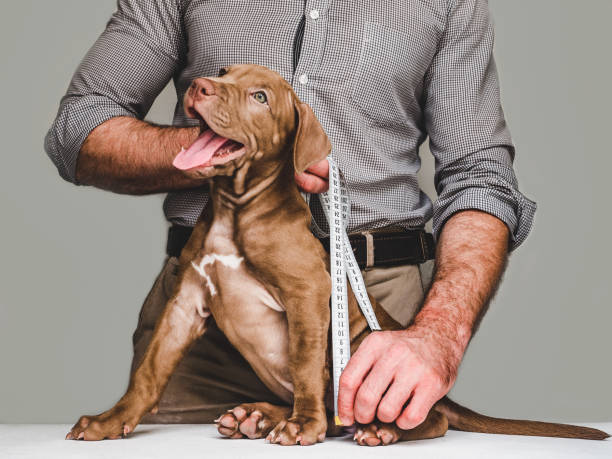
Take two dogs that both weigh 6 kg.
One might be compact and relatively tall. The other might have a long body and short legs. Put them into the same carrier and the difference becomes obvious immediately.
This is one reason breed lists such as "suitable for Chihuahua, Pomeranian, Yorkie..." are convenient for marketing but weak as the main sizing method.
Breed gives you a clue. Weight gives you another clue.
The actual body gives you the answer.
Start With Length and Height
For body length, measure the pet in a natural standing position rather than stretching the animal into an unusual posture. The goal is to understand how much horizontal space the body normally occupies.
Standing height matters because the pet needs usable vertical space too. A carrier can have plenty of floor length and still feel restrictive if the roof sits too low.
Width is less commonly shown in consumer size guides, but it becomes important with broader-bodied dogs and larger cats.
Then look beyond the standing position.
How does the pet normally settle?
Does it curl tightly when resting? Does it prefer lying more extended? Does it turn frequently before settling down?
Those behaviors influence how useful a particular interior shape will be.
External Size Can Be Misleading
A carrier measuring 45 × 30 × 30 cm outside does not provide a 45 × 30 × 30 cm empty box inside.
Wall construction takes space.
Padding takes space.
Frames take space.
A thick bottom board raises the floor. Rounded corners remove usable volume. Pockets and structural components can also intrude into the interior.
With molded carriers, the shell geometry can narrow toward the top or bottom. With soft carriers, the nominal dimensions may look generous while the real shape changes once the product is loaded.
For product teams, this distinction matters when building a size chart.
| Measurement | What It Tells You |
|---|---|
| Body length | Basic horizontal space requirement |
| Standing height | Required vertical clearance |
| Body width | Whether the interior feels restrictive laterally |
| Normal lying posture | How the pet actually uses floor space |
| Pet weight | Load requirement and a secondary sizing reference |
| Carrier internal dimensions | Available space before structural effects are considered |
Weight belongs on that list, but notice where it sits.
It helps determine whether the carrier structure can handle the load. It can also help customers narrow down a size.
It is not a substitute for measuring the animal.
For brands, a better customer-facing guide might therefore say "recommended for pets up to X kg, subject to body dimensions" rather than presenting weight as an absolute fit guarantee.
That small wording change sets a more realistic expectation.
How Much Room Should a Pet Have Inside a Carrier?
There is no useful universal answer such as "add exactly 5 cm on every side." Pets have different body shapes, and travel conditions change how the available space is used.
A carrier needs enough usable room for the pet to maintain a natural posture, turn and reposition itself, and settle down. Extra space beyond that is not automatically beneficial, especially when the carrier will be moving.

Sizing advice often becomes strangely mathematical at this point.
Measure the pet. Add a fixed number. Buy the resulting carrier.
That can be a useful rough shortcut, but product fit is more three-dimensional than that.
Imagine a carrier with excellent length but a narrow roof. Or plenty of height with very little usable floor area. Both may technically exceed the pet's measurements and still be poor fits.
I find natural posture more useful as a starting point.
The pet needs to be able to enter the carrier without being forced into an awkward position. Once inside, it needs enough room to adjust its body and settle.
From there, the amount of additional room depends partly on what the carrier is for.
Usable Space Changes Once the Carrier Moves
A carrier sitting on the living-room floor gives a misleading impression of space.
Pick it up by the handles and the shape may change.
The bottom can bow.
The side panels may pull inward.
The roof may sag slightly.
Now place the same carrier on a stroller and roll over uneven pavement. Or put it into a vehicle where acceleration, braking, and cornering introduce another type of movement.
The interior dimensions printed on the specification sheet have not changed.
The pet's experience of that space has.
This is why structural support and sizing are more closely connected than they first appear.
A well-supported 40 cm interior may provide more useful space than a nominally larger soft structure that loses its shape under load.
Look at the Floor First
The floor is especially important because it is where the pet receives most of its support.
If the bottom board bends heavily under the pet's weight, the animal is no longer standing or lying on the flat area shown in the product drawing.
It is standing in a curved surface.
That can also pull the side walls inward and reduce the effective width.
For B2B buyers reviewing carrier samples, this is something worth checking with the intended load inside rather than judging the empty sample on a meeting-room table.
Put weight in it.
Lift it.
Carry it.
Set it on the intended platform.
Watch what happens to the shape.
Those simple observations often tell you more about usable space than another line of dimensions on a specification sheet.
Can a Pet Carrier Be Too Big or Too Small?
Yes. An undersized carrier restricts normal movement, but an oversized carrier can also create problems once the pet and carrier are being transported.
A carrier is too small when the pet cannot maintain a reasonable natural posture or reposition comfortably. It can also be unnecessarily large when excessive interior space allows too much movement or makes the carrier unstable, bulky, or difficult to handle.
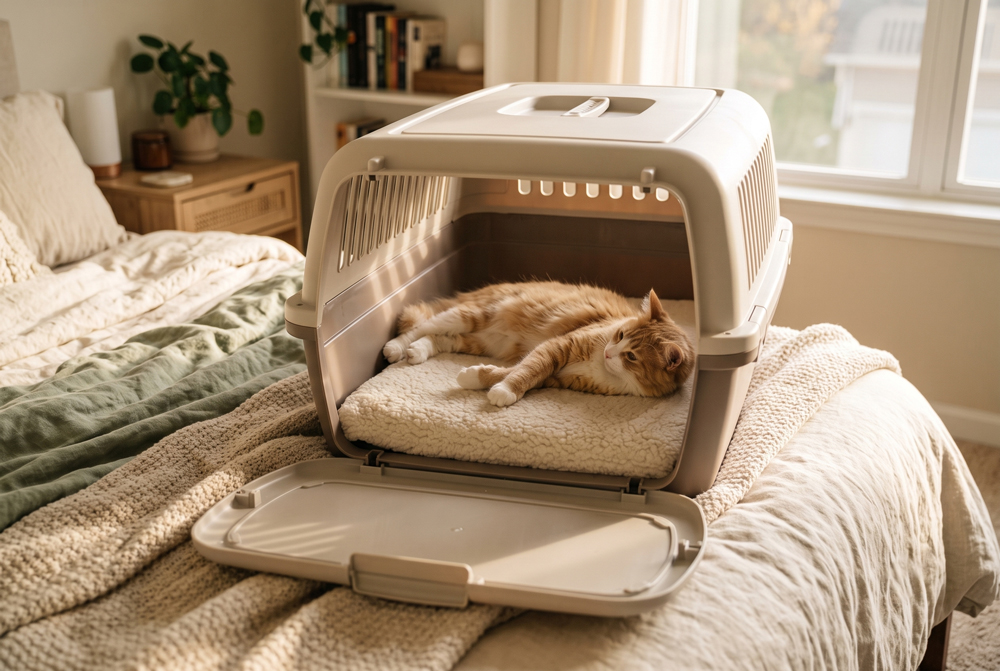
The problems with a carrier that is too small are fairly easy to see.
The pet cannot stand naturally. Turning becomes difficult. The body is pressed against the sides. The available resting position is restricted.
Most customers understand that.
Oversizing is less obvious because "more space" sounds like an upgrade.
At home, it often is.
A travel carrier is different.
Travel Space Is Not the Same as Living Space
A pet crate used at home can prioritize generous room. A carrier has another job: it has to move the animal from one place to another.
Once the carrier is lifted, rolled, driven, or transported, the pet moves relative to the carrier.
If the interior is far larger than necessary, there is more room for that movement.
A small dog in a very large carrier may shift from one side to the other as the carrier changes direction. In a stroller, the same extra room can become noticeable over bumps and turns.
This does not mean pets need to be packed tightly.
It means there is a useful middle ground between restricted and unnecessarily oversized.
That middle ground is where the animal can adjust its posture without having a large empty area around it.
Oversizing Affects the Owner Too
Every increase in carrier size affects more than interior comfort.
A larger carrier weighs more.
It occupies more vehicle space.
It becomes wider to carry through a doorway.
It may no longer fit comfortably on a stroller frame.
Packaging gets larger. Shipping volume increases. Retail shelf space changes.
For a brand, those consequences quickly become commercial.
Suppose a product team wants to reduce SKU count and decides that one large carrier can cover pets from 3 kg to 10 kg.
On paper, the strategy looks efficient.
In reality, the smallest pets may have a poor fit, while customers with larger pets may still judge the carrier by body dimensions rather than weight.
One SKU has not necessarily solved the sizing problem. It may simply have moved the problem downstream into customer service and returns.
A good size range therefore does not try to maximize the number of pets that can technically fit inside each carrier.
It tries to create sensible fit zones.
That is a different objective.
Do Dogs and Cats Need Different Amounts of Space in a Carrier?
Dogs and cats do not need two completely separate sizing formulas, but species, body shape, posture, and behavior can change what "usable space" looks like inside the same carrier.
Carrier fit is better judged from the individual animal's dimensions and natural posture than from species alone. Dogs and cats may use interior space differently, so entrance design, height, floor area, visibility, and structure can affect fit as much as nominal size.
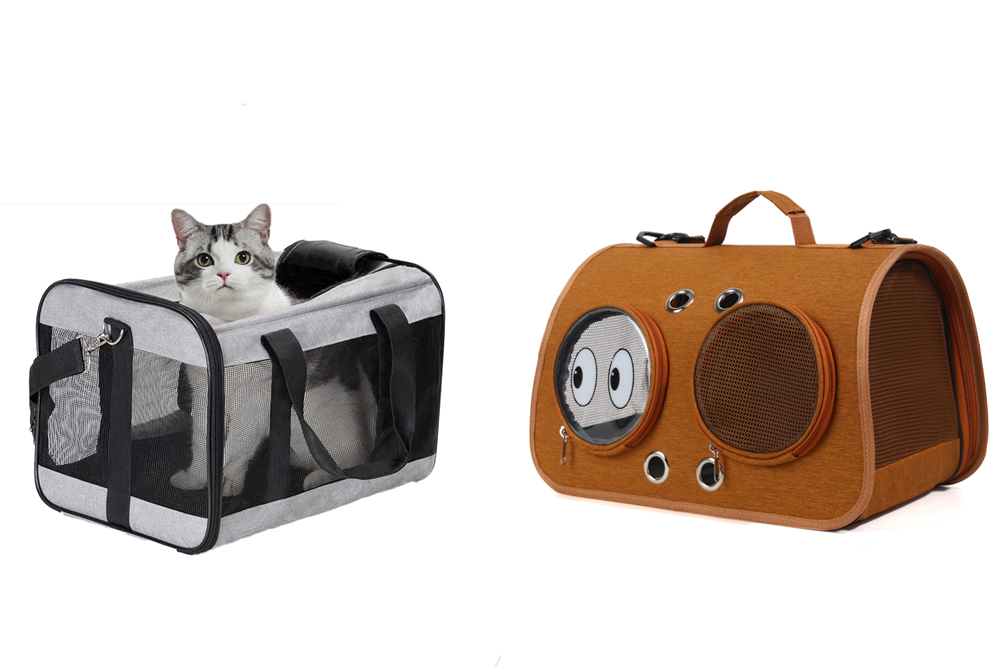
It would be convenient to say cats need one amount of extra room and dogs need another.
In product development, it rarely works that neatly.
There is enormous variation within both groups.
A long-bodied small dog and a compact cat of similar weight can require different interior proportions. A tall dog may benefit from more vertical clearance. A cat may use the carrier differently again, especially when entering, turning, or settling.
The entrance can change the experience as well.
Fit Begins Before the Pet Is Fully Inside
Imagine two carriers with identical internal dimensions.
Carrier A has a large top opening.
Carrier B has a relatively narrow front entrance with a structural frame around it.
On the specification sheet, they are the same size.
In use, they may feel completely different.
This is something we pay attention to when reviewing samples because customers do not experience a carrier as a set of L × W × H numbers.
They experience the opening first.
Then the floor.
Then the available headroom and side space.
For some pets, a top opening makes loading easier. Others enter comfortably through the front. The answer depends on the animal and the intended product.
Body Shape Creates More Variation Than the Label "Dog" or "Cat"
This becomes particularly important for brands trying to use one carrier design for both.
That can work.
Many carriers do not need to be species-specific.
But the size chart needs to acknowledge variation rather than making broad promises such as "fits all cats under 8 kg" or "suitable for small dogs under 10 kg."
Those statements are easy to understand and easy to print on packaging.
They can also create expectations that the product cannot always meet.
A more useful fit guide combines several references:
- maximum recommended load
- carrier internal dimensions
- suggested pet measurements
- example breeds or pet types as reference only
- a simple posture or fit illustration
The illustration is particularly valuable.
Customers may not know whether their dog's shoulder height is unusual, but they can understand a drawing showing how the pet is expected to stand and lie inside the carrier.
For retail teams, that can make sizing guidance much easier to communicate without turning the package into a technical manual.
Does the Right Carrier Size Change for Car, Airline, and Everyday Travel?
Yes. The pet's body does not change, but the constraints around the carrier do. Vehicle space, airline requirements, carrying distance, stroller compatibility, and storage can all affect the practical size choice.
The same pet may need different carrier considerations for everyday carrying, car travel, stroller use, and air travel. Start with proper pet fit, then check the dimensional, structural, and interface requirements of the specific travel scenario.
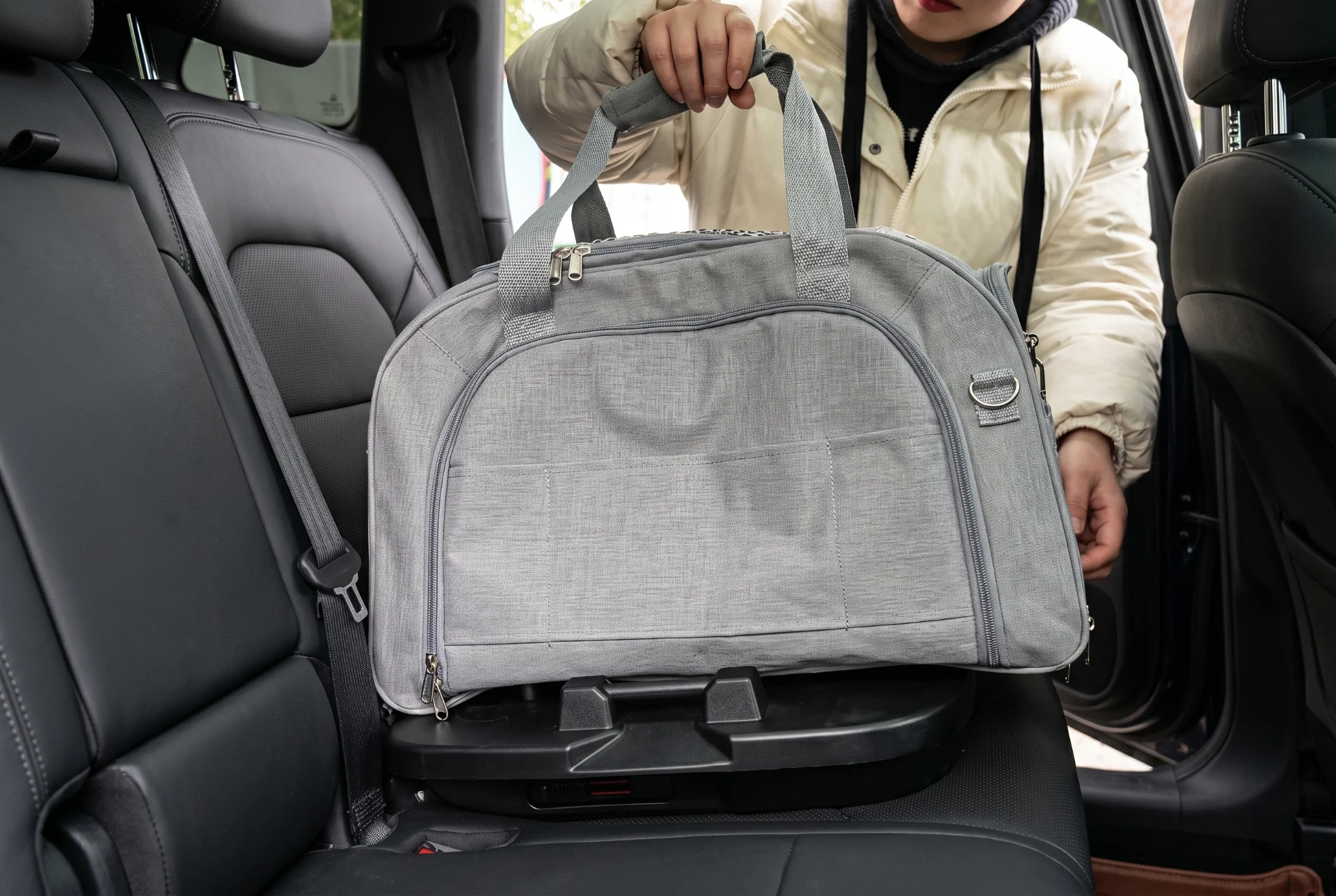
This is where universal sizing guides start to break down.
A carrier can fit the pet beautifully and still be wrong for the journey.
The most obvious example is air travel.
A particular airline, route, aircraft, or travel arrangement may impose dimensional or other carrier requirements. Those requirements can change, so buyers need to verify the current rules directly with the relevant airline or authority rather than relying on a permanent universal chart.
But airlines are only one example.
Car and stroller travel create their own constraints.
Everyday Carrying Rewards Compactness
For normal short outings, the owner is physically carrying the product.
A few extra centimeters may not look significant in a product drawing. After twenty minutes on someone's shoulder, they can feel very significant.
The total weight matters too.
This creates a strong reason not to oversize a daily carrier simply to make the product appear more spacious.
A compact carrier with well-planned interior geometry can be much more pleasant to use.
Car Travel Introduces Vehicle Fit
Once the carrier goes into a vehicle, external dimensions become important in a different way.
Where will it sit?
How much seat space does it occupy?
Can the intended restraint or docking method work with that carrier size?
Does increasing the carrier width change its relationship with the seat, door, or other passengers?
The animal still needs suitable internal room, but now the carrier has to fit another environment as well.
For vehicle-oriented products, this is one reason sizing cannot be separated from the rest of the product architecture.
A carrier may be perfectly proportioned for the pet but too large for the intended vehicle interface.
The reverse can also happen: shrinking the carrier to fit a platform may compromise the space available to the animal.
Those conflicts are better discovered during development than after production.
Stroller Use Adds Another Set of Boundaries
A detachable carrier used on a stroller has to work with the stroller platform or frame.
Making the carrier wider may improve interior space, but it can change stroller balance or push the frame dimensions beyond what the brand wants.
Making it taller can affect the center of mass.
Increasing the carrier weight affects the total stroller load.
This is where modular product development gets interesting.
Carrier size is no longer an isolated specification.
It affects the vehicle base, stroller frame, docking position, folding dimensions, packaging, and sometimes even how the entire product family is divided into sizes.
Airline Travel Has Its Own Rules
Air travel deserves separate treatment because dimensional restrictions may come from outside the product itself.
A carrier that works perfectly for road travel may not meet a particular airline's current requirements.
Likewise, designing a carrier solely around one airline dimension can create compromises for other use cases.
There is no permanent universal airline carrier size that works everywhere.
Airlines can have different rules for in-cabin pets, carrier dimensions, pet eligibility, and aircraft configurations. Those requirements can also change.
Consumers need to check the current requirements directly with the airline before travel.
For brands, the wording matters too.
Claims such as "airline approved" can be much broader than the reality if compatibility depends on airline, route, aircraft, or current policy.
More specific guidance is usually more useful.
Usable space becomes even more restricted during air travel, where you must balance your pet's comfort with the [strict dimensional limits of airline under-seat pet carriers].
One Pet, Different Travel Priorities
The same 5 kg dog can create several different product briefs.
| Travel Scenario | Sizing Priority |
|---|---|
| Everyday carrying | Compact dimensions, low weight, usable interior fit |
| Car travel | Pet fit plus vehicle positioning or interface compatibility |
| Stroller travel | Pet fit plus platform size, balance, and docking compatibility |
| Airline travel | Pet fit plus current airline-specific requirements |
| Multi-mode travel | Balance between interior space, portability, and system compatibility |
This does not necessarily mean the customer needs five different carriers.
It means brands need to be careful when claiming that one carrier is ideal for every travel situation.
Sometimes a well-designed multi-scenario carrier can cover several of these uses.
Sometimes the requirements pull the product in opposite directions.
Knowing the difference is part of good product development.
What Does Carrier Structure Have to Do With Size?
A carrier's stated dimensions only describe its boundaries. Structure determines how much of that space remains usable when the pet is inside and the carrier is being moved.
Frame support, bottom-board stiffness, side-wall construction, openings, and load-bearing design can all change the effective interior space. Two carriers with the same dimensions may therefore fit the same pet very differently.
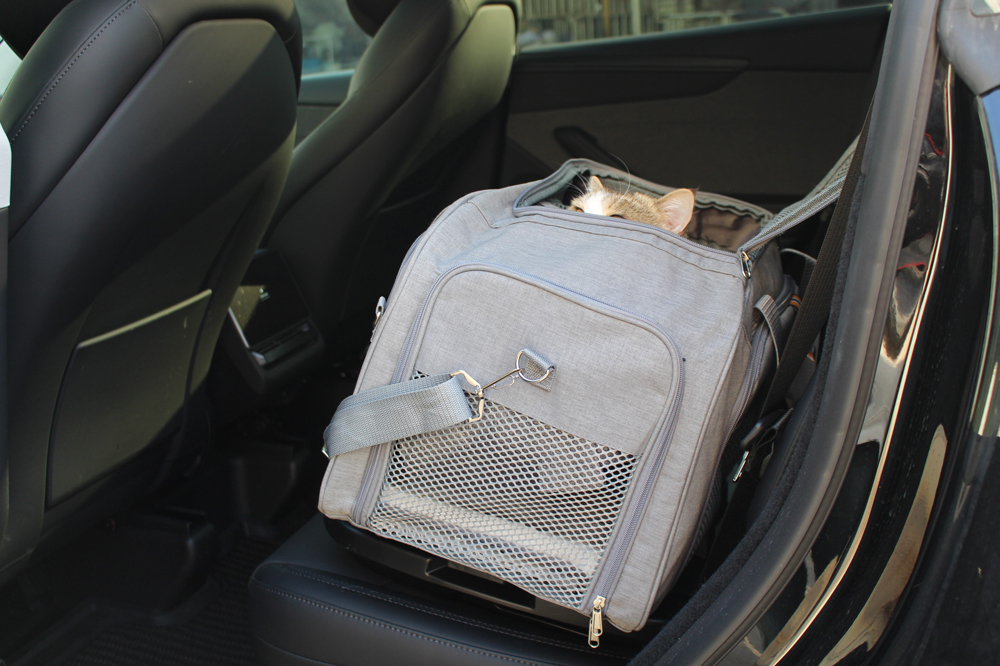
This is the part of sizing that often disappears from online size charts.
A customer sees:
45 × 30 × 30 cm
The natural assumption is that those numbers describe the space available to the pet.
Sometimes they come close.
Sometimes they do not.
Soft-goods construction is a good example.
Soft Carriers Do Not Always Hold Their Drawing Dimensions
Fabric moves.
Mesh stretches.
Foam compresses.
The top can sag when the carrier is lifted.
If the bottom lacks enough support for the intended load, the whole shape can change.
None of that makes a soft carrier inherently bad. Soft construction brings real advantages in weight, storage, and portability.
It simply means that the product team needs to evaluate size under realistic use rather than only from a technical drawing.
During sampling, one useful test is almost embarrassingly simple: load the carrier to the intended working weight and carry it around.
Look at the side profile.
Check the floor.
Measure the opening again.
See whether the roof still sits where the drawing says it sits.
You can discover a lot in five minutes.
Openings Consume Structure Too
A large opening improves access but can remove structural support from that side of the carrier.
The solution may require a frame, zipper structure, molded part, or additional reinforcement.
Those parts then affect weight and usable space.
Product development is full of these small trade-offs.
Increasing one dimension does not necessarily solve them.
Sometimes changing the internal structure creates more useful room without increasing the external carrier at all.
For brands working on a new size range, that can be more valuable than simply scaling every dimension by 10%.
How Should Brands Build a More Useful Pet Carrier Size Guide?
A useful size guide helps customers understand fit instead of promising that one weight number guarantees compatibility.
For B2B carrier brands and retailers, combine internal dimensions, recommended pet measurements, maximum intended load, fit illustrations, and scenario-specific notes. Breed and weight ranges can help customers navigate, but they work better as references than absolute guarantees.
This is where sizing stops being only a product-development issue and becomes a commercial one.
Poor sizing guidance creates friction all the way down the chain.
The consumer orders the wrong size.
The retailer gets the return.
Customer service has to explain the fit.
Reviews complain that "the 8 kg size is too small," even though another 8 kg pet fits perfectly.
The factory may then be asked to enlarge the next production run without anyone identifying what actually caused the problem.
Was the carrier too short?
Too low?
Was the entrance too narrow?
Did the bottom collapse?
Was the customer relying on the weight recommendation alone?
Those are completely different problems.
A Size Chart Can Communicate More Than S, M, and L
For a consumer-facing product, the guide does not need to become complicated.
It can still be easy to scan.
A useful structure might include:
| Information | Role in the Size Guide |
|---|---|
| Internal carrier dimensions | Shows approximate usable envelope |
| Recommended pet length | Helps assess body fit |
| Recommended pet height | Helps assess standing clearance |
| Maximum intended load | Communicates structural limit |
| Example pet types | Gives quick context, not a guarantee |
| Fit illustration | Shows expected posture visually |
| Travel notes | Explains scenario-specific restrictions |
That gives customers several ways to check their choice.
It also gives retailers better information when answering questions.
Think About SKU Coverage Before Finalizing the Size Chart
For brands, carrier sizing is also a range-planning decision.
Three sizes may look neat on a product page.
That does not mean three sizes create good market coverage.
The gaps between them matter.
If Size S is comfortable for pets around one body range and Size M jumps significantly larger, customers in between may struggle.
On the other hand, adding six sizes creates more inventory, more tooling or pattern variation, more packaging, and more complicated purchasing.
There is no perfect number of SKUs.
The useful question is whether each size serves a meaningful group of pets without excessive overlap.
Actual customer data can help here.
Returns, fit complaints, common pet measurements, and retailer feedback can reveal where the range is weak.
For OEM/ODM projects, these discussions are often more useful than simply asking a factory to "make S, M and L."
At Anvoya, sizing discussions during carrier and travel-system development often connect quickly with other parts of the product: structure, bottom support, stroller platform dimensions, vehicle positioning, hardware, and the target load.
That is why we treat dimensions as part of the product architecture rather than a label added after the carrier is finished.
The carrier has to fit the pet first.
Then it has to fit the journey.
Conclusion
The right carrier is not the biggest one available. Good sizing balances natural posture, usable interior space, structural support, and the real conditions in which the pet will travel.
FAQ
Can I Choose a Pet Carrier Based on Weight Alone?
No. Weight is useful for checking the carrier's intended load range, but pets with the same weight can have very different body lengths, heights, and shapes. Body measurements and natural posture give a better indication of fit.
How Do I Know If a Pet Carrier Is Too Small?
A carrier may be too small if the pet cannot maintain a reasonable natural posture, reposition itself, or settle comfortably without being compressed by the walls or roof.
Is a Bigger Pet Carrier Always More Comfortable?
No. Extra space can be useful up to a point, but an unnecessarily large travel carrier can allow more movement inside, become harder to carry, and take up more space in cars, strollers, or other transport environments.
Should a Pet Be Able to Stand Up in a Carrier?
The pet needs enough usable height to maintain an appropriate natural posture for the intended journey. Fit also needs to account for turning, repositioning, and resting rather than checking standing height alone.
Should I Use Internal or External Carrier Dimensions?
Internal dimensions are more useful for evaluating pet fit. External dimensions matter for vehicle space, storage, airline requirements, stroller compatibility, and overall handling. Both are useful, but they answer different questions.
Why Does My Soft Pet Carrier Feel Smaller Than Its Listed Dimensions?
Soft carrier walls, padding, frames, bottom boards, and fabric movement can reduce usable interior space. Some carriers also change shape once they are loaded and lifted.
Can Dogs and Cats Use the Same Carrier Size?
Sometimes. The better question is whether the carrier fits the individual animal's body dimensions, posture, and behavior. Species or breed labels alone do not guarantee a good fit.
Does a Pet Need a Smaller Carrier for Car Travel?
Not automatically. The pet still needs suitable interior space, but the carrier also has to work with the intended vehicle position or restraint system. Vehicle compatibility can therefore affect the practical carrier dimensions.
What Size Pet Carrier Is Allowed on an Airline?
There is no single universal size that applies to every airline or flight. Requirements can vary by airline, route, aircraft, and travel arrangement. Check the current requirements directly with the relevant airline before traveling.
How Can Pet Carrier Brands Reduce Size-Related Returns?
Use more than a weight recommendation. Internal dimensions, suggested pet measurements, maximum intended load, fit illustrations, and clear travel-specific guidance can help customers choose more accurately and reduce unrealistic fit expectations.