
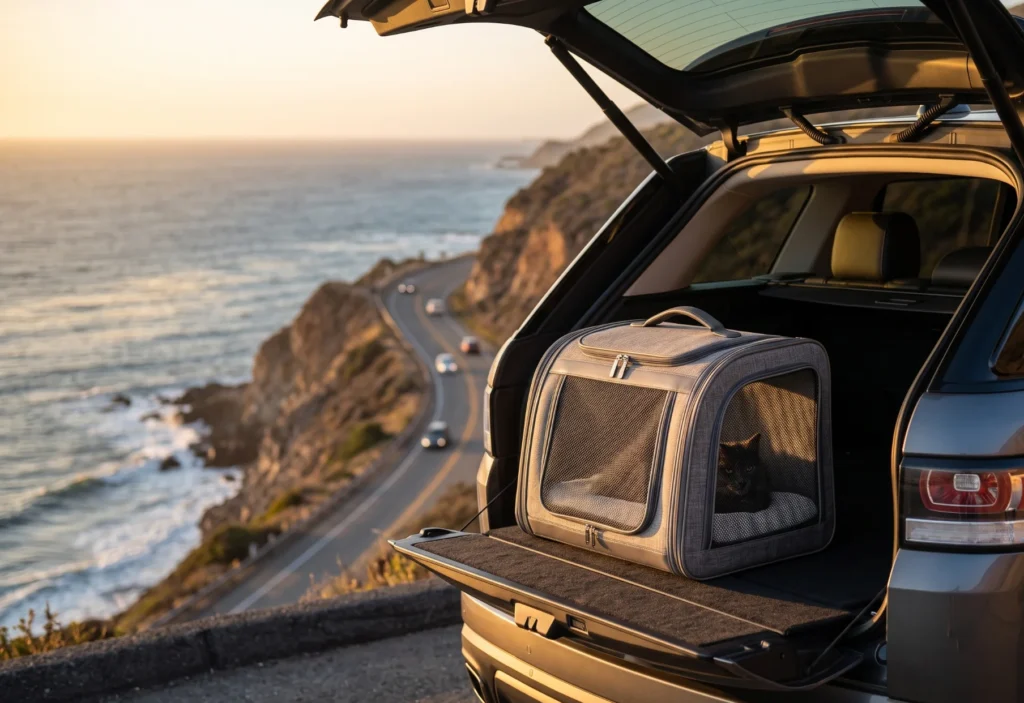
Cat carrier size is one of the easiest details to get wrong because a carrier that looks roomy in a product photo may feel awkward, unstable, or unsafe in real travel. If the carrier is too small, the cat feels trapped. If it is too large, handling and vehicle use become harder. The right answer is balance.
A cat carrier should be large enough for the cat to stand naturally, turn around, lie down comfortably, and adjust posture without being cramped. It should not be so oversized that the cat slides around during carrying or car travel. In most cases, the ideal cat carrier size is about 1.5 times the cat’s body length.[^1]
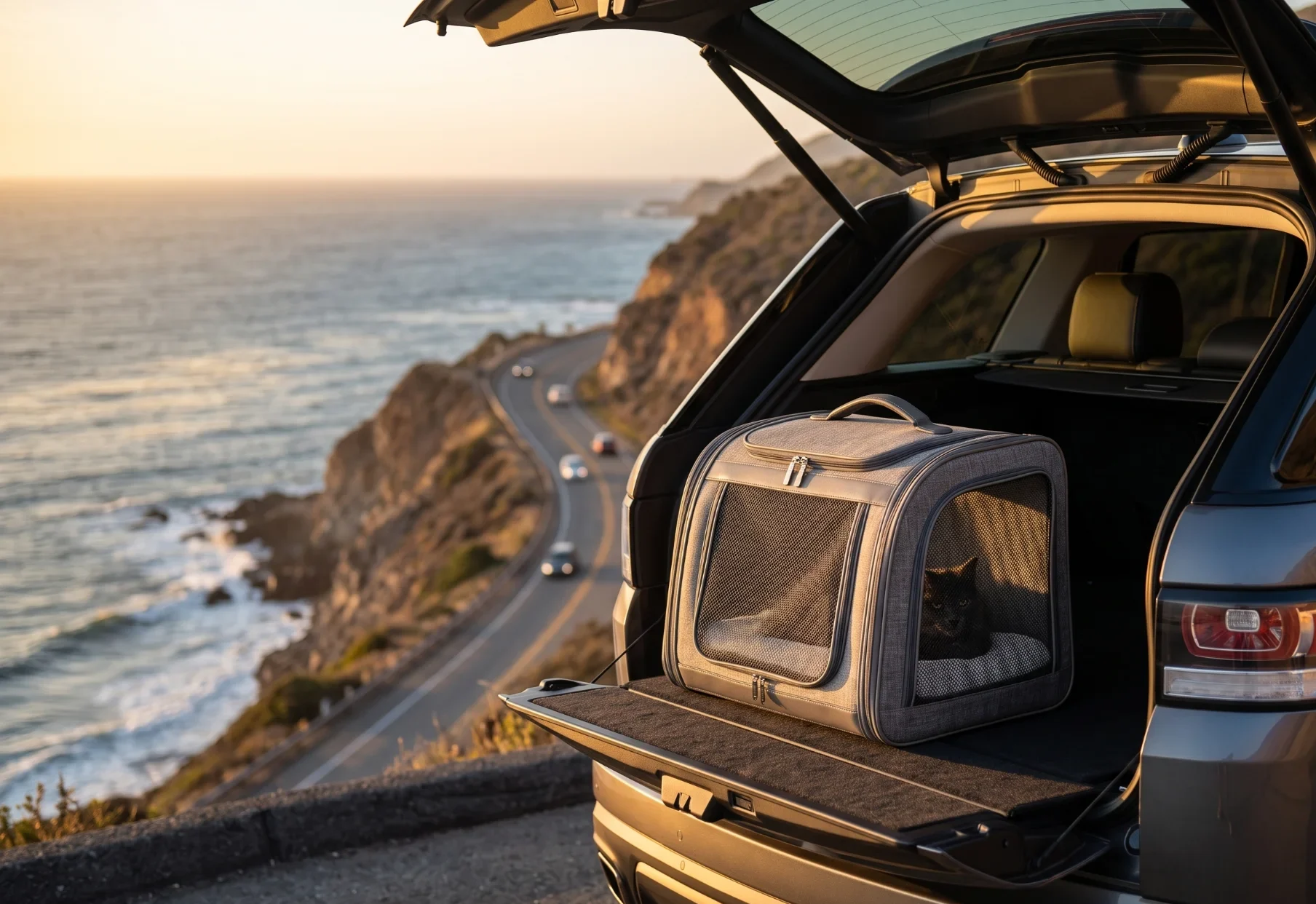
A good carrier is not just a box with enough room inside. It is a small travel environment. The best choice depends on the cat’s body length, weight, temperament, trip duration, and whether the carrier must connect with a car seat base or stroller frame.
How Much Space Should a Cat Have in a Carrier for the Right Cat Carrier Size?
Many people assume that more space always means more comfort. That sounds logical, but cats do not always experience open space as security. A carrier that is too large can make a nervous cat feel exposed and unstable, especially when the carrier moves.[^2]
The right cat carrier size gives a cat enough space to stand, turn, sit, curl, and lie down. A good rule is to choose a carrier with an interior length about 1.5 times the cat’s nose-to-tail-base length, with enough height for natural sitting.

The basic space rule
A cat carrier should support four natural movements:
- Standing without the back pressing hard against the top
- Turning around without squeezing the shoulders
- Sitting upright in a normal posture
- Lying down in a relaxed curled or loaf position
This is the simplest way to judge cat carrier size at home. A measuring tape gives a better answer than guessing from breed names. A “medium cat” can be very different from another medium cat. One may be compact and heavy. Another may be long, lean, and flexible.
A practical method is to measure:
| Measurement | How to Measure | Why It Matters |
|---|---|---|
| Body length | Nose to base of tail | Helps determine carrier length |
| Shoulder height | Floor to top of shoulders | Helps determine carrier height |
| Sitting height | Floor to top of head while sitting | Important for upright comfort |
| Weight | Current body weight | Helps confirm load rating and structure |
For many adult cats, common carrier interior lengths fall around 17–22 inches. Smaller cats may be comfortable in the lower end of that range. Larger cats, such as Maine Coons or long-bodied mixed breeds, may need more.
Why “bigger” is not always better
A carrier that is far too large may create three problems:
- The cat may slide during carrying or braking.
- The carrier may become harder to lift and control.
- The carrier may not fit vehicle seats, airline spaces, or stroller systems.
In our product development discussions, this is a frequent design tension. A comfortable pet travel carrier must offer enough interior room, but the outer shell still has to work with handles, latches, bases, storage, and transport rules.
The goal is not maximum space. The goal is controlled comfort.
Soft bedding can help reduce extra movement inside a carrier, but bedding should not be used to “fix” a carrier that is clearly too large or poorly structured. Buyers should look at both the interior dimensions and the external dimensions, especially if the carrier will be used in a car or stroller.
What Size Cat Carrier Do I Need? A Practical Cat Carrier Size Chart
Choosing a carrier from a product page can feel frustrating because brands describe sizes differently. One company’s “medium” may equal another company’s “large.” This creates returns, disappointed customers, and nervous cats.
You need a cat carrier size based on your cat’s measured length, sitting height, and weight, not just the label on the box. For most cats, the carrier should be slightly longer than the cat’s body and tall enough for comfortable sitting.

A simple size reference
The table below gives a practical starting point. Exact dimensions should still be checked against the individual cat and the product’s internal measurements.
| Cat Type | Typical Cat Weight | Suggested Interior Length | Suggested Interior Height | Notes |
|---|---|---|---|---|
| Kitten or small adult cat | 4–8 lb / 1.8–3.6 kg | 15–17 in / 38–43 cm | 10–11 in / 25–28 cm | Avoid oversized carriers for tiny cats |
| Average adult cat | 8–12 lb / 3.6–5.4 kg | 17–19 in / 43–48 cm | 11–12 in / 28–30 cm | Most common home and vet-trip range |
| Large adult cat | 12–18 lb / 5.4–8.2 kg | 19–22 in / 48–56 cm | 12–14 in / 30–36 cm | Check door width and turning space |
| Extra-large cat | 18+ lb / 8.2+ kg | 22+ in / 56+ cm | 14+ in / 36+ cm | Structure and load rating matter more |
These figures are guidelines, not veterinary or safety certifications. Cats vary by body shape, and a carrier must be tested with the actual cat whenever possible.
Internal size matters more than external size
One mistake buyers often make is reading only the outside dimensions. A carrier may look large from the outside but have thick walls, curved corners, padding, ventilation frames, or structural ribs that reduce usable space.
For procurement teams, this is an important point. When comparing suppliers, ask for:
- Interior usable length
- Interior usable width
- Interior usable height
- Door opening dimensions
- Maximum recommended pet weight
- Static load and handle strength test data
- Packaging dimensions for shipping efficiency
A pet brand may sell the product as a “medium cat carrier,” but the customer experiences the interior space, not the carton label.
Door size is part of cat carrier size
The entrance matters almost as much as the floor space. A cat may fit inside the carrier once placed there, but loading the cat can still be stressful if the door is too narrow.
A good carrier should have a door opening that allows:
- Calm entry without forcing the shoulders
- Easy removal at the vet
- Access for cleaning
- Reduced risk of pinched fur or paws
Top-loading designs can help with nervous cats.[^3] Front doors can work well for trained cats. Some carriers combine both.
A small personal note: many cat owners discover the door problem only during a rushed vet visit. That is exactly the wrong time to learn that the carrier opening is technically functional but not user-friendly.
For B2B buyers, door geometry, latch feel, and repeated-use durability are worth evaluating during sample review. These details influence customer satisfaction more than many people expect.
Should a Cat Carrier Be Larger for Long-Distance or Car Travel?
Long-distance travel creates a different set of problems. A carrier that works for a five-minute vet trip may not be ideal for a two-hour drive, a train ride, or a day of mixed car and walking travel.
A cat carrier for long-distance or car travel can be slightly roomier, but it should still control movement. The best cat carrier size allows posture changes, ventilation, and bedding while keeping the cat stable when the carrier is lifted, turned, or secured in a vehicle.
Home use is different from car use
A normal household carrier is often used for:
- Vet appointments
- Grooming visits
- Short local trips
- Emergency transport
- Temporary containment
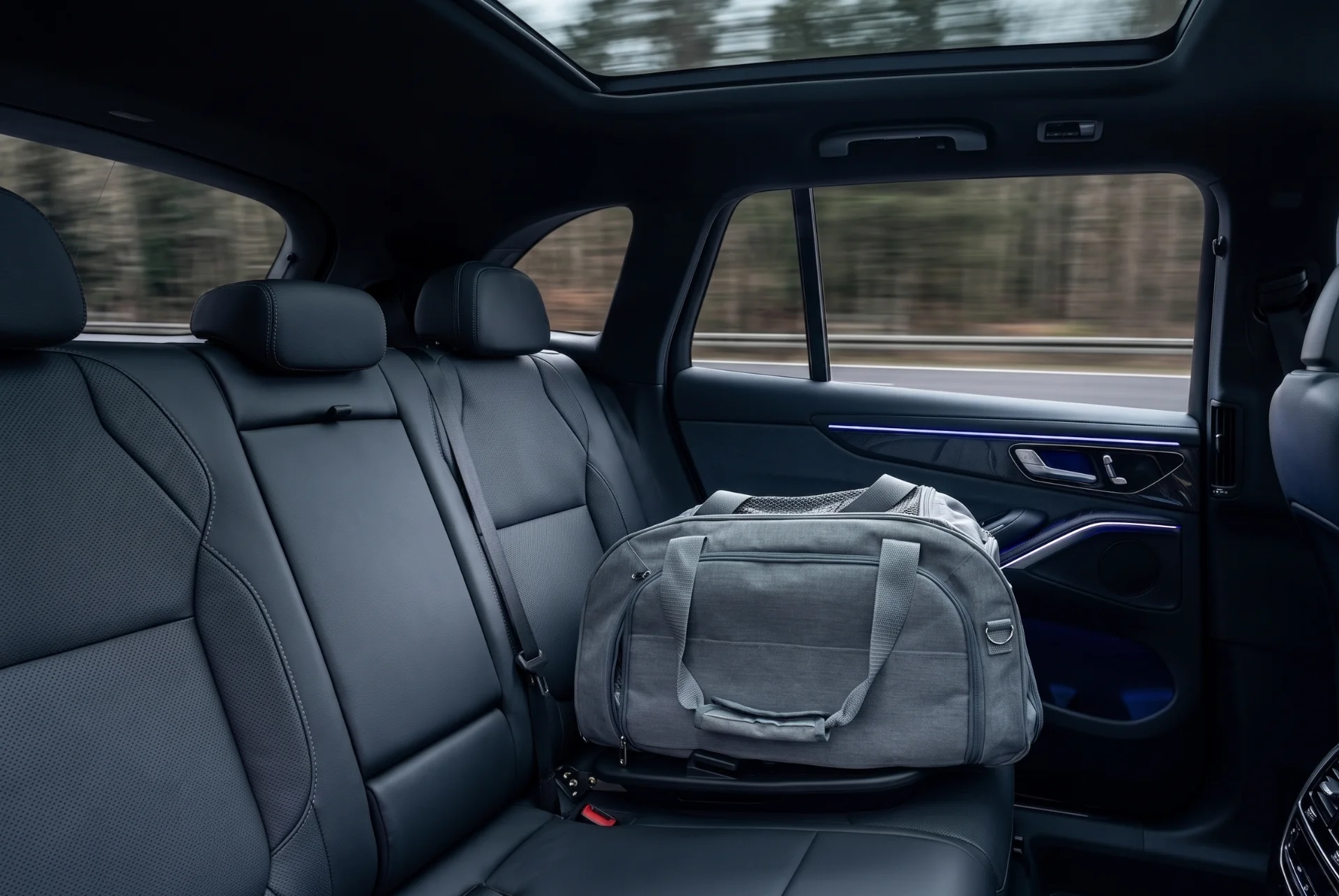
For these uses, the main concern is comfort, loading, cleaning, and carrying. However, car travel adds another layer. The carrier becomes part of the vehicle environment. It may be placed on a seat, floor, or dedicated base. It may be secured with a belt path, strap, latch, or connection system.
That means the carrier must be evaluated for more than interior space.
Car travel size considerations
When a carrier will be used in a vehicle, buyers should consider:
| Factor | Why It Matters |
|---|---|
| Carrier footprint | Must fit the intended vehicle seat or base |
| Height | Should not block visibility or create awkward belt routing |
| Center of gravity | Taller carriers may feel less stable |
| Interior movement | Too much space can increase sliding during sudden braking |
| Anchor compatibility | Interfaces must match the intended system |
| Structural stiffness | The carrier should not deform easily under normal handling |
Pet car seats and pet carriers do not currently operate under the same unified mandatory crash-test regulations as child restraint systems.[^4] Crash testing can be a useful engineering tool, but it should not be treated as proof of absolute safety or as equivalent to legal child car seat certification.[^5]
This distinction matters. A responsible supplier should avoid exaggerated claims. A buyer should ask what was tested, how it was tested, and what the results actually show.
Why stability is part of comfort
Cats often feel calmer when the carrier feels predictable. A huge carrier may allow more movement, but movement can feel like loss of control. During braking or turning, the cat may shift into a wall of the carrier. That can increase stress.
A better long-distance design often includes:
- A stable base
- Secure latching
- Good airflow
- Washable padding
- Smooth interior edges
- Enough room for posture changes
- Limited uncontrolled sliding
For longer travel, the cat may also need breaks, hydration planning, and veterinary guidance, especially for anxious cats, senior cats, or cats with medical conditions.[^6] The carrier size is only one part of the travel plan.
B2B evaluation point
For brands, distributors, and OEM/ODM buyers, long-distance use changes the product brief. The product is no longer just a simple cat carrier. It becomes a pet travel carrier that must perform across handling, storage, cleaning, vehicle placement, and consumer education.
A supplier should be able to discuss:
- Material selection
- Load paths
- Handle attachment strength
- Ventilation area
- Latch cycle testing
- Production consistency
- Misuse prevention
- Compatibility with accessories
At Anvoya, our background in child restraint and automotive safety products shapes how we think about these questions. The focus is not to claim that pet carriers are child car seats. The focus is to apply disciplined engineering thinking to pet travel products where fit, stability, and repeatable manufacturing quality matter.
How Do You Choose the Right Carrier Size for Different Cats?
Cats do not all use space the same way. A calm adult cat, a nervous rescue cat, a long-bodied breed, and a senior cat may all need different carrier decisions, even if their weights are similar.
The right cat carrier size depends on the cat’s body shape, age, mobility, temperament, and travel habits. Measure the cat first, then choose a carrier that supports natural movement without creating excess empty space or handling problems.
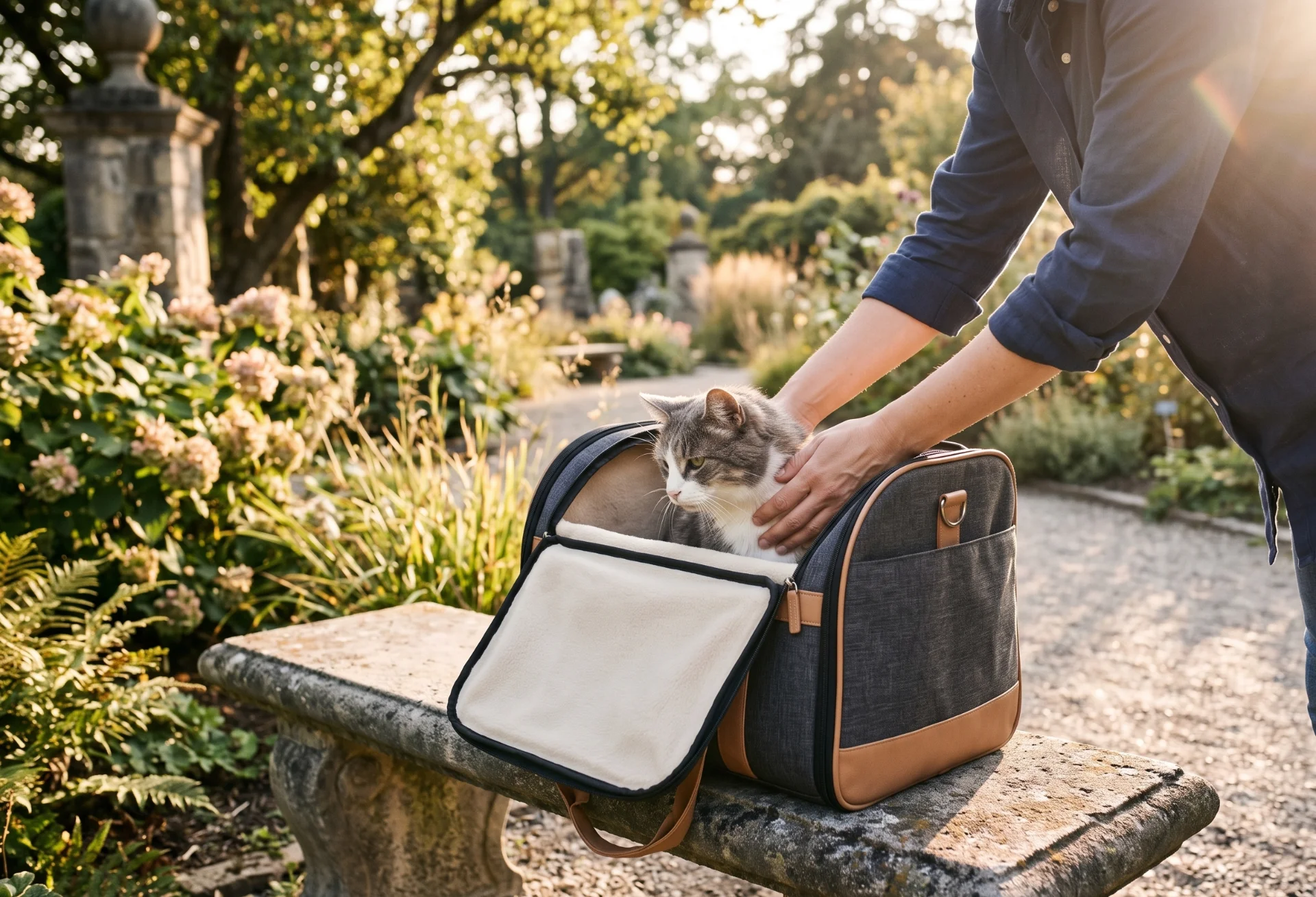
Small cats and kittens
Small cats do not always need the smallest available carrier. Kittens grow quickly[^7], and a very tiny carrier may become useless within months. However, an oversized carrier can feel unstable for a kitten.
A practical approach is to choose a carrier with:
- Moderate extra room for growth
- Soft bedding to reduce sliding
- Secure door latches
- Good visibility and airflow
- Easy cleaning for accidents
For kittens, buyers should also consider whether the carrier will be used through adulthood. If the goal is long-term use, choose based on expected adult size, but avoid a carrier that feels like an open crate during early months.
Large cats
Large cats need more than extra length. They need a carrier with enough structural support. A carrier that fits by dimensions but flexes under weight is not a good choice.
For large cats, check:
- Weight rating
- Handle strength
- Bottom stiffness
- Door opening size
- Interior width for turning
- Ventilation on multiple sides
A long cat may need more floor length. A broad cat may need more width. A heavy cat may need a reinforced base even if the interior size looks acceptable.
Senior cats and cats with mobility issues
Senior cats may struggle to crouch, twist, or climb through a small front opening.[^8] In these cases, the carrier design can matter more than a small size increase.
Helpful features include:
- Top opening
- Low entry lip
- Removable lid
- Non-slip bedding
- Smooth interior corners
- Easy access for veterinary staff
A senior cat may also need room to lie in a preferred posture. Still, the carrier should not become so large that the cat slides when carried.
Nervous cats
Nervous cats often prefer a carrier that feels enclosed and predictable. More room may not reduce anxiety. In fact, too much open space can increase it.
For anxious cats, look for:
- Partial visual coverage
- Stable base
- Quiet latches
- Familiar bedding
- Good airflow without full exposure
- Entry design that reduces struggling
Some cats respond well when the carrier is left open at home for several days before travel. This simple habit can make the carrier smell familiar. It also changes the carrier from a “vet box” into part of the home environment.
Breed labels are not enough
Breed can give clues, but it should not replace measurement. A British Shorthair may be compact and heavy. A Siamese may be lighter but long. A Maine Coon may require both length and height. Mixed-breed cats vary even more.
For product listings, brands should be careful with phrases like “suitable for all cats.” A more helpful listing includes:
- Interior dimensions
- Maximum pet weight
- Example body length range
- Door opening size
- Use case recommendations
- Clear photos with scale
This helps consumers choose the correct cat carrier size and reduces return rates. It also builds trust because the product information feels specific rather than promotional.
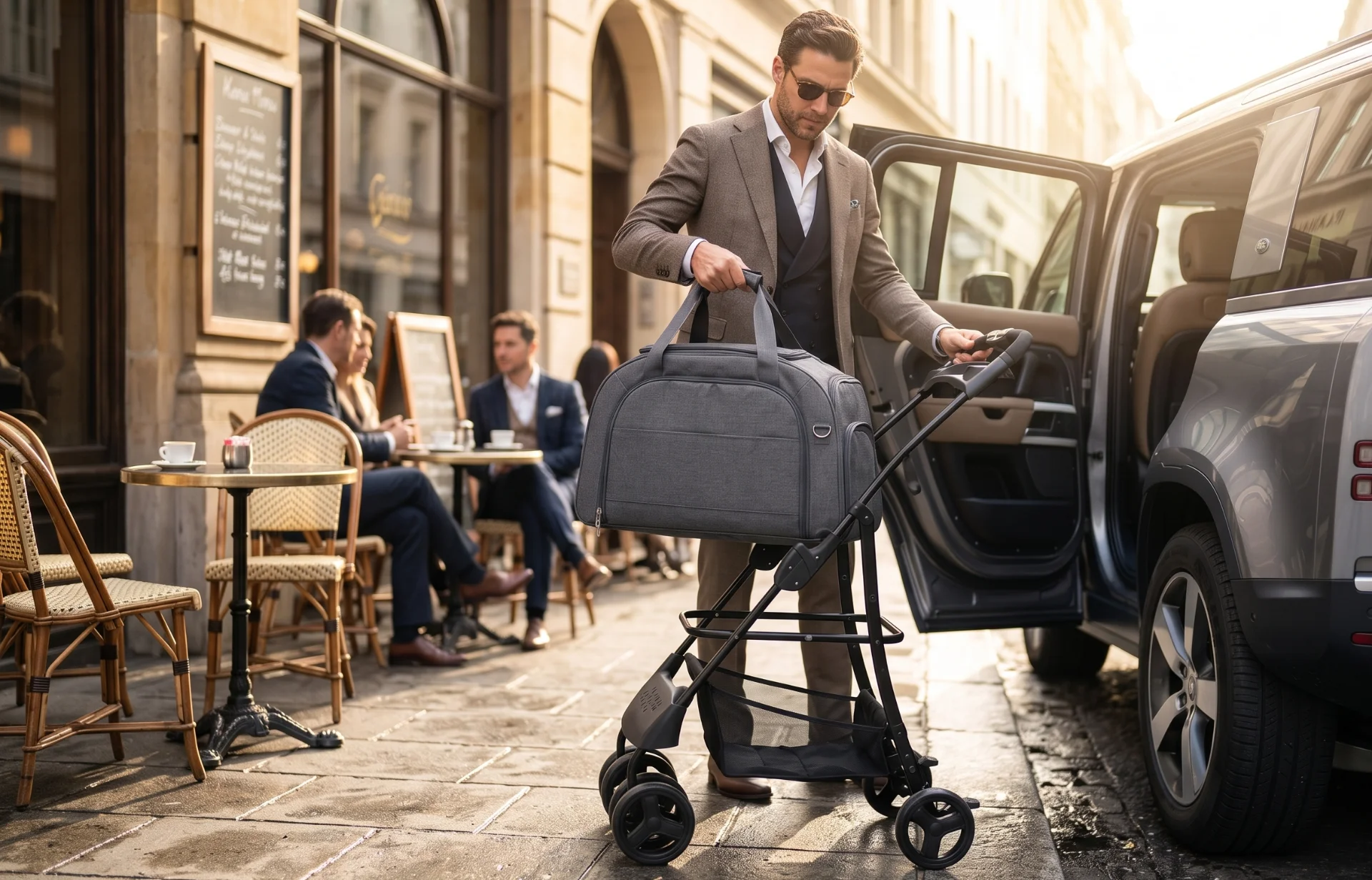
Can the Same Pet Carrier Work for Car and Stroller Travel?
Many buyers now want one carrier for several travel situations. They want to carry the cat by hand, secure the carrier in a vehicle, and connect it to a stroller. This sounds simple, but the engineering becomes more complex.
The same pet carrier can work for car and stroller travel if the size, structure, center of gravity, locking interfaces, and connection points are designed as one system. In this case, carrier size is not only about whether the cat fits inside.
A multi-use carrier has more constraints
A regular carrier can be designed around the cat and the human hand. A car-and-stroller carrier must also work with external systems. That changes the design brief.
The carrier must answer several questions:
- Does it fit the cat comfortably?
- Does it sit securely on a stroller frame?
- Does it connect correctly with a car base or belt system?
- Does the handle position support balanced lifting?
- Does the shell remain stable under normal use?
- Does the product remain practical for storage and shipping?
This is where pet travel carrier design moves beyond simple dimensions.
Why the connection interface matters
If a carrier connects to a stroller or car base, the interface must be repeatable and intuitive. A consumer should not need to guess whether the carrier is locked. Misuse prevention matters because many travel products fail in real life not because the idea is poor, but because the user experience is confusing.
Important interface features include:
| Feature | Buyer Evaluation Question |
|---|---|
| Locking sound or indicator | Can the user confirm attachment easily? |
| Release mechanism | Is it secure but not frustrating? |
| Tolerance control | Do parts fit consistently across production runs? |
| Load direction | Does the structure guide force into stronger areas? |
| Stability | Does the carrier wobble during normal movement? |
| Misuse resistance | Is incorrect installation obvious or difficult? |
These are manufacturing and quality-control questions, not just design questions.
Why size affects stability
A carrier that is too tall may raise the center of gravity on a stroller. A carrier that is too wide may interfere with frame geometry. A carrier that is too long may become hard to rotate, store, or secure in a car.
So the right cat carrier size for a modular travel system must balance:
- Interior pet comfort
- External system compatibility
- Vehicle-seat fit
- Stroller stability
- Carry ergonomics
- Shipping and retail packaging
- Production repeatability
This is why a modular product cannot simply take a best-selling carrier shape and add connectors. The structure needs to be planned from the start.
From cat carrier to pet travel system
In B2B development, this distinction matters. A basic cat carrier is often evaluated by appearance, material, price, and size. A pet travel system requires a broader evaluation:
- Carrier body design
- Base or vehicle interface
- Stroller connection
- Load-bearing parts
- Latch durability
- Tooling precision
- Quality inspection standards
- Documentation for buyers and end users
At Anvoya, this is the kind of thinking we bring from European child car seat and automotive safety product experience into pet travel. The value is not in claiming pet products follow the same legal framework as child restraints. They do not. The value is in using vehicle anchoring logic, structural load-path thinking, materials control, and production consistency to help brands develop more reliable pet travel products.
For a consumer, the question may start as “Will my cat fit?” For a brand or distributor, the better question is: “Will this carrier size work across the whole travel use case?”
That is a much stronger product development question.
FAQ
Is a bigger cat carrier always better?
No. A bigger cat carrier is not always better because too much space can make the cat slide during carrying or car travel. The carrier should be large enough for standing, turning, and lying down, but compact enough to feel stable and secure.
How do I measure my cat for a carrier?
Measure your cat from the nose to the base of the tail, then measure sitting height from the floor to the top of the head. Use these numbers to compare with the carrier’s internal dimensions. Weight should also match the product’s recommended load rating.
What is the best cat carrier size for car travel?
The best cat carrier size for car travel gives the cat enough room to adjust posture while keeping the carrier stable and easy to secure. Buyers should check the footprint, height, anchor method, and structural strength, not only the interior space.
Should a cat be able to stand up in a carrier?
Yes. A cat should be able to stand in a natural posture, although the carrier does not need to be tall enough for excessive stretching. The cat should also be able to turn around, sit, and lie down comfortably.
Can one carrier work for cats, car seats, and strollers?
One carrier can work across carry, car, and stroller use if it is designed as a system. The size must match the cat, but the structure, locking interfaces, base stability, and stroller connection also need proper engineering and quality control.
Conclusion
The best cat carrier size is not simply the largest option on the shelf. It is the size that lets the cat stand, turn, sit, and rest while keeping the carrier stable, portable, and suitable for the travel situation. Short home trips, long-distance car travel, and modular stroller systems all create different requirements. If your brand is developing a pet travel carrier or modular travel system, Anvoya can help evaluate size, structure, interfaces, and OEM/ODM development options with practical engineering discipline.
[^1]: "Travelling with your cat", https://icatcare.org/articles/travelling-with-your-cat. Veterinary travel guidance supports selecting a carrier according to the animal’s body size and ability to stand, turn, and rest, though the specific 1.5-times-length formula is best treated as a practical sizing heuristic rather than a certified standard. Evidence role: general_support; source type: institution. Supports: A neutral veterinary or animal-welfare source should support the idea that carrier size should be based on the cat’s measured body dimensions and allow basic posture changes.. Scope note: The source may support dimensional fit principles without directly validating the exact 1.5-times multiplier.
[^2]: "Feline stress management during air travel - PMC - NIH", https://pmc.ncbi.nlm.nih.gov/articles/PMC10812047/. Research and feline-welfare guidance describe transport as a common stressor for cats and note that enclosed, predictable spaces can reduce perceived threat; this supports the general rationale for avoiding carriers that allow excessive movement. Evidence role: mechanism; source type: research. Supports: A source should explain that cats often seek enclosed, predictable spaces and that transport-related movement can contribute to stress.. Scope note: The source is likely to support the behavioral mechanism rather than directly compare oversized and correctly sized carriers.
[^3]: "AAFP and ISFM Feline-Friendly Handling Guidelines - PMC", https://pmc.ncbi.nlm.nih.gov/articles/PMC11107994/. Feline-friendly handling guidance notes that carriers with top access or removable lids can facilitate examination and removal of reluctant cats, supporting the claim that top-loading designs may help with nervous cats. Evidence role: expert_consensus; source type: institution. Supports: A feline-friendly handling source should support the use of carriers with removable tops or top openings to reduce stressful handling..
[^4]: "Car Seat & Booster Seat Safety, Ratings, Guidelines", https://www.nhtsa.gov/equipment/car-seats-and-booster-seats. Government motor-vehicle safety rules establish mandatory performance requirements for child restraint systems, while no equivalent unified federal crash-test standard is specified for pet carriers or pet car seats. Evidence role: historical_context; source type: government. Supports: A government source should show that child restraint systems are regulated under mandatory motor-vehicle standards, while comparable mandatory pet-carrier crash-test rules are not listed.. Scope note: This supports the regulatory distinction in the relevant jurisdiction; requirements may vary by country and by product category.
[^5]: "Car Seat & Booster Seat Safety, Ratings, Guidelines - NHTSA", https://www.nhtsa.gov/vehicle-safety/car-seats-and-booster-seats. Motor-vehicle safety documentation distinguishes regulated certification requirements from individual test results, supporting the view that a crash test can inform engineering assessment without establishing absolute safety or equivalence to child-restraint certification. Evidence role: general_support; source type: government. Supports: A source should distinguish between engineering tests and legally defined certification requirements for regulated restraint systems.. Scope note: The source may address regulated vehicle restraints generally rather than pet carriers specifically.
[^6]: "Cornell Feline Health Center", https://www.vet.cornell.edu/departments-centers-and-institutes/cornell-feline-health-center. Veterinary travel guidance recommends planning for water, rest, and health needs during longer trips and consulting a veterinarian for animals with medical conditions or travel anxiety. Evidence role: expert_consensus; source type: institution. Supports: A veterinary source should support planning for hydration, breaks, and medical advice for cats during longer trips, especially when health or anxiety concerns exist..
[^7]: "Choosing and Caring for Your New Cat", https://www.vet.cornell.edu/departments-centers-and-institutes/cornell-feline-health-center/health-information/feline-health-topics/choosing-and-caring-your-new-cat. Veterinary education sources describe rapid kitten growth during early development, supporting the practical concern that a very small carrier may be outgrown within a short period. Evidence role: general_support; source type: education. Supports: A veterinary education source should support that kittens experience rapid growth during early months, affecting equipment fit..
[^8]: "The Special Needs of the Senior Cat", https://www.vet.cornell.edu/departments-centers-and-institutes/cornell-feline-health-center/health-information/feline-health-topics/special-needs-senior-cat. Studies of feline osteoarthritis report that degenerative joint disease is common in older cats and can affect mobility, providing a clinical basis for easier carrier access in senior animals. Evidence role: mechanism; source type: paper. Supports: A study or veterinary review should support that older cats commonly experience osteoarthritis or mobility impairment that can affect climbing and posture changes.. Scope note: The evidence supports age-related mobility constraints generally rather than testing specific carrier-door designs.