
Finding an under-seat pet carrier sounds simple until two airlines give you different dimensions—and your pet still needs enough usable room inside.
There is no universal under-seat pet carrier size that works for every airline, aircraft, and seat. The right carrier has to balance airline dimensional limits with your pet's actual fit, ventilation, structural support, and the conditions of the specific flight.
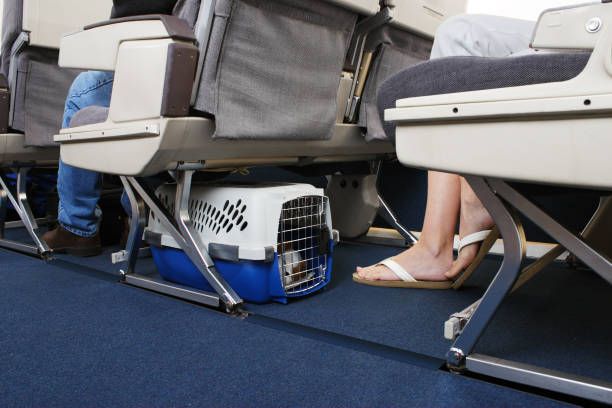
The phrase “airline approved” makes shopping look easier than it really is.
You see it on product pages all the time. A carrier might be 18 × 11 × 11 inches, soft-sided, lightweight, and marketed for cabin travel. That sounds reassuring.
Then you check the airline.
One airline lists a lower maximum height. Another changes its limits depending on the aircraft. A third recommends soft-sided carriers because under-seat space can vary by seat location.
American Airlines, for example, currently lists different limits for soft-sided carriers, hard-sided carriers on mainline aircraft, and hard-sided carriers on American Eagle flights. Delta says maximum kennel dimensions are determined by aircraft type and recommends an 18 × 11 × 11-inch soft carrier for many aircraft rather than treating that size as universal. Southwest currently allows other pet carriers up to 18 × 10.5 × 10 inches and specifically warns that under-seat space can vary by seat type. Alaska currently gives a different limit again for in-cabin soft carriers.
That tells us something important before we even talk about materials or pockets:
Under-seat carrier selection starts with the flight, not the product label.
And airline compliance is only half of the problem.
A carrier can fit beautifully under the seat and still be a poor choice if the pet cannot use the interior comfortably.
The smallest possible bag is not automatically the best airline carrier.
What Size Pet Carrier Fits Under an Airline Seat?
There is no single dimension that fits every airline seat. Under-seat pet carrier limits depend on the airline, aircraft, cabin, and sometimes the specific seat you select.
Start with the carrier dimensions published by your airline for the actual flight, then confirm that the pet can still fit comfortably inside. A common 18 × 11 × 11-inch soft carrier may work on many flights, but it is not a universal airline standard.
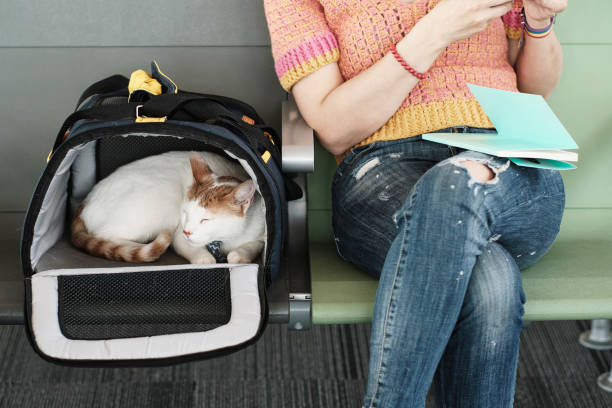
If you search for airline pet carriers online, one size appears again and again:
18 × 11 × 11 inches.
There is a reason.
It is close to the recommendation currently published by several major carriers for certain soft-sided cabin carriers, and it gives manufacturers a useful dimensional envelope for product development.
But there is a big difference between common and universal.
American currently lists 18 × 11 × 11 inches for recommended soft-sided carriers. Delta also recommends a soft-sided carrier with those dimensions because it fits many aircraft types, but Delta makes the more important point that maximum dimensions depend on the aircraft.
Southwest's current maximum for other carriers is 18 × 10.5 × 10 inches.
Already, the 11-inch-high carrier that seems perfectly normal elsewhere is one inch above Southwest's stated maximum height.
And Alaska's current published in-cabin soft-carrier limit is 17 × 11 × 9.5 inches.
So buying an 18 × 11 × 11-inch bag and assuming it will work everywhere is not a reliable travel strategy.
External Dimensions Are Only the First Check
For airline use, external dimensions matter because the carrier has to physically occupy a restricted space.
Length matters.
Width matters.
Height often becomes especially sensitive because the carrier sits beneath the seat structure.
But once you move inside the bag, another set of dimensions becomes important.
A carrier that measures 11 inches high outside may offer less usable height because of:
- padding
- reinforced piping
- frame components
- a thick bottom board
- curved side panels
- internal bedding
- a sagging upper panel
This becomes particularly important for small dogs and cats close to the upper end of the recommended size.
The specification drawing may say 11 inches.
The pet does not experience a drawing.
It experiences the space left after the carrier is constructed, loaded, and placed under the seat.
Slight Flexibility Is Different From Crushing the Carrier
Soft-sided carriers have an obvious advantage in a restricted environment: the upper section can often flex slightly.
American's current policy reflects this distinction. It recommends soft-sided collapsible kennels and allows some dimensional flexibility, but the carrier still has to fit under the seat without excessive collapse.
That qualification matters.
A soft carrier being able to give slightly around a seat frame is one thing.
Compressing the entire roof several inches until it rests on the pet is another.
The first is dimensional flexibility.
The second is a fit problem.
For product development, I would not treat “compressible” as an excuse to design beyond the target flight envelope. The structure still has to preserve useful interior space when the carrier is in its most restricted configuration.
How Do Pet Carrier Size Rules Differ Between Airlines?
Airlines use different carrier dimensions, aircraft restrictions, cabin rules, and pet-fit requirements. Some publish a recommended soft-carrier size, while others specify tighter maximum dimensions or require travelers to confirm the aircraft.
Never assume one airline's carrier size applies to another. Check the operating airline's current pet policy and aircraft restrictions for every trip, including connecting flights operated by another carrier.
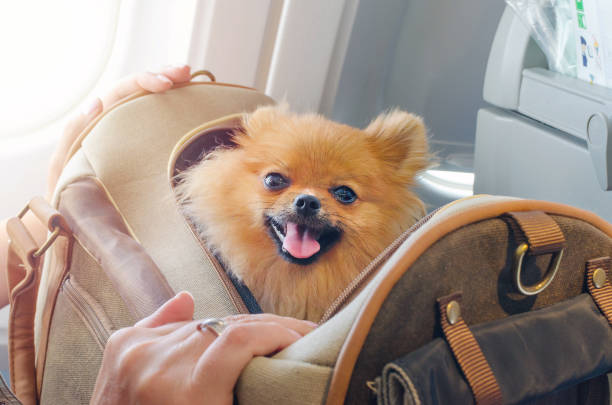
A comparison makes the problem much easier to see.
The following reflects published airline information checked in September 2026. Airline policies can change, so this table is a starting point for shopping—not a substitute for checking the flight again before departure.
| Airline | Current Published Cabin Carrier Guidance | Construction / Fit Notes |
|---|---|---|
| American Airlines | Soft: 18 × 11 × 11 in. Hard, Mainline: 19 × 13 × 9 in. Hard, American Eagle: 16 × 12 × 8 in. | Soft-sided recommended; pet must fit comfortably inside the closed carrier; aircraft and cabin restrictions apply |
| Delta Air Lines | Soft carrier around 18 × 11 × 11 in. recommended for many aircraft | Actual maximum depends on aircraft type; pet must fit comfortably and carrier must fit below the seat |
| Southwest Airlines | Other carriers: max. 18 × 10.5 × 10 in. | Soft-sided recommended; pet must remain completely inside and be able to stand and move around; seat location can affect available space |
| Alaska Airlines | Soft-sided carrier: max. 17 × 11 × 9.5 in. | Current in-cabin guidance uses a smaller dimensional envelope than several other U.S. carriers |
The differences are not enormous when you look at the numbers individually.
From a product-design perspective, however, half an inch or one inch can be significant.
Consider carrier height:
- 11 inches
- 10 inches
- 9.5 inches
That 1.5-inch range can change the entire upper structure of a soft carrier.
The product developer has to decide where that lost space goes.
Does the roof become permanently lower?
Does the side wall angle inward?
Can the structure compress locally?
Can part of the upper section fold?
Can the bag operate in two different configurations?
These are not merely airline-policy questions anymore.
They become design questions.
Aircraft Type Can Matter as Much as the Airline
Another mistake is checking only the logo on the ticket.
American explicitly publishes different hard-carrier dimensions for mainline and American Eagle services. It also identifies certain cabins and seat positions where pet carriers cannot be accommodated because suitable under-seat storage is unavailable.
Delta takes a similarly aircraft-dependent approach and tells travelers that maximum kennel dimensions vary according to aircraft type.
Southwest notes that usable under-seat space can vary with seat type and location, including more limited space in some aisle seats.
So a better purchasing question is:
Will this carrier work on my actual itinerary?
Not:
Does this carrier work on Airline X in general?
That distinction becomes even more important with connecting flights.
Your first leg might be operated on one aircraft and the second on another. A codeshare can introduce another operating carrier with its own rules.
Check the operating flight, not only the brand under which the ticket was sold.
“Airline Approved” Is a Marketing Phrase, Not a Universal Specification
There is no single industry size called airline approved that automatically clears every carrier for every cabin flight.
The phrase can still be useful when it means:
designed around common cabin pet-carrier requirements.
But consumers need to understand the limit of that statement.
If the product page says:
Airline Approved Pet Carrier
look for the next layer of information.
Which airlines?
Which external dimensions?
Soft or hard construction?
What pet size?
Does the manufacturer tell you to verify your airline?
A more credible product description gives the dimensions and intended travel scenario rather than letting the phrase “airline approved” do all the work.
Should You Choose a Soft-Sided or Hard-Sided Under-Seat Pet Carrier?
Neither construction is automatically better. Soft carriers offer useful dimensional flexibility and lower weight, while hard carriers provide stronger shape retention. The best choice depends on airline restrictions, pet fit, and how the carrier behaves in the limited under-seat space.
Soft-sided carriers are often more practical for under-seat travel because they can flex slightly around limited spaces. Hard-sided carriers retain their shape better, but their fixed dimensions leave less tolerance when under-seat clearance is tight.
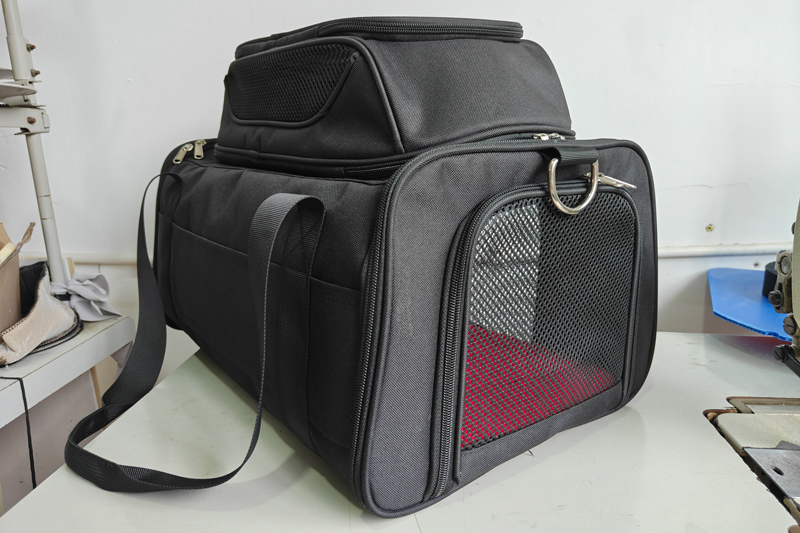
This comparison is often reduced to:
Soft is comfortable. Hard is protective.
That is too simple to be useful.
For airline travel, structure has to be understood together with dimensional restrictions.
Soft-Sided Carriers Work With the Space
A well-designed soft carrier has some controlled flexibility.
That word controlled is important.
The walls can flex enough to work within small dimensional differences without allowing the entire bag to lose shape.
This is particularly valuable around the upper portion of an under-seat carrier because seat structures do not always create a perfect rectangular box.
Soft construction also tends to reduce total carrier weight, which becomes noticeable when walking through a large airport.
But poor soft-goods construction creates another problem.
The roof sags.
The side panels bow inward.
The base bends.
The carrier technically has generous dimensions but provides surprisingly little useful room once the pet is inside.
So when comparing soft carriers, I would pay attention to shape retention, not just flexibility.
Those are different qualities.
Hard-Sided Carriers Hold Their Geometry
A rigid shell does something very well: it preserves its internal shape.
The side walls stay where they were designed to stay.
The roof does not sag onto the animal.
The floor generally has more defined structural support.
But that rigidity also means a 9.5-inch opening cannot accept a 10-inch-high hard carrier.
There is no useful flex.
This is one reason American publishes separate hard-sided limits, and why many airline policies and consumer recommendations lean toward soft-sided carriers for in-cabin under-seat travel.
That does not mean hard = wrong.
It means dimensional verification becomes even more important.
The Smallest Carrier Is Not Automatically Better
Now we arrive at the central product contradiction.
Airlines want the carrier small enough to fit under the seat.
The pet needs enough interior space to remain reasonably comfortable.
If we solve only the first problem, the easiest engineering answer is obvious:
make the carrier smaller.
Lower the roof.
Reduce the width.
Trim the length.
Eventually the bag fits almost anywhere.
Unfortunately, the pet has to fit too.
A very compact carrier may look ideal on an airline dimension chart while leaving insufficient usable space inside once the bottom pad, frame, seams, and soft-goods structure are included.
That is why airline carrier development is really an optimization problem.
External space is restricted. Internal space is valuable.
A good design wastes as little of that dimensional envelope as possible.
What Design Features Matter Most in an Under-Seat Pet Carrier?
The most useful features are the ones that preserve usable space and make restricted travel easier: effective ventilation, a stable base, secure closures, lightweight construction, practical openings, easy-clean materials, and structure that keeps its shape without becoming unnecessarily bulky.
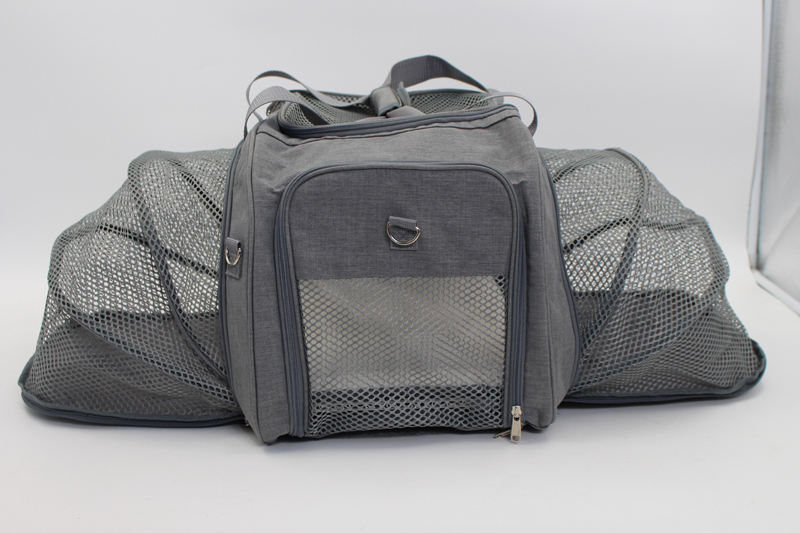
For airline travel, prioritize usable interior space, ventilation, secure closures, stable floor support, low weight, and controlled structural flexibility. Expandable designs can also help separate a compact flight configuration from a roomier everyday configuration.
Airline carriers are a good example of why feature count can be misleading.
A bag might have:
- six storage pockets
- a luggage sleeve
- a bottle holder
- two shoulder straps
- decorative piping
- three accessory loops
None of those features fix a poor interior shape.
For the pet, some much less glamorous decisions matter more.
Ventilation Has to Work Under the Seat
Mesh area looks great in product photographs.
Actual airflow depends on placement.
A mesh panel pressed close to a seat structure is less useful than the same panel completely exposed.
Another panel may sit beside a passenger's bag or against the carrier's own folded material.
That makes multi-side ventilation valuable.
It also means designers need to consider the carrier in its real flight configuration rather than evaluating ventilation while the product is sitting alone on a table.
A Stable Base Preserves Usable Space
The floor does more than support the pet's weight.
It helps define the carrier's geometry.
If the base bends deeply in the middle, the side walls can pull inward.
Suddenly, a carrier that looked wide enough becomes narrower around the pet.
A stable board or base panel can help preserve the intended interior shape without requiring a heavy hard shell.
There is still a balance here.
Too much material increases weight and thickness. Too little support compromises the space.
For a travel carrier that may spend hours being carried through airports, every layer has a cost.
Openings Need to Work in Tight Spaces
A huge top opening can be excellent at home.
It may become less useful when the carrier sits directly below an aircraft seat.
A front or side access point may be easier in some situations.
Multiple access options can be useful, but they also affect structure. Every large zipper opening removes support from a fabric panel, which may then require reinforcement.
Again, one decision changes another.
That is normal carrier development.
Closures Need to Stay Closed
Airports are not a forgiving environment for an unexpected escape.
Zipper pulls, locking clips, internal tether arrangements where appropriate, and the way two zipper sliders meet all deserve more attention than they usually receive in product photography.
The solution does not have to be complicated.
It has to be difficult for the pet to open accidentally while remaining practical for the owner.
Easy-Clean Materials Become More Important on a Flight
Travel days are long.
A nervous pet may urinate, vomit, spill water, or soil the bedding.
A removable bottom pad and cleanable interior can save an owner from dealing with a wet carrier through the rest of the journey.
Leak-resistant construction is also commonly included in airline requirements.
It is a basic feature, but basic features often matter most when something goes wrong.
Expandable Space Can Solve a More Interesting Problem
This is where under-seat carrier design can move beyond simply making a smaller bag.
The aircraft creates a temporary height restriction.
The pet does not live permanently underneath an airline seat.
So why should the entire product be designed as though that low-clearance environment exists all day?
An expandable upper section creates another possibility.
Think of it as two configurations:
Flight Mode → controlled height + compact external profile
Everyday Mode → increased headroom + greater usable interior volume
In flight configuration, the upper section remains folded, zipped, or otherwise controlled around the target dimensional envelope.
Once the pet leaves the restricted under-seat environment—and where circumstances permit—the structure can expand and restore more vertical space.
That does not mean the carrier can be expanded during the flight.
Airline rules still apply, and the carrier generally has to remain properly stowed beneath the seat when required.
The design value appears before and after that restricted phase.
Airport waiting conditions, ground transportation, hotel use, everyday carrying, and general travel do not necessarily impose the same 9.5- or 10-inch height restriction.
Now the carrier can serve both contexts more intelligently.
To maximize space without violating airline cabin limits, many frequent flyers upgrade to an [expandable pet carrier to provide extra resting room during layovers] and hotel stays.
Expandability Is Not an Excuse to Ignore Structure
There is an engineering challenge here.
Add a flexible expansion zone and the upper structure can become unstable.
Add too much reinforcement and the folded configuration becomes bulky.
The zipper path takes space.
Mesh panels change tension when the section expands.
The corners need to fold consistently.
The carrier still has to meet its target dimensions when closed.
This is where expandable carrier design becomes more than sewing an extra piece of mesh onto the roof.
The soft-goods pattern, reinforcement locations, folding direction, frame support, and zipper geometry all influence whether the concept works cleanly.
From a pet-carrier development perspective, that is the interesting part.
The goal is not:
How can we make the biggest expandable bag?
It is:
How can we preserve more useful space across two very different environments without losing control of the external dimensions?
How Do You Choose the Right Under-Seat Carrier for Your Pet and Flight?
Start with the flight, then work inward. Verify airline and aircraft restrictions, measure the pet, establish the allowable external carrier dimensions, compare construction types, and confirm that enough usable interior space remains.
Choose an under-seat carrier by matching four things: airline requirements, the specific flight and seat, your pet's measurements, and the carrier's real internal structure. Verify the airline policy again shortly before departure because rules and aircraft assignments can change.
It helps to make the buying process sequential.
Otherwise people start with a product they like and spend the rest of the process trying to make the flight fit the carrier.
Reverse that.
1. Check the Airline First
Find the airline's current pets in cabin policy.
Look for:
- carrier dimensions
- soft or hard restrictions
- pet-size requirements
- cabin restrictions
- seat restrictions
- pet reservation requirements
- number of pets permitted
- route or destination restrictions
Do this before buying the carrier.
2. Check the Aircraft and Seat
This step is easy to skip.
If the airline says dimensions vary by aircraft, find out what operates your route.
Look at connecting flights individually.
Also check whether your chosen seat has ordinary under-seat storage. Bulkhead, premium-cabin, exit-row, or other seat configurations may have different restrictions.
If anything remains unclear, confirm it with the airline.
3. Measure the Pet
Do not select a carrier from weight alone.
Two 7 kg pets can have very different body lengths and standing heights.
Look at:
- body length
- standing height
- body width
- natural lying position
- ability to turn and reposition
Then compare these measurements with the usable internal space, not just the external product size.
4. Establish Your Dimensional Envelope
Now you know two things:
what the airline can accommodate and what the pet requires.
The overlap between those two is your realistic product range.
Sometimes there is plenty of overlap.
Sometimes there isn't.
If the pet cannot fit reasonably inside a carrier that meets the airline's cabin restrictions, a smaller bag is not a clever solution.
The travel arrangement itself may need to change.
5. Compare the Construction
Now soft, hard, and expandable designs make sense as choices.
A soft carrier may give you:
- lower weight
- slight dimensional flexibility
- easier storage
- more adaptable soft-goods architecture
A hard carrier may give you:
- stronger shape retention
- rigid side protection
- more predictable internal geometry
An expandable carrier may offer:
- controlled dimensions in flight configuration
- more usable space outside the restricted environment
- greater versatility for multi-stage travel
None is automatically best.
The structure has to match both the pet and the trip.
6. Look at the Boring Features
This is where many purchases are won or lost.
Check:
- ventilation from multiple sides
- base stiffness
- interior padding
- zipper security
- access points
- empty carrier weight
- carrying handles
- shoulder strap comfort
- leak-resistant construction
- cleaning access
- storage placement
A feature becomes valuable when it solves something that actually happens during travel.
7. Verify Again Before Departure
Airline rules change.
Aircraft assignments change.
Seat assignments change.
Your outbound and return flight may even use different aircraft.
Checking once when you buy the carrier is not enough for a trip months later.
Go back to the airline's official policy before departure and make sure the plan still works.
That final check takes a few minutes.
It can save a much bigger problem at the airport.
For Pet Carrier Brands, the Same Logic Works in Reverse
Consumers begin with the airline and search for a carrier that fits.
A product-development team has to work backward from several possible airline environments and decide which ones it wants the product to target.
That creates a defined external dimensional envelope.
Inside that envelope, every millimeter becomes valuable.
How much is lost to the base?
How much does the frame consume?
Can the roof flex without collapsing?
Where can ventilation sit without weakening the structure?
Can an upper section expand after the flight?
How light can the bag become without losing support?
This is the kind of problem where soft-goods development becomes much more than choosing fabric and color.
For Anvoya, airline-travel carrier development fits naturally into our broader pet-travel work because the design problem is fundamentally about space, structure, portability, and changing travel environments.
No single carrier will fit every airline and every aircraft.
That is not the design objective.
A stronger objective is to define the travel scenarios clearly, engineer around those constraints, and tell the customer exactly what the product was designed to do.
Conclusion
The best under-seat pet carrier balances airline dimensions with real pet space. Check the airline and aircraft first, then judge fit, structure, ventilation, portability, and how the carrier works beyond the flight.
FAQ
Is 18 × 11 × 11 Inches an Airline-Approved Pet Carrier Size?
It is a common soft-carrier size and is currently recommended by airlines such as American and Delta for many flights, but it is not universally accepted. Southwest and Alaska currently publish lower height limits, and aircraft-specific restrictions may apply.
What Size Pet Carrier Fits Under Most Airline Seats?
There is no single guaranteed size. Soft-sided carriers around 18 × 11 × 11 inches are common, but several airlines publish smaller limits. Always check the operating airline and aircraft before buying or flying.
Can an Airline Reject a Carrier That Says “Airline Approved”?
Yes. The marketing label does not override an airline's pet policy. The carrier still has to meet the airline's dimensional, construction, pet-fit, route, aircraft, and seat requirements.
Are Soft Pet Carriers Better for Flying?
Soft carriers are often easier to use under aircraft seats because they can flex slightly and usually weigh less. Their structure still needs to preserve enough usable space for the pet rather than collapsing heavily under the seat.
Can a Soft Pet Carrier Be Slightly Taller Than the Published Limit?
Do not assume it can. Some airlines provide limited flexibility for collapsible soft carriers, while others publish maximum dimensions. Any flexibility depends on the airline, aircraft, carrier construction, and actual under-seat space.
Can I Squash a Soft Carrier to Make It Fit Under the Seat?
Minor controlled flexibility is different from substantial compression. If fitting the carrier forces the roof or walls heavily into the pet's space, the carrier is not functioning well in that configuration.
Is a Hard-Sided Carrier Allowed Under an Airline Seat?
Some airlines permit hard-sided in-cabin carriers, but their size limits may differ from soft carriers. Because hard carriers cannot flex around restricted spaces, verifying the exact aircraft dimensions becomes particularly important.
Is an Expandable Pet Carrier Good for Air Travel?
It can be useful when the compact configuration is designed around the target airline's dimensional limits and the expanded configuration provides more room outside the restricted under-seat environment. Expansion does not override airline rules and may not be permitted while the carrier is stowed onboard.
Does My Pet Carrier Have to Stay Under the Seat for the Whole Flight?
Major U.S. airlines generally require in-cabin pets to remain inside their carriers and the carrier to remain properly stowed during flight. Exact rules vary, so check the current policy of the airline operating your flight.
What Should I Check Before Buying an Under-Seat Pet Carrier?
Check the airline, aircraft and seat restrictions first. Then measure your pet, compare the allowable external carrier dimensions, examine real internal space, and evaluate ventilation, base support, closures, carrier weight, access, and overall structure.