
What Is the Best Pet Carrier for Small Dogs?
Small dogs are easy to carry, but that does not mean every small carrier works well. A carrier can be too loose, too heavy, or simply wrong for the way the dog travels.
The best pet carrier for a small dog matches the dog's body size, weight, movement, and travel habits. The carrier needs enough room to move naturally without becoming so large that the dog loses stability.
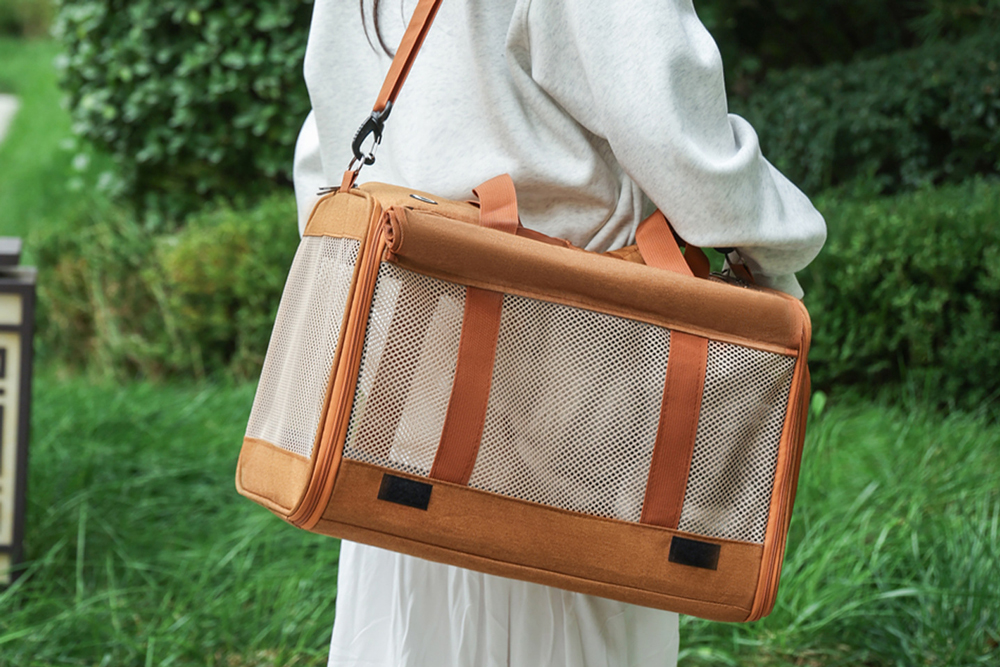
When I think about small-dog carriers, I rarely start with the breed.
A Chihuahua, Pomeranian, French Bulldog, and Dachshund may all fall into the “small dog” category, but their bodies are not shaped the same way. Their weight can be very different too. One dog may sit quietly in a carrier. Another may keep turning around and looking for a better position.
So “small dog” is only a starting point.
The carrier needs to match the actual dog and the actual trip.
That becomes even more important because small dogs often travel in more ways than large dogs do. They are easier to carry onto public transport. They are more likely to be used with a stroller. Some owners take them into shops, hotels, cafes, or airplanes. Car travel can also be part of the same journey.
This means the carrier may need to do several jobs without becoming bulky.
That is why I think the better question is not simply, “Which small dog carrier is best?”
It is, “What kind of carrier makes sense for this dog and the way the owner travels?”
What Makes a Good Carrier for a Small Dog?
A good small-dog carrier gives the dog enough usable space to change position while keeping the overall product easy to carry, stable, and practical for the owner.
For a small dog, I would look at internal fit, carrier weight, structural support, ventilation, opening design, and stability before getting too interested in extra features.
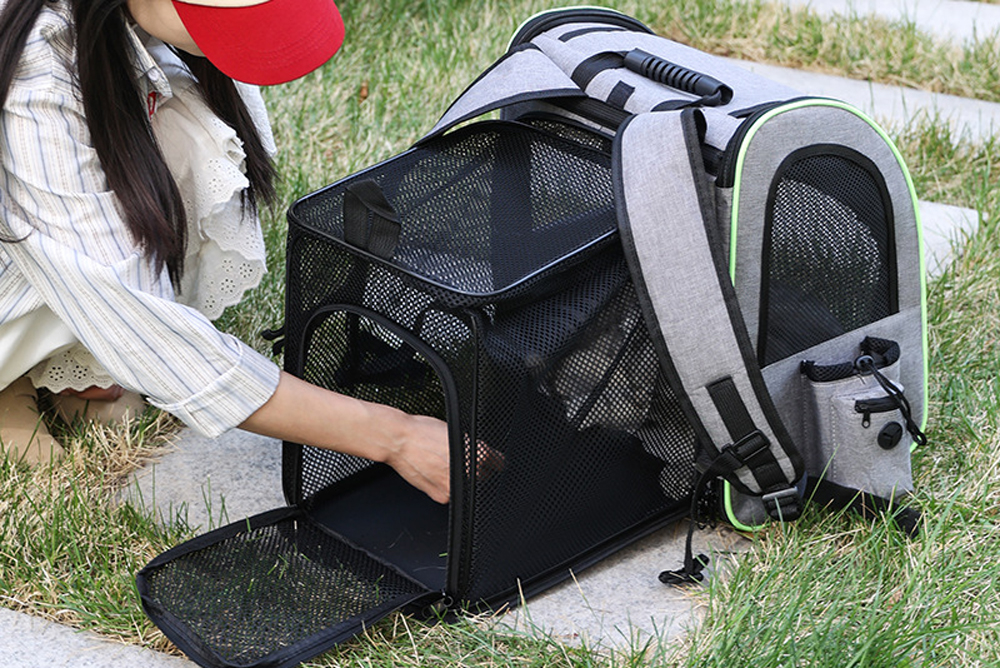
The interesting thing about small dogs is that their carrier can become part of the owner's normal daily routine.
A large dog may only use a carrier for a specific purpose. With a small dog, the carrier can go almost anywhere.
That changes what “good” means.
A carrier that is acceptable for a twenty-minute trip to the vet may become frustrating when someone carries it for an hour. A design that feels roomy at home may become difficult when the owner has to lift it into a car or onto a stroller.
How Much Internal Support Does a Small Dog Need?
More space is not always better.
A small dog needs enough room to stand, turn, sit, and settle into a natural position. At the same time, a very large interior can leave the dog moving around more than necessary when the carrier is being carried or transported.
This is especially noticeable when the carrier itself is moving.
The dog moves.
The carrier moves.
The owner moves.
Those three things are connected.
A well-fitted carrier gives the dog some freedom without making the whole interior feel like an empty box.
Does Carrier Weight Matter More With Small Dogs?
It can.
A small dog often gets carried by the owner rather than walking the entire route. That means the weight of the carrier becomes a much bigger part of the experience.
Imagine a four-kilogram dog inside a three-kilogram carrier.
The owner is carrying seven kilograms before adding anything else.
Add a water bottle, a blanket, treats, or other supplies, and the total keeps growing.
This is why I think carrier weight deserves more attention in the small-dog category.
A carrier does not need to be extremely light at the expense of structure. The better balance depends on the use case.
What About Openings and Ventilation?
Small dogs can be nervous in unfamiliar places, so visibility and access can matter.
A front opening may work well for some situations. A top opening may be easier when lifting a small dog into the carrier. A wider access area can also make the owner feel more in control during a visit to the vet.
Ventilation is another basic requirement, but more openings do not automatically create a better carrier.
The openings need to work with the carrier structure, the dog's position, and the way the owner handles the product.
| Feature | What I Would Look For |
|---|---|
| Internal fit | Enough space without excessive empty room |
| Weight | Easy enough for frequent carrying |
| Structure | Appropriate support for the intended use |
| Openings | Easy access without awkward handling |
| Ventilation | Good airflow within the overall design |
| Stability | Predictable movement while carrying or traveling |
The best small-dog carrier is often the one that feels simple to use.
There is no need for every part to be a feature.
How Is a Small Dog Carrier Different From a Large Dog Carrier?
The biggest difference is not simply the size of the carrier. Small dogs are often carried more frequently and used across more travel situations, while larger dogs place greater demands on space, weight, and overall load-bearing capacity.
Small-dog carriers usually place more emphasis on portability, internal fit, weight, and multi-scenario use. Larger dog carriers tend to focus more heavily on available space, structural capacity, accessibility, and overall practicality.
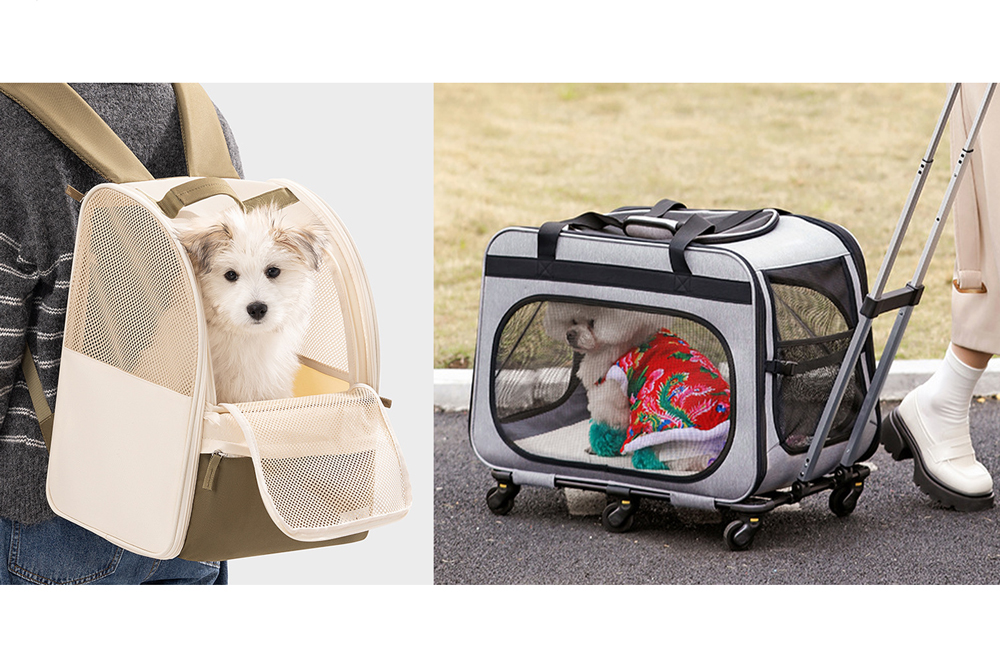
This is where the simple “small carrier versus large carrier” comparison falls short.
The difference is not only about adding twenty centimeters to the length.
The whole product can change.
A small carrier may be picked up with one hand. A large carrier may need two people or a completely different handling method. A small dog can be carried at chest height. A large dog may spend more time walking instead.
The travel behavior changes with the dog.
Why Does Portability Matter More for Small Dogs?
Because the carrier itself often becomes the transport method.
The owner may carry the dog through an airport, into a train station, through a hotel lobby, or from the car to a building.
That means handles, straps, weight distribution, and balance all become important.
A carrier that looks light on a specification sheet can still feel uncomfortable if the weight sits too far away from the owner's body.
The shape matters too.
A narrow carrier can feel easier to manage in crowded places. A wider one may give the dog more usable space but take up more room around the owner's body.
There is always a trade-off.
What Changes With a Large Dog?
A large dog places more physical demand on almost everything.
The carrier needs more internal space.
The structure needs to handle a larger load.
The opening becomes more important because the owner needs to get a bigger dog in and out.
The overall dimensions also become harder to manage in a car, home, or storage area.
At a certain point, carrying the dog inside a carrier stops being practical.
That can shift the product category toward travel crates, wheeled carriers, vehicle systems, or other mobility solutions.
Is Breed a Useful Way to Choose the Carrier?
It is useful as a reference.
It is not enough on its own.
Two dogs of the same breed can have noticeably different body shapes. One may have a long back. Another may have a deeper chest. A heavier dog may need a different structure from a lighter dog of similar height.
I would rather start with the dog's actual measurements and behavior.
| Factor | Small Dog | Larger Dog |
|---|---|---|
| Handling | Often carried directly | More likely to walk or use larger mobility products |
| Carrier weight | A major part of the total load | Still important, but structure often becomes the bigger issue |
| Internal fit | Easy to make too large | Harder to provide enough space |
| Structural demand | Moderate, depending on use | Usually much higher |
| Travel modes | Often highly varied | More dependent on vehicle or specialized mobility |
| Opening | Convenience is important | Accessibility becomes increasingly important |
So there is no universal “small dog design.”
There is a design that matches a particular dog's size, structure, behavior, and travel pattern.
Should Small Dogs Use Soft or Hard-Sided Carriers?
Small dogs can use either soft or hard-sided carriers. The more useful choice depends on where the carrier will be used and what the owner needs it to do.
Soft carriers can work well for frequent carrying and everyday travel, while hard-sided carriers can offer more defined structure. A hybrid design can combine both approaches when the product needs several functions.
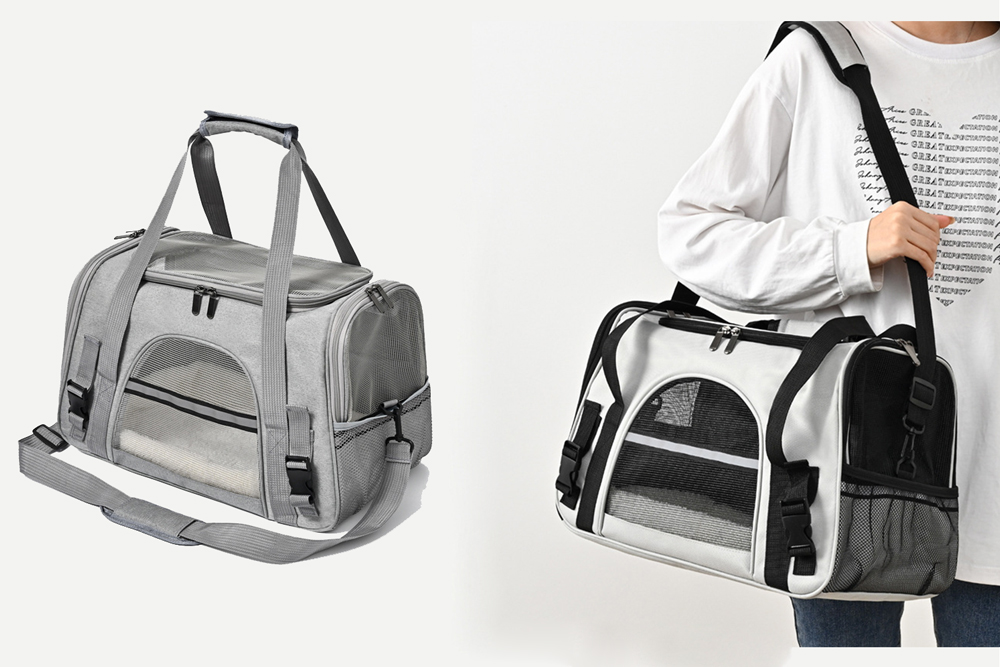
I would be careful with simple rules here.
“Small dog equals soft carrier” sounds logical because soft bags are lightweight.
“Travel equals hard carrier” also sounds logical because rigid products look more substantial.
Neither rule works all the time.
The right construction depends on what the carrier is expected to do.
When Does a Soft Carrier Make Sense?
A soft carrier is attractive when the owner carries the dog often.
The product can be lighter and easier to handle. It can also feel less bulky when stored at home or taken into a crowded space.
Soft materials can work particularly well for everyday travel where flexibility matters more than a rigid structure.
But the structure still matters.
A very soft carrier can collapse or change shape depending on how it is handled. That may not be a problem in one situation, but it can become inconvenient when the carrier needs to stay open, support a specific opening, or connect to another product.
When Does a Hard Carrier Make More Sense?
A rigid carrier gives a much more controlled shape.
That can be useful when the product needs to maintain a fixed interior or work with a vehicle interface. It can also make certain hardware integrations easier.
The trade-off is obvious.
More structure usually means more material and potentially more weight.
For a small dog, that extra weight can be felt immediately because the owner is likely to carry both the dog and the carrier.
What About a Hybrid Construction?
This is often where things get interesting.
A carrier does not have to choose one material for every part.
A rigid bottom can provide a stable base. A structured frame can support the opening. Softer panels can keep the carrier lighter and easier to handle.
That gives the product more flexibility.
| Construction | Useful When | Main Trade-Off |
|---|---|---|
| Soft | Frequent carrying and everyday use | Structural support can be harder to control |
| Hard | Defined shape and stronger structure | More weight and bulk |
| Hybrid | Different parts have different jobs | More complex product development |
So I would not choose the material first.
I would choose the use case first.
Then the construction can follow.
That approach also leaves more room for a carrier to evolve into a travel product instead of remaining just a soft bag.
What Size Carrier Does a Small Dog Actually Need?
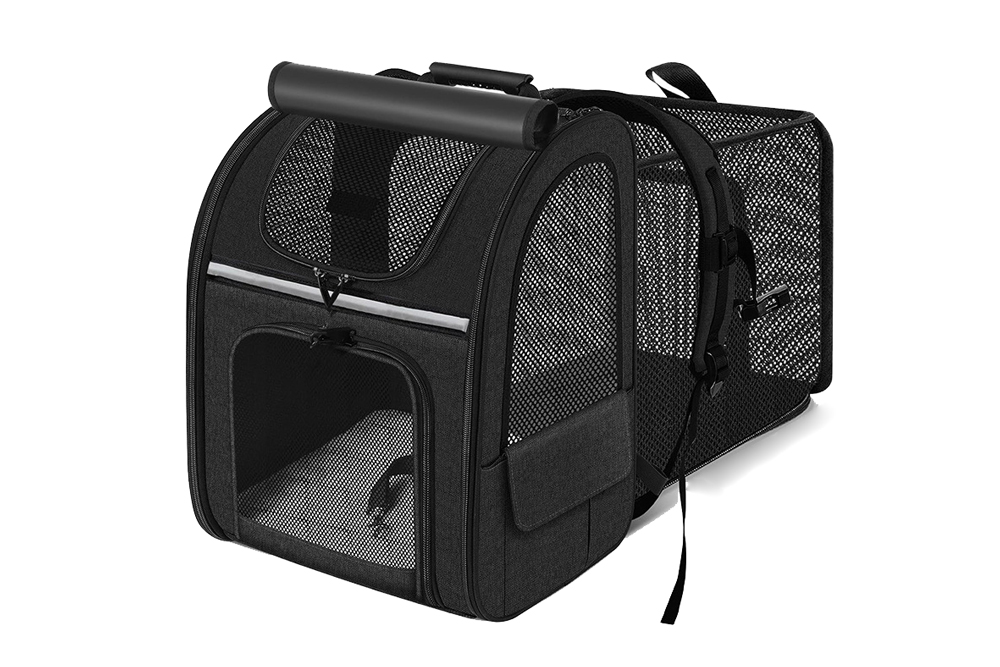
A small dog needs enough room to stand, turn, sit, and settle naturally, but the carrier does not need to be much larger than necessary.
The right carrier size is based on the dog's actual body dimensions and natural movement, with enough usable space for comfort without creating excessive empty space that can make travel less stable or the carrier harder to handle.
This is probably the part where people want one simple number.
Unfortunately, there is no single number that works for every small dog.
A five-kilogram Dachshund and a five-kilogram French Bulldog can have completely different proportions.
One has a longer body.
The other has a deeper chest and a different overall shape.
That is why I would not size a carrier from weight alone.
Start With the Dog, Not the Carrier
Measure the actual dog.
The dog's body length, standing height, and overall width give a much better starting point than the product label saying “small.”
The dog also needs to be able to change position naturally.
A carrier that is just large enough to contain the dog may look efficient on paper but feel restrictive in everyday use.
At the same time, a huge carrier is not automatically more comfortable.
The dog may move around too much. The carrier may become harder to carry. It may take up unnecessary room in the car.
Rather than relying solely on generic weight labels, owners should learn [how to calculate the true usable interior room a pet needs in a carrier] based on their body length and posture.
How Much Extra Space Is Useful?
There needs to be some room around the dog.
The exact amount depends on the dog's body shape, posture, and travel scenario.
For example, a carrier used mainly for short trips may have different requirements from one used for several hours.
An owner may also want room for a small blanket or pad.
The point is not to create an empty room around the dog.
The point is to create usable space.
That is a subtle difference.
Does Interior Shape Matter?
Very much.
Two carriers can have the same external dimensions and provide very different internal space.
Thick walls reduce the usable interior.
Rounded corners change how the dog can position itself.
A large frame can take up valuable room.
This is one reason product designers need to look at internal dimensions, not only external dimensions.
| Measurement | Why It Matters |
|---|---|
| Body length | Gives a starting point for usable interior length |
| Standing height | Helps determine vertical clearance |
| Body width | Helps prevent unnecessary compression |
| Door opening | Affects how easily the dog enters and exits |
| Internal shape | Determines how much of the stated space is actually usable |
There is another reason to avoid making the carrier unnecessarily large.
The carrier is also an object that someone has to handle.
It has to go through doors.
It may need to fit beside a passenger.
It may sit in a car.
It may need to connect to a stroller.
Every extra centimeter can create another problem somewhere else.
This is why carrier sizing is not simply a comfort question.
It is a product architecture question.
What Should You Consider When Choosing a Carrier for Travel?
The right carrier depends on the whole trip rather than one isolated feature. A carrier for a quick vet visit has different priorities from a product used for road trips, flights, daily walking, and stroller travel.
Before choosing a travel carrier, consider the dog's size and behavior, the expected trip length, carrying method, vehicle use, storage needs, and whether the carrier needs to connect with other travel products.
This is where the word “travel” becomes too broad.
Travel can mean a twenty-minute drive.
It can mean a full day away from home.
It can mean flying.
It can mean taking the dog around a city.
Those are very different jobs.
A carrier that is excellent for one may be frustrating for another.
What Kind of Travel Will the Carrier Handle?
Start there.
For short everyday trips, weight and easy access may matter most.
For long car journeys, internal comfort and vehicle integration become more important.
For stroller use, the carrier needs to work with the frame.
For air travel, airline-specific requirements can become the main constraint.
Trying to make one product perfect for every situation can lead to a carrier that is only average at everything.
Sometimes a focused product is the better choice.
What About Car Travel?
This deserves more attention than it usually gets.
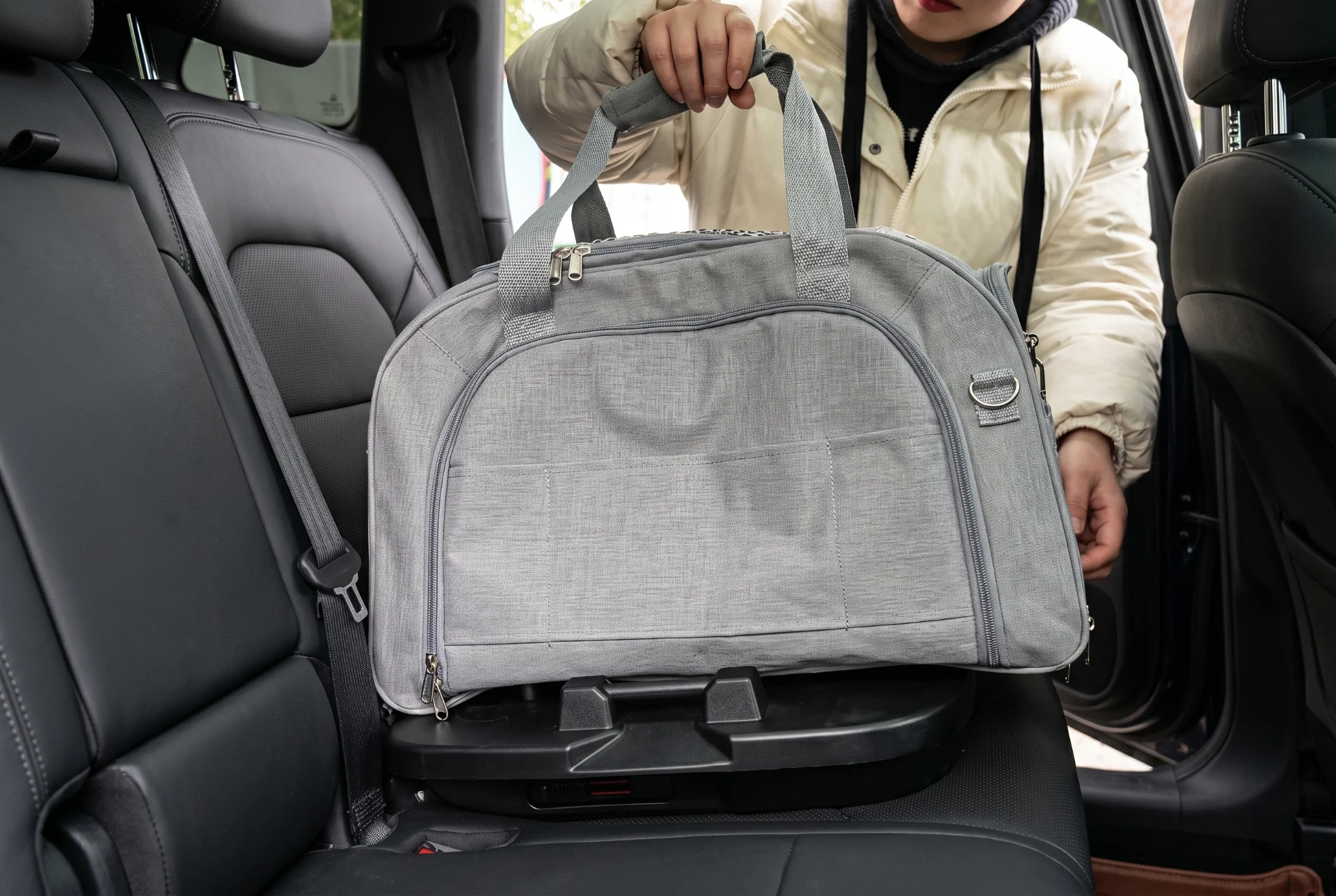
Small dogs are often taken everywhere by car. The carrier may be placed on the rear seat or used as part of a dedicated pet travel setup.
Once the vehicle becomes part of the journey, the carrier needs to work with the method used to position and restrain it.
That can affect the carrier's structure.
A soft bag designed only for hand carrying may not be the best starting point for a vehicle-oriented product.
A carrier developed around a vehicle interface can create a very different experience.
The important point is that the carrier and the vehicle connection need to be considered together.
Could the Carrier Work With a Stroller?
For small dogs, this can be especially useful.
A dog may travel by car for twenty minutes and then spend another thirty minutes walking around a city.
The owner does not necessarily want to move the dog into a different product after parking.
A detachable carrier can solve part of that problem.
The carrier becomes the common piece.
The stroller becomes a mobility platform.
The vehicle can become another part of the same system.
That leads to a product concept I find increasingly relevant:
Not every small dog needs this.
But for brands developing premium travel products, it is worth considering.
What Does This Mean for Product Development?
It changes the starting point.
Instead of asking, “What should our next small dog carrier look like?”
A better development question is:
“How many parts of the customer's journey can this carrier realistically support?”
That question can uncover opportunities that a standard feature list misses.
| Travel Scenario | Product Priority |
|---|---|
| Short everyday carrying | Low weight and easy handling |
| Vet visits | Easy access and portability |
| Car travel | Vehicle interface and stable positioning |
| City travel | Portability and mobility |
| Stroller use | Reliable carrier-to-frame connection |
| Longer journeys | Interior comfort and practical storage |
This is also where small-dog products start to become interesting for brands.
A small carrier is no longer just a smaller version of a large one.
The usage pattern can be completely different.
What Makes a Small Dog Carrier a Better Product for Brands?
For a pet brand, the opportunity is not simply to make the carrier smaller. It is to design around the way small dogs are actually transported and to build a product with a clear reason to exist.
A stronger small-dog carrier combines an appropriate internal fit with low-weight handling, useful structure, and travel compatibility. A modular design can take the product further by connecting carrying, car travel, and stroller mobility.
This is where the consumer question turns into a product question.
The market already has plenty of small bags.
Some are soft.
Some are structured.
Some have backpacks.
Some have wheels.
Some attach to strollers.
Adding one more version is not automatically a good business opportunity.
The product needs a clearer reason to exist.
Is the Opportunity in the Product Architecture?
Often, yes.
A carrier can be designed as one product that supports several travel modes.
The carrier itself handles daily movement.
A vehicle interface adds car functionality.
A stroller frame adds mobility.
The system does not need to become complicated.
The important thing is that the interfaces are planned from the start.
This is very different from taking an existing bag and trying to attach a stroller bracket six months later.
What Does That Change in Manufacturing?
Quite a lot.
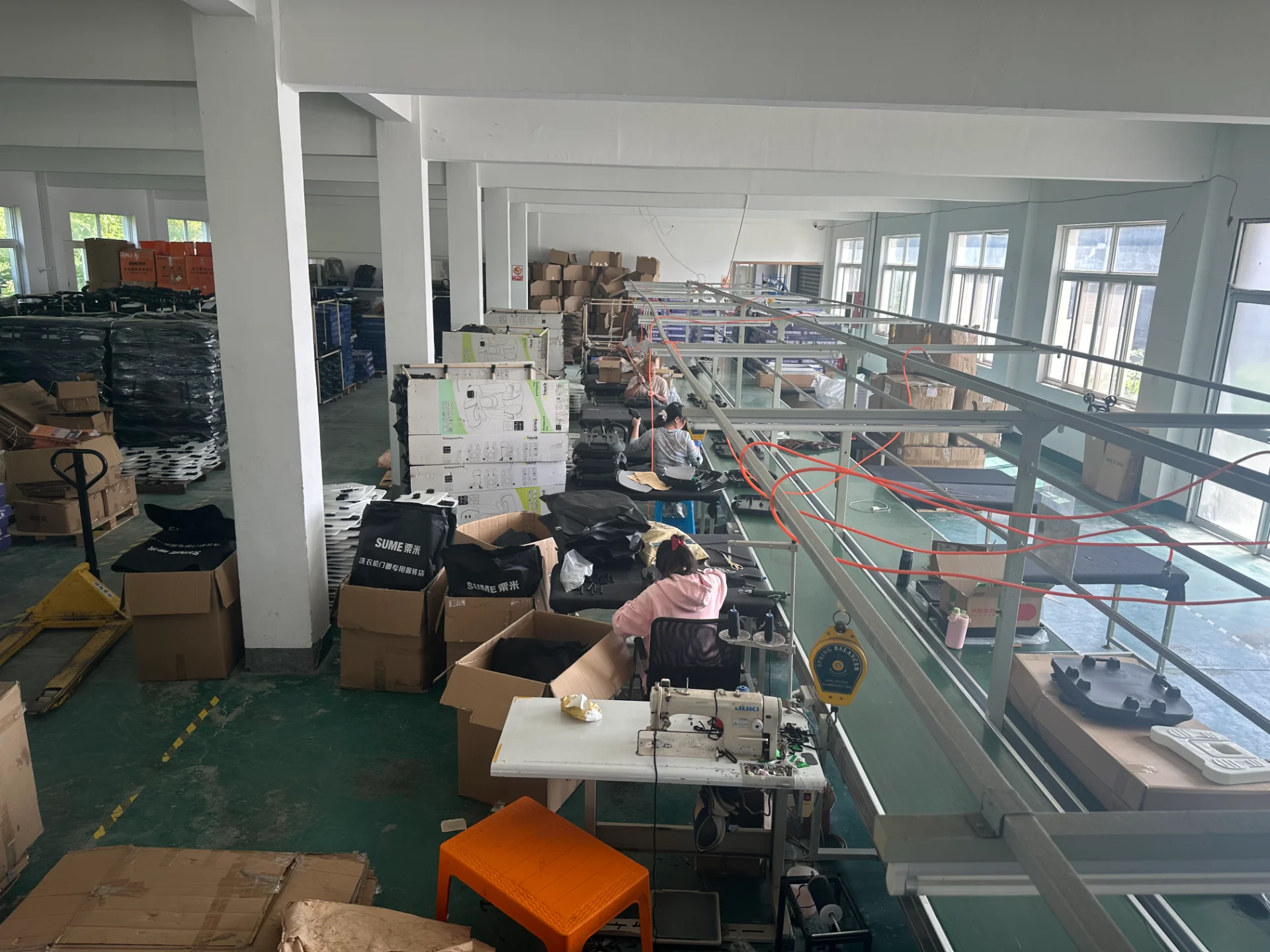
Once hardware and structural components become part of the carrier, the project may involve more than fabric development.
There may be injection-molded parts.
There may be metal hardware.
There may be reinforcement.
There may be tooling for rigid components.
Soft goods and rigid components also need to fit together consistently.
That is where DFM becomes important.
A prototype can look perfect.
The factory then discovers that a part is difficult to assemble, the tolerance is too tight, or the connection takes too many steps.
A product that is intended for larger production volumes needs a manufacturing plan from the early stages.
Could an Existing Small-Dog Carrier Be Upgraded?
Sometimes.
A brand may already have a carrier with good customer acceptance.
The first question does not have to be “replace everything.”
It can be:
What part of the product already works?
Where is the missing functionality?
Can the base be redesigned?
Can a rigid interface be added?
Can the carrier connect to a stroller?
Can the existing soft-goods design remain?
Depending on the original structure and tooling, the answers can be quite different.
At Anvoya, this is where our OEM/ODM product development work becomes useful. We can look at soft goods, structural parts, hardware, tooling, prototyping, and manufacturing as one development problem rather than treating each part separately.
That matters because the biggest change is often underneath the carrier.
The visual appearance may stay almost the same.
The internal structure can change completely.
Where Does Small-Dog Product Design Go Next?
I think the strongest direction is not simply smaller carriers with more features.
It is better integration.
A small-dog carrier can start as a traditional carrying product.
Then it can become vehicle-ready.
Then it can connect with a stroller.
The same carrier can travel through several parts of the owner's day.
That gives the brand a different product story.
It also gives the product a clearer reason to command a higher price than a basic soft carrier.
| Traditional Approach | More Advanced Approach |
|---|---|
| Smaller version of a general carrier | Designed around small-dog travel behavior |
| Focus on appearance and materials | Focus on fit, structure, and use scenario |
| One main travel mode | Multiple connected travel modes |
| Accessories added later | Interfaces considered early |
| Single SKU | Potential modular product family |
I would still keep the product focused.
Not every carrier needs a vehicle base.
Not every carrier needs a stroller.
Not every small dog needs a multifunction travel system.
The useful part is understanding the path.
Size × Structure × Use Scenario
Those three variables tell us much more than the phrase “small dog carrier.”
A small dog with a compact body, frequent car travel, and regular stroller use may need a very different product from a slightly larger small dog that only visits the vet twice a year.
That is the real product development opportunity.
The category is moving from “a bag that carries a small dog” toward products that support how people actually travel with them.
For pet brands, that shift can create room for more useful products, more differentiated product lines, and more thoughtful OEM/ODM development.
Conclusion
The best small-dog carrier matches the dog's body, size, and travel habits, while balancing internal fit, structure, portability, and the way the carrier will be used across different travel situations.