
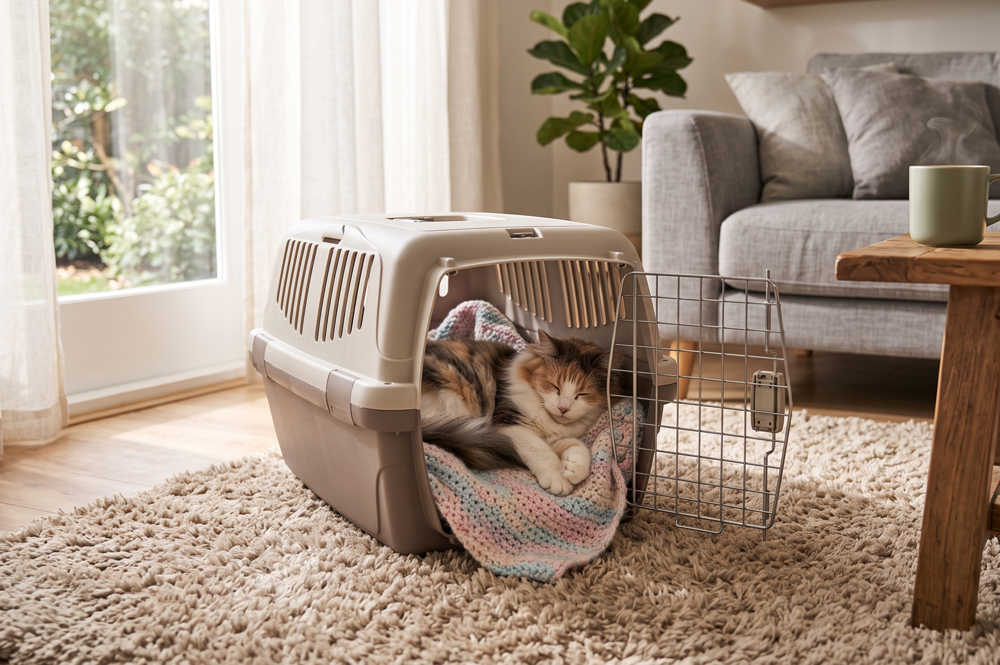
Hard cat carriers often feel like the safer choice when a buyer compares pet travel products for car use. The problem is that “hard” can sound stronger than it really is. That assumption can lead brands to overlook anchoring, restraint, ventilation, and fit. A better answer starts with the travel scenario, then evaluates the whole carrier system.
Hard cat carriers can be safer than soft cat carriers for car travel when they have a stable shell, secure closure, controlled movement, and a reliable vehicle connection. However, the shell material alone does not make a carrier safe. Real car-travel safety depends on structure, fixation, load paths, restraint design, ventilation, size, and misuse prevention.
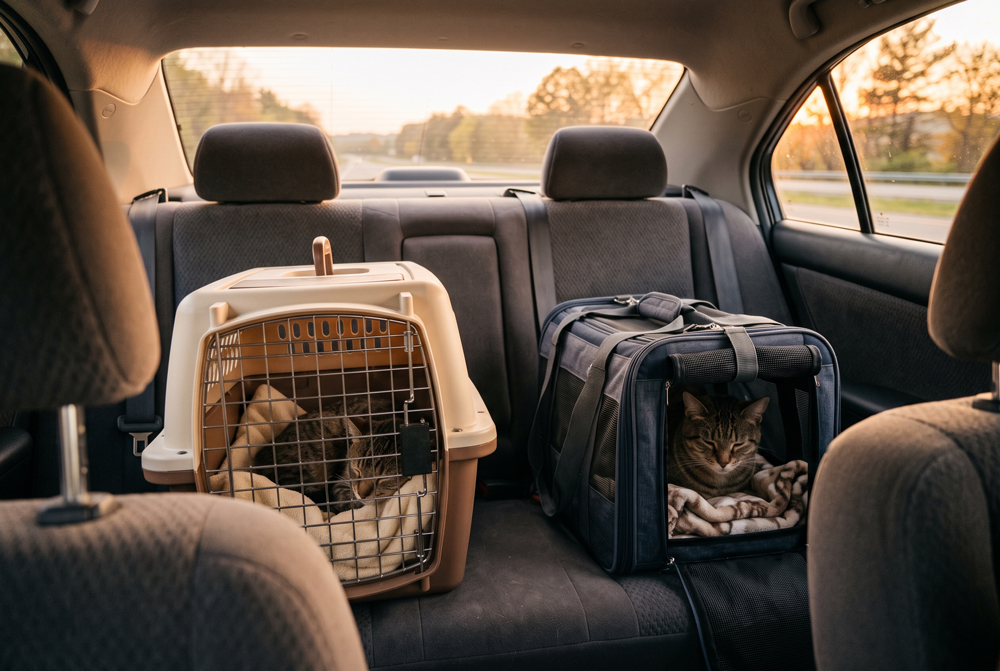
Many pet owners start with a simple question: hard or soft? In product development, that question is only the first layer. Once a carrier enters a vehicle, it becomes part of a moving environment with braking, cornering, vibration, and possible impact forces.
What Is the Difference Between Hard Cat Carriers and Soft Cat Carriers?
Choosing between hard cat carriers and soft cat carriers can feel simple at first. Hard shells look protective. Soft bags look convenient. The difficulty starts when the same product must work for home storage, vet visits, air travel, car seats, stroller frames, and daily carrying.
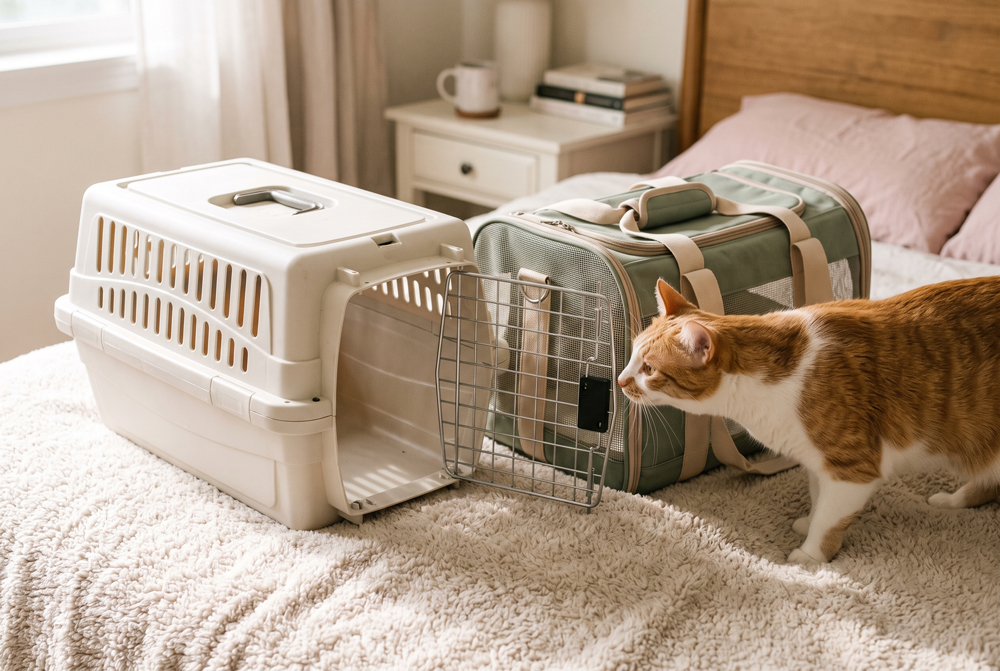
Hard cat carriers usually use molded plastic or composite shells, while soft cat carriers use fabric panels, mesh, zippers, and flexible frames. Hard carriers tend to offer stronger shape retention and easier cleaning. Soft carriers tend to offer lighter weight, easier storage, and better hand-carry comfort, depending on the design.
Basic material and structure differences
The most visible difference is the outer body. A hard-sided cat carrier normally uses an injection-molded or thermoformed shell. It may include a top cover, bottom tray, metal or plastic door, ventilation slots, and mechanical latches. A soft-sided cat carrier usually uses polyester, nylon, Oxford fabric, EVA panels, mesh windows, webbing handles, and zipper closures.
That difference changes how the carrier behaves under load.
| Feature | Hard Cat Carriers | Soft Cat Carriers |
|---|---|---|
| Body structure | Rigid shell | Flexible or semi-rigid fabric body |
| Shape retention | Usually stronger | Depends on frame and panel reinforcement |
| Cleaning | Usually easier to wipe | Fabric may absorb dirt or odor |
| Storage | Takes more space | Often foldable or compressible |
| Weight | Often heavier | Often lighter |
| Comfort in hand | Can feel bulky | Often easier to carry |
| Car travel potential | Good if vehicle-ready | Possible if reinforced and secured |
| Common weak points | Latches, brittle plastic, loose doors | Zippers, soft walls, weak base panels |
Why buyers should not stop at “hard vs soft”
A common procurement mistake is to treat the material category as the safety category. That shortcut is risky. Some hard cat carriers have thin shells, weak door locks, or no reliable way to connect to a vehicle seat. Some soft carriers have reinforced frames, stable bases, and dedicated seat belt routing.
So the better question is:
Is the carrier designed for the way it will be used?
A carrier for walking to the vet has different requirements from a carrier used in a moving vehicle. A hand-carry carrier should be comfortable, balanced, and easy to lift. A vehicle-ready carrier should limit movement, resist deformation, and connect to the vehicle in a predictable way.
Key selection factors for buyers
When we help buyers compare concepts, we usually separate the evaluation into three layers:
-
Everyday usability
- Weight
- Handle comfort
- Access openings
- Cleaning
- Storage
- Cat acceptance
-
Product durability
- Shell thickness or fabric grade
- Stitching quality
- Door and zipper strength
- Hardware performance
- Repeated-use testing
-
Vehicle-use readiness
- Secure base or belt path
- Anti-slip bottom
- Stable geometry
- Controlled center of gravity
- Misuse-resistant fixation
- Ventilation after installation
This layered view helps avoid overclaiming. It also helps pet brands develop product lines that match real customer behavior. Most customers do not use one product for one perfect scenario. They carry the cat from home, place the carrier in a car, visit a clinic, and sometimes connect it to a stroller. The carrier must support that chain of use.
Are Hard Cat Carriers Safer for Car Travel?
Hard cat carriers are often considered safer for car travel because they can hold their shape better during sudden braking or cornering. However, the problem appears when a rigid carrier is placed loose on a seat. A strong shell can still slide, tip, rotate, or become a moving load.
Hard cat carriers may offer safety advantages in cars when their rigid structure is combined with proper fixation. A hard shell can improve stability and protect interior space, but it is not enough by itself. Vehicle safety depends on how the carrier is secured to the seat, base, or vehicle anchoring system.
Why rigidity can help in a vehicle
A vehicle is not a normal carrying environment. Even during everyday driving, a carrier may face:
- Sudden braking
- Sharp turns
- Road vibration
- Emergency maneuvers
- Rear-seat sliding
- Seat belt movement
- Impact-like dynamic loading
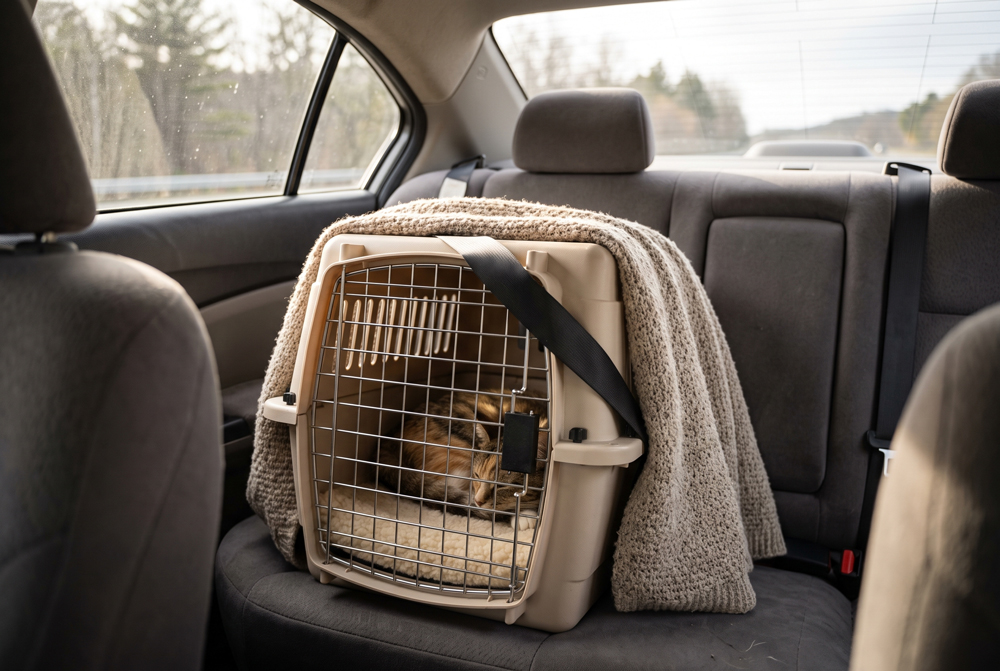
In these situations, a rigid shell can provide useful advantages. It can help maintain usable interior space around the cat. It can also reduce wall collapse compared with many basic fabric bags. If the carrier has a stable base, it may resist tipping better than a narrow soft bag.
However, hard cat carriers must be evaluated as systems. A carrier with a strong shell but a weak door latch may fail at the most important point. A carrier with a rigid body but no defined seat belt path may move unpredictably. A product with an oversized shell may leave too much space for the pet to be thrown around inside.
The limits of hard-shell thinking
Hard-shell design does not automatically mean crash protection. In the pet travel category, buyers should be careful with claims. Pet car seats and pet carriers do not currently operate under the same unified and mandatory crash-test regulations as child restraint systems. Crash testing can be a valuable engineering tool, but it should not be presented as absolute proof of safety or as equivalent to legal child car seat certification.
This is especially important for B2B buyers, importers, and retailers. Marketing language should be clear and defensible. A safer product story should focus on engineering features that buyers can inspect and verify.
What to ask suppliers
For hard cat carriers intended for car travel, procurement teams should ask specific questions:
| Evaluation Point | Buyer Question | Why It Matters |
|---|---|---|
| Shell structure | What material and thickness are used? | Thin shells may crack or deform |
| Door system | How is the door locked? | Door failure can allow escape |
| Base stability | Is the bottom flat and anti-slip? | Sliding increases risk |
| Vehicle fixation | How does it connect to the car? | Loose carriers can become hazards |
| Load path | Where do forces travel during braking? | Poor load paths can cause failure |
| Testing | What internal tests were performed? | Test reports support supplier credibility |
| Documentation | Can reports and material specs be verified? | Buyers need evidence, not slogans |
A balanced view
Hard cat carriers are often a strong starting point for car-focused design. They allow engineers to create defined connection points, stable geometry, and controlled load paths. That is why Anvoya applies child-restraint engineering thinking to pet travel systems, including anchoring, structural support, dynamic-load thinking, and misuse prevention.
Still, responsible evaluation must stay practical. A rigid product should be tested, reviewed, and matched to the intended pet size, vehicle position, and use case. For application-specific decisions, brands should consult qualified testing partners, engineers, or compliance professionals.
What Makes Hard Cat Carriers Safe for Car Travel?
The safety discussion can become confusing when every supplier uses words like “strong,” “secure,” or “travel-safe.” The risk is that buyers compare surface features instead of system performance. A car-ready carrier must manage movement, connection, structure, and animal comfort at the same time.
Hard cat carriers are safer for car travel when they include stable structure, secure closure, defined vehicle fixation, anti-slip support, proper ventilation, suitable sizing, and tested materials. The safest direction is not simply a harder shell. It is a vehicle-ready carrier system designed to reduce movement and misuse.
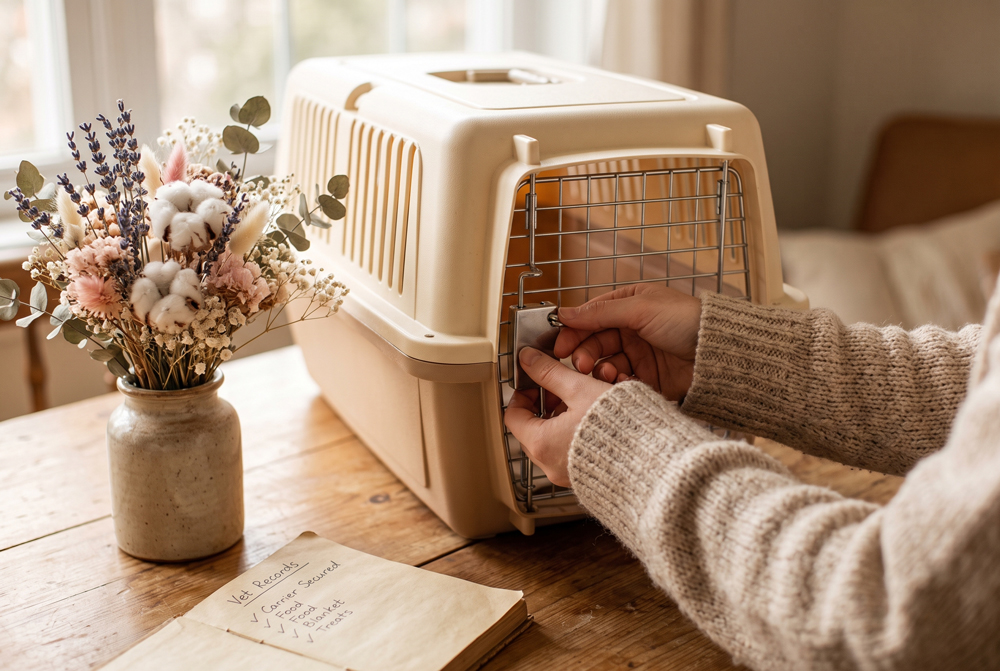
A practical car-travel safety checklist
For B2B product evaluation, a checklist is more useful than a simple yes-or-no claim. Buyers can use the following points when comparing hard cat carriers, hybrid carriers, or soft-sided alternatives.
| Safety Factor | What to Check | Red Flag |
|---|---|---|
| Structure | Shell integrity, reinforced base, stable geometry | Flexible bottom or weak corners |
| Vehicle connection | ISOFIX base, seat belt path, or dedicated anchoring | No clear fixation method |
| Closure | Door latch, zipper lock, secondary lock | Easy accidental opening |
| Interior restraint | Controlled space, non-slip mat, optional tether design where appropriate | Oversized interior with poor control |
| Ventilation | Openings remain clear after installation | Vents blocked by seat or belt |
| Size | Cat can sit and turn, but not slide excessively | Too large or too cramped |
| Handling | Balanced handle and secure lift points | Carrier tilts heavily when lifted |
| Misuse prevention | Clear routing, click feedback, visual indicators | Installation depends on guesswork |
| Materials | Verified plastics, fabrics, webbing, and fasteners | No material documentation |
| Testing | Internal drop, vibration, load, and dynamic tests where applicable | Only lifestyle photos as evidence |
Vehicle connection is the core issue
The most important shift is from “carrier as a box” to “carrier as part of a vehicle system.” In a moving car, the carrier needs a reliable way to stay in position. This may involve a seat belt path, an ISOFIX-compatible base, or another engineered connection method.
At Anvoya, this is where our background in European child car seats becomes relevant. We do not describe pet carriers as child restraints. That would be misleading. But the engineering mindset is useful. Child-restraint development pays close attention to anchoring, load direction, misuse, tooling quality, and production consistency. Those same disciplines can improve pet travel products.
Structure and load paths
A safer carrier should direct force through strong areas. This concept is called a load path. If a carrier connects to the vehicle only through a weak handle, the handle may become the failure point. If a belt presses against a thin wall, the shell may deform. If the base is unstable, the carrier may rotate.
Good vehicle-ready design considers:
- Where the carrier contacts the seat
- Where the belt or base connects
- How the shell transfers force
- How the door remains closed
- How the pet’s body moves inside
- How ventilation remains open
- How users avoid incorrect installation
Fit matters more than many buyers expect
A cat carrier should give the cat enough room to sit, turn around, and rest. But a very oversized carrier can allow too much internal movement during braking. For automotive use, “bigger” is not always safer.
Brands should define size ranges carefully. For example:
- Small cats may need a more compact cabin.
- Larger cats need enough headroom and shoulder width.
- Kittens may require different interior control than adult cats.
- Long-distance travel may need more comfort features, but not uncontrolled space.
Documentation buyers should request
Procurement teams should ask suppliers for documents that can be checked. These may include:
- Material specifications
- Plastic grade or fabric grade
- Webbing and buckle details
- Internal test summaries
- Assembly inspection standards
- AQL quality control plans
- Factory audit documents
- Relevant compliance reports for target markets
Certifications and test reports should always be verified with the issuing body, laboratory, or qualified consultant. This protects the buyer and prevents weak suppliers from using unclear claims.
Can a Soft Cat Carrier Be Safe in a Car?
Soft carriers are sometimes dismissed too quickly. That creates another problem. Many pet owners love soft products because they are light, easy to carry, and easier to store. If a brand ignores those advantages, it may create a safer-looking product that customers do not enjoy using.
A soft cat carrier can be safe in a car if it is specifically designed for vehicle use. It needs a reinforced frame, stable base, secure closures, reliable belt routing or anchoring, and controlled movement. A basic fabric travel bag without vehicle fixation should not be treated as car-ready.
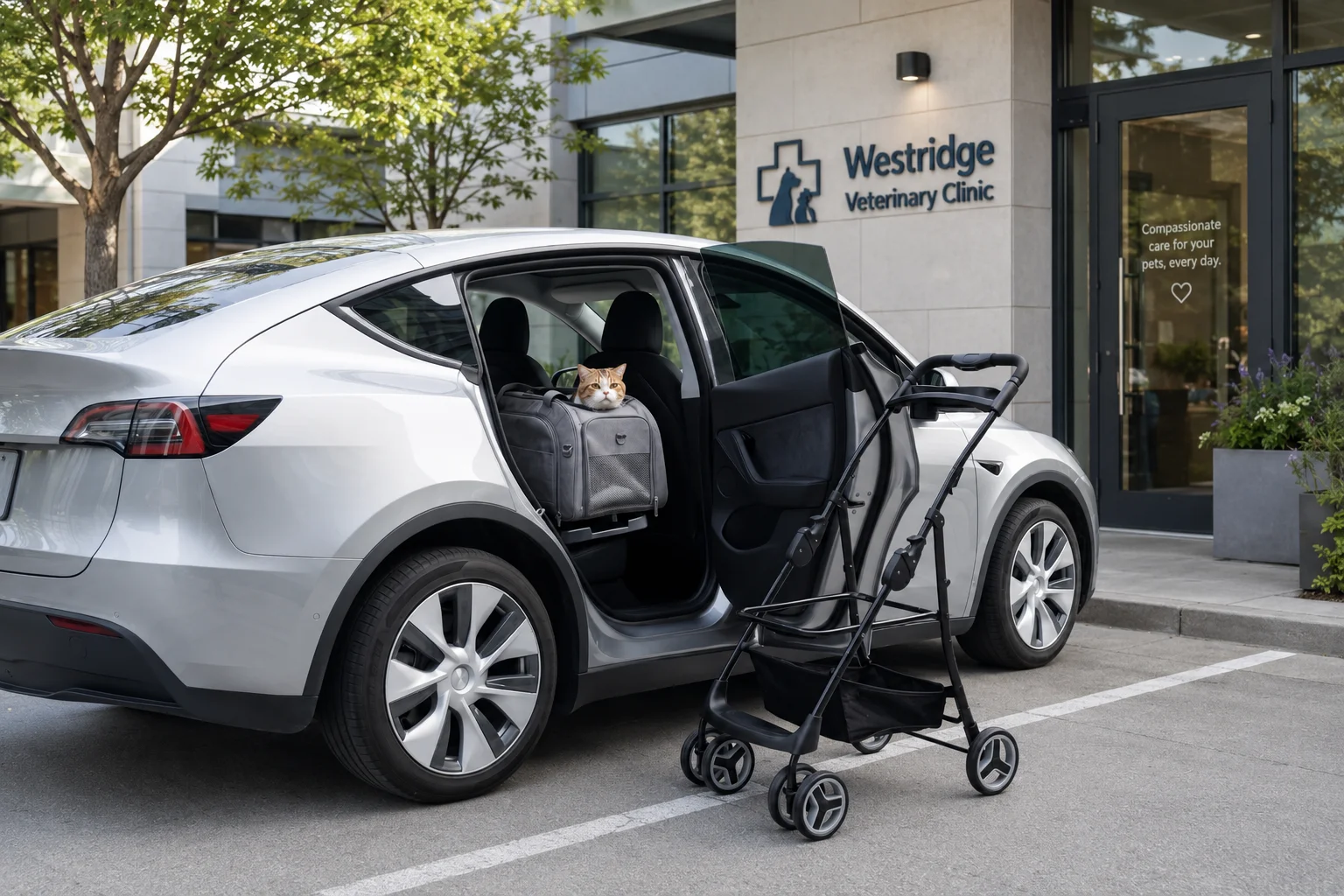
Where soft carriers perform well
Soft-sided carriers can be very practical. Many customers prefer them for short trips, public transport, small apartments, and air travel. They often feel less bulky than hard cat carriers. They may also be easier to place under storage spaces or carry over the shoulder.
Common soft carrier advantages include:
- Lower product weight
- Foldable storage
- Flexible handling
- More fabric and mesh comfort
- Lower shipping volume in some designs
- Better lifestyle appearance
- Easier private-label styling
These advantages matter commercially. A pet brand must sell a product that customers will use correctly. A product that looks strong but is too heavy, too ugly, or too difficult to install may be used less often or used incorrectly.
Where soft carriers need caution
The main limitation is structural control. Many soft carriers rely on fabric tension, zippers, and removable base boards. That may be enough for walking to a vet. It may not be enough for controlled vehicle use.
Potential weak points include:
| Soft Carrier Area | Possible Risk | Better Design Direction |
|---|---|---|
| Zippers | Accidental opening or seam stress | Lockable zipper heads and reinforced stitching |
| Mesh panels | Tear or deformation | Higher-strength mesh and protected placement |
| Base board | Bending or slipping | Rigid insert with anti-slip surface |
| Side walls | Collapse under belt pressure | Internal frame or semi-rigid panels |
| Handles | Used incorrectly as anchor points | Separate vehicle fixation path |
| Seat belt routing | Belt crushes the carrier | Defined reinforced belt channel |
Soft does not mean unsafe
The better way to say it is this: soft does not mean unsafe, and hard does not mean safe. The design intention matters.
A well-designed soft carrier for car travel should not be a normal tote bag with pet mesh added. It should be developed with vehicle forces in mind. The supplier should explain how the carrier is secured, which areas are reinforced, and how the pet is kept in a stable position.
For brands, the product positioning should also be honest. If a soft carrier is mainly for everyday carrying, say so. If it is designed for vehicle use, support the claim with structure, testing, instructions, and supplier documentation.
When a soft option may be the right choice
A soft carrier may be suitable when:
- The travel is short and low-speed.
- The product has a reinforced frame.
- The carrier includes a stable base.
- The seat belt path is clearly designed.
- The cat fits correctly.
- The closure system is secure.
- The buyer can verify supplier testing.
However, for brands developing a stronger car-travel product line, soft construction may need hybrid reinforcement. That means fabric comfort plus structural elements. In some cases, a semi-rigid shell, reinforced bottom, or modular base can create a better balance.
Can a Cat Carrier Be Designed for Both Car Travel and Everyday Use?
Many traditional carriers force customers to choose one use case. A hard box may work for a car but feel awkward for daily carrying. A soft bag may feel convenient but lack vehicle stability. This gap creates frustration for pet owners and product risk for brands.
A cat carrier can be designed for both car travel and everyday use when it is developed as a modular travel system. The carrier should support carrying, vehicle fixation, and stroller compatibility without depending on unsafe user improvisation. This approach moves beyond hard cat carriers versus soft bags.
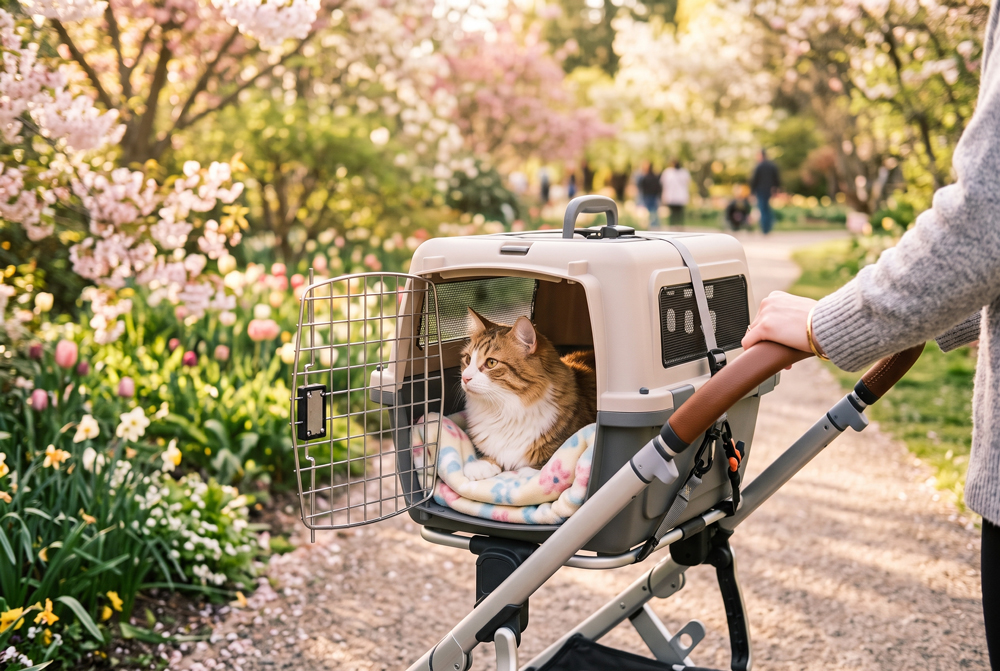
Why multi-use design is becoming more important
Pet owners no longer think of a carrier as a single-purpose box. They want one product to support several travel moments:
- Home to car
- Car to clinic
- Car to hotel
- Walking in urban areas
- Shopping mall or airport movement
- Stroller use for longer outings
- Storage at home
This creates a product development challenge. Every use case adds requirements. A stroller-compatible carrier needs a stable interface. A car-ready carrier needs secure vehicle connection. A hand-carry product needs balanced weight. A pet comfort product needs airflow and visibility.
If these functions are added late, the product can become complicated. If they are designed from the beginning, the system can feel simple.
From carrier to travel system
At Anvoya, we describe this direction as smart, easy, and safety-focused travel system design. The goal is not only to make a carrier stronger. The goal is to make the full travel experience more controlled.
This can include:
-
A carrier module
- Hard-shell or semi-rigid body
- Comfortable interior
- Secure door or opening
- Balanced carry handle
-
A vehicle module
- ISOFIX base or defined vehicle connection
- Stable platform
- Clear installation feedback
- Reduced misuse risk
-
A stroller module
- Compatible frame connection
- Quick release
- Stable center of gravity
- Smooth transition from car to walking
-
A product-line strategy
- Shared interfaces
- Upgrade paths
- Private-label styling
- Faster SKU expansion
Why this matters for B2B buyers
For importers, distributors, retailers, and e-commerce brands, modular design can reduce commercial risk. A buyer may already have a best-selling pet carrier. Instead of replacing the whole product line, a vehicle-ready base can upgrade the system and create a new value story.
This is the idea behind Anvoya’s BASE-X, a modular ISOFIX pet car seat base designed to help upgrade compatible pet carriers into vehicle-ready systems. The buyer still needs to evaluate compatibility, fixation, and documentation for each application. But the strategy is clear: preserve existing product value while adding car-use differentiation.
Anvoya’s AERO concept follows the same logic from another angle. It is a lightweight 3-in-1 system for car, carry, and stroller use. The benefit is not only convenience. The benefit is that the product is designed around connected use cases rather than separate accessories.
Hard-shell, soft-shell, or hybrid?
The future is not only about hard cat carriers. Many strong product concepts will be hybrid. A carrier may use a rigid base, reinforced frame, soft comfort panels, and vehicle-ready connection points. This can give brands a more attractive balance of safety perception, comfort, weight, and lifestyle design.
| Design Type | Best Use | Limitation | Product Opportunity |
|---|---|---|---|
| Traditional hard carrier | Vet visits, basic transport | Bulky, often not vehicle-ready | Add base compatibility and better closure |
| Traditional soft carrier | Daily carry, storage, air-style travel | May lack structure | Add frame, reinforced base, belt path |
| Hybrid carrier | Multi-use travel | Requires careful engineering | Strong B2B differentiation |
| Modular travel system | Car, carry, stroller | Higher development complexity | Stronger product-line value |
A supplier selection note
A supplier for multi-use carriers should understand more than sewing or molding. The supplier should understand interfaces, tooling tolerance, structural testing, assembly consistency, and misuse prevention. This is where manufacturing experience matters.
Buyers should ask:
- Can the supplier develop both carrier and base interfaces?
- Can the supplier control tooling and fit tolerance?
- Can the supplier support OEM/ODM customization?
- Can the supplier provide production quality control documents?
- Can the supplier explain the vehicle connection clearly?
- Can the supplier help expand the line over time?
That is the difference between buying a carrier and building a travel system.
Frequently Asked Questions
Are hard cat carriers always safer than soft cat carriers?
No. Hard cat carriers are not always safer. A hard shell can help with structure, but safety also depends on vehicle fixation, closure strength, base stability, ventilation, size, and testing. A poorly secured hard carrier can still slide or tip in a car.
Should a cat carrier be buckled with a seat belt?
A cat carrier should only be secured with a seat belt if the product has a defined and reinforced seat belt path. Wrapping a belt around a random carrier may cause deformation or unstable loading. Buyers should follow the manufacturer’s instructions and verify the design.
Is ISOFIX useful for pet carriers?
ISOFIX can be useful when the pet carrier or base is engineered for that connection. It can provide a more defined vehicle interface than loose placement. However, pet products should not be described as legally equivalent to child car seats. Buyers should verify test data and compatibility.
What size cat carrier is safest for car travel?
The carrier should allow the cat to sit, turn, and rest comfortably, but it should not be so large that the cat slides excessively during braking. Correct sizing depends on the cat’s weight, body length, and travel duration. Brands should define clear size guidance.
Can one carrier work for car, carry, and stroller use?
Yes, one carrier can support car, carry, and stroller use if it is designed as a modular system from the beginning. The key is a stable carrier body, reliable connection interfaces, secure closures, and clear instructions for each use scenario.
Conclusion
Hard cat carriers can offer real advantages for car travel, especially when they provide stable structure and controlled shape retention. However, the safer buying decision is not based on shell material alone. Buyers should evaluate vehicle connection, fixation, load paths, closure systems, ventilation, sizing, and supplier documentation. At Anvoya, we help pet brands develop vehicle-ready and stroller-compatible travel systems with child-restraint engineering discipline. If you are building a differentiated pet travel line, we can help you evaluate carrier concepts, modular bases, and OEM/ODM development options.