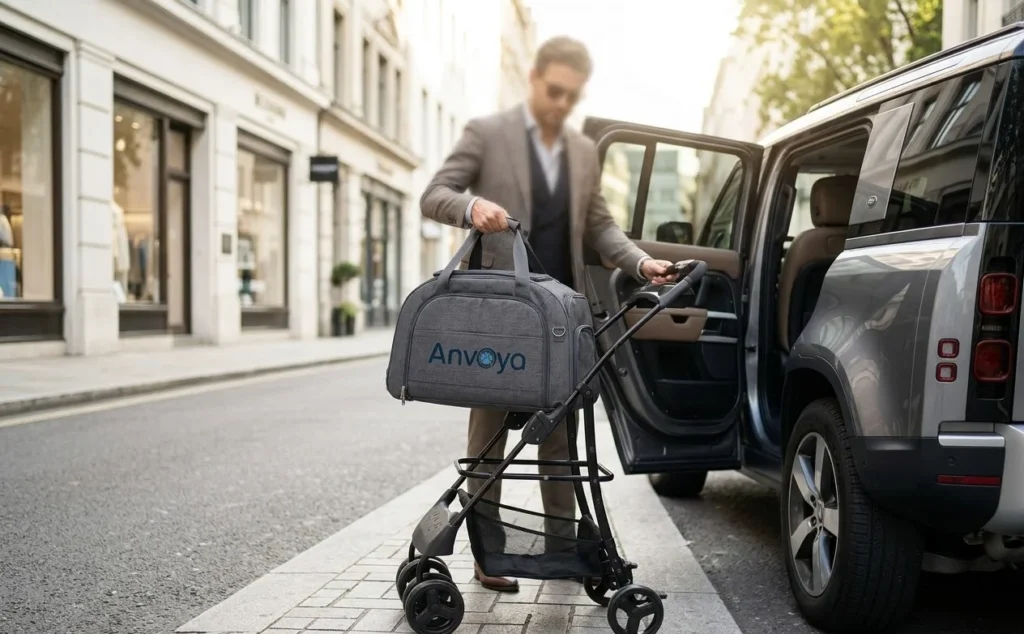
Pet Stroller OEM decisions become difficult when a brand has already sold standard stroller models for years. The market looks crowded, buyers compare similar frames, and small design changes no longer feel enough. The better path is to treat the next stroller as a travel platform, not just another fabric-and-frame product.
A Pet Stroller OEM program helps brands move beyond traditional strollers when it starts with structure, use scenarios, manufacturability, and future expansion. The goal is not only a new look. The stronger question is whether the stroller can connect carrying, storage, car-side use, and accessories in a repeatable product system.
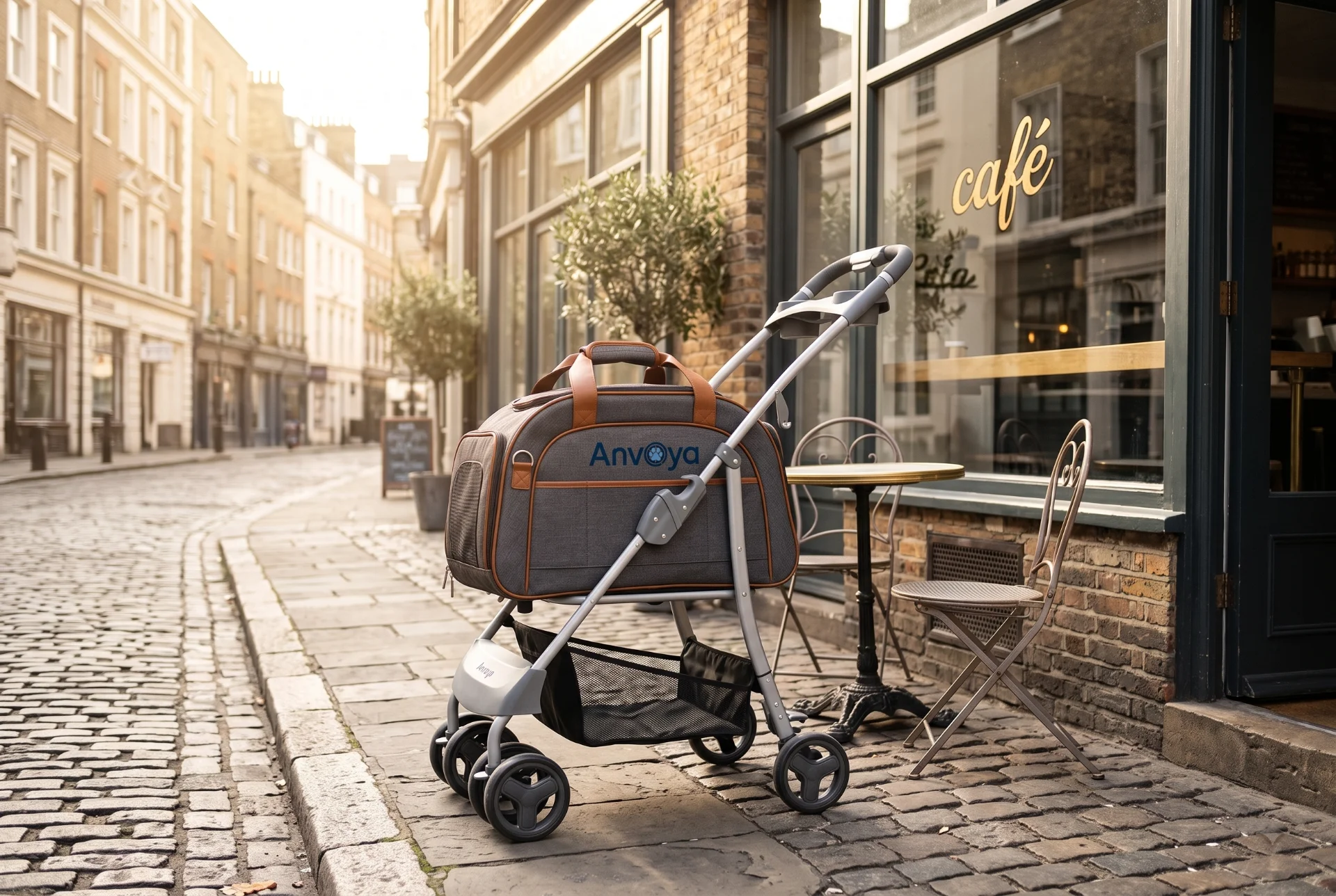
Many brands come to OEM/ODM discussions with sketches, color references, and competitor photos. Those are useful, but they are not enough. Based on our product development conversations at Anvoya, the real decisions usually appear earlier: product role, folding logic, connection points, tooling risk, and production consistency.
Why Are Traditional Pet Strollers Becoming Harder for Brands to Differentiate?
A traditional pet stroller can still sell well, but many brands feel pressure from sameness. The problem is clear: many models share similar frames, baskets, canopies, and fabric panels. The agitation comes when price becomes the main comparison. The solution starts by changing the product question.
A traditional pet stroller becomes harder to differentiate because many visible features are easy to copy. Color, fabric, wheel style, and logo placement may improve presentation, but they rarely create a strong product moat. Brands need deeper differentiation through structure, scenario coverage, usability, and manufacturable design.
The surface is no longer the whole story
In early OEM/ODM discussions, many pet brands begin with appearance. That is natural. Buyers see the product first. Retail pages also depend on photos, videos, and clear selling points. However, a better-looking stroller is not always a better business product.
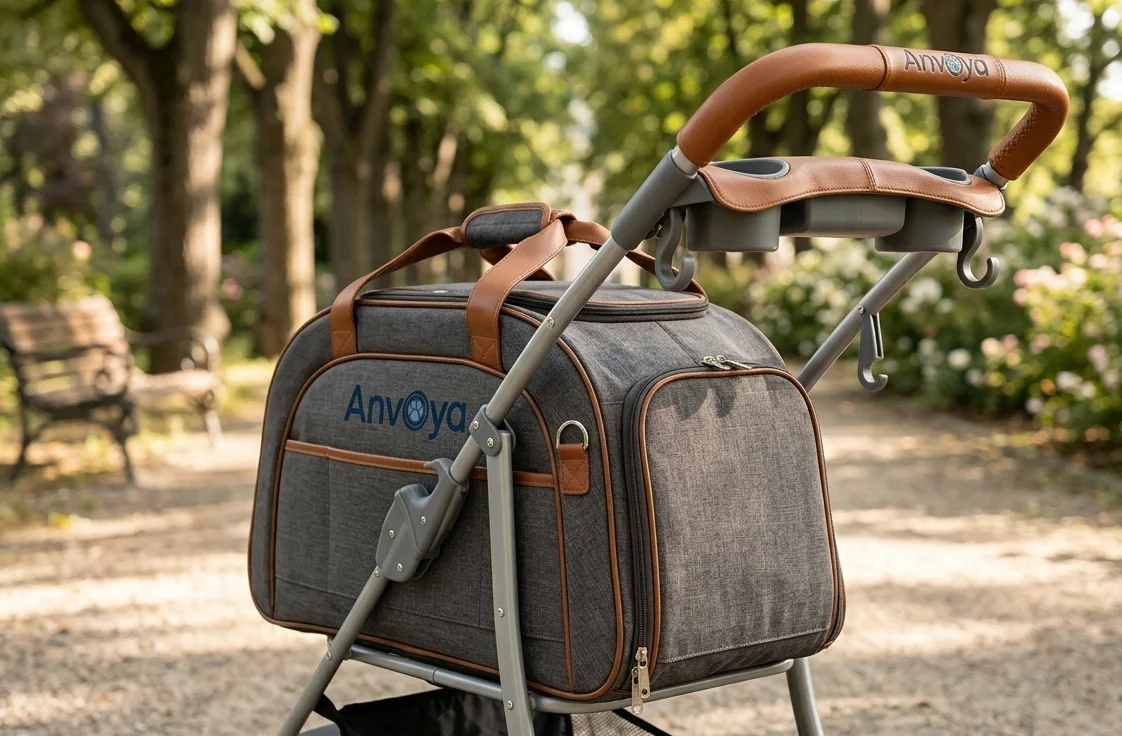
A stroller with a new textile, larger canopy, or upgraded handle may still remain a single-purpose SKU. It may be easy to launch, but it may not create enough separation from competitors. A Pet Stroller OEM partner should help the brand ask a more useful first question:
“Is this just a new stroller look, or can this become a travel platform?”
That shift matters because product managers are not only buying a sample. They are buying a future development path.
Common differentiation levels
| Differentiation Level | Typical Change | Commercial Value | Development Risk |
|---|---|---|---|
| Surface styling | Colors, fabric, logo, trim | Low to medium | Low |
| Functional improvement | Wheels, canopy, basket, brakes | Medium | Medium |
| Structural upgrade | Fold system, connection points, removable cabin | Medium to high | Medium to high |
| Travel platform | Carry, stroller, storage, car-side use, accessories | High | Higher if not planned early |
The first two levels are not wrong. They are useful when a brand needs a fast refresh. But if a brand wants to move beyond a traditional stroller category, the third and fourth levels become more important.
Where sameness usually appears
Brands often face similarity in:
- Frame geometry that looks close across suppliers
- Fabric cabin shape with limited structural identity
- Basic fold mechanisms that do not support future modules
- Accessory add-ons that feel separate, not integrated
- Retail claims that sound almost identical across listings
This is why a Pet Stroller OEM discussion should include engineering and production questions before appearance is finalized. If the frame cannot support a removable cabin, if the latch position is weak, or if the fold path conflicts with a storage feature, the concept may become expensive to adjust later.
At Anvoya, our background in modular pet travel systems makes this point especially practical. We do not see a stroller only as a frame with wheels. From a product development perspective, we look at whether the cabin, base, handle, connection points, and load-bearing areas can support the brand’s next generation of products.
That approach does not mean every stroller must become complex. It means the brand should know what type of product it is building before tooling begins.
What Can Brands Add to a Pet Stroller OEM Program to Create More Value?
A Pet Stroller OEM program can lose value when “adding more” only means adding more accessories. Extra pockets, cup holders, and color options may help the retail page, but they do not always change the product role. Brands create more value when additions support real travel scenarios.
Brands can add more value to a Pet Stroller OEM program by building around user scenarios: carrying, folding, home storage, car-side transfer, removable pet cabins, and future accessories. The best additions are not random features. They should connect to the structure and improve how the product works across daily travel situations.
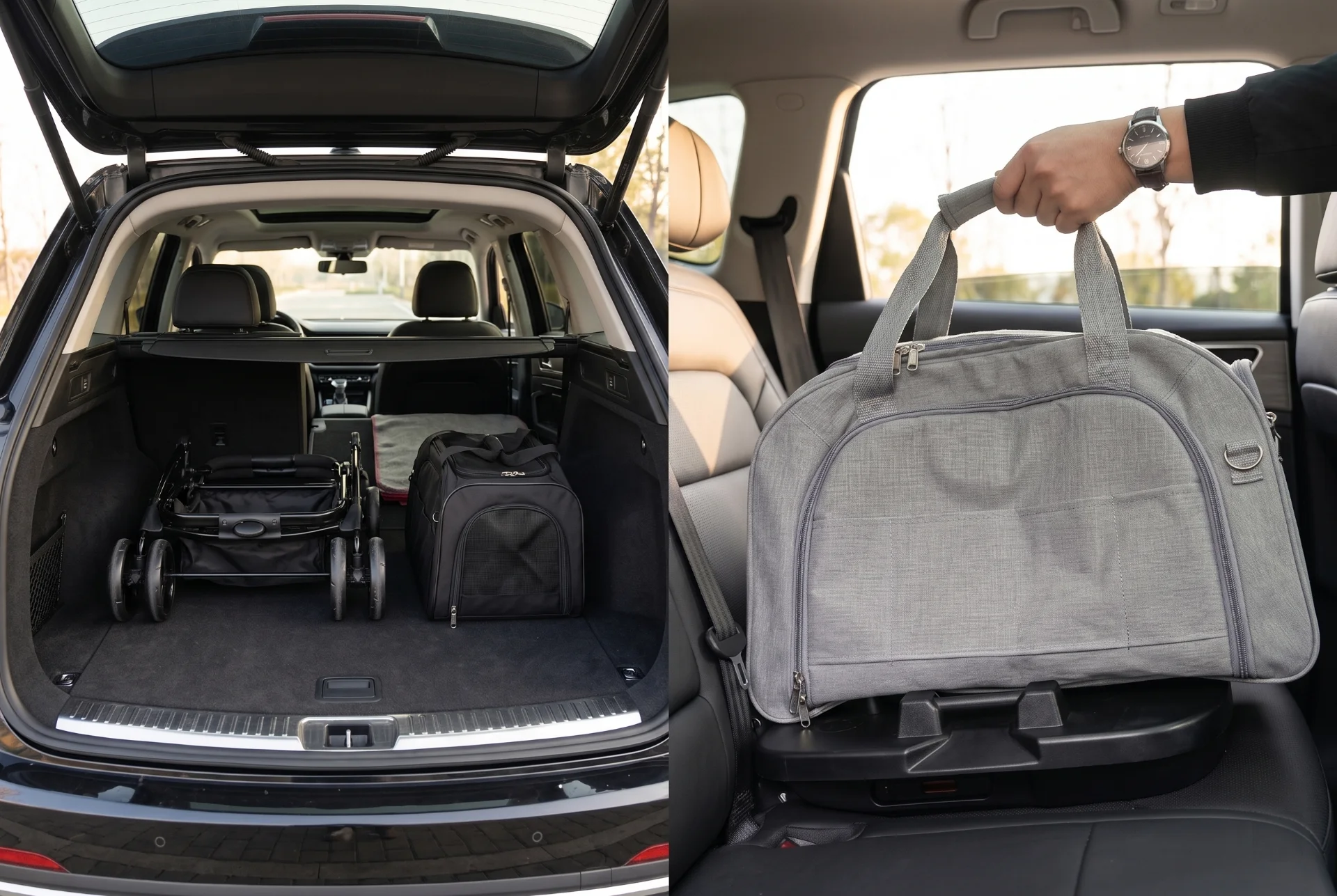
Value comes from connected use, not scattered features
A feature can look good in a product meeting but still fail in daily use. A pet owner does not think in factory terms. They think in situations:
- “Can I carry my pet from home to the car?”
- “Can I fold the stroller while holding the pet cabin?”
- “Can I store this in a small apartment?”
- “Can I move from walking to car-side loading without chaos?”
- “Can I use the same cabin with another product later?”
These questions are where stronger Pet Stroller OEM value begins.
Useful value layers for upgraded stroller products
| Value Layer | What It Means | Why It Matters for Brands |
|---|---|---|
| Removable cabin | Pet compartment separates from frame | Creates carry and transfer use |
| Stable docking | Cabin connects with controlled positioning | Improves perceived quality and usability |
| Fold-aware structure | Folding path avoids module conflict | Reduces redesign risk |
| Storage logic | Product fits home, car trunk, or retail shipping needs | Supports real-life convenience |
| Accessory interface | Planned points for future add-ons | Extends product line potential |
| Material consistency | Fabric, plastic, metal parts align with use load | Supports production repeatability |
Accessories are attractive because they are visible and easy to explain. However, poorly planned accessories can make the stroller harder to manufacture or less consistent in use. For example:
-
A clip-on bag may affect folding clearance.
If the frame was not designed for the bag position, the user may need to remove it every time. -
A removable cabin may need better load paths.
A fabric-only solution may look fine in a sample, but repeated lifting and docking can expose weak points. -
A large canopy may change balance or packaging.
Bigger is not always better if it creates instability, assembly complexity, or higher shipping volume. -
A premium handle may require tooling changes.
If the change affects the frame tube or plastic joint, the cost and timeline may increase.
This is why early feasibility review is important. A brand may think it is adding one simple selling point, while the manufacturer sees changes across tooling, assembly, quality control, and packaging.
A more useful way to define added value
Instead of asking, “What can we add?” a brand can ask:
- Does this feature solve a real travel problem?
- Does this feature support the stroller’s structure?
- Can this feature be produced consistently?
- Can this feature become part of a future product family?
- Will this feature reduce or increase customer misuse?
At Anvoya, we often frame stroller upgrades through multi-scenario pet travel. This does not mean every product needs car-seat-style engineering. Pet travel products do not have the same mandatory crash-test regulations as child restraint systems. However, structural thinking still matters. Connection points, docking logic, locking feel, and material choices all influence whether the product feels reliable and can be produced repeatedly.
A strong Pet Stroller OEM program adds value by making the product easier to use, easier to explain, and easier to extend.
Can a Pet Stroller OEM Product Become Part of a Modular Pet Travel System?
A Pet Stroller OEM product can remain a single stroller, but many brands now want more. The problem is that modular ideas often look simple in concept drawings. The agitation begins when the cabin, frame, base, and accessories do not align. The solution is early system planning.
Yes, a Pet Stroller OEM product can become part of a modular pet travel system if the structure is designed for it from the start. The stroller should include planned connection points, load-bearing zones, folding logic, compatible modules, and production controls that support repeatable assembly across future product extensions.
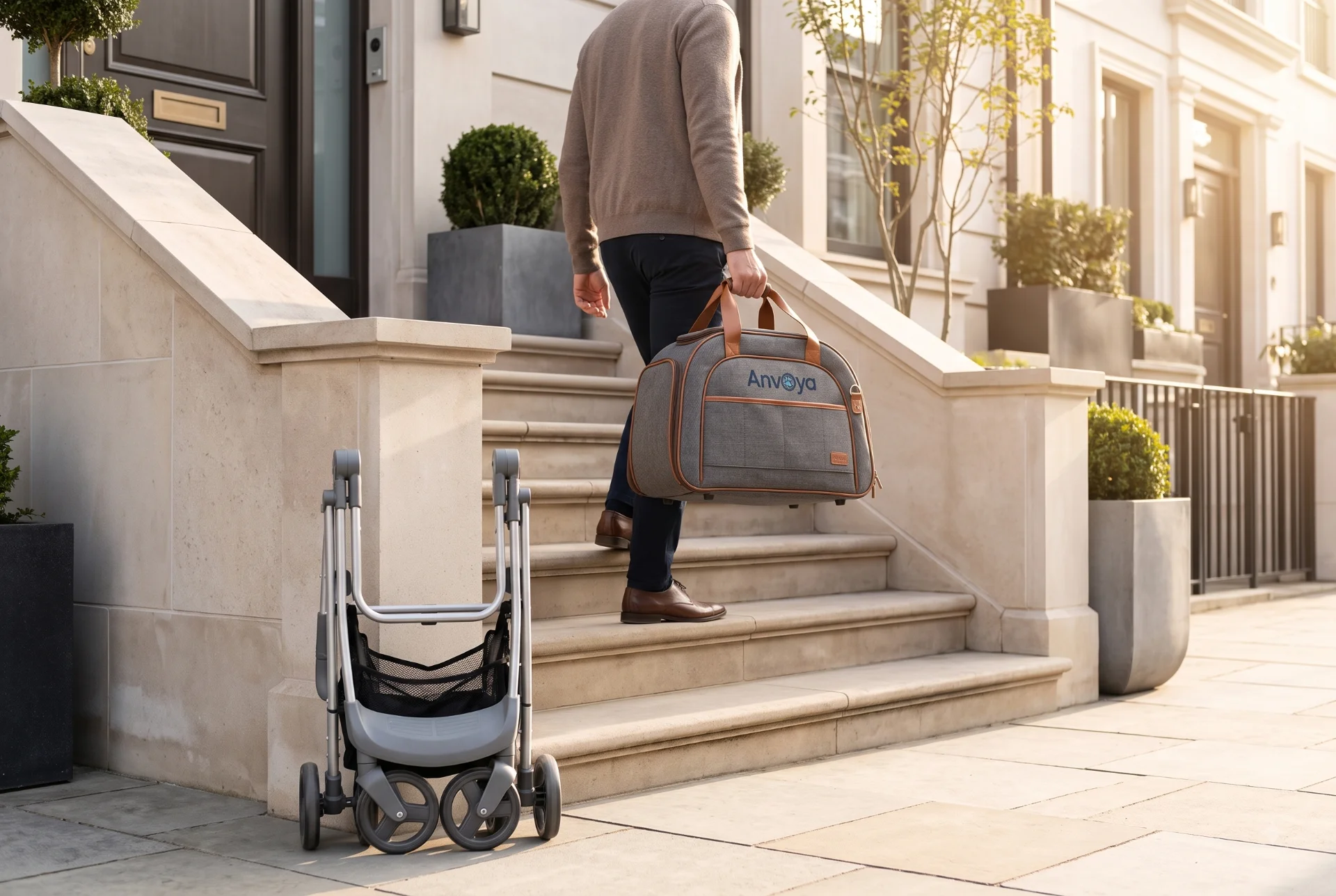
Modular does not mean “attach anything anywhere”
A modular pet travel system sounds simple. In reality, it requires decisions that affect the whole product. A removable cabin needs a secure docking method. A stroller frame needs the right support points. A future base, storage stand, or car-side accessory may require dimensional discipline.
This is where many projects become difficult. A brand may approve a beautiful concept, but the factory later discovers that the frame cannot carry the cabin in the planned position, the locking method is awkward, or the fold system conflicts with the module.
Key questions for modular stroller development
A brand should ask these questions before drawings move too far:
-
What is the main module?
Is the pet cabin the core product, or is the stroller frame the core product? -
How does the module connect?
Does it slide, click, hook, strap, or lock into place? -
Where does the load travel?
Does weight move into the frame through strong points or weak fabric areas? -
Can users understand the connection?
A system should reduce misuse, not create confusion. -
Will future accessories share the same interface?
A modular system loses value if every new product requires a new connection method.
Single stroller versus modular travel platform
| Product Approach | Best For | Main Advantage | Main Risk |
|---|---|---|---|
| Traditional stroller | Fast refresh, entry price range | Easier sourcing and faster development | Limited differentiation |
| Upgraded stroller | Better comfort and usability | Clearer retail value | Still may remain one SKU |
| Modular stroller platform | Brand families and premium positioning | Expandable product roadmap | Needs earlier structural planning |
| Full travel system | Carry, stroller, storage, car-side scenarios | Stronger ecosystem value | Higher development and validation workload |
At Anvoya, our work around products such as AERO and modular travel thinking shows why the cabin should not be treated as an afterthought. A lightweight 3-in-1 concept for car-side handling, carrying, and stroller use depends on how the main unit connects to each scenario. The same thinking applies when a brand wants to upgrade a stroller into a broader travel system.
What “car-side use” should and should not mean
It is important to be careful here. Pet car seats and pet travel products do not currently operate under the same unified and mandatory crash-test regulations as child restraint systems. A stroller module that can be carried toward a vehicle is not automatically a certified vehicle restraint product.
From a product development perspective, car-side use may include:
- Easier transfer from home to vehicle
- Better handling around parking areas
- Compatibility with a separate base concept
- Reduced loose movement during loading and unloading
- Clearer user instructions for positioning and use
If a product is intended for vehicle-related use, brands should involve qualified engineering review and verify any claimed test documents or supplier statements. Crash testing can be an engineering tool, but it should not be described as proof of absolute safety.
Why early architecture protects the brand
A modular Pet Stroller OEM project has more upside, but it also has more dependencies. The safest commercial path is to define the architecture early:
- Core module dimensions
- Docking interface
- Frame support areas
- Fold and storage behavior
- Assembly method
- Inspection points
- Packaging constraints
- Future accessory roadmap
When these details are discussed before tooling, a brand has a better chance of building a scalable product family instead of one complicated SKU.
What Should Brands Look for in a Pet Stroller OEM Partner?
A Pet Stroller OEM partner should not only quote a product. The problem with quote-only sourcing is that early risks stay hidden. The agitation appears later as tooling changes, unstable samples, delayed development, or inconsistent production. A better partner helps review feasibility before the project becomes expensive.
Brands should look for a Pet Stroller OEM partner that can evaluate structure, manufacturability, materials, tooling implications, quality control, and future product expansion. The right partner should translate technical decisions into commercial impact, including development time, production consistency, product differentiation, and long-term line planning.
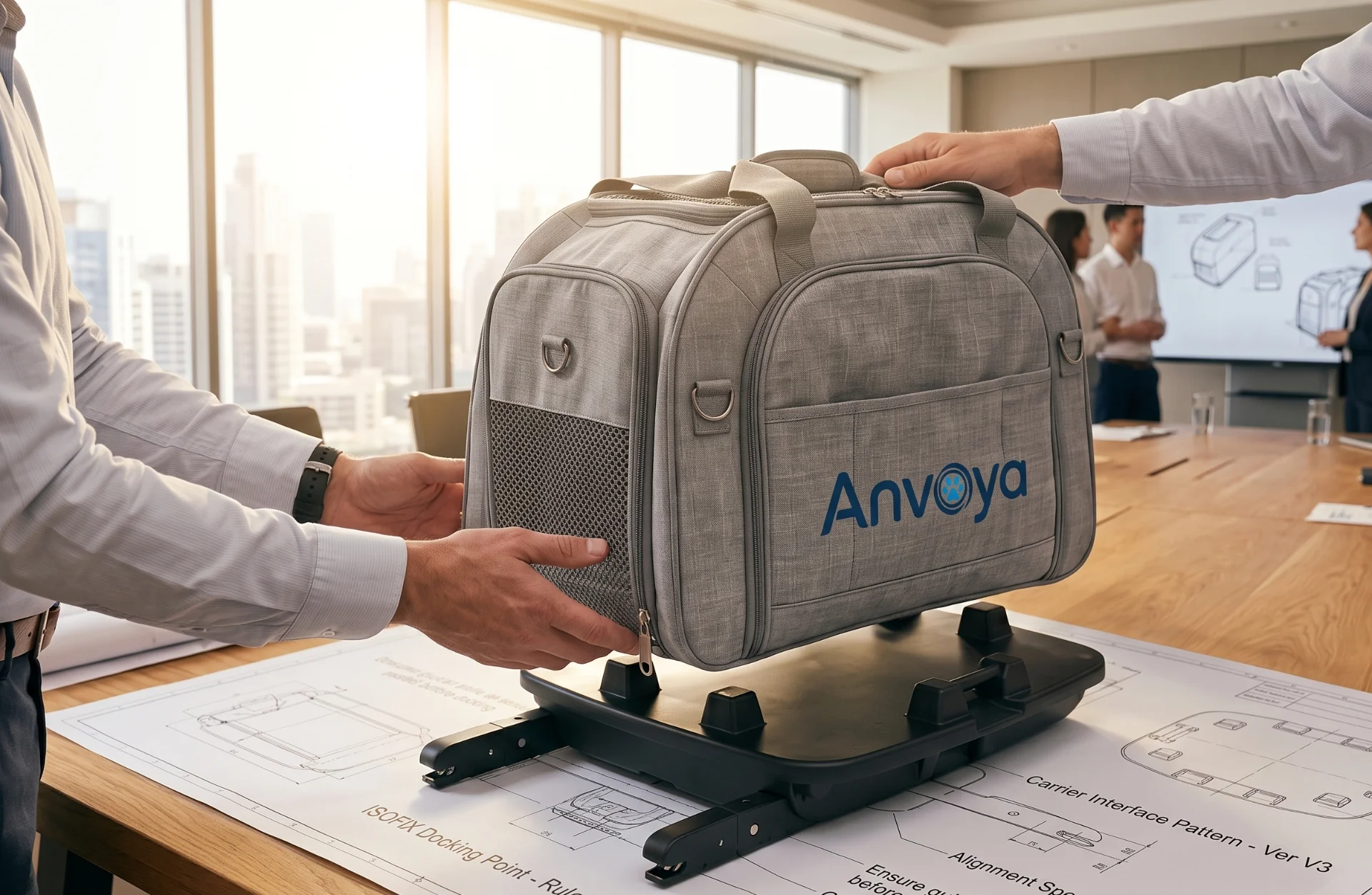
A good OEM partner asks uncomfortable questions early
A supplier who says “yes” to everything can feel easy at the beginning. However, pet stroller development benefits from honest review. If a requested feature affects folding stability, loading, tooling cost, or assembly steps, the brand should know early.
A useful Pet Stroller OEM partner may ask:
- What is the main commercial role of this stroller?
- Is this a refresh, a premium upgrade, or a platform?
- Which existing product should it protect or extend?
- Which parts must be unique, and which can remain standard?
- Is the removable cabin required now or later?
- What quality problems have appeared in past stroller products?
- Which markets and retail channels will sell this product?
These questions may slow the first meeting, but they often protect the later project.
Evaluation checklist for brand owners
| OEM Capability | What to Check | Why It Matters |
|---|---|---|
| Structural review | Frame, joints, docking, folding path | Reduces redesign risk |
| Product architecture | Platform thinking and module planning | Supports future SKUs |
| Material understanding | Fabric, plastics, metals, fasteners | Affects durability and consistency |
| Tooling awareness | Mold changes, tube bending, fixtures | Controls cost and timing |
| Quality control process | Incoming, in-process, final checks | Supports repeatable production |
| Communication discipline | Clear drawings, revisions, feasibility notes | Reduces misunderstanding |
| Compliance mindset | Document review and market requirements | Helps buyers verify claims |
The difference between sample-making and product development
A sample can look finished but still be far from production-ready. This is a common risk in OEM sourcing. A showroom sample may use hand-adjusted parts, temporary stitching, or non-final hardware. A production product needs repeatability.
Production repeatability depends on:
-
Stable specifications
The factory team needs clear dimensions, materials, tolerances, and assembly steps. -
Controlled tooling
Plastic joints, locks, brackets, and frame parts must be consistent across production lots. -
Inspection standards
A brand should know which points will be checked and how defects will be classified. -
User-focused assembly
The product should feel logical to assemble and use, not only easy to produce. -
Packaging validation
Oversized stroller products can create shipping cost pressure and damage risk.
At Anvoya, our OEM/ODM discussions often connect stroller development to broader travel system thinking. Our background includes child car seat and automotive safety product engineering methods, especially structural load paths, anchoring logic, misuse prevention, tooling, materials, and production consistency. For pet products, that background is useful as an engineering discipline, not as a claim that pet strollers carry child restraint certification.
What brands should verify
Brands should verify supplier claims carefully, especially around testing, materials, and certifications. Depending on the target market, the buyer may need to review:
- Material test reports
- Restricted substance documents
- Load or durability test references
- Factory quality system documents
- Product drawings and specifications
- Packaging drop-test information
- Market-specific labeling and instruction requirements
A qualified professional should review application-specific safety or compliance decisions. This is especially important when the product connects to vehicle-related scenarios or when the brand wants to make performance claims in marketing.
A strong Pet Stroller OEM partner does not replace the brand’s responsibility. The partner helps make decisions clearer, earlier, and more practical.
How Can Pet Stroller OEM Brands Move Beyond Traditional Stroller Products?
Pet Stroller OEM brands can get trapped when the next product brief says only “make it more premium.” The problem is that premium appearance is easy to imitate. The agitation comes when the launch feels new for one season but not defensible. The solution is a platform roadmap.
Pet Stroller OEM brands can move beyond traditional stroller products by defining a product roadmap before design details. The roadmap should clarify whether the next stroller is a refresh, an upgraded SKU, a modular platform, or part of a larger pet travel system with carry, storage, and vehicle-related scenarios.
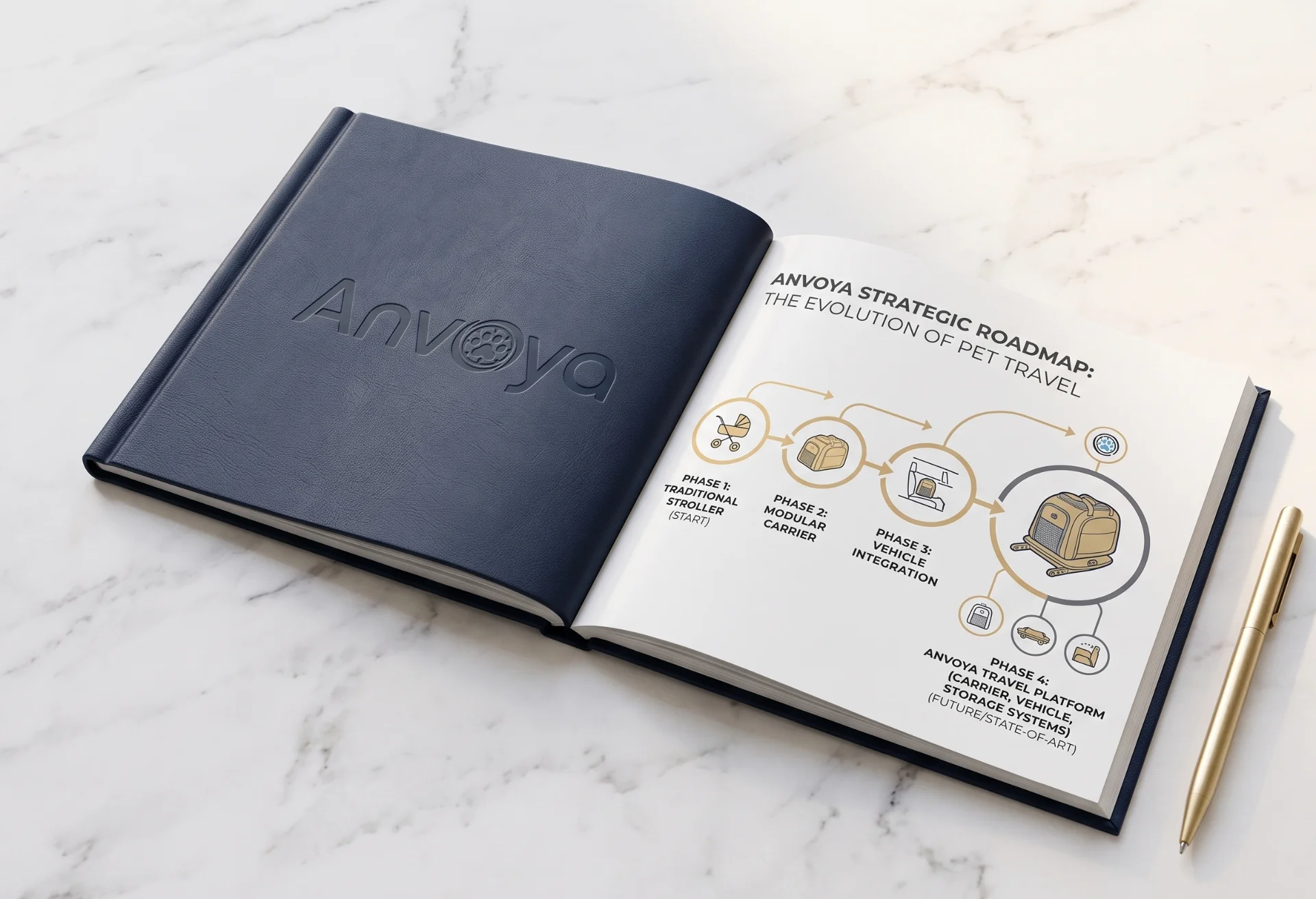
Start with the product role
A brand should not begin only with a competitor image. The better starting point is the product role. Different roles require different development choices.
| Product Role | Main Goal | Suitable Development Focus |
|---|---|---|
| Market refresh | Keep current range active | Styling, fabric, minor function |
| Premium upgrade | Raise perceived value | Comfort, wheels, canopy, handling |
| Differentiated hero SKU | Create stronger category identity | Structure, removable cabin, fold logic |
| Modular platform | Build future extensions | Interfaces, load paths, accessory roadmap |
| Travel system | Connect multiple scenarios | System architecture and validation planning |
This table is simple, but it prevents many mistakes. If the goal is only a seasonal refresh, complex tooling may not be necessary. If the goal is a platform, then surface customization is not enough.
Build a development sequence
A practical Pet Stroller OEM roadmap can follow this order:
-
Define user scenarios
The team should list real use cases: walking, shopping, carrying upstairs, storing at home, loading near a car, or connecting with future modules. -
Choose the product architecture
The team should decide whether the cabin, frame, or base is the core element. -
Review structural feasibility
The supplier should evaluate frame support, folding movement, connection points, and load-bearing areas. -
Estimate tooling implications
New plastic parts, metal tube shapes, locks, and fixtures may affect cost and timeline. -
Prototype critical mechanisms first
The team should test docking, folding, and handling before spending too much time on final styling. -
Define production controls
The team should document inspection points, assembly steps, and acceptable tolerances. -
Prepare the future accessory map
The team should avoid designing accessories as isolated afterthoughts.
Avoid the “beautiful sample” trap
The most expensive mistakes often begin with a sample that looks exciting but has not been reviewed deeply. A beautiful sample may hide several problems:
- The fold is not smooth after repeated use.
- The cabin connection feels loose or confusing.
- The frame requires too many unique parts.
- The packaging volume is too high for the target channel.
- The design is hard to inspect during production.
- The accessory interface cannot support future products.
These problems do not always appear in a photo. They appear during pilot production, quality inspection, retail returns, or customer use. That is why early structure matters.
Connect commercial planning with engineering planning
Product managers often need to balance ambition and speed. A modular stroller platform may create stronger long-term value, but it usually requires more early decision-making. A simple refresh may launch faster, but it may not protect margins for long.
A balanced roadmap can include:
- Short-term SKU refreshes to maintain market activity
- Mid-term upgraded stroller models with clearer functional value
- Long-term modular travel systems built around shared cabins, bases, and accessories
This staged approach helps brands reduce development risk. It also protects existing best-selling products. Instead of replacing everything at once, a brand can upgrade around what already works.
At Anvoya, this is where our OEM/ODM role often becomes most useful. We help brands discuss whether a pet stroller should stay as one product or become part of a smarter travel system. The answer depends on channel, price point, target user, timeline, and appetite for development risk.
Moving beyond traditional strollers is not about making the product look more expensive. It is about making the product role more meaningful.
Frequently Asked Questions
What is the main difference between a traditional pet stroller and a modular pet stroller?
A traditional pet stroller usually works as one standalone product. A modular pet stroller is designed with planned connection points, removable parts, or shared interfaces. It can support carrying, storage, stroller use, and future accessories when the structure is planned early.
Should brands focus on appearance first in a Pet Stroller OEM project?
Appearance matters, but it should not be the first decision. Brands should first define product role, user scenarios, structure, folding logic, and manufacturability. Colors, fabrics, and logo placement become more effective after the product architecture is clear.
Can a pet stroller be used as part of a car travel system?
A pet stroller can be designed for easier car-side handling or compatibility with related travel modules. However, pet travel products do not have the same unified mandatory crash-test regulations as child restraint systems. Brands should verify documents carefully and seek qualified engineering review for vehicle-related claims.
What causes delays in upgraded pet stroller OEM development?
Delays often come from late structural changes, unclear connection methods, tooling revisions, unstable samples, or features that conflict with folding and packaging. Early feasibility review helps brands identify these risks before tooling and production planning become costly.
How can a brand reduce risk when developing a new pet stroller platform?
A brand can reduce risk by defining scenarios, confirming the main module, reviewing load-bearing areas, prototyping key mechanisms early, and documenting quality control points. A capable OEM/ODM partner should connect design ideas with manufacturability and production consistency.
Conclusion
Pet Stroller OEM development is no longer only about fabric, colors, logos, or accessory lists. Brands that want to move beyond traditional strollers need to think earlier about structure, folding logic, connection points, modular use, tooling risk, and production repeatability. A stronger stroller can become a scalable travel platform when the architecture is clear from the beginning. If your brand is planning its next upgraded pet travel product, Anvoya can help review the concept from an OEM/ODM development perspective and explore a smarter path forward.