

Pet Carrier Backpacks: Pros and Cons
A backpack frees both hands, and the dog rides close to your chest. That sounds ideal, until the dog overheats or your back gives out first.
A carrier backpack is worth it for a small, calm pet on walks, hikes, and crowded streets where both hands matter. It is the wrong buy for a large dog, a dog that panics in tight spaces, or any trip that needs a car seat.
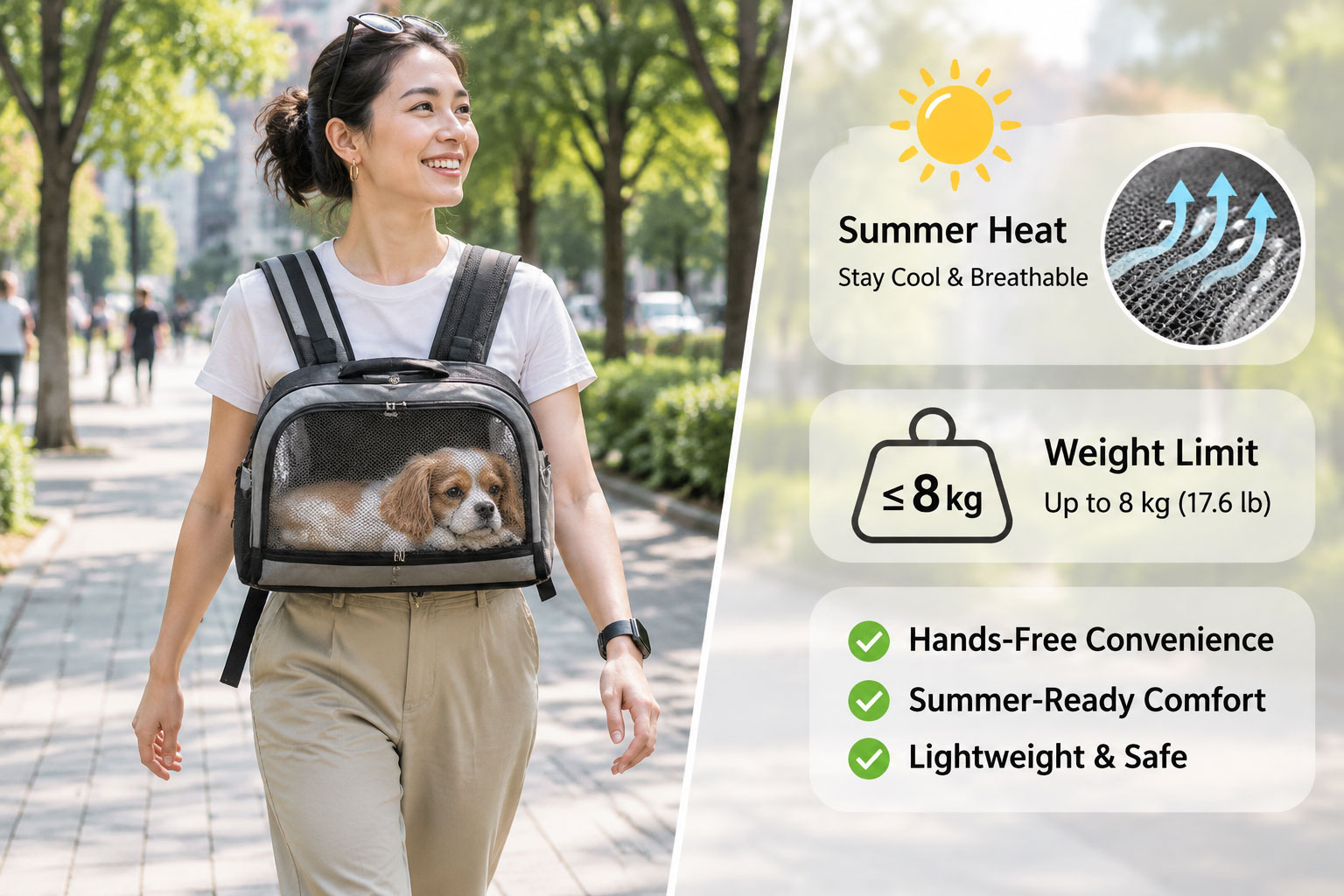
I get this question every week, from buyers and from pet owners. The answer is not one product. It is a fit question, and it turns on three things: the pet's size and spine, the air inside the bag, and what the trip actually asks of you. This article works through the good and the bad in that order.
What does a carrier backpack actually do well?
Two hands free changes a walk. The dog rides close, the leash stays in your pocket, and stairs stop being a problem.
A backpack works best for a small pet on foot: hands-free walking, hiking, and crowded streets, plus close contact that calms an anxious pet. It also helps a senior or recovering dog join a walk it could not finish on four legs.

The first win is the obvious one: both hands stay free. A leash carrier needs one hand at all times. A stroller needs one hand on the handle. A backpack needs none. That matters on stairs, on a crowded train platform, and on a trail where you need a hand for balance. It matters even more when you carry something else — a shopping bag, a phone, a child's hand. The backpack turns the pet into luggage you wear. I have watched a small dog ride calmly through a crowd that would terrify it on a leash, and that is the moment the backpack makes sense.
The second win is proximity. A pet in a backpack rides against your back, close to your body heat and your movement. For an anxious pet, that closeness calms. The pet hears your heartbeat, feels your stride, and smells something familiar. A traditional carrier puts the pet at arm's length, swinging by a handle, and the pet feels every bump alone. The backpack syncs the pet's movement with yours, and that rhythm settles a nervous animal. Cats stress faster than dogs in new places, and the same closeness that calms a cat can also trap heat — ventilation decides whether it works, and that comes later in this article.
The third win is the senior dog. A dog that cannot finish a walk still wants to join it. A backpack lets an older dog, a recovering dog, or a puppy that tires fast ride along and step out when it feels up to it. The dog stays part of the outing instead of staying home. That is the use case where a backpack earns its keep. It keeps a dog in the world a little longer.
Storage helps too. Most backpacks add pockets for water, treats, waste bags, and a phone. The weight sits on your hips when the belt fits right, not on one shoulder. A good hip belt and a chest strap spread the load, and that is the difference between a comfortable hour and a sore back.
Where does a backpack fall short?
A backpack falls short on weight, heat, and time. Most cap out near 10 kg, a heavy dog strains your back, weak ventilation overheats the pet, and a dog that panics in a tight space has no exit.

Weight is the first limit. Most backpacks cap out near 10 kg, and the popular models top out lower. A 12 kg dog in a backpack is a heavy load on a human back, and the bag's own frame adds weight before the pet climbs in. The number on the label is the maximum, not the comfortable load. A pet near the top of the range rides in a bag that sags, and a sagging bag pulls on your shoulders with every step. If your pet is over 10 kg, a backpack is already the wrong tool, and a carrier with wheels or a stroller carries the weight instead.
Heat is the second limit, and the one I see people miss. A backpack wraps the pet in fabric on five sides, and the pet's own body heat has nowhere to go when the mesh is thin or the panels are small. A dog pants to cool down, and a panting dog in a tight bag only gets hotter. In warm weather, or on a fast walk, the bag turns into an oven. A bubble window makes it worse: clear plastic blocks airflow and traps heat, which is why our cat guide flags bubble backpacks as a heat risk. Read the cat backpack safety detail before buying a bubble model.
The third limit is the pet itself. Some pets panic in tight spaces. A cat that claws at the zipper, a dog that whines and turns in circles, a pet that freezes and will not settle — a backpack makes all of it worse, because the pet cannot leave. A carrier on the ground lets the pet step out. A backpack does not. And a pet that panics on your back is a safety problem for both of you.
Then there is the car. A backpack is not a car restraint. It has no anchor point, no rigid frame that locks to a seat, and no test behind it. In a car, a backpack slides across the seat like any loose bag. If the trip includes driving, the pet needs a carrier that locks to the car, and that is a different product entirely.
Horizontal or vertical — does the shape matter?
| Horizontal | Vertical | |
|---|---|---|
| Pet posture | Lies or sits with back level | Sits upright, head and paws out |
| Spine | Stays straight, weight spread | Compressed, load on lower spine |
| Best for | Most pets, longer rides, anxious pets | Confident dogs, short rides, city views |
| Watch out for | Needs room to turn and lie down | Keep rides under 45 minutes; watch for stiffness |
Shape matters more than brand. A horizontal carrier keeps the pet in its natural position, with the spine straight. A vertical carrier holds the pet upright, which compresses the spine and raises the risk of disc trouble over time.
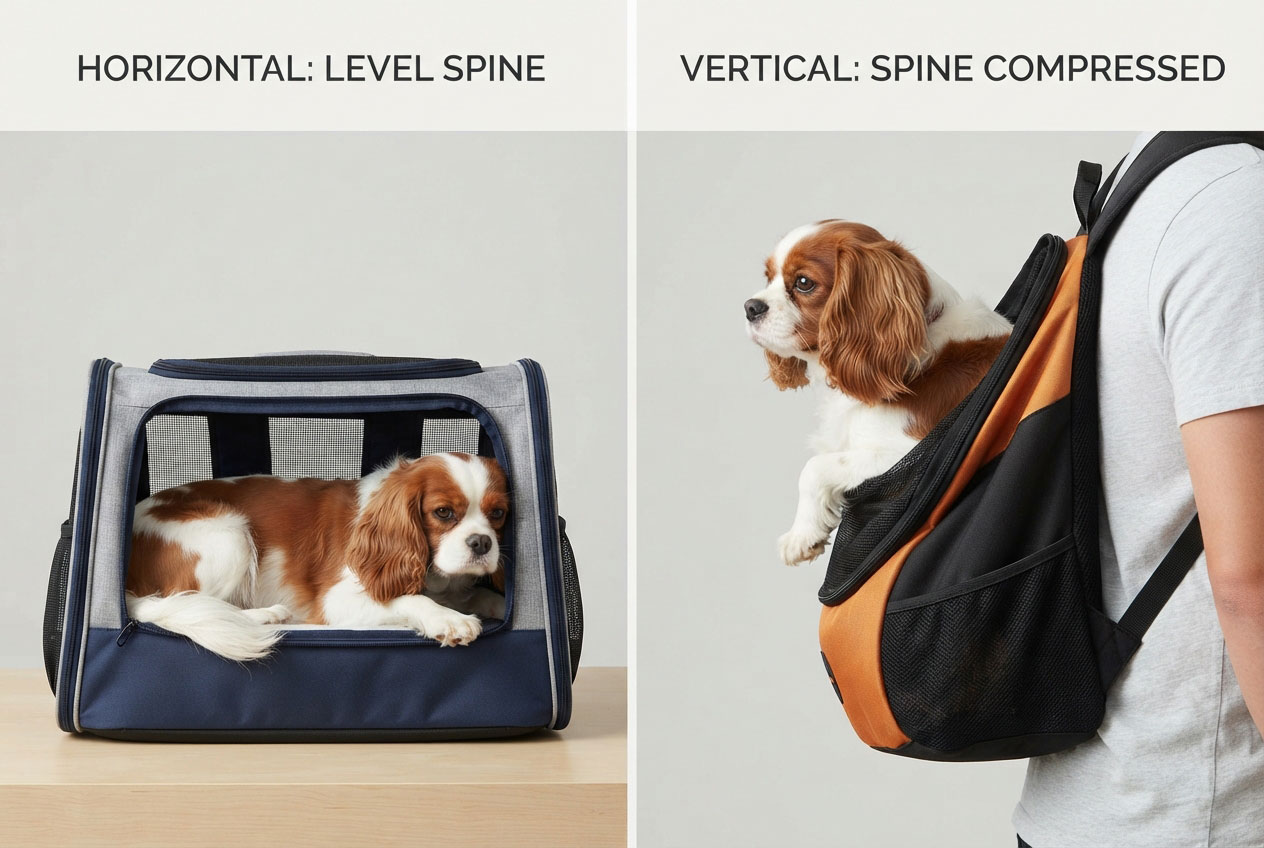
A dog's spine is built to stay horizontal. Four legs, a level back, a head carried forward. A horizontal carrier keeps that shape: the pet lies or sits with its back level, its legs tucked under, its weight spread across the base. The spine stays straight, the joints stay neutral, and the pet can shift position when it wants to. That is the natural position, and it is the one a good carrier protects.
A vertical carrier breaks that shape. The pet sits upright, head and paws above the opening, spine stacked like a human in a chair. Dogs are not built for that. The upright position loads the lower spine and the hips, and it compresses the discs between the vertebrae. Over a short ride, a healthy dog tolerates it. Over a long ride, or repeated daily, the compression adds up, and vets link sustained upright carrying to a higher risk of intervertebral disc disease — IVDD — especially in long-backed breeds like dachshunds, corgis, and French bulldogs. The risk is not a certainty, and a single short ride does not cause it. But the shape is the risk, and the risk grows with time in the bag.
That does not make every vertical carrier a bad buy. A confident, curious dog that likes to watch the world often prefers the upright view, and a short ride in a vertical carrier is fine for a healthy dog. The problem is duration and fit. A vertical carrier worn for more than 30–45 minutes without a break, or a carrier that forces the pet upright when it wants to lie down, is where the strain builds. Watch the pet: a dog that shifts constantly, pants without heat, or goes stiff when you lift it out is telling you the position hurts.
My check is simple. I put the pet in the carrier, let it settle, and look at the spine. If the back stays level, the carrier fits. If the back curves or the pet cannot turn around and lie down, the carrier is too small or the wrong shape. A horizontal carrier with a rigid base and a flat floor passes that check for most pets. A vertical carrier passes it only for short rides with a dog that chooses the upright view.
How much ventilation does a backpack really need?
A summer hike, twenty minutes in. The dog pants, the mesh panel presses against its face, and the bag feels warm from the outside.
A backpack needs mesh on at least two sides, with real airflow across the pet, not one small window. Brachycephalic breeds — pugs, French bulldogs — overheat faster, and a bubble window traps heat instead of venting it.
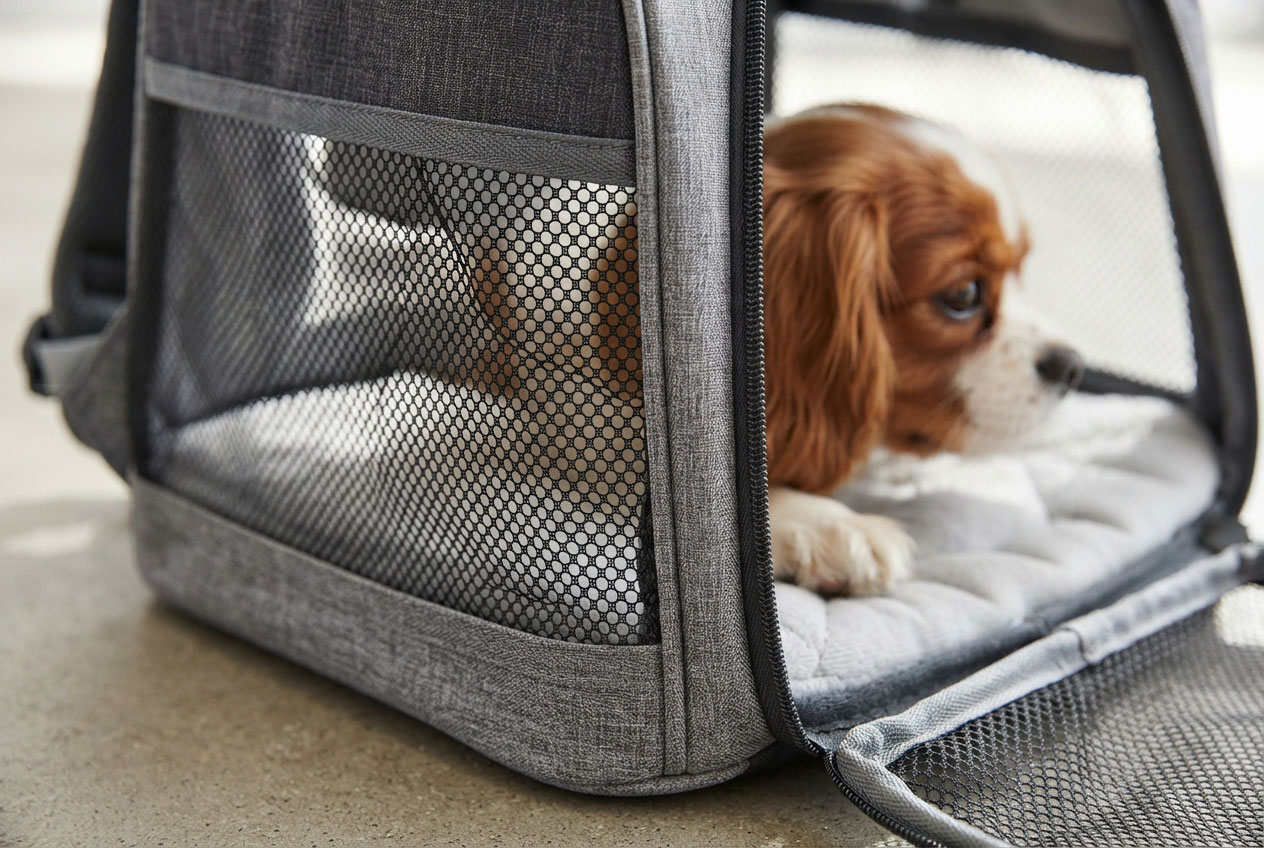
Mesh is the difference between a carrier and a box. A good backpack puts mesh on at least two sides, so air moves across the pet instead of sitting still. The best models add a third panel, or a full mesh front, so the pet gets cross-ventilation from more than one direction. The mesh has to be real mesh — open weave, not a solid panel with a few holes punched in it. Hold the panel up to the light. If you can see through it easily, air passes. If you cannot, the pet breathes its own warm air.
The bubble window is the trap. A clear plastic bubble looks great in photos: the pet sees out, the owner sees the pet. But plastic does not breathe. A bubble backpack seals the pet behind a curved sheet of plastic, and the heat builds fast. Our cat backpack guide calls this out directly — bubble models trap heat, and a cat in a bubble bag overheats sooner than the same cat in a mesh bag. The same holds for dogs. A window that looks clear is not a window that vents.
Brachycephalic breeds need more air than other dogs. Pugs, French bulldogs, and other flat-faced breeds cool themselves less efficiently, and they overheat faster in a closed bag. A backpack with weak ventilation is a bad buy for these breeds at any price. If you own one, look for a carrier with mesh on three sides and a wide opening, and skip the bubble entirely.
I test the airflow before I buy. I put my hand inside the empty bag, close the zippers, and feel for a draft from the mesh panels. Then I put the pet in for five minutes at home, in a cool room, and watch. A pet that pants in a cool room will pant harder outside. A pet that settles and breathes normally has enough air. Clean the mesh too — clogged mesh from hair and dust blocks airflow over time, and a washable liner keeps the bag from holding odors.
Who is a backpack right for — and when is a carrier or stroller the better buy?
The right buy depends on the pet, not the bag. Five checks before you pay, and one honest line about the car.
A backpack suits a small, calm pet that walks with you often. A carrier or stroller suits a pet that rides in the car, a dog that cannot walk far, or any trip where the pet needs a real seat.
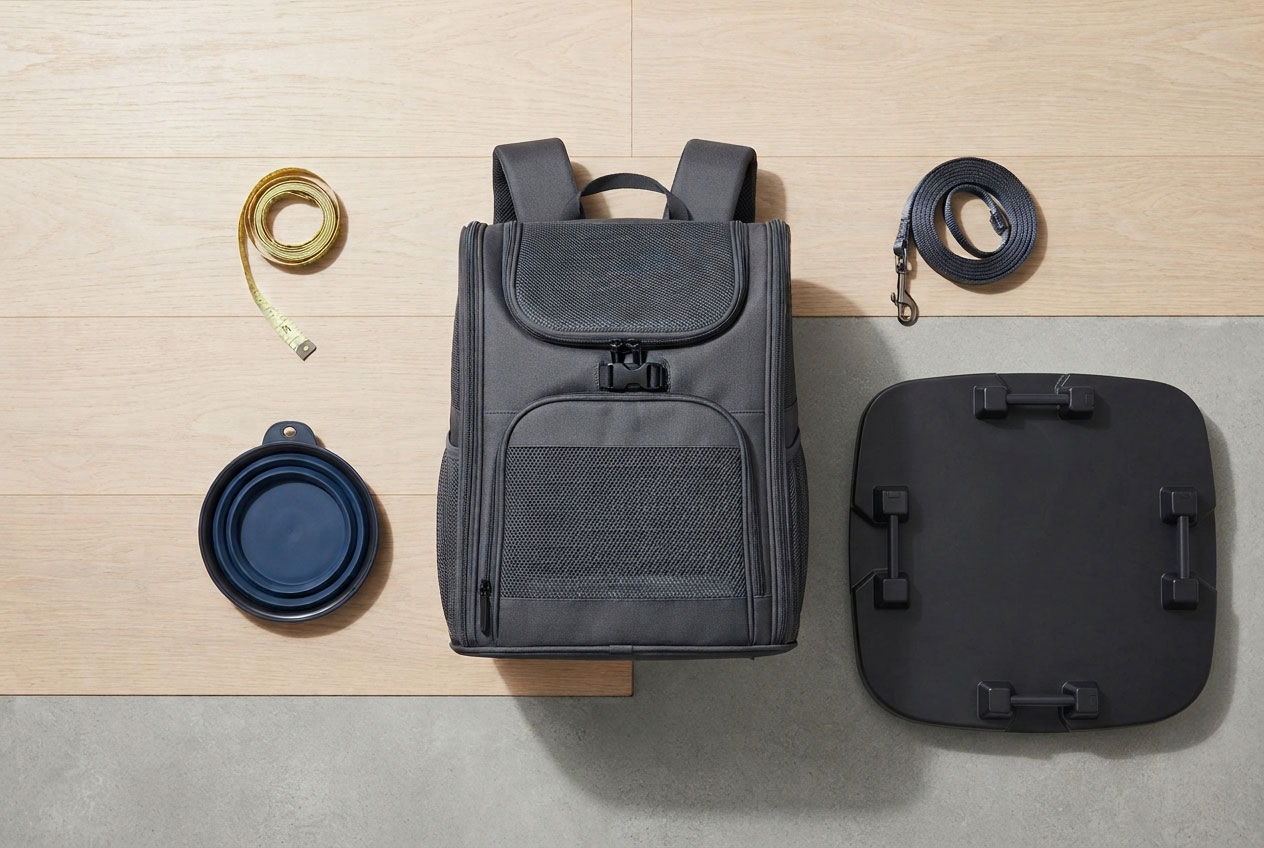
Five checks, in order, before you pay.
-
Size and weight. Measure the pet: body length from nose to base of tail, standing height, and weight. Then measure the inside of the bag, not the outside — padding and piping eat space. The pet needs room to turn around and lie down. If the pet cannot turn, the bag is too small.
-
Posture and shape. Pick horizontal first. A horizontal carrier keeps the spine level for most pets. Pick vertical only for short rides with a confident dog that likes the view, and keep those rides under 45 minutes.
-
Ventilation. Mesh on at least two sides, three if the pet is brachycephalic. No bubble window. Test the airflow with your hand before you buy.
-
Your own fit. I try the bag on with weight in it. Padded shoulder straps, a hip belt, and a chest strap spread the load. If the straps dig in after five minutes in the shop, they dig in worse on a walk. Your back decides whether the backpack works, and a sore back means the bag stays in the closet.
-
The car leg. A backpack covers the walk. It does not cover the car. If the trip includes driving, the pet needs a carrier that locks to the car. That is where a different system earns its place. AERO is the integrated version: the carrier, the ISOFIX base, and the stroller in one product, for small pets up to 12 kg. BASE-X is the modular version: a standalone ISOFIX base system whose carrier detaches for everyday use. Pick the one that matches how the pet actually travels. For cats, read our cat backpack safety guide first — cats stress faster than dogs, and the safety detail is different. For a dog that cannot walk far, our stroller guide asks the same worth-it question from the other side.
A backpack is a walking tool, not a travel system. Pick the shape that keeps the spine straight, the mesh that moves air, and the carrier that covers the car.