
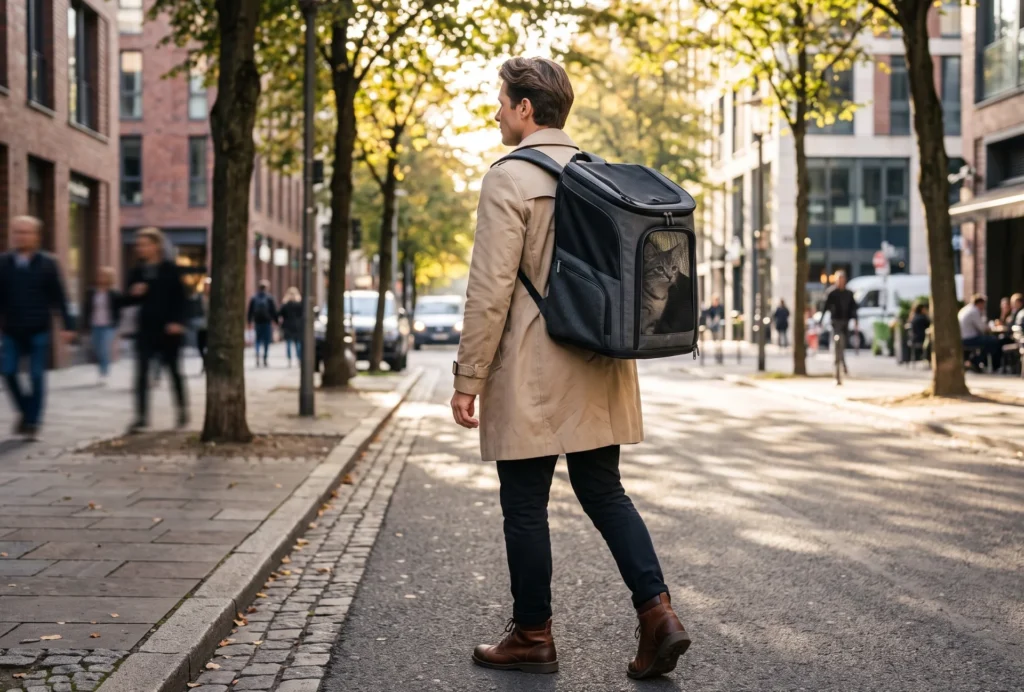
Cat backpacks can make travel easier, but the wrong design or use can turn convenience into stress or risk. Many owners buy one for walking, errands, or car rides without separating those situations. The safer approach is simple: match the carrier to the pet, the journey, and the environment.
Cat backpacks are safe for some cats and some short everyday trips when they offer strong ventilation, stable structure, secure containment, and enough space for the cat to sit or turn comfortably. They are not automatically safe for vehicle travel because walking comfort and crash restraint are very different safety requirements[^1].
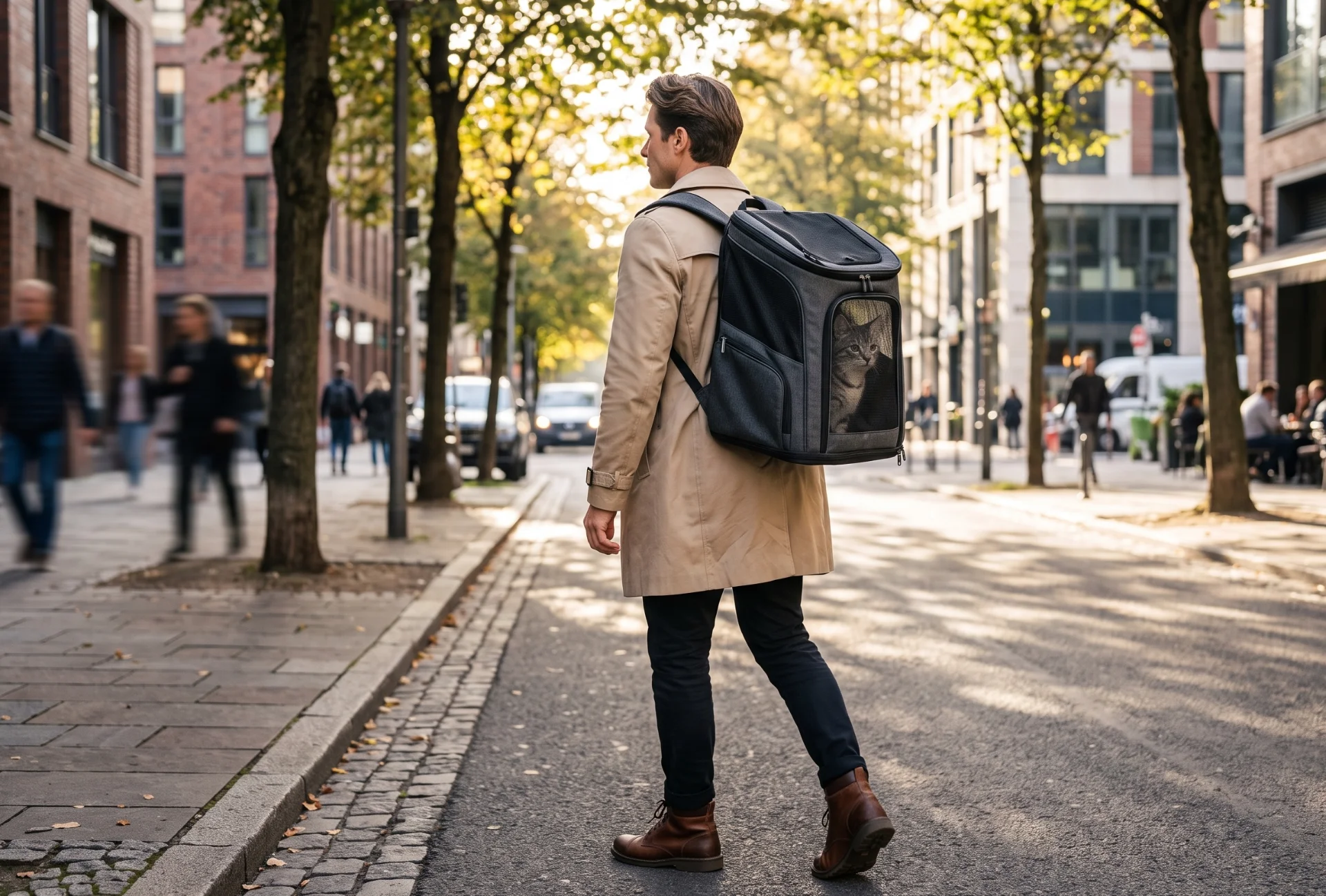
A backpack carrier should never be judged by appearance alone. Bubble windows, cute shapes, and lightweight shells may look attractive, but true safety comes from structure, airflow, restraint, stability, and correct use. The key question is not “Is this carrier popular?” It is “Safe for what situation?”
What Makes a Cat Backpack Safe or Unsafe?
A cat backpack can feel like a simple lifestyle product, but small design choices matter. Poor airflow, weak seams, unstable bases, or tight interiors can quickly create stress. The owner may feel mobile and comfortable, while the cat may feel trapped, overheated, or unsupported.
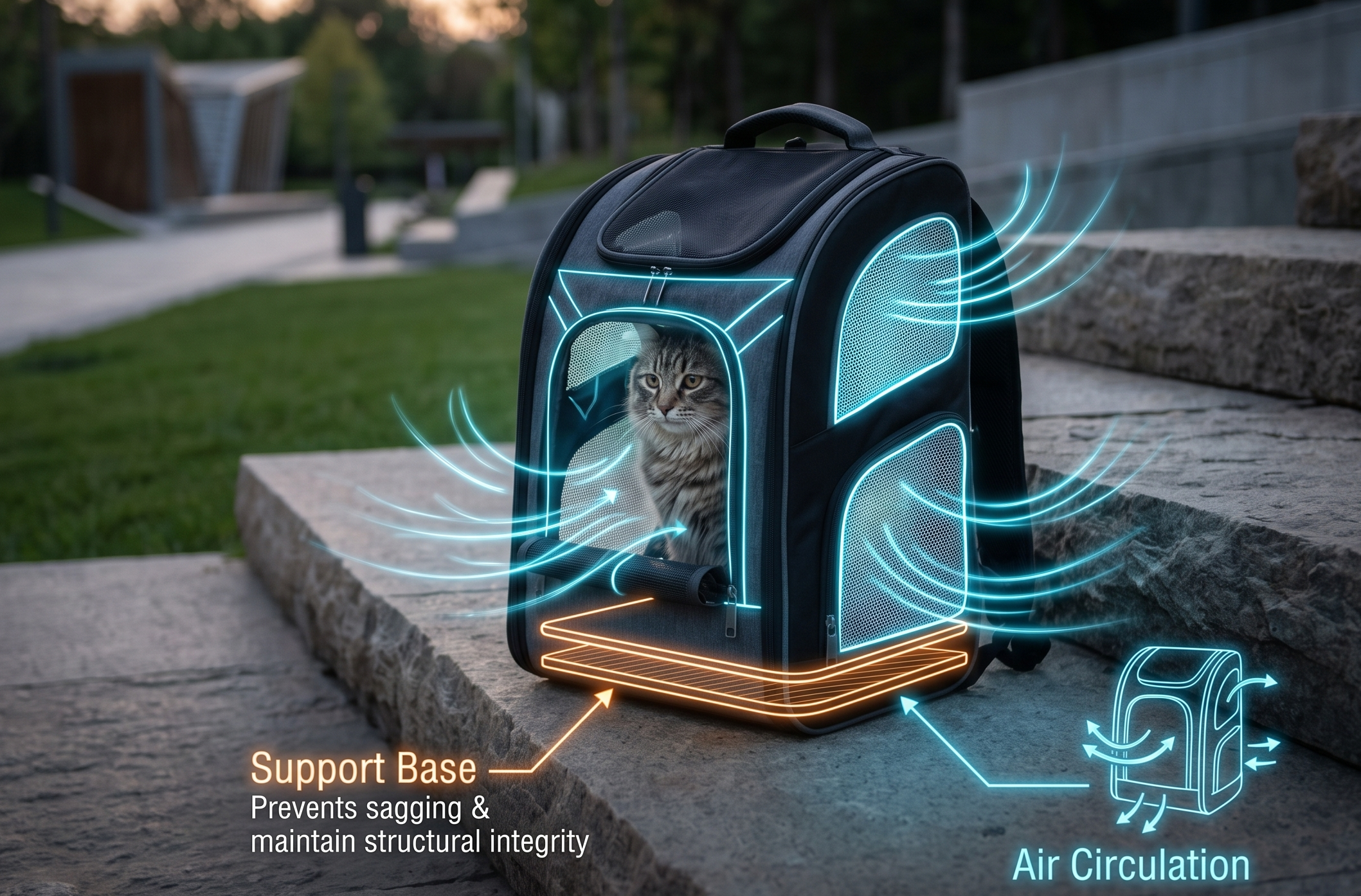
A safer cat backpack usually has continuous ventilation, a stable base, escape-resistant closures, non-toxic materials, and enough internal space for the cat’s posture. An unsafe one often collapses, tips easily, restricts airflow, overheats in sunlight, or allows the cat to push through zippers, mesh, or weak openings.
The main safety factors are practical, not decorative
A safe carrier starts with basic engineering. The product has to hold the pet securely, allow normal breathing, reduce panic, and stay stable while the owner moves. Style can matter for retail, but safety depends on details that are easy to overlook during online shopping.
Key safety points include:
- Ventilation: Mesh panels, side vents, and airflow paths should work even when the owner’s back blocks one surface.
- Internal space: The cat should be able to sit naturally, turn partially, and avoid being pressed against hard plastic.
- Structural support: The base should not sag under the cat’s weight.
- Containment: Zippers, buckles, and leash tethers should reduce escape risk.
- Stability: The backpack should not swing sharply with every step.
- Material quality: Fabrics, plastics, foams, and coatings should be suitable for pet contact.
- Cleaning access: Removable pads and wipeable surfaces help control odor and hygiene.
A common mistake is choosing by maximum advertised weight alone. Weight capacity matters, but it does not tell the whole story. A 6 kg cat may fit by weight but still feel cramped by body length or height.[^2] Cats also behave differently under stress.[^3] One calm cat may sit quietly in a semi-rigid carrier. Another may claw, twist, and push against every seam.
Safer and riskier features at a glance
| Feature | Safer Design | Higher-Risk Design |
|---|---|---|
| Ventilation | Multiple mesh panels or vents | Small holes or single top vent |
| Base | Firm, flat, removable pad | Soft base that bends downward |
| Opening | Secure zippers with locks or covers | Loose zipper pulls, weak seams |
| Shape | Semi-rigid with internal support | Collapsible under pet movement |
| Visibility | Balanced view and privacy | Full exposure with no hiding space |
| Fit | Allows natural posture | Forces curled or compressed posture |
Cat behavior matters as much as product design
The safest carrier on paper can still be wrong for a specific cat. Some cats tolerate enclosed spaces after gradual training. Others panic when lifted off the ground or carried close to street noise.
A careful introduction usually helps[^4]:
- Leave the backpack open at home.
- Put familiar bedding inside.
- Let the cat enter without pressure.
- Close it briefly indoors.
- Try short hallway or garden sessions.
- Move to quiet outdoor walks before busy areas.
A carrier should feel like a familiar space before it becomes a travel tool.
This matters because stress can create safety problems. A panicked cat may overheat, scratch through mesh, or escape during loading.[^5] A safe cat backpack is not only a product. It is also a training process and a responsible use pattern.
Are Cat Backpacks Safe for Walking and Everyday Travel?
Cat backpacks can be useful for daily mobility, but everyday travel is not risk-free. A short walk to the vet feels different from a crowded subway, a hot summer street, or a long shopping trip. The danger grows when owners treat all outdoor movement as the same.
Cat backpacks are generally safer for short walking trips, urban transfers, vet visits, and low-intensity everyday travel when the cat is calm, the weather is mild, and the carrier has good airflow and structure. They are less suitable for long exposure to heat, heavy crowds, rough movement, or anxious cats.
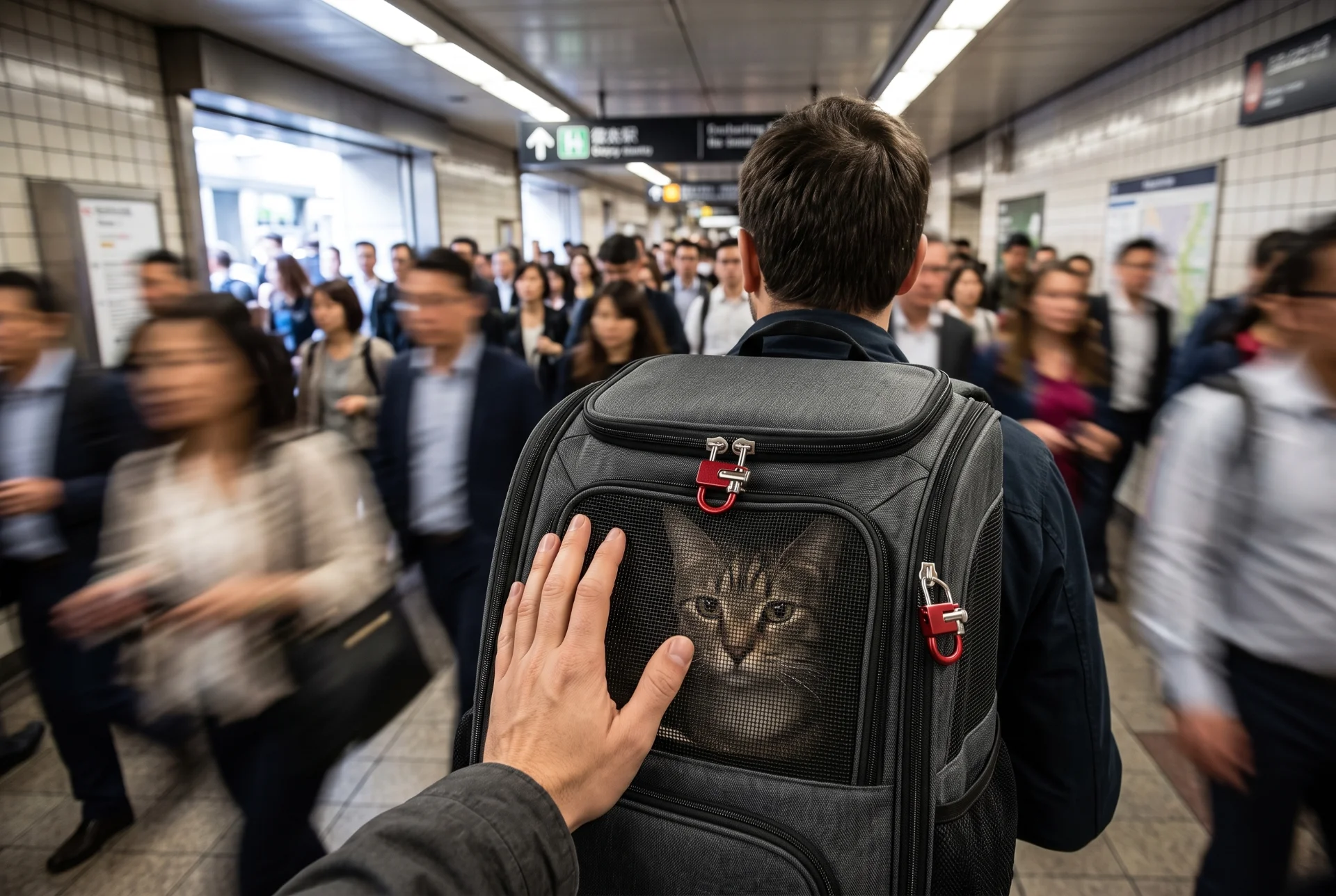
Everyday use is about comfort, control, and observation
For walking and daily movement, the main safety questions are:
- Can the cat breathe easily?
- Can the cat stay calm?
- Can the owner monitor the cat?
- Can the carrier remain stable?
- Can the cat escape if startled?
This is different from vehicle safety, where impact loads, anchoring, and crash dynamics become important. For walking, the biggest risks are usually heat, stress, instability, and escape.
A short walk in mild weather may be fine for many cats. A long walk in direct sun may not be. Transparent bubble backpacks can trap heat faster than owners expect, especially when airflow is limited.[^6] Even mesh backpacks can become uncomfortable when the cat is pressed against the owner’s back and air cannot circulate freely.
Good everyday-use situations
Cat backpacks can work well in situations like:
- Walking from home to a nearby clinic
- Moving through an apartment building
- Taking public transport during quiet hours
- Carrying a cat through an airport terminal before using an approved travel carrier
- Short urban errands where the cat is already trained
They are especially helpful when the owner needs both hands free. This is one reason backpack-style carriers became popular in cities. Stairs, scooters, metro stations, and crowded sidewalks can make hand-carried boxes inconvenient.
Situations that need more caution
Some conditions raise the risk:
| Situation | Why It Matters | Safer Alternative |
|---|---|---|
| Hot weather | Heat can build inside the carrier | Use a shaded, ventilated carrier and shorten the trip |
| Heavy crowds | Noise and movement can trigger panic | Use a calmer route or rigid carrier |
| Long walks | Fatigue and stress increase | Take breaks and monitor breathing |
| Rain or humidity | Poor airflow and damp bedding cause discomfort | Use weather protection without blocking vents |
| Nervous cat | Escape attempts may increase | Train indoors first |
Signs that the trip should stop
Owners should watch for warning signs. These can include heavy panting, frantic scratching, repeated turning, drooling, loud distress vocalization, or limp posture. Cats often hide discomfort until it becomes serious, so small behavior changes deserve attention.
In my experience, the most useful habit is to check the cat before checking the phone. A quick glance at posture, breathing, and body position can prevent many problems.
For everyday walking, the answer is balanced. A cat backpack can be safe enough for the right cat, the right carrier, and the right route. It should not be treated as a universal solution for every cat or every trip.
Are Cat Backpacks Safe for Car Travel?
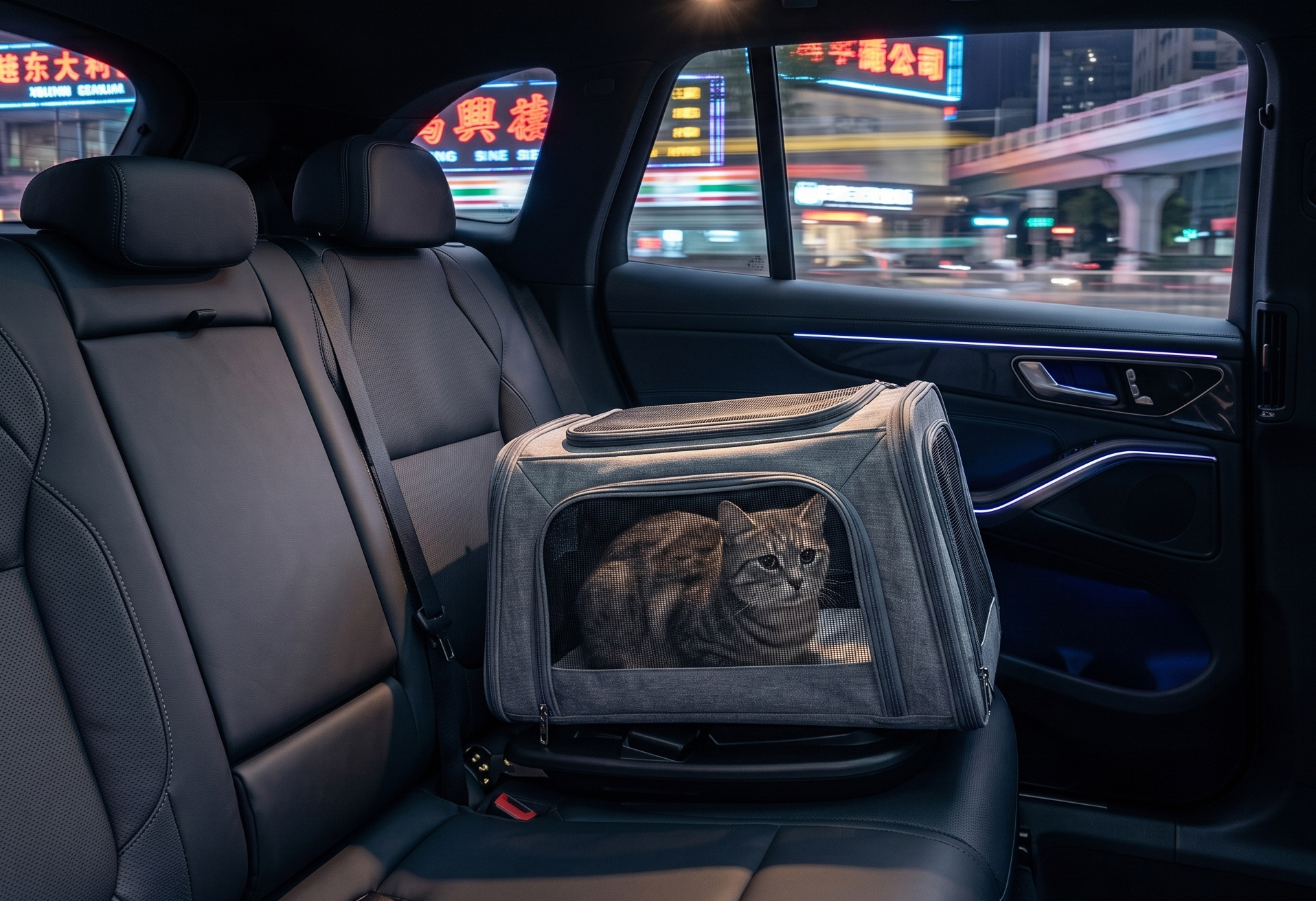
Car travel changes the safety question completely. A backpack that works well on foot may not perform well in a moving vehicle. During sudden braking, a carrier can slide, rotate, or become a moving load.[^7] That creates risk for the cat, the driver, and passengers.
Cat backpacks are not automatically safe for car travel because most are designed for carrying, not vehicle restraint. A safer vehicle carrier needs secure attachment, stable geometry, strong load paths, and compatibility with seat belts or anchoring systems. Buyers should verify test documents and avoid assuming “carrier” means “crash-ready.”
Walking safety is not vehicle safety
This distinction is critical. A cat backpack may be safe enough for:
- Short walking trips
- Apartment-to-car movement
- Vet clinic transfers
- Public transport in calm conditions
But that does not mean it is suitable as a restraint system inside a moving vehicle.
Vehicle travel introduces forces that are not present during walking. Even at low urban speeds, sudden braking can create high forward movement.[^8] In a collision, the carrier, pet, and attachment points all experience dynamic loads. A soft backpack with shoulder straps was usually not designed to manage those loads.
At Anvoya, vehicle restraint thinking comes from child car seat engineering, but pet travel products should be discussed carefully. Pet car seats and carriers do not currently operate under the same unified mandatory crash-test regulations as child restraint systems. Crash testing can be a valuable engineering tool, but it should not be presented as absolute proof of safety or as equivalent to legal child car seat certification.
What makes a carrier more suitable for vehicle travel?
A vehicle-ready pet carrier needs more than a handle and zipper. Buyers should look at the whole system:
-
Attachment method
The carrier should connect securely to the vehicle seat belt, ISOFIX base, or another defined anchoring method. -
Structural load path
The design should transfer forces through reinforced areas, not weak mesh or decorative panels. -
Stable base
The carrier should resist tipping, sliding, and rotation during normal driving and sudden braking. -
Pet containment
The cat should remain inside the carrier. Closures and seams must withstand movement and stress. -
Vehicle compatibility
The system should fit real vehicle seats, belt paths, and anchoring positions. -
Misuse prevention
Clear routing, labels, and instructions reduce incorrect installation.
Backpack vs vehicle-ready carrier
| Requirement | Typical Cat Backpack | Vehicle-Ready Pet Carrier |
|---|---|---|
| Designed for walking | Yes | Sometimes |
| Designed for vehicle anchoring | Often no | Yes, if specified |
| Stable on car seat | Varies | Should be tested for fit and stability |
| Load path planning | Usually limited | Should be reinforced |
| Seat belt compatibility | Often improvised | Should be clearly defined |
| Crash-test evidence | Often absent | Documents should be requested and reviewed |
This is why vehicle use deserves separate evaluation. A backpack can still be useful for moving the cat to the car. Once inside the vehicle, the safer option may be a carrier or pet car seat designed for secure attachment.
For related reading, the same principle appears in dog travel safety. Helpful next steps include [How to Secure a Dog in a Car] and [Can a Pet Carrier Be Used as a Dog Car Seat?]. The species differs, but the core idea is the same: the carrier must match the travel environment.
Procurement note for brands and buyers
For B2B buyers, importers, and private-label pet brands, vehicle claims should be reviewed with extra care. Ask suppliers for:
- Test method descriptions
- Test speed and pulse information
- Load weight used
- Photos or video of setup
- Material specifications
- Buckle, zipper, and stitching data
- Instructions and warning labels
- Quality control process records
A responsible supplier should explain the product’s intended use and its limits. That honesty builds trust. It also reduces product returns, misuse, and exaggerated marketing claims.
How Does a Cat Backpack Compare With a Traditional Pet Carrier?
Many owners compare cat backpacks with hard carriers as if one must be better. That is not the best way to think about it. Each style solves a different problem. The safest choice depends on the trip, the cat’s behavior, and how the carrier is secured.
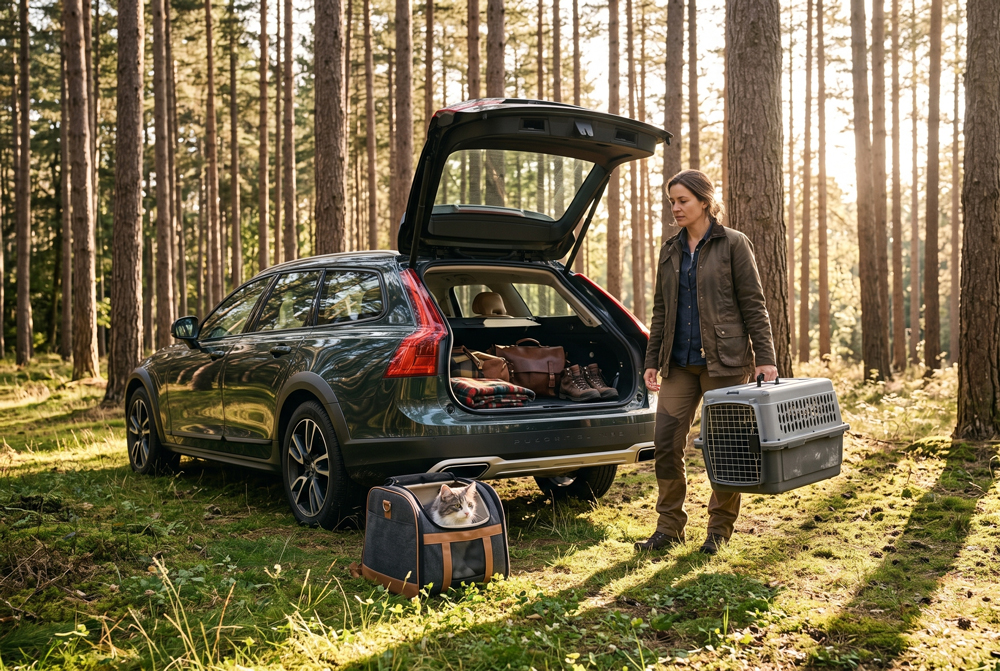
A cat backpack is usually better for hands-free short movement, stairs, and urban walking. A traditional pet carrier is often better for stability, vet handling, vehicle placement, and anxious cats. Neither option is automatically safer. The safer choice is the one designed for the specific use case.
Different carriers solve different jobs
A backpack carrier focuses on portability. A hard-sided carrier focuses on structure. A soft-sided carrier may focus on comfort and storage. A vehicle-ready carrier focuses on attachment and load management.
The comparison becomes clearer when the travel scenario is defined.
| Use Case | Cat Backpack | Traditional Hard Carrier | Soft Carrier |
|---|---|---|---|
| Short walking | Good for trained cats | Less convenient | Good if shoulder strap is stable |
| Vet visit | Convenient but may be awkward on exam table | Very practical | Practical |
| Car travel | Needs careful evaluation | Often more stable, but still needs restraint | Varies widely |
| Nervous cat | May feel exposed | Often better privacy | Depends on structure |
| Cleaning | Varies by design | Usually easy | Fabric may hold odor |
| Storage | Easy | Bulky | Easy |
Cat backpack strengths
Cat backpacks can be useful because they:
- Free the owner’s hands
- Help with stairs and public transport
- Keep the pet close to the body
- Work well for short city transfers
- Appeal to owners who want mobility
This is why the category has grown. Many modern pet owners live in apartments, use ride-hailing, or walk to clinics. A backpack solves a real convenience problem.
Cat backpack limitations
The limitations are also real:
- The cat may sway with the owner’s movement.
- The interior may be narrow.
- Some designs have poor airflow.
- Sun exposure can be a problem.
- The carrier may not sit securely on a car seat.
- Escape risk increases if zippers are weak.
- Some cats dislike being elevated and exposed.
Traditional carriers often feel less fashionable, but they can be more predictable. A flat base on the floor or seat usually gives the cat a stable surface. Hard sides can also protect the cat from being squeezed in crowded environments.
The best carrier may be modular
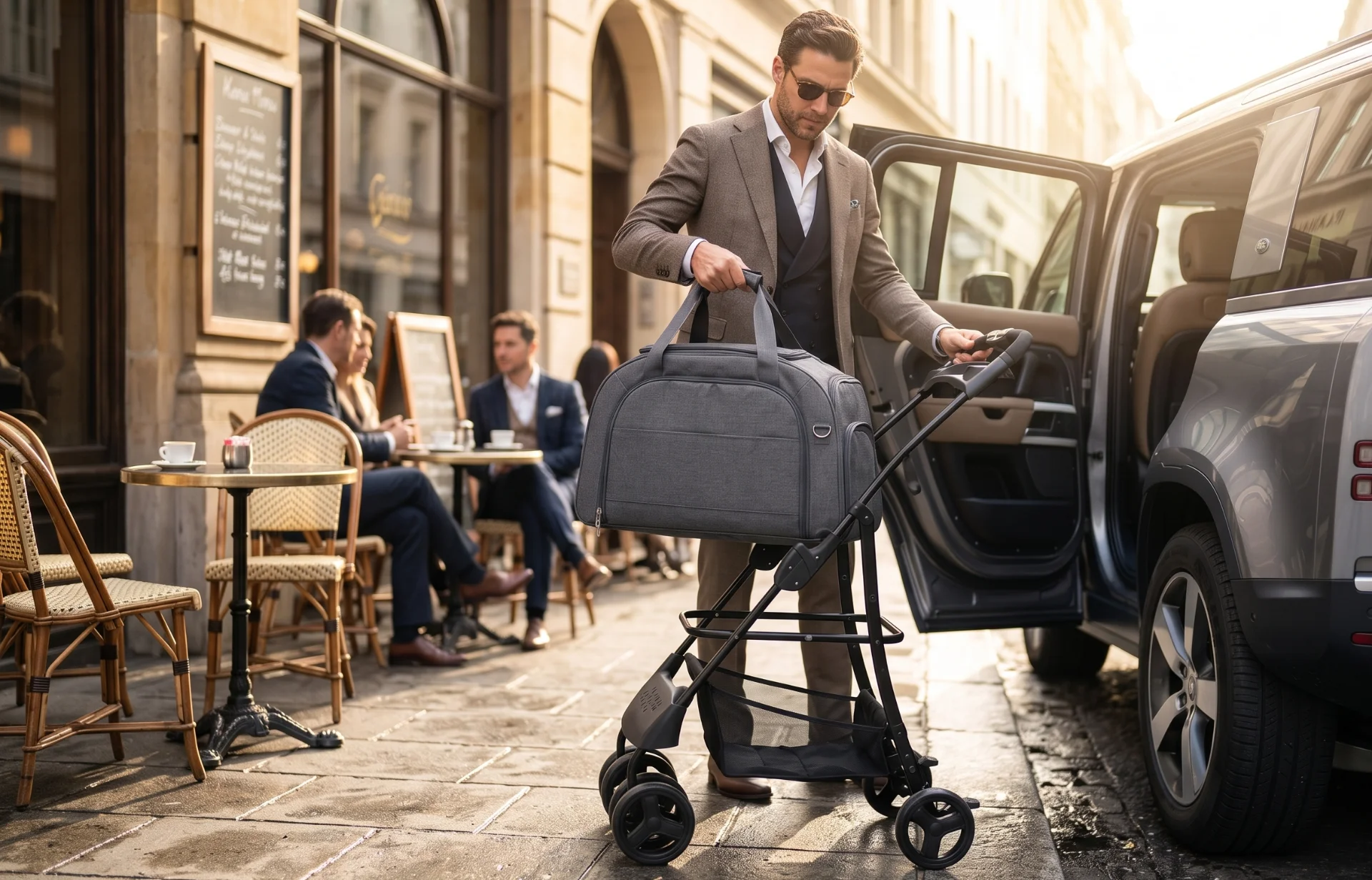
A useful direction for product development is modularity. A carrier can be designed for more than one use, but each use must be engineered properly. For example, a carrier may work as a hand carrier, stroller module, and vehicle carrier if the system has correct attachment points, structure, and instructions.
This is where Anvoya focuses its product thinking. The goal is not to make every carrier do everything casually. The better goal is to create smart, easy, and safety-focused travel systems where each mode is considered. For B2B buyers, modular systems can also preserve existing product lines. A brand may not need to replace a best-selling carrier if a compatible base or travel system can upgrade its use case.
The practical takeaway is simple. A cat backpack can be a good walking carrier. A traditional pet carrier may be a better general-purpose option. A vehicle-compatible system is a separate category that deserves specific evaluation.
What Should You Look for in a Safer Pet Travel Carrier?
Choosing a safer carrier can feel confusing because many listings use similar words. “Premium,” “safe,” and “travel-ready” do not always mean much. A better buying process starts with the journey: walking, vet visits, public transport, car travel, or multi-mode travel.
A safer pet travel carrier should match the intended use and include ventilation, structural support, secure containment, stable placement, suitable materials, clear instructions, and verified compatibility with the travel environment. For vehicle use, buyers should also review attachment design, test documentation, and installation guidance.
Start with the use case
Before comparing products, define the main travel need.
Ask these questions:
- Will the carrier be used mainly for walking?
- Will it be placed in a car during driving?
- Will it be used for vet visits?
- Will the cat stay inside for more than 30 minutes?
- Will the owner use public transport?
- Is the cat calm, nervous, large, elderly, or motion-sensitive?
- Does the product need to support private-label or retail claims?
The safest product for one use may be poor for another. A lightweight backpack can be convenient for a 10-minute walk. It may be the wrong choice for a long drive unless it has a defined vehicle attachment system.
Safety checklist for pet owners
Pet owners can use this checklist before buying or using a carrier:
- Airflow: Are there vents on more than one side?
- Fit: Can the cat sit in a natural position?
- Base: Does the bottom stay flat under weight?
- Zippers: Can they be locked or secured?
- Mesh: Is it strong enough to resist claws?
- Visibility: Does the cat have both view and privacy?
- Heat control: Can the carrier avoid direct sun buildup?
- Cleaning: Can bedding be removed and washed?
- Handling: Can the owner lift and load it without tipping?
- Instructions: Does the brand explain correct and incorrect use?
Extra checklist for vehicle travel
For car use, the checklist should go further:
| Evaluation Point | Why It Matters |
|---|---|
| Seat belt routing | Prevents improvised and unstable installation |
| ISOFIX or base compatibility | Improves repeatable attachment when properly designed |
| Anti-rotation support | Reduces tipping and movement |
| Reinforced shell or frame | Helps manage load transfer |
| Internal tether design | Helps containment but should not be the only restraint |
| Test documentation | Helps buyers evaluate claims |
| Warning labels | Reduces misuse |
| Production QC | Supports consistency across batches |
At Anvoya, the engineering discussion often starts with load paths and misuse prevention. This comes from experience with European child car seats and automotive safety products. For pet travel, the same thinking can improve product quality, but buyers should still verify documents and seek qualified professional evaluation for application-specific decisions.
What brands and procurement teams should ask suppliers
For importers, distributors, and OEM/ODM customers, supplier selection is just as important as product design. A strong supplier should be able to explain how a product is made, how quality is controlled, and what use case the product is built for.
Useful questions include:
- What is the intended use: walking, stroller, car, or multi-mode?
- Which parts carry load during movement or braking?
- What materials are used for shell, fabric, mesh, buckles, and straps?
- How are zippers and seams tested?
- What is the maximum pet weight and body size?
- How is ventilation measured or evaluated?
- What vehicle types were checked for fit?
- What installation mistakes are most likely?
- What inspections happen during production?
- Can the supplier support private-label documentation?
This approach avoids vague safety language. It also helps brands build differentiated products without overstating claims.
A safer carrier is part of a system
A carrier does not work alone. The pet, owner, vehicle, route, climate, and instructions all affect safety. That is why one product can be appropriate in one setting and inappropriate in another.
The best pet travel products make correct use easy. They reduce guesswork. They help owners secure the carrier consistently. They also tell owners when the product should not be used.
For cat backpacks, that means clear walking-use guidance. For vehicle carriers, that means defined attachment and compatibility. For modular systems, that means every mode needs its own safety logic.
FAQ
Are cat backpacks safe for nervous cats?
Cat backpacks may not be ideal for nervous cats unless they are introduced slowly. A nervous cat may panic, scratch mesh, overheat, or try to escape. Start indoors, use familiar bedding, and choose a carrier with privacy, airflow, and a stable base.
Can a cat backpack be used as a car seat?
A cat backpack should not be used as a car seat unless the manufacturer clearly defines vehicle attachment and provides suitable documentation. Most backpacks are designed for carrying, not crash restraint. For car travel, look for a carrier with seat belt routing, anchoring compatibility, and stable structure.
How long can a cat stay in a cat backpack?
Many cats tolerate short trips better than long ones. A 10–30 minute outing may be reasonable for a trained, calm cat in mild weather. Longer use requires breaks, airflow checks, hydration planning, and close monitoring. Heat, stress, and posture are the main concerns.
Are bubble cat backpacks safe?
Bubble cat backpacks can be safe for short use if they have enough ventilation and do not trap heat. The clear window should not replace airflow. Avoid direct sun, check the cat often, and make sure the interior gives the cat enough space and privacy.
What is the safest carrier for car travel with a cat?
The safest option is usually a carrier designed specifically for vehicle use, with secure attachment, stable structure, and clear installation instructions. Buyers should verify test documents and compatibility instead of relying on marketing terms. A walking backpack is not automatically suitable for driving.
Conclusion
Cat backpacks can be safe for walking and everyday travel when the design, cat temperament, and environment all fit the use case. They are not automatically safe for car travel, because vehicle restraint requires different engineering: attachment, stability, load paths, and compatibility. For pet brands and buyers building safer travel lines, Anvoya can help evaluate modular carrier systems, ISOFIX-based solutions, and OEM/ODM product development with a practical safety-first approach.
[^1]: "CPS Certified Products", https://centerforpetsafety.org/cps-certified/. Vehicle-safety guidance explains that restraint systems are designed to manage crash forces and prevent occupants or objects from moving violently during sudden deceleration; this supports distinguishing walking comfort from crash-restraint performance. Evidence role: mechanism; source type: government. Supports: Transportation safety sources should explain that vehicle restraints must manage crash forces and dynamic loads, which are different from ordinary carrying comfort.. Scope note: General vehicle-safety mechanism; it does not test cat backpacks specifically.
[^2]: "PSA: PLEASE buy appropriately sized carriers for EACH of ...", https://www.reddit.com/r/CatAdvice/comments/qhxjq6/psa_please_buy_appropriately_sized_carriers_for/. Pet-transport sizing guidance defines appropriate carrier fit by the animal’s ability to stand, turn, and lie in a natural position, indicating that weight capacity alone is an incomplete measure of suitability. Evidence role: definition; source type: institution. Supports: Carrier-sizing guidance should support that animal fit depends on body dimensions and posture, not only weight capacity.. Scope note: Carrier-sizing rules may be developed for transport containers generally and may not address every backpack design.
[^3]: "Feline stress management during air travel - PMC - NIH", https://pmc.ncbi.nlm.nih.gov/articles/PMC10812047/. Studies of feline handling and transport report stress-related behavioral and physiological responses that vary among cats, supporting the article’s claim that carrier suitability depends partly on individual temperament. Evidence role: general_support; source type: paper. Supports: Feline behavior research should support that cats show variable stress responses to handling, confinement, and transport.. Scope note: The evidence supports variability in feline stress responses, not the safety of a specific carrier type.
[^4]: "AAFP and ISFM Feline-Friendly Handling Guidelines - PMC", https://pmc.ncbi.nlm.nih.gov/articles/PMC11107994/. Veterinary behavior guidance describes gradual carrier acclimation and familiarization as methods for reducing feline transport stress; this supports the article’s training sequence, although outcomes vary by cat. Evidence role: mechanism; source type: institution. Supports: Veterinary behavior guidance should support gradual carrier acclimation using familiar bedding, positive exposure, and short practice sessions.. Scope note: Guidance supports the approach generally but does not guarantee success for anxious cats.
[^5]: "Travelling with your cat - International Cat Care", https://icatcare.org/articles/travelling-with-your-cat. Feline handling guidance notes that transport stress can lead to escape attempts, defensive behavior, and signs of physiological distress, supporting the article’s warning that panic can create practical safety hazards. Evidence role: mechanism; source type: institution. Supports: Veterinary or welfare sources should support that stressed cats may struggle, pant, attempt escape, or become at risk during handling and transport.. Scope note: The source may not specifically document scratching through backpack mesh.
[^6]: "The Greenhouse Effect", https://www.ces.fau.edu/nasa/module-2/how-greenhouse-effect-works.php. Research on solar heat gain in enclosed spaces and veterinary literature on companion-animal heat stress support the mechanism that transparent, poorly ventilated enclosures can warm rapidly in sunlight; this is contextual evidence rather than a direct test of bubble cat backpacks. Evidence role: mechanism; source type: paper. Supports: Research should support that transparent enclosed spaces exposed to sunlight can heat rapidly, and that limited airflow increases heat-stress risk for animals.. Scope note: Contextual mechanism; direct measurements for specific backpack models may not be available.
[^7]: "Drive Safe: Secure Your Load", https://www.nhtsa.gov/drive-safe-secure-your-load. Transportation-safety guidance explains that unsecured objects can shift or become hazardous projectiles during sudden stops or crashes, supporting the article’s statement that an unsecured carrier may slide, rotate, or become a moving load. Evidence role: mechanism; source type: government. Supports: Vehicle-safety sources should support that unsecured objects can move or become hazardous loads during braking or collisions.. Scope note: General vehicle-cargo safety evidence, not a cat-carrier-specific crash test.
[^8]: "Seat Belt Safety: Buckle Up America", https://www.nhtsa.gov/vehicle-safety/seat-belts. Basic crash-physics explanations of inertia show that unrestrained occupants or objects continue moving forward when a vehicle decelerates suddenly, supporting the article’s warning about carrier movement even below highway speeds. Evidence role: mechanism; source type: education. Supports: Physics or transportation-safety sources should explain inertia and forward motion of unrestrained occupants or objects during sudden deceleration.. Scope note: This supports the physical principle but does not quantify risk for a particular speed, carrier mass, or attachment method.