
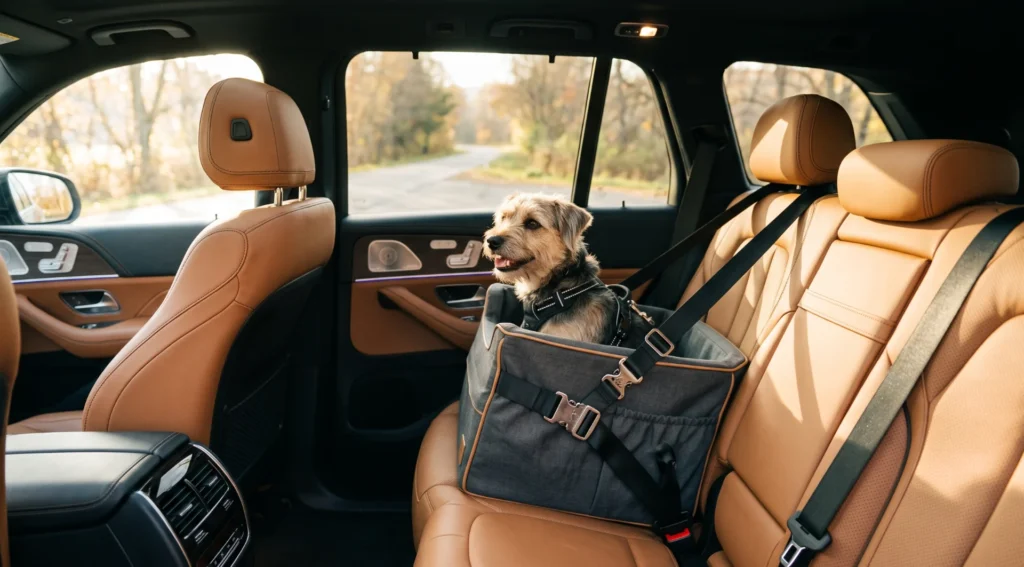
Knowing how to secure a dog in a car matters because an unrestrained pet can create two risks at once. The dog may be hurt by sudden movement, and the driver may be distracted at the wrong moment. A good restraint approach reduces uncontrolled movement and keeps the driving environment safer.
To secure a dog in a car, use a restraint method that limits pet movement and attaches properly to the vehicle. Common options include a crash-tested harness, secured crate, pet carrier, dog car seat, or ISOFIX/LATCH-style base. The best choice depends on the dog’s size, behavior, vehicle layout, and how the product connects to the car.
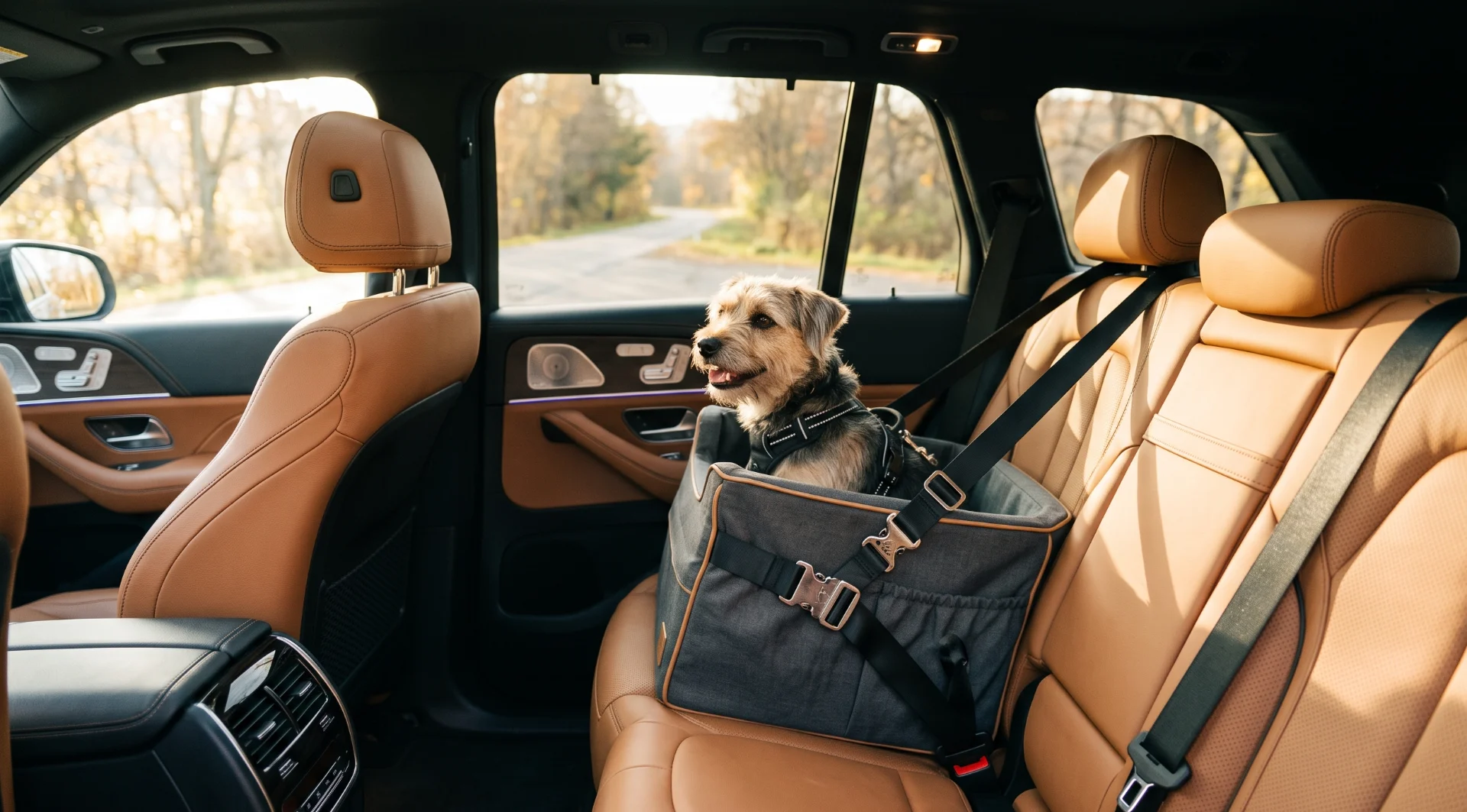
Most pet owners first think about comfort. That is natural. But in vehicle travel, comfort only works when the restraint system is also stable, correctly installed, and suitable for the dog. Let’s break down the real safety logic behind pet travel.
Why Should You Secure a Dog in a Car?
A loose dog may seem harmless during a short trip. The problem starts when normal driving changes suddenly. A brake, turn, horn, or distraction can cause fast movement inside the cabin, and the driver may react too late.
The reason to secure a dog in a car is not only to protect the dog. It is also to protect the driver and passengers by reducing distraction, preventing movement into control areas, and limiting uncontrolled movement during sudden braking or a collision.
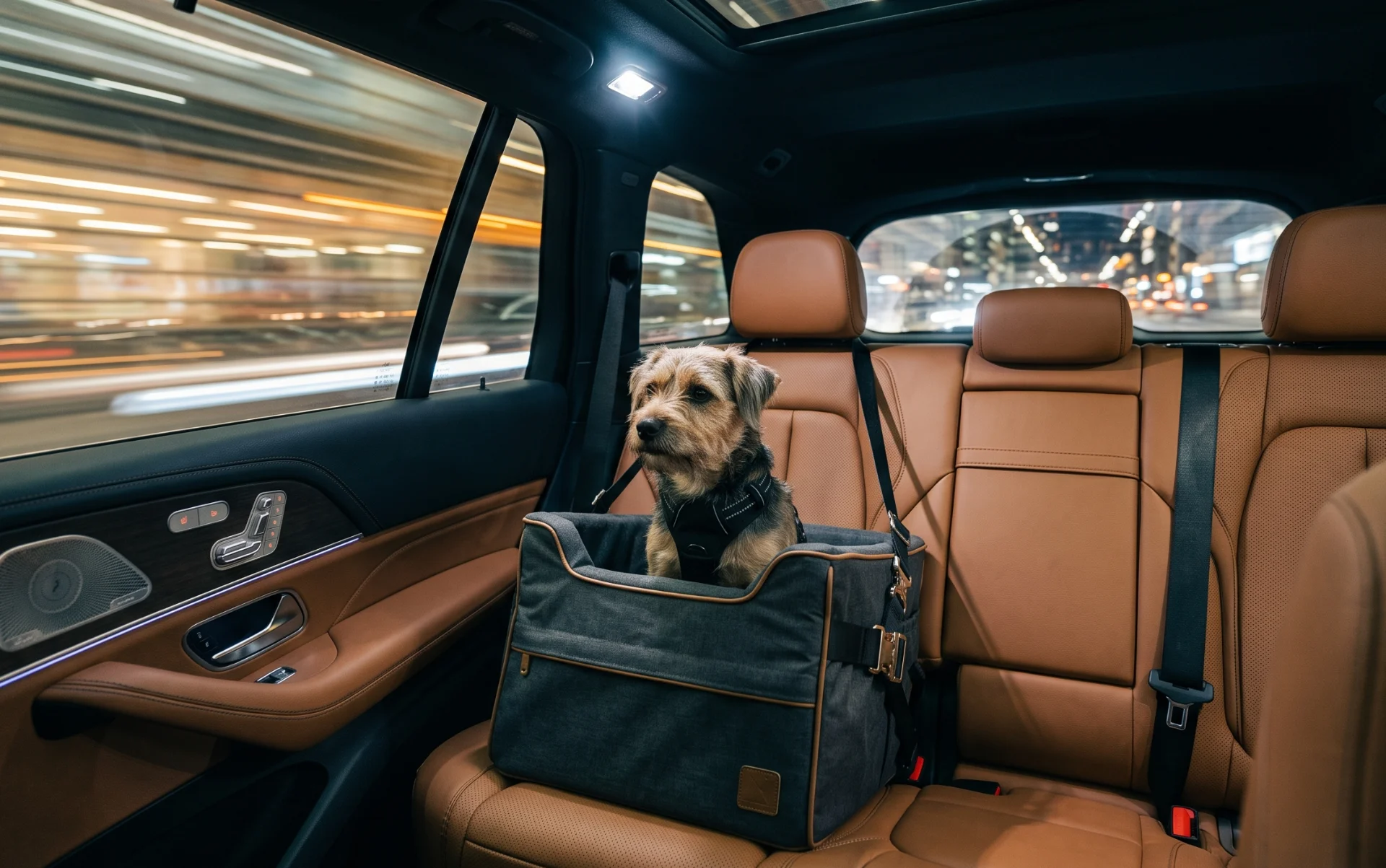
Pet travel safety has two safety objects
Many people talk about pet car safety as if the dog is the only concern. That view is too narrow. In real driving, the safety chain includes:
- The dog
- The driver
- Passengers
- Other road users
- The vehicle environment
A dog that moves freely can climb onto the driver’s lap, block mirrors, touch the gear selector, step near pedals, or suddenly bark and jump. Even a calm dog can react to another animal, a loud motorcycle, or an open window.
The first goal of restraint is simple:
The goal of restraint is not simply to keep the dog in one place. It is to prevent uncontrolled movement inside the vehicle.
That sentence is the core of safe pet travel. A restraint system should reduce unpredictable motion before it becomes a driving risk.
What can happen if a dog is not secured?
A typical scenario is easy to imagine:
- The car is moving normally.
- The driver brakes suddenly.
- The dog slides, jumps, or falls.
- The driver looks away or reaches back.
- The vehicle control environment becomes less stable.
In a more severe event, such as a collision, the dog may move in an unintended direction. That can increase risk for the pet, the driver, and passengers. I avoid dramatic “impact force” claims unless they come from verified testing, because responsible safety discussions should stay grounded. Still, the principle is clear: uncontrolled movement inside a vehicle is a risk factor.
A practical safety mindset
When we evaluate pet travel products at Anvoya, we do not start by asking, “Does this look comfortable?” We first ask:
| Evaluation Question | Why It Matters |
|---|---|
| Is the dog contained or restrained? | Reduces sudden movement |
| Is the product attached to the vehicle? | Prevents the product from sliding or tipping |
| Is the attachment intuitive? | Reduces misuse |
| Can the product handle daily use? | Supports consistent safety habits |
| Does it fit the vehicle seat geometry? | Improves installation stability |
Comfort still matters. A stressed dog can become a distraction. But comfort should sit on top of a secure structure, not replace it.
What Are the Safest Ways to Secure a Dog in a Car?
Choosing how to secure a dog in a car can feel confusing because there are many product names: harnesses, crates, carriers, booster seats, pet car seats, and vehicle bases. The key is not the name. The key is how movement is controlled.
The safest ways to secure a dog in a car are restraint systems that fit the dog, attach to the vehicle, and prevent uncontrolled movement. Common choices include dog harnesses connected to seat belts, secured crates, vehicle-ready carriers, dog car seats, and dedicated bases with ISOFIX or LATCH-style anchoring.
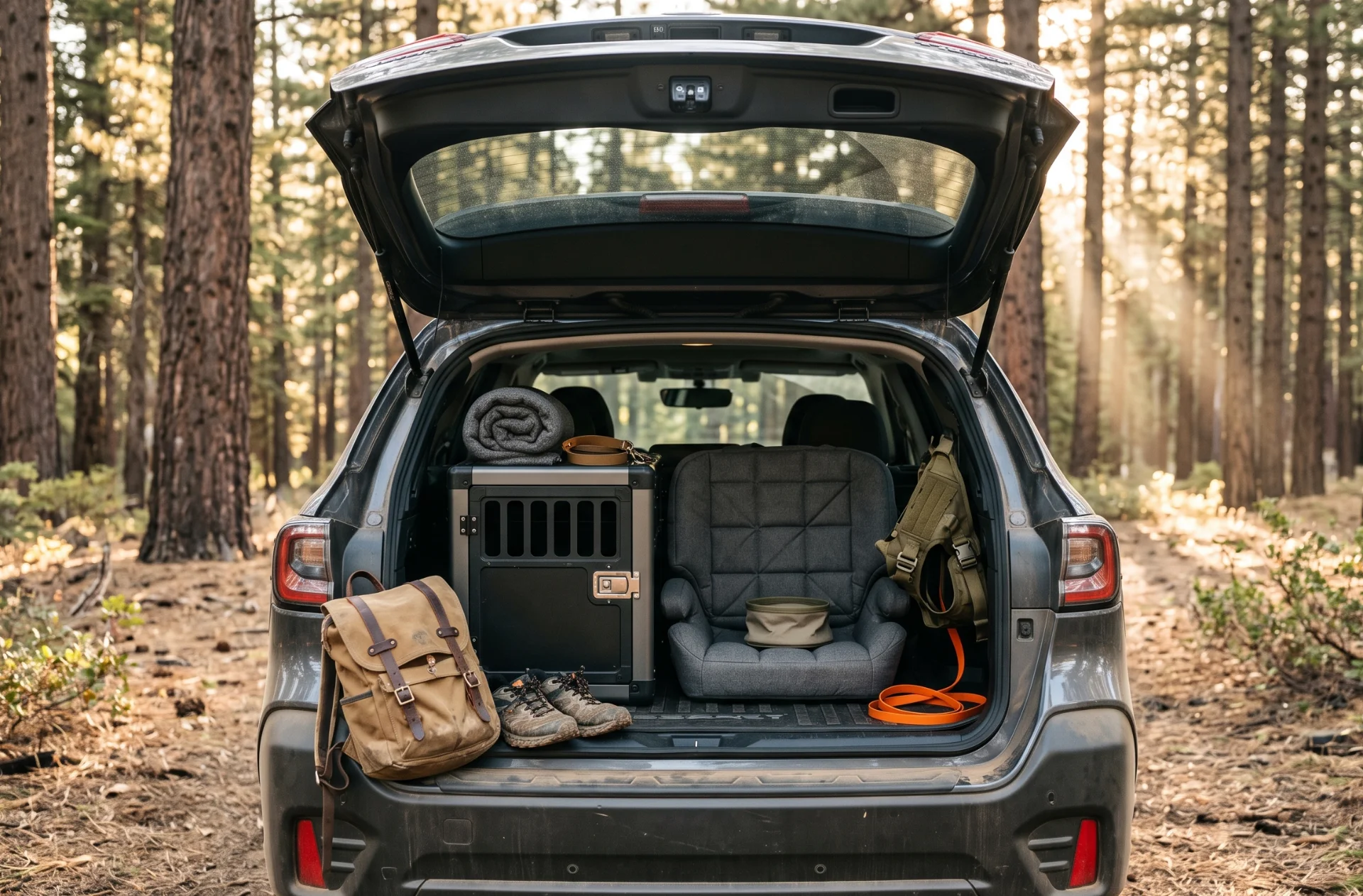
The main restraint options
There is no single best product for every dog, every car, and every trip. A small dog in an urban hatchback has different needs from a large dog in an SUV. A nervous puppy also needs a different approach from a trained adult dog.
Here are the main options buyers usually compare:
| Option | Best For | Main Strength | Buyer Should Check |
|---|---|---|---|
| Dog harness | Medium and large dogs | Keeps dog on seat with some mobility | Fit, stitching, hardware, seat belt connection |
| Crate | Larger dogs, cargo areas | Strong containment | Vehicle attachment, ventilation, crate structure |
| Pet carrier | Small dogs and cats | Portable containment | Whether it is vehicle-ready |
| Dog car seat | Small and medium dogs | Elevated comfort and containment | How it attaches to the vehicle |
| Dedicated base | Modular systems | Repeatable installation | ISOFIX/LATCH compatibility, lock indicators |
| Stroller-compatible carrier | Multi-scene travel | Car-to-stroller convenience | Interface strength and stability |
Three questions matter more than the product label
When someone asks how to secure a dog in a car, I usually think about three engineering questions.
1. How is the pet restrained?
The dog should not be able to roam freely. A harness controls the body. A crate or carrier controls the space. A dog car seat may use an inner tether, side walls, and vehicle attachment points.
2. How is the product attached to the vehicle?
This question is often missed. A carrier placed on a seat is not the same as a carrier attached to the seat. A dog car seat sitting loosely on upholstery may shift under braking.
3. How easy is correct use?
A system that is difficult to install is more likely to be misused. For B2B buyers, this is not just a user experience issue. It affects returns, complaints, and brand trust.
Why “safest” should be evaluated carefully
Pet car seats do not operate under the same unified, mandatory crash-test regulations as child restraint systems. Some products may be crash tested by manufacturers or third-party labs, but buyers should review the test method, dog dummy weight, installation mode, and pass/fail criteria.
A good supplier should be able to discuss:
- Material specifications
- Load paths
- Buckle and webbing quality
- Attachment geometry
- Misuse prevention
- Production consistency
- Test documentation buyers can verify
At Anvoya, our background in European child car seats and automotive safety products shapes this evaluation. We do not claim that pet travel products are the same as certified child restraint systems. Instead, we apply relevant engineering thinking to improve how pet carriers, dog car seats, ISOFIX bases, and stroller systems are developed.
Is a Dog Harness, Carrier, Crate, or Car Seat Better for Car Travel?
Many pet owners want one simple answer. The market makes that harder because each product solves a different part of the problem. A harness, carrier, crate, and dog car seat can all be useful, but each one has limits.
A dog harness is often practical for larger dogs, while a secured carrier or dog car seat is usually better for small dogs that need containment. A crate can work well in cargo areas if properly fixed. The better choice depends on dog size, vehicle layout, restraint quality, and attachment method.
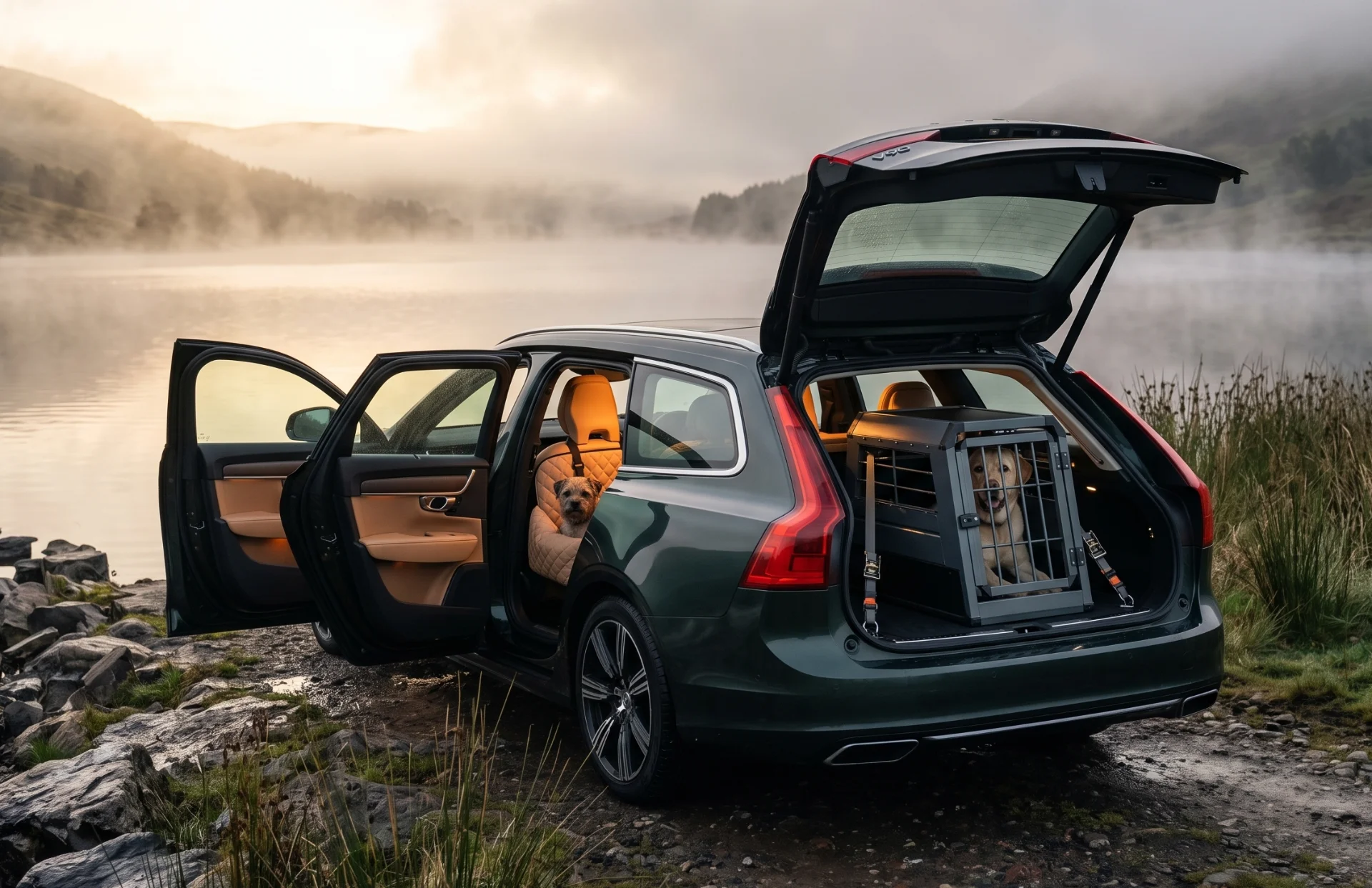
Comparison by real-world use
A good pet travel product should match the dog’s body, behavior, and travel routine. A product that looks safe online may not work well if the dog twists out of it, the seat belt path is confusing, or the vehicle seat shape causes instability.
| Product Type | Advantages | Limitations | Best Buyer Focus |
|---|---|---|---|
| Harness | Simple, compact, good for walking transition | Fit-sensitive; may allow turning or tangling | Sizing range, hardware strength, webbing |
| Carrier | Portable, enclosed, calming for small pets | Not always designed for vehicle loads | Vehicle attachment and structure |
| Crate | Strong containment for larger dogs | Bulky, hard to move, needs firm fixing | Cargo-area anchoring |
| Dog car seat | Comfortable, familiar, often elevated | Some are comfort products only | Vehicle connection and inner restraint |
| Modular system | Supports car, carry, stroller use | Requires well-designed interfaces | Base, locking mechanism, platform compatibility |
Harnesses: useful but fit-dependent
A harness can be a good restraint option when it fits the dog correctly. The webbing should sit on strong body areas, not the neck. The connection should limit forward and side movement without choking or twisting.
Buyers should check:
- Chest and neck adjustment range
- Stitching quality
- Metal or reinforced hardware
- Seat belt loop or tether design
- Whether the dog can back out of it
A harness is often better than a loose dog, but it still leaves the dog exposed on the seat. For anxious dogs, small dogs, or dogs that try to climb around, containment may be more effective.
Carriers and crates: containment first
A carrier or crate creates a defined space. That can help with nervous pets and reduce wandering. However, the structure must be suitable for car use. A soft carrier designed only for walking through an airport terminal may not be appropriate as a vehicle restraint.
Important checks include:
- Rigid or reinforced structure
- Secure door and latch
- Ventilation
- Stable base
- Vehicle belt path or base connection
- Compatibility with pet weight
Dog car seats: comfort plus restraint
A dog car seat can be helpful for small dogs because it creates a dedicated seating position. Some products also elevate the dog so it can look outside, which may reduce anxiety. However, a dog car seat should not be judged only by padding, fabric, or style.
A serious buyer should ask:
Is this product actually secured to the vehicle, or is it simply placed on the seat?
That question separates comfort accessories from vehicle-ready systems. The best dog car seat designs consider the pet, the product, and the car as one connected system.
How Do You Secure a Pet Carrier or Dog Car Seat in a Car?
A pet carrier or dog car seat may look stable when the car is parked. The real question is what happens when the vehicle turns, brakes, or stops suddenly. If the product can slide, tip, or rotate, the restraint strategy is incomplete.
To secure a dog in a car using a pet carrier or dog car seat, attach the product to the vehicle with the seat belt, a dedicated base, ISOFIX/LATCH anchors, or approved vehicle attachment points. Then secure the dog inside according to the product instructions.
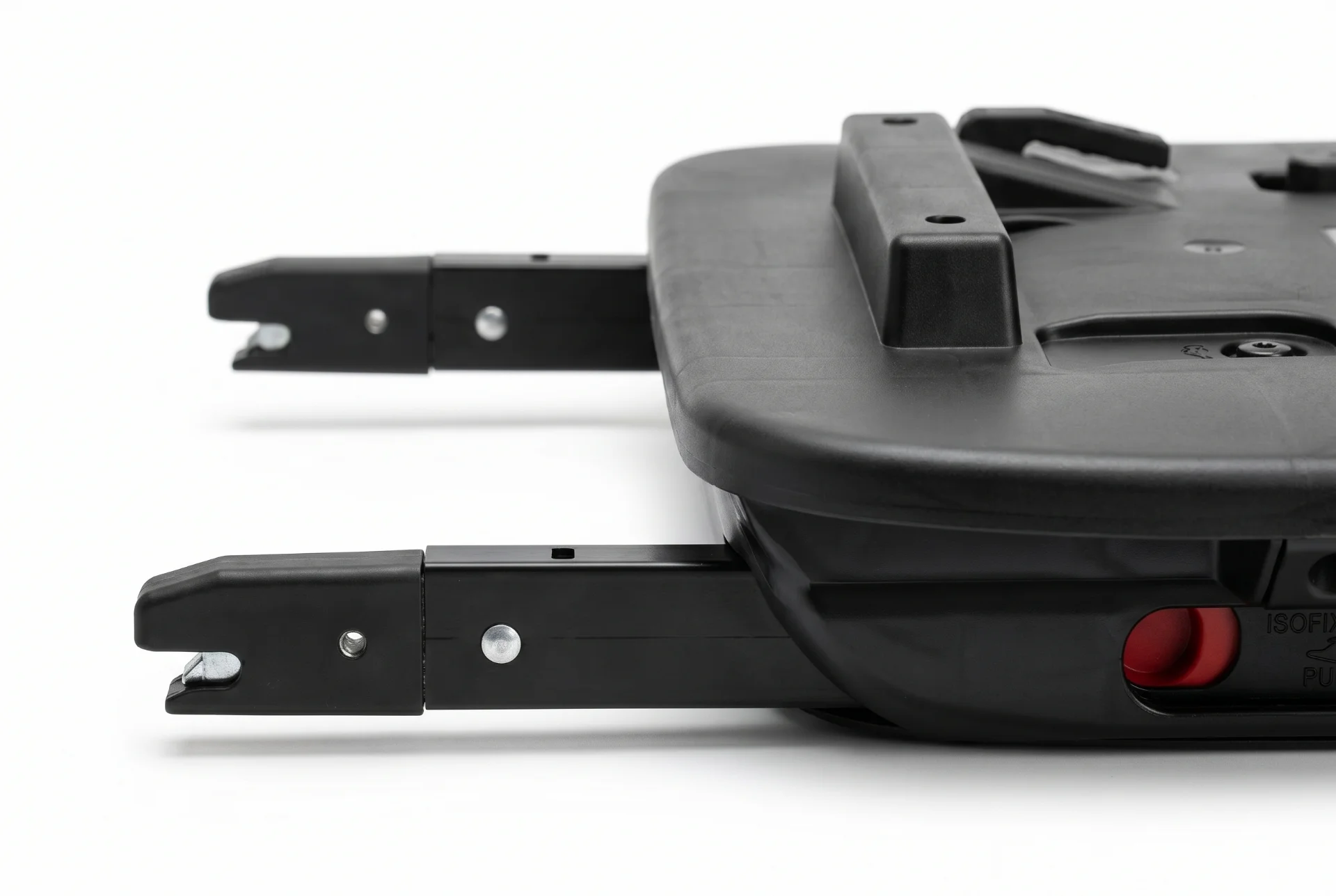
The product must connect to the vehicle
A common mistake is assuming that containment alone is enough. A dog may be inside a carrier, but if the carrier is loose on the seat, the whole carrier can move. That means the pet is contained but the travel system is not secured.
There are four common attachment methods.
| Attachment Method | How It Works | Main Advantage | Main Concern |
|---|---|---|---|
| Seat belt routing | Vehicle belt passes around or through product | Widely available | Misrouting risk |
| Seat belt plus tether | Belt holds product; tether controls pet | Simple and flexible | Tether length and anchor strength |
| Dedicated base | Carrier locks into a fixed platform | Faster repeat installation | Base must fit vehicle and product |
| ISOFIX/LATCH-style base | Base connects to vehicle anchors | More repeatable connection | Compatibility must be verified |
Basic installation checklist
Before each trip, use a short checklist. A restraint system only works when it is used consistently.
- Place the product in the recommended seating position.
- Route the seat belt or connect the base exactly as instructed.
- Check for excessive sliding, tipping, or rotation.
- Lock the carrier or seat into its base if applicable.
- Attach the dog’s inner tether or harness if provided.
- Confirm ventilation and comfort.
- Avoid placing the product where airbags create risk.
Vehicle manuals and product manuals matter. Buyers should not guess around airbags, anchor points, or belt routing.
Why repeatable installation matters
From an OEM/ODM perspective, repeatability is a major product quality issue. A design may perform well in a lab when installed by an engineer, but daily users need clear cues. This is why child restraint engineering pays so much attention to indicators, click sounds, belt paths, labels, and misuse prevention.
Pet travel products can learn from that mindset. Useful design details include:
- Color-coded belt guides
- Visible lock indicators
- One-hand release buttons
- Stable base geometry
- Anti-rotation support
- Clear user labels
- Durable connector housings
At Anvoya, this is where our child car seat engineering DNA becomes relevant. The goal is not to claim pet products have the same legal status as child seats. The goal is to bring better structure, clearer attachment logic, and more consistent manufacturing into pet mobility products.
Can a Pet Carrier Be Used as a Dog Car Seat?
Many people place a carrier on the vehicle seat and assume it has become a dog car seat. That is understandable, but it is not always correct. A product can fit inside a car without being designed for car restraint.
A pet carrier can be used as a dog car seat only if it is designed or approved by the manufacturer for vehicle use and can be secured to the car. A carrying bag alone is not automatically a vehicle-ready restraint system.
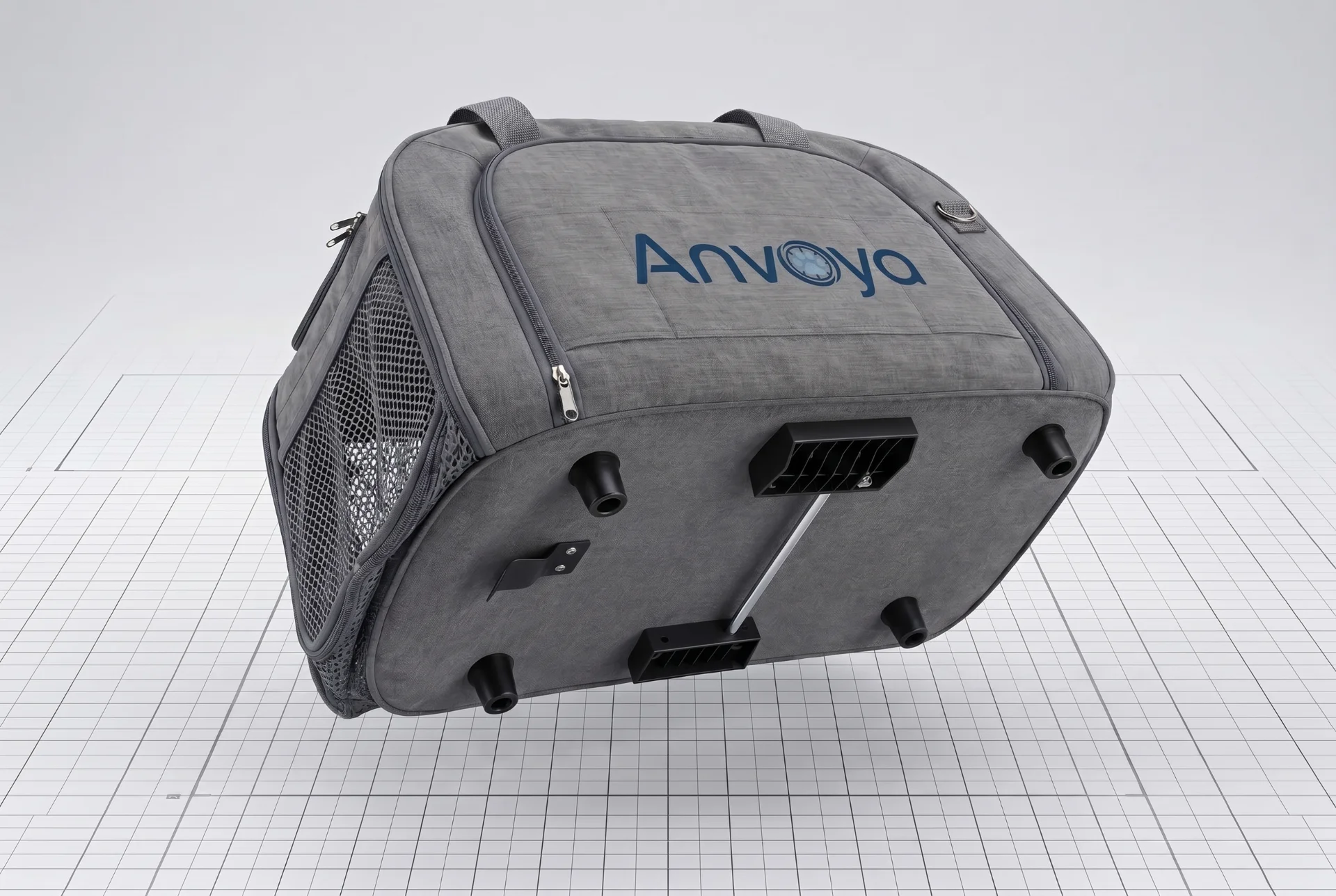
Carrier designed for carrying ≠ vehicle-ready restraint system
A standard carrier is usually designed for hand carrying, short walking distances, or temporary containment. A vehicle-ready carrier must consider different forces, directions, and user behaviors. The difference is not always visible at first glance.
A buyer should check whether the carrier has:
- A defined belt path
- A compatible base interface
- Reinforced shell or frame
- Strong handle and hinge design
- Locking door or top cover
- Inner tether or harness point
- Clear car-use instructions
- Weight limit for vehicle use
If these details are missing, the carrier may still be useful outside the car, but it should not be marketed as a dog car seat without evidence.
Important procurement questions for brands and importers
For pet brands, importers, distributors, and private-label buyers, this distinction matters commercially. If a product is marketed as car-safe but lacks vehicle attachment logic, the brand may face customer complaints, platform issues, or reputational risk.
Before sourcing a carrier for vehicle use, buyers should ask the supplier:
| Question | Why It Matters |
|---|---|
| What vehicle attachment method is used? | Confirms the carrier is not just placed on the seat |
| What pet weight range is supported? | Prevents misuse by oversized dogs |
| Are test reports available? | Allows document verification |
| What materials are used in the shell, webbing, and buckles? | Supports quality evaluation |
| Is there an installation manual? | Reduces end-user misuse |
| Can the design connect to a stroller or base? | Supports modular product lines |
How Anvoya approaches this category
Anvoya’s product development focuses on modular pet travel systems. That means we look beyond one isolated carrier. We consider how a pet carrier can connect to a car base, stroller frame, and daily carry mode.
For example, BASE-X is designed as a modular ISOFIX pet car seat base that can upgrade compatible pet carriers into vehicle-ready systems. AERO is a lightweight 3-in-1 system for car, carry, and stroller use. These product ideas are built around one practical question: how can brands preserve existing best-selling products while improving vehicle attachment and expanding use scenarios?
This is especially important for OEM/ODM customers. A modular platform can shorten development time, reduce tooling risk, and create a more differentiated pet travel product line.
Is ISOFIX a Better Way to Secure a Pet Carrier in a Car?
ISOFIX sounds technical, and many buyers associate it with child car seats. That association is useful but must be handled carefully. ISOFIX can improve repeatability and attachment stability, but it does not automatically make every pet product safe.
ISOFIX can be a better way to secure a dog in a car when the pet carrier, base, and vehicle anchors are compatible and correctly engineered. It provides a direct connection to the vehicle structure, but buyers should verify design, testing, instructions, and weight limits.
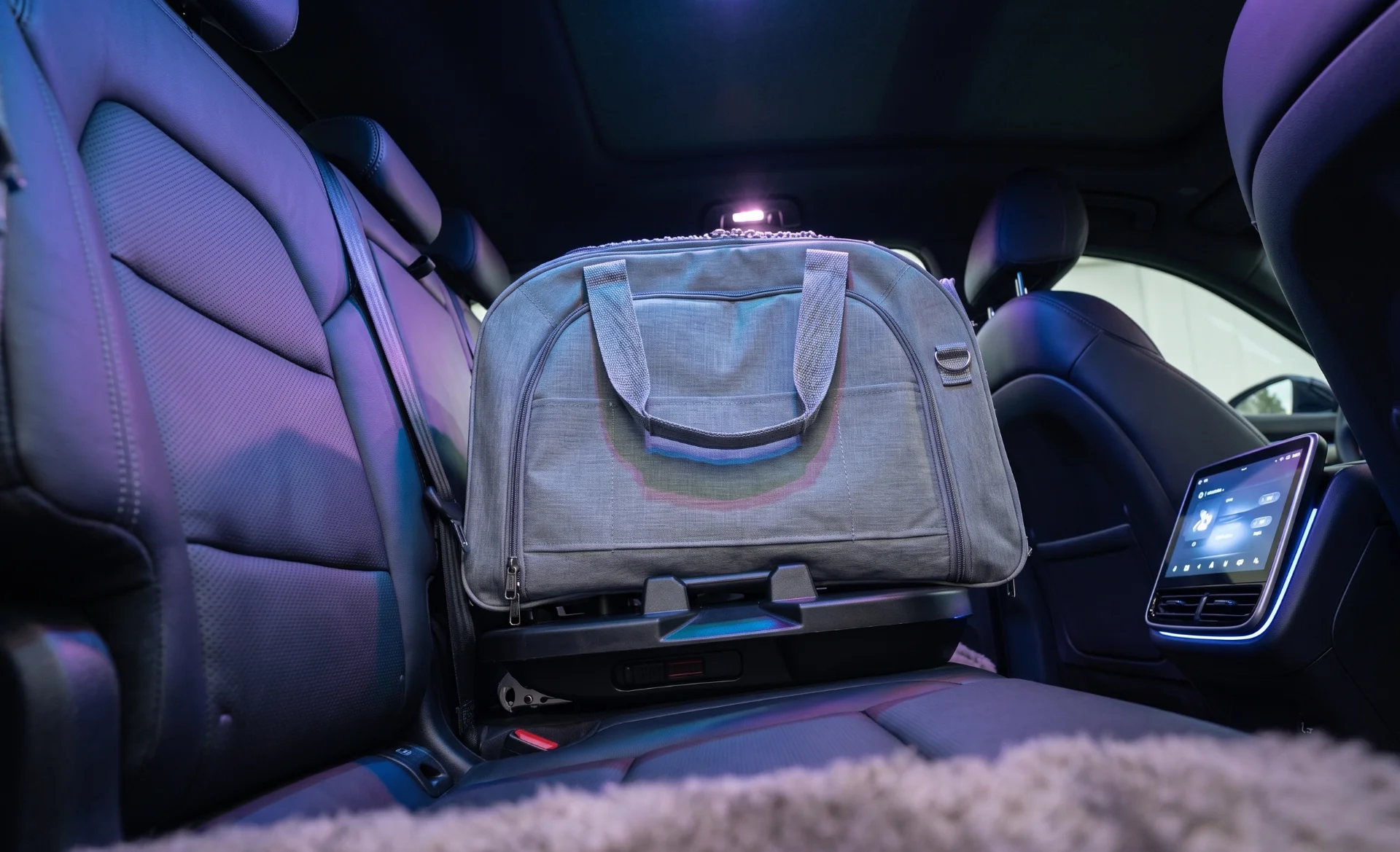
What ISOFIX means in this context
ISOFIX is a vehicle anchoring concept widely known from child restraint systems. In some markets, the related term LATCH is used. For pet travel products, ISOFIX-style connection can help create a more repeatable installation than seat belt routing alone.
However, pet car seats are not governed by the same unified mandatory regulations as child car seats. So, buyers should not treat the word “ISOFIX” as proof of absolute safety. It is an attachment method. The full system still needs qualified engineering evaluation.
Why ISOFIX can help
A well-designed ISOFIX base may offer several advantages:
- More consistent installation: Users connect rigid or semi-rigid arms to vehicle anchors.
- Reduced belt-routing errors: The base may remove the need for complex seat belt paths.
- Faster daily use: The carrier can click in and out of a fixed base.
- Improved product ecosystem: One base can support compatible carriers or seats.
- Better user confidence: Clear lock indicators can show when the system is engaged.
For B2B buyers, these benefits can improve customer experience and reduce support burden. A product that installs the same way every time is easier to explain, photograph, demonstrate, and sell.
What buyers must verify
ISOFIX should not be treated as a marketing sticker. It should be part of a complete engineering package.
| Verification Area | What to Ask For |
|---|---|
| Vehicle compatibility | Which vehicle seats and anchor types are supported? |
| Connector design | Are connectors rigid, semi-rigid, or strap-based? |
| Lock confirmation | Are there visual or tactile indicators? |
| Load path | How does force travel from carrier to base to vehicle? |
| Anti-rotation design | Does the base reduce tipping or pitching? |
| Test evidence | What dynamic or static tests were performed? |
| Production control | How are connector tolerances checked? |
At Anvoya, we value ISOFIX because it aligns with our background in automotive safety products. But we still speak carefully. ISOFIX is not a magic word. It is one part of a restraint system that should include structure, material strength, controlled interfaces, clear instructions, and consistent manufacturing.
How Can a Dog Travel Safely From the Car to the Stroller?
Modern pet travel rarely happens in one scene. A dog may move from home to elevator, stroller, car, parking lot, café, clinic, hotel, or airport. If every transition requires a different product, the pet may become stressed and the owner may make mistakes.
A dog can travel safely from the car to the stroller when the carrier is part of a modular pet travel system. The same pet compartment can connect to a vehicle base, detach for carrying, and lock onto a stroller frame without removing the dog repeatedly.
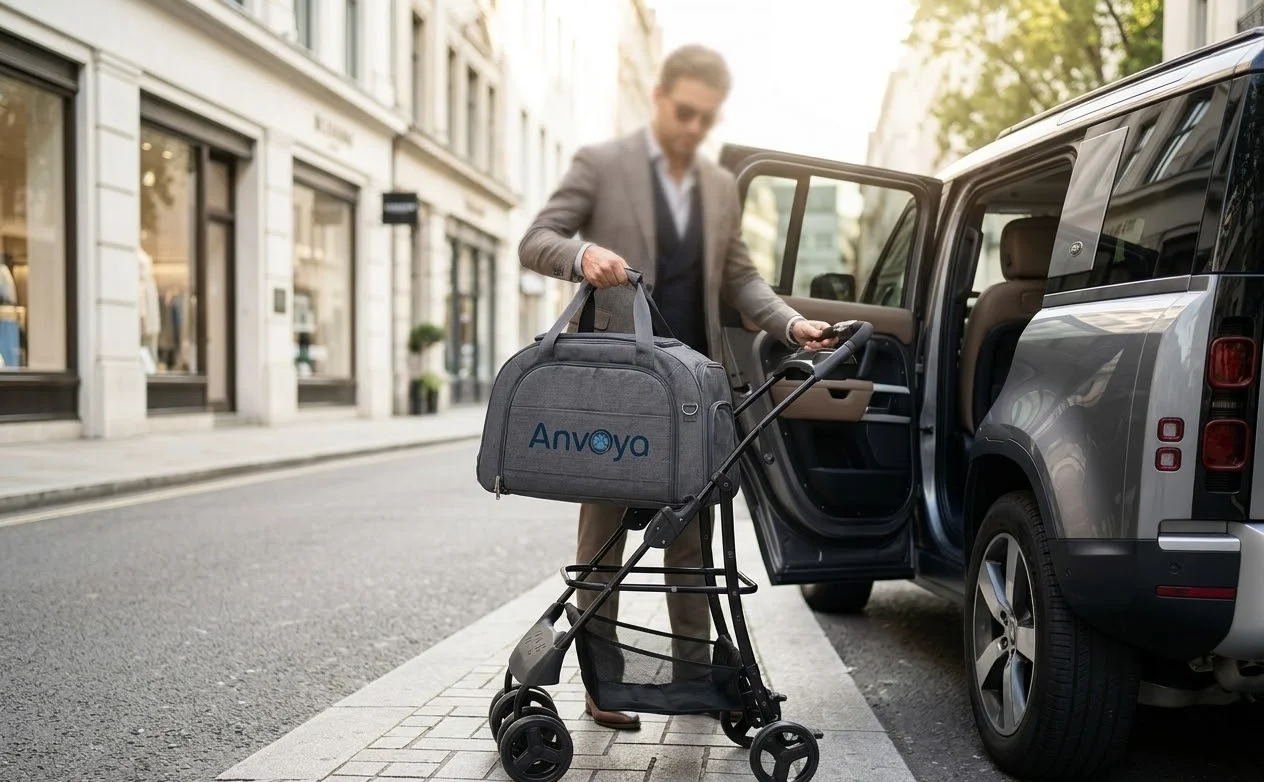
Pet travel is now multi-scenario
The old product logic was simple: one carrier for carrying, one stroller for walking, one seat for the car. That worked when trips were short and products were basic. Today, pet owners want smoother movement across multiple environments.
A typical journey may look like this:
- Home
- Elevator or hallway
- Stroller
- Car
- Destination parking area
- Stroller again
- Indoor visit or outdoor walk
- Return trip
Every transfer can create friction. The dog may resist being lifted. The owner may forget to reattach a tether. The carrier may be placed loosely on a seat “just for a short drive.” These small compromises can weaken safety habits.
Why modular systems make sense
A modular pet travel system connects different travel modes through a shared interface. The carrier does not become a loose object that changes role randomly. Instead, it becomes a defined module within a larger system.
A strong modular system should provide:
- A stable carrier shell
- A vehicle base or secure belt path
- A stroller locking interface
- Clear release and lock feedback
- Ventilation for longer use
- Washable fabrics
- Pet comfort for repeated transitions
- Consistent weight limits across modes
This is where car, carry, and stroller design meet. The product must be convenient, but convenience should not undermine vehicle restraint.
Commercial value for B2B buyers
For pet brands and retailers, modularity also creates stronger business value. A single product ecosystem can support:
| Business Goal | Modular System Benefit |
|---|---|
| Reduce development risk | Shared components and validated interfaces |
| Preserve best sellers | Existing carriers can be upgraded through bases |
| Shorten time to market | Platform thinking reduces redesign |
| Increase differentiation | Car + stroller + carry story is clearer |
| Improve repeat purchases | Customers can add bases, frames, or accessories |
Anvoya’s work with modular products such as BASE-X and AERO reflects this direction. The goal is not only to make a nice-looking pet product. The goal is to help brands build expandable pet travel lines with smarter interfaces, easier use, and stronger safety logic.
For application-specific decisions, especially when a product is marketed for vehicle restraint, buyers should involve qualified engineering, testing, and compliance professionals. Supplier claims, test reports, and certifications should always be reviewed as documents to verify, not slogans to repeat blindly.
Frequently Asked Questions
What is the safest place for a dog in a car?
The safest place depends on the dog, vehicle, and restraint product. In many cases, the rear seat or cargo area is preferred because it keeps the dog away from driver controls and front airbags. Always follow the vehicle manual and product instructions.
Can I drive with my dog on my lap?
No. A dog on the driver’s lap can interfere with steering, pedals, mirrors, and attention. Even a small dog can distract the driver during braking or turning. It is better to use a harness, carrier, crate, dog car seat, or secured base.
Should a dog car seat be attached with a seat belt?
Many dog car seats use the vehicle seat belt, but the belt must follow the manufacturer’s instructions. Some systems use a dedicated base or ISOFIX/LATCH anchors instead. The important point is that the seat must be attached to the vehicle, not just placed on the seat.
Is a crash-tested pet carrier always safe?
Crash testing is a useful engineering tool, but it is not a guarantee of absolute safety. Buyers should review the test method, pet weight range, installation mode, and documentation. Pet products do not currently follow the same unified mandatory rules as child car seats.
Can one carrier work for car and stroller travel?
Yes, if the carrier is designed as part of a modular pet travel system. It should lock securely into a vehicle base or belt path and also connect safely to a stroller frame. The interface, weight limit, and locking indicators should be verified.
Conclusion
To secure a dog in a car, start with the real goal: prevent uncontrolled movement inside the vehicle. A good solution protects the pet while also helping the driver maintain a safer driving environment. Harnesses, crates, carriers, dog car seats, ISOFIX bases, and stroller-compatible systems all have a place when they are properly designed and installed. If you are developing or sourcing pet travel products, Anvoya can help you evaluate modular car, carry, and stroller systems with stronger engineering logic and OEM/ODM development support.