
An expandable pet carrier looks like an easy upgrade for travel, but brands can misjudge where the extra space actually helps. If expansion interferes with carrying, boarding, or secure transport, the product creates new problems. The better approach is to match expansion to specific travel stages where comfort and convenience matter most.
An expandable pet carrier can be better for travel when it is designed for static or semi-static moments, such as airport waiting, layovers, hotel stays, rest stops, and temporary pet resting. It is less useful during boarding, active carrying, vehicle transfer, or any stage where the carrier must stay compact, stable, and properly secured.
The real question is not whether expansion is good. The better question is where expansion creates value without weakening the base carrier. In product development, I usually break travel into stages first, then judge whether expandable space supports or distracts from the carrier’s main job.
Why Do Brands Add Expandable Space to an Expandable Pet Carrier?
Pet travel can involve hours of waiting, tight spaces, and stressed animals. A compact bag may pass size checks, but it can feel limited once the pet is no longer in motion. Brands add expandable space to solve that gap and make travel feel more humane and premium.
An expandable pet carrier gives pets more usable resting room during non-moving travel stages. For brands, the feature can support comfort positioning, premium pricing, visual differentiation, and better perceived value. The benefit works best when expansion is presented as a convenience feature rather than a universal travel or safety solution.
Dive deeper
In carrier development, expansion usually enters the conversation after the basic form factor is already constrained. Airline-style soft carriers, tote carriers, backpack carriers, and car-compatible carriers all face the same tension: the product must stay compact enough for transport, yet roomy enough for the pet to rest.
That tension creates a clear product opportunity.
A pet may spend only a short time boarding a flight, entering a car, or being carried through a terminal. Yet the same pet may spend much longer in these moments:
- Waiting before check-in
- Sitting near the gate
- Resting during a layover
- Staying in a hotel room
- Pausing during a road trip
- Settling beside the owner at a café or rest area
For those stages, extra floor area matters more than a sleeker silhouette.
Why brands find expansion attractive
From a brand-side product planning view, expandable space can support several goals:
| Brand Goal | How Expansion Helps | Risk If Poorly Designed |
|---|---|---|
| Premium positioning | Makes the carrier feel more versatile | Feature may look gimmicky |
| Travel comfort story | Offers pet more resting area | Claims may be overstated |
| SKU differentiation | Separates product from basic carriers | Added complexity increases cost |
| Retail display appeal | Expansion is easy to demonstrate | Display benefit may exceed real-use value |
| Multi-stage travel use | Supports waiting and lodging | Misuse during movement may create complaints |
The strongest commercial angle is usually comfort during downtime. I avoid framing expansion as a safety upgrade unless the brand has verifiable testing, documentation, or certification for that exact claim. Buyers can appreciate restraint. It signals that the product team understands travel realities.
Expansion is a feature, not the whole product
A weak carrier does not become strong because it expands. The base product still needs:
- Stable structure
- Reliable zippers
- Breathable mesh
- Cleanable lining
- Comfortable carry points
- Suitable bottom support
- Proper dimensions for the target channel
- Hardware that survives repeated opening and folding
For OEM/ODM buyers, the development question is simple: Does the expansion feature improve the carrier’s actual use case, or does it only create a marketing photo?
A well-developed expandable pet carrier answers that question through structure, not slogans.
When Is an Expandable Pet Carrier Most Useful During Travel?
Travel exposes pets to long inactive periods. A normal carrier can work well while moving, but it may feel cramped during delays. An expandable pet carrier becomes most useful when the pet is staying in one place and the owner can supervise the expanded configuration.
An expandable pet carrier is most useful during static or semi-static travel stages, including airport waiting, layovers, road trip rest stops, hotel rooms, and temporary indoor resting. In these moments, expansion can increase usable lying space while the carrier remains close to the owner and does not need to be carried or secured.
Dive deeper
The most practical way to evaluate expandable designs is by mapping the travel journey. Too many product briefs focus only on “airline approved” dimensions. That matters, of course, but real travel includes many hours before and after the flight.
I like to separate travel into active and inactive stages.
Travel stages where expansion creates value
| Travel Stage | Expansion Value | Brand Development Note |
|---|---|---|
| Airport waiting area | High | Owner can supervise and give pet more space |
| Layover | High | Long waiting time makes comfort more relevant |
| Hotel room | High | Carrier can become a temporary den |
| Road trip rest stop | Medium to high | Useful when placed on stable ground |
| Café or indoor waiting | Medium | Depends on available space and local rules |
| Airline boarding | Low | Compact profile matters more |
| Vehicle transfer | Low | Stability and secure placement matter more |
| Walking through terminal | Low | Expanded mode is impractical |
The pattern is clear. Expansion works best when the carrier is placed, not when it is carried.
Why static use is different
During waiting or resting, the product faces different loads. The side panel may rest on the floor. The pet may turn around, lie down, or lean against mesh walls. The owner may open a top access panel to comfort the pet. These conditions are very different from lifting the bag by its handles.
That difference affects development decisions.
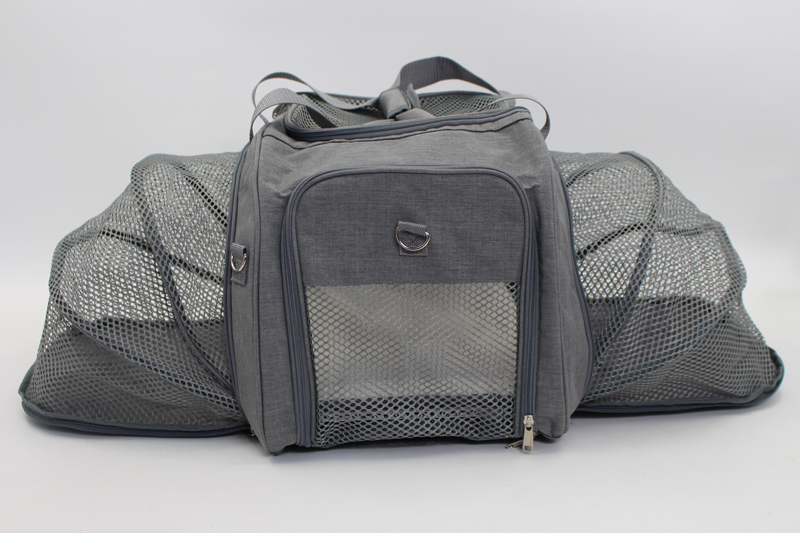
For example, the expanded section needs enough support to avoid sagging. A soft mesh wing that collapses under light pressure may look generous in a photo but feel unstable in real use. On the other hand, a rigid extension may improve shape but add weight, folding bulk, and cost.
Strong use cases to highlight in B2B positioning
For pet product brands, I would position expansion around specific travel moments:
- “More resting room during layovers”
- “Extra space during supervised waiting”
- “Comfort-focused design for hotel and road trip stops”
- “Compact for movement, expandable for rest”
- “Designed for multi-stage travel routines”
Those claims are easier to support than broad statements like “safer travel” or “stress-free travel.” Pets respond differently, and travel conditions vary. A measured claim builds trust with distributors, retailers, and private-label buyers.
Anvoya’s product development background sits close to this kind of stage-based thinking. In carrier prototyping, small decisions like mesh tension, zipper route, bottom board stiffness, and panel fold direction can decide whether the expanded space feels useful or merely decorative.
When Should an Expandable Pet Carrier Stay in Its Compact Travel Configuration?
Extra space can become a disadvantage when the travel environment is crowded, moving, or regulated. A carrier that expands at the wrong time may be harder to lift, fit, or control. For that reason, an expandable pet carrier still needs a strong compact mode.
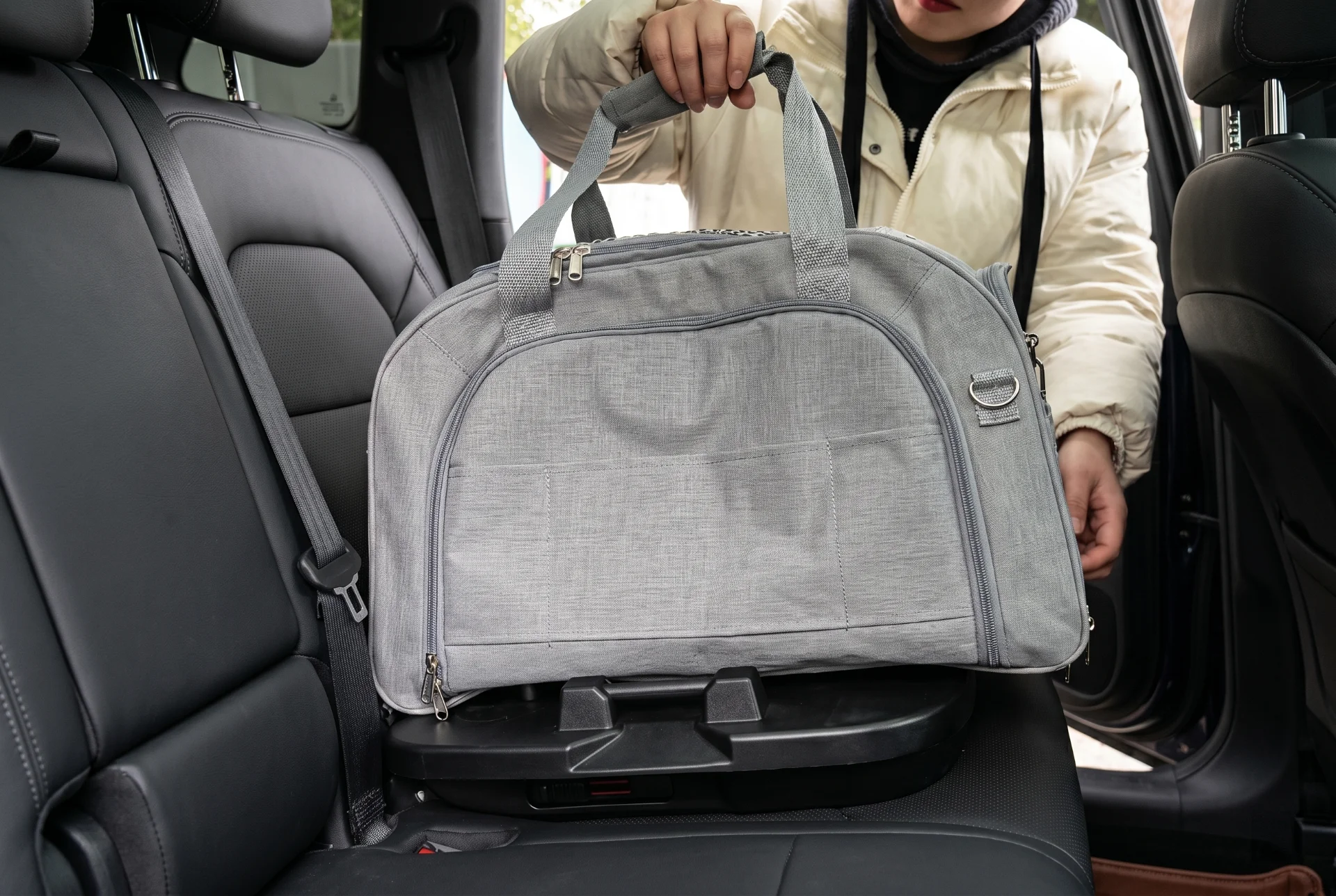
An expandable pet carrier should stay compact during active carrying, airline boarding, under-seat placement, vehicle transfer, escalator use, crowded walking, and any secured transport situation. Compact mode helps preserve the designed footprint, handling balance, and compatibility with spaces where expansion would interfere with movement or placement.
Dive deeper
Expandable design can be misunderstood by consumers if the product communication is too broad. Some buyers may assume the expanded mode is suitable everywhere. That can create frustration when the carrier must fit under a seat, pass through a narrow aisle, or be placed securely in a vehicle.
For brands, the product needs visual and written guidance. The compact mode is not a secondary function. It is the travel function.
Compact mode matters most in these situations
-
Boarding and airline under-seat placement
Airline cabin requirements vary by airline, aircraft type, route, and staff interpretation. A carrier designed for air travel must preserve its compliant form in the intended travel configuration. Brands need to guide end users to confirm current airline rules before travel. -
Vehicle movement and transfer
A carrier placed in or moved around a vehicle needs a predictable footprint. If a brand makes vehicle-related claims, the claim requires careful evaluation and documentation. Expandability alone does not make a carrier vehicle-safe. -
Carrying through crowded areas
Expanded side panels increase width and snag risk. Handles and shoulder straps also behave differently when weight shifts outward. -
Security screening and tight queues
Airports and stations often involve conveyor belts, lines, barriers, and sudden movement. Compact form helps reduce handling problems. -
Escalators, stairs, and public transport
A wide or expanded carrier can become awkward. The owner needs the bag close to the body, with stable load distribution.
The structural reason compact mode cannot be an afterthought
A pet carrier works as a load-bearing soft structure. Even when the shell looks flexible, the product depends on a chain of components:
- Fabric panels
- Webbing
- Zippers
- Binding tape
- Mesh
- Bottom board
- Frame wire or support rods
- Stitching density
- Hardware attachment points
Expansion changes that load path. When the carrier is compact, forces usually travel from the pet’s weight into the bottom panel, then into the side walls and carry handles. When expanded, weight may shift toward the open panel. If the owner tries to lift the bag while expanded, stress can concentrate at zipper ends, mesh seams, or hinge points.
That is why a responsible brand guide should define use modes clearly:
| Mode | Suitable Use | Avoid |
|---|---|---|
| Compact mode | Carrying, boarding, transfer, storage, under-seat placement | Overloading beyond design limits |
| Expanded mode | Supervised resting, waiting, hotel use, stable indoor placement | Carrying, secured transport, crowded movement |
| Partially open access | Feeding, comforting, quick interaction | Leaving pet unsupervised if escape risk exists |
For premium pet travel brands, this clarity is commercial protection. It reduces unrealistic expectations and helps retailers explain the feature with confidence.
What Design Trade-Offs Should Brands Consider When Developing an Expandable Pet Carrier?
An expansion panel adds value, but it also adds seams, zippers, weight, folding bulk, and possible weak points. If a brand only designs for the showroom effect, the product may fail in daily use. A better development brief balances comfort, structure, manufacturability, and user guidance.
Brands developing an expandable pet carrier need to balance expanded space, compact dimensions, structural support, ventilation, zipper reliability, cleanability, production cost, and claim control. The best design is not always the largest expansion. It is the version that improves rest comfort while preserving the carrier’s core travel function.
Dive deeper
Expandable construction looks simple from the outside. In sampling, it is rarely simple. A side expansion panel may affect the entire carrier pattern. A top expansion changes how the pet sits and how the bag collapses. A double-sided expansion can improve resting area, but it may make the carrier harder to fold cleanly.
In manufacturing, each extra function has consequences.
Main trade-offs in expandable carrier design
| Design Area | Benefit | Trade-Off |
|---|---|---|
| Side expansion | Adds lying area | May reduce side stability |
| Double-side expansion | Creates larger rest zone | Adds cost, weight, and bulk |
| Top expansion | Improves headroom | May affect under-seat shape |
| Mesh panels | Improve visibility and airflow | Need claw resistance and seam strength |
| Zippered expansion | Easy to operate | Zipper quality becomes critical |
| Frame support | Improves shape retention | Adds weight and packing complexity |
| Soft foldable panels | Lower bulk | May sag or collapse |
| Removable mat | Easier cleaning | Needs stable fit in both modes |
Structural evaluation points
In manufacturer-side development, I pay close attention to the quiet details that buyers may not notice in a render:
- Zipper path: Curved corners look smooth, but tight curves can increase zipper resistance.
- End reinforcement: Expansion zippers often fail near the start and stop points.
- Mesh tension: Loose mesh looks untidy and can deform under pet movement.
- Bottom transition: The main bottom board and expansion floor need to align well.
- Fold memory: Some fabrics crease badly after repeated folding.
- Ventilation balance: More mesh helps airflow, but too much mesh can reduce privacy and structure.
- Cleaning access: Crumbs, fur, and odor collect where expansion folds meet the main shell.
Airline sizing versus real travel comfort
Many brands begin with airline dimensions. That is understandable. Still, if the whole product is designed only around a maximum under-seat size, expansion may become an afterthought.
A better product brief separates two dimensions:
-
Travel configuration dimensions
These are the compact dimensions used for carrying, boarding, and storage. -
Rest configuration dimensions
These are the expanded dimensions used during supervised downtime.
That separation also helps claim writing. A brand can say the carrier is compact for travel and expandable for rest, while asking users to verify airline rules for their route and aircraft.
Materials and manufacturing considerations
An expandable pet carrier also needs a realistic cost structure. More panels mean more cutting, stitching, binding, inspection, and reject risk. A low-cost zipper can save cents but damage the whole product experience.
For OEM/ODM programs, buyers often compare options like these:
- Standard polyester versus higher-denier fabric
- PVC mesh versus rubberized or reinforced mesh
- Single puller zipper versus double puller zipper
- Basic bottom board versus honeycomb or composite support
- Simple side panel versus structured expansion wing
- Manual sample review versus defined quality inspection criteria
A thoughtful specification avoids both extremes. The carrier does not need to become overbuilt and heavy. It also cannot feel flimsy once expanded. The right balance depends on pet weight range, retail price target, channel expectations, and the brand’s travel positioning.
Should Your Brand Add an Expandable Pet Carrier to Its Travel Product Line?
A new feature can grow a product line, but it can also distract from the brand’s real strength. An expandable pet carrier makes sense when the target customer values multi-stage travel comfort and when the brand can explain when expansion is useful, and when compact mode matters more.
Your brand should add an expandable pet carrier if it fills a clear travel-stage need, supports your price positioning, and can be developed without weakening structure, portability, or claim accuracy. It may not fit if your line focuses on ultra-light commuting, strict compactness, or highly controlled vehicle-secured use cases.
Dive deeper
For a pet product brand, the decision is partly product strategy and partly engineering discipline. Expansion can help a travel line feel more complete, especially when the existing range includes basic soft carriers, airline-style bags, or premium weekend travel products.
However, the feature needs a clear role in the assortment.
When expansion fits the line
An expandable pet carrier is a strong candidate when your brand wants to serve:
- Frequent travelers who face long waiting times
- Small dog and cat owners who use carriers as temporary rest spaces
- Premium pet travel customers who value comfort details
- Retailers looking for demonstration-friendly features
- Distributors wanting visible differentiation from basic bags
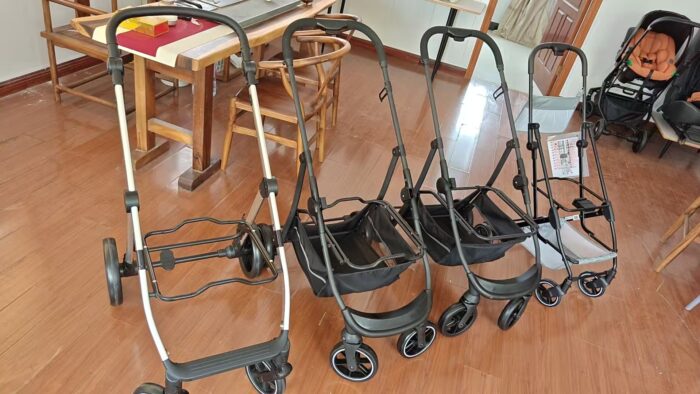
- Brands building a “travel system” around carrier, stroller, and vehicle movement
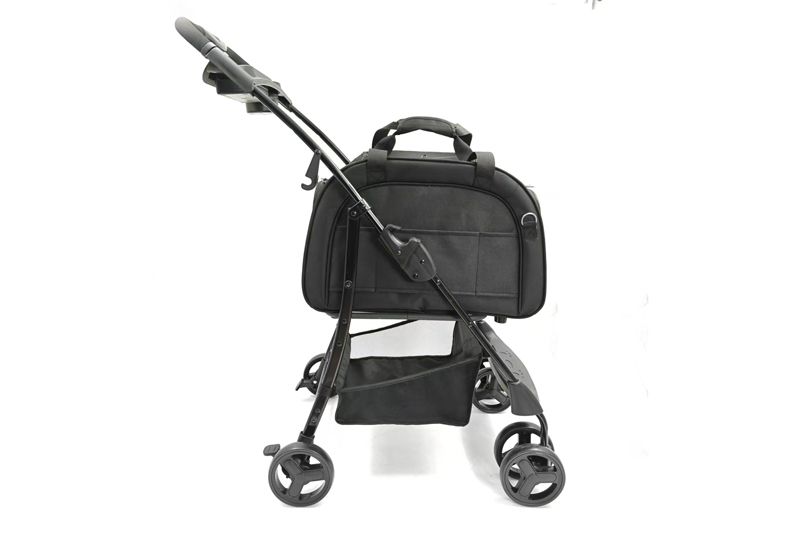
That last point matters for companies working in modular pet mobility. A carrier may connect to a stroller, sit in a car environment, or function as a standalone travel bag. Expansion can add value in the resting stage, even if the carrier stays compact during docking, transfer, or secured placement.
When expansion may not fit
There are also cases where a simpler carrier may be better:
| Product Direction | Why Expansion May Be Less Suitable |
|---|---|
| Ultra-light commuting bag | Expansion adds weight and hardware |
| Fashion-first tote | Side panels may disrupt silhouette |
| Low-price promotional carrier | Cost and quality risk may be too high |
| Strict airline-only positioning | Users may misunderstand mode limits |
| Vehicle-secured carrier concept | Expanded mode may conflict with secure placement |
| Minimalist backpack carrier | Expansion may affect balance and comfort |
For vehicle-related or safety-oriented product lines, the brand needs extra caution. Expansion can be a comfort feature during rest, but secured transport claims require evaluation that goes beyond appearance. Buyers should verify any relevant test reports, certifications, or supplier documents before making safety or compliance statements.
A practical decision framework for B2B buyers
Before adding the product, I suggest building the business case around five questions:
-
Which travel stage does the expansion solve?
Waiting, layovers, hotel use, and rest stops are stronger answers than “all travel.” -
Can the compact mode stand alone as a good carrier?
If the base carrier is weak, expansion will not rescue the product. -
Can users understand the two modes quickly?
Packaging, hangtags, online images, and manuals need to show compact versus expanded use. -
Does the feature match the target price point?
Cheap expansion often creates zipper and seam problems. Premium expansion needs visible quality. -
Can the supplier control production consistency?
Foldable structures need stable stitching, aligned panels, and inspection standards.
How a manufacturer partner can support the decision
For OEM/ODM buyers, an engineering-led supplier can help turn a feature idea into a workable product brief. That does not mean every brand needs a complex system. Sometimes the right answer is a single-side expansion with better bottom support. Sometimes it is a compact carrier plus a detachable rest mat. Sometimes expansion belongs in a premium SKU only.
At Anvoya, the broader product philosophy is to connect carrier use with real travel behavior. That may include stroller integration, vehicle-ready concepts, or modular travel systems. Still, for this topic, the focus stays simple: expansion has to support the travel stage. If it does that cleanly, it can be a valuable addition to a pet travel line.
Frequently Asked Questions
Is an expandable pet carrier better than a standard carrier?
An expandable pet carrier can be better for waiting, layovers, hotel stays, and supervised rest. A standard compact carrier may be better for movement, boarding, and simple daily transport. The better choice depends on the travel stage, pet size, product structure, and the brand’s positioning.
Can an expandable pet carrier be used on airplanes?
Some expandable carriers are designed to stay compact during boarding and under-seat placement, then expand during waiting or after arrival. Airline rules vary by airline, aircraft, and route. Brands and buyers should avoid broad “airline approved” claims unless dimensions and supporting documents are carefully verified.
Is expandable space a safety feature?
Expandable space is better positioned as a comfort and convenience feature. It should not be marketed as a safety upgrade unless the specific product has verifiable testing or certification supporting that claim. For safety-sensitive applications, brands should seek qualified professional evaluation and confirm documentation.
What pets benefit most from expandable carrier designs?
Small dogs and cats that spend long periods waiting or resting during travel may benefit most. The carrier must still match the pet’s weight, posture, and behavior. Brands should define a realistic pet size range and test how the animal uses both compact and expanded configurations.
What should B2B buyers check before sourcing an expandable pet carrier?
B2B buyers should review compact dimensions, expanded dimensions, zipper quality, mesh strength, bottom support, stitching reinforcement, cleaning access, packaging claims, and supplier quality control. They should also request samples and verify any compliance, airline, or safety-related documents before placing large orders.
Even with the extra mesh wings deployed during a layover, it is still crucial to understand [how long your dog can safely stay in a carrier] or [how long your cat can stay in a carrier] before they need a proper comfort break outside the bag.
Conclusion
An expandable pet carrier is better for travel only when it solves the right part of the journey. It adds the most value during waiting, layovers, hotel stays, and supervised rest, while compact mode remains important for boarding, carrying, and transfer. For brands, the strongest opportunity is a clear comfort story backed by sound structure and careful claims. If you are evaluating an OEM/ODM expandable carrier project, Anvoya can help turn the concept into a practical, manufacturable travel product.