
A 20-minute vet visit and a full day of travel can both involve a carrier, but they place very different demands on a cat.
There is no single maximum carrier time that is safe for every cat. For longer trips, a common planning reference is to reassess the cat and provide breaks when practical around every few hours, but age, health, stress, temperature, carrier conditions, and travel method can require a different plan. :contentReference[oaicite:0]{index=0}
It is tempting to turn this question into a number.
Two hours. Four hours. Six hours.
A number feels useful because you can put it into a travel plan. The trouble is that carrier time is only one part of the situation.
A relaxed adult cat lying comfortably in a stable, well-ventilated carrier is not having the same experience as a frightened cat that has been panting and clawing at the door for twenty minutes. A carrier sitting in an air-conditioned car is different from one exposed to heat. A short trip to the veterinarian is different from a flight involving check-in, security, boarding, the flight itself, and baggage or customs procedures afterward.
Even the carrier changes the equation. A cat needs enough usable space to stand, sit, turn around, and lie down naturally, and good ventilation remains important during travel. :contentReference[oaicite:1]{index=1}
So the better question is not simply:
How many hours has my cat been in the carrier?
It is:
What is happening to my cat during those hours?
That shift—from watching the clock to watching the whole travel situation—is much more useful.
Is There a Safe Time Limit for How Long a Cat Can Stay in a Carrier?
There is no universal carrier-time limit for cats. Published travel guidance can help you plan breaks, but the individual cat and the travel conditions matter more than hitting a particular number.
For long trips, use regular reassessment and planned breaks rather than treating any hour limit as guaranteed safe. Older cats, kittens, cats with health conditions, highly stressed cats, and some short-nosed breeds may require additional precautions or veterinary advice before travel. :contentReference[oaicite:2]{index=2}
One older AVMA travel guide gives a practical road-trip reference: on long journeys, plan stops about every two hours for exercise and relief, while offering small portions of food and water. That can be useful for trip planning, but it is not a biological timer that makes the first 119 minutes automatically fine and minute 120 suddenly unsafe. :contentReference[oaicite:3]{index=3}
In fact, with cats, a scheduled stop can be more complicated than it sounds.
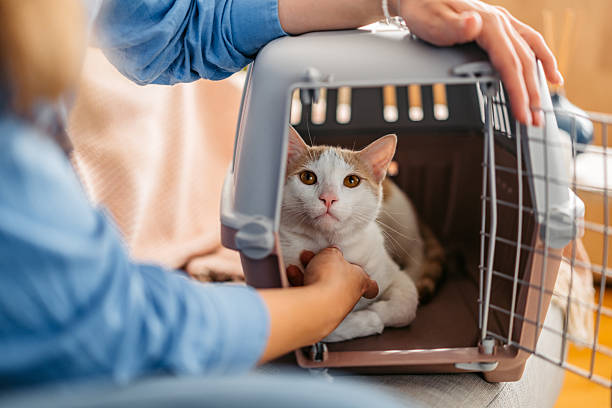
Unlike a dog, a cat cannot necessarily be taken out at every rest area for a quick walk. Opening a carrier beside an open car door or in an unfamiliar parking area can create an escape risk. Feline veterinary guidance specifically warns against opening the carrier during the car journey simply because a cat is meowing. :contentReference[oaicite:4]{index=4}
That means “take regular breaks” needs some interpretation.
You can stop the vehicle, check temperature and airflow, observe the cat, make sure the carrier has not shifted, and deal with water, litter, or bedding in a secure environment when appropriate. On a very long journey, you may need to plan safe enclosed places where the cat can come out rather than improvising at the roadside.
The Cat May Set a Shorter Limit Than Your Schedule
Imagine you planned to drive for two hours before stopping.
Forty minutes into the trip, the cat begins panting heavily. It does not settle. There is persistent drooling and frantic movement at the carrier door.
The planned stop time has become irrelevant.
The same applies in the opposite direction. A cat that curls up and sleeps does not suddenly become distressed because an arbitrary number has appeared on the dashboard clock.
This does not mean carrier confinement can continue indefinitely when the cat appears quiet. Long travel still requires planning for hydration, elimination, comfort, temperature, and the overall journey.
It simply means a fixed hour count is a poor substitute for observation.
Carrier Training Changes the Starting Point
There is another variable that rarely appears in “maximum carrier time” answers: what the carrier means to the cat.
For one cat, the carrier has been sitting in the living room for months with familiar bedding inside.
For another, it comes out of the closet twice a year and is immediately followed by a stressful car ride and veterinary examination.
Those two cats may react very differently before the journey has even started.
The Feline Veterinary Medical Association recommends carrier acclimation and training, and its client guidance suggests gradually increasing the amount of time a cat spends inside a closed carrier. :contentReference[oaicite:5]{index=5}
That preparation cannot turn an unsuitable carrier into a place for unlimited confinement.
It can, however, make the time that genuinely has to be spent inside less stressful.
Does the Safe Carrier Time Change for Car Trips, Flights, and Vet Visits?
Yes. The practical meaning of carrier time changes significantly by travel scenario because the owner's access to the cat, ability to stop, environmental control, and carrier requirements are different.
A short vet trip, long car journey, and commercial flight need different carrier-time plans. Car travel offers more control over stops, while air travel may require continuous carrier confinement through several stages and is governed by airline-specific policies.
This distinction is easy to miss.
A carrier is the common object, so all carrier use gets discussed as though it were one activity.
It isn't.
A Vet Visit Can Be Short but Highly Stressful
A veterinary appointment may involve only a short drive, yet some cats find the entire sequence difficult.
The carrier appears.
The cat leaves its familiar territory.
The car moves.
Then comes a waiting room full of unfamiliar smells, people, and perhaps other animals.
Feline veterinary guidance recognizes that the trip to the clinic can itself contribute significantly to feline distress. Recommendations include acclimating the cat to its carrier, keeping the carrier stable and level while carrying it, covering it when appropriate to reduce visual stimulation, and maintaining a comfortable vehicle temperature. :contentReference[oaicite:6]{index=6}
In this scenario, reducing unnecessary waiting may matter more than debating whether the cat can physically remain inside for another hour.
If the clinic allows it, asking about quieter waiting arrangements can be useful for a cat that becomes very distressed around other animals. The exact options depend on the veterinary practice.
Car Travel Gives You More Control
A car journey is different because you can usually modify the plan.
You can leave earlier.
Stop sooner.
Adjust the cabin temperature.
Choose a quieter route.
Check the carrier.
Break a ten-hour drive into two days if necessary.
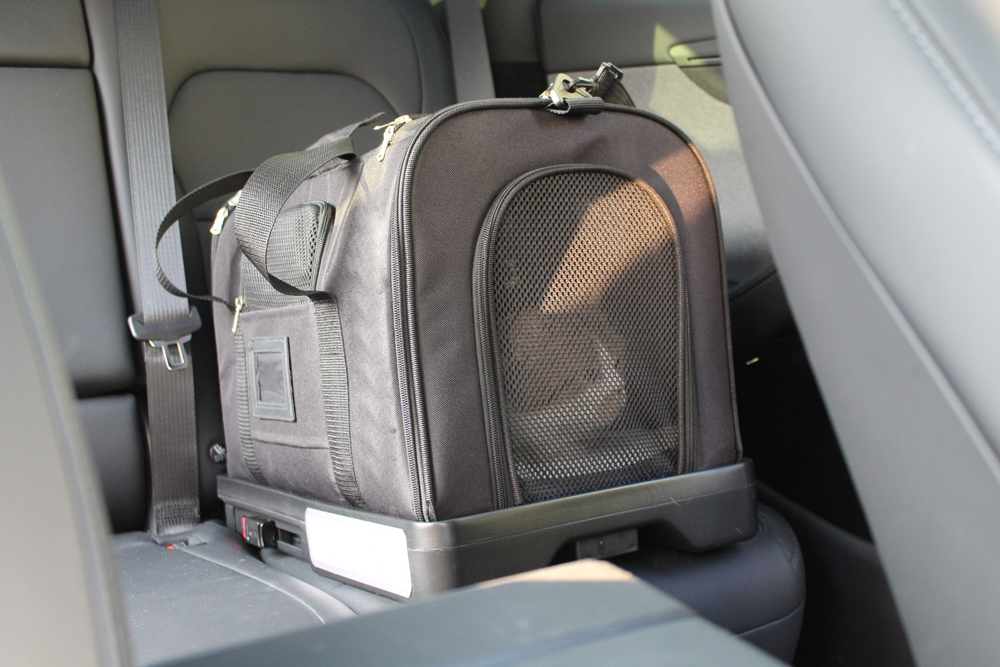
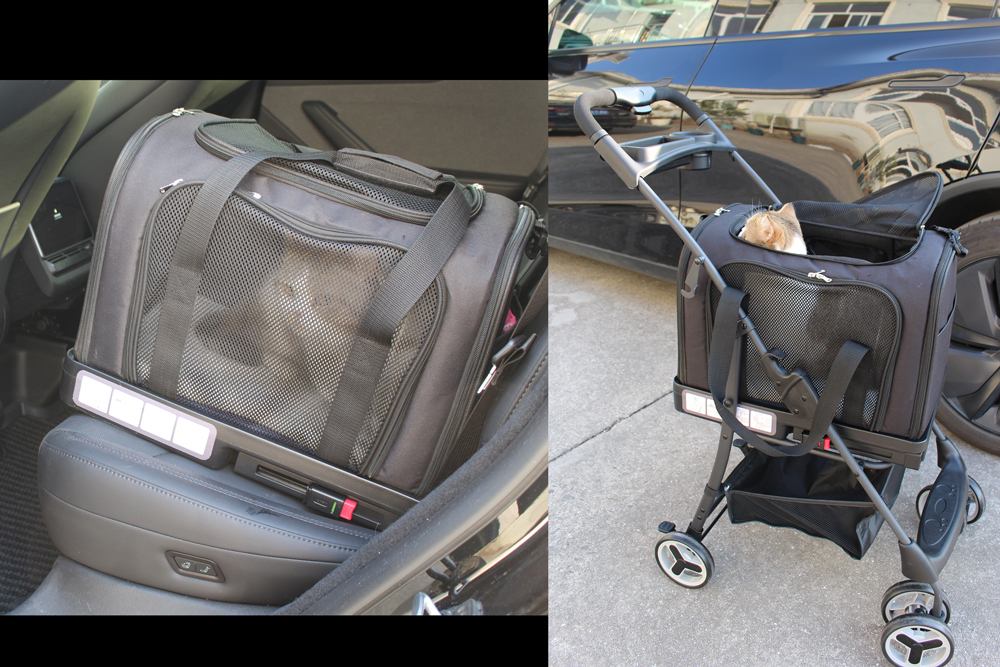
The carrier itself needs to remain stable. Current FelineVMA guidance recommends securing cat carriers on the vehicle floor behind the driver or passenger seat, while CDC guidance also emphasizes preventing crates from sliding or shifting during vehicle movement. :contentReference[oaicite:7]{index=7}
That stability matters for comfort as well as transport.
A cat may have enough room on paper but still struggle to settle if the carrier tips, slides, or changes position every time the vehicle brakes.
Flying Creates a Longer Continuous Process
For air travel, the duration on the ticket is not the same as total carrier time.
Consider a three-hour flight.
The cat may enter the carrier before leaving for the airport. Then there is ground transportation, check-in, security, waiting at the gate, boarding, the flight, deplaning, baggage collection, and possibly customs or other procedures.
Suddenly, a “three-hour flight” has become a much longer travel day.
For in-cabin travel, pets generally need to remain in their carriers and airline policies apply. CDC specifically advises travelers to check airline rules, and requirements vary between airlines and travel arrangements. :contentReference[oaicite:8]{index=8}
Cargo travel brings a different set of requirements. USDA APHIS guidance covers kennel construction, ventilation, animal space, feeding and watering arrangements, temperature exposure, and handling conditions. :contentReference[oaicite:9]{index=9}
So there is no useful universal statement such as:
A cat can safely fly in a carrier for six hours.
Six hours of what?
Cabin travel? Cargo? A direct flight? Two connections? What happens before departure and after landing?
For flying, plan around the complete journey, then verify the current requirements with the airline and relevant authorities.
What Factors Affect How Long a Cat Can Stay in a Carrier?
A cat's carrier tolerance depends on more than duration. Stress, age, health, temperature, ventilation, carrier space, stability, bedding, travel experience, and access to water or breaks can all change the situation.
The most important carrier-time factors are the cat's physical condition and stress level, usable carrier space, airflow, temperature, stability, travel method, and whether basic needs can be managed during the journey.
Some of these factors are easy to see. Others only become obvious once the journey starts.
Usable Space Matters More Than the Size Label
A carrier marked “Large” tells you very little by itself.
Can the cat turn around?
Can it lie down naturally?
Does the roof collapse inward once the soft carrier is lifted?
Does thick padding take several centimeters away from the interior?
Is the floor stable under the cat's weight?
CDC travel guidance says a crate needs enough room for the pet to stand, sit, lie down, and turn around. USDA air-transport guidance similarly requires appropriate kennel space and emphasizes the animal's ability to stand, turn, sit erect, and lie in a natural position. :contentReference[oaicite:10]{index=10}
This connects directly with carrier sizing.
A cat squeezed into a carrier with poor headroom and little ability to reposition may become uncomfortable much sooner. At the other extreme, simply buying the biggest carrier available does not solve every travel problem. Excess space can make the carrier cumbersome and may allow more movement when the carrier shifts.
Fit is about usable space and support, not maximum volume.
Ventilation Has to Remain Ventilation
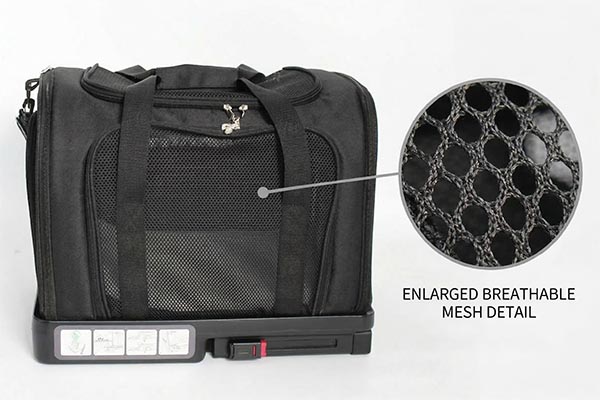
A carrier can have excellent mesh coverage in a product photograph and poor effective airflow during actual travel.
One mesh panel ends up against luggage.
Another sits close to the car seat.
A blanket used to reduce visual stimulation covers too much of the ventilation area.
The carrier is placed somewhere warm.
Now the real airflow is different from the design drawing.
Air-travel requirements place considerable emphasis on ventilation, and USDA guidance also addresses temperature and airflow in animal holding and cargo areas. :contentReference[oaicite:11]{index=11}
Covering a carrier can help some cats feel less exposed during transport, but the cover cannot be allowed to create poor ventilation or excessive heat. Feline veterinary guidance recommends both reducing visual stress where appropriate and keeping the car well ventilated at a comfortable temperature. :contentReference[oaicite:12]{index=12}
Those two ideas belong together.
Heat Can Make Time a Secondary Question
Temperature deserves special attention because conditions can deteriorate quickly.
A cat should never be left unattended in a parked vehicle. CDC warns that vehicle temperatures can rise rapidly on hot days and become fatal. :contentReference[oaicite:13]{index=13}
In that situation, asking whether the cat has been in the carrier for one hour or three misses the real danger.
The environment has already become the priority.
Stability Is Part of Comfort
Carrier discussions often focus on softness, padding, and dimensions.
Movement receives less attention.
Try carrying a cat in a poorly supported soft bag that swings with every step. The internal space may be adequate, but the cat is constantly compensating for motion.
Feline veterinary guidance recommends supporting the carrier from underneath rather than carrying it only by the handle, which helps keep it level and reduces movement. :contentReference[oaicite:14]{index=14}
This is a small detail with a very practical effect.
The carrier is not just a container.
During travel, it becomes the cat's entire immediate environment.
| Factor | What to Look At |
|---|---|
| Carrier fit | Can the cat turn, sit, and lie naturally? |
| Ventilation | Are airflow openings clear during actual use? |
| Temperature | Is the environment comfortable and controlled? |
| Stability | Is the carrier level and prevented from shifting? |
| Bedding | Can it absorb small accidents and remain usable? |
| Stress | Is the cat settling or becoming increasingly distressed? |
| Health and age | Are there conditions that change travel tolerance? |
| Journey type | Can you stop, or must the cat remain confined? |
| Total travel time | Does the plan include waiting and transfers, not only transit time? |
That table is a better travel checklist than a single maximum-hour number.
How Should You Manage Carrier Time During Long-Distance Travel?
Long-distance travel works better when carrier time is planned as part of the entire journey. Include acclimation before departure, safe opportunities to reassess the cat, temperature control, hydration and elimination planning, and realistic travel margins.
For long-distance travel, plan the whole door-to-door journey rather than only the driving or flight time. Build in safe opportunities to check the cat and manage basic needs, while keeping the carrier secure and avoiding risky roadside release.
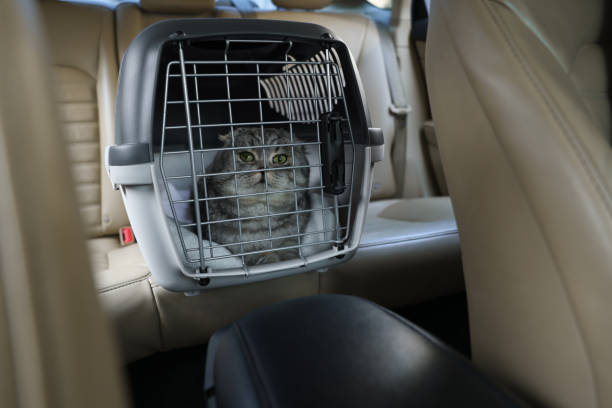
A six-hour drive rarely takes exactly six hours when a cat is involved.
That is worth accepting before you leave.
Start Before Travel Day
Carrier preparation works best before the cat needs to go anywhere.
Leaving the carrier accessible at home gives the cat an opportunity to investigate it without immediately being transported somewhere unfamiliar. Familiar bedding and gradual carrier training can help change the association.
Feline veterinary guidance recommends exactly this kind of acclimation rather than storing the carrier away until the day of a veterinary visit. :contentReference[oaicite:15]{index=15}
For a long trip, short practice drives can also reveal problems early.
Maybe the cat becomes nauseous.
Maybe the carrier slides.
Maybe the cat settles after ten minutes.
Maybe it never settles at all.
You want to learn those things on a twenty-minute practice trip, not three hours from home.
Plan Breaks That Are Actually Safe for a Cat
This part deserves more thought than “stop every X hours.”
A motorway service station is not a living room.
Opening a carrier door in an unsecured environment can turn a comfort break into a missing-cat emergency.
For car travel, breaks can first be used to stop motion, observe the cat, check temperature and ventilation, inspect bedding, and assess whether the plan needs to change.
If the cat needs to come out during a very long trip, plan a secure enclosed environment rather than relying on an open parking area.
The logistics depend on the cat and journey, but the principle is simple:
A break is only helpful if the break itself is safe.
Prepare for Small Accidents
Long confinement means urine, feces, or vomiting are possibilities even with good planning.
Absorbent material therefore becomes much more important on a long trip than on a ten-minute journey.
USDA air-transport guidance requires leak-proof kennel flooring with appropriate absorbent material for animals transported under those rules, while CDC also recommends bedding such as paper or towels for cargo crates to absorb accidents. :contentReference[oaicite:16]{index=16}
For ordinary consumer travel, the practical lesson is straightforward: prepare for the carrier to get dirty.
Bring replacement absorbent pads or bedding.
Keep cleaning supplies accessible rather than buried under every suitcase in the trunk.
Long Flights Need a Different Plan
You cannot treat a flight like a road trip with wings.
You may not be able to open the carrier when you want to. Airline requirements can determine carrier dimensions, placement, and how the cat remains contained.
For cargo travel, handling and environmental conditions are also outside the owner's direct control for part of the journey.
Current airline rules need to be checked before every trip rather than copied from an old blog or assumed from a previous flight. CDC and USDA both direct travelers to verify the applicable requirements, and USDA notes that pet-travel preparation can involve documentation and destination-specific rules as well. :contentReference[oaicite:17]{index=17}
Cats that are very young, older, short-nosed, or living with chronic health conditions may face additional travel concerns. CDC's Yellow Book specifically identifies these groups as cases where travel conditions can contribute to medical complications. :contentReference[oaicite:18]{index=18}
That is a conversation to have with a veterinarian before booking the trip.
Not at the departure gate.
How Can You Tell When Your Cat Has Been in a Carrier Too Long?
Do not wait for a planned time limit if your cat appears to be struggling. Increasing agitation, persistent escape attempts, heavy panting, excessive drooling, vomiting, extreme lethargy, breathing difficulty, or signs of overheating need attention.
Watch the cat rather than relying only on elapsed time. Heavy panting, frantic escape behavior, persistent drooling, vomiting, unusual lethargy, breathing difficulty, or apparent overheating can signal that the current travel situation needs immediate reassessment.
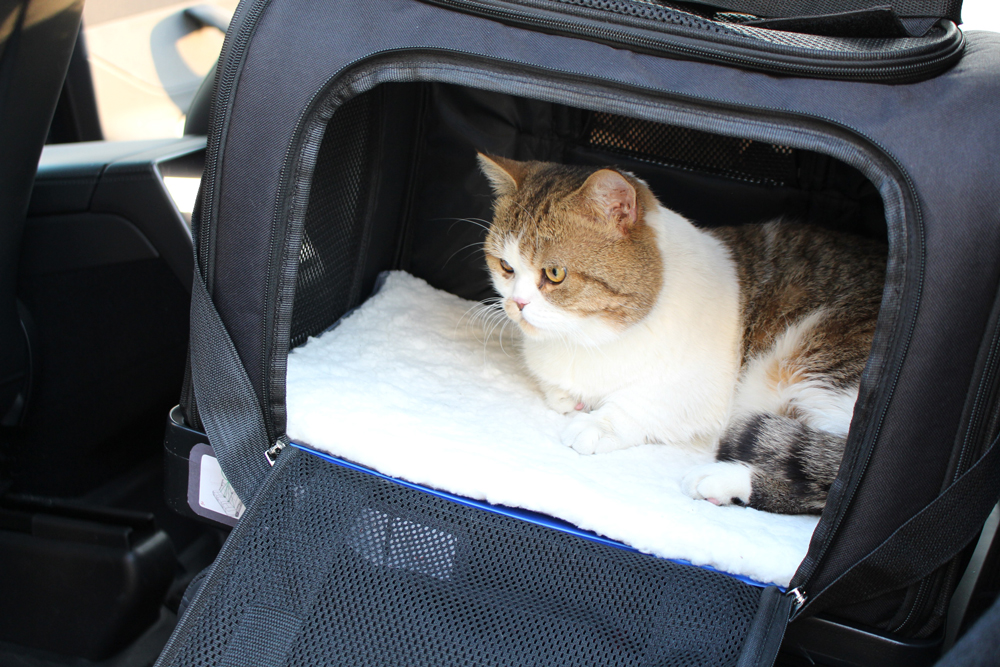
Cats do not all express stress in the same way.
One becomes noisy.
Another claws at the carrier.
Another freezes and becomes very quiet.
That last one is worth remembering because silence does not always mean comfort.
Look for Change, Not Just One Behavior
Meowing on its own does not tell you exactly what is happening.
A cat may vocalize briefly and then settle.
That is different from escalating vocalization combined with frantic movement, panting, or repeated attempts to escape.
The pattern matters.
You know what the cat looked like at the beginning of the journey. What has changed?
Is breathing different?
Is the cat unable to settle?
Has drooling started?
Has it vomited?
Does it appear unusually weak or unresponsive?
Those observations tell you much more than “we have been driving for 90 minutes.”
Drooling or Vomiting Can Be Travel-Related
Cats can experience travel sickness. Feline veterinary guidance notes that vomiting and drooling may occur during travel and advises owners who suspect travel sickness to speak with their veterinarian about appropriate management. :contentReference[oaicite:19]{index=19}
This is important because an owner may otherwise interpret every sign as a carrier problem.
Sometimes the carrier does need improvement.
Sometimes the cat is struggling with the movement of the vehicle.
Sometimes anxiety is involved.
Sometimes a medical issue may be relevant.
A blog cannot determine which one applies to an individual cat.
Panting and Breathing Problems Deserve More Caution
Cats can pant when highly stressed or overheated, but persistent or unusual breathing changes deserve more attention than an arbitrary travel schedule.
Short-nosed cats also warrant additional caution in some travel situations. USDA guidance identifies breeds including Persian, Himalayan, and Burmese cats among short-nosed animals that may face greater breathing or heat-related concerns during air transport, while CDC advises considering breed, age, and health when planning travel. :contentReference[oaicite:20]{index=20}
If a cat is having difficulty breathing, appears overheated, collapses, becomes extremely lethargic, or shows other severe symptoms, seek veterinary help rather than trying to calculate how much carrier time remains.
A Better Carrier Cannot Make Unlimited Confinement Acceptable
It is worth ending here because carrier brands sometimes oversell comfort.
Better ventilation matters.
Correct sizing matters.
Stable construction matters.
Absorbent bedding matters.
A carrier that stays level and gives the cat usable room is better prepared for travel than one that collapses, shifts, or traps heat.
But none of those features turn a carrier into a place where time no longer matters.
The carrier supports the journey.
It does not remove the cat's biological needs or individual stress response.
For a ten-minute veterinary trip, that distinction may barely come into view. During a cross-country move or international flight, it becomes central to the travel plan.
Conclusion
There is no universal safe carrier time for every cat. Plan around the journey, carrier conditions, and individual cat—and let changes in the cat's behavior override the clock.
FAQ
Can a Cat Stay in a Carrier for 2 Hours?
Many cats may spend two hours in a carrier during travel, but two hours is not a universal safety guarantee. Carrier fit, ventilation, temperature, stress, age, health, and the individual cat's behavior all matter.
Can a Cat Stay in a Carrier for 4 Hours?
A four-hour journey may be manageable for some cats with proper preparation, while others may struggle much earlier. For longer trips, plan opportunities to reassess the cat and manage water, elimination, temperature, and comfort rather than relying on four hours as a fixed safe limit.
Can a Cat Stay in a Carrier for 8 Hours?
Eight hours is a long period to plan as uninterrupted carrier confinement. If travel will last this long, consider the complete journey, opportunities for safe breaks, hydration and elimination needs, carrier conditions, and the cat's health and stress tolerance. Ask your veterinarian about individual concerns before a long trip.
How Often Should You Stop When Driving Long Distance With a Cat?
An older AVMA travel guide recommends planning stops about every two hours on long trips as a general travel reference. With cats, however, a stop does not automatically mean opening the carrier outdoors. Assess the cat and use a secure environment if the carrier needs to be opened. :contentReference[oaicite:21]{index=21}
Should I Let My Cat Out of the Carrier During a Car Trip?
Do not casually open the carrier inside an unsecured vehicle or outdoor rest area. Cats can escape quickly when frightened. Feline veterinary guidance advises keeping cats contained during vehicle travel rather than opening the carrier in response to meowing. :contentReference[oaicite:22]{index=22}
Can My Cat Stay in the Carrier During a Vet Waiting Room Visit?
Usually the carrier remains a useful secure space while waiting. Keeping it stable and reducing unnecessary visual stress can help some cats. If your cat becomes highly distressed, ask the veterinary practice whether a quieter waiting arrangement is available.
How Long Can a Cat Stay in an Airline Carrier?
There is no universal maximum that applies to every flight. Total carrier time can include travel to the airport, check-in, waiting, boarding, the flight, connections, and arrival procedures. Always verify current airline and destination requirements before traveling. :contentReference[oaicite:23]{index=23}
What Size Carrier Is Best for Long Travel?
Choose a carrier that provides enough usable space for the cat to stand, sit, turn around, and lie down naturally while remaining practical for the travel scenario. For flights, the carrier also has to meet the applicable airline or transport requirements. :contentReference[oaicite:24]{index=24}
Why Is My Cat Panting in the Carrier?
Panting can occur with severe stress or heat, among other causes, and breathing changes should not be judged from travel duration alone. If panting is persistent, breathing appears difficult, or your cat shows other concerning symptoms, seek veterinary advice.
How Can I Make a Long Carrier Trip Easier for My Cat?
Acclimate the cat to the carrier before travel, use familiar bedding, keep the carrier stable and well ventilated, maintain a comfortable temperature, prepare for accidents, and plan the entire journey rather than only the driving or flight time. :contentReference[oaicite:25]{index=25}