

Dog car harnesses can sound reassuring when the package says “crash tested,” but that phrase often leaves out the most important details. A dog owner may assume it means child-seat-level protection. In reality, the testing method, pass criteria, dog size, and installation setup matter far more than the label.
Some dog car harnesses are crash tested, but crash testing is not universally mandatory for every product sold. A “crash tested” claim may mean the manufacturer ran a test, while “passed” or “certified” depends on documented results and the testing program used. Buyers need to verify the test method, model, size, and configuration.
I work around vehicle-related pet travel products, and I have learned to slow down whenever a safety claim sounds too simple. A harness is only one part of a real restraint system. The sections below explain what the claim means, who tests it, and how to read the fine print before trusting it.
What Does “Crash Tested” Mean for a Dog Car Harness?
A “crash tested” label can feel like a clear answer, but it often creates a new problem. It tells you that a test happened. It may not tell you whether the dog car harness passed, failed, or was tested in the same way that your dog would actually use it.
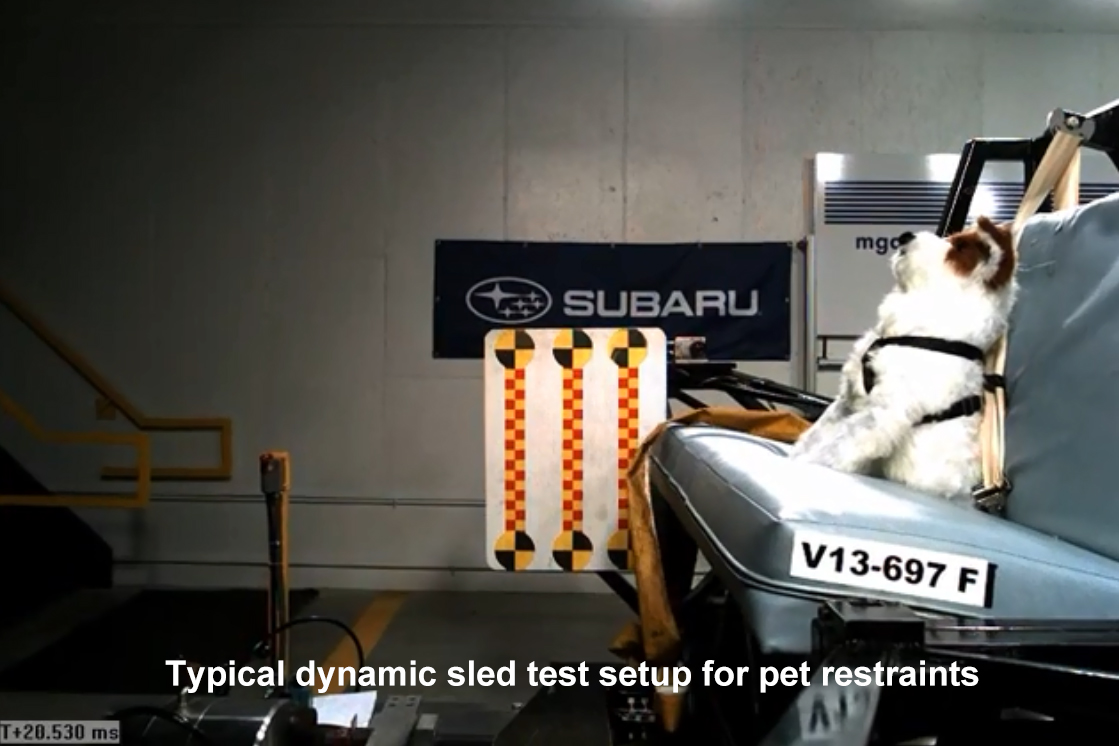
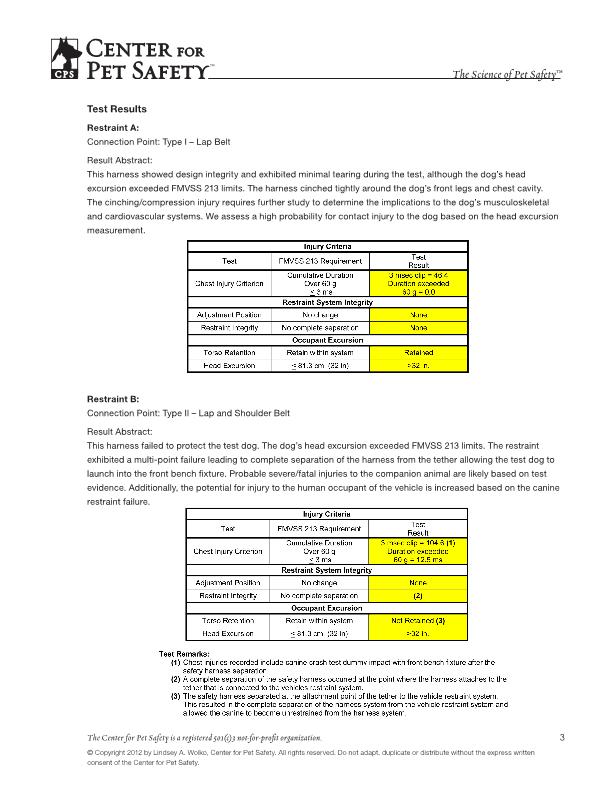
A dog car harness is “crash tested” when it has been evaluated in a simulated crash or dynamic sled test. However, “tested” does not automatically mean “passed” or “certified.” The most useful claims identify the test speed, crash pulse, dummy weight, attachment method, tested size, and measurable pass or fail criteria.
The wording matters more than most shoppers realize
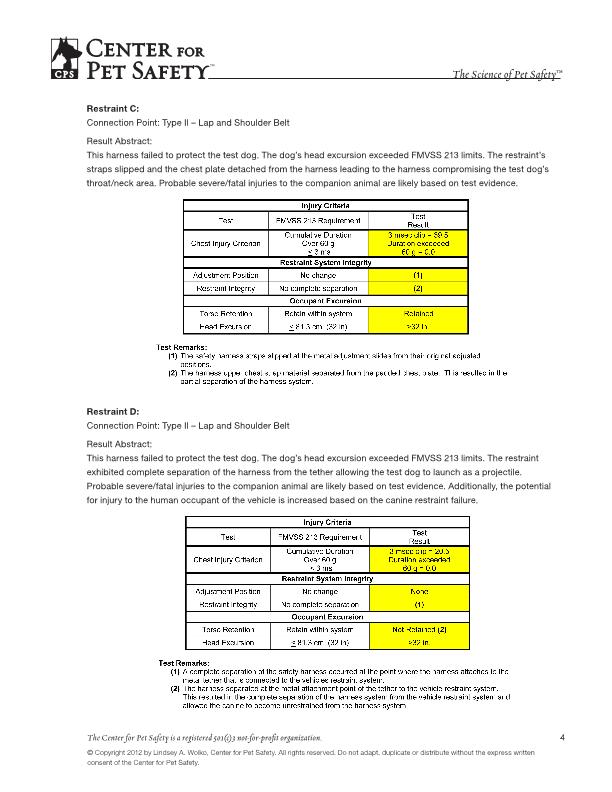
In normal shopping language, “crash tested” sounds positive. In engineering language, it is incomplete. A product can be tested and still perform poorly. I have seen this same issue in product development conversations where one team says, “We tested it,” and the next question is always, “What were the results?”
For dog car harnesses, three phrases are often mixed together:
| Marketing phrase | What it may mean | What to verify |
|---|---|---|
| Crash tested | A dynamic impact test was performed | Test lab, test speed, dummy size, setup, results |
| Passed crash testing | The product met a defined pass/fail requirement | The requirement and whether the report names the exact model |
| Crash-test certified | A third-party program issued certification | Certifying body, valid model list, size coverage, date |
What usually happens in a crash test?
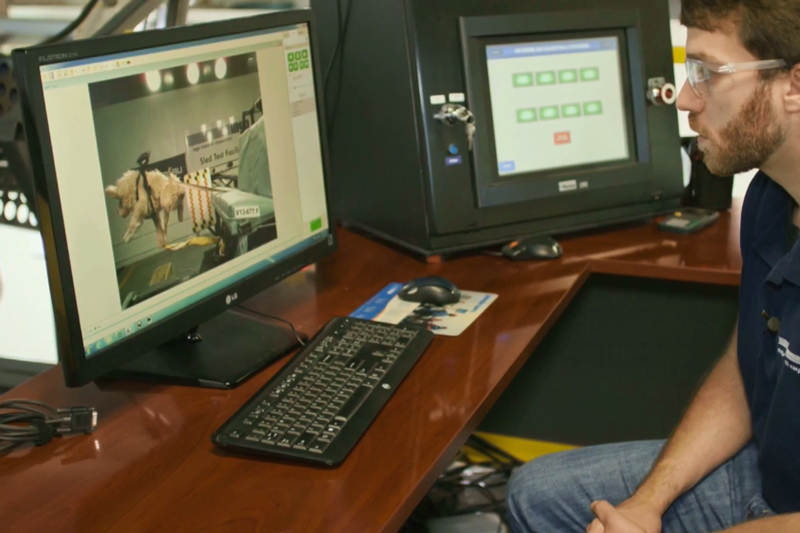
A typical crash test for a pet restraint may use a sled system rather than a full vehicle crash. The harness is installed on a test bench with a weighted dog dummy. The sled accelerates or decelerates according to a defined crash pulse. Engineers then look at how the harness controls the dummy.
Important performance questions include:
- Did the harness keep the dummy on the seat?
- Did the webbing, stitching, buckles, or metal parts break?
- Did the attachment point release?
- Did the dummy rotate, launch forward, or strike hard structures?
- Was the load spread across the body, or did it concentrate in a risky area?
Why one test does not tell the whole story
A 25 lb dog and a 75 lb dog create very different loads. A small harness size may pass while a larger size needs additional reinforcement. The seat belt path also matters. Some harnesses connect directly to the vehicle belt. Others use a tether. A longer tether can allow more movement before the dog is restrained, which changes the force and travel distance.
That is why I treat “crash tested” as the beginning of the question, not the end. A credible claim gives enough detail for a buyer to understand what was tested, how it was tested, and what happened during the test.
Is Crash Testing Required for Dog Car Harnesses?
Dog owners often assume that anything sold as a vehicle safety product must meet a legal crash standard. That assumption is easy to understand. Child car seats are regulated, vehicle seat belts are regulated, and the packaging looks similar. Dog car harnesses sit in a more complicated category.
Crash testing is generally not required by a universal mandatory crash-performance certification system for dog car harnesses in the same way child restraint systems are regulated. In the United States, agencies such as NHTSA regulate vehicle safety and child restraints, while pet restraint crash testing is largely handled through voluntary testing and certification programs.
Pet restraints are not regulated like child car seats
The National Highway Traffic Safety Administration, or NHTSA, plays a major role in vehicle safety in the United States. NHTSA oversees Federal Motor Vehicle Safety Standards for vehicles and regulated equipment such as child restraint systems. Those child seat rules include defined performance requirements and compliance procedures.
Dog car harnesses do not fall into the same regulated framework. That does not mean testing is meaningless. It means the responsibility shifts heavily to manufacturers, independent labs, retailers, and consumers to evaluate the claim.
A useful way to view the landscape is:
| Product category | Mandatory crash-performance regulation? | Typical oversight |
|---|---|---|
| Child car seat | Yes, under defined government standards | NHTSA and regulated compliance systems |
| Vehicle seat belt | Yes, as vehicle safety equipment | Vehicle safety standards |
| Dog car harness | No universal mandatory system comparable to child restraints | Voluntary testing, lab reports, third-party programs |
| Pet carrier for vehicle use | Varies by product and claim | Manufacturer testing and voluntary certification |
Voluntary standards and protocols still matter
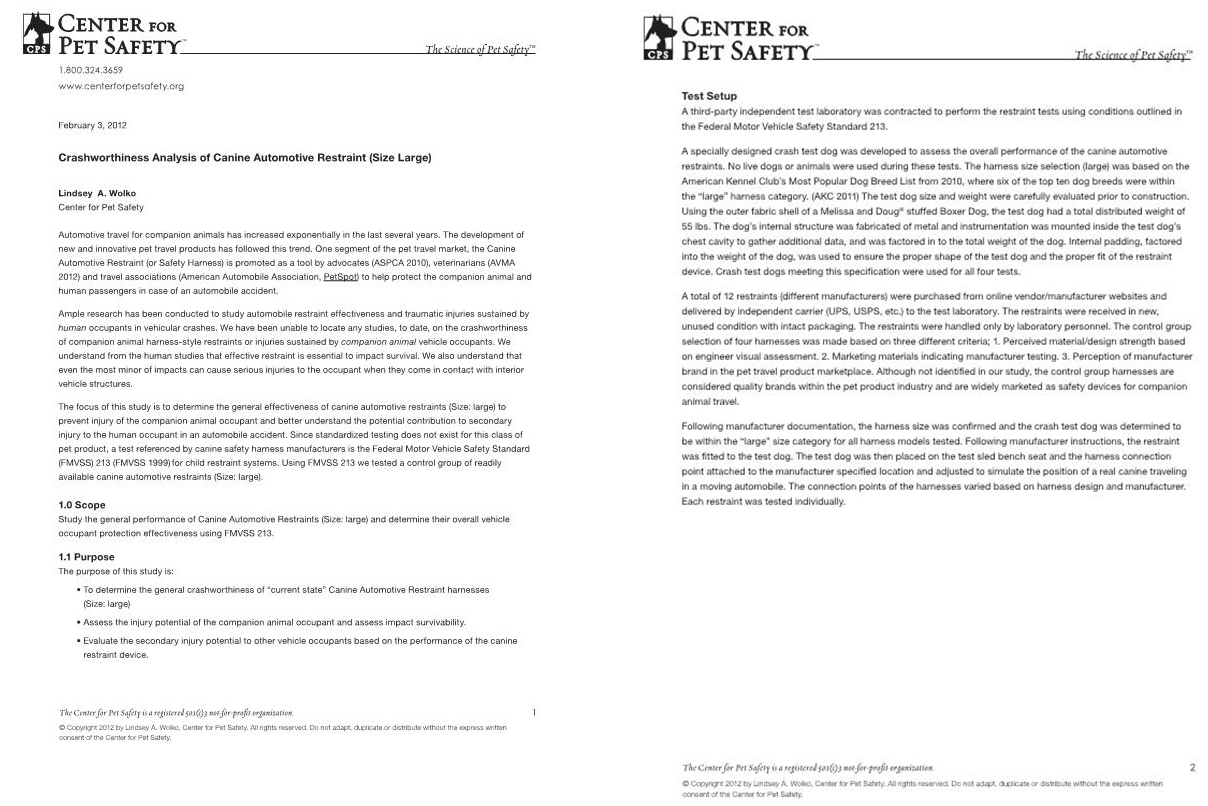
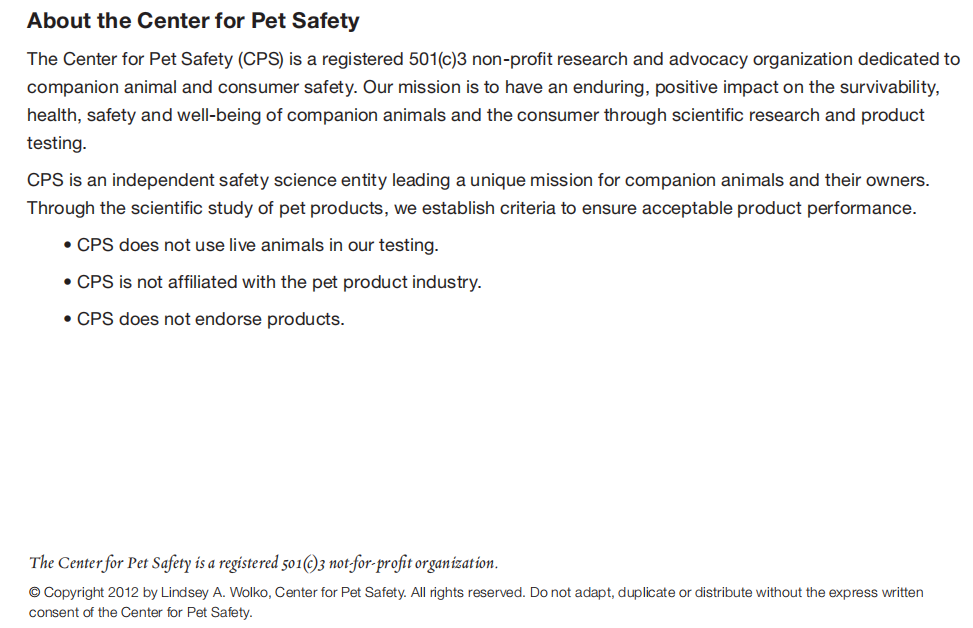
The Center for Pet Safety, often called CPS, is one of the best-known organizations connected with pet travel product crash testing and certification. CPS has published test protocols and certification programs for certain pet travel products, including harnesses, crates, and carriers.
CPS certification is voluntary. A manufacturer may choose to participate, or it may run its own tests through an independent laboratory. The important point is that a voluntary program can still provide meaningful structure when it includes:
- Published test protocols
- Defined pass/fail criteria
- Appropriate test dummies
- Model and size identification
- Publicly verifiable certification status
Why the lack of a universal mandate creates confusion
Without one mandatory standard across the whole market, two products can both claim “crash tested” while being tested very differently. One may have been tested at a recognized independent lab using a defined frontal impact protocol. Another may have been tested internally with limited documentation. The packaging may look equally confident.
For consumers, that creates a practical problem. You cannot judge the claim by the phrase alone. You need supporting evidence.
For manufacturers, the situation creates a product development challenge. A responsible team has to decide which protocol to design around, how to size the harness range, how to validate stitching and hardware, and how to document the result clearly. In my experience, the difficult work starts long before the sled test. Pattern shape, webbing angle, buckle selection, load path, and dog body geometry all affect whether a restraint has any real chance of performing well.
Who Tests Dog Car Harnesses?
A dog harness may be tested by the brand itself, an independent laboratory, or a third-party certification organization. The problem is that the package may not clearly say which one did the work. That small detail can change how much confidence you place in the claim.
Dog car harnesses can be tested through manufacturer-run testing, independent crash-test laboratories, or third-party certification programs such as those associated with the Center for Pet Safety. Independent and third-party testing generally offers stronger credibility because the test setup, protocol, and results are less dependent on marketing language alone.
Three common testing routes
Most crash-testing claims come from one of three paths. Each path can be useful, but each has limits.
| Testing route | What it means | Strength | Limitation |
|---|---|---|---|
| Manufacturer internal testing | The brand or factory conducts its own test | Useful during development | Results may not be public or independently verified |
| Independent lab testing | A lab performs testing for the company | More objective setup and measurement | The brand may choose what to publish |
| Third-party certification | A certifying body evaluates against its program | Easier for consumers to verify | Only applies to listed models, sizes, and configurations |
Manufacturer testing
Manufacturer testing often happens during development. It may include static pull tests, component tests, stitching strength tests, buckle loading, and dynamic sled tests. This work can be serious and technically valuable.
However, internal testing alone requires trust. A company may show a video of a sled test, but the video may not include the full report. It may not show whether the product met a defined pass threshold. It may not identify the exact harness size, dog dummy mass, or attachment method.
For a buyer, internal testing is a useful signal only when the brand shares enough detail.
Independent laboratory testing
Independent labs can test restraint products using defined equipment and instrumentation. A lab report may include:
- Product name and model number
- Harness size
- Test dummy weight
- Test speed or crash pulse
- Seat belt routing
- Attachment hardware
- Observed failures
- Photos or video stills
- Test date and report number
This gives shoppers and retailers more to evaluate. Still, a lab test is not automatically the same as certification. A lab can perform a test selected by the manufacturer. The manufacturer may test one size, then market the entire size range in a way that feels broader than the data.
Third-party certification
Third-party certification adds another layer. CPS, for example, has certification programs where products are evaluated against its protocols. When a product is certified, consumers can usually verify certification through the organization’s published information.
That extra verification matters. It helps reduce the gap between “we tested this” and “an external program says this model met its criteria.”
What I look for first
When I read a crash-testing claim, I scan for five things before I read the marketing copy:
- Who ran the test?
- Which exact product was tested?
- Which size was tested?
- What dog weight or dummy mass was used?
- What counted as passing?
If those answers are missing, I slow down. The claim may still be based on real work, but it is not transparent enough for a confident decision.
How Can You Tell If a Dog Car Harness Is Really Crash Tested?
This is the part that matters most at the store, online, or during a product comparison. A claim may look polished, yet the supporting information may be thin. A careful check can help you separate meaningful dog car harnesses testing from vague safety language.
You can tell whether a dog car harness is really crash tested by looking for a named testing organization, a documented protocol, the exact tested model and size, the vehicle attachment configuration, and published results. A credible claim connects the product you are buying to a specific test, not just a general statement about safety.
A practical verification checklist
When a brand says its harness is crash tested, I look for evidence in a very plain way. The brand does not need to publish every engineering detail, but it needs to give enough information to avoid ambiguity.
Use this checklist:
- Testing organization
- Was the test performed by the manufacturer, an independent lab, or a third-party certifier?
- Test protocol
- Does the brand name the protocol or describe the crash pulse and impact condition?
- Pass or fail result
- Does it say “passed,” or only “tested”?
- Exact model
- Is the tested product the same model being sold?
- Exact size
- Was your dog’s harness size tested, or only another size?
- Dog weight range
- Does the tested dummy weight match the claimed use range?
- Attachment method
- Was it tested with the vehicle seat belt, a tether, an anchor strap, or another setup?
- Installation position
- Was the harness tested on a rear seat bench, bucket seat, or other setup?
- Documentation
- Is there a certificate, report excerpt, certification page, or test video with context?
Watch the small wording changes
Safety marketing often uses soft phrases. Some are harmless, but some blur the line between comfort, strength, and crash performance.
Be cautious with phrases such as:
“Safety tested”
“Designed for crash protection”
“Crash tested materials”
“Tested to high standards”
“Inspired by child seat technology”
These phrases may be true in some sense, but they do not prove dynamic crash performance. “Crash tested materials” may mean the webbing was strong. It may not mean the complete harness restrained a dog dummy during a sled test.
One tested configuration does not validate every configuration
This is one of the most common gaps. A product may be tested in one setup, while the owner uses it differently.
For example:
| Tested setup | Real-world variation | Why it matters |
|---|---|---|
| Medium harness with seat belt routed through back loop | Large harness used with long tether | More mass and more forward travel |
| Rear bench seat | Front passenger seat | Airbags and geometry change risk |
| Dog dummy sitting upright | Dog lying sideways | Body position changes load paths |
| Factory-supplied connector | Third-party extension strap | Connector strength and length differ |
| One harness size | Full size range | Stitching and webbing geometry may change |
I have seen small changes in hardware length change how a restraint behaves. A few extra inches of slack can let a dog build momentum before the harness loads. That changes the peak forces on buckles, stitching, and the dog’s body.
Ask for the report if the claim matters to you
For higher-priced products, it is reasonable to contact the brand. A serious company may not release the full lab report, but it can usually answer basic questions:
- Which lab or organization performed the test?
- Which standard or protocol was used?
- Which sizes passed?
- What dog weight range was represented?
- Was the current production version the one tested?
If the answer is vague, treat the claim as unverified. That does not automatically make the harness poor, but it means you do not have enough evidence to rely on the crash-test statement.
Does “Crash Tested” Mean a Dog Car Harness Is Safe in Every Car?
A crash-test label can make a product feel universal. Real vehicles are not universal. Seat belt geometry, seat shape, dog posture, harness fit, and installation method all influence performance. Even a well-tested dog car harness has boundaries.
No, “crash tested” does not mean a dog car harness is safe in every car or every crash. Crash tests reflect specific conditions, such as a defined impact speed, dummy weight, harness size, and attachment method. Proper fit and installation are still important, but they do not expand the test beyond its documented limits.
Crash tests are controlled snapshots
A crash test is designed to create repeatable conditions. That repeatability is useful because engineers can compare results. However, real crashes vary in ways a lab test cannot fully cover.
Variables include:
- Impact direction: frontal, side, rear, rollover
- Crash severity and speed
- Vehicle seat belt geometry
- Rear seat angle and cushion stiffness
- Dog size and body shape
- Dog posture at the moment of impact
- Harness adjustment tightness
- Use of extra tethers or accessories
- Wear, aging, and previous loading of materials
A harness that performs well in a frontal sled test may not have been evaluated for a side impact. A product tested with one dog dummy may not represent a deep-chested dog, a short-legged breed, or a very long-bodied dog.
Fit changes the load path
Harness fit is more than comfort. It affects where crash forces travel. A loose harness may allow the dog to rotate or slip. A tight harness in the wrong area may concentrate force around the neck, abdomen, or shoulders.
For everyday use, look for:
- A snug chest fit without restricting breathing
- Wide load-bearing webbing or panels
- Strong stitching at high-load points
- Metal or tested hardware where loads are high
- Clear seat belt routing
- Limited slack in the restraint system
- Size guidance based on girth and weight, not weight alone
Fit cannot turn an untested harness into a proven crash restraint. Still, poor fit can reduce the value of a tested design.
Vehicle position matters
Most safety guidance for pets favors the rear seat area rather than the front passenger seat. NHTSA and other road safety sources often discuss pets in the context of driver distraction. A loose dog can distract the driver, interfere with controls, or become a projectile in a sudden stop.
Airbags also matter. A front passenger airbag is designed for people sitting in a specific position, not for a dog in a harness or carrier. Even if a harness is crash tested, the front seat may introduce hazards that were not part of the product test.
“Safe” is not a single yes-or-no claim
In product engineering, I prefer specific claims over broad ones. “This harness passed a 30 mph frontal sled test under Protocol X in sizes S, M, and L” is more useful than “safe for all cars.” The first claim can be checked. The second claim is too wide.
A better consumer question is:
“Was this exact harness tested in a way that resembles how I will use it, and does the documentation support the claim?”
That question keeps the focus on evidence. It also avoids false confidence. A crash-tested harness can reduce risk in some scenarios, but it cannot guarantee protection in every vehicle or every collision.
Frequently Asked Questions
Are all dog car harnesses crash tested?
No. Some dog car harnesses are crash tested, while others are only designed for comfort, walking, or basic restraint. Look for a named test organization, protocol, model, size, and result. A general “safe for car travel” claim does not prove crash testing.
Is a crash-tested dog harness better than a regular walking harness?
Usually, yes for vehicle use, if the crash-testing claim is credible. A walking harness is designed for leash control, not crash loads. A vehicle harness needs stronger load paths, secure hardware, and controlled attachment to the seat belt or restraint system.
What is the Center for Pet Safety?
The Center for Pet Safety, or CPS, is a nonprofit research and advocacy organization focused on pet product safety. It has developed voluntary test protocols and certification programs for certain pet travel products. CPS certification can help consumers verify claims for listed products.
Can I use a dog car harness in the front seat?
The rear seat is generally the safer and more practical location for restrained pets. Front seats can introduce airbag risks and driver distraction. Always follow the harness instructions, vehicle manual, and any safety guidance from the product maker.
Does correct installation prove a harness is crash safe?
No. Correct installation is necessary, but it does not prove crash performance by itself. A harness also needs credible dynamic testing to support a crash-safety claim. Good installation helps the product perform as designed within the limits of its tested configuration.
Conclusion
Dog car harnesses can be crash tested, but the phrase alone is not enough. A serious claim identifies the test method, organization, model, size, attachment setup, and result. Testing is voluntary in many markets, so careful verification matters. Before you buy, compare the evidence behind the label rather than relying on broad safety wording. If your brand is developing vehicle-related pet travel products, use documented testing early in product development and publish the results clearly when they are complete.