
Are Dog Seat Belts Safe? Do Dogs Need a Seat Belt in the Car?
Dog seat belts look simple, but the safety question is not simple at all. Many pet owners worry about distraction, sudden braking, and crash risk, yet they also see many products making big promises. I believe the better solution starts with understanding restraint methods, vehicle loads, and how dogs actually move in cars.
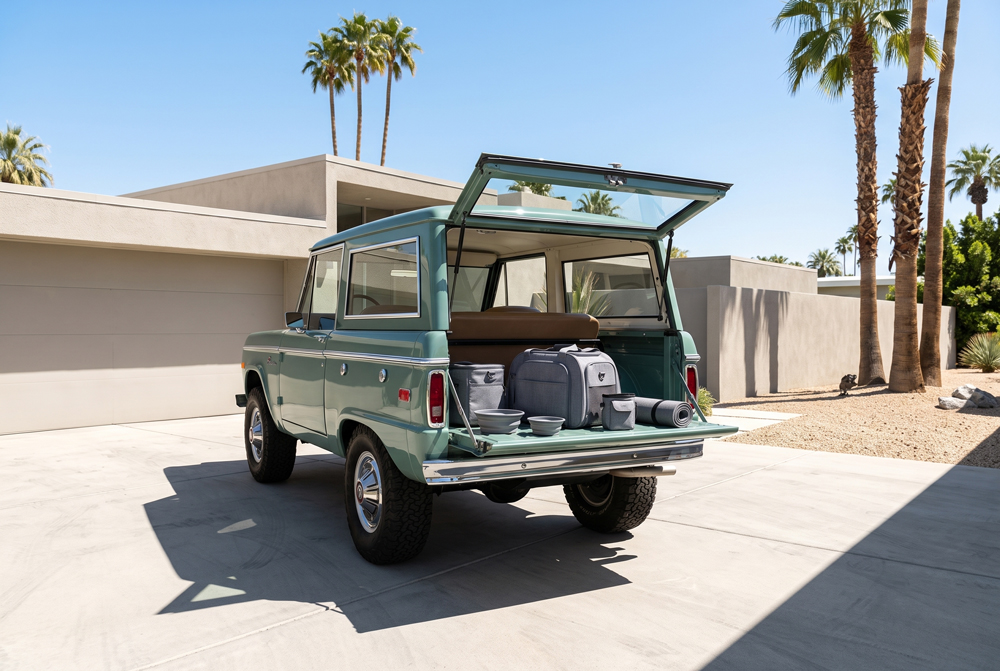
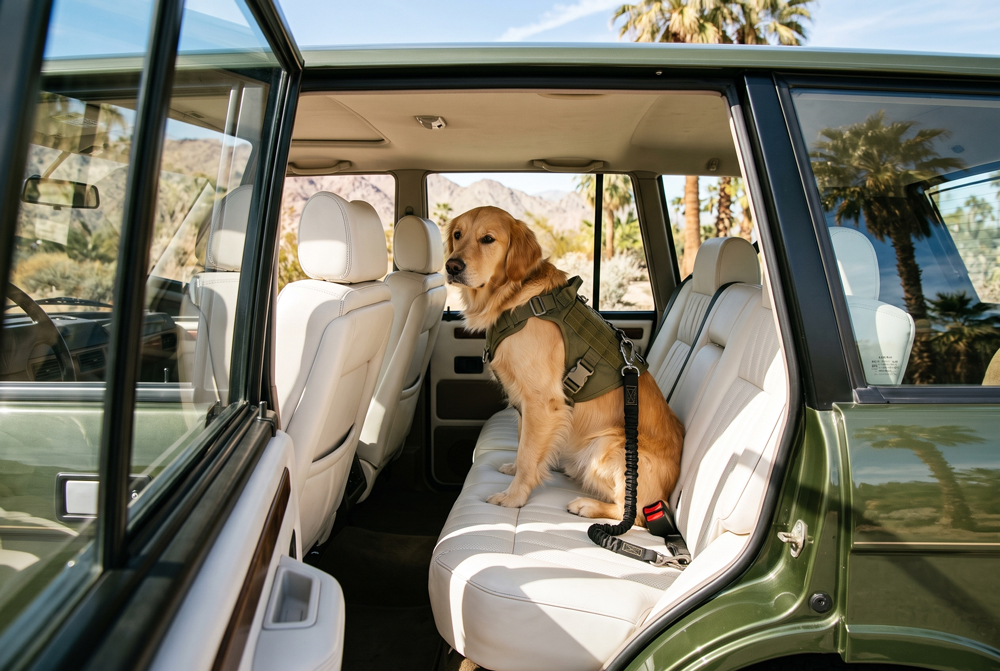
Dog seat belts can help limit a dog’s movement in the car, but they are not automatically “safe” in every situation. Dogs need some form of vehicle restraint to reduce driver distraction and uncontrolled movement. The right choice may be a crash-oriented harness, carrier, crate, pet car seat, or vehicle-connected travel system.
The real question is not whether one product type is always good or bad. The better question is how each restraint method works, what problem it solves, and where its limits are. I have seen buyers make better decisions when they compare restraint systems by function, not by marketing claims.
Do Dogs Need Seat Belts in the Car?
A loose dog in the car may seem harmless on a short trip, but the risk grows quickly. The dog can jump forward, climb onto the driver, block mirrors, or fall during braking. I see this problem often when people treat a car ride like a walk, not a moving vehicle environment.
Dogs need vehicle restraint because restraint helps reduce movement, distraction, and impact risk. A dog seat belt, harness, crate, carrier, or pet car seat can all serve this goal in different ways. The best option depends on the dog’s size, behavior, vehicle layout, and the product’s design purpose.
Why a Loose Dog Creates Risk
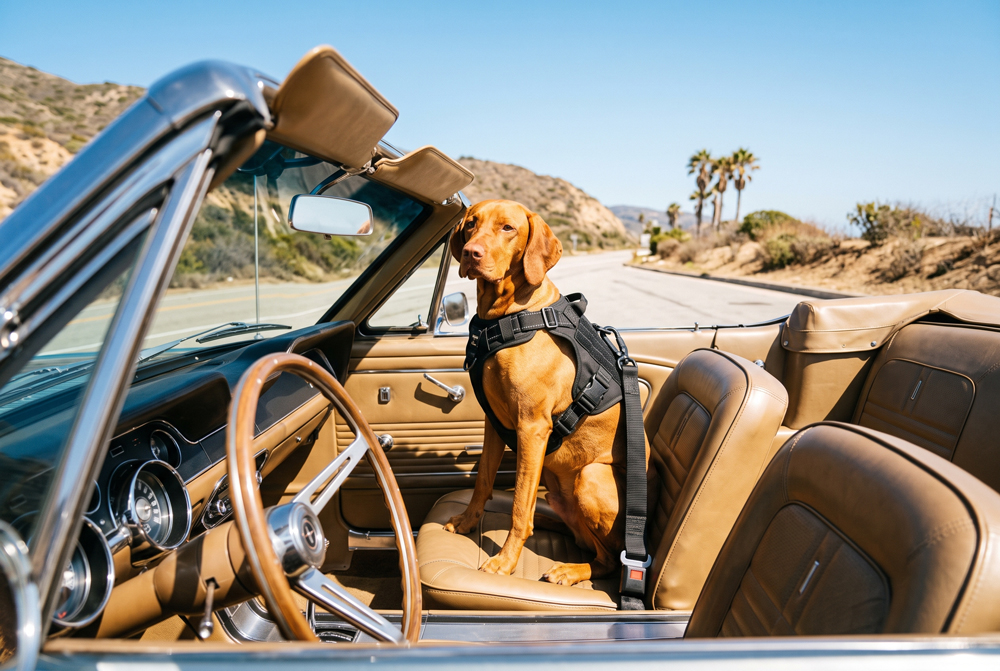
A moving vehicle changes everything. A calm dog on the sofa may become unstable in a turn. A small dog may slip into the footwell. A larger dog may brace against the seat back or center console. During sudden braking, even a low-speed stop can create enough force to throw the dog forward.
The first safety priority is not only the pet. It is also the driver and passengers.
An unsecured dog can:
- Distract the driver during lane changes or parking
- Interfere with steering, pedals, or gear controls
- Become a moving load during sudden braking
- Strike a passenger or interior trim
- Escape quickly after a crash or roadside stop
I once rode with a friend whose small dog kept moving from the rear seat to the front passenger seat. Nothing dramatic happened, but I remember how often the driver looked away from the road. That small habit is exactly why restraint matters.
Restraint Is About Control, Not Just Crash Claims
Many consumers hear “seat belt” and think of human seat belts. That comparison is not perfect. Human belts are integrated into the vehicle and regulated under mature automotive standards. Pet restraints are more varied. A product may be designed for walking, comfort, containment, light restraint, or crash-oriented vehicle use.
That is why buyers should separate the function from the name.
| Restraint Method | Main Function | Typical Strength | Key Limitation |
|---|---|---|---|
| Dog seat belt tether | Limits movement | Simple and low-cost | Depends heavily on harness and attachment point |
| Harness + seat belt | Connects dog to vehicle | Better body load distribution | Walking harnesses may not be vehicle-designed |
| Crate | Containment | Keeps dog enclosed | Needs strong structure and secure vehicle placement |
| Pet carrier | Containment + portability | Useful for small pets | Must be anchored or stabilized |
| Pet car seat | Elevated or contained travel | Comfort and positioning | Not always crash-oriented unless engineered for vehicle loads |
The important point is simple:
A restraint method designed for walking is not necessarily the same as a solution designed for vehicle travel.
For procurement teams, this distinction matters. A low-cost walking harness with a clip may look similar to a vehicle restraint, but the load path, stitching, buckles, webbing width, and attachment geometry may be very different.
What Buyers Should Look For
When I evaluate pet travel products, I start with practical questions:
- What movement does the product control?
- Where does the load go during braking?
- Does the dog remain contained or only tethered?
- Can the product be misused easily?
- Are test documents available for review?
- Is the product suitable for the dog’s weight and shape?
A dog does not need a “seat belt” in the human sense. However, a dog does need a restraint strategy in the vehicle. That strategy may use dog seat belts, a carrier, a crate, a pet car seat, or a modular anchoring system.
Are Dog Seat Belts Safe?
Dog seat belts can be safe enough for basic movement control, but they are not automatically crash-safe. The safety depends on the belt, harness, connector, vehicle anchor, dog size, and test evidence. I would never judge a pet travel product by the word “safety” alone.
A dog seat belt is safer when it connects to a vehicle-appropriate harness, uses strong webbing and hardware, limits slack, and has documented dynamic testing. It is less safe when clipped to a collar, paired with a walking harness, or used with too much tether length.
The Biggest Misunderstanding: Collar Attachment
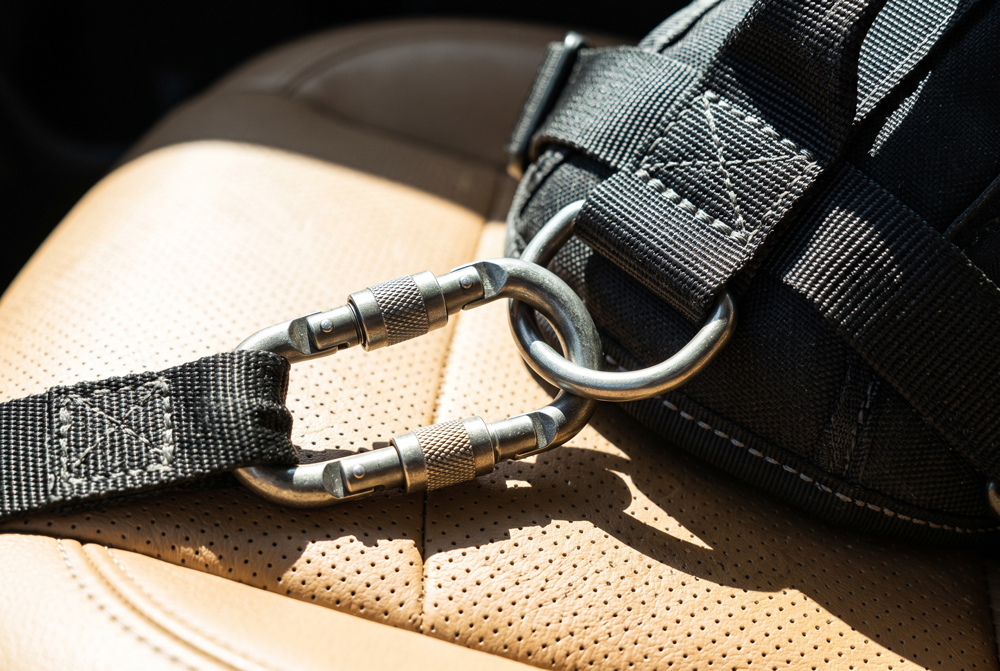
A dog seat belt should not be clipped to a collar. This is one of the clearest points I can make. A collar concentrates force around the neck. During sudden braking, that load can be dangerous.
A harness spreads force across the chest and torso. However, not every harness is suitable for vehicle restraint. Many walking harnesses are designed for leash pulling, comfort, and daily control. They may not be designed for sudden vehicle loads.
Safety Depends on the Full System
I prefer to think in systems:
- Dog body
- Harness or carrier
- Tether or belt
- Anchor point
- Vehicle seat geometry
- Human setup behavior
A weak part can reduce the value of the whole system. For example, a strong tether may still fail if the harness stitching tears. A robust harness may still allow excessive movement if the tether is too long. A carrier may still slide if it is not secured to the seat or base.
For B2B buyers, the product evaluation should include both component quality and system behavior.
| Product Element | What to Check | Why It Matters |
|---|---|---|
| Webbing | Width, thickness, abrasion resistance | Webbing carries load during restraint |
| Stitching | Box stitch, bar tack, thread quality | Stitching is often a failure point |
| Buckle | Material, locking feel, release force | Buckles must resist accidental release |
| Metal hook | Shape, coating, tensile strength | Hardware connects restraint to vehicle |
| Adjuster | Slip resistance | Loose adjustment increases travel distance |
| Harness fit | Chest coverage, strap position | Load should not focus on the neck |
Crash Testing Is Useful, But It Is Not Magic
Crash testing is an important engineering tool. It can reveal failures that static pulling tests miss. However, pet car seats and dog seat belts do not currently operate under the same unified and mandatory crash-test regulations as child restraint systems in many markets.
That means a buyer should be careful with claims like:
- “Crash tested”
- “Crash safe”
- “Car seat certified”
- “Meets child seat standards”
- “Guaranteed protection”
These phrases need supporting documents. A responsible supplier should be willing to discuss:
- Test speed
- Dog dummy weight
- Vehicle seat fixture
- Attachment method
- Pass/fail criteria
- Photos or videos
- Laboratory identity
- Repeatability of results
At Anvoya, our background in European child car seats and automotive safety products shapes how we think about pet travel. Still, I avoid saying pet products are equivalent to child restraints. The better claim is more precise: child-restraint engineering methods can improve load paths, anchoring logic, misuse prevention, tooling, materials, and production consistency.
When Dog Seat Belts Are Most Useful
Dog seat belts are most useful when the main goal is to reduce movement. They may work well for:
- Medium or large dogs that sit calmly
- Short daily trips
- Dogs already trained to stay in the rear seat
- Vehicles where crates do not fit
- Owners who want a simple restraint method
They may be less ideal for:
- Very small dogs that need containment
- Dogs that chew webbing
- Anxious dogs that spin or tangle
- Flat-faced breeds needing careful positioning
- Puppies still learning car behavior
In short, dog seat belts can be part of a good safety plan. But they should not be treated as a universal answer.
How Does a Dog Seat Belt Work?
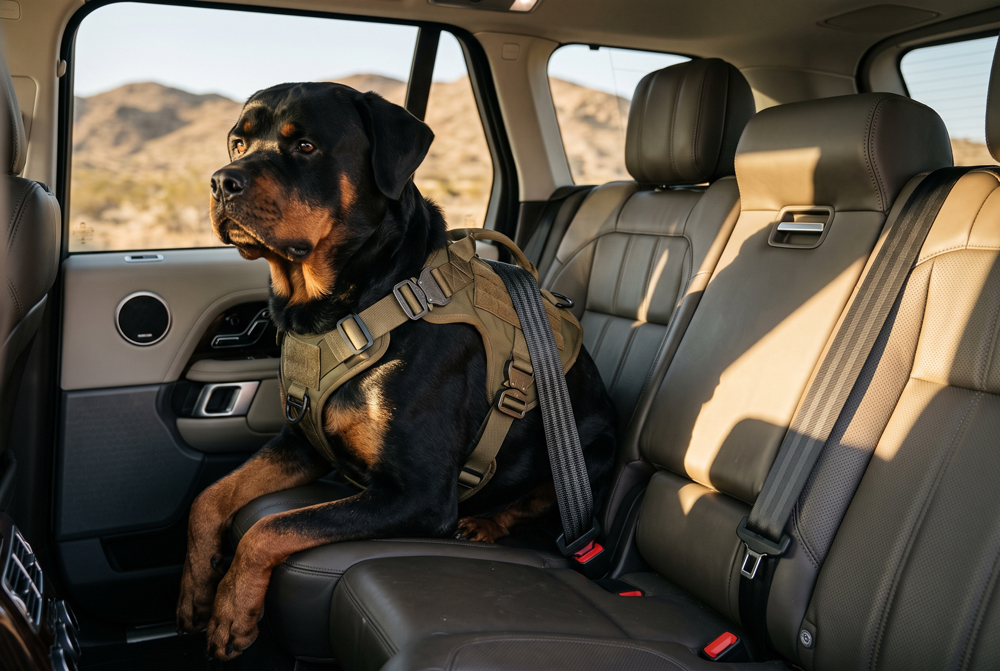
A dog seat belt works by connecting the dog’s harness to the vehicle so the dog cannot move freely around the cabin. It usually uses a tether, buckle insert, latch bar hook, or seat belt loop. Its job is to limit travel distance during normal driving and sudden stops.
Most dog seat belts work by creating a controlled link between the dog and the vehicle. The system should keep the dog in one seating area, reduce jumping or roaming, and manage some braking forces through the harness. The design is only effective when the attachment point and harness are appropriate.
Common Dog Seat Belt Designs
There are several common designs in the market. They look similar online, but they perform differently.
| Design Type | How It Connects | Main Advantage | Main Concern |
|---|---|---|---|
| Seat belt buckle tether | Clips into vehicle buckle receiver | Easy to use | May not fit all vehicles; buckle strength varies |
| Seat belt loop tether | Loops around the human seat belt | More universal | Setup must be correct |
| LATCH/ISOFIX hook tether | Clips to vehicle lower anchor | Stronger vehicle anchor logic | Not every vehicle position is suitable |
| Headrest tether | Loops around headrest posts | Simple for light restraint | Headrests are not ideal load anchors |
| Zipline style | Runs across rear seat | Allows controlled movement | More movement may mean more impact distance |
A good restraint design reduces movement without creating a new hazard. Too much slack allows the dog to gain speed before the tether stops movement. Too little slack can make the dog uncomfortable or force poor posture.
The Load Path Matters
In vehicle safety, a load path is the route force takes through a product. For a pet restraint, the path might be:
Dog’s torso → harness panel → harness straps → tether hook → vehicle anchor → vehicle body
If one part of that chain is weak or poorly positioned, performance drops. This is why a walking harness may not be enough. It may have plastic buckles, narrow straps, decorative stitching, or leash rings placed for walking control rather than crash loading.
A vehicle-oriented harness should consider:
- Wider chest contact
- Stronger stitching
- Metal hardware where needed
- Reduced neck loading
- Better strap geometry
- Less twisting under load
- Secure connection to the vehicle
Anchor Point Options
The vehicle connection also matters. Many dog seat belts use the seat belt buckle receiver because it is convenient. Others connect to LATCH or ISOFIX-style lower anchors. These anchors were originally designed for child restraint installation, so they offer a more direct vehicle connection.
However, a pet product using ISOFIX or LATCH should still be evaluated as a pet travel system, not as a child restraint. Buyers should verify the intended vehicle positions, load assumptions, installation instructions, and misuse warnings.
At Anvoya, our BASE-X concept focuses on this vehicle anchoring problem. The idea is to help selected pet carriers become more vehicle-ready through a modular ISOFIX base approach. This does not mean every carrier becomes automatically crash-proof. It means the carrier-to-vehicle connection can be engineered more intentionally.
A Simple Way to Evaluate Function
When I review a dog restraint product, I ask three plain questions:
- Does it keep the dog out of the driver’s space?
- Does it keep the dog in a stable position during braking?
- Does the structure look designed for vehicle loads, not just walking comfort?
If the answer is weak, the product may still be useful for convenience, but I would not overstate its safety value.
How Do You Secure a Dog in a Car With or Without a Harness?
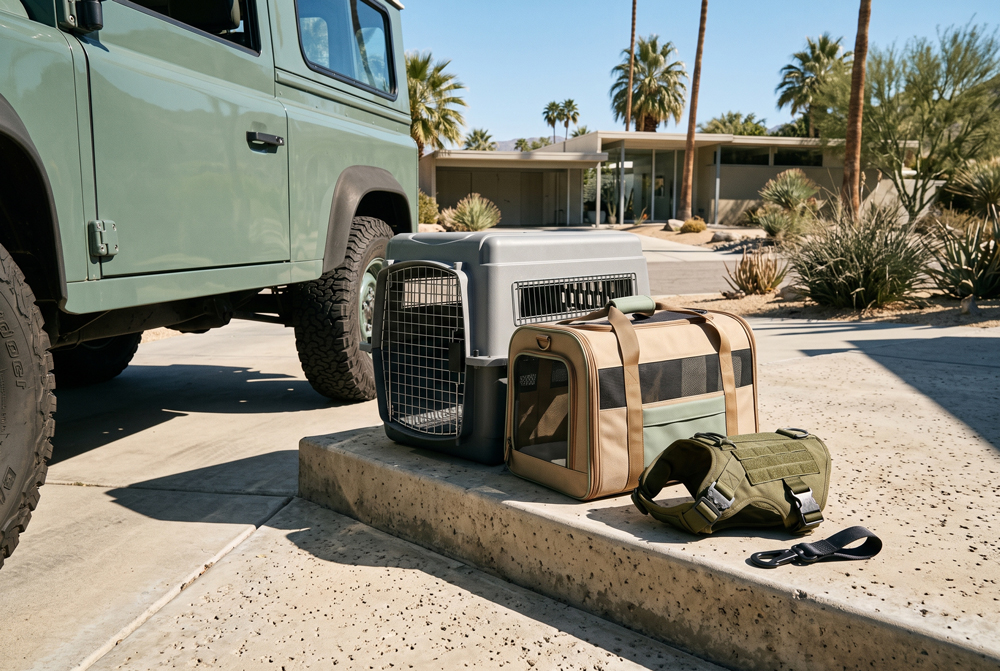
Securing a dog in a car starts with choosing the right restraint category. A harness and dog seat belt may work for many dogs, but small dogs, anxious dogs, or dogs that need more containment may do better in a carrier, crate, or pet car seat.
You can secure a dog with a vehicle harness and dog seat belt, a secured crate, an anchored pet carrier, or a pet car seat system. The safest setup is the one that fits the dog, limits movement, connects properly to the vehicle, and is used consistently according to instructions.
Option 1: Harness + Dog Seat Belt
This is one of the most common solutions. The dog wears a harness, and the tether connects the harness to the vehicle.
A better setup usually includes:
- A rear seat position
- A harness designed for vehicle restraint
- A short but comfortable tether length
- A vehicle anchor that matches the product instructions
- No connection to the collar
- No twisted straps
Basic setup steps:
- Fit the harness snugly around the chest and torso.
- Place the dog in the rear seat.
- Connect the tether to the harness attachment point.
- Connect the tether to the vehicle anchor.
- Adjust slack so the dog can sit or lie down but not roam.
- Check that the dog cannot reach the driver area.
This method is simple, but it depends heavily on harness quality.
Option 2: Secured Crate
A crate focuses on containment. It can prevent the dog from moving around the cabin and may reduce escape risk after an incident. However, the crate itself must be secured. An unsecured crate can slide, tip, or become a moving object.
A crate may work well for:
- Dogs trained to rest in enclosed spaces
- Larger vehicles with cargo space
- Nervous dogs that prefer a den-like environment
- Long-distance travel
Buyers should check:
- Structural rigidity
- Door latch strength
- Ventilation
- Tie-down points
- Vehicle placement
- Size match for the dog
Option 3: Anchored Pet Carrier
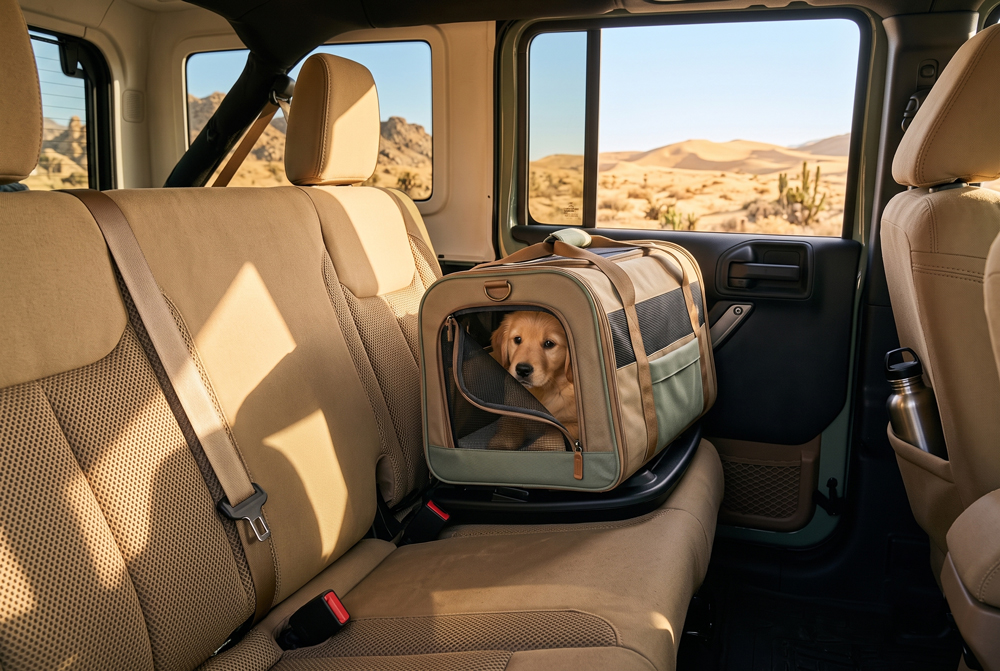
A pet carrier offers containment and portability. It is popular for small dogs because the owner can move from home to car to destination without changing products. The challenge is vehicle anchoring.
A soft carrier placed loosely on a seat is not the same as an anchored travel system. A better carrier setup uses seat belt routing, base connection, or another stabilizing method.
This is where modular pet travel systems can add value. For example, a carrier that also connects to a stroller and a vehicle base can reduce product switching. It can also help brands build a more complete line around one design language.
Option 4: Pet Car Seat
A pet car seat often provides an elevated or contained riding position. Small dogs may feel calmer when they can see outside. Owners also like the comfort and lifestyle appeal.
However, buyers should ask a serious question:
Is the pet car seat mainly a comfort seat, or is it engineered as a vehicle restraint product?
A pet car seat should be evaluated for:
- Containment wall strength
- Internal tether design
- Base stability
- Vehicle belt routing
- ISOFIX or LATCH compatibility if available
- Material durability
- Ease of cleaning
- Misuse risk
Method Comparison for Buyers
| Method | Best For | Main Safety Role | Buyer Evaluation Focus |
|---|---|---|---|
| Harness + dog seat belt | Calm medium/large dogs | Movement restriction | Harness strength, tether length, anchor quality |
| Crate | Dogs needing containment | Enclosure and separation | Structure, tie-down, door latch |
| Pet carrier | Small dogs and portability | Containment + carry function | Anchoring, sidewall structure, base compatibility |
| Pet car seat | Small dogs needing comfort | Positioning + partial containment | Stability, internal restraint, vehicle connection |
| ISOFIX base system | Modular product lines | Vehicle anchoring | Interface strength, fit, test documentation |
The Human Factor
Even the best product can be misused. I always look at whether a normal user can install it correctly in less than a minute. If a product needs too many steps, people skip steps. If instructions are unclear, misuse increases.
Good design should make the correct action obvious. This is a lesson I respect from child car seat engineering. Labels, color coding, tactile feedback, locking clicks, and clear belt paths can reduce mistakes.
For OEM/ODM buyers, usability is not only a consumer benefit. It also reduces returns, complaints, and brand risk.
Is a Dog Seat Belt Enough for Safe Car Travel?
A dog seat belt may be enough for basic restraint, but it is not always enough for safer car travel. The dog’s size, behavior, restraint design, vehicle anchor, and containment needs all matter. I would treat the seat belt as one part of a broader travel safety system.
Dog seat belts are enough when they match the dog, connect to a vehicle-appropriate harness, limit movement, and have credible test support. They are not enough when the dog needs containment, the harness is weak, the tether is too long, or the product was designed mainly for walking.
Think in Layers
Safe pet travel works better when buyers think in layers. One product rarely solves every problem.
A stronger travel plan may include:
- Driver distraction control
- Dog movement limitation
- Body load distribution
- Containment
- Vehicle anchoring
- Escape prevention
- Comfort and stress reduction
- Correct user installation
A dog seat belt mainly addresses movement limitation. A harness helps distribute load. A crate or carrier adds containment. A base or vehicle anchor improves connection to the car. A pet car seat may improve comfort and positioning.
When You May Need More Than a Dog Seat Belt
You may need a carrier, crate, pet car seat, or modular base system if:
- The dog is very small
- The dog moves constantly
- The dog tries to chew the tether
- The dog becomes anxious in open seating
- The vehicle seat is not compatible
- The owner wants stroller + car + carry use
- The brand wants a premium product ecosystem
- The product must support private-label differentiation
For example, a 4 kg toy breed may not be best served by a simple tether on a wide rear bench. The dog may slide, rotate, or become tangled. A contained carrier with a stable vehicle connection may offer a more controlled travel environment.
Why This Matters for Brands and Importers
For pet brands, the market is moving beyond basic accessories. Consumers are asking better safety questions. Retailers are asking for stronger documentation. Importers want fewer returns and fewer unclear claims.
A product line built only around low-cost dog seat belts may compete mainly on price. A product line built around a travel system can compete on value.
That travel system may include:
- Vehicle-ready pet carriers
- ISOFIX-compatible bases
- Stroller frames
- Internal restraint points
- Replaceable covers
- Modular accessories
- Clear packaging education
- Test document packages for buyers
This is the commercial logic behind Anvoya’s product development direction. Our BASE-X and AERO concepts focus on smart, easy, and safer pet travel systems. The goal is not to tell customers that every dog seat belt is bad. The goal is to help brands evaluate where a belt is enough and where a more complete vehicle-connected system creates stronger value.
Procurement Checklist
Before selecting a dog restraint product, I suggest asking suppliers for:
| Document or Evidence | Why It Helps |
|---|---|
| Material specifications | Confirms webbing, plastic, metal, and fabric quality |
| Static pull test data | Shows basic component strength |
| Dynamic test report or video | Shows behavior under sudden loading |
| Installation instructions | Reveals misuse risk |
| Weight range guidance | Helps match product to dog size |
| Quality control plan | Shows production consistency |
| Batch inspection records | Helps verify repeatability |
| Packaging claim review | Reduces legal and marketing risk |
Professional evaluation is also wise for application-specific decisions. Vehicle types, pet sizes, local regulations, and sales market expectations can change the right answer.
Frequently Asked Questions
Are dog seat belts safe for small dogs?
Dog seat belts can help small dogs, but many small dogs need more containment than a tether provides. A secured carrier or pet car seat may control sliding, spinning, and tangling better. The safest option depends on the dog’s size, behavior, harness fit, and vehicle connection.
Can I attach a dog seat belt to a collar?
You should not attach a dog seat belt to a collar. A collar can place sudden force on the dog’s neck during braking or impact. A properly fitted harness is a better choice because it spreads force across the chest and torso.
Is a walking harness okay for car travel?
A walking harness is not necessarily designed for vehicle travel. Walking products focus on leash control and comfort, while vehicle restraints must consider sudden loads, hardware strength, stitching, and load paths. Buyers should verify whether the harness is intended and tested for car use.
What is better, a dog seat belt or a crate?
Neither option is always better. A dog seat belt limits movement when paired with a suitable harness. A crate provides containment, but it must be secured in the vehicle. The better choice depends on dog size, behavior, vehicle space, and the product’s tested design.
Do pet car seats need crash testing?
Crash testing is useful because it shows how a product behaves under dynamic load. However, pet car seats do not follow one universal mandatory crash-test regulation like child restraints in many markets. Buyers should request test details and avoid treating “crash tested” as proof of absolute safety.
Conclusion
Dog seat belts can be helpful, but they are only one part of pet vehicle safety. I would use them to reduce movement and distraction, not as a blanket guarantee of crash protection. The better approach is to compare harnesses, crates, carriers, pet car seats, and vehicle-connected systems by function, evidence, and fit. If you are developing a pet travel product line, Anvoya can help you evaluate OEM/ODM options that balance smart design, easier use, and stronger vehicle-restraint thinking.