
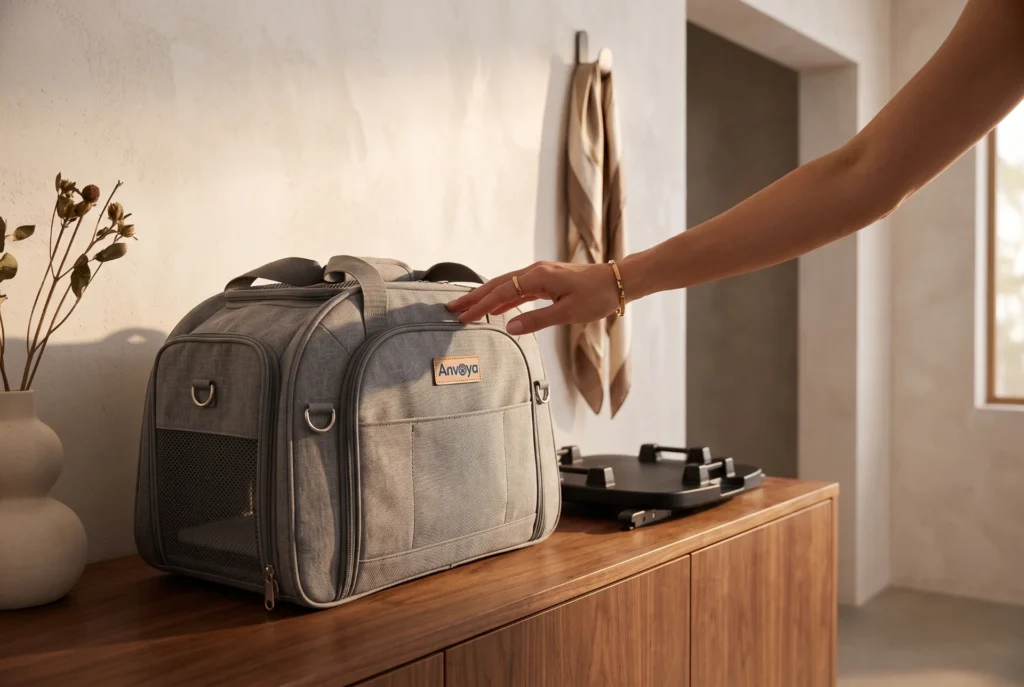
A pet carrier is often the first product a brand considers when entering car-use pet travel, but “it fits on the seat” does not mean it works as a dog car seat. That gap can create product confusion, weak claims, and customer complaints. The better question is whether the carrier can become part of a vehicle-ready system.
A pet carrier can be used as a dog car seat only when it has defined vehicle anchoring, reliable pet containment, and a structure that can manage load during braking or impact-like movement. A normal carrier with only handles, fabric straps, or a seatbelt loop should not automatically be marketed as a car seat.
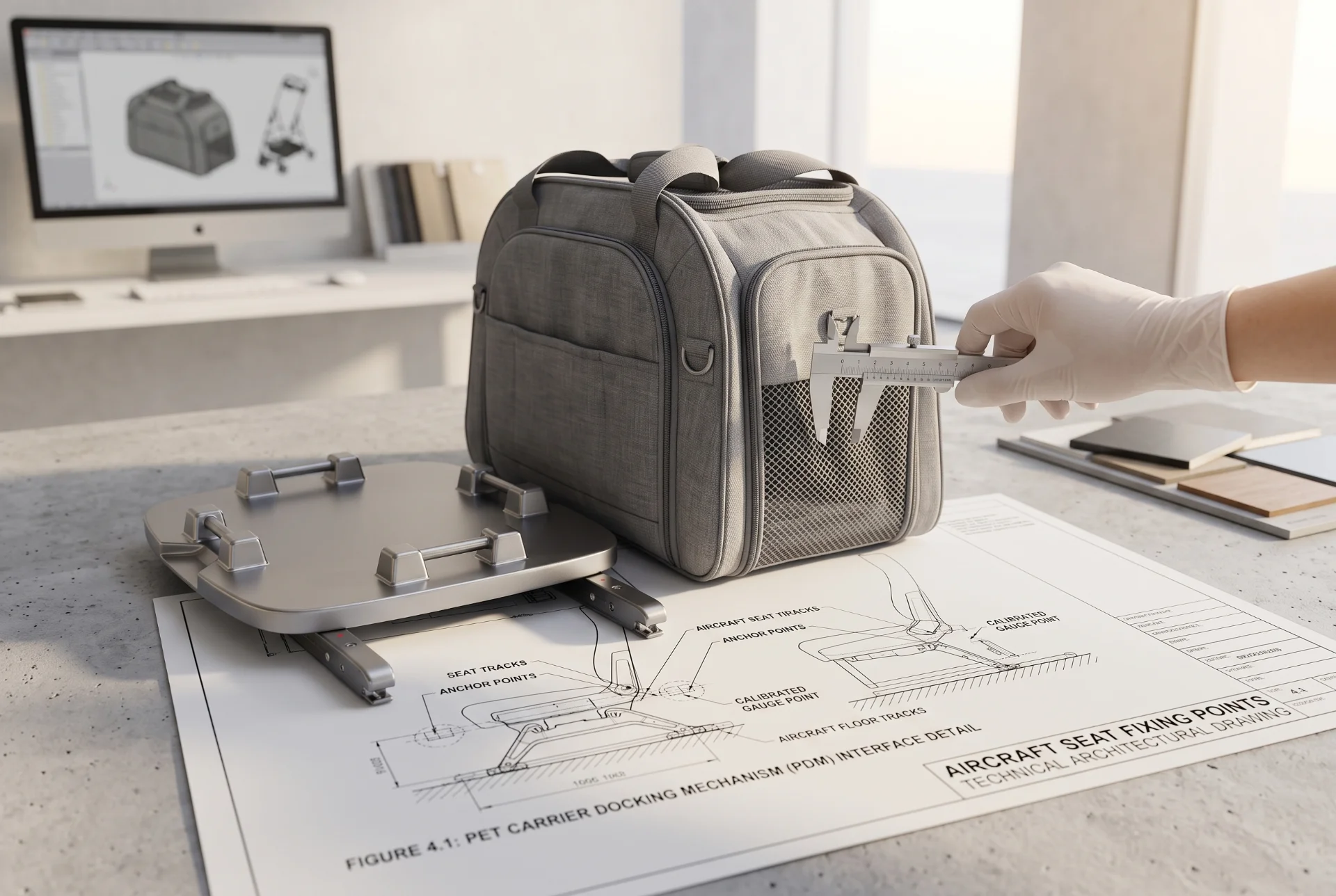
Many brand teams ask us the same practical question: “Can we keep our best-selling carrier shape and add car-use function?” Sometimes the answer is yes, but only after engineering review. The difference sits in fixation, load path, restraint logic, and misuse prevention.
What Is the Difference Between a Pet Carrier and a Dog Car Seat?
A pet carrier solves one job first: moving a pet by hand, trolley, or stroller. A dog car seat solves a different job inside a moving vehicle. Confusing those two jobs can lead buyers to overvalue comfort features and undervalue attachment strength, structure, and predictable restraint.
A pet carrier is mainly designed for portability and containment, while a dog car seat is designed to secure the pet system inside a vehicle. A true car-use system must consider vehicle anchoring, pet restraint, carrier structure, and movement under sudden braking or collision-like loads.
The job-to-be-done is different
A standard carrier usually focuses on:
- Easy carrying
- Ventilation
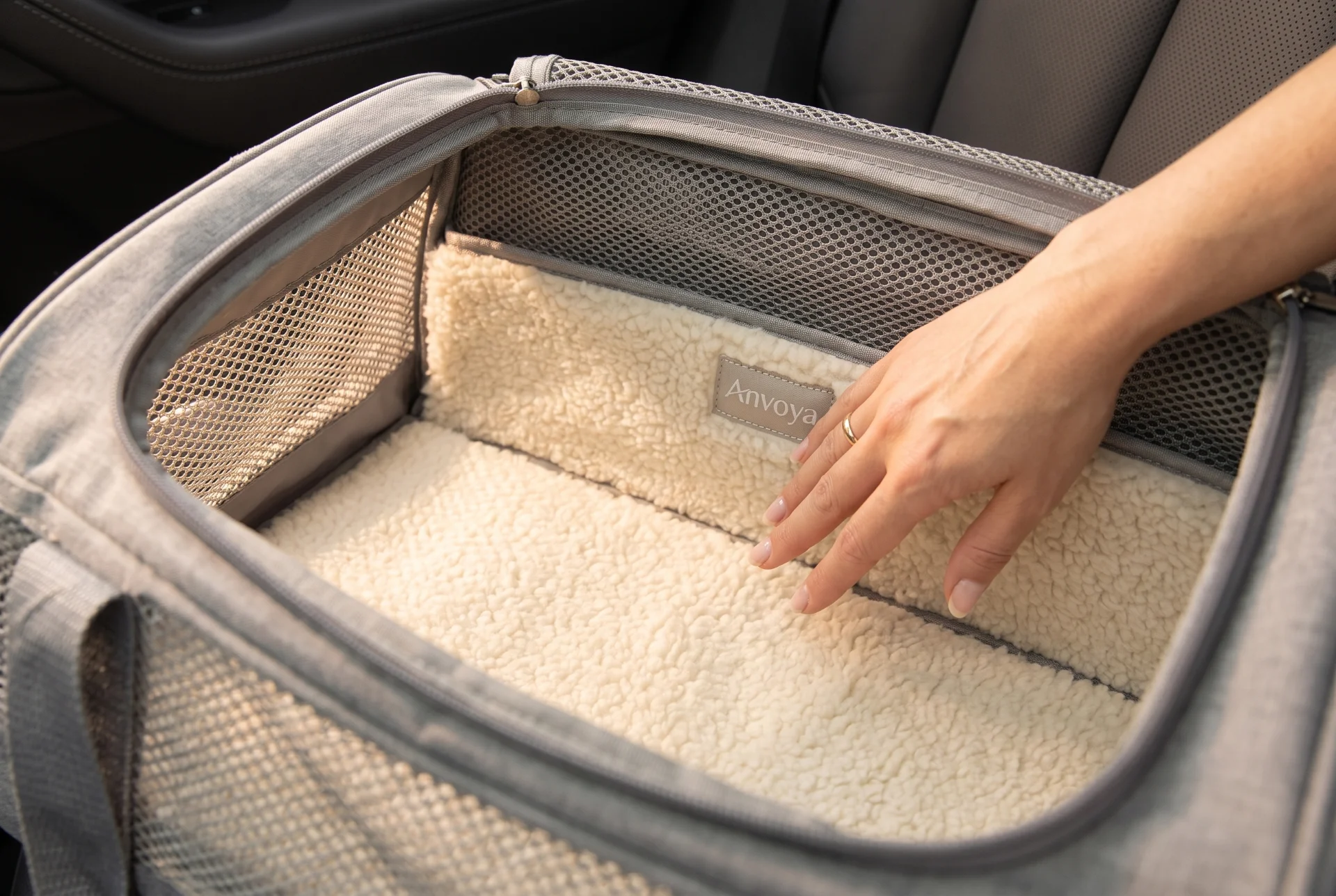
- Pet comfort
- Low weight
- Storage
- Soft or semi-rigid construction
- Retail appeal
A dog car seat or vehicle-ready pet travel system must focus on additional requirements:
- How the product connects to the vehicle
- How the pet is contained or restrained
- How the structure handles load
- How the user avoids wrong installation
- How the product performs under dynamic movement
- How clear the safety claim is for buyers and end users
This difference matters because vehicle use creates forces that normal carrying use does not. A carrier may feel strong when lifted by a handle, but that does not prove its shell, base, seams, buckles, or anchor points can manage sudden forward movement. In child restraint development, engineers always think in terms of load path. That same thinking is useful for pet travel, even though pet car seats do not operate under the same unified mandatory certification system as child car seats.
A simple comparison for product managers
| Evaluation Point | Normal Pet Carrier | Dog Car Seat / Vehicle-Ready System |
|---|---|---|
| Primary use | Hand carry, daily travel, indoor/outdoor movement | Vehicle transport and pet containment |
| Vehicle fixation | Often absent or accessory-level | Defined anchoring method |
| Pet restraint | Zipper, mesh, leash tether, inner strap | Planned containment and restraint logic |
| Structure | Comfort and portability focused | Load-management focused |
| Misuse prevention | Often limited | Installation clarity is part of design |
| Claim risk | Lower if sold as a carrier | Higher if marketed as car-use safety product |
The buyer’s real question
When a brand asks whether a carrier can become a car seat, we normally reframe the question:
“Can the carrier fit in the car?” is not the same as “Can the carrier function as part of a car-use restraint system?”
This reframing helps product managers avoid a common commercial mistake. A product can look convincing in photos but still have unclear fixation. It may have a strap, a buckle, or a seatbelt path, but the key question is whether those parts transfer load into strong areas of the carrier and vehicle.
For OEM/ODM development, this is also where supplier selection matters. A capable supplier should not only show a sample. The supplier should explain the intended anchoring method, the structural connection points, and the installation logic. That discussion usually reveals whether the product is a normal travel accessory or a serious vehicle-use development project.
Why Can’t Every Pet Carrier Be Used as a Dog Car Seat?
A pet carrier cannot automatically become a dog car seat because its materials, seams, base, buckles, and handles may not be designed for vehicle loads. The risk is not just that the carrier moves. The risk is that the attachment point fails or transfers force unpredictably.
Not every pet carrier can be used as a dog car seat because car use requires more than size compatibility. The carrier needs structural areas that can accept load, defined fixing points, and a restraint method that limits pet and carrier movement during sudden braking or impact-like events.
The common misunderstanding: “It has a strap, so it is safe”
Many product teams start with a familiar idea: add a belt slot, side strap, or buckle and position the carrier as a car seat. This can be a useful starting point, but it is not enough by itself. The critical issue is not whether a strap exists. The critical issue is whether the strap connects to a structure that can manage the load.
A soft fabric loop sewn into a panel may work for keeping a product in place during normal driving. It may not work as a predictable load path under strong deceleration. The same issue applies to light plastic buckles, decorative handles, and removable shoulder straps. They may be suitable for daily carrying, but vehicle use requires a different engineering mindset.
What can go wrong in development?
For brand product managers, the risk is both technical and commercial.
Technical risks include:
- The carrier slides or rotates on the vehicle seat.
- The seatbelt path compresses the carrier and changes pet space.
- The tether restrains the pet but not the carrier.
- The carrier shell deforms around the belt.
- The attachment point pulls away from fabric or plastic.
- The user installs the product in several unintended ways.
Commercial risks include:
- Customers believe the product offers more protection than it was designed to provide.
- Retail pages make claims that are difficult to support.
- After-sales teams receive complaints after hard braking incidents.
- Importers or distributors ask for test evidence that the supplier cannot explain.
- The brand loses trust because the product was positioned too aggressively.
A more useful qualification framework
Before calling any carrier a dog car seat, a buyer can ask these screening questions:
-
Where does the vehicle force enter the product?
The answer should not be vague. It should point to a belt path, ISOFIX/LATCH interface, base, or fixed connector. -
Where does that force go next?
The force should travel through reinforced areas, not only fabric panels or cosmetic parts. -
How is the pet restrained or contained?
The pet should not be able to escape, shift dangerously, or load a weak internal tether. -
How does the user install it correctly?
If installation depends on judgment alone, misuse risk rises. -
What evidence supports the claim?
Evidence may include internal engineering review, material specifications, component tests, dynamic-load thinking, or third-party testing where applicable. Buyers should verify documents and not treat marketing phrases as proof.
At Anvoya, many upgrade discussions begin with a brand’s existing bestseller. The brand wants to preserve the look, fabric language, retail story, and tooling investment. That is understandable. However, the existing design still needs a structural review. Some carriers can be adapted. Some need a redesigned base or reinforced connection points. Some should stay as carriers and not be repositioned as car seats.
What Does a Pet Carrier Need to Work as a Dog Car Seat?
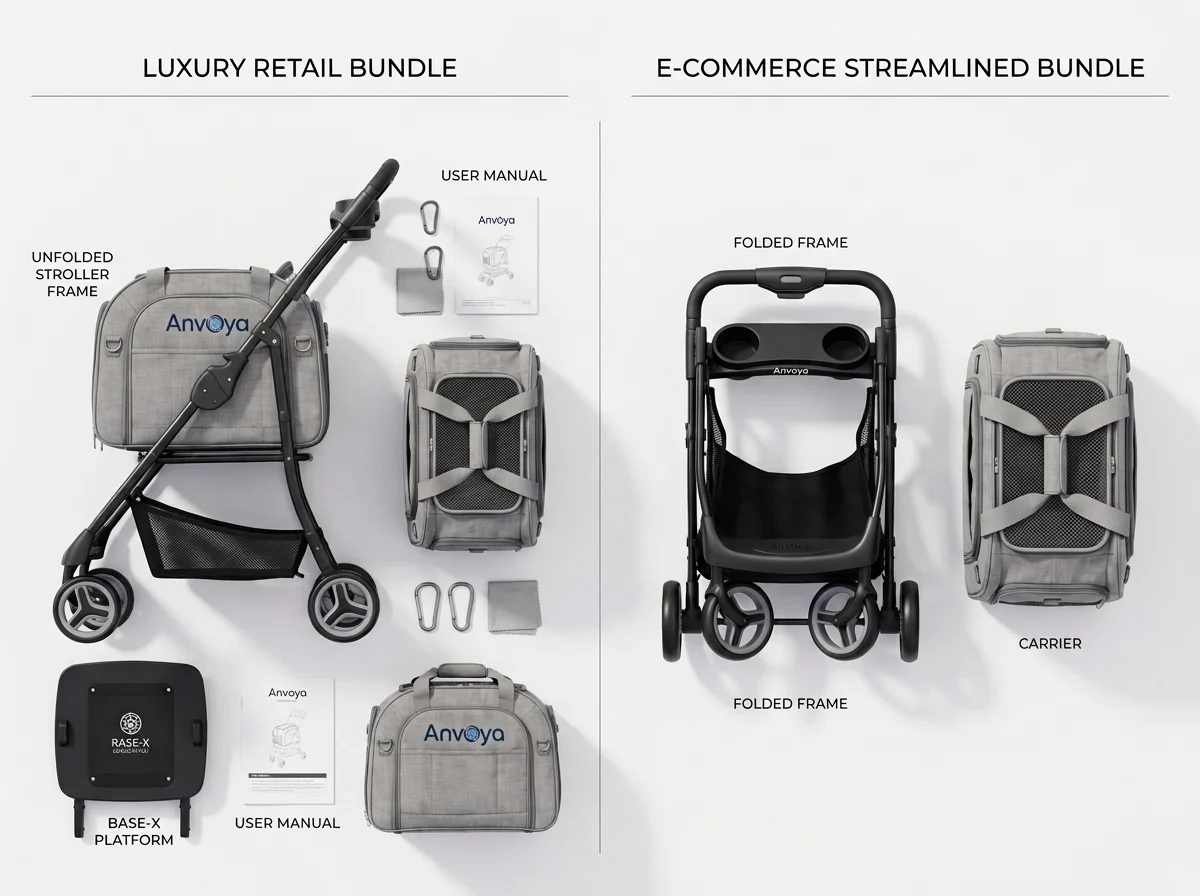
A pet carrier needs three things to work as a dog car seat: a defined vehicle anchoring method, a clear pet restraint or containment strategy, and a structure that can transfer load through reinforced points. Without these, the product is only placed in the car, not engineered for car use.
A pet carrier can work as a dog car seat only when the carrier, vehicle connection, and pet restraint work together as one system. The design should control carrier movement, limit pet movement, reduce misuse, and avoid relying on weak accessories such as decorative handles or casual straps.
The three-part system
A vehicle-ready pet travel product should be judged as a system, not as a single bag or box. In practical procurement terms, the system has three layers.
| Layer | Main Question | What Buyers Should Check |
|---|---|---|
| Vehicle anchoring | How does it connect to the car? | Seatbelt path, ISOFIX, LATCH, base, anti-rotation design |
| Pet restraint | How is the pet controlled? | Internal tether, harness compatibility, enclosure, door lock |
| Structural load path | How does force move through the product? | Reinforcement, shell, frame, base, buckle location, materials |
1. Vehicle anchoring must be intentional
A carrier placed on a seat can move under braking. So the first job is fixation. A vehicle-ready design may use:
- A seatbelt routing path
- A fixed vehicle base
- ISOFIX-style rigid connectors in suitable markets
- LATCH-style connection concepts in suitable markets
- Anti-slip and anti-rotation geometry
- Support legs or stabilizing structures in some concepts
The exact method depends on the vehicle market, product size, pet weight range, retail positioning, and regulatory context. Buyers should also confirm whether the product is intended for rear-seat use, front-seat use, or only specific seating positions. Clear instructions matter because even a strong design can perform poorly when installed incorrectly.
2. Pet restraint must match the carrier concept
Some carriers use full enclosure. Some use open booster-seat styling. Some use internal tethers. Each approach has trade-offs.
A fully enclosed carrier may help keep the pet inside the product, but it still needs vehicle fixation. An open design may feel convenient and comfortable, but it often requires stronger restraint logic because the pet can move more freely. An internal tether may reduce movement, but it should be used with appropriate harness logic and should not become the only load-bearing element in the system.
For pet brands, the restraint story should be clear and honest. The product page should not imply absolute safety. It should explain the intended use and installation method in practical terms.
3. The structure must accept load predictably
This is where child car seat engineering experience becomes useful. In child restraint development, teams consider how energy and force move through the shell, base, connectors, and belt paths. Pet products are different, and they do not share the same unified mandatory crash-test regime. Still, the engineering questions are very similar:
- Does the shell flex too much?
- Does the belt crush the product?
- Are reinforcements located where the load enters?
- Are screws, rivets, or stitched areas properly backed?
- Does the base distribute force instead of concentrating it?
- Can the product be manufactured consistently?
A sample can look good while hiding weak load transfer. That is why procurement teams should ask suppliers about tooling, material grade, quality control, and production consistency. For example, a plastic shell made with inconsistent wall thickness may behave differently from batch to batch. A fabric carrier with inconsistent stitching may create variable performance at connection points.
A practical development checklist
Before launching a car-use claim, a product manager can ask the supplier for:
- Installation diagram
- Defined pet weight range
- Vehicle compatibility notes
- Load-bearing component list
- Material specifications
- Buckle and connector specifications
- Sewing or assembly quality standards
- Internal validation plan
- Third-party test reports, if claimed
- Clear user warning language
The goal is not to make every pet product sound like a child car seat. The goal is to create a responsible pet travel product with clear limitations and credible engineering logic.
Can ISOFIX or LATCH Turn a Pet Carrier Into a Car Seat System?
ISOFIX or LATCH can help a pet carrier become part of a more stable car seat system, but connectors alone are not a complete solution. The carrier still needs a compatible base, reinforced fixing points, restraint logic, and structural load management.
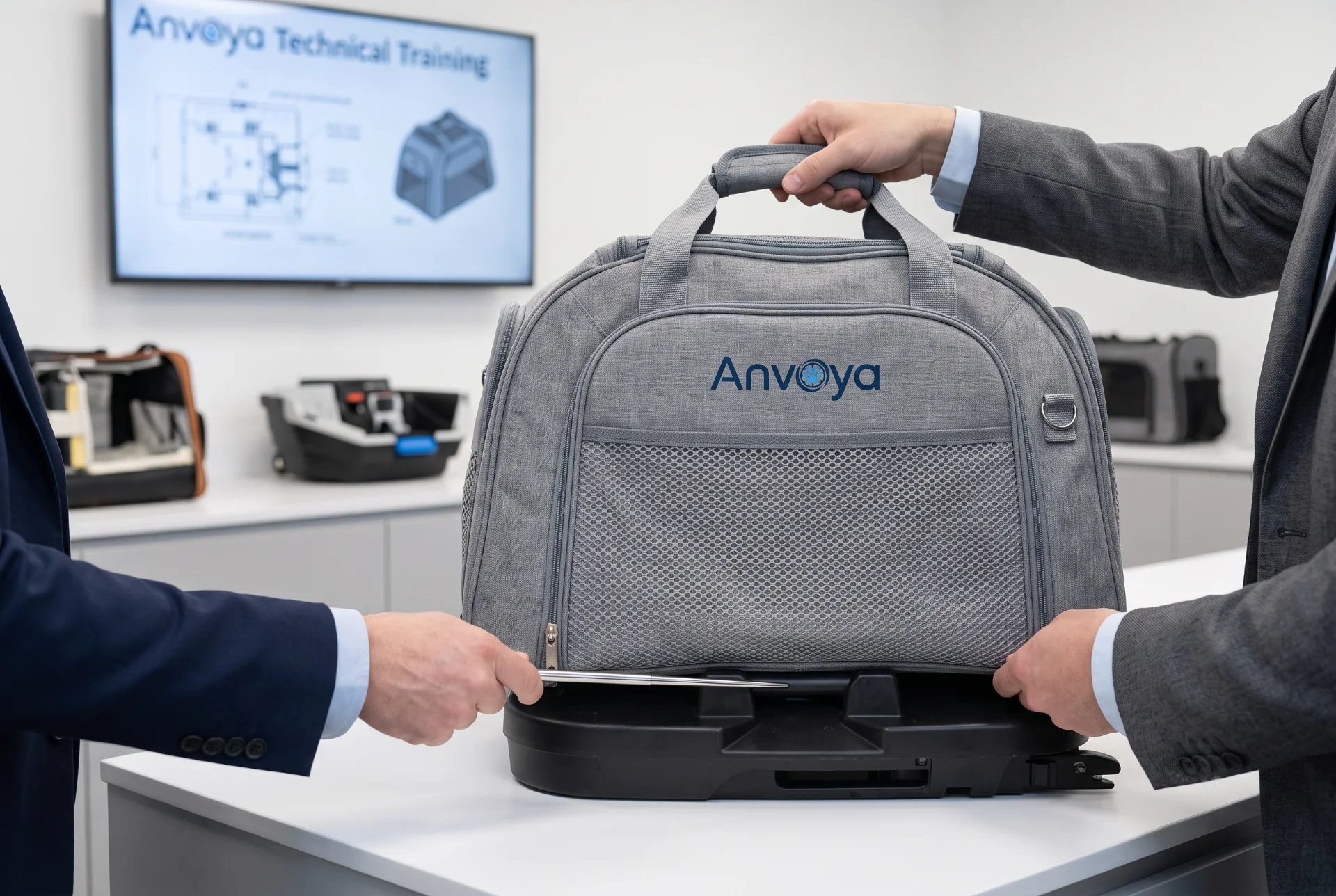
ISOFIX or LATCH can improve vehicle anchoring when used in a properly designed pet travel system. However, they do not automatically make a normal carrier safe for car use. The full system must include a compatible carrier structure, secure locking interface, and clear installation instructions.
Why vehicle anchoring matters
ISOFIX and LATCH are familiar terms in child restraint products. In pet travel, they can offer a more defined way to connect a pet system to the vehicle. This is especially useful for brands that want cleaner installation and less dependence on seatbelt routing.
However, the connector is only one part of the system. A rigid connector attached to a weak carrier does not solve the load-path problem. In fact, a stronger vehicle connection can place more demand on the carrier structure. That is why a modular base can be valuable when it is engineered properly.
A modular base concept
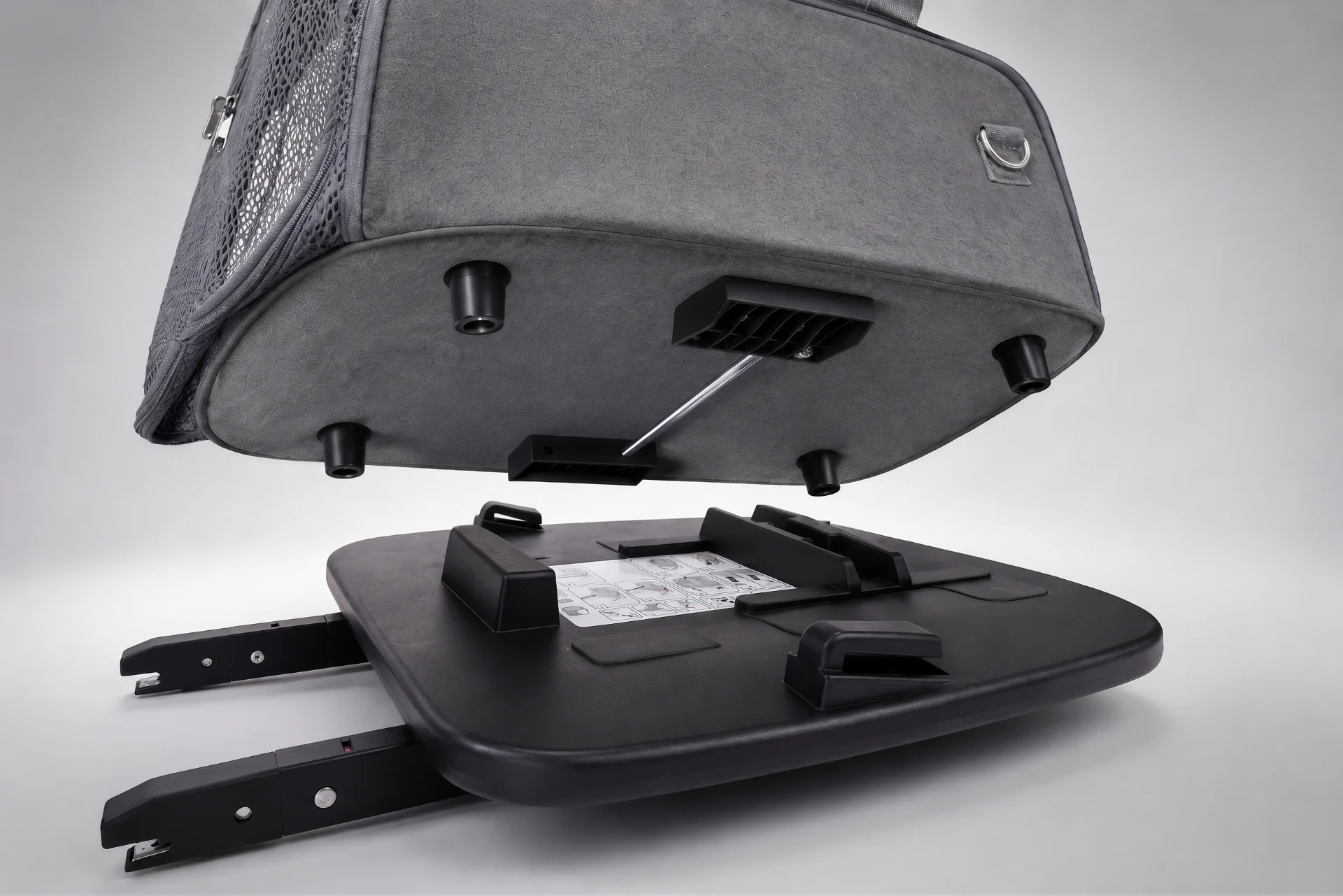
A vehicle base can act as the structural bridge between the car and the carrier. In this concept, the base connects to the vehicle, while the carrier locks onto the base through defined fixing points. This approach can help brands preserve the appearance of an existing carrier while improving car-use capability, but only if the carrier is suitable for adaptation.
A good modular concept should address:
- Vehicle interface: How the base connects to ISOFIX, LATCH, or seatbelt systems.
- Carrier interface: How the carrier locks onto the base.
- Load path: How forces move from carrier to base to vehicle.
- Anti-rotation: How the system limits tipping or pitching.
- Release mechanism: How the user removes the carrier without accidental unlocking.
- Misuse prevention: How the design makes incorrect installation less likely.
ISOFIX/LATCH is not a marketing shortcut
For procurement teams, ISOFIX or LATCH should not be treated as a label to decorate a product page. Buyers should ask what exact function the connector performs. They should also verify the connector quality, metal specification, locking feedback, and installation instruction.
| Buyer Question | Why It Matters |
|---|---|
| Is the connector load-bearing or positioning-only? | The claim must match the function. |
| Does the carrier lock to a reinforced base? | Weak carrier attachment can fail first. |
| Is there visual or audible locking feedback? | Users need confirmation. |
| Does the system control rotation? | Forward and upward movement both matter. |
| Are instructions market-specific? | Vehicle seat structures vary by region. |
How we think about this in development
When our team reviews a brand-side upgrade request, the first conversation is rarely about the connector itself. The deeper question is whether the carrier can accept a fixed interface without changing its core identity. Many brands want to keep the same soft shape, same front opening, same fabric cover, and same lifestyle look. That goal is commercially smart because it protects existing sales.
Still, engineering may require hidden changes:
- Reinforced bottom board
- Internal frame or shell
- Metal or plastic load spreader
- Locking sockets
- Anti-lift geometry
- Stronger stitching around structural zones
- Revised tooling for the base
- Assembly checks for connector alignment
This is where OEM/ODM development should be cautious and collaborative. A supplier should not promise that every existing carrier can be converted. A qualified engineering review is needed for each product size, weight range, material system, and use case.
Can the Same Pet Carrier Also Connect to a Pet Stroller?
A pet carrier can connect to a pet stroller when the system is designed with a shared modular interface, but stroller use and car use place different demands on the product. A stroller adapter is not automatically suitable for vehicle anchoring, and a car base is not automatically convenient for walking use.
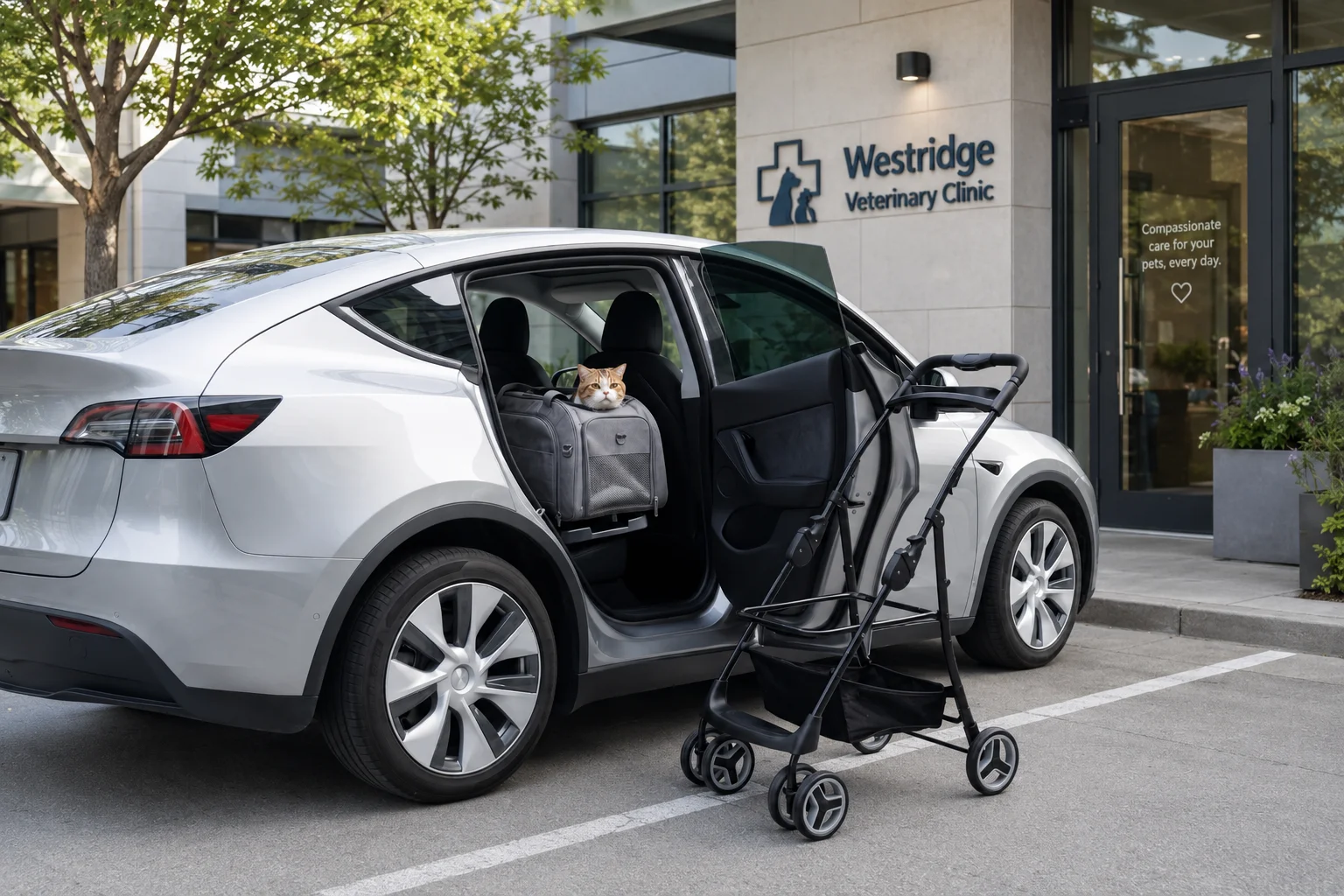
The same pet carrier can support car, carry, and stroller use if the product platform is designed around compatible interfaces. The carrier must lock securely to each base, while each base must be engineered for its own environment: vehicle loads, stroller stability, or hand-carry comfort.
Modular systems are commercially attractive
Pet travel brands increasingly want expandable platforms. A single carrier body that connects to a vehicle base and stroller frame can create a stronger product story. It can also reduce SKU complexity and help customers buy into a product ecosystem.
For distributors and retailers, modular systems can improve commercial value because accessories and upgrades become easier to sell. For e-commerce sellers, the same platform can support multiple listings: carrier only, car-use kit, stroller bundle, and travel system package.
But each use case has different engineering demands
A stroller system focuses on:
- Rolling stability
- Frame folding
- Front-wheel control
- Brake performance
- Tip resistance
- Handle height
- Basket clearance
- Easy attachment and release
A car-use system focuses on:
- Vehicle anchoring
- Dynamic load direction
- Anti-rotation
- Pet containment
- Seat compatibility
- Installation feedback
- Misuse prevention
A hand-carry system focuses on:
- Handle comfort
- Weight balance
- Shoulder strap strength
- Ventilation
- Door access
- Daily durability
The same carrier may serve all three use cases, but the interface must be designed with those differences in mind. A stroller latch may only need to hold the carrier during rolling and turning. A car base interface may need stronger reinforcement and more controlled movement. Buyers should not assume that one latch design can do everything.
Platform thinking for brands
For brand product managers, the strongest strategy is often to define the platform early. Instead of adding adapters after the carrier is finished, the team can design the carrier around a central interface zone. This reduces redesign work later.
A platform plan may include:
- Carrier body: The shared pet enclosure or capsule.
- Vehicle base: The car-use anchoring module.
- Stroller frame: The walking-use mobility module.
- Carry handle: The hand-carry function.
- Accessory logic: Rain cover, mat, sunshade, storage, replacement textiles.
- Instruction system: Clear user guidance for each mode.
Evaluation table for multi-use pet travel systems
| Mode | Main Value | Main Risk | Buyer Evaluation Point |
|---|---|---|---|
| Carry | Daily convenience | Handle or strap fatigue | Load rating and handle attachment |
| Car | Vehicle fixation | Overstated safety claim | Anchoring, restraint, load path |
| Stroller | Outdoor mobility | Tipping or weak latch | Frame stability and locking mechanism |
| Modular bundle | Higher commercial value | Interface mismatch | Platform-level compatibility |
A real development pattern we often see
A brand may come with a popular soft carrier and ask for stroller and car functions. The first reaction is to keep the carrier unchanged. That makes sense from a marketing view. Customers already like the look. The factory may already have materials and sewing lines ready.
However, the hidden interface often decides whether the project is realistic. If the bottom panel is too soft, the stroller latch may wobble. If the side walls lack reinforcement, the carrier may deform when locked to a base. If the door opening interrupts a structural zone, the locking point may need to move. These are solvable problems in many cases, but they need early engineering work.
A good supplier should help the brand separate three statements:
- “This carrier is compatible with a stroller.”
- “This carrier can be fixed in a vehicle using a defined base.”
- “This carrier has been evaluated under specific test conditions.”
Those statements are not the same. Clear wording protects the brand, the distributor, and the end user.
Frequently Asked Questions
Can any soft pet carrier be used as a dog car seat?
No. A soft pet carrier should not automatically be used as a dog car seat. Buyers should check whether it has reinforced fixing points, a defined vehicle attachment method, and a suitable pet restraint system. A soft structure may need redesign or a dedicated vehicle base.
Is a seatbelt loop enough for car-use positioning?
A seatbelt loop may help position a carrier, but it is not enough by itself. The loop must connect to a structure that can transfer load predictably. Buyers should review the belt path, stitching, reinforcement, carrier deformation, and user instructions before making car-use claims.
Are pet car seats certified like child car seats?
Pet car seats do not currently follow the same unified and mandatory crash-test certification system as child restraint systems. Crash testing can be a useful engineering tool, but buyers should verify reports, test conditions, and claim wording carefully. Pet products should not be presented as legally equivalent to child car seats.
What should brands ask suppliers before upgrading a carrier?
Brands should ask for the anchoring method, load-bearing components, pet restraint logic, material specifications, installation instructions, and validation plan. If the supplier mentions ISOFIX, LATCH, or crash testing, the brand should request clear documents and understand exactly what was tested.
Can a best-selling carrier be upgraded without changing its appearance?
Sometimes yes, but not always. A brand may keep the main visual identity while adding hidden reinforcement, a stronger base, or a new locking interface. However, each existing carrier needs engineering review. Some designs are better kept as normal carriers.
Conclusion
A pet carrier can be used as a dog car seat only when it becomes part of a vehicle-ready system with defined anchoring, pet restraint, and structural load management. A strap, buckle, or seatbelt slot is not enough unless the whole product can transfer load predictably. For pet brands, the safest commercial path is careful evaluation, honest claims, and qualified engineering review. If your team wants to upgrade an existing carrier into a modular car, carry, and stroller system, Anvoya can help assess the structure and development route.