
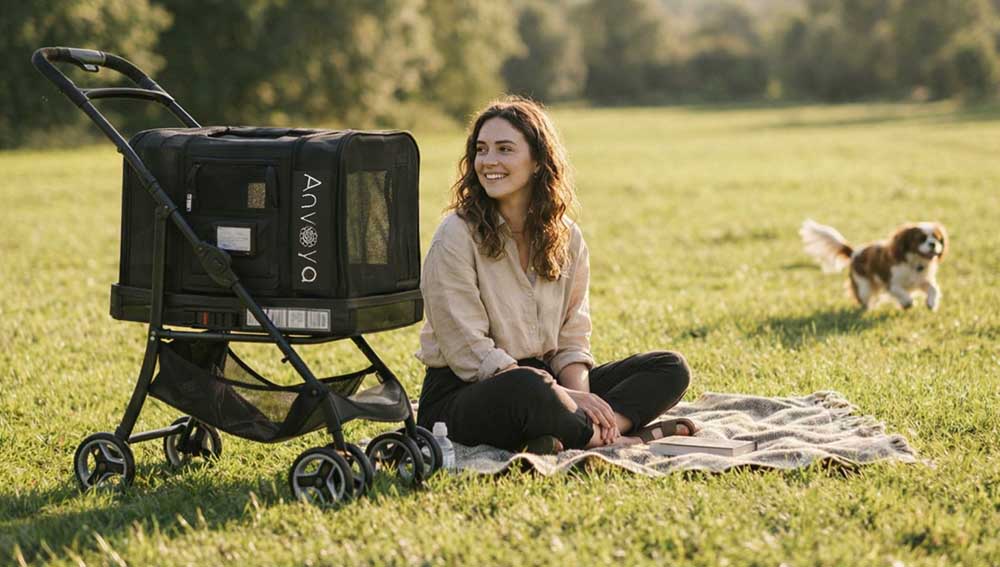
Why Millennials and Gen Z Are Driving the Pet Travel Boom?
Pet owners are facing a new dilemma: how to safely transport their furry companions across increasingly diverse travel scenarios. While traditional solutions excel in short-distance or pedestrian transit, high-velocity vehicular travel requires a different structural approach.
The pet travel industry is undergoing a structural transformation, driven by Millennials and Gen Z pet owners who demand measurable material durability, engineering innovation, and transparent safety data in pet transportation products.
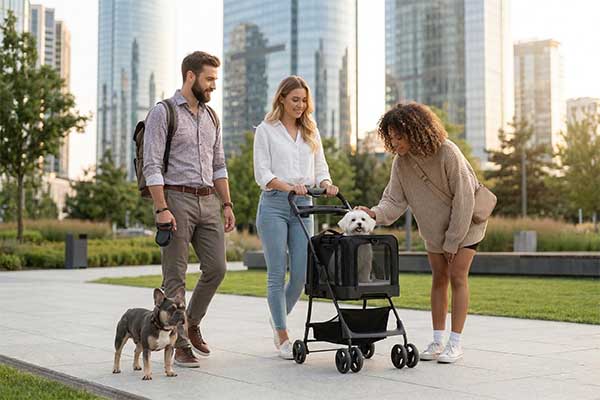
As younger generations increasingly view pets as family members, the reliance on human-grade safety concepts has never been greater. Let's explore the engineering and market factors behind this booming segment.
How is the "Pet Humanization" trend reshaping the B2B pet products market?
Pet owners are no longer satisfied with products that function merely as accessories. They are evaluating pet gear through the lens of occupant safety, mirroring the standards applied to human automotive gear.
The B2B pet products market is experiencing a shift from discretionary fabric goods to structural hardware systems designed for dynamic deceleration and environmental adaptability.
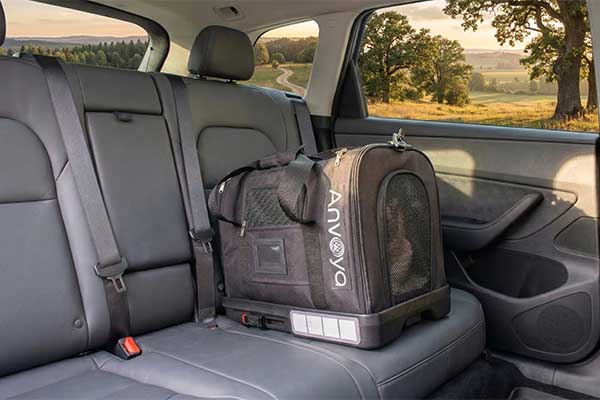
This shift is fundamentally altering the procurement criteria for distributors and retailers in the pet industry.
Shifting demand from discretionary accessories to essential, high-performance equipment
The market is diversifying. While soft carriers remain the standard for airline in-cabin comfort and short urban walks, consumers now require specialized equipment for vehicular transit. This demand focuses on:
- Structural integrity that survives the lifecycle of a vehicle.
- Modularity to transition seamlessly between environments.
- Load-bearing capabilities for emergency braking scenarios.
To understand the baseline of this transition, it is essential to define what makes a high-quality pet travel system in today's safety-conscious climate.
The new benchmark for quality: Material science, Design for Manufacturing (DFM), and supply chain transparency
B2B buyers are now auditing pet products with the same scrutiny applied to human-grade automotive parts. Key evaluation metrics include:
- Polymer performance: Using high-impact PP/HDPE that maintains tensile strength under UV exposure and temperature fluctuations.
- DFM (Design for Manufacturing): Engineering modular systems that optimize shipping volumes and streamline SKUs for global distributors.
- Traceability: Providing verifiable data on resin sourcing and assembly protocols.
The "Pet-Tech" imperative: Integrating smart features with engineered hardware systems
The fusion of technology with structural hardware is creating new product categories. However, tech cannot compromise the physical "safety cage":
- Designing sensor-ready zones within rigid frames for climate monitoring.
- Ensuring that integrating GPS or smart locks does not weaken the carrier's impact resistance.
- Developing hardware platforms that serve as a stable foundation for future IoT add-ons.
What critical safety gap emerges as pet travel becomes non-negotiable?
As pets accompany owners on highway road trips, a gap has emerged between static comfort and dynamic kinetic protection.
The industry faces a specific engineering challenge: bridging the gap between a pet owner's emotional attachment and the physical reality of vehicular deceleration forces.
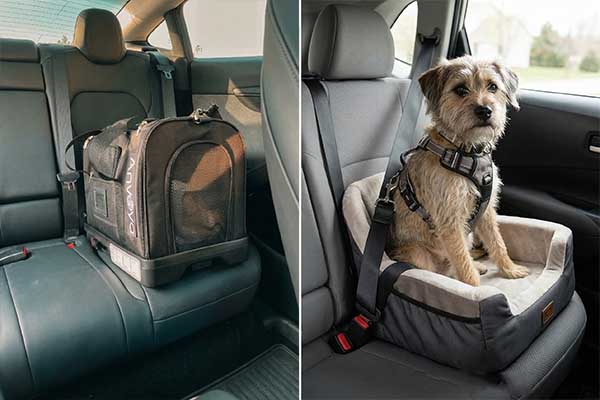
This physical discrepancy poses risks that the B2B supply chain must address proactively.
The disparity between perceived emotional value and actual occupant protection
Consumers often confuse comfort with safety. A plush lining is excellent for static resting, but it provides minimal energy absorption during a collision. For a comprehensive look at the physics of protecting pets in transit, refer to The Complete Safety Guide for Dog & Cat Car Seats.
Why conventional carriers fail under dynamic load: A structural and materials analysis
Conventional fabric carriers and thin-wall plastic crates are engineered for containment, not crash protection. Under dynamic load (e.g., a 50km/h emergency stop):
- Standard fabrics may experience tensile failure or tearing.
- Belt-looped attachments can create a pivot point, leading to high excursion rates (forward movement).
- Without internal ribbing, standard plastics may deform rather than dissipate kinetic energy.
Objectively, the global pet travel market currently exists in a "regulatory void." There are no official, universal crash test standards for pets, nor are there advanced, biofidelic "crash test dogs" equipped with infrared sensors like those used in the child safety industry.
Therefore, the frontier of pet crash testing today focuses strictly on structural integrity—ensuring the ISOFIX base doesn't snap, the shell doesn't crush, and the hardware holds under extreme G-forces. However, as the "pet humanization" trend deepens, legislation will inevitably follow. Distributors must audit their portfolios now. By offering structural-verified options for high-velocity scenarios alongside standard soft-goods lines, retailers can future-proof their business against impending regulations and capture the high-end consumer mindshare before the market is forced to pivot.
The shift towards data-backed safety products presents a clear path to escape price wars in commoditized categories.
Channel partners can capture this premium segment by focusing on engineered travel systems rather than standalone bags, leveraging automotive-grade precision to justify higher retail price points.
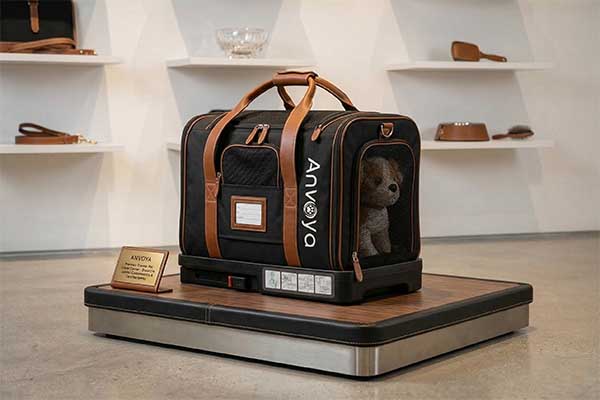
This technical positioning protects margins and builds a defensible category leadership.
Moving beyond commoditized soft goods to complete, engineered travel systems
To capitalize on this, channel partners should diversify their offerings:
- Maintain soft goods for urban/pedestrian mobility, but introduce hard-shell ecosystems for automotive travel.
- Focus the sales narrative on energy absorption and standardized vehicle integration.
- Frame the purchase as a one-time investment in a multi-year safety platform.
Leveraging "Automotive-Grade Precision" as a key market differentiator against mass-market competitors
Highlighting manufacturing pedigree is a powerful B2B strategy. For example, applying ECE R44/R129 child safety principles to the structural design of pet mobility establishes immediate authority. Demonstrating that a product shares its R&D foundation with human infant car seats shifts the conversation from "price" to "lifesaving capability."
The business case for modularity: Cross-selling rigid bases (BASE-X), carriers (AERO/TERRA), and stroller platforms
Modularity transforms a single transaction into a recurring revenue stream. By utilizing standardized interfaces, retailers can lock customers into an ecosystem.
| Component | Function | Cross-Selling Opportunity |
|---|---|---|
| Rigid Base (BASE-X) | The vehicle anchor point | Ensures repeat purchases of compatible carriers |
| Carrier (AERO) | The occupant protection zone | Can be marketed alongside stroller frames |
| Stroller Platform | Multi-modal urban mobility | Connects the vehicle ecosystem to the sidewalk |
What do corporate strategists require in an OEM/ODM pet safety partner?
In a category governed by physics, a standard trading company is insufficient. Strategists require a manufacturing partner capable of executing complex geometries and stringent quality control.
A highly capable OEM/ODM partner must provide end-to-end control—from raw resin selection to precision injection molding—ensuring the structural integrity of every unit off the line.
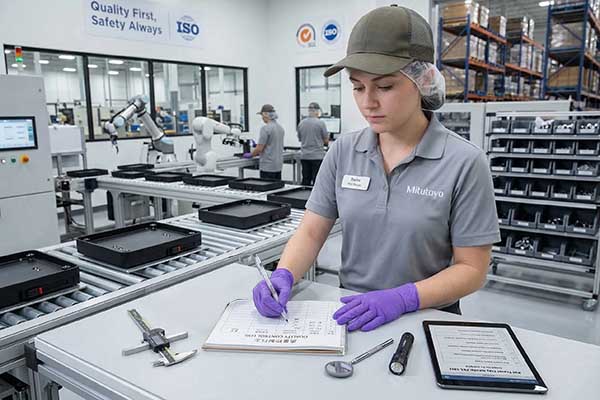
Vertically integrated manufacturing capabilities, from tooling and molding to final assembly
Relying on outsourced assembly for safety-critical gear introduces unacceptable variance. Strategists should prioritize partners with in-house tooling and molding. This ensures:
- Direct control over the cooling cycles of PP/HDPE, preventing micro-fractures in the plastic.
- Precision fitment of alloy locking mechanisms.
- Rapid iteration during the prototyping phase without third-party delays.
A portfolio of market-validated platforms (NIMBUS, APEX) for rapid turnkey deployment
Developing safety hardware from scratch is capital-intensive. B2B buyers benefit from manufacturers offering pre-engineered platforms. For guidance on navigating this procurement process, see how to source a premium pet stroller with a detachable carrier. These validated bases allow brands to customize aesthetics without re-engineering the complex safety mechanics.
Advanced co-development capacity for proprietary, safety-critical innovations
True differentiation requires deep engineering collaboration. An ideal partner provides:
- Engineering teams experienced in structural deceleration and load distribution.
- The ability to translate a brand's specific design language into a manufacturable, structurally sound product.
- Strict IP protection protocols for custom joint-development projects.
How does engineering data validate the next generation of pet travel systems?
The B2B market is moving from "trust me" to "show me the test reports." In the absence of biometric pet dummies, engineering validation focuses heavily on the structural limits of the carrier system itself.
These systems are validated using the mechanical testing methodologies designed for human occupant protection hardware.
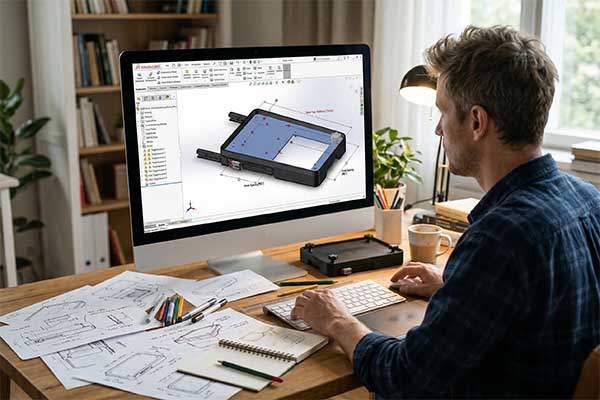
Applying ECE child safety engineering principles to structural limits and impact forces
Applying ECE principles to pet travel doesn't mean measuring the pet's internal trauma (which is currently impossible without standardized dummies), but rather measuring how the hardware reacts to impact. Engineers focus on:
- Minimizing peak excursion (forward travel of the carrier) during impact.
- Designing the carrier shell to maintain its structural volume, ensuring it doesn't crush the space the pet occupies.
- Preventing the "rebound" effect with stabilized structural bases and anti-rotation mechanisms.
The role of standardized anchor points (ISOFIX/LATCH) in achieving true vehicle integration
A safety seat is only as secure as its connection to the vehicle. ISOFIX/LATCH systems eliminate the variable of human installation error.
- A rigid metal-to-metal connection prevents the carrier from rotating or pivoting during a crash.
- It transforms the pet carrier from a loose piece of cargo into an integrated extension of the vehicle's chassis.
Material testing protocols for safety-critical components: From PP/HDPE hardware to high-denier fabrics
A system fails at its weakest point. Comprehensive testing regimens are non-negotiable:
| Material Type | Key Properties | Testing Methods | Safety Implications |
|---|---|---|---|
| PP/HDPE | High impact resistance | Dynamic sled tests, drop tests | Prevents shell fragmentation and volume collapse |
| High-denier fabrics | Tensile strength | Tear resistance, seam burst tests | Ensures the pet remains contained |
| Alloy components | Locking integrity | Salt-spray, fatigue stress analysis | Guarantees the ISOFIX connection holds |
What defines the future B2B landscape for pet mobility and safety?
The future of B2B pet mobility will be defined by segmentation. The market will clearly delineate between "lifestyle accessories" for pedestrian use and "engineered safety equipment" for vehicular travel.
Success belongs to brands that can seamlessly integrate robust safety mechanics with modern, active lifestyles without compromising on either front.
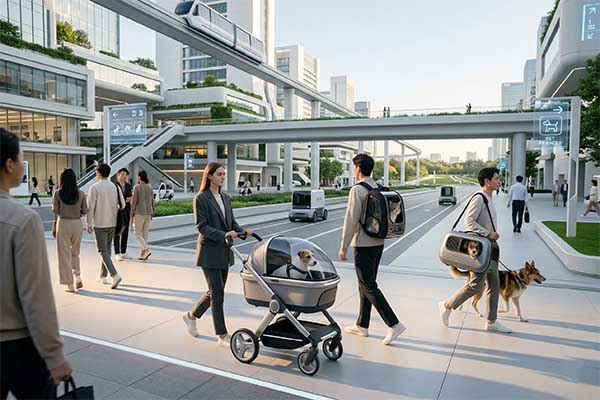
The convergence of urban mobility, adventure sports, and integrated pet transport solutions
Consumers expect one ecosystem to do it all. The future lies in modularity:
- Systems that click out of a vehicle's ISOFIX base and directly onto an all-terrain stroller frame.
- Materials that handle both the UV exposure of a hiking trail and the kinetic requirements of highway driving.
Regional distributors can capture significant market share by being the first to introduce structurally validated safety systems to their territories. By educating their retail networks on the reality of current testing standards and the importance of structural integrity, they elevate their status from simple "vendors" to "safety consultants."
Partnering with a specialist manufacturer to mitigate risk and capture the high-value segment of the market
Ultimately, competing in the premium safety segment requires an industrial backbone. By partnering directly with a specialized manufacturer like Anvoya, brands mitigate their R&D risks, ensure strict quality control, and gain rapid access to the high-margin, engineering-driven future of the pet travel industry.
Conclusion
The pet travel boom is fundamentally reshaping industry standards. As Millennials and Gen Z prioritize verifiable safety and material durability over basic aesthetics, the B2B supply chain must adapt. By embracing automotive-grade engineering, modular design, and honest, structurally-sound testing methodologies, forward-thinking brands and distributors will not only future-proof against impending regulations but also capture the most lucrative segment of the modern pet market.