
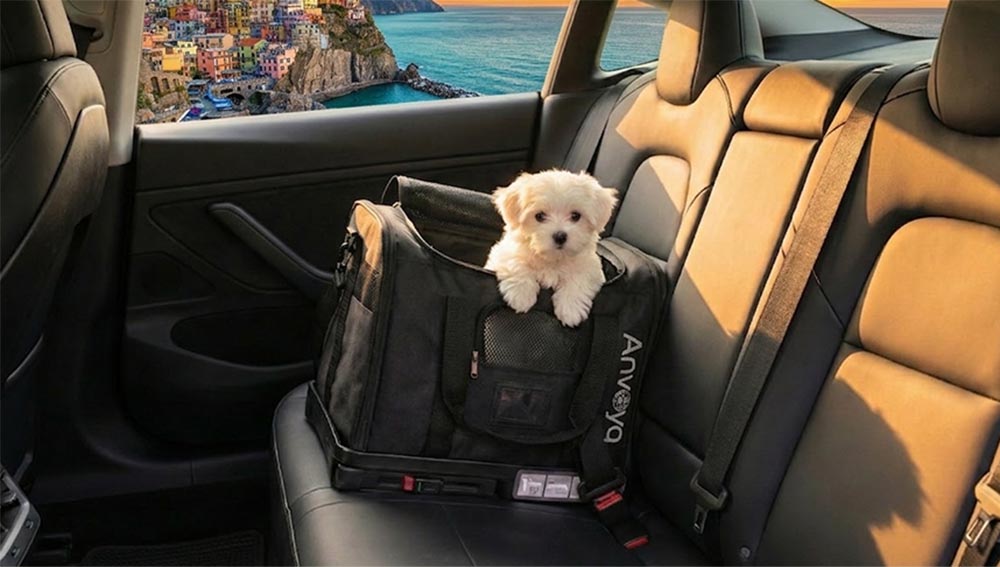
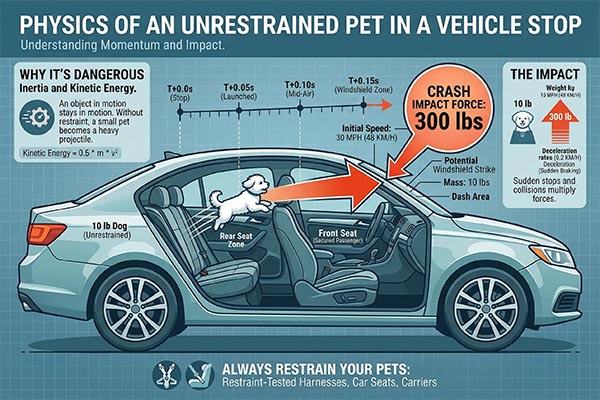
Every year, millions of pets travel in cars with zero protection. A 30 mph crash throws a 10-pound dog with the force of 300 pounds. Would you let your child ride without a seat belt? Your pet deserves the same answer.
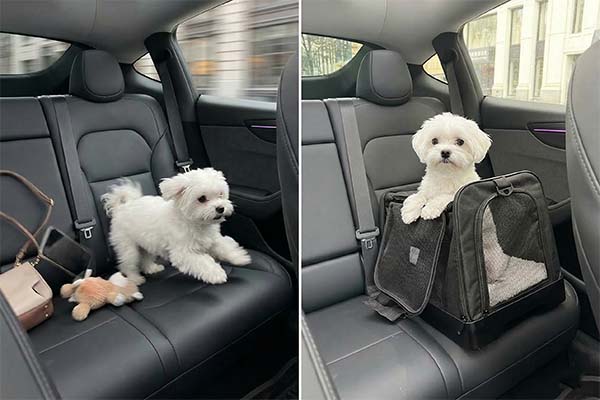
Quick Answer: Pet Car Seat Fast Facts at a Glance
| 📊 Topic | Key Fact |
|---|---|
| What it does | Anchors your pet to the vehicle chassis, preventing free movement and projectile risk. |
| Distraction reduction | Restrained pets cause 57% fewer dangerous driving incidents vs. unrestrained pets. |
| Legal status (U.S.) | Recommended everywhere; mandatory in states like Rhode Island. |
| Market size (2025) | ≈ $3.2 billion globally, growing at 6%+ per year. |
| #1 Safety Rule | Always clip the tether to a harness, never a collar. |
| Best Position | Back seat only — never in the front seat near an active airbag. |
| Gold Standard | ISOFIX rigid anchoring systems and automotive-grade polymer construction. |
“A comprehensive guide for pet brands, distributors, and safety advocates.”
Part 1: The Basics
What Is a Pet Car Seat and How Does It Work?
If you have never used a pet car seat before, the concept is straightforward: a pet car seat is a structural restraint system that attaches to your car, holding your pet in one safe spot so they cannot roam the cabin or become a high-velocity projectile during a sudden stop.
How the Anchoring System Works
Most conventional pet car seats use a two-part anchoring system:
- The seat anchors to your car — traditionally using the vehicle's seat belt. This stops the base from moving.
- Your pet anchors to the seat — using a short, built-in tether that clips directly onto your pet's harness.
What Makes a Modern Pet Car Seat Different
Basic pet car seats from ten years ago were little more than fabric bags tied to a headrest. Today, engineering has changed everything.
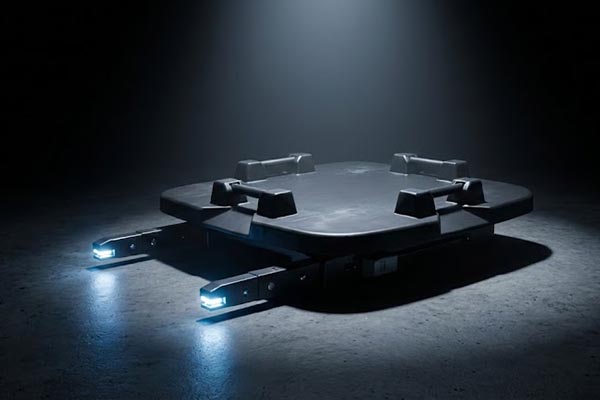
Premium systems — like the Anvoya BASE-X ISOFIX Pet Car Seat Base — borrow directly from automotive-grade child seat technology. Instead of relying on fabric seatbelts, the BASE-X uses an ISOFIX docking system. It physically locks into the vehicle's steel chassis anchor points, meaning virtually zero movement even in a severe impact.
"The same engineering philosophy that keeps children safe in crashes can — and should — be applied to pet travel. Rigid chassis docking, energy-absorbing polymers, and multi-point restraints are not luxuries. They are the baseline."
— Lead Automotive Engineer, Anvoya R&D Division
ISOFIX: The Gold Standard for Stability
ISOFIX (or LATCH in the U.S.) is a universal connector system built into the frame of most modern cars. When a seat base locks into ISOFIX anchors, it completely eliminates the slack and wobble that comes from seat-belt-only installations.
Anvoya's decade of child seat manufacturing experience ensures their pet travel systems are built with the same DFM (Design for Manufacturing) standards used in human child safety products — a level of precision that fashion-focused pet brands cannot match.
What Are the Different Types of Pet Car Seats?
Not all pet car seats are created equal. Knowing the structural differences is the key to protecting your specific pet.
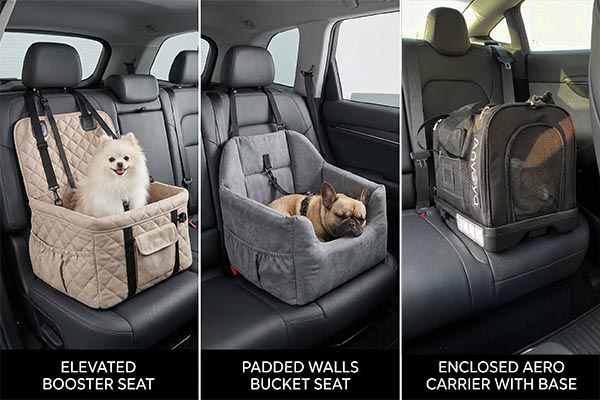
1. Booster Seats for Small Dogs
A booster seat is an elevated platform that lifts your small dog up so they can look out the window. It is strapped in using the vehicle's seat belt.
- Best for: Small dogs under 20 lbs who suffer from motion sickness.
- Key feature: Elevation gives pets a view, which significantly reduces travel anxiety and nausea.
- Safety check: Must have rigid, reinforced sides, not just soft foam.
2. Bucket-Style Pet Car Seats
A bucket seat is a deeper, bowl-shaped seat that wraps around your pet. It functions as both a travel bed and a restraint point.
- Best for: Small to medium dogs (up to 33 lbs) on longer road trips.
- Key feature: High padded bolsters on all sides absorb lateral movement and provide a den-like feeling.
3. Fully Enclosed Carriers (The Safest Option for Cats & Small Pets)
These are rigid or heavily structured carriers that fully enclose the animal and lock directly into the car.
- Best for: Cats, escape-artist small dogs, and pets who need maximum crash protection.
- The Anvoya AERO Advantage: The Anvoya AERO ISOFIX Combo features a fully enclosed, burst-proof cabin that drops directly into a rigid ISOFIX base. Because it is a full enclosure, it is the ultimate, stress-free travel solution for cats, completely eliminating the risk of escape while providing child-seat-grade crash protection.
⚠️ Why We Do NOT Recommend Console Seats
You may see "Console Seats" that strap to the center armrest between the driver and passenger. We strongly advise against these. They force your pet into the front row of the vehicle, placing them dangerously close to the windshield and exposing them to the fatal impact zone of front airbags. True safety means back seat only.
| Type | Best Pet Size | Installation | Trip Length | Safety Level |
|---|---|---|---|---|
| Booster Seat | Under 20 lbs | Seat belt + headrest strap | Any | ⭐⭐⭐ |
| Console Seat | NOT RECOMMENDED | Front seat (High Risk) | None | ❌ DANGEROUS |
| Bucket Seat | Up to 33 lbs | Seat belt through base | Long | ⭐⭐⭐ |
| Hard-Shell Carrier | Any small pet | Seat belt or ISOFIX | Any | ⭐⭐⭐⭐⭐ |
Part 2: Why a Pet Car Seat Could Save Lives
Why Pet Car Seats Matter for Pet and Human Safety
Here is the uncomfortable truth: an unrestrained dog or cat in a moving car is a severe safety hazard for everyone in the vehicle.
The Physics of an Unrestrained Pet
Let's keep the math simple. In a 30 mph crash, a 10-pound dog hits with the force of a 300-pound object. A 30-pound dog generates 900 pounds of force.
Your windshield, dashboard, and seats were engineered to absorb the impact of human bodies wearing seat belts — they cannot protect you from a 300-pound projectile flying through the cabin.
Pet Car Seat Safety Statistics: What the Data Says
A recent study commissioned by Volvo Cars looked at real driving behavior with restrained and unrestrained dogs. The results were striking:
| Safety Aspect | Unrestrained Pet | Restrained Pet |
|---|---|---|
| Dangerous driving incidents | 649 occurrences | 274 occurrences |
| Driver distraction time per trip | 3 hours 39 minutes | 1 hour 39 minutes |
In plain terms: an unrestrained pet more than doubles the number of dangerous driving moments and adds hours of severe distraction to a typical road trip.
Industry Consensus on Biomechanics: From a biomechanics standpoint, the forces involved in even a moderate collision are severe enough to cause fatal injury to an unrestrained animal and serious blunt-force trauma to human occupants. Restraint is non-negotiable.
Why Your Pet Is Also at Risk
Beyond protecting human drivers, a structured pet car seat protects the animal from:
- Being thrown forward into the dashboard during hard braking.
- Ejection through a window or door in a rollover.
- Panic-bolting into live traffic after a collision.
A premium pet car seat — especially one locked into an ISOFIX base — keeps your pet contained, protected, and isolated from these chaotic scenarios.
Part 3: Pet Car Seat Buying Guide
Key Features to Look for in a Safe Pet Car Seat
Shopping for a pet car seat can feel overwhelming. There are dozens of options at every price point, and not all of them are equally safe. So here are the four features that actually matter — and why each one is non-negotiable.
1. Secure Integration With Your Vehicle's Anchor Systems
This is the most important baseline. A pet car seat must securely anchor to your car's built-in safety systems — it should never just rest on the seat or hang from a headrest with a flimsy strap. For traditional seats, look for:
- Designated seat-belt routing slots built directly into the structural base.
- Lap-and-shoulder belt compatibility (not just the lap belt).
- A snug fit that prevents tipping or sliding when pushed firmly.
The Ultimate Upgrade: ISOFIX-compatible bases, like the Anvoya BASE-X, bypass the seatbelt entirely. They physically lock into your car's chassis anchor points, eliminating all slack, wobble, and human installation error.
2. Multiple Anchoring Points
A single strap is never enough to handle crash forces. The safest pet car seats utilize at least 2 direct anchoring points to prevent rotation:
- The rigid base locked directly into the car's ISOFIX/LATCH system.
- Structural tethers connecting the carrier to the rigid base for maximum lateral stability.
3. Built-In, Shock-Absorbing Safety Tether (Harness, Not Collar)
Every safe pet car seat includes a fixed-length internal tether that clips onto your pet's harness. This tether must:
- Be short — long enough for your pet to sit and lie down comfortably, but short enough to prevent them from being ejected.
- Clip to a harness, never a collar (attaching to a collar can cause fatal neck injuries in a sudden stop).
- Be made from engineered, heavy-duty webbing, completely avoiding cheap, uncontrolled bungee cords.
⚠️ Avoid extension tethers. Safety experts flag long, generic extension tethers as dangerous because they allow too much forward excursion in a crash.
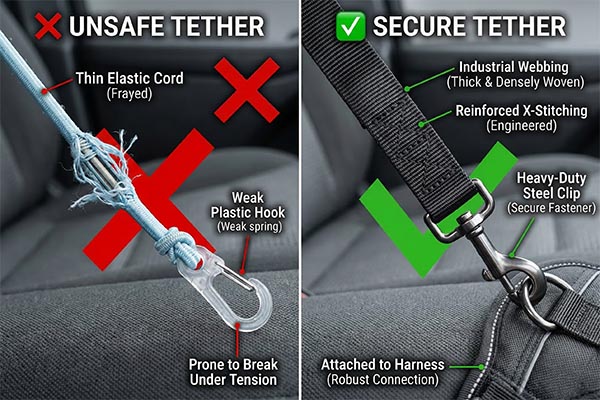
The Anvoya Difference: To minimize localized pressure on a pet’s body during a collision, we utilize engineered, high-stretch, shock-absorbing webbing. Unlike flimsy elastic cords, our industrial-grade tethers offer controlled deceleration, providing multiple times the shock‑absorbing performance of traditional rigid tethers without sacrificing restraint.
4. A Rigid, Structural Base
When evaluating safety, the base is the true foundation. Most pet seats rely on soft foam or hollow plastic. We prioritized a completely different, child-safety-grade approach:
- A Hard, Structural Foundation: Unlike padded fabric shells, our seat features a rigid, high-strength base made from structural polymers (PP or HDPE). This provides an unyielding platform that maximizes energy absorption in a crash.
- Direct ISOFIX Connection: The seat isn't just resting on your upholstery; it securely clicks into a rigid ISOFIX interface, creating the most stable connection to the car's chassis possible.
- Open-Side Versatility: With no raised structural walls to restrict orientation, the carrier can be installed horizontally or vertically. This open design offers flexible cabin configurations while the rigid base maintains absolute structural integrity.
This system moves beyond traditional fabric-and-foam construction, utilizing a rigid, anchored foundation to deliver superior impact protection.
Pet Car Seat Safety Certifications and Crash Testing: What to Know
Here is the uncomfortable truth: the pet product industry has very few mandatory safety standards. Unlike child car seats — which must meet strict government crash-test requirements before they can be sold — pet car seats in the U.S. and Europe are largely self-regulated. This means any company can call their product "safe" without any independent proof.
So how do you know which products are actually engineered for a collision?
The Benchmark: Independent Crash Testing
In the United States, third-party organizations like the Center for Pet Safety (CPS) have stepped up to establish rigorous crash-test standards for pet travel products. When evaluating safety, true experts focus on three critical failure points:
- Excursion distance — how far the pet dummy travels forward in a simulated crash.
- Hardware integrity — whether straps, buckles, and tethers hold under severe crash forces.
- Structural failure — whether the seat base collapses, shatters, or breaks.
Crucially, independent safety testing consistently disqualifies products that use extension tethers, proving that additional tether length significantly increases the risk of catastrophic injury during sudden deceleration.
The Industry Consensus: When evaluating pet restraint products, the most important factor is minimizing how much the animal moves during a crash. The less excursion, the safer the pet — and achieving that relies entirely on a rigid base connection and engineered tether design.
What to Look for When Shopping
When comparing pet car seats, look for these strict credibility signals:
- ✅ Automotive-Grade Engineering: Designs that reference proven European child seat standards (like ECE R44 or ECE R129).
- ✅ Structural Polymer Construction: Bases built from high-strength HDPE or PP polymers, rather than brittle plastic, foam, or wire-reinforced fabric.
- ✅ Factory-Direct Accountability: Brands that own their tooling and manufacturing processes, rather than simply reselling unverified, off-the-shelf imported goods.
- ❌ Use of Extension Tethers: A major red flag flagged by safety experts.
- ❌ Lack of Structural Testing: If a brand cannot explain how their product absorbs impact, it likely doesn't.
The Anvoya Standard
At Anvoya, our engineering heritage comes from over a decade of developing and manufacturing ECE-certified child car seats. Our pet travel systems are built using the exact same DFM (Design for Manufacturing) protocols required for regulated human safety products.
We believe that engineering discipline should not disappear just because the passenger has four legs.
How to Choose the Right Pet Car Seat for Your Dog or Cat
Choosing the right pet car seat comes down to four things: your pet's size, your vehicle type, your pet's temperament, and your trip length. Get these four factors right, and you will find a seat that works well for years.
Best Pet Car Seat for Small Dogs (Under 15 lbs)
Small dogs have the most options available. For toy breeds and small terriers under 15 lbs, a booster seat works very well on everyday trips. Look for:
- A weight limit clearly stated and at least 20% above your dog's weight (to allow for weight fluctuation).
- High, structurally reinforced sides to stop sideways tipping.
- An engineered tether length that allows sitting but prevents jumping.
For small dogs on longer trips, a bucket-style seat with a deep basin provides a more den-like, comfortable experience that reduces travel anxiety.
Best Pet Car Seat for Medium Dogs (15–33 lbs)
Medium dogs are the trickiest category because many budget seats are simply not built to handle this weight reliably under crash forces. For dogs between 15 and 33 lbs, prioritize:
- Rigid base construction — fabric-only seats are dangerously weak for this weight class.
- ISOFIX or multi-point anchoring — the kinetic energy in a crash is significantly higher with a heavier animal.
- Structural containment — sides that are rigid and tall enough to contain the dog's center of gravity.
The Anvoya AERO ISOFIX Pet Stroller & Car Seat Combo is engineered specifically for this demanding weight class. It combines a rigid ISOFIX base with a premium soft carrier that integrates as a single travel system. It is a standout option for medium-breed owners who want genuine automotive engineering behind their purchase.
Pet Car Seat for Cats and Small Animals
Cats are escape artists, so open-top booster seats are highly dangerous and not recommended. Instead, opt for an enclosed carrier that can be mechanically locked into the car. Look for:
- Secure, burst-proof zippers or latched closures the cat cannot force open.
- Ventilation mesh on multiple sides.
- An ISOFIX-compatible base or heavily reinforced seat-belt routing loops built into the carrier body.
- Airline approval (IATA standards) if you also travel by air.
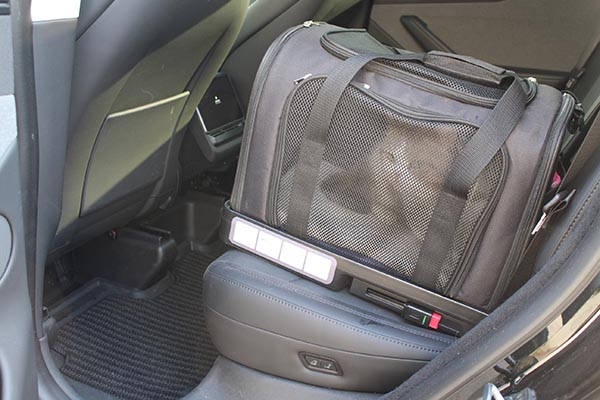
For rabbits, guinea pigs, and other small animals, the rule is absolute: enclosed and structurally buckled is always safer than open and loose.
Vehicle Compatibility Checklist
Before buying, quickly check these compatibility points:
| ✅ Check | Why It Matters |
|---|---|
| Does your car have ISOFIX/LATCH anchor points? | Required for secure, zero-movement ISOFIX bases. |
| Is your rear seat bench or bucket style? | Affects the leveling and stability of traditional seats. |
| Is the headrest removable or adjustable? | Needed if you are forced to use outdated headrest-strap designs. |
Part 4: How to Use a Pet Car Seat Correctly
Front Seat vs Back Seat: Where Should Your Pet Ride?
This is one of the most common questions — and the answer is not up for debate.
Your pet should always ride in the back seat. Always.
Why the Front Seat Is Dangerous for Pets
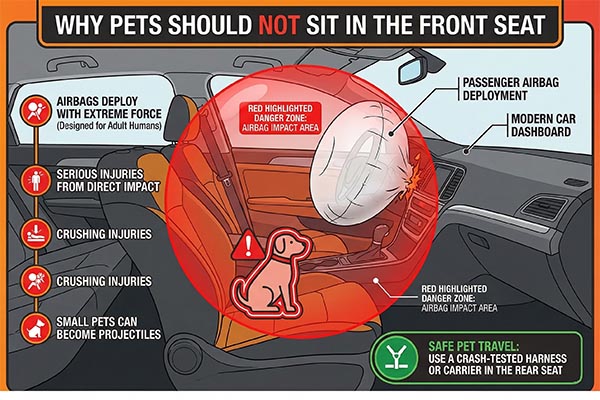
The front passenger seat is a fatal position for a pet due to three main factors:
- Airbags: Modern passenger-side airbags deploy at speeds up to 200 mph, designed to stop a heavy adult human. A dog or cat hit by an airbag will likely suffer fatal trauma, even in a minor fender-bender. Airbags save human lives; they crush pets.
- Windshield Proximity: In a frontal collision, a pet in the front seat has virtually no stopping distance before making impact with the dashboard or glass.
- Driver Distraction: The back seat creates a physical barrier that keeps your pet out of your immediate visual and physical space, dramatically improving driving focus.
The One Exception: No Back Seat Available
If you are driving a two-seat sports car or a single-cab truck with absolutely no rear seat, you must place the secured pet carrier in the front passenger seat AND manually deactivate the passenger-side airbag. Move the passenger seat as far back from the dashboard as possible. Never place a pet carrier in the open bed of a pickup truck.
How to Install a Pet Car Seat Step by Step
Correct installation is just as important as choosing a good seat. Even a well-designed product becomes a deadly projectile if installed loosely.
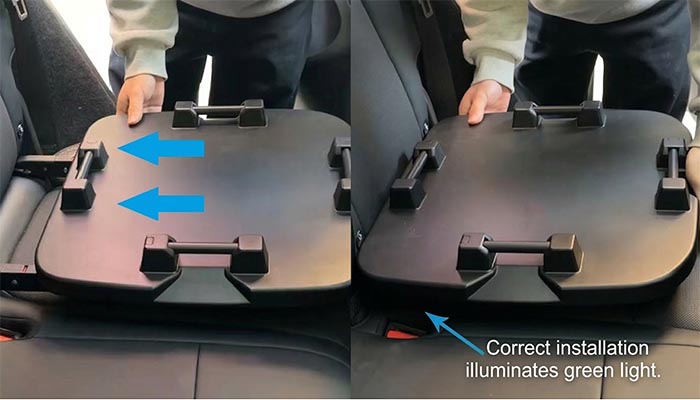
Method A: The Modern Standard (ISOFIX Hard Base Installation)
If you are using an advanced system like the Anvoya BASE-X, installation is foolproof and takes seconds:
- Locate Anchors: Find the ISOFIX/LATCH metal bars hidden in your car's rear seat crease.
- Click & Lock: Push the rigid connectors of the base directly into the anchors until you hear a solid "click" and the safety indicators turn green.
- Attach Carrier: Drop the pet carrier onto the rigid base until it locks automatically.
- Tether the Pet: Clip the internal shock-absorbing tether to the back D-ring of your pet's harness.
Method B: Traditional (Seat Belt Routing Installation)
If you are using a standard pet seat, meticulous installation is required every time:
- Position: Place the seat on the rear seat bench.
- Route the Belt: Thread the vehicle's lap-and-shoulder belt through the designated structural loops on the pet seat. Buckle it in.
- Eliminate Slack: Push your full body weight down into the pet seat while pulling the shoulder belt tight to engage the car's locking retractor.
- Test Stability: Push the seat firmly. If it moves more than one inch in any direction, unbuckle and try again.
- Attach Tether: Clip the seat's built-in tether to your pet's harness back ring (never a collar).
Common Mistakes Pet Parents Make With Pet Car Seats
Even with a good seat, usage errors can cancel out the safety benefits. Avoid these four common traps:
Mistake #1: Letting the Pet Ride in the Front Seat
As covered above, the airbag deployment risk makes the front seat a death trap for pets. Always use the back seat.
Mistake #2: Clipping the Tether to a Collar
This is one of the most dangerous mistakes you can make. A collar is for ID tags, not crash restraint. In a sudden stop, a tether clipped to a collar acts like a noose, transferring all crash forces directly to the pet's fragile neck and spine. Always clip to a well-fitting harness.
Mistake #3: Using an Extension Tether
Budget seats often include long bungee tethers to give pets "more freedom." In reality, extra slack equals extra velocity before impact. Safety organizations disqualify extension tethers for a reason. Use only the short, engineered tether built into the seat.
Mistake #4: Installing the Seat Loosely
A loosely installed seat fails to protect the pet and becomes a heavy projectile that can injure human passengers. If you struggle with getting seat belts tight, upgrade to an ISOFIX-locking base to eliminate human error entirely.
Part 5: Pet Car Seat Market & Legal Context
Pet Car Seat Market Growth and Trends in 2025–2026
The pet car seat market is no longer a niche. It is a rapidly maturing segment driven by a massive shift in how owners view travel safety.
The Numbers: How Big Is the Market?
| Metric | Value |
|---|---|
| Global pet car seat market (2025 est.) | ≈ $3.2 billion USD |
| Projected market size (5–7 years) | > $5 billion USD |
| Expected CAGR (overall market) | > 6% per year |
| Largest regional market | North America (≈ 40% of global revenue) |
| Fastest-growing region | Asia-Pacific |
North America leads in revenue, but Europe leads in engineering standards, driving strong growth in premium products—particularly those featuring ISOFIX compatibility and structural polymer construction.
What Is Driving the Growth?
- Humanization of Pets: Owners now demand child-grade safety standards for their animals.
- Distracted Driving Awareness: Increased legislation and insurance scrutiny regarding loose pets in vehicles.
- ISOFIX Standardization: As ISOFIX anchors become universal, rigid-base pet seats are transitioning from a luxury to a practical baseline.
Anvoya is positioned squarely at the forefront of this shift. By translating over a decade of ECE-certified child-seat manufacturing expertise into the premium pet mobility sector, Anvoya is redefining industry standards. For global pet brands and distributors seeking a reliable OEM, ODM, and product development partner, the opportunity is significant. Learn more about Anvoya's B2B capabilities here.
Are Pet Car Seats Required by Law? U.S. & Global Regulations
The legal landscape is moving rapidly in one direction: toward mandatory restraint.
- United States: While no federal law exists yet, states like Rhode Island have made pet restraints mandatory. In states like New Jersey and Hawaii, unrestrained pets can trigger animal cruelty or distracted driving citations.
- Europe & UK: In the UK, the Highway Code strictly requires animals to be "suitably restrained," with heavy fines and license penalty points for non-compliance. Similar strict laws apply in Germany and Spain.
- Insurance Impact: Globally, car insurance companies are increasingly treating loose pets as "driver negligence," which can void payouts in the event of an accident.
Part 6: Travel Tips & FAQs
Travel Tips: Helping Your Pet Love Their Car Seat
Buying a great pet car seat is only half the job. The other half is getting your pet to actually use it — and ideally, to love it. With a little patience, most dogs and cats can be trained to settle happily into their car seat.
Step 1: Introduce the Seat at Home First
Do not put the car seat straight into the car and expect your pet to accept it immediately. Instead, place the car seat on the floor at home for a few days. Let your pet sniff it, step into it, and explore it on their own terms. Add their favorite blanket, a few treats, and a toy.
Step 2: Move It to the (Stationary) Car
Once your pet is comfortable sitting in the seat at home, move it to the car — but don't drive yet. Sit with your pet in the parked car for 5–10 minutes. Reward calm behavior with treats and calm praise.
Step 3: Start With Short, Positive Trips
Your pet's first few trips in the car seat should go somewhere they enjoy — a park, a friend's house, or just a loop around the block. Avoid making the first trip a visit to the vet.
Step 4: For Motion-Sick Pets, Elevation Helps
Pets prone to motion sickness often feel better when they can see the horizon through the forward windshield. An elevated booster seat that gives them a forward view can significantly reduce nausea and anxiety.
Step 5: Keep a Consistent Routine
Pets respond well to routine. If you always put the car seat in the same position, always use the same tether setup, and always give a treat when they get in — your pet will start to associate the seat with positive experiences.
Frequently Asked Questions About Pet Car Seats
Are Pet Car Seats Actually Safe?
Yes, but only if engineered correctly. The difference between a fabric bag tied to a headrest and an ISOFIX-anchored polymer base is the difference between a placebo and real crash protection. Look for structural bases, short harness tethers, and independent crash-test referencing.
Can I Use One Pet Car Seat for Two Dogs?
No. Seats are tested for single-occupant crash dynamics. Putting two dogs in one seat overloads the weight limit, compromises the tether geometry, and creates a high risk of the dogs injuring each other upon impact.
Do Pet Car Seats Work for Cats?
Yes, but it must be an enclosed carrier. Cats panic in open booster seats. You need a structurally reinforced, enclosed carrier that physically locks into the car's seat belt or ISOFIX system.
Conclusion: Your Pet Deserves a Seat Built to Real Safety Standards
The evidence is clear. A pet car seat is not a luxury accessory — it is a critical safety tool that protects your pet, eliminates driver distraction, and keeps you legally compliant.
But the engineering matters. At Anvoya, a decade of building ECE-certified child car seats means every pet travel system we design starts from a foundation of real automotive safety — not just cut-and-sew fabric. Our BASE-X ISOFIX Base and AERO ISOFIX Combo show what pet safety looks like when it is built by chassis engineers.
Ready to elevate your brand's pet travel category?
Whether you are a global pet brand, a regional distributor, or a retailer looking for an advanced OEM, ODM, and product development partner, we have the manufacturing infrastructure to bring your vision to life.
👉 Explore Anvoya's Partnership & Custom Manufacturing Programs →
External Resources & Further Reading
For readers who want to go deeper on pet travel safety, here are the most credible external sources on this topic:
- 🔗 Center for Pet Safety — Crash Test Research & Certified Products — The leading independent body for pet restraint crash testing in the U.S.
- 🔗 NHTSA — Child Car Seat Safety Standards — Useful benchmark for understanding what rigorous restraint testing looks like
- 🔗 IATA — Live Animal Regulations for Air Travel — Reference for airline-compatible carrier standards