
Choosing the right size pet stroller can feel like a guessing game. You're faced with a wall of product dimensions, but you’re worried your pet won't actually be comfortable or secure inside. Buying a stroller that's too small is a non-starter, yet one that's too large can be a bulky, impractical burden. The solution is to look beyond simple length and width and understand how a stroller's fundamental design dictates its true usable space.
To find the right size pet stroller, first measure your pet's length (from nose to base of tail) and height (from floor to top of head). Add 4–6 inches (10–15 cm) to these measurements to determine the minimum interior dimensions needed for comfort. However, the most critical factor is the stroller's structure, which determines if the listed dimensions translate into actual, usable space for your pet under real-world conditions.

Now that you have your pet's base measurements, we can dive into the engineering details that truly define a stroller's size. It's not just about the numbers on a spec sheet; it's about how the product is built to either maintain or sacrifice that space.
How Does Structure Affect a Pet Stroller's Usable Size?
You’ve found a stroller online with dimensions that seem perfect, but a nagging thought persists: will it sag or bow inward once your pet is inside? This is a crucial consideration because a sagging frame directly reduces the comfortable, usable size of the cabin for your pet.
A stroller's internal structure—its frame, support panels, and baseboard—is what guarantees its shape retention under load. A more structured or semi-structured design will reliably maintain its listed dimensions, ensuring the space you paid for is the space your pet actually gets to enjoy.Once you understand the required cabin dimensions, the next step in evaluating the stroller's footprint is deciding [whether a 3-wheel or 4-wheel pet stroller layout provides the best stability] for your daily routes.

The Spectrum of Structural Design
In my experience developing pet travel products, I've learned that "collapsible" and "structured" are not absolute categories. They exist on a spectrum, and the engineering choices made here have a direct impact on the stroller's performance.
- Highly Collapsible (Low Structure): These strollers often use fabric tension and minimal framing to create the cabin. While they excel at folding down into a small package, they are the most prone to sagging. The top can droop, and the sides can bow inward, significantly shrinking the interior volume. A 24-inch long stroller might only provide 20 inches of usable length if the front and back fabric panels angle inward.
- Semi-Structured: This is the most common design. These strollers use a combination of a folding frame, removable support rods, and a rigid or semi-rigid baseboard. The goal is to provide enough structure to prevent major sagging while still allowing the stroller to fold. The quality here varies widely. Look for strollers with firm, reinforced side panels and a solid floor that won't bend under your pet's weight.
- Highly Structured (and Modular): These designs prioritize cabin integrity above all else. They often feature a rigid internal frame or a detachable carrier that functions as a self-contained, structured pod. The carrier component of these systems, like our Anvoya AERO and TERRA series, is engineered to maintain its shape, guaranteeing the internal volume is always consistent. This provides a more predictable and secure environment for your pet.
The base is particularly important. A flimsy, fabric-only base will hammock under your pet's weight, forcing them into an unnatural position and reducing the flat, stable floor area. A rigid baseboard, ideally made from wood, honeycomb board, or durable plastic, ensures the entire floor of the stroller is usable, stable ground for your pet. When evaluating the size pet stroller you need, always consider how much of that quoted size will remain once your pet's weight is introduced.
Does a Bigger Stroller Always Mean Less Portability?
You might need a large size pet stroller for your medium or large dog, but the thought of managing a huge, heavy contraption is daunting. Where will you store it? How will you even get it into your car? This is a classic dilemma for pet owners.
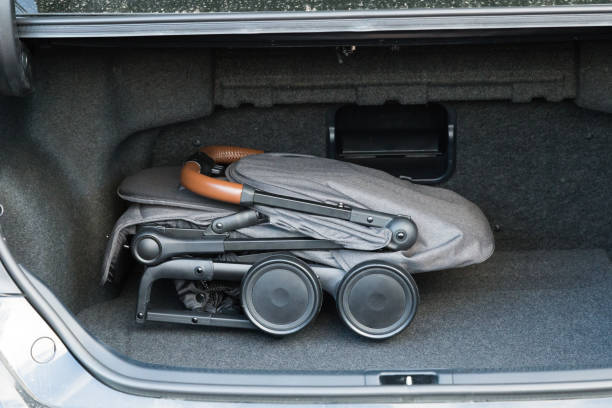
The good news is that a generous deployed size doesn't have to mean poor portability. A well-engineered stroller balances a spacious cabin for the pet with a compact, manageable footprint when folded. The trade-off isn't just about size, but in-use size versus stored size.
The Engineering of Portability and Storage
The ultimate goal for a product engineer is to deliver maximum function when a product is in use and maximum convenience when it is not. For a pet stroller, this means providing a safe, roomy cabin that can magically disappear when it's time to pack up.
Folding Mechanisms
The most basic strollers fold like a traditional baby stroller, often in an "umbrella" or "flat fold" style. More advanced systems allow the carrier portion to detach from the wheel base. This modular approach offers a huge advantage:
- The carrier can be used on its own (for example, as a car seat).
- The frame and carrier can be stored separately, often fitting into tighter spaces.
- The weight is distributed. You can carry the lighter frame and carrier in two separate, more manageable pieces.
Weight vs. Structure
There is a constant battle between making a product lightweight and making it strong. Using aluminum for the frame instead of steel can reduce weight, but the design must include proper reinforcements to prevent it from feeling flimsy. For the cabin, cheap, thin fabric saves weight and cost but offers zero structural support. At Anvoya, we focus on integrating hardware elements—like internal frames and locking mechanisms—directly with high-quality soft goods. This allows us to create carriers that are both structured and reasonably lightweight.
Here’s how different designs stack up in this trade-off:
| Feature | Highly Structured Stroller | Highly Collapsible Stroller | Modular Travel System |
|---|---|---|---|
| Deployed Size | Predictable and consistent interior space. | Interior space can shrink under load. | Carrier offers consistent, predictable space. |
| Stored Size | Tends to be the bulkiest when folded. | Folds down to the most compact size. | Carrier and frame store separately; flexible. |
| Weight | Often the heaviest due to more framing. | Typically the lightest option. | Moderate total weight, but can be separated. |
| Ideal Use Case | Pets needing high stability; frequent daily use. | Occasional use; users with very limited storage. | Multi-mode travel (car, walking, home). |
Ultimately, a "big" stroller is only a problem when it's difficult to handle and store. A modular or intelligently designed collapsible system can give your pet all the space it needs without creating a logistical nightmare for you.
How Should Travel Mode Influence Your Choice of Stroller Size?
You're planning a trip that involves a long car ride to the airport, a flight, and then navigating a busy city on foot. Can a single size pet stroller effectively handle all of these different environments? The answer lies in its adaptability.
Different travel modes impose unique constraints on a stroller's size, structure, and functionality. Air travel demands compliance with strict dimensional limits, while car travel prioritizes stability and security. Your choice should be guided by how and where you travel most.
Sizing for Different Environments
Choosing a stroller is about matching its design characteristics to your primary use case. Let's break down the requirements for each mode of travel.
H3: Sizing for Air Travel
For air travel, the carrier component is what matters most. Airlines impose strict size and weight limits for in-cabin pet carriers, which must fit under the seat in front of you. This is where a "structured-collapsible" or semi-structured carrier excels. It needs to have enough "give" to compress slightly to fit into the airline's sizer or a tight under-seat space, but it also needs enough structure to pop back into shape and provide a safe, non-claustrophobic space for your pet during the flight. A completely unstructured, duffel-bag-style carrier may fit, but it offers little protection and can collapse onto your pet.
H3: Sizing for Car Travel
In a car, stability is paramount. The primary concern is preventing the stroller or carrier from tipping over or sliding off the seat during turns or sudden stops.
- For full strollers: The stroller's dimensions must allow it to fit securely in the cargo area or, if folded, on the floor or seat.
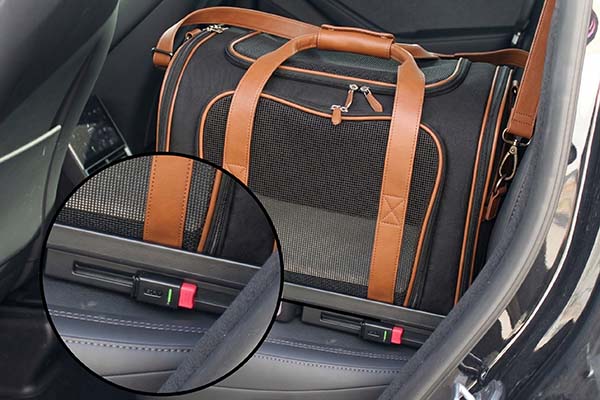
- For detachable carriers: This is the safest and most efficient solution. A carrier with the right dimensions can be placed on a vehicle seat and secured with the seatbelt. Even better, an engineered travel system like our BASE-X architecture allows the carrier to dock directly onto an ISOFIX/LATCH-compatible vehicle base. This provides automotive-grade security and ensures the carrier maintains its shape, protecting your pet.
H3: Sizing for Everyday Use
For daily walks and running errands, maneuverability and overall footprint are key. A massive stroller might be great for an open park but a nightmare in a crowded store or on a narrow sidewalk. Here, you're not just considering the cabin size, but the entire wheelbase width and length. A stroller with a smaller turning radius and a more compact frame will be far more practical for urban environments. This is another area where modularity shines; you can use a compact, structured carrier for quick trips and attach it to the stroller frame for longer walks.
Frequently Asked Questions
How do I measure my pet for a stroller?
Have your pet stand on all fours. Measure their body length from the tip of their nose to the base of their tail. Then, measure their height from the floor to the top of their head or shoulders (whichever is higher). Add 4 to 6 inches (10-15 cm) to both measurements to find the minimum interior cabin dimensions you should look for.
What's more important: the pet's weight or its dimensions?
Both are equally important, but for different reasons. The weight limit is a structural safety rating you must never exceed. The dimensions determine your pet's actual comfort and ability to sit, stand, and turn around. A stroller might support your pet's weight but be too small for them to lie down comfortably.
Can I use a stroller for two small pets?
Yes, provided two conditions are met. First, their combined weight must be well below the stroller's maximum weight capacity. Second, the interior cabin must be large enough for both of them to lie down comfortably without being cramped. Some larger strollers even offer divider accessories to create separate spaces.
Is a hard-sided pet stroller better?
Not necessarily. A hard-sided carrier offers maximum impact protection but is also heavy, bulky, and does not collapse for storage. The more relevant comparison is about structure. A well-engineered, semi-structured soft-sided carrier can offer excellent shape retention and safety while being much lighter and more portable than a hard-shell design.
Conclusion
Ultimately, finding the perfect size pet stroller requires you to look beyond a simple set of dimensions. It involves a thoughtful evaluation of your pet’s needs, your lifestyle, and your primary modes of travel. The key is to understand the engineering trade-off between a stroller's deployed size—the usable, structured space your pet occupies—and its stored size, which dictates its portability and convenience for you. A highly collapsible design may be easy to store but can compromise your pet's space, while a highly structured design offers stability but can be bulky.
The most innovative products find the intelligent balance between these two states. By thinking like a product developer and assessing how a stroller's structure, folding mechanism, and modularity will perform in the real world, you can make a choice that serves both you and your beloved companion.
For pet product brands aiming to engineer travel systems that master this balance, Anvoya provides the deep expertise in hardware integration and safety-oriented design needed to create market-leading products. Contact us to explore how we can help you transform your product line.