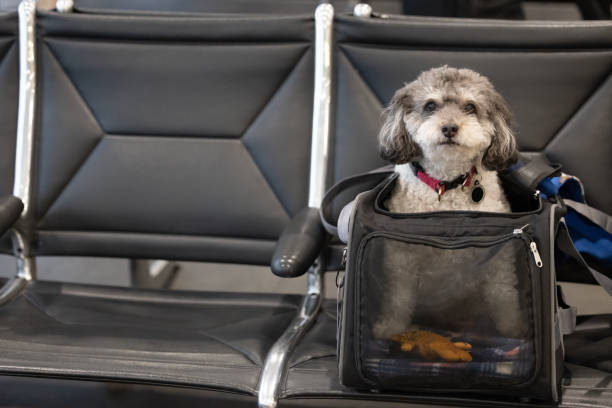
A custom pet carrier can look approved on a screen and still fail during sampling. The problem is that photos hide structure, fit, stitching tension, hardware feel, and production repeatability. If a brand skips sample rounds too quickly, a small design risk can become a bulk-order problem. A clear sampling plan keeps development controlled.
Most custom pet carrier projects need 1–2 sample rounds for simple color, logo, or material changes; 2–4 rounds for structural redesign; 2–4 rounds for modular or vehicle-ready systems; and sometimes more than 5 rounds for new-tooling projects. The right number depends on how much risk each sample must close before production approval.
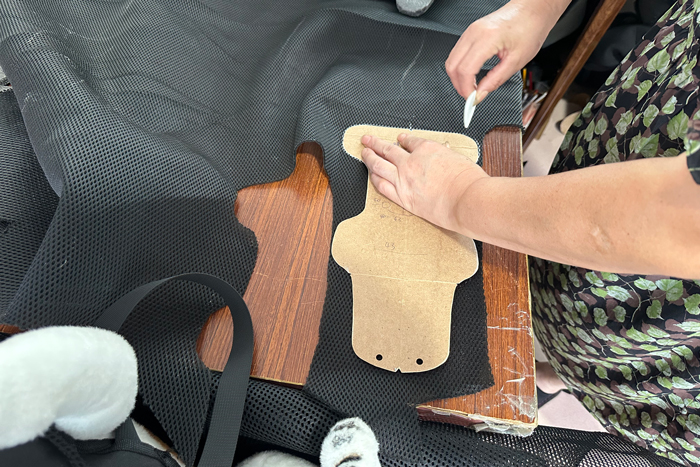
In my OEM/ODM project communication, the real question is rarely only “How many samples?” Buyers are usually trying to protect launch timing, budget, approval confidence, and channel commitments. So I prefer to discuss sample rounds by project complexity and production risk, not by a fixed number.
Why Do Structural, Modular, and New-Tooling Custom Pet Carrier Projects Require More Sampling?
A simple custom pet carrier update may only change fabric color or add a private-label logo. A structural project is different. It changes how the carrier holds weight, opens, folds, docks, or connects with hardware. Those details create risks that drawings and renderings cannot fully close.
A structural, modular, or new-tooling custom pet carrier usually needs more sampling because each round verifies a different risk: appearance, load-bearing structure, hardware function, docking fit, material behavior, stitching quality, and manufacturability. New-tooling projects often need extra prototype rounds before production-like samples can be approved.
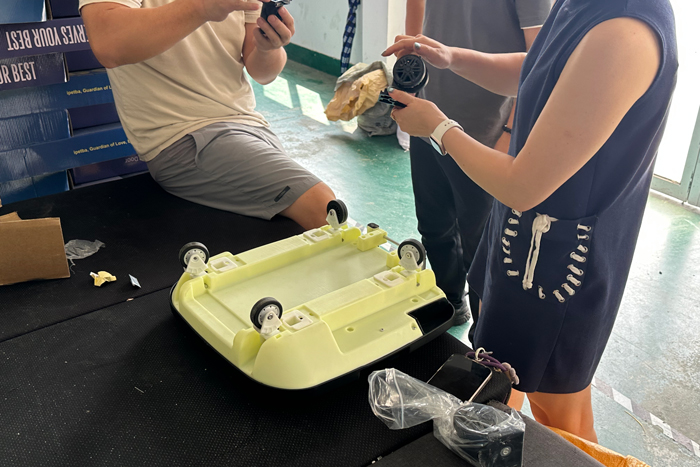
Simple changes close fewer risks
For a basic private-label project, the sample goal is narrow. The buyer may want to confirm:
- Pantone color accuracy
- Logo placement and size
- Fabric hand feel
- Zipper color or puller style
- Inner lining choice
- Packaging artwork fit
In these cases, 1–2 sample rounds can be enough in many projects. The original carrier construction already exists. The factory already understands stitching sequence, reinforcement points, cutting allowance, and assembly method. The sample mainly confirms visual and material decisions.
I have seen buyers spend too long reviewing logo position while ignoring more important structural changes. That is fine for a display-focused item, but it becomes risky when the project moves into load-bearing or modular use.
Structural changes add real product behavior
A structural custom pet carrier changes how the product performs in the user’s hand. For example:
- A wider top opening may reduce side-wall stability.
- A heavier mesh panel may pull the fabric downward.
- A new frame wire may improve shape but affect folding.
- A thicker foam insert may change the internal pet space.
- A different shoulder strap anchor may increase stress at one seam.
These projects often need 2–4 sample rounds because the team has to test the carrier as an object, not only as a design file. A buyer may approve the first look, then notice that the zipper corner feels tight, the bottom board shifts, or the handle balance feels wrong when the carrier is loaded.
For B2B buyers, I usually separate structural review into three practical questions:
| Review point | What it checks | Why it matters before production |
|---|---|---|
| Load path | Handles, straps, bottom board, frame, stitching | Weak points can fail after repeated use |
| User operation | Opening, closing, folding, carrying, cleaning | Poor usability creates returns and complaints |
| Production repeatability | Cutting, sewing, assembly, tolerance | A handmade sample may not match mass production |
Modular and vehicle-ready systems need fit verification
A modular carrier is more complicated because the pet carrier must interact with another product. It may dock onto a stroller frame, lock into a vehicle base, attach to a bracket, or connect with a hardware interface.
For modular carrier, stroller, and vehicle-ready projects, sample rounds often focus on:
-
Interface position
The docking part must land in the correct place after sewing and assembly. -
Tolerance control
Soft goods move. Plastic parts do not move in the same way. The sample has to prove the two can meet reliably. -
Release and locking feel
A latch may look correct but feel too tight, too loose, or inconsistent. -
Compatibility with base or frame
A carrier that fits one prototype base may need adjustment before it fits production tooling. -
Pet and user experience
The docking hardware cannot make the interior uncomfortable or the carrier too heavy for daily use.
This is where Anvoya’s background in modular pet travel systems becomes relevant. A carrier that connects to a base or stroller is no longer only a soft-goods product. It becomes a mixed system of fabric, plastic, metal, webbing, foam, and tolerance management. The sampling plan has to respect that.
New-tooling projects deserve a separate category
New-tooling work is the area where buyers most often underestimate sample rounds. A new shell, base, docking component, molded bottom, or special hardware part can require more than 5 rounds in some projects.
The early samples may not use final production materials. They may be:
- 3D-printed parts
- CNC mockups
- Soft prototype assemblies
- Handmade structural samples
- Partial function samples
- Appearance models
These early samples answer a simple question: Does the product direction make sense before tooling money is committed?
After that, the project moves closer to production materials, tooling trials, finishing, assembly, and pre-production confirmation. A new-tooling custom pet carrier is not slow because the team is indecisive. It takes more rounds because the team has more unknowns to close.
What Should Each Custom Pet Carrier Sampling Stage Verify Before Mass Production?
A custom pet carrier sample is only useful when everyone knows what the sample is meant to prove. If the first sample is judged like a final product, the team may reject useful learning. If a final approval sample is treated like a concept mockup, production risk remains open.
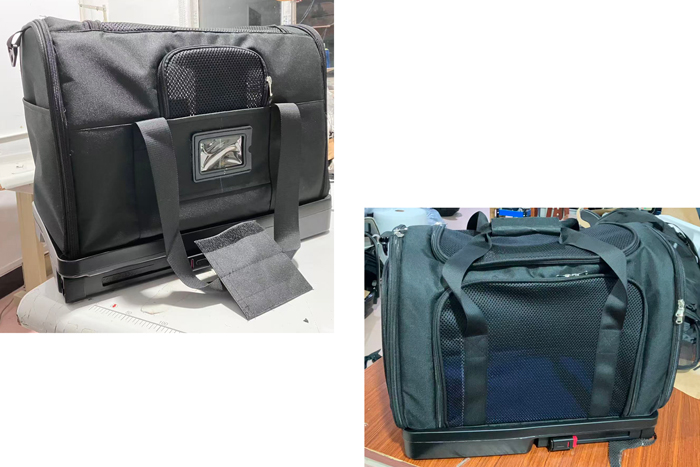
Each custom pet carrier sampling stage verifies a specific risk before mass production. Concept samples confirm size, appearance, and material direction. Structural samples test load-bearing, opening, hardware, and stitching. Modular samples verify docking and fit. Pre-production samples confirm near-final workmanship, packaging, materials, and approval standards.
Stage 1: Concept or appearance sample
The concept sample checks whether the project direction is worth continuing. It is not always production-ready, and it does not need to answer every manufacturing question.
A concept sample usually verifies:
- Overall size and proportion
- Visual style
- Fabric direction
- Color combination
- Pocket layout
- Opening position
- Brand placement
- Basic pet space
For example, if a brand wants to upgrade a traditional soft carrier into a more premium travel product, the first sample may focus on silhouette, texture, and perceived value. The stitching may not be final. The frame may still need improvement. That is acceptable if both sides understand the sample’s purpose.
The risk closed at this stage is market direction risk. The buyer can show the sample internally, compare it with price targets, and decide whether the design concept matches the intended retail channel.
Stage 2: Structural and function sample
The structural sample moves from “Does it look right?” to “Does it work?”
This stage verifies:
- Handle strength direction
- Strap anchor placement
- Bottom support
- Side-wall stability
- Zipper path
- Ventilation panel tension
- Folding behavior
- Pet entry and exit
- Stitching reinforcement
- Hardware function
A common issue appears around openings. A larger opening improves convenience, but it can weaken the upper frame or distort the side panel. Another issue appears around bottom boards. A rigid board improves stability, but it may add weight, affect washing, or create a hard edge inside the carrier.
For a structural custom pet carrier, I prefer to review the sample with weight inside the product. Empty carriers can be misleading. A carrier may stand beautifully on a table, then sag when loaded. A shoulder strap may look premium, then twist under weight. A zipper may feel smooth when the fabric is relaxed, then bind when the wall is under tension.
A simple internal review can include:
| Test action | What I watch | Typical design response |
|---|---|---|
| Lift by top handles | Seam stress and balance | Add reinforcement, adjust handle spacing |
| Carry with shoulder strap | Body tilt and strap comfort | Move anchor points, change pad design |
| Open and close zippers repeatedly | Corner friction and fabric bite | Adjust zipper path, add binding control |
| Load bottom with weight | Sagging and board movement | Change board thickness or sleeve design |
| Fold or compress carrier | Shape recovery | Adjust frame wire or foam density |
For application-specific load or transport requirements, buyers need qualified evaluation and suitable test planning. A supplier sample review is important, but it is not the same as a formal compliance or safety certification.
Stage 3: Modular, vehicle-fit, or interface sample
A modular sample has a different job. It verifies whether the custom pet carrier can connect consistently with another product.
This stage may involve:
- Carrier-to-stroller docking
- Carrier-to-base connection
- Latch position
- Release button travel
- Frame clearance
- Soft-goods interference
- Hardware alignment
- Assembly tolerance
- Repeated docking cycles
This stage can expose small problems that are hard to see in CAD. Soft goods can shift after sewing. Fabric thickness can push a plastic part slightly out of position. Foam, lining, binding, and reinforcement layers can change the final fit by a few millimeters. In a docking system, a few millimeters matter.
For vehicle-ready products, brands also need to separate fit verification from any formal safety claim. A sample can confirm that an interface, base, or docking direction fits according to the product design intent. Any safety performance, regulatory claim, or certification document must be verified separately by the buyer with qualified labs or professional evaluators.
Stage 4: Pre-production sample
The pre-production sample is the closest sample to mass production. It verifies whether the factory can build the product repeatedly with approved materials, workmanship, hardware, labeling, and packaging.
This sample checks:
- Final fabric and color
- Confirmed hardware
- Approved stitching method
- Binding and seam cleanliness
- Reinforcement position
- Label and warning content
- Packaging structure
- Carton information
- Assembly instructions
- Workmanship standard
- Fit against approved reference samples
A pre-production sample is where buyers need to be strict. If the sample is approved with vague comments like “looks okay,” the production team has little protection when disputes happen later. I prefer approval notes that state exactly what is accepted, what is conditional, and what remains to be corrected before shipment.
A practical approval record may include:
- Approved sample photos from all angles
- Material swatch references
- Hardware list
- Measurement points and tolerances
- Stitching and reinforcement requirements
- Packaging confirmation
- Open issues and correction deadline
- Buyer sign-off date
This record protects both sides. It also reduces the risk of judging mass production against a memory instead of a documented standard.
What Is the Difference Between a Sales Display Sample and a Custom Pet Carrier Production Approval Sample?
A custom pet carrier may look ready for a trade show but still be unready for production. This confusion creates trouble when sales, marketing, sourcing, and engineering teams use the word “sample” in different ways. A photo-ready sample and a production approval sample do not carry the same meaning.
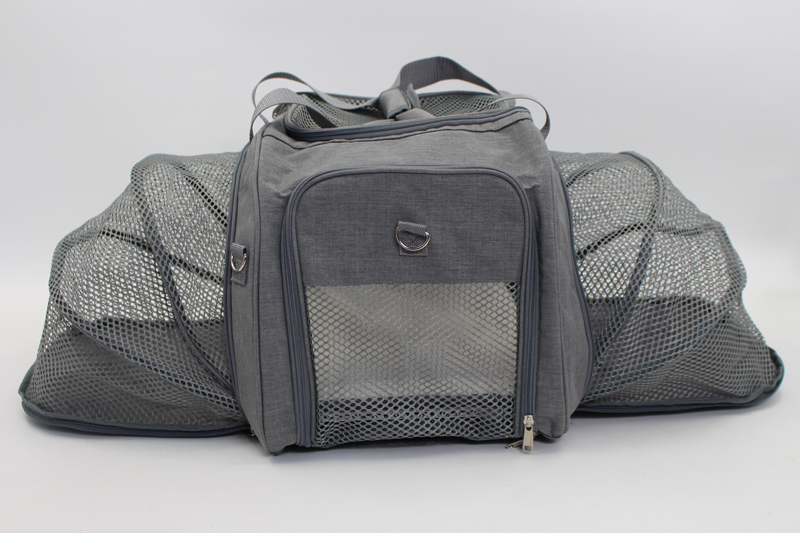
A sales display sample is made for photos, exhibitions, buyer meetings, or channel feedback. A production approval sample is made to authorize materials, tooling direction, workmanship standards, packaging, and mass production. One supports selling; the other controls production risk.
Sales display samples are useful, but limited
A sales display sample can be valuable. It helps a brand test market reaction before committing to full production. It can support catalog photography, distributor meetings, retail line reviews, trade shows, crowdfunding preparation, and internal launch discussions.
However, a sales display sample may use shortcuts:
- Hand-adjusted stitching
- Substitute fabric
- Temporary hardware
- Non-final zipper pullers
- 3D-printed plastic parts
- Unconfirmed packaging
- Manual trimming or finishing
- Early logo technique
- Prototype reinforcement
These shortcuts are not automatically bad. In early development, they can save time. The danger appears when a buyer assumes that the display sample already represents mass production.
A display sample answers questions like:
- Does the product look attractive?
- Can the sales team explain the concept?
- Does the channel understand the price point?
- Does the product fit the brand direction?
- Do buyers respond to the color and shape?
Those are commercial questions. They are important, but they do not replace production approval.
Production approval samples control bulk-order risk
A production approval sample has a stricter role. It becomes the physical reference for mass production.
It answers questions like:
- Are final materials confirmed?
- Are colors approved under agreed lighting or references?
- Are dimensions and tolerances accepted?
- Are all hardware parts production-ready?
- Can the sewing line repeat the construction?
- Does the packaging protect the product?
- Are labels, warnings, and manuals approved?
- Are open engineering issues closed or documented?
Here is a simple comparison I often use in buyer discussions:
| Item | Sales display sample | Production approval sample |
|---|---|---|
| Main purpose | Sell, present, collect feedback | Approve mass production |
| Material status | May be substitute | Near-final or final |
| Hardware status | May be temporary | Confirmed for bulk order |
| Workmanship | May be hand-improved | Must reflect production method |
| Packaging | Often incomplete | Confirmed or near-final |
| Risk closed | Market acceptance | Manufacturing readiness |
| Buyer action | Review and comment | Sign off or request correction |
A good-looking sample can still be risky
I have seen samples that looked excellent in photos but still needed more development. The body shape was clean. The logo was sharp. The fabric looked premium. Yet the zipper path was too tight near a curved opening, and the bottom board shifted when weight was added. In that case, approving the sample for marketing was reasonable. Approving it for mass production would have been premature.
The reverse can also happen. A rough structural sample may look unattractive but teach the team something important. It may prove that a frame concept works, that a docking position is viable, or that a handle reinforcement needs to move.
For B2B teams, the best approach is to label samples clearly:
- Photo sample
- Exhibition sample
- Concept sample
- Structure sample
- Tooling trial sample
- Fit sample
- Pre-production sample
- Production approval sample
Clear naming reduces arguments. It also helps sourcing teams explain development progress to management without creating false confidence.
When can one sample serve two purposes?
Sometimes one custom pet carrier sample can support both sales review and technical review. This works best when the product uses an existing construction with small changes. For example, a carrier with only new color, logo, and lining may produce a second sample that is good enough for both photography and pre-production approval.
For structural, modular, or vehicle-ready products, I treat dual-purpose samples with caution. A sample may be attractive enough for trade show display, while the docking part, base interface, or load-bearing reinforcement still needs correction. In those cases, I prefer to approve it for display only and keep production approval separate.
How Can Brands Plan Sampling Costs, Revisions, and Development Timelines?
A custom pet carrier sampling plan becomes much easier when brands budget for revisions from the beginning. Many delays happen because the first timeline assumes perfect samples, instant feedback, and no material changes. Real development usually needs decision time, supplier adjustment, and another round of confirmation.
Brands can plan custom pet carrier sampling by matching the budget and timeline to project complexity. Simple customization may need 1–2 rounds. Structural or modular projects often need 2–4 rounds. New-tooling projects may need 5 or more rounds. Each revision needs clear comments, ownership, and approval criteria.

Start with a complexity-based sample budget
A practical budget begins with project classification. The more the project changes product behavior, the more sample rounds it may need.
| Project type | Typical sample range | Main risks being closed |
|---|---|---|
| Color, logo, fabric change | 1–2 rounds | Appearance, material hand feel, branding |
| Structural carrier redesign | 2–4 rounds | Load-bearing, usability, stitching, shape |
| Modular carrier/stroller system | 2–4 rounds | Docking, fit, tolerance, hardware integration |
| Vehicle-ready carrier/base concept | 2–4 rounds or more | Interface, fixation, base compatibility |
| New-tooling travel system | 5+ rounds possible | Structure, tooling, material, assembly, DFM |
These are typical ranges from real OEM/ODM communication, not universal guarantees. A disciplined project can move faster. A small design change can still create a major issue. A buyer’s internal feedback cycle can also add weeks, even when the factory sample lead time is short.
Count revision time, not only sample-making time
Many buyers ask, “How long does one sample take?” That is useful, but incomplete. The total development timeline includes:
- Design confirmation
- Material sourcing
- Pattern or engineering adjustment
- Sample production
- Internal factory review
- International shipping
- Buyer review
- Consolidated feedback
- Revision confirmation
- Next sample round
For soft-goods projects, a sample round may take around one to several weeks depending on material availability and complexity. For molded parts or new tooling, the schedule can extend much longer. International shipping and buyer decision time can also become a hidden delay.
A simple timeline model looks like this:
| Activity | Often overlooked delay |
|---|---|
| Material selection | Approved fabric may not be in stock |
| Hardware choice | Similar-looking hardware may have different strength or MOQ |
| Buyer feedback | Different departments may give conflicting comments |
| Pattern revision | One dimension change may affect several panels |
| Packaging review | Carton size may change after product structure changes |
| Tooling decision | Prototype approval does not equal tooling approval |
Make feedback specific and testable
Vague feedback creates extra sample rounds. Comments like “make it more premium” or “improve the structure” are hard to execute. Clear comments reduce confusion.
Better feedback sounds like:
- “Increase side-wall stiffness without increasing folded thickness by more than 10%.”
- “Move the shoulder strap anchor 20 mm toward the center to reduce forward tilt.”
- “Change the zipper corner radius because the current sample catches at the front-left curve.”
- “Keep the outer fabric, but replace the lining with a lighter color for better interior visibility.”
- “Confirm whether the docking latch can release with one hand while the carrier is loaded.”
For modular products, I like to separate comments by system area:
- Carrier body
- Bottom structure
- Handle and strap system
- Docking interface
- Stroller or base connection
- Pet interior comfort
- Packaging and instructions
This makes feedback easier for the development team to process. It also prevents one sample round from becoming a mixed list of visual, structural, and commercial comments with no priority.
Protect launch timing with decision gates
A brand can control sampling better by using decision gates. Each gate answers a specific question before the project moves forward.
A typical custom pet carrier development plan may include:
-
Concept gate
The brand approves size, style, target user, and price direction. -
Structure gate
The team approves load path, opening, bottom support, and key hardware direction. -
Interface gate
The team approves docking, base, frame, or modular fit if applicable. -
Material gate
The brand approves fabric, lining, mesh, foam, webbing, zipper, and hardware. -
Pre-production gate
The buyer approves final workmanship, labels, packaging, and production reference sample.
These gates do not need to be bureaucratic. They can be simple approval emails with photos, measurements, and open-issue lists. The value is clarity. Everyone knows what has been approved and what remains open.
Plan for cost before emotions rise
Sampling cost can become sensitive when the project needs more rounds than expected. A brand may feel the supplier is moving slowly. A supplier may feel the buyer is changing direction. Clear cost planning avoids frustration.
Brands can ask early:
- Which sample rounds are included in the development quote?
- Which revisions create extra sample charges?
- Who pays for express shipping?
- Are prototype parts charged separately?
- Are new molds, jigs, or tooling trials separate from soft samples?
- Can sample costs be refunded or credited after bulk order?
- What changes will affect MOQ or material cost?
For engineering-led products, buyers gain more control when they treat sampling as risk reduction, not as a small pre-order expense. A sample round that catches a docking issue, weak seam, or poor folding experience can save much more than it costs.
At Anvoya, the most productive discussions happen when the buyer shares the launch goal, target retail positioning, product use case, and tolerance for development risk early. A premium pet travel system, a lightweight airline-style carrier, and a modular carrier-stroller product need different sample plans. The earlier that difference is clear, the easier it is to keep cost and timing realistic.
Frequently Asked Questions
Can a custom pet carrier go into production after one sample?
Yes, a custom pet carrier can sometimes move forward after one sample if the project only changes color, logo, lining, or minor materials on an existing design. For structural, modular, or new-tooling work, one sample rarely closes enough production risk for confident approval.
Why do new-tooling pet carrier projects need so many samples?
New-tooling projects need more samples because the team must verify structure, fit, molded parts, assembly method, tolerance, and production feasibility. Early samples may be 3D or prototype models. Later samples move closer to final materials, tooling trials, and pre-production approval.
Is a pre-production sample the same as a golden sample?
They are closely related, but companies may use the terms differently. A pre-production sample usually confirms near-final materials, workmanship, packaging, and construction. A golden sample often becomes the approved physical reference for mass production quality comparison. Buyers need to define both terms with the supplier.
Who pays for custom pet carrier sample revisions?
Payment depends on the agreement. Buyers often pay for initial samples, special materials, express shipping, prototypes, or changes requested after approval. Suppliers may absorb corrections caused by manufacturing mistakes. The cleanest approach is to define sample charges, revision rules, and tooling costs before development starts.
What information helps a supplier quote sampling more accurately?
A supplier can quote more accurately when the buyer shares product size, target pet weight range, materials, logo method, structure changes, hardware needs, packaging requirements, target order quantity, and whether the carrier must connect with a stroller, base, or other modular system.
Once you receive the prototype from your factory, a visual check is never enough; your sourcing team must know exactly [what structural and functional details to check before approving a pet carrier prototype] to prevent failures later.
Conclusion
A custom pet carrier does not have one fixed sample count before production. Simple visual customization may need only 1–2 rounds, while structural, modular, vehicle-ready, or new-tooling projects often need more because they carry more design and manufacturing risk. The safest plan is to define what each sample must verify before approval. If your brand is developing a custom carrier, modular pet travel system, or OEM/ODM upgrade, Anvoya can help review the sampling path and turn your concept into a production-ready plan.