
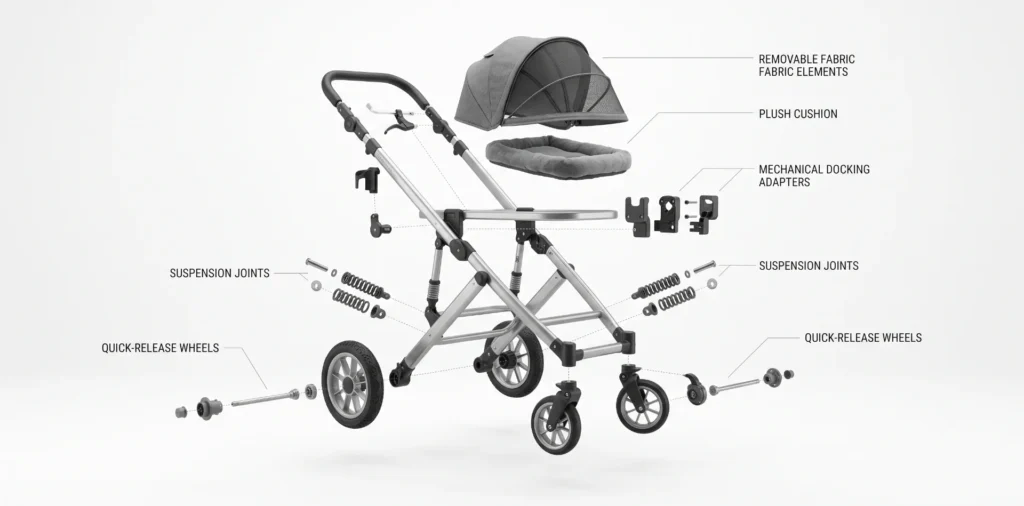
A pet stroller may sell smoothly for months before the first real after-sales question appears.
A front wheel is damaged.
A connector is lost.
A cushion needs replacing.
A retailer asks whether one part can be supplied—or whether the customer must return the whole product.
That answer matters more than many suppliers expect.
In our work with distributors, spare parts are rarely the first topic discussed during product selection. But once the product reaches the market, they quickly become part of the brand experience.
A product line is easier to sell when retailers know it can also be supported.
After-Sales Planning Should Start Before Production
Replacement parts should not be discussed only after a customer reports a problem.
By that point, the factory may discover that:
- the wheel cannot be removed separately
- the connector has no individual part number
- the current batch does not match the previous version
- the replacement cushion uses a different color
- the distributor has no installation guide
- the MOQ for one small component is unexpectedly high
These problems usually begin during development.
A better process identifies early:
- which parts experience the most wear
- which parts customers may lose
- which parts can be replaced at home
- which parts need professional handling
- which parts should be stocked locally
- which parts must remain compatible across production batches
After-sales is not a customer-service problem added later. It is part of product development.
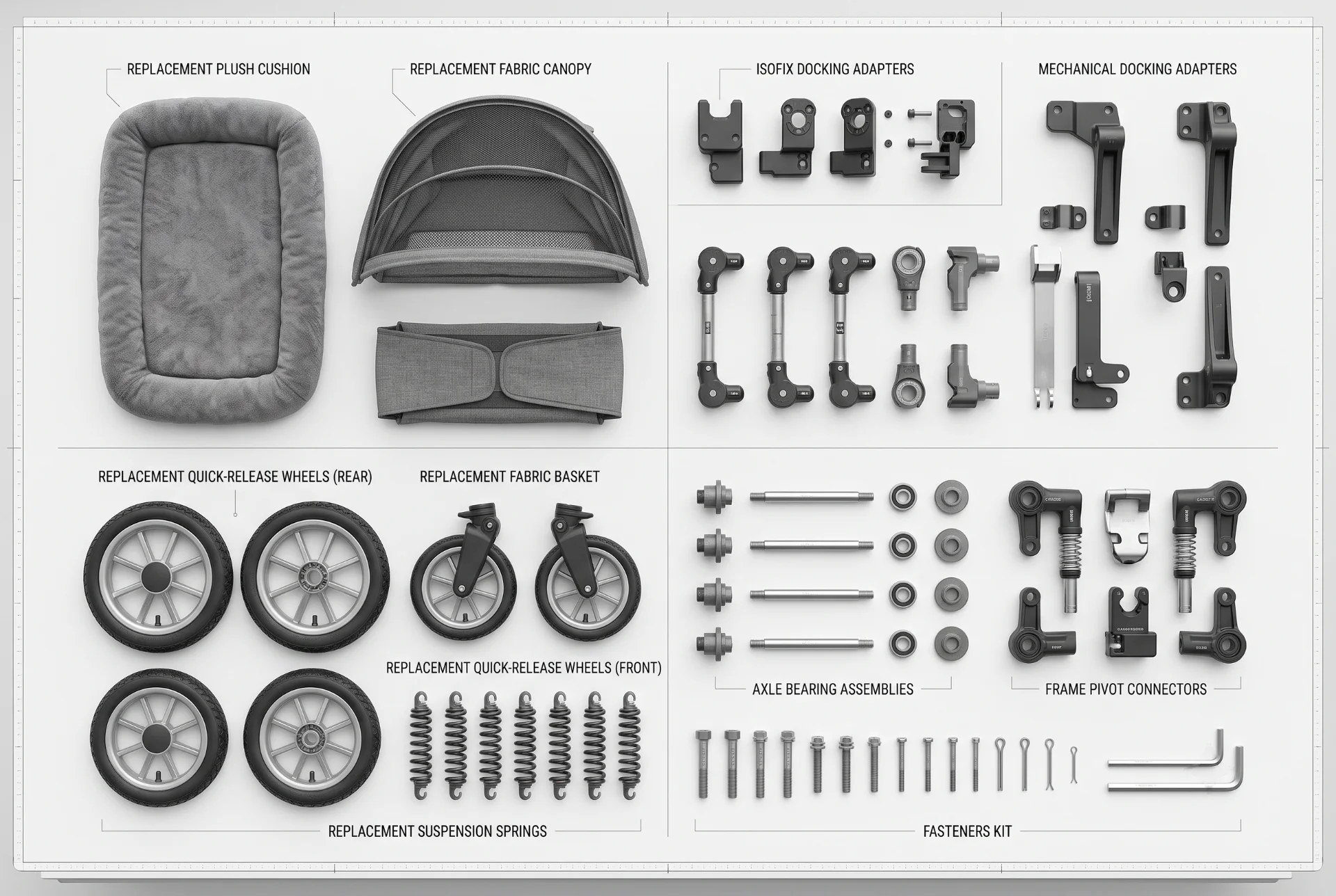
Which Pet Stroller Parts Usually Need Replacement?
Not every component needs to be stocked in large quantities.
The most useful spare-parts plan begins with the parts that are exposed to wear, dirt, repeated handling, or accidental loss.
| Part | Common Reason for Replacement | Typical Priority |
|---|---|---|
| Front wheels | Road wear, bearing issues, impact damage | High |
| Rear wheels | Brake, axle, or tire wear | High |
| Cushions | Dirt, odor, pet accidents, long-term use | High |
| Liners | Cleaning, seasonal use, normal wear | High |
| Small connectors | Loss during storage or transport | High |
| Docking adapters | Repeated connection or accidental loss | High |
| Canopy | Fabric damage, fading, broken support parts | Medium |
| Brake components | Wear from regular use | Medium |
| Handles or covers | Surface damage from daily contact | Medium |
| Frame components | Structural damage | Low, factory-controlled |
| Base-related hardware | Compatibility or repeated-use issues | Model-specific |
The list changes depending on the product.
An urban stroller may need more replacement front wheels because of frequent curb impacts. An outdoor model may need tires, bearings, or brake parts. A modular travel system may need more careful management of docking adapters and locking components.
The spare-parts plan should follow the actual use scenario.
Why Small Parts Can Create Large Problems
A missing connector may cost very little to manufacture.
But without it, the entire product may become unusable.
This is particularly true for modular products that depend on precise connections between:
- carrier and stroller frame
- carrier and vehicle base
- adapter and stroller tube
- wheel and axle
- canopy and frame
- locking part and docking interface
A distributor does not want to return a complete stroller because one small component is missing.
The customer does not want to wait several weeks for the factory to identify the correct part.
The value of a spare part is not its material cost. It is the product function it restores.
This is why small components need:
- clear part numbers
- product-version records
- photographs
- compatibility information
- individual packaging
- installation instructions
Modular Pet Travel Systems Need Better Parts Management
A conventional one-piece stroller may have a relatively simple parts list.
A modular pet travel system is different.
One platform may include:
- stroller frame
- removable carrier
- vehicle base
- docking interface
- tube adapter
- cushion
- canopy
- wheels
- release parts
- locking components
The commercial advantage is clear: one system supports more travel scenes.
The after-sales structure also becomes more important.
For example, one BASE-X platform may work with more than one carrier configuration. That creates flexibility for the buyer, but only when the correct adapters and docking components are clearly managed.
The distributor needs to know:
- which adapter fits which carrier
- whether old and new versions remain compatible
- whether the same base supports future products
- which locking component can be replaced
- whether installation can be completed locally
Modularity creates more product opportunities, but it also requires more disciplined version control.
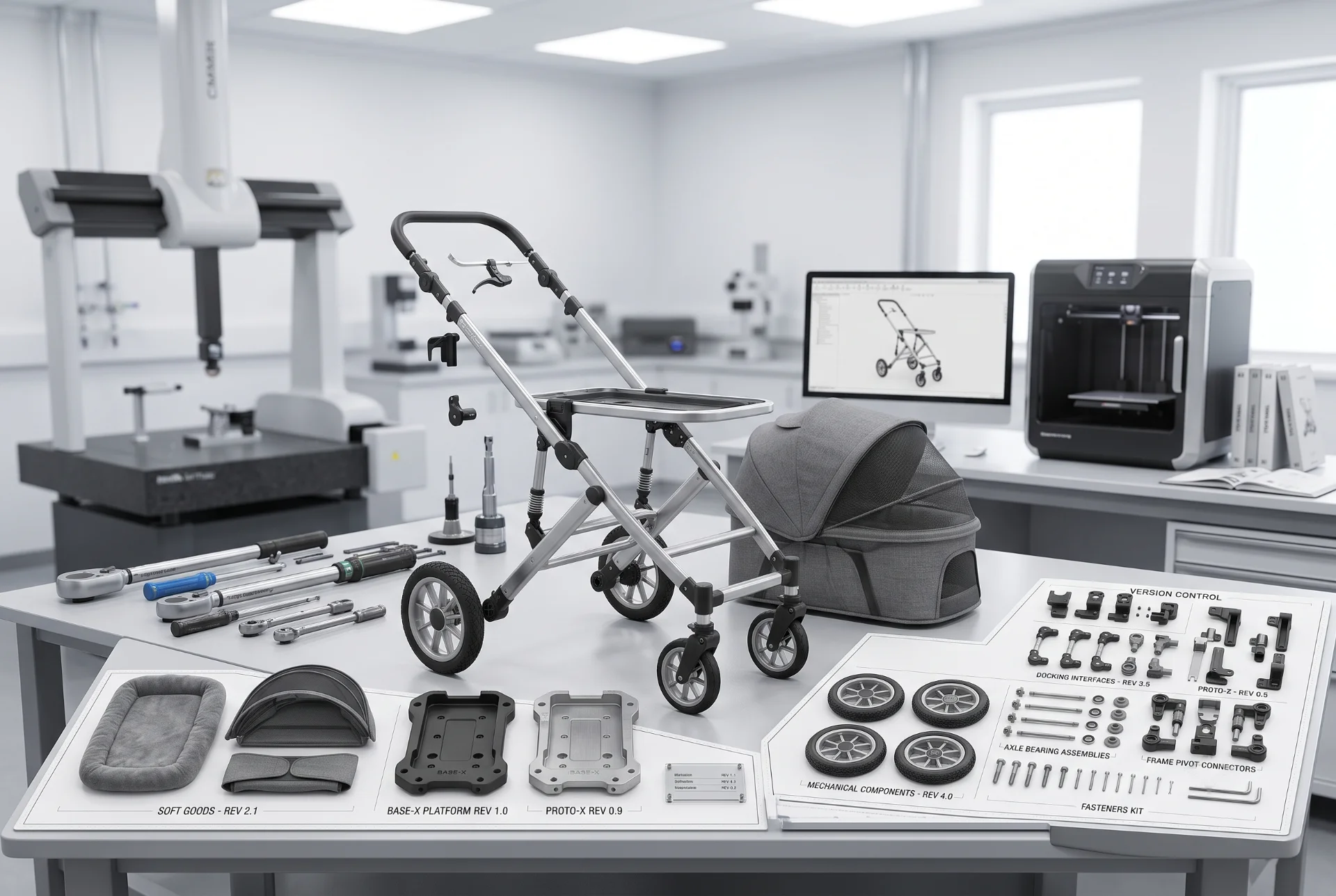
Replacement Parts Can Prevent Full-Product Returns
Cross-border returns are expensive.
Returning a complete pet stroller may involve:
- local collection
- retailer handling
- warehouse inspection
- replacement shipping
- damaged packaging
- customer refunds
- distributor service time
In many cases, the original problem can be solved with:
- one wheel
- one cushion
- one locking part
- one adapter
- one short installation video
The economics are very different.
A distributor that holds a small quantity of common parts can often resolve the issue locally within days.
Without local stock, even a simple problem may turn into a long complaint.
The cheapest return is often the return that never needs to happen.
Spare Parts Improve Retailer Confidence
Retailers think beyond the first sale.
Before carrying a new pet travel product, they may ask:
- Can replacement wheels be ordered?
- What happens if the customer loses an adapter?
- Are spare cushions available?
- Can the carrier be replaced separately?
- Does the supplier support older versions?
- Is there an installation guide?
- How long is the lead time for parts?
These questions are not signs that the retailer expects the product to fail.
They show that the retailer is thinking about long-term customer service.
A clear answer makes the product easier to list and easier for store staff to recommend.
A vague answer—“contact the factory if anything happens”—places too much risk on the distributor and retailer.
Retailers are more comfortable selling a product when they know one damaged part will not become a complete-product dispute.
Replacement Parts Can Also Create Repeat Business
Spare parts are not only used when something breaks.
Some components can become normal repeat purchases:
- replacement cushions
- seasonal liners
- rain covers
- wheel sets
- upgraded carriers
- storage accessories
- new docking adapters
- a second vehicle base
A customer may want a second cushion while the first is being washed.
A family with two cars may want another compatible base instead of moving the same base each time.
A buyer may begin with one carrier and later add another module that uses the same platform.
This is where a modular system creates a different commercial model from a one-time stroller sale.
The first product begins the relationship. Compatible parts and modules extend it.
A well-planned parts system can turn after-sales support into long-term product-line value.
What Should Distributors Keep in Local Stock?
Distributors do not need to stock every structural component.
The goal is to keep the parts that solve the most common issues quickly.
Fast-Moving Parts
These usually deserve local stock:
- front wheels
- rear wheels
- cushions
- liners
- small connectors
- common docking adapters
- rain covers
- frequently used locking parts
Low-Frequency Parts
These may be held in smaller quantities:
- canopies
- brake assemblies
- handles
- wheel axles
- suspension parts
- less common adapters
Factory-Controlled Parts
These may be supplied only after technical review:
- frame structures
- load-bearing joints
- specialized base hardware
- structural locking mechanisms
- components that affect system compatibility
A simple starting ratio can be discussed during the first order, based on:
- order quantity
- road conditions
- product type
- sales channel
- expected use
- local service capacity
There is no useful universal percentage for every product. A large-wheel outdoor stroller and a lightweight indoor stroller will not need the same spare-parts mix.
A Simple Spare-Parts System Is Better Than a Large Unclear One
The most effective system does not need to be complicated.
Each part should have a basic record.
| Spare-Part Field | Example |
|---|---|
| Part code | BX-ADP-01 |
| Part name | Carrier docking adapter |
| Compatible model | BASE-X Carrier A |
| Product version | V2 |
| Color | Black |
| Replacement method | Customer-installable |
| Tool required | No |
| Recommended local stock | Based on order volume |
| Factory lead time | Confirm per order |
| Installation material | Photo guide / video |
This information can be included in:
- distributor manuals
- service sheets
- online support pages
- internal CRM records
- retailer training materials
- spare-part cartons
The part code should also appear on the individual package.
A clear photo is especially useful. Part names are often translated differently across markets, but a photo and code reduce confusion.
Compatibility Across Production Batches Matters
One of the most frustrating after-sales problems occurs when the replacement part looks correct but does not fit the older product.
This can happen after changes to:
- wheel axles
- frame tubes
- docking points
- carrier bottoms
- brake structures
- plastic connectors
- release mechanisms
Product improvement is normal.
Unrecorded product changes are the problem.
When a component changes, the supplier should record:
- the old version
- the new version
- the production date or batch
- whether the parts remain interchangeable
- whether an adapter is required
- which stock the distributor should keep
A replacement part is only useful when compatibility is known before it is shipped.
This becomes even more important for private label customers. The consumer sees the retailer’s brand, not the factory’s internal version history. The distributor needs reliable records behind the product.
Private Label Spare Parts Should Still Look Professional
A customer may forgive a simple replacement carton.
They will still expect the part to feel connected to the product they purchased.
Private label spare-part support can include:
- branded labels
- model name
- part code
- compatibility list
- installation instructions
- safety notes where relevant
- QR code linking to a video
- matching color identification
Not every part needs expensive retail packaging.
A plain carton or bag can work if the information is clear.
The objective is not luxury packaging. It is avoiding uncertainty.
A wheel marked only as “wheel” is not enough when the brand sells several stroller models.
Common Spare-Parts Mistakes
No Individual Part Numbers
The distributor sends a photo, the factory guesses, and the wrong component is shipped.
Parts Change Between Batches
Small production changes are made without updating compatibility records.
The Product Cannot Be Disassembled
A worn wheel cannot be replaced without returning the full frame.
No Matching Color Is Reserved
The original fabric or frame color is discontinued, leaving no suitable replacement.
Parts Are Available but Instructions Are Not
The customer receives the component but cannot install it.
Spare Parts Are Discussed After Shipment
The first order leaves the factory without any local service stock.
Too Many Parts Are Stocked
The distributor buys expensive structural parts that are unlikely to be used.
No Version Control
Old and new adapters look similar but are not interchangeable.
The goal is not to stock everything. It is to know exactly what can fail, wear, or get lost—and have a practical response ready.
How Anvoya Approaches After-Sales Planning
Anvoya develops pet travel products as systems rather than isolated pieces.
That means after-sales planning can cover:
- stroller wheels
- cushions and liners
- canopies
- connectors
- docking adapters
- tube components
- carrier-bottom parts
- BASE-X interfaces
- compatible carriers
- private label packaging
- installation materials
For AERO, the spare-parts plan may focus on lightweight daily-use components, carrier soft goods, wheels, and connection parts.
For BASE-X, compatibility records become especially important because the platform may support different carriers or customized docking solutions.
When an existing customer carrier is adapted to BASE-X, the related bottom component and adapter should be recorded as part of that customer’s product configuration.
This prevents a future replacement request from turning into a new development project.
Anvoya can also help buyers decide which parts should:
- ship with the first order
- remain in local distributor stock
- stay available at the factory
- be sold as accessories
- be supplied only after technical review
The product launch is only the first step. The spare-parts plan determines how confidently the line can be supported after it reaches the market.
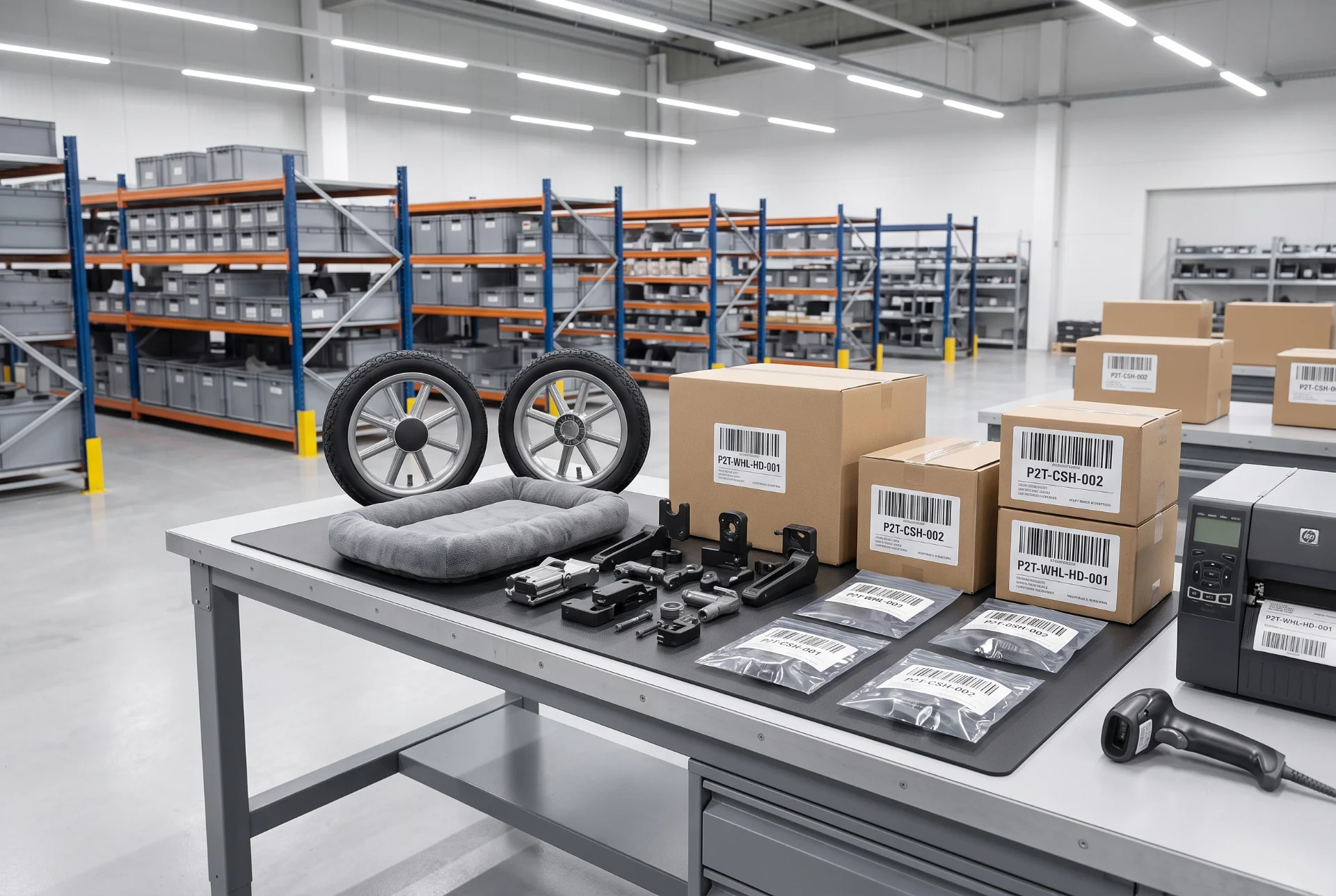
What OEM Buyers Should Confirm Before Production
Before approving the first order, buyers should confirm:
- Which parts wear most often?
- Which parts can customers replace themselves?
- Which parts need local technical support?
- Can the wheels be removed individually?
- Are cushions and liners sold separately?
- Are connectors available as individual parts?
- How are product versions recorded?
- Which parts should be stocked locally?
- What is the lead time for factory replacements?
- Can the parts use private label packaging?
- Are installation photos or videos available?
- Will future product versions remain compatible?
These questions are much easier to answer before production than after the first complaint.
FAQ
Q: Which pet stroller parts should distributors keep in stock?
A: Front wheels, rear wheels, cushions, liners, small connectors, and common adapters are usually the most practical parts to keep locally.
Q: Should spare parts be ordered with the first shipment?
A: Yes, especially for parts that experience wear, can be lost, or are easy to replace locally. The exact quantity should match the product and order volume.
Q: Are replacement cushions only for after-sales service?
A: No. They can also be sold as normal accessories for cleaning, seasonal use, or color changes.
Q: Can pet stroller wheels be replaced individually?
A: They should be designed that way where practical. Removable wheels make maintenance easier and can prevent full-frame returns.
Q: Why do modular pet travel systems need stricter version control?
A: Carriers, bases, frames, and adapters must remain compatible. A small structural change can affect whether two modules connect correctly.
Q: Can spare parts use private label packaging?
A: Yes. Simple branded packaging with a part code, model name, compatibility information, and installation guide is usually enough.
Q: How many spare wheels should a distributor order?
A: There is no universal number. It depends on order quantity, wheel type, road conditions, product positioning, and local service expectations.
Q: Can replacement parts reduce product returns?
A: Yes. Many full-product returns can be avoided when distributors can replace one wheel, connector, cushion, or adapter locally.
Q: How does BASE-X affect spare-parts planning?
A: BASE-X may connect with different carriers and docking components, so each configuration needs clear adapter codes, compatibility records, and version control.
Q: Can replacement parts create repeat sales?
A: Yes. Cushions, liners, wheel sets, accessories, upgraded carriers, and additional bases can become normal repeat purchases.
Q: What information should every spare part include?
A: It should include a part code, name, compatible model, version, color, replacement method, and installation instructions.
Conclusion
A pet travel product is not fully ready for distribution when the first shipment leaves the factory.
It is ready when the distributor also knows how to support it.
The right spare-parts plan reduces unnecessary returns, gives retailers more confidence, extends product life, and creates room for repeat orders.
A strong product line is not only easy to sell. It is also practical to maintain after the sale.