

Pet carrier zippers and mesh often fail because a frightened pet creates pressure patterns that normal product demos never show. A calm cat in a showroom may sit quietly. A stressed cat at an airport may scratch corners, bite zipper edges, and push hard against closed panels. Better carrier design starts by testing for panic behavior, not only everyday carrying.
Pet carrier zippers and mesh fail when stress concentrates at weak connection points, such as zipper ends, corner seams, mesh edges, and stitching intersections. The issue is rarely one material alone. Escape resistance depends on the full closure system, panel structure, reinforcement design, production consistency, and how the animal behaves during travel.
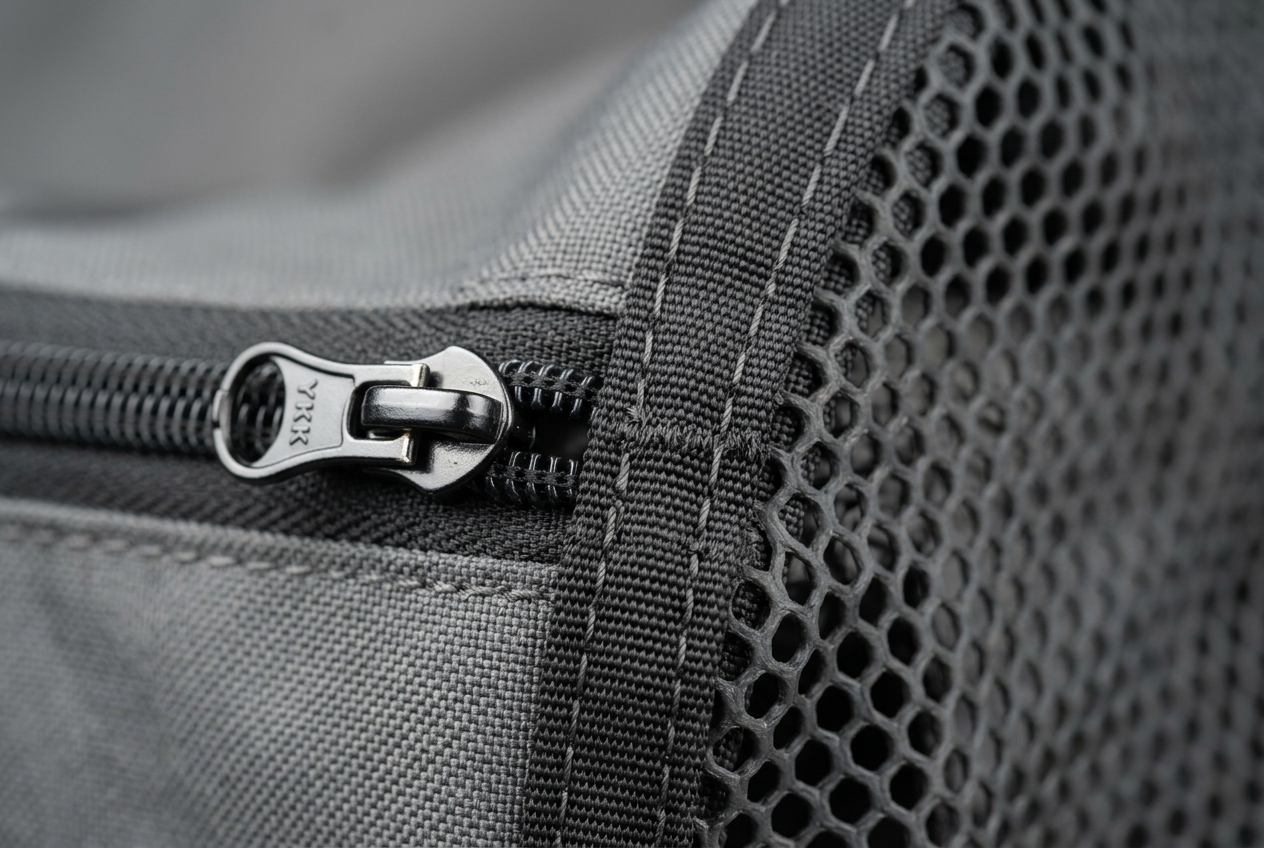
Most owners only see the final moment: a torn mesh panel, a separated zipper, or a pet squeezing through a gap. In product development, I try to look earlier. Where did the force start? Which part deformed first? Which detail made the failure possible?
What Happens When a Frightened Pet Tries to Escape?
A pet carrier may look secure when a calm animal is sitting inside it. The problem appears when fear changes the animal’s movement. Noise, crowds, vibration, unfamiliar smells, and confinement can turn a normal trip into a repeated escape attempt.
A frightened pet may scratch mesh panels, bite zipper edges, push against closed openings, strike the side walls, and focus force on one small corner. Pet carrier zippers and mesh often fail because this pressure is repetitive, concentrated, and unpredictable rather than a single clean pull or standard handling load.
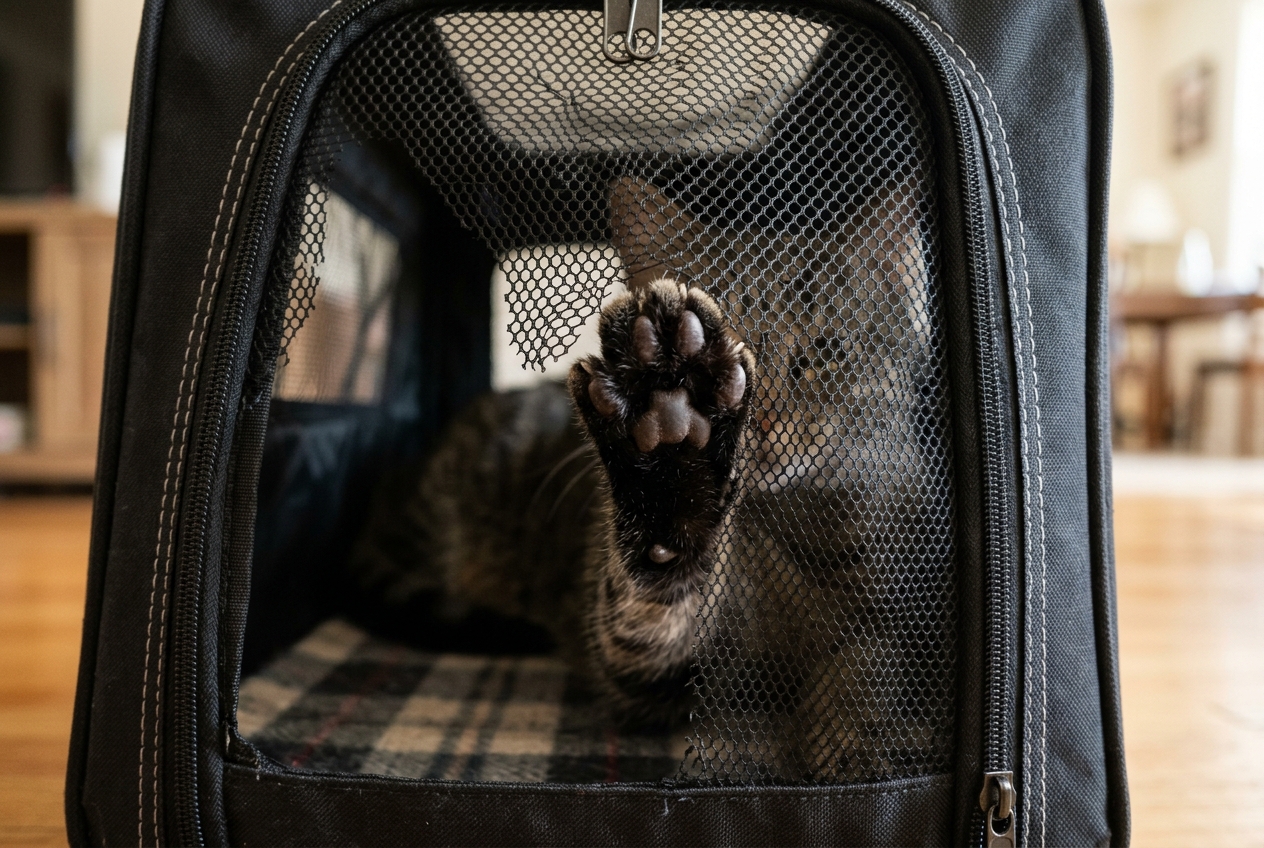
Panic creates a different load case
Most product photos show the best situation: the pet is calm, the carrier is upright, and the owner has closed everything correctly. Real travel adds many variables.
A cat may hear airport announcements and begin pushing against the front opening. A small dog may paw at the same mesh window for ten minutes in a veterinary waiting room. A nervous animal may bite the fabric beside a zipper because that area feels like the edge of an exit.
From a product development view, these behaviors create several stress types:
- Repeated pressure against mesh and zipper panels
- Scratch abrasion at corners and seam lines
- Biting force around zipper tape and binding
- Internal impact when the pet shifts suddenly
- Panel distortion when the carrier bends during carrying
- Long-duration stress during flights, car rides, or clinic visits
I have seen samples that felt solid when empty but changed shape quickly when pressure was applied from the inside. That is an important difference. A carrier is not only a bag. It is a temporary containment product used around living animals.
Normal use and escape attempts are different
A useful evaluation separates two conditions:
| Condition | Typical behavior | Product risk |
|---|---|---|
| Normal carrying | Pet sits, turns, or lies down | Comfort, ventilation, handle strength |
| Mild stress | Pet paws or shifts repeatedly | Mesh abrasion, panel deformation |
| Panic attempt | Pet scratches, bites, pushes, or rams openings | Zipper separation, seam failure, mesh detachment |
No supplier can honestly guarantee that no animal will ever escape from any soft carrier. Animals differ too much. A calm toy poodle and a terrified rescue cat create very different risks.
A better goal is more practical: reduce foreseeable escape risks through structure, reinforcement, and clear use instructions. For B2B pet brands, that language also matters commercially. Claims like “escape-proof” can create expectations that are hard to prove. Product specifications with defined construction details are more useful than broad marketing promises.
Why Strong Mesh Can Still Tear at the Seams
Many brands focus on mesh material first. That makes sense, because mesh is visible and easy to compare. But a strong mesh panel can still fail if the edge construction, seam allowance, stitching, or corner reinforcement cannot transfer force into the surrounding carrier body.
Mesh failure often begins at the boundary, not the center. Pet carrier zippers and mesh depend on how each panel is attached. If a pet scratches one corner repeatedly, the mesh may remain intact while stitches loosen, binding shifts, or the mesh pulls away from the fabric frame.
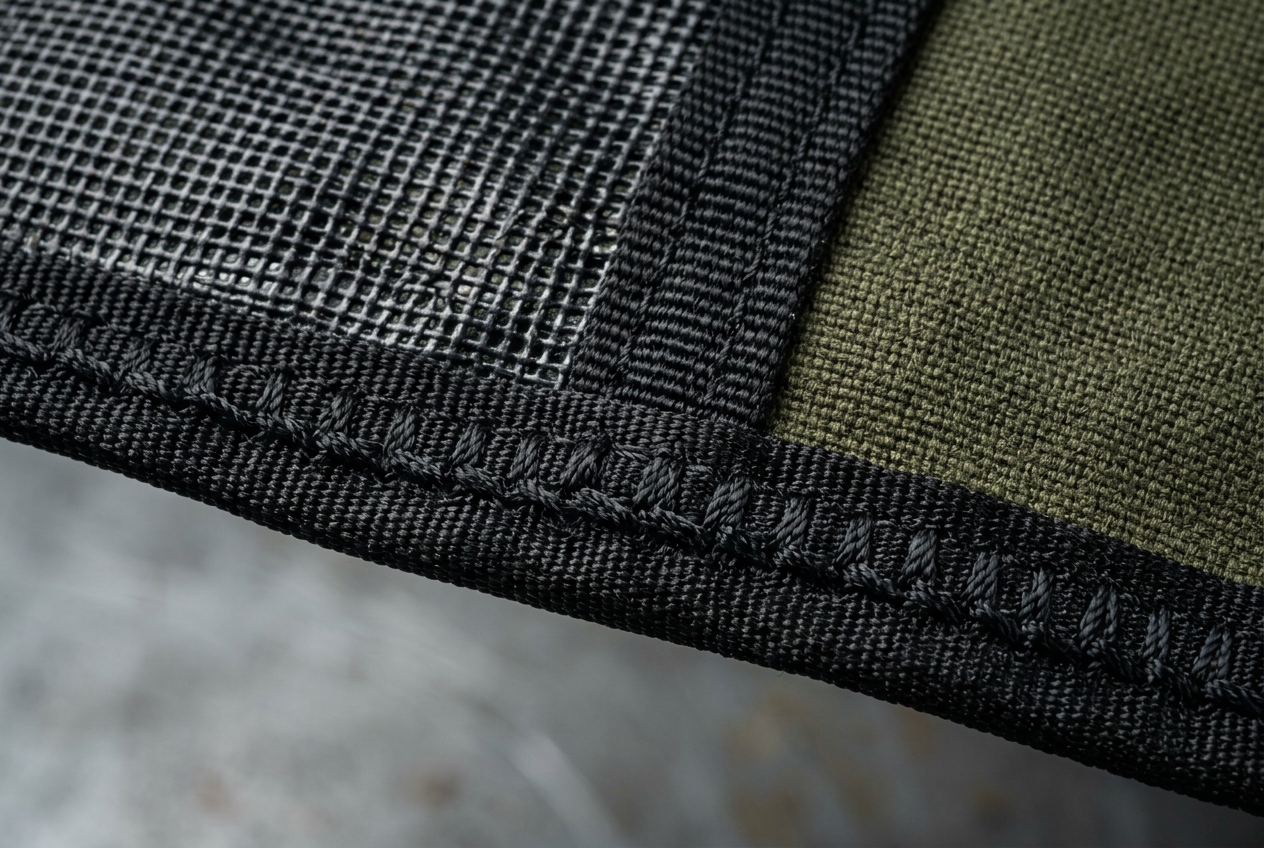
The edge carries the load
When a pet pushes against a mesh window, the load does not stay in the middle of the mesh. It travels to the edge. That edge may include:
- Mesh-to-fabric stitching
- Binding tape
- Seam allowance
- Corner bar-tacks
- Zipper tape attachment
- Foam or PE board support
- Lining fabric and outer shell layers
If the mesh material has good tensile strength but the seam allowance is too narrow, the assembly can still fail. If the mesh is sewn under uneven tension, one corner may carry more load than the rest. If a cat scratches exactly where the mesh meets the binding, small yarn breaks can grow into a larger tear.
What buyers often miss
Material test data can be useful, but it does not tell the full story. A mesh supplier may provide tensile strength, abrasion resistance, or composition details. Those numbers describe the mesh fabric under test conditions. They do not automatically describe the finished carrier.
For private label buyers, I like to review the complete construction instead of approving mesh alone.
| Evaluation point | Why it matters |
|---|---|
| Mesh specification | Determines baseline strength, openness, and abrasion behavior |
| Seam allowance | Affects how much material is captured in stitching |
| Stitch density | Influences tear resistance and production consistency |
| Edge binding | Protects the mesh edge from direct scratching |
| Corner reinforcement | Reduces stress concentration at high-risk points |
| Panel tension | Prevents loose areas that pets can grab or bite |
| Access to seams | Determines whether the pet can attack vulnerable edges |
The corner problem
Corners deserve special attention. A flat mesh panel has a broad surface. A corner concentrates force. Pets also notice corners because they feel like possible exit points. When a cat scratches the same corner repeatedly, the damage may not look dramatic at first. One stitch loosens. The binding opens slightly. The mesh edge starts to pull.
A good carrier design does not rely on mesh strength alone. It uses mesh, seam geometry, reinforcement, and inspection criteria together. That gives a brand better control over performance from prototype to production.
Zipper Failure Is Not Always About Zipper Quality
When a zipper opens during travel, the first reaction is usually simple: the zipper must be bad. Sometimes that is true. However, many failures involve the full closure assembly. The zipper teeth, slider, tape, stitching, end stops, curves, and surrounding fabric all interact.
Pet carrier zippers and mesh fail in different ways under pressure. A zipper clip may stop sliders from moving, but it will not necessarily stop zipper teeth from separating. A heavier zipper may help in one design and create stiffness or curve problems in another.
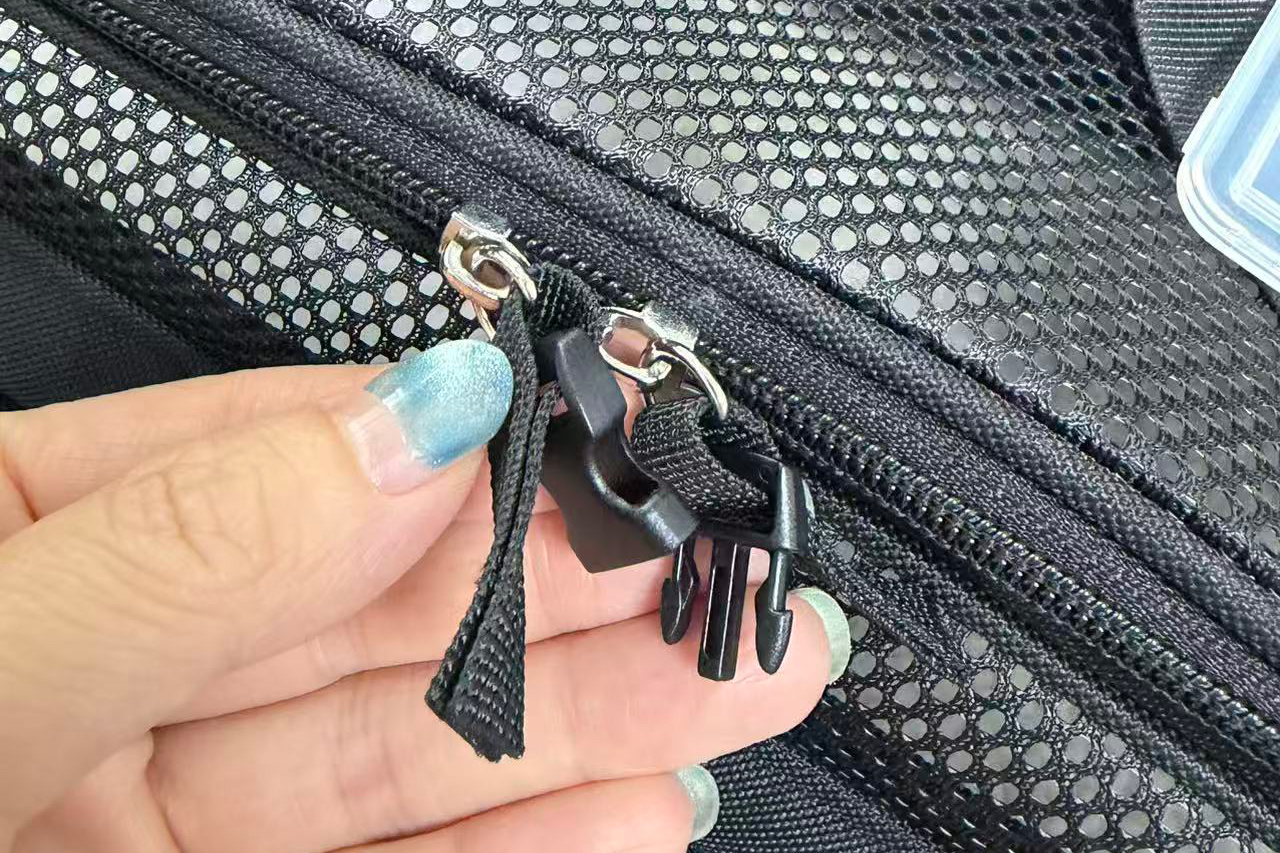
Several failures look similar to owners
A customer may write, “The zipper broke.” That complaint can describe many different technical problems.
Common zipper-related failure modes include:
-
Slider movement
The zipper pull moves because it is not locked or secured. -
Zipper chain separation
The teeth separate under internal pressure even though the slider has not moved much. -
Stitching failure around zipper tape
The zipper remains intact, but the tape pulls away from the fabric. -
End-stop failure
The zipper end opens because the terminal area is poorly secured. -
Fabric trapped in the zipper
The owner cannot close the carrier fully, leaving a weak opening. -
Curve stress
Tight corners distort the zipper chain and make separation more likely.
Each failure needs a different fix. A locking pull helps with slider movement. It does little for weak stitching. A larger zipper size may improve chain strength, but it can also make the opening harder to operate if the curve radius is too tight.
Zipper quality versus zipper application
A zipper that works well in luggage may not perform the same way in a soft pet carrier. Luggage mainly faces external handling and compression. A carrier also faces internal animal pressure from unpredictable directions.
For B2B buyers, the question is not only, “Which zipper do you use?” Better questions include:
- What zipper size and type are specified?
- How are zipper ends secured?
- Does the zipper pass through tight curves?
- Is the zipper tape reinforced at stress points?
- Can the owner see whether the opening is fully closed?
- Does the closure remain stable under internal pressure?
- Are locking pulls, clips, or secondary retainers practical for the user?
A small closure gap can become a big issue
Some pets do not need a full failure to escape. A small unclosed area near a zipper end may be enough. A cat can push its nose into the gap, then use body pressure to widen it. This is why closure usability matters. If the carrier is hard to close, owners may leave a slight gap without noticing.
In development, I prefer to treat the zipper as part of a closure system, not a purchased component. The system includes hardware, sewing, geometry, user operation, and inspection. That view prevents quick but incomplete fixes.
How Ventilation and Escape Resistance Affect Each Other?
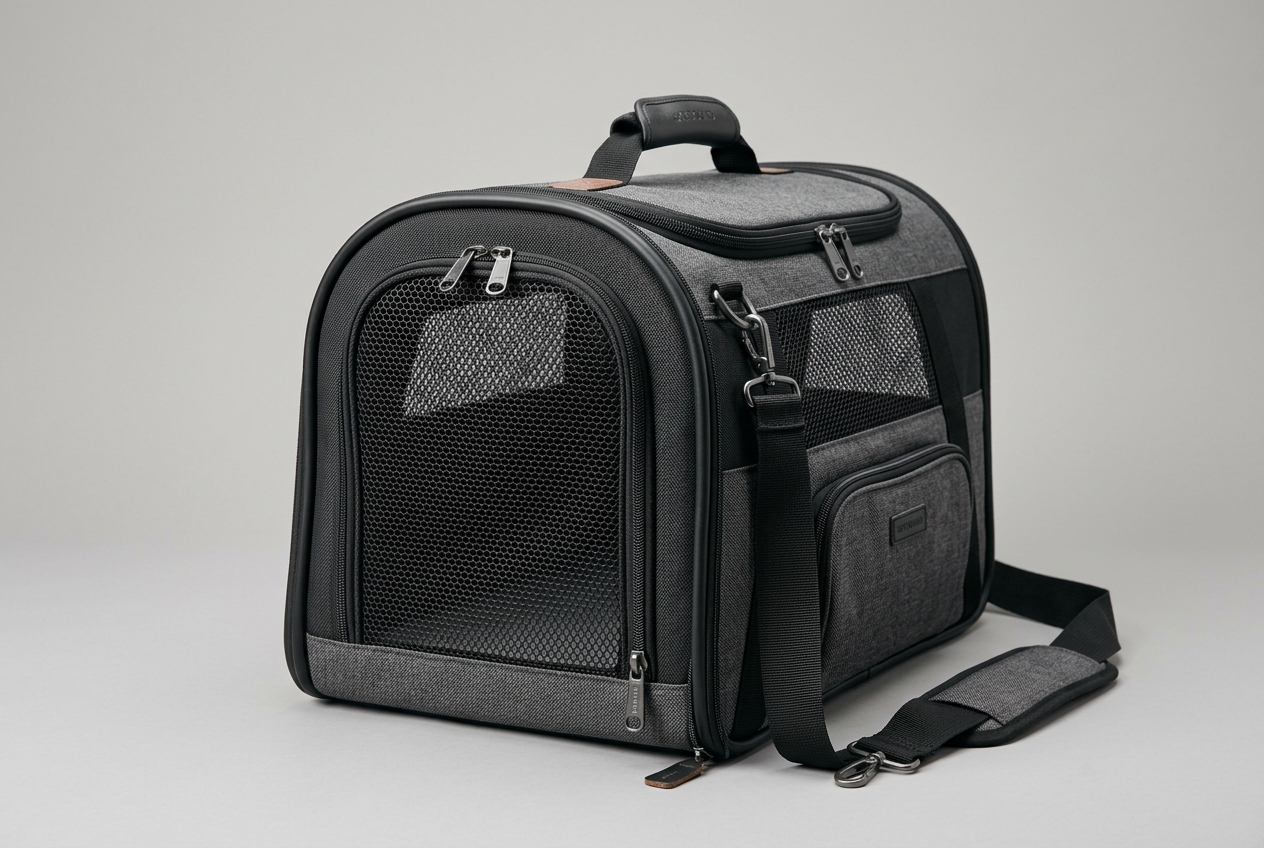
Ventilation is essential in a pet carrier. A carrier that feels closed, hot, or visually restrictive can increase stress for animals and concern for owners. At the same time, large mesh areas reduce the amount of continuous fabric available for structural support.
Pet carrier zippers and mesh are often affected by ventilation decisions. More mesh can improve airflow and visibility, but it may also create longer seams, flexible side walls, and more exposed areas for scratching or biting. Good design balances airflow, comfort, and containment.
More open does not always mean better
Pet owners usually like carriers that look breathable. Large mesh windows suggest comfort. They also help owners see the pet. For cats and small dogs, airflow matters during car rides, flights, and waiting periods.
However, each mesh panel changes the carrier structure. A large panel may reduce stiffness. A long mesh edge may need more stitching control. A flexible side wall may allow the pet to push the opening outward, placing extra load on zipper curves.
That does not mean brands need to reduce ventilation aggressively. It means the ventilation plan has to be engineered with the structure.
What changes when mesh area increases?
| Design choice | Benefit | Possible trade-off |
|---|---|---|
| Large side mesh | Better airflow and visibility | Longer mesh seams, more scratch exposure |
| Top mesh opening | Easier pet loading and monitoring | Added zipper length and corner stress |
| Front mesh door | Convenient access | Pet may push directly against closure |
| Expandable mesh panel | More resting space | More zipper ends and folding stress |
| Multiple small vents | Better distributed structure | May reduce visibility or owner appeal |
Airflow under real use
One detail buyers sometimes overlook is compression. Airline-oriented soft carriers may be placed under seats. Owners may carry them against the body. Stroller baskets, luggage stacks, or vehicle footwells may reduce exposed ventilation areas.
A design with good airflow in a showroom may behave differently when one side is blocked. Evaluation needs to consider:
- Airflow when one panel is partially covered
- Mesh placement relative to the pet’s resting position
- Ventilation after the carrier flexes or compresses
- Whether the pet can directly reach vulnerable seams
- Interior usable space, not just external dimensions
For products such as airline soft carriers, the balance becomes more demanding. Low weight, under-seat dimensions, ventilation, and containment all compete. Overbuilding the carrier with heavy reinforcement everywhere may solve one problem while creating another: excess weight, poor flexibility, or uncomfortable handling.
A better design reinforces the high-risk zones and leaves the rest of the product usable. That usually means stronger edges, smarter panel geometry, and better closure routing rather than simply choosing the heaviest materials.
Why More Openings Can Create More Structural Weak Points?
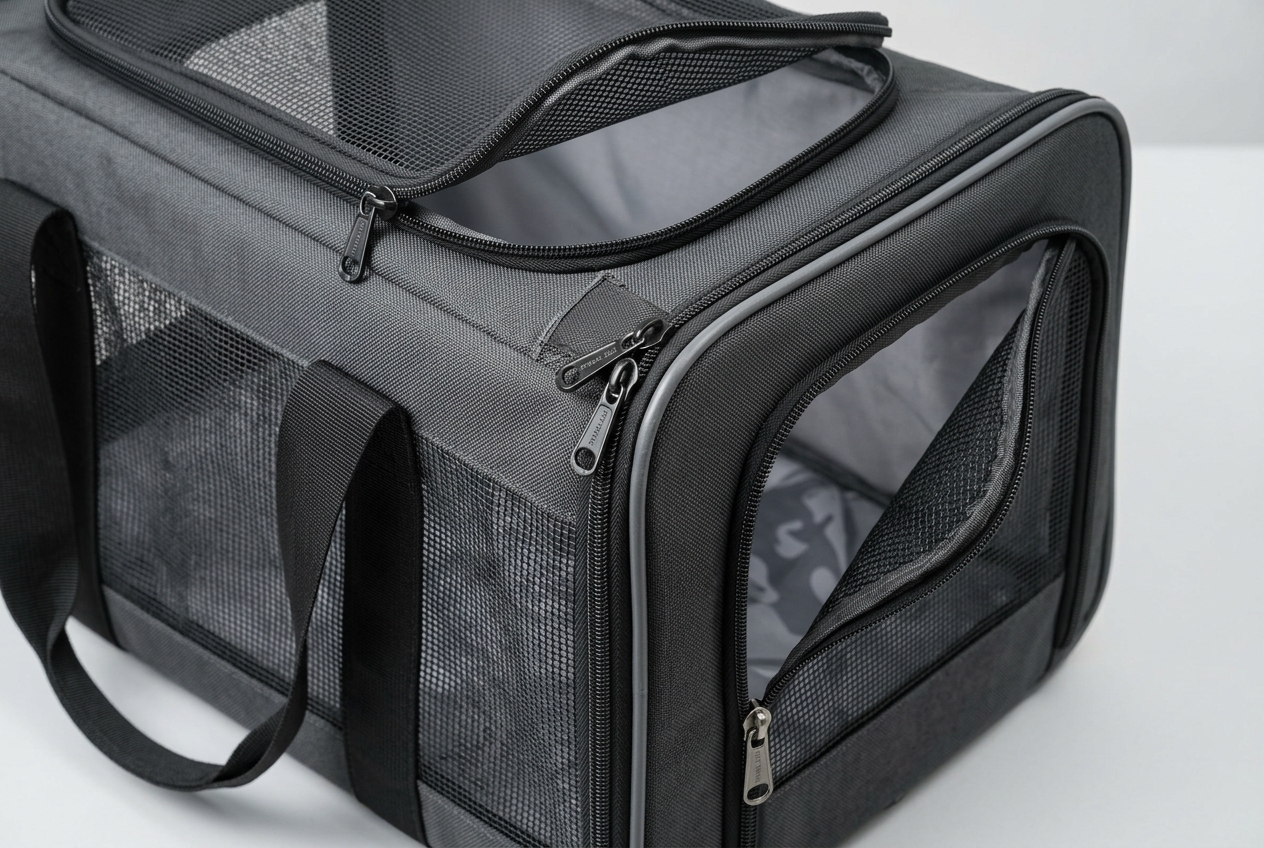
Top openings, front doors, side access, and expandable panels make a carrier easier to use. Owners like convenience. Retailers like visible features. Yet every new opening adds zipper length, seam intersections, closure ends, and inspection points.
Pet carrier zippers and mesh become more complex when a carrier has multiple access points. Each opening can improve usability, but it also creates new locations where stress can concentrate. The feature has to be integrated into the structure, not added as decoration.
Convenience creates engineering work
A single-opening carrier has fewer closure paths. A dual-opening carrier gives owners more flexibility, especially with nervous cats that resist front loading. Expandable panels are popular because they provide more resting space after arrival.
These features are valuable. The issue is that they change the carrier’s load path.
A carrier with more openings may include:
- Longer total zipper length
- More zipper curves
- More zipper start and end points
- More stitching intersections
- More fabric layers at corners
- More chances for misalignment in production
- More inspection requirements at final QC
A design team may add a top opening to an existing model and assume the rest of the structure remains unchanged. In practice, the top panel may have helped support the carrier shape. Cutting it open changes stiffness, especially during lifting.
Closed condition matters most
Features are often judged when open. A buyer opens the top panel, checks how easily a pet can enter, and likes the user experience. The more important test may happen when the feature is closed and the animal pushes from inside.
For each opening, I like to ask:
- Does the opening keep its shape when the carrier is lifted?
- Do zipper ends have enough reinforcement?
- Are corner curves smooth enough for the zipper type?
- Can the pet access the seam from inside?
- Is there a simple way to confirm full closure?
- Does the opening deform under internal pressure?
Expandable panels need extra care
Expandable carriers are especially interesting. They sell well because they show a clear benefit: more space after travel. But a large expansion zipper adds length, folded fabric, mesh panels, and several stress points.
When closed, the expansion section may be compressed. When open, it may carry animal weight or clawing force. The zipper ends and mesh-to-fabric transitions deserve close review.
A useful rule in product development is simple: every opening needs its own containment logic. If a feature changes the shape, access, or pressure path, the reinforcement plan needs to change with it.
What Pet Brands Should Test Before Approving a Carrier Design?
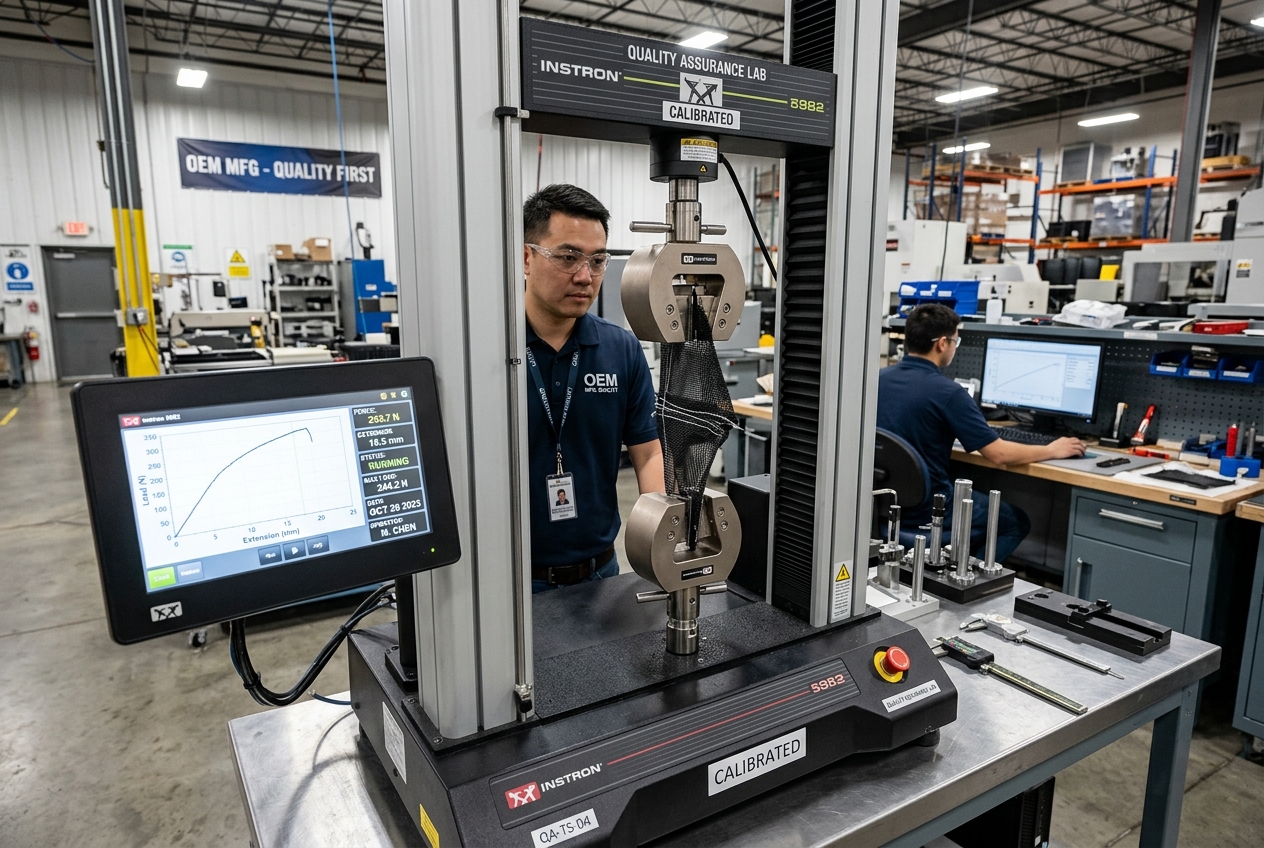
Many factories check whether a zipper opens and closes smoothly. That is a valid inspection step, but it is incomplete for escape resistance. Smooth operation does not prove that the closure can handle pressure from a frightened animal.
Pet carrier zippers and mesh need tests for operation, structural resistance, repeated use, and practical usability. A brand needs documented criteria for loads, cycles, inspection points, and failure definitions instead of relying only on visual checks or supplier descriptions.
Separate the test objectives
A good approval plan divides testing into different questions. One test cannot answer everything.
| Test area | What it checks | Example observations |
|---|---|---|
| Closure operation | Ease of opening and closing | Smooth movement, fabric catching, full closure visibility |
| Structural resistance | Response to internal force | Zipper separation, seam deformation, mesh detachment |
| Repeated use | Durability over time | Misalignment, slider wear, loosened stitching |
| Cleaning impact | Change after care process | Fabric shrinkage, stiffness, zipper drag |
| Usability | Owner behavior during real use | Incorrect closure, hard-to-use locking pull |
The actual load levels, cycle counts, and pass criteria need to be defined for the product category and market requirements. An airline soft carrier, a vet-visit carrier, and a modular stroller-compatible carrier may not need identical specifications.
Practical test ideas for development
During early development, I find simple observation tests very useful before formal lab work. They do not replace professional testing, but they reveal weak details fast.
A product team may review:
- Internal pressure applied to each closed opening
- Repeated zipper operation over key curves
- Pulling force on zipper ends
- Scratch simulation near mesh corners
- Seam inspection after panel deformation
- Carry testing with weighted load inside
- Compression checks for airline-style soft structures
- Full-closure confirmation by a person unfamiliar with the sample
A carrier that passes a smooth-zipper check can still fail when the animal applies force from the inside.
QC must match production reality
Prototype approval is only the start. Production consistency matters just as much. A well-designed seam can still become weak if sewing allowance varies, stitch density drifts, or zipper-end reinforcement is skipped.
For OEM buyers, inspection documentation can reduce ambiguity. Useful details include:
- Approved seam construction photos
- Critical-to-quality points for mesh and zipper areas
- Tolerance for stitch distance from edge
- Reinforcement placement requirements
- Zipper model and size control
- Batch inspection records
- Defect definitions for loose stitching, skipped stitches, and distorted panels
A supplier’s material claim may be true and still insufficient. Finished product performance comes from assembly quality.
Turning Customer Complaints into Better OEM Product Specifications?
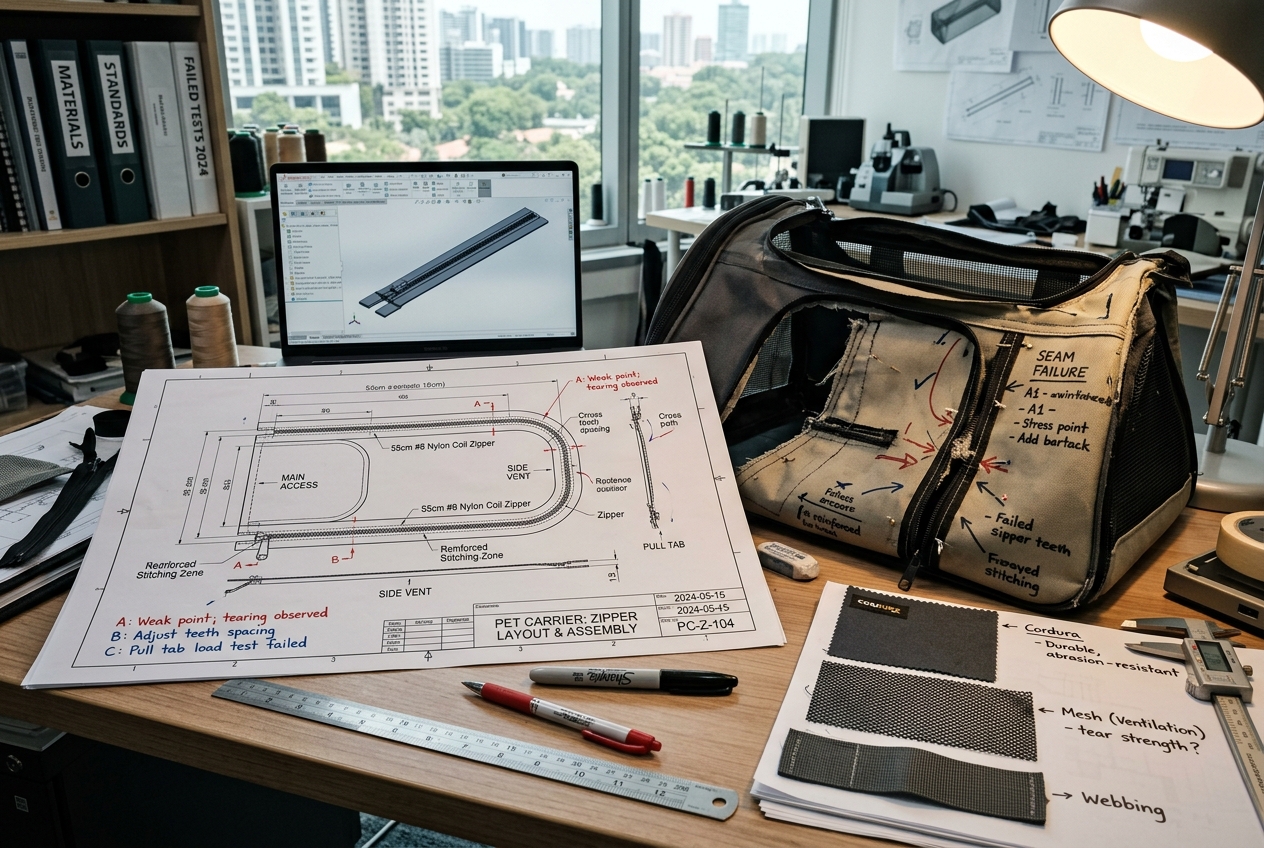
Escape-related complaints can be emotional. A pet owner may be frightened, angry, or embarrassed. For a brand, the worst response is to treat every complaint as the same type of failure. Useful complaint analysis separates product defects, behavior mismatch, and user operation issues.
Pet carrier zippers and mesh complaints can reveal design weaknesses when the brand records enough detail. Photos, batch data, pet weight, travel scenario, failure location, and closure status help convert reviews into better OEM specifications and more focused product improvements.
Three complaints may need three different actions
Consider three common scenarios.
Situation A: A seam separates during ordinary handling.
This may indicate a manufacturing defect, weak seam construction, or poor quality control.
Situation B: A cat bites through the mesh after repeated stress.
This may show that the product is unsuitable for that animal’s behavior. It may also reveal that the mesh, binding, or panel placement is too vulnerable.
Situation C: The owner does not fully close the carrier.
This may be a usability issue. The product may need clearer instructions, better closure visibility, or a more intuitive locking feature.
If all three cases are grouped under “zipper/mesh failure,” the brand loses the opportunity to act precisely.
What to record from complaints
A good complaint record does not need to be complicated. It needs enough detail to show patterns.
Useful fields include:
- Product model
- Production batch or PO number
- Purchase date and duration of use
- Pet species, size, and approximate weight
- Travel scenario, such as flight, car, vet visit, or home use
- Damage location
- Photos from inside and outside
- Whether the carrier was fully closed
- Whether the issue repeated in other units
- Owner description of pet behavior before failure
Over time, these records help a brand identify whether problems cluster around a specific opening, batch, material change, or design feature.
Turning feedback into specifications
The commercial value of negative reviews is not the complaint count alone. The value comes from turning patterns into product requirements.
For example:
| Complaint pattern | Possible specification response |
|---|---|
| Mesh pulls away at one corner | Add corner reinforcement and define stitch placement |
| Zipper separates at tight curve | Adjust curve radius or zipper type |
| Owners leave small zipper gap | Improve pull design or add full-closure indicator |
| Pets bite zipper tape | Add protective flap or change internal access to edge |
| Damage appears in one batch | Tighten production QC and material traceability |
In OEM development, this is where supplier capability matters. A factory that only repeats “we use strong mesh” may not help much. A development partner that can review construction, adjust samples, document critical points, and stabilize production gives the brand more control.
How Anvoya Approaches Secure Pet Carrier Development?
Secure carrier development requires more than choosing tough-looking materials. It requires soft-goods engineering, closure design, production control, and realistic evaluation of how pets behave under stress. That fits closely with how I view modern premium pet travel products.
At Anvoya, pet carrier zippers and mesh are treated as part of a complete product system. For OEM/ODM projects, Anvoya reviews reinforced mesh panels, zipper routing, closure usability, panel support, and production inspection details while balancing weight, ventilation, comfort, and market positioning.

Secure does not mean heavy everywhere
It is tempting to solve every problem with thicker fabric, heavier mesh, larger zippers, and more reinforcement. That approach can create a carrier that looks strong on paper but becomes too heavy, stiff, expensive, or hard to use.
A better development process identifies the high-risk points:
- Corners where pets scratch repeatedly
- Zipper ends that carry concentrated force
- Mesh edges that are easy to bite
- Large panels that deform under pressure
- Openings that are hard for owners to close fully
- Areas that production workers may sew inconsistently
Then the reinforcement goes where it matters.
Anvoya’s relevant development focus
Anvoya is a B2B manufacturer in Ningbo, China, focused on OEM/ODM pet travel and mobility products. The company’s engineering background comes from child car seat and automotive-related product development, and that experience informs how the team thinks about structure, docking, and safety-oriented design.
For soft carriers, that does not mean making medical or absolute safety claims. It means looking at construction details with an engineering mindset.
Potential development improvements may include:
- Reinforced mesh panel edges
- Improved zipper routing around curves
- Stronger zipper-end construction
- Protective flaps near bite-prone areas
- Controlled opening geometry
- Semi-structured panel support
- Better mesh-to-fabric seam design
- Easier-to-inspect construction details
- Prototype evaluation before production approval
- Batch-level quality control points
Different product lines create different trade-offs
For airline-oriented soft carriers such as a premium travel carrier concept, low weight, ventilation, and under-seat dimensions matter. The design cannot become bulky just to add strength.
For modular carrier systems, the carrier may also need to work with a stroller frame, vehicle base, or docking structure. In that case, closure strength interacts with lifting, carrying, docking, and shape retention.
This is where development becomes practical rather than theoretical. A zipper path that looks clean on a flat pattern may behave differently when the carrier is lifted with weight inside. A mesh panel that looks breathable may need edge protection if the pet can reach the seam directly. A top opening that helps loading may need extra support to prevent the carrier from collapsing during carrying.
For B2B buyers, the useful question is not, “Can you make it stronger?” The better question is, “Where is the current design most likely to fail, and how will the finished carrier be verified?” That conversation leads to better specifications and fewer surprises after launch.
FAQ
Can any soft pet carrier be truly escape-proof?
No soft pet carrier can honestly guarantee containment under every possible condition. Pet size, fear level, biting behavior, claw strength, and owner operation all affect performance. A responsible product claim focuses on features that reduce escape risk, such as reinforced mesh, secure zipper ends, and documented durability evaluation.
Are metal zippers always better than nylon zippers for pet carriers?
Metal zippers are not automatically better. They may be stronger in some applications, but they can add weight, stiffness, and corrosion concerns. Nylon coil or molded zippers may work well when properly sized, routed, reinforced, and tested as part of the full closure assembly.
Why do cats often damage carrier corners first?
Corners feel like exit points, and they concentrate force. A cat may repeatedly scratch or bite the same corner because it senses an edge or gap. This can loosen stitching, damage binding, or pull mesh away from the surrounding panel even when the mesh material itself is strong.
What evidence should a pet brand request from an OEM supplier?
A pet brand can request mesh specifications, zipper type, construction photos, reinforcement details, sample test records, critical QC points, and batch inspection requirements. Finished assembly evidence matters more than broad terms like “heavy-duty mesh” or “premium zipper.”
Do more mesh panels make a carrier unsafe?
More mesh panels do not automatically make a carrier unsafe. They improve airflow and visibility. However, larger mesh areas add seams, flexible sections, and scratch exposure. The design needs proper reinforcement, good panel geometry, and testing under realistic internal pressure.
Conclusion
Pet carrier zippers and mesh fail most often when panic behavior exposes weak points in the full assembly. Mesh strength, zipper quality, seam construction, opening geometry, and usability all matter. For pet brands, the best path is clear specification, realistic testing, and careful supplier evaluation. If you are developing a secure pet carrier or upgrading an existing OEM design, Anvoya can help review vulnerable structures and turn them into production-ready improvements.