
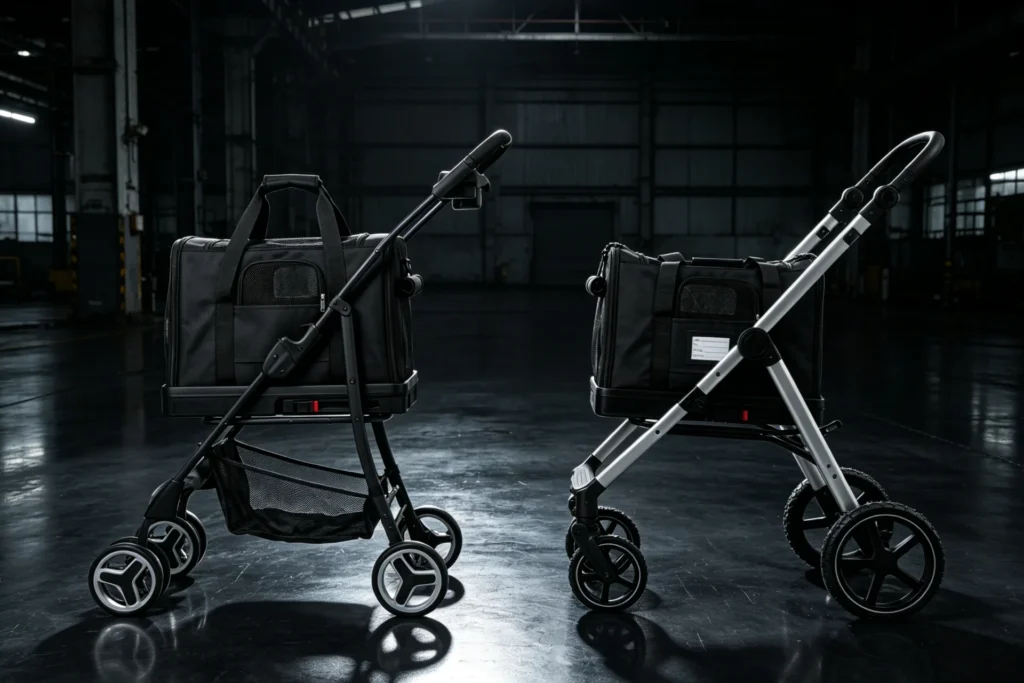
A stroller can look easy to sell, yet fail in daily use. That gap creates returns, bad reviews, and weak repeat orders.
Lightweight and heavy-duty pet strollers serve different use cases. The better choice depends on pet size, movement, road surface, storage, folding needs, frame support, wheelbase, braking, and daily user behavior, not only stroller weight, load rating, or price.
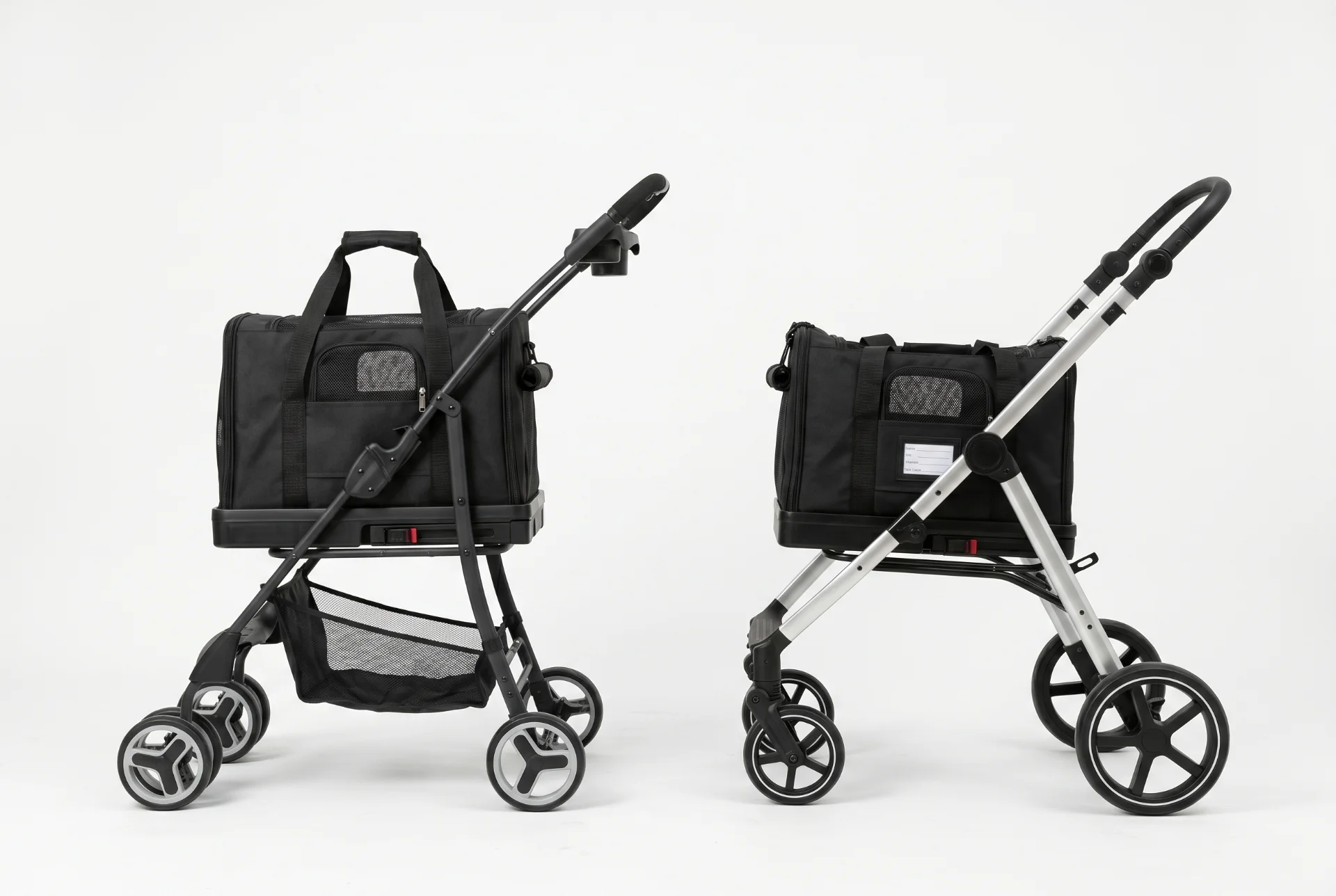
In our product development work, we do not start with the question, “Which stroller is better?” We start with a more practical question. We ask how the pet moves, where the owner walks, how often the stroller is folded, and what kind of support the frame must give. A lightweight stroller can feel perfect in a store aisle and still feel unstable on uneven pavement[^1]. A heavy-duty stroller can look strong in a catalog and still become too bulky for short urban trips. This is why we treat stroller selection as a system decision, not a simple product comparison.
What Is the Difference Between Lightweight and Heavy-Duty Pet Strollers?
Many buyers judge a stroller by weight first. That shortcut feels fast, but it can hide weak stability, poor support, and the wrong use scenario.
Lightweight pet strollers focus on easy carrying, folding, and storage. Heavy-duty pet strollers focus on stronger support, larger pets, rougher surfaces, and higher stability needs. The main difference is the balance between portability and structural strength.
How we separate the two designs in practice
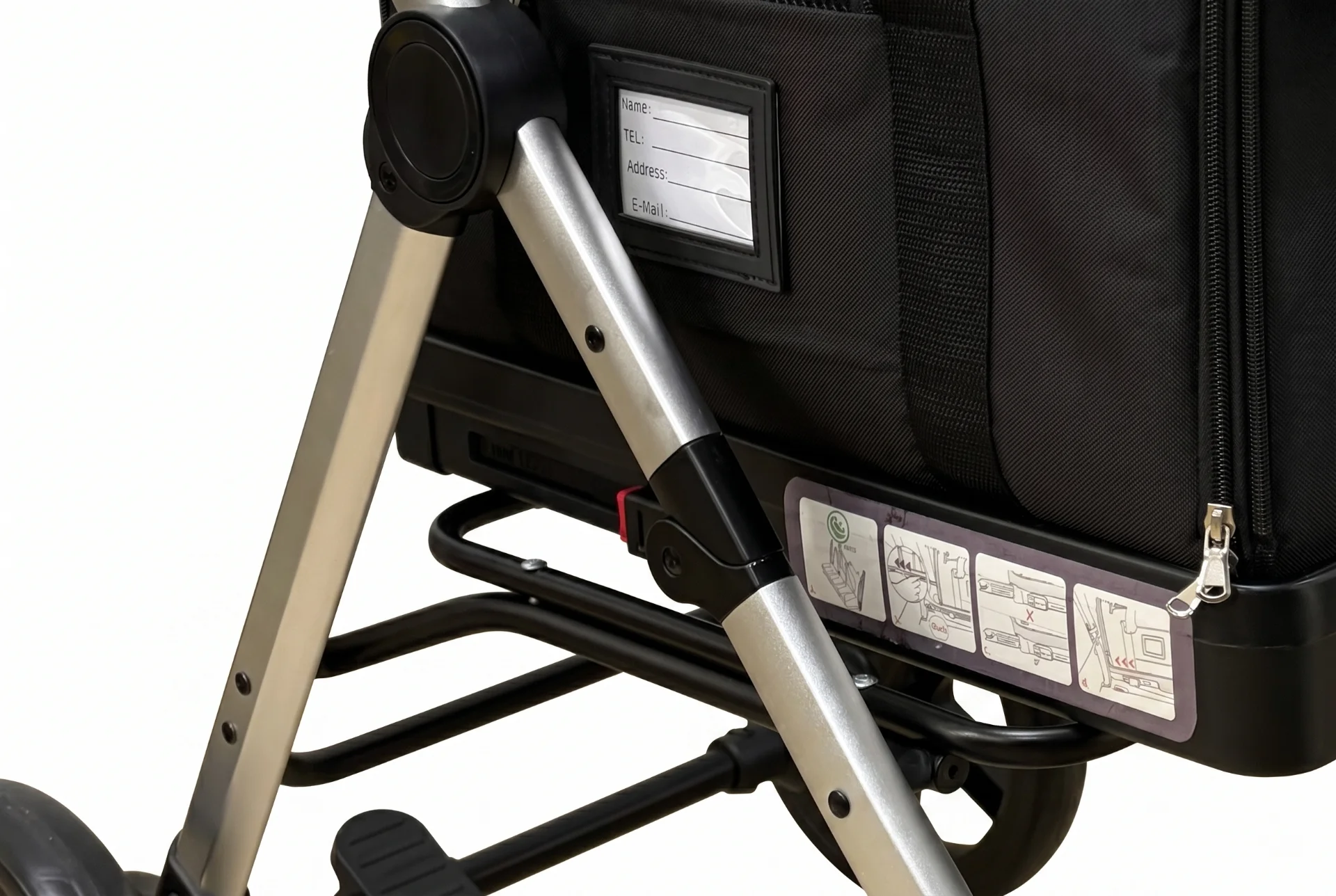
In our work as a pet mobility manufacturer, we look beyond the net weight printed on a spec sheet. We check the frame layout, cabin support, wheel position, brake feel, handle height, and how the stroller reacts when the pet shifts from one side to another. A lightweight stroller is usually easier for apartments, car trunks, elevators, and short errands. It often works well for small pets, calm pets, and users who fold the stroller many times in one day. A heavy-duty stroller is usually better when the pet is larger, when the pet changes posture often, or when the road is not smooth. Yet heavy-duty does not always mean “better.” If the stroller is hard to store or hard to lift, the owner may use it less. That can create poor reviews even when the frame is strong.
| Factor we check | Lightweight stroller | Heavy-duty stroller |
|---|---|---|
| Main value | Easy to lift and fold | Stronger support and stability |
| Common pet type | Small or calm pets | Larger, heavier, or active pets |
| Daily fit | Apartments, travel, errands | Parks, longer walks, uneven roads |
| Main risk | Flex, tipping feel, small wheels | Bulk, storage issues, low use |
| Buyer mistake | Choosing only by low weight | Choosing only by high capacity |
A good selection starts with the real user routine. We usually ask whether the stroller will be carried upstairs, loaded into a car, pushed on brick roads, or used for older pets that need smooth support. The answer often matters more than the weight category.
Which Pet Stroller Is Better for Daily Urban Use?
Urban users need easy movement, but they also face curbs, narrow stores, elevators, rough sidewalks, and quick folding needs. A weak fit becomes obvious fast.
For daily urban use, the better stroller is usually the one that balances compact folding, stable wheelbase, easy steering, firm braking, and enough cabin space for the pet’s real posture. It is not always the lightest model.
What daily city use really demands
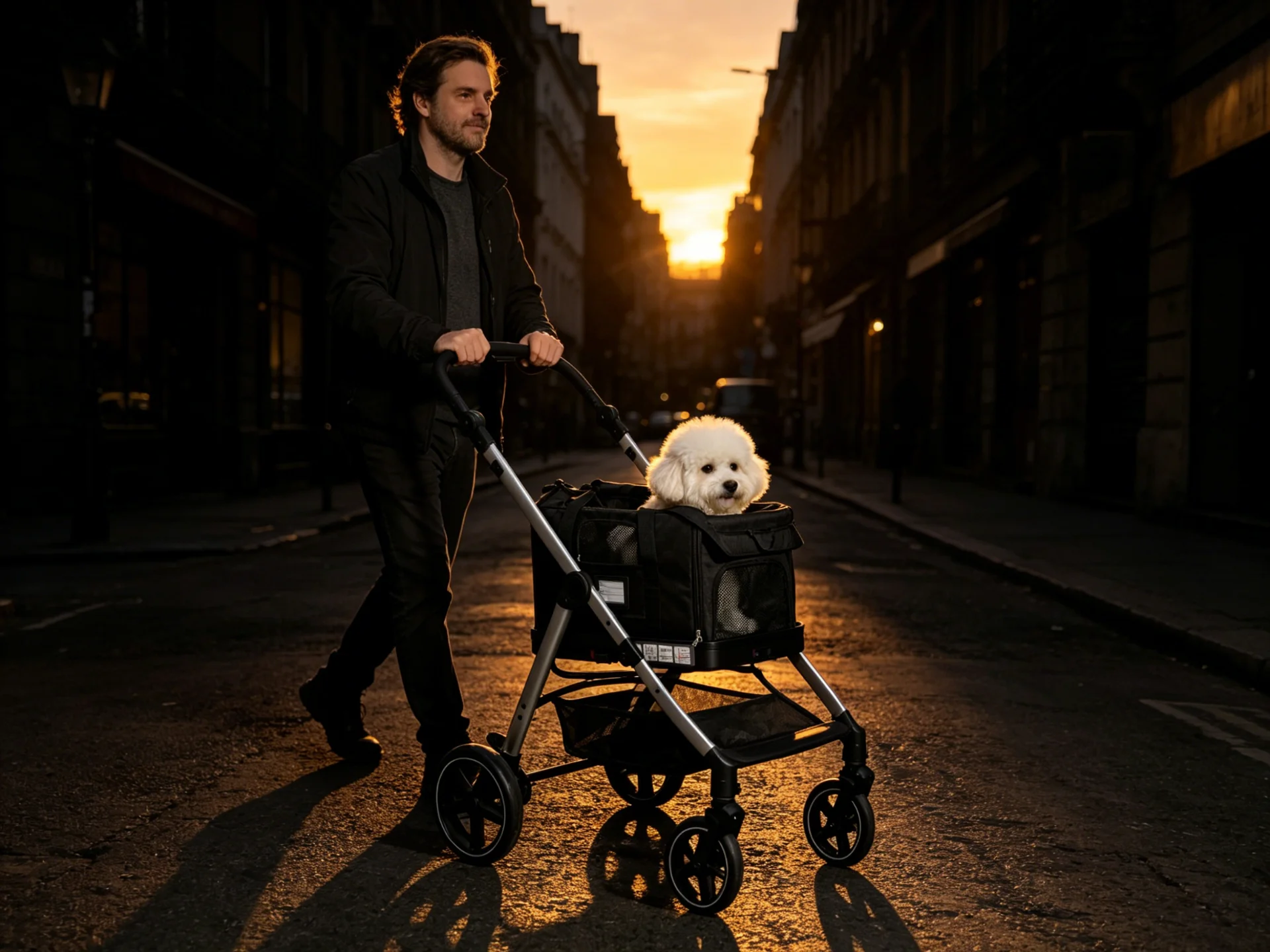
In city use, we often see a conflict between convenience and stability. A very light stroller can be easy to lift into a taxi or carry into an apartment. That is useful. But the same stroller may have a narrow wheelbase or small wheels. This can create a shaky feeling when the road changes from smooth tile to rough pavement. A heavy-duty stroller may feel safer on the ground, yet it may become a problem in elevators, small cafés, and car trunks. So we do not call one type better for all cities. We match the stroller to the city pattern. Short errands need quick folding and easy handling. Longer walks need wheel comfort, frame support, and better braking. Senior pets may need a low step-in height and a cabin that lets them lie down without stress.
| Urban condition | Better design focus | Why it matters |
|---|---|---|
| Small apartment | Compact fold and low weight | Storage affects daily use |
| Public transport | Easy lift and narrow width | Users move through tight spaces |
| Uneven sidewalk | Larger wheels and stable frame | The pet feels less shaking |
| Quick shopping trips | One-hand steering and good brake | The owner stops often |
| Senior pet care | Soft support and easy access | The pet may not stand well |
We also pay attention to how the pet behaves inside the cabin. A calm small dog may not challenge the balance much. A restless pet may lean, turn, stand, or press against the side. That movement changes the center of gravity[^2]. In product evaluation, this is where a stroller that looks fine on paper may feel weak in real use. For urban buyers, the best stroller is the one that owners will use often without feeling nervous, tired, or blocked by the product size.
How Does Frame Material Affect Pet Stroller Durability?
A stroller frame is easy to ignore because fabric and color sell faster. But weak frame support becomes clear after folding, pushing, and daily vibration.
Frame material affects stroller durability through strength, flex, weight, corrosion resistance, folding life, and joint support.[^3] Aluminum is lighter and easier to carry. Steel can feel stronger but adds weight.[^4] The full structure matters more than material alone.

Why material is only one part of durability
In manufacturing, we do not judge durability by material name alone. Aluminum, steel, and mixed structures can all work well when the design is right. A poor frame design can make a strong material feel weak. A smart structure can make a lighter material perform better in daily use. We look at tube shape, tube thickness, joint design, folding locks, wheel mounts, and how the cabin base connects to the frame. The cabin base is important because the pet’s load is not always still. A pet may stand near the front, lie to one side, or push against the mesh. This creates changing force[^5]. The frame must manage that force without too much twist or flex.
| Frame factor | What we look for | Risk if ignored |
|---|---|---|
| Tube material | Weight, strength, rust resistance | Wrong weight or weak support |
| Tube shape | Resistance to bending and twisting | Frame feels loose |
| Joint quality | Folding safety and long-term fit | Noise, play, or poor locking |
| Wheel mount | Impact support from road surface | Wobble or early wear |
| Cabin base support | Pet weight spread | Sagging or unstable posture |
We also check the folding structure because many failures in daily use start at moving points. A stroller may not break, but it can become loose. That loose feeling damages user trust[^6]. For ODM and brand buyers, material selection should match the target price, target pet size, and expected road condition. A travel stroller can use lighter material if the structure supports the cabin well. A large-pet stroller may need stronger tubes, larger joints, and a more stable base. The key point is simple. Material matters, but the whole support system decides real durability.
Why Do Large Pets Need Heavy-Duty Stroller Systems?
Large pets create more load, but load is not only a number. Their body length, posture, and movement can challenge the stroller much more.
Large pets often need heavy-duty stroller systems because they need more cabin space, stronger base support, wider stability, stronger wheel structure, and better braking. Their movement can shift balance and stress the frame more than small pets.
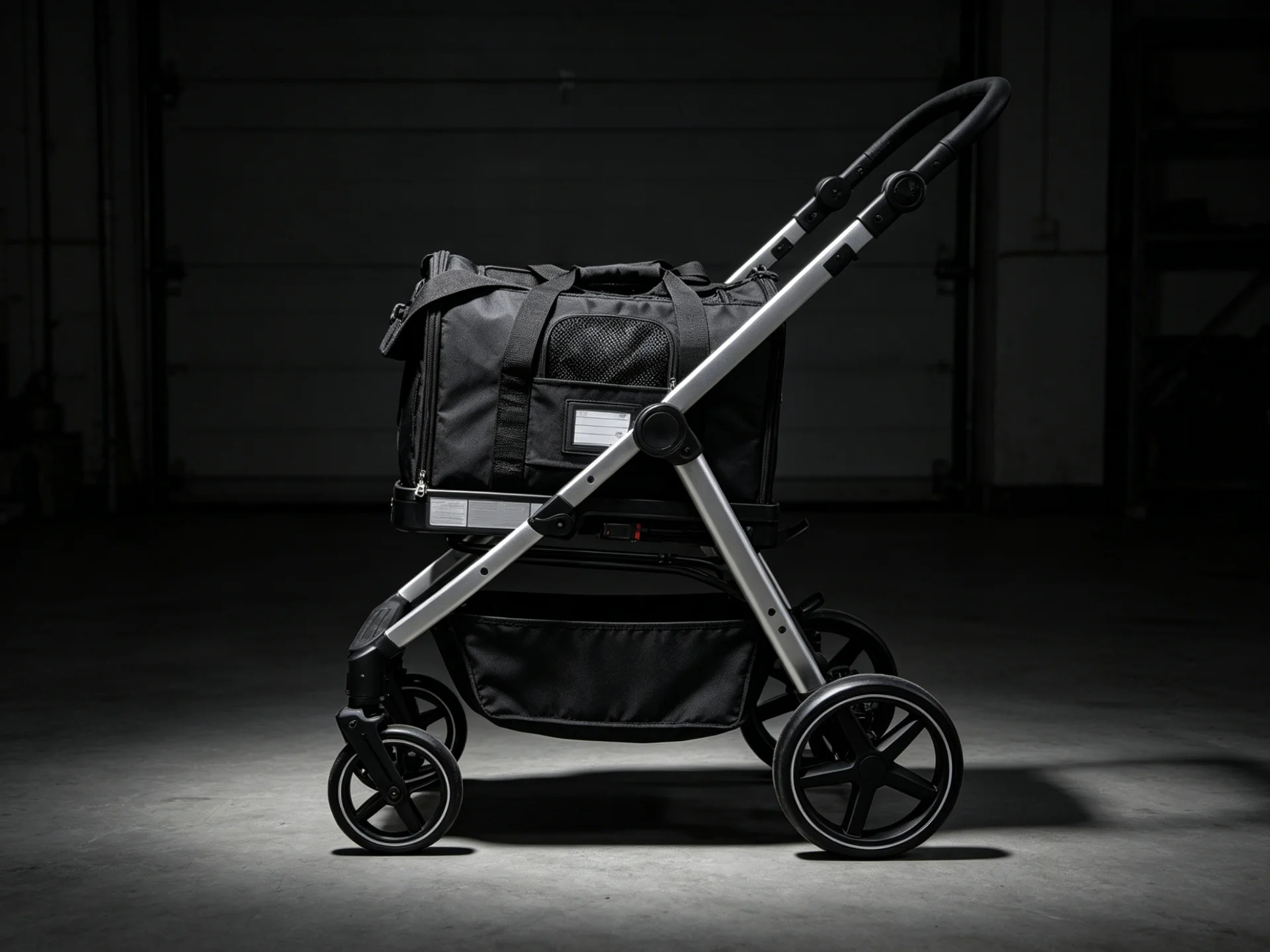
Why rated capacity is not enough for large pets
Many buyers ask for the maximum weight capacity first. We understand why. It is a simple number. But in product development, we treat that number as only one part of the decision. A 20 kg compact dog and a 20 kg long-bodied dog do not use the cabin in the same way[^7]. One may sit upright. The other may need to lie down. One may stay calm. The other may turn often. These details affect balance, pressure points, and comfort. A large pet also raises the need for a firm cabin base. If the base bends, the pet may feel unstable[^8]. If the cabin is too short, the pet may press against the fabric and change the stroller’s balance.
| Large-pet need | Heavy-duty design answer | What can go wrong |
|---|---|---|
| Longer body | Larger cabin length | Pet cannot lie naturally |
| Higher movement force | Stronger frame and joints | Frame flex feels unsafe |
| Higher center shift[^9] | Wider wheelbase | Tipping risk increases |
| More road impact | Larger wheels and better mounts | Shaking and wheel wear |
| More stopping force | Stronger brake system | Poor control on slopes |
We also think about the person pushing the stroller. A large pet stroller should not only carry weight. It should stay manageable. If the handle height is wrong or the wheel structure is poor, the user may feel strain. This can lead to low usage even when the stroller is technically strong. For large pets, heavy-duty should mean a complete system. The system includes the frame, wheels, brakes, cabin space, base support, and access points. It should not mean only a heavier product or a larger load number on the carton.
What Should Retail Buyers Consider Before Choosing a Pet Stroller?
Retail buyers face pressure from price, photos, claims, and speed. But the wrong stroller choice can hurt sell-through and raise after-sales problems.
Retail buyers should consider target pet size, real use scenario, cabin dimensions, stability, frame structure, wheel quality, folding size, brake design, packaging, spare parts, and likely review risks before choosing a pet stroller.
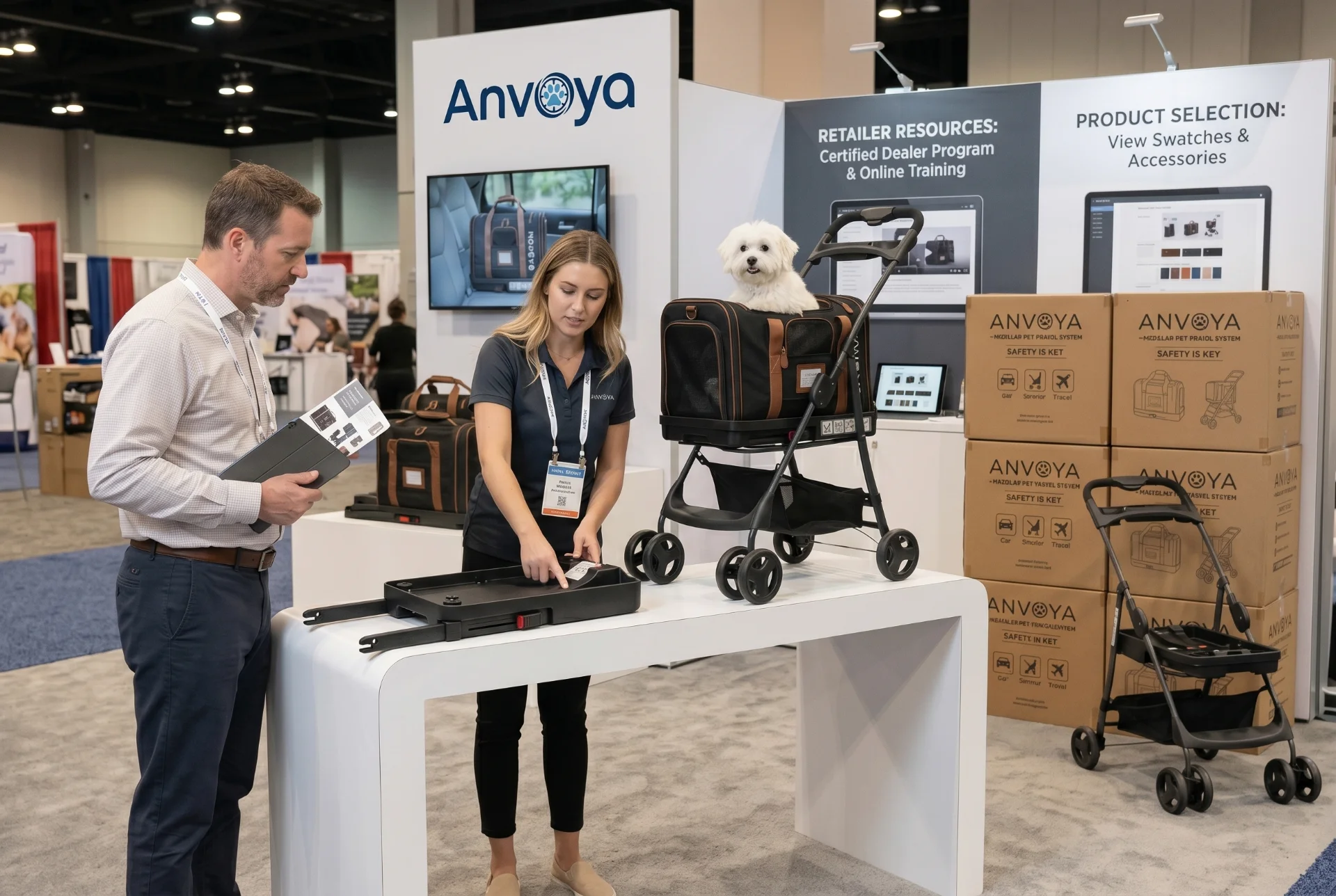
A practical selection checklist for buyers
When we discuss stroller projects with brand buyers and distributors, we try to move the conversation away from single-point claims. A stroller does not sell well only because it is light, strong, or cheap. It sells well when the end user feels that it fits daily life. Retail buyers should first define the user group. Is the stroller for small urban pets, senior pets, two small pets, medium dogs, or large breeds? Then the buyer should define the use environment. Is it for city sidewalks, travel, parks, shopping malls, or rougher outdoor paths? After that, the buyer can judge the structure.
| Buyer question | Why we ask it | What to check |
|---|---|---|
| Who is the pet user? | Size and posture vary | Cabin length, width, height |
| Where will it be used? | Roads change performance | Wheel size and suspension feel |
| How often is it folded? | Daily storage matters | Fold size and lock design |
| How active is the pet? | Movement affects balance | Wheelbase and center of gravity |
| What review risk exists? | Returns cost money | Brakes, wobble, fabric stress |
For ODM and OEM buyers, we also suggest checking packaging strength, assembly steps, fabric quality, replaceable parts, and instruction clarity. A good stroller can still create customer issues if the assembly is confusing or if the folded size is larger than expected. We also advise buyers not to compare only catalog load capacity. A supplier should be able to explain why the frame, wheels, and cabin base fit the claimed use case[^10]. In our own evaluation, we prefer clear trade-offs. A lightweight model should be honest about its limits. A heavy-duty model should still be usable in real life. That honest fit is usually better for the brand than a product that tries to promise everything.
Conclusion
The best pet stroller is not the lightest or strongest one. It is the one that fits the pet, user, road, and daily routine.
[^1]: "Strollers tested for safety and stability", https://www.nbcdfw.com/video/news/consumer-reports/strollers-tested-for-safety-and-stability/3360256/. Principles of mechanical physics explain that vehicles with a narrower wheelbase, smaller wheels, and a higher center of gravity are more susceptible to instability and tipping when encountering uneven surfaces or obstacles. Evidence role: mechanism; source type: education. Supports: The claim that strollers with certain design features, often found in lightweight models (e.g., narrow wheelbase, small wheels), are more prone to instability on uneven surfaces..
[^2]: "Center of Gravity | Glenn Research Center - NASA", https://www1.grc.nasa.gov/beginners-guide-to-aeronautics/center-of-gravity/. In physics, the stability of an object is dependent on its center of gravity; any shift in the distribution of mass within the object, such as a passenger or load moving, will cause a corresponding shift in the center of gravity, potentially reducing stability. Evidence role: definition; source type: encyclopedia. Supports: The claim that the movement of a load within a vehicle alters its center of gravity, which can affect its stability..
[^3]: "List of materials properties - Wikipedia", https://en.wikipedia.org/wiki/List_of_materials_properties. Materials science demonstrates that a product's durability is a function of its constituent materials' intrinsic properties, including tensile strength, resistance to deformation (flex), weight, and ability to withstand environmental degradation like corrosion. Evidence role: mechanism; source type: education. Supports: The claim that material properties such as strength, flexibility (elastic modulus), density (weight), and corrosion resistance are key factors in determining the durability and lifespan of a mechanical structure..
[^4]: "[PDF] Aluminum and Aluminum Alloys - NIST Materials Data Repository", https://materialsdata.nist.gov/bitstream/handle/11115/173/Aluminum%20and%20Aluminum%20Alloys%20Davis.pdf. Engineering comparisons show that while steel generally has higher absolute strength and stiffness, many aluminum alloys offer a superior strength-to-weight ratio, making them a preferred choice for applications where reducing weight is a primary design goal, such as in bicycle or stroller frames. Evidence role: general_support; source type: research. Supports: The claim that aluminum offers a lower weight for a given volume compared to steel, while steel typically provides higher strength and stiffness, a key trade-off in designing lightweight structures..
[^5]: "Bearing Static vs Dynamic Load Ratings: C, C0, L10 & Free Calculator", https://www.lily-bearing.com/resources/blog/understanding-static-load-vs.-dynamic-load-in-bearings?srsltid=AfmBOoqWE65T5bRqdtPeLrMyaAvRHJJ6V4aK3PgFD8SMmJeXYYGczr1r. In structural engineering, a distinction is made between static loads, which are constant, and dynamic loads, which change over time due to movement or acceleration. Dynamic loads can induce significantly higher stresses on a structure than a static load of the same magnitude. Evidence role: definition; source type: education. Supports: The claim that a moving load creates dynamic forces that differ from static forces..
[^6]: "Consumer Attitudes Towards Product Safety - CUNY Academic Works", https://academicworks.cuny.edu/ny_pubs/1142/. Studies in human factors and ergonomics show that users' perception of a product's quality and safety is heavily influenced by tactile and auditory feedback. Unintended movement, looseness in joints, or rattling sounds can undermine user trust, even if the product's structural integrity is not compromised. Evidence role: general_support; source type: paper. Supports: The claim that physical signs of degradation, such as looseness or rattling, negatively impact a user's perception of a product's safety and reliability..
[^7]: "Morphometrics within dog breeds are highly reproducible and ... - PMC", https://pmc.ncbi.nlm.nih.gov/articles/PMC2748280/. Animal welfare institutions and veterinary guidelines for pet travel advise that carriers should be large enough for the animal to stand up, turn around, and lie down in a natural position, underscoring the importance of body length and height in addition to weight. Evidence role: expert_consensus; source type: institution. Supports: The claim that a pet's body dimensions, not just its weight, are a critical factor for ensuring its comfort and ability to rest naturally in a carrier..
[^8]: "A Review on Mitigating Fear and Aggression in Dogs and Cats in a ...", https://pmc.ncbi.nlm.nih.gov/articles/PMC7826566/. Research in animal behavior and veterinary science indicates that dogs and other animals rely on proprioception to sense their body's position and stability. Unstable or compliant surfaces can create a sense of insecurity or anxiety, as it challenges their ability to maintain balance. Evidence role: mechanism; source type: paper. Supports: The claim that animals can feel insecure or anxious on surfaces that are not firm.. Scope note: The source would likely discuss general principles of animal behavior rather than their reaction to stroller bases specifically.
[^9]: "Center of mass - Wikipedia", https://en.wikipedia.org/wiki/Center_of_mass. According to the principles of physics for calculating the center of mass, the magnitude of the shift in a system's center of gravity is proportional to the mass of the moving component. Therefore, the movement of a larger pet will displace the stroller's overall center of gravity more than the same movement by a smaller pet, increasing the risk of instability. Evidence role: mechanism; source type: education. Supports: The claim that a heavier object moving within a system will cause a more significant shift in the system's combined center of gravity..
[^10]: "Sustainable Procurement Policy & Guidelines for Suppliers", https://procurement.ucop.edu/suppliers/what-sustainable-procurement-uc/policy. Best practices in supply chain management and procurement emphasize the need for due diligence, which includes requiring suppliers to provide technical justifications or testing data to validate that a product's design and materials are suitable for its claimed use case and target market. Evidence role: general_support; source type: other. Supports: The claim that a key step in procurement and quality assurance is to verify that a supplier's product specifications are adequate for the product's intended application.. Scope note: The source would provide a general business principle, not one specific to the pet product industry.