
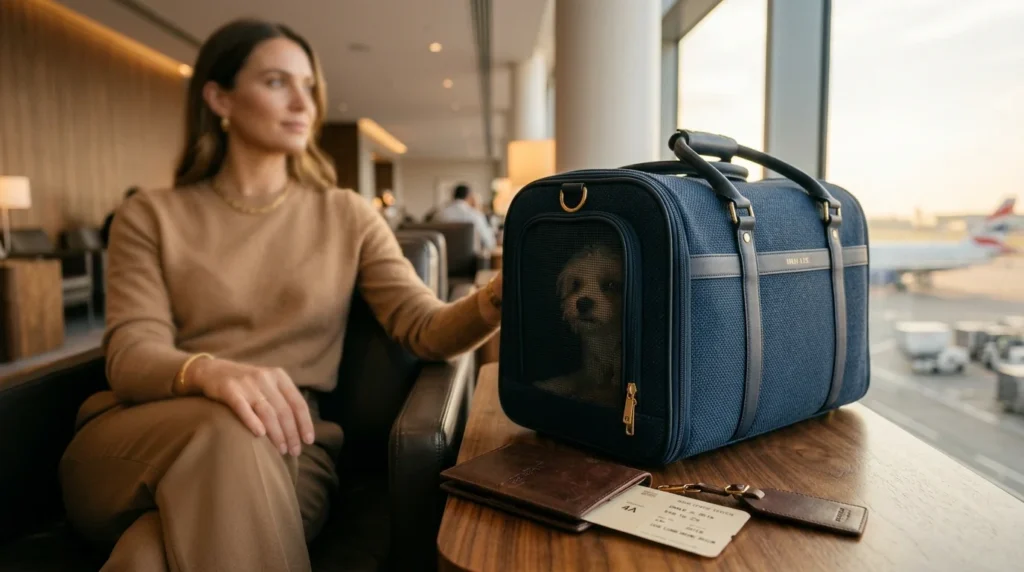
“Airline-approved” appears on countless pet carriers.
But in practice, no single label can guarantee that one carrier will be accepted by every airline, on every aircraft, for every pet.
IATA publishes standards and guidance for animal transport. Airlines then apply their own rules based on aircraft, route, cabin, destination, and operating policy. The final carrier check may still happen at the airport.
A carrier can be designed for airline travel. It cannot promise universal airline acceptance.
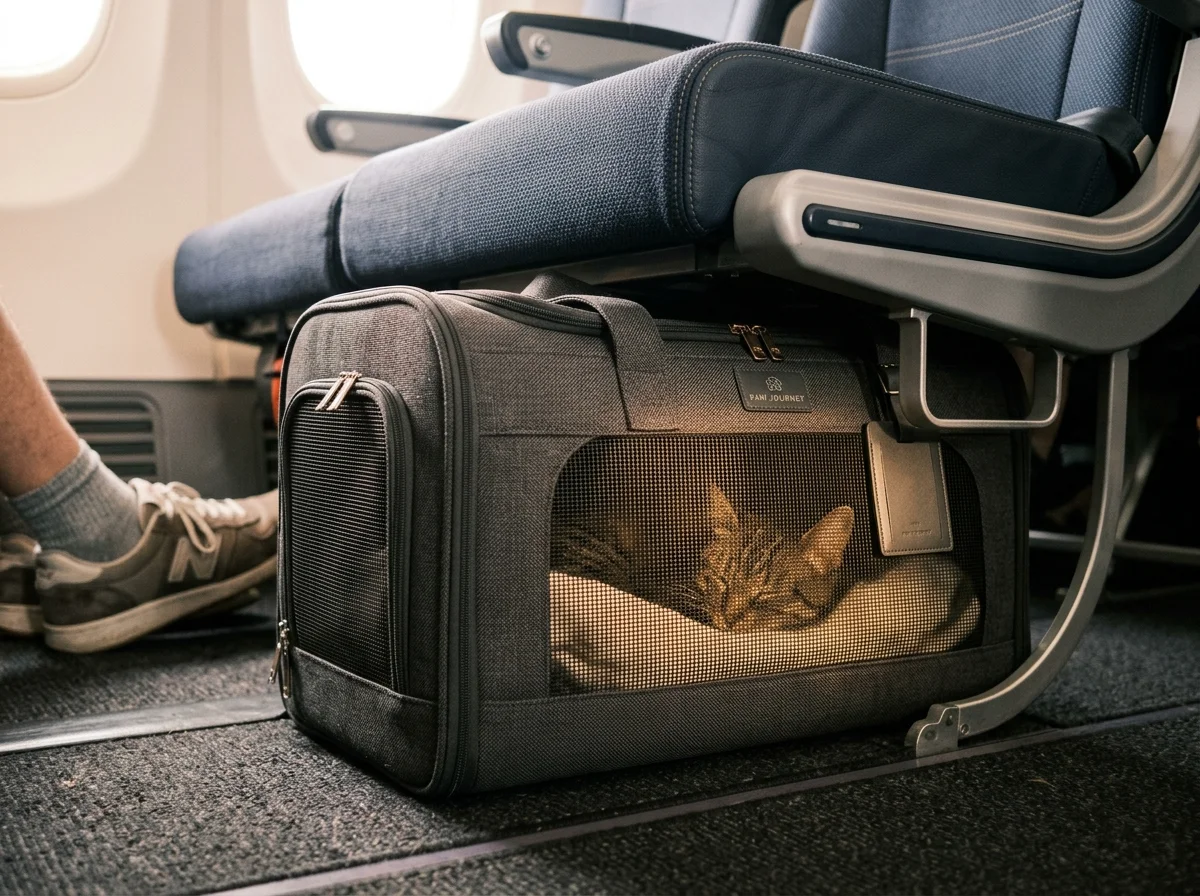
IATA Does Not Certify Pet Carrier Brands
This is the first point pet brands should understand.
IATA develops standards for the acceptance, packing, and handling of animals transported by air. It does not certify, approve, endorse, or sell individual pet carrier brands or models.
That means terms such as:
- IATA certified
- officially approved by IATA
- IATA-authorized carrier
should not be used unless there is a separate, verifiable basis for the claim.
A more accurate statement may be:
Designed with reference to IATA Live Animals Regulations.
Or, when the complete design has actually been checked against the applicable requirements:
Designed to meet applicable IATA container requirements for in-cabin pet travel.
Even then, IATA compliance does not replace the airline’s own rules.
The IATA requirements themselves contain state and airline-operator variations. A container that meets the general design principles may still be unsuitable for a particular route or airline.
IATA provides the framework. The airline controls acceptance.
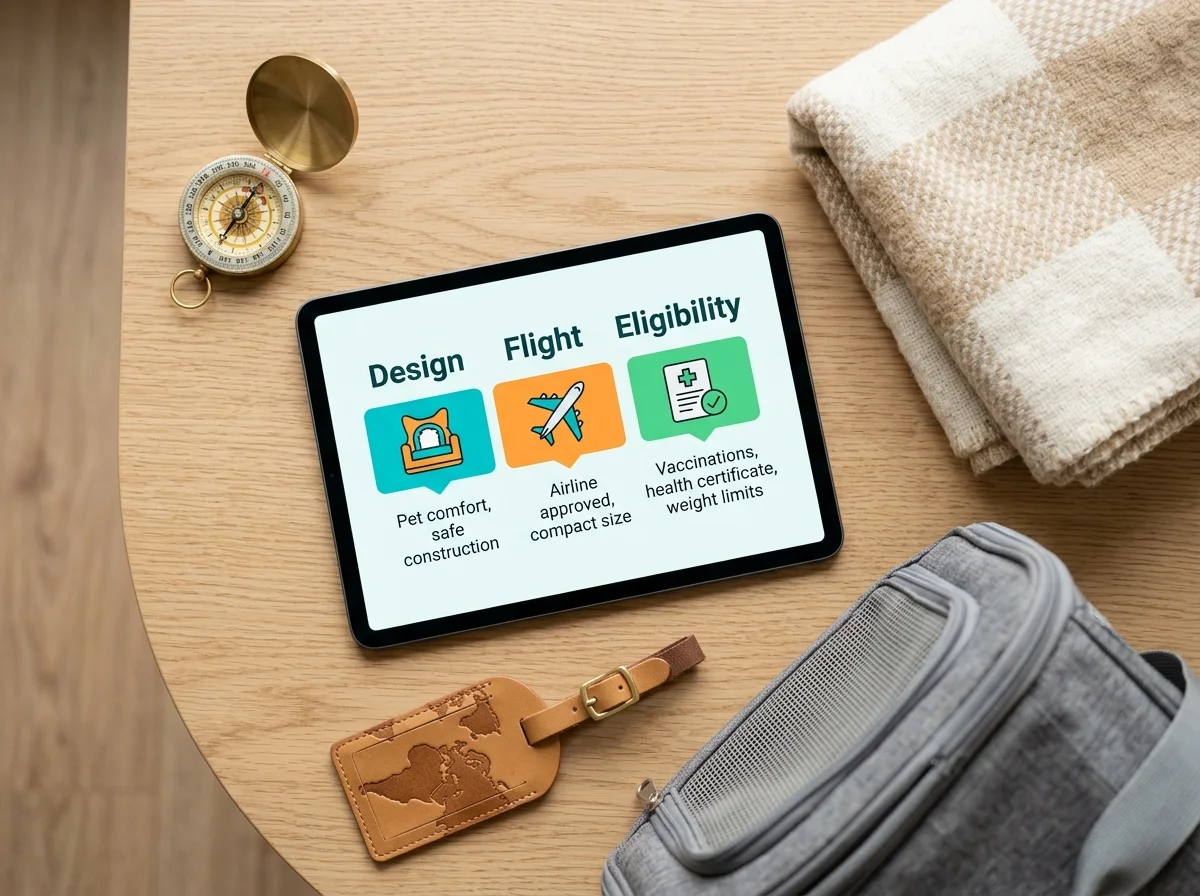
“Airline-Approved” Usually Hides Three Different Questions
When a customer asks whether a pet carrier is airline-approved, they may actually be asking three separate questions.
1. Is the Carrier Properly Designed?
The carrier should address areas such as:
- ventilation
- secure closure
- escape prevention
- leak resistance
- internal safety
- suitable materials
- sufficient space for the pet
2. Does It Fit the Airline’s Cabin Limit?
The carrier may need to fit under the seat in front of the passenger.
That limit can change according to:
- airline
- aircraft type
- seat design
- cabin class
- route
- operating carrier
3. Is the Pet Eligible for That Flight?
Even a suitable carrier does not guarantee that the pet can travel.
The airline may also consider:
- pet species
- pet size
- combined pet-and-carrier weight
- destination restrictions
- number of pets already booked
- breed restrictions
- cabin availability
- required health documents
These three questions should not be collapsed into one logo on the product page.
Carrier design, flight compatibility, and pet eligibility are related, but they are not the same thing.
Different Airlines Use Different Rules
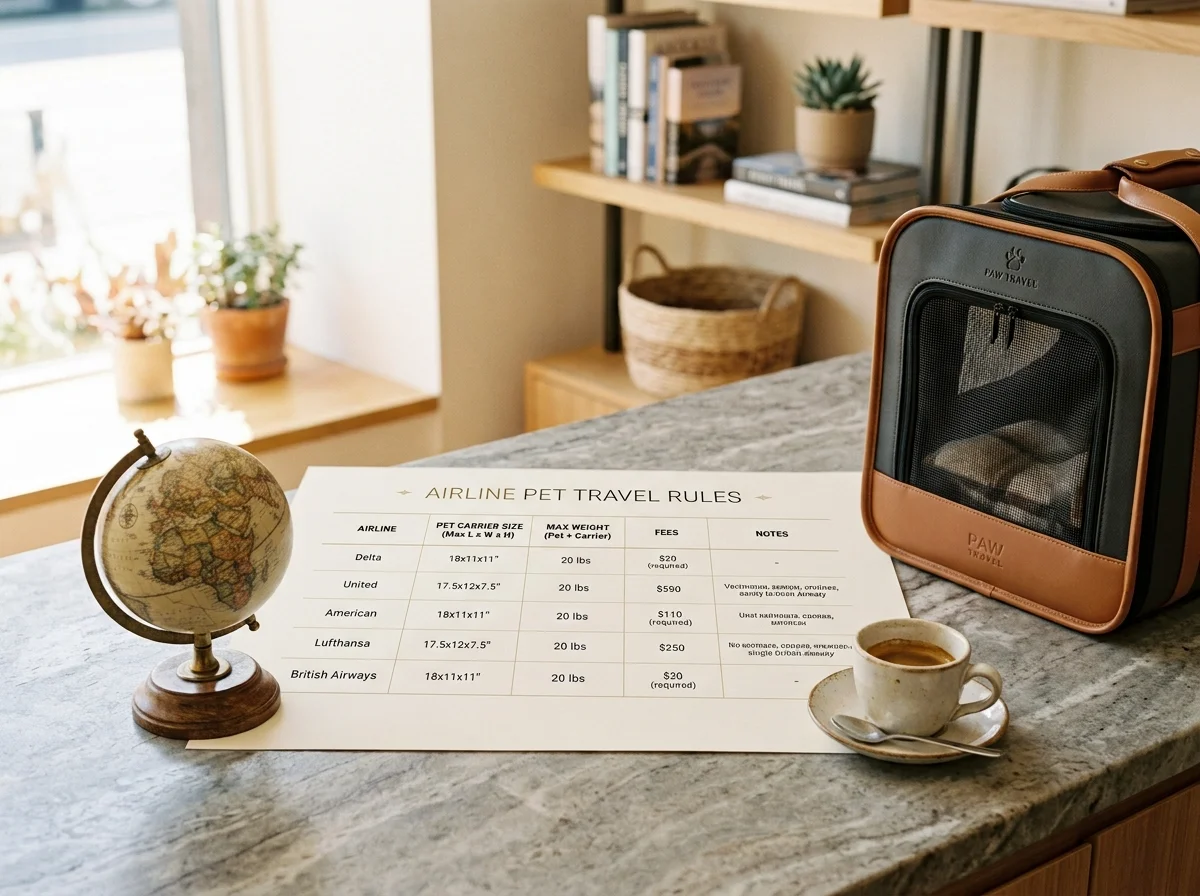
A carrier that works for one airline may not meet another airline’s cabin policy.
The differences are not minor.
The following examples were checked in July 2026 and are included only to show why travelers must verify the operating airline before departure.
| Airline | Example of Current In-Cabin Policy |
|---|---|
| Delta | Maximum size depends on the aircraft; the airline recommends a soft carrier around 18 × 11 × 11 inches for most aircraft |
| KLM | Carrier up to 18 × 11 × 9 inches, with a combined pet-and-carrier limit of 8 kg |
| Lufthansa | Soft carrier up to 22 × 16 × 9 inches, with a combined limit of 8 kg |
| Emirates | Pets are generally not permitted in the passenger cabin, apart from limited exceptions |
This table immediately shows why “approved by all airlines” is not a credible claim.
One airline may focus on aircraft-specific under-seat dimensions. Another may set both size and total weight limits. Another may not permit ordinary pets in the cabin at all.
Codeshare flights add another complication.
A ticket may be sold by one airline but operated by another. In that case, the operating carrier’s rules may determine whether the pet and carrier are accepted.
The airline logo on the booking page is not always the airline making the final pet-carriage decision.
Under-Seat Space Is the Real Physical Limit
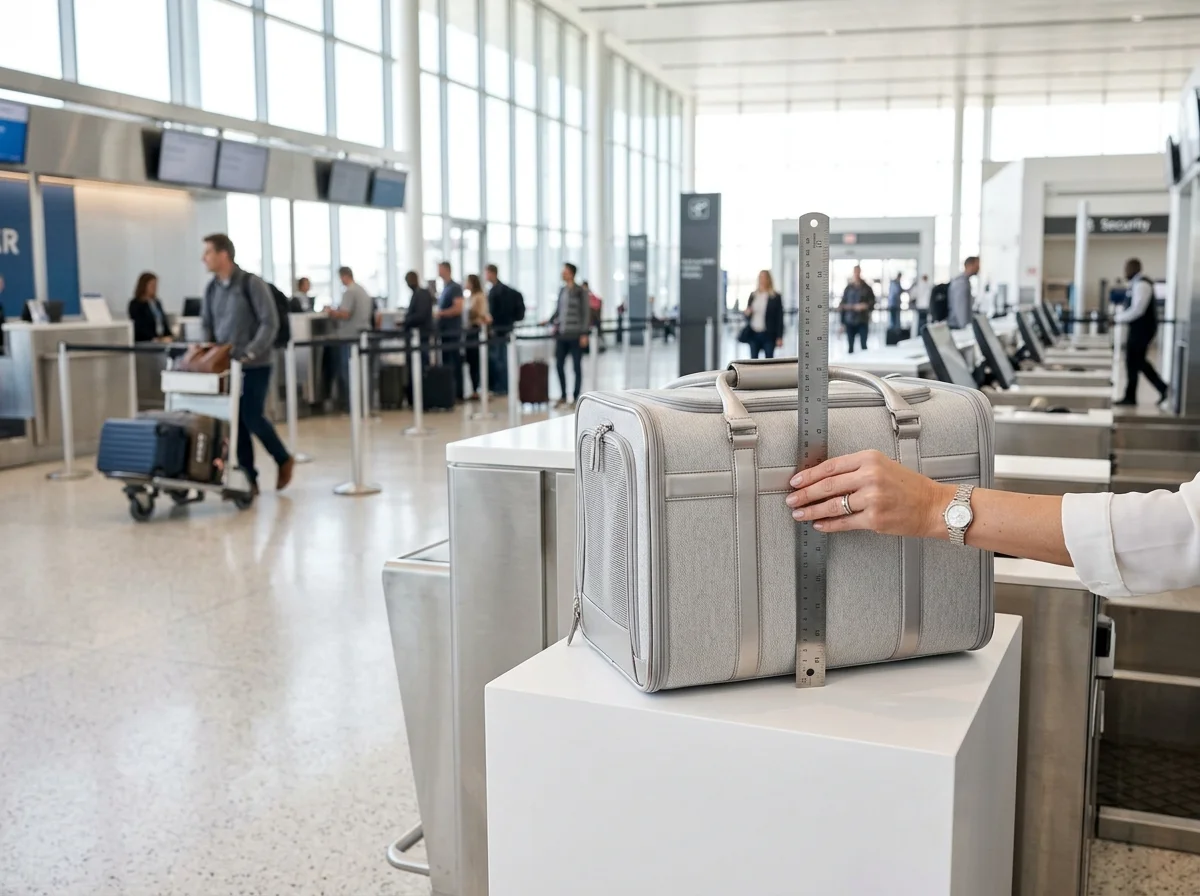
For in-cabin travel, the carrier normally needs to fit under the seat in front of the passenger.
That sounds simple until the aircraft changes.
Under-seat space may vary because of:
- aircraft type
- entertainment boxes
- seat supports
- cabin configuration
- bulkhead seating
- premium cabin design
- aisle, middle, or window position
This is why some airlines publish one recommended soft-carrier size while still stating that the actual limit depends on the aircraft.
A pet carrier brand cannot control the seat structure.
It can, however, design around common cabin limitations by considering:
- a low overall height
- flexible but controlled upper panels
- no fixed trolley hardware
- no permanently protruding wheels
- handles that lie flat
- ventilation that remains open when the carrier is placed under a seat
- a base that does not collapse into the pet’s usable space
For cabin travel, the most important measurement is not how large the bag looks. It is how safely it uses limited under-seat space.
Soft-Sided Does Not Mean It Can Be Compressed Without Limit
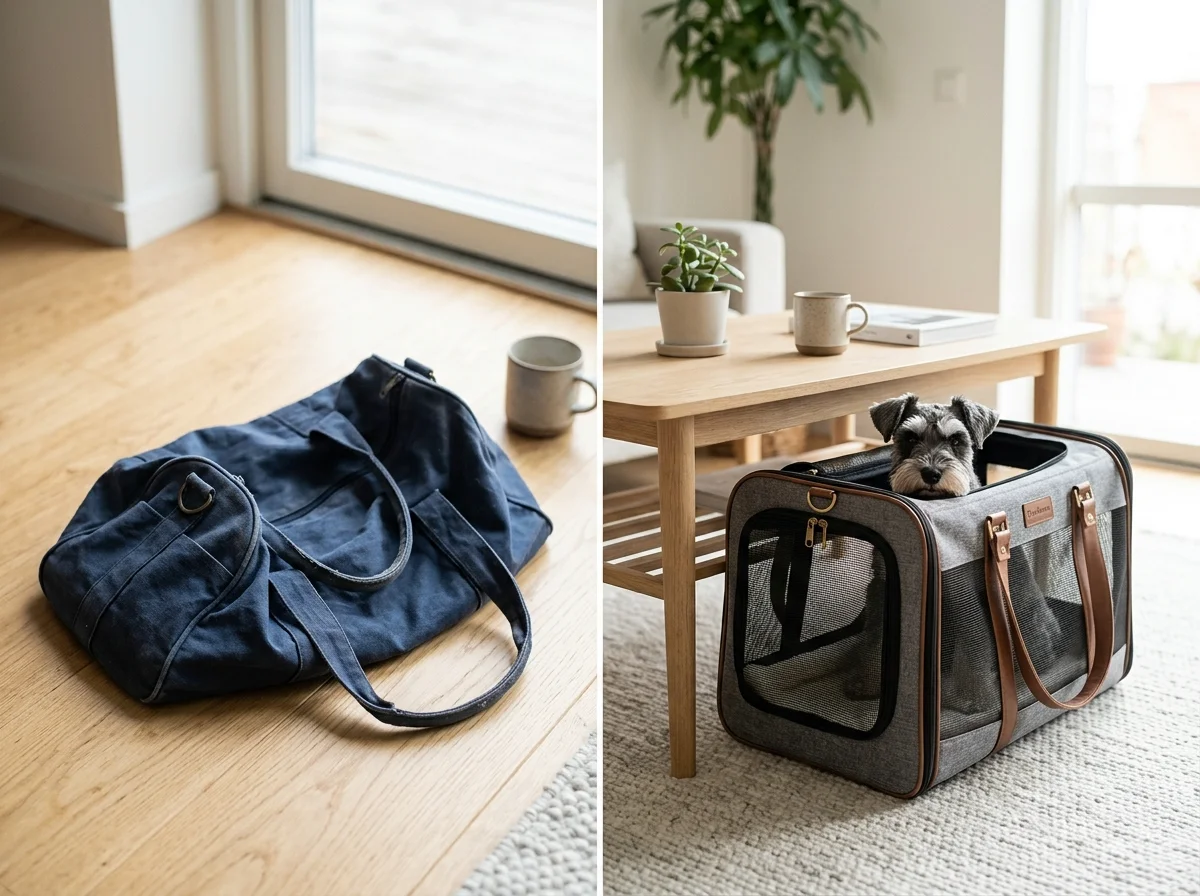
Soft-sided pet carriers are often preferred for cabin travel because they can adapt slightly to the space under a seat.
But compression has a limit.
IATA warns that when a soft carrier is compressed under the seat, its ventilation openings may also be compressed. This can reduce airflow and allow heat to build up inside.
That creates an important design distinction:
- Controlled flexibility helps a carrier fit.
- Structural collapse reduces usable space and may block ventilation.
A well-designed soft carrier should not behave like an empty travel bag.
It still needs enough structure to:
- maintain breathing space
- keep mesh panels open
- prevent the roof from resting heavily on the pet
- keep the base reasonably level
- stop side walls from folding inward
- retain its shape during carrying
This is why semi-structured construction can be useful.
Possible supporting materials include:
- removable PP panels
- lightweight internal frames
- reinforced piping
- foam-supported walls
- structured baseboards
- flexible support rods
The structure should help preserve space without making the carrier too rigid to fit under the seat.
An airline carrier needs flexibility, but the pet should not become the structure holding the bag open.
External Dimensions Do Not Tell the Whole Story
Many carrier listings show only three external measurements and a maximum pet weight.
That is not enough.
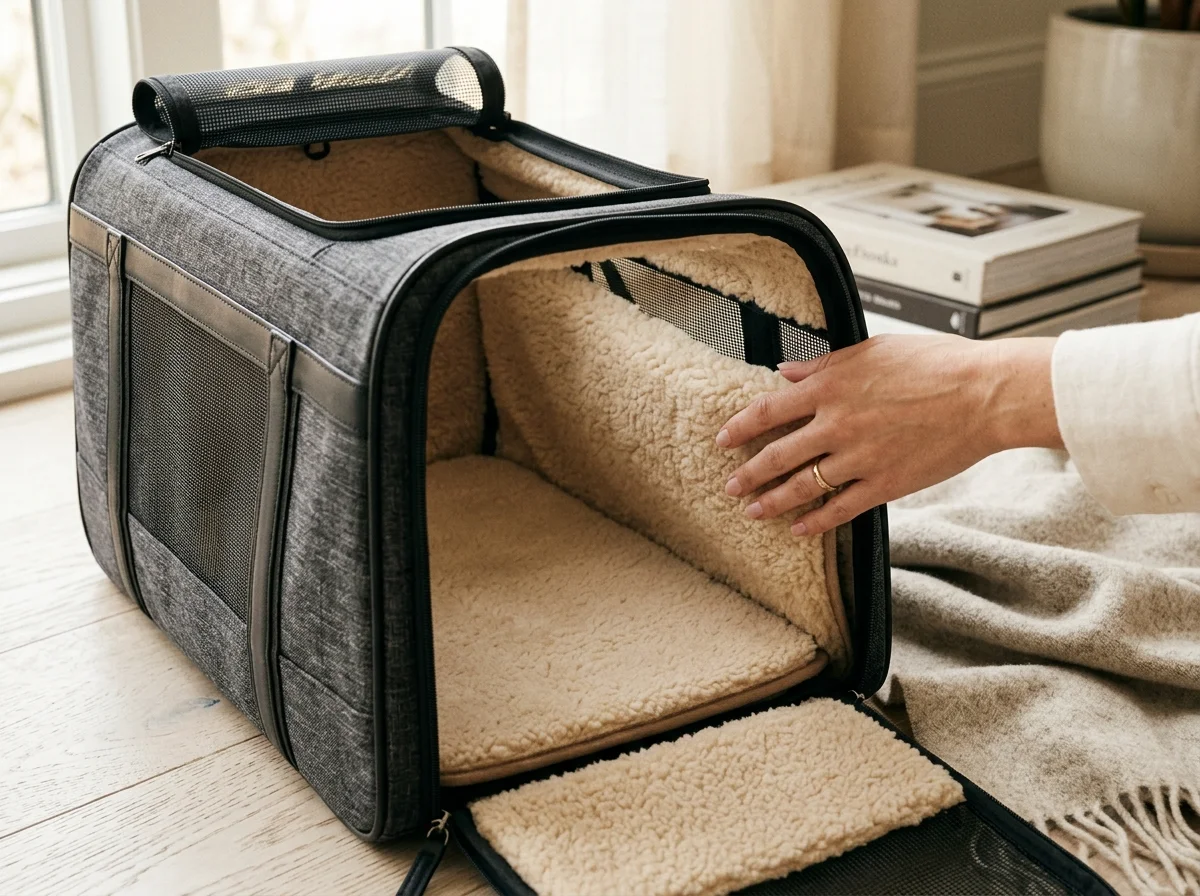
A carrier may measure 46 cm long on the outside but offer considerably less usable space inside because of:
- thick end panels
- curved walls
- padding
- internal pockets
- structural boards
- docking components
- sloped roofs
- reinforced corners
The pet’s body shape matters as well.
Two pets of the same weight may have completely different space requirements. A compact cat, a long-bodied dachshund, and a tall miniature poodle should not be matched to a carrier using kilograms alone.
IATA’s sizing approach considers body measurements such as:
- nose-to-tail-base length
- elbow height
- shoulder width
- natural standing height
The objective is to provide enough space for the animal to:
- stand
- sit upright
- turn around
- lie in a natural position
For brands, this means product pages should ideally provide more than a weight limit.
Useful information may include:
- external dimensions
- internal usable dimensions
- entrance dimensions
- carrier weight
- recommended pet posture
- suitable body length or shoulder height
- combined airline weight considerations
The carrier must fit the aircraft, but the pet must still fit the carrier.
Ventilation Must Still Work in the Travel Position
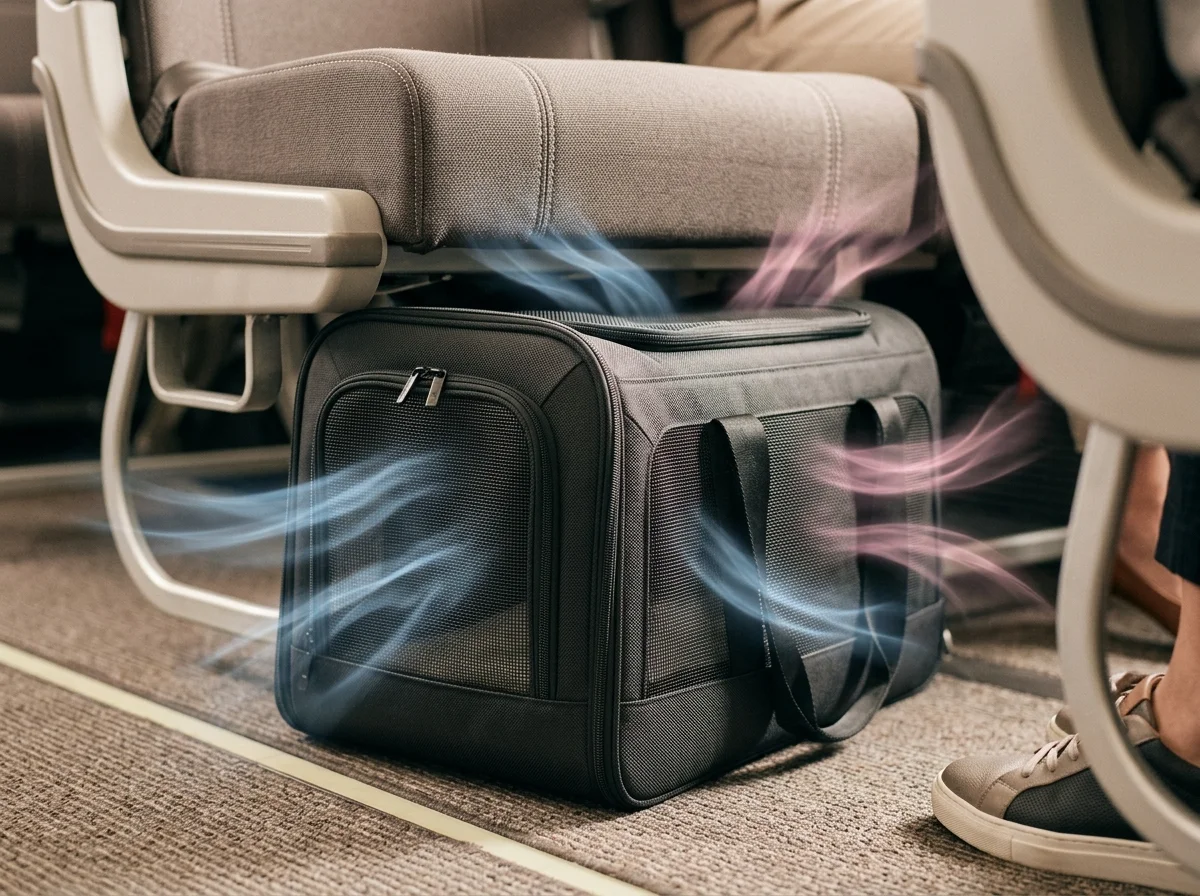
A mesh panel may look large in a studio photo and become partly blocked when the carrier is:
- placed against a seat support
- compressed under the seat
- held against the passenger’s legs
- covered by a pocket
- attached to a luggage sleeve
- placed on a trolley
- surrounded by blankets or accessories
Ventilation should therefore be evaluated in the position in which the carrier will actually be used.
IATA’s in-cabin guidance refers to ventilation openings across the carrier’s vertical sides and warns against blocking those openings.
For product development, the questions should include:
- Are ventilation panels distributed across more than one side?
- Can the pet’s body block most of the airflow?
- Does the roof remain ventilated after mild compression?
- Do external pockets cover mesh areas?
- Can a privacy cover be opened sufficiently?
- Does the carrier remain ventilated when placed under a seat?
- Can the mesh resist scratching without becoming too dense?
More mesh is not automatically better. Mesh strength, opening size, placement, and airflow all matter.
Ventilation should be designed for the carrier’s most restricted position, not only for the product photograph.
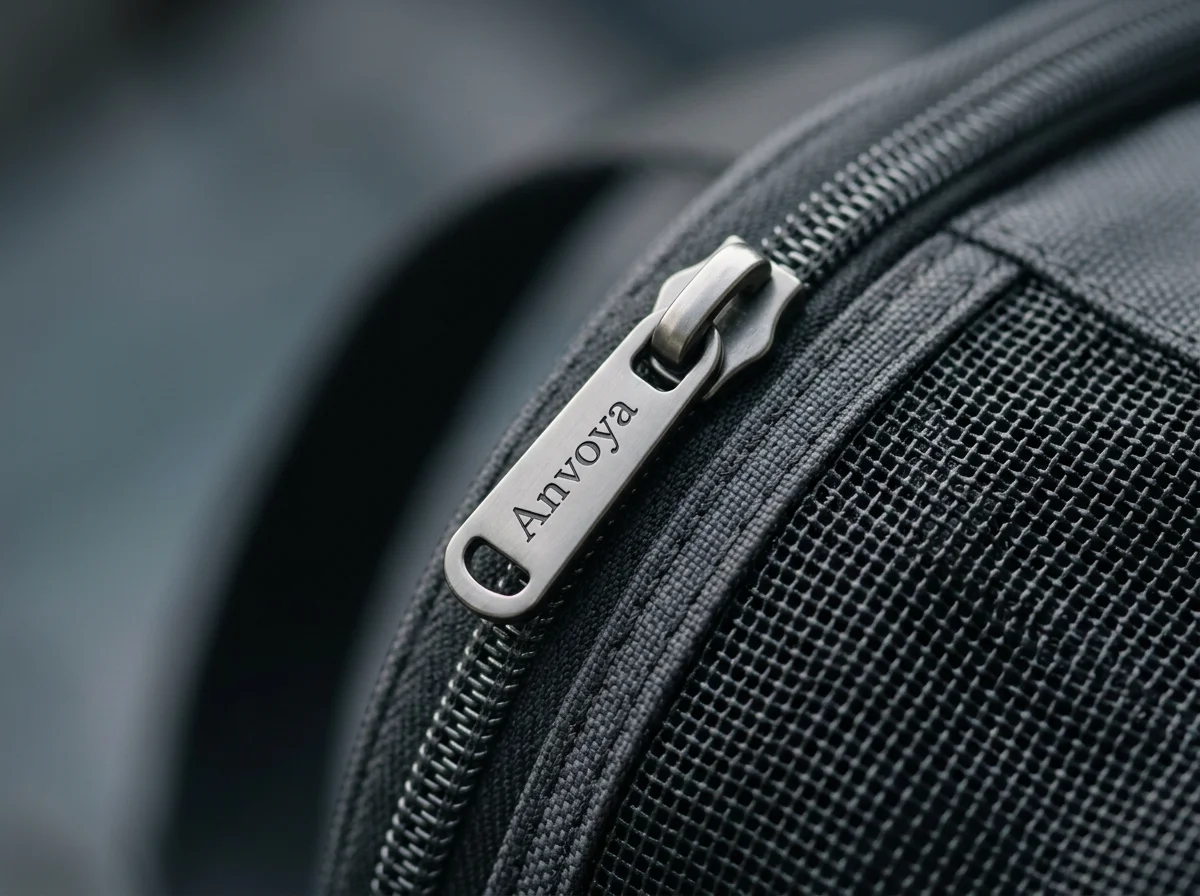
Secure Closure Means More Than Adding a Zipper
Air travel exposes a carrier to unfamiliar sounds, movement, crowds, and stress.
A pet that is calm at home may push, scratch, or bite at the carrier during travel.
The closure system should therefore consider:
- zipper strength
- zipper locking
- double-entry panels
- internal reinforcement
- scratch-resistant mesh
- gaps around corners
- leash-tether placement
- accidental opening during carrying
A zipper can be strong and still slide open when pushed repeatedly from inside.
Useful details may include:
- zipper clips
- locking pulls
- double zippers that can be secured together
- reinforced zipper ends
- covered internal seams
- openings small enough to prevent paws or noses from pushing through
An internal tether may help during controlled entry and exit, but it should not be treated as the main restraint while the carrier is closed. The pet should remain safely contained by the carrier itself.
Escape prevention must be designed around a stressed animal, not only a calm product demonstration.
Leak Resistance and Cleaning Are Part of Airline Readiness
A carrier used in the cabin must be able to manage normal travel accidents.
This may include:
- urine
- water spills
- vomit
- wet paws
- food residue
The carrier should not allow liquid to pass quickly onto the aircraft floor.
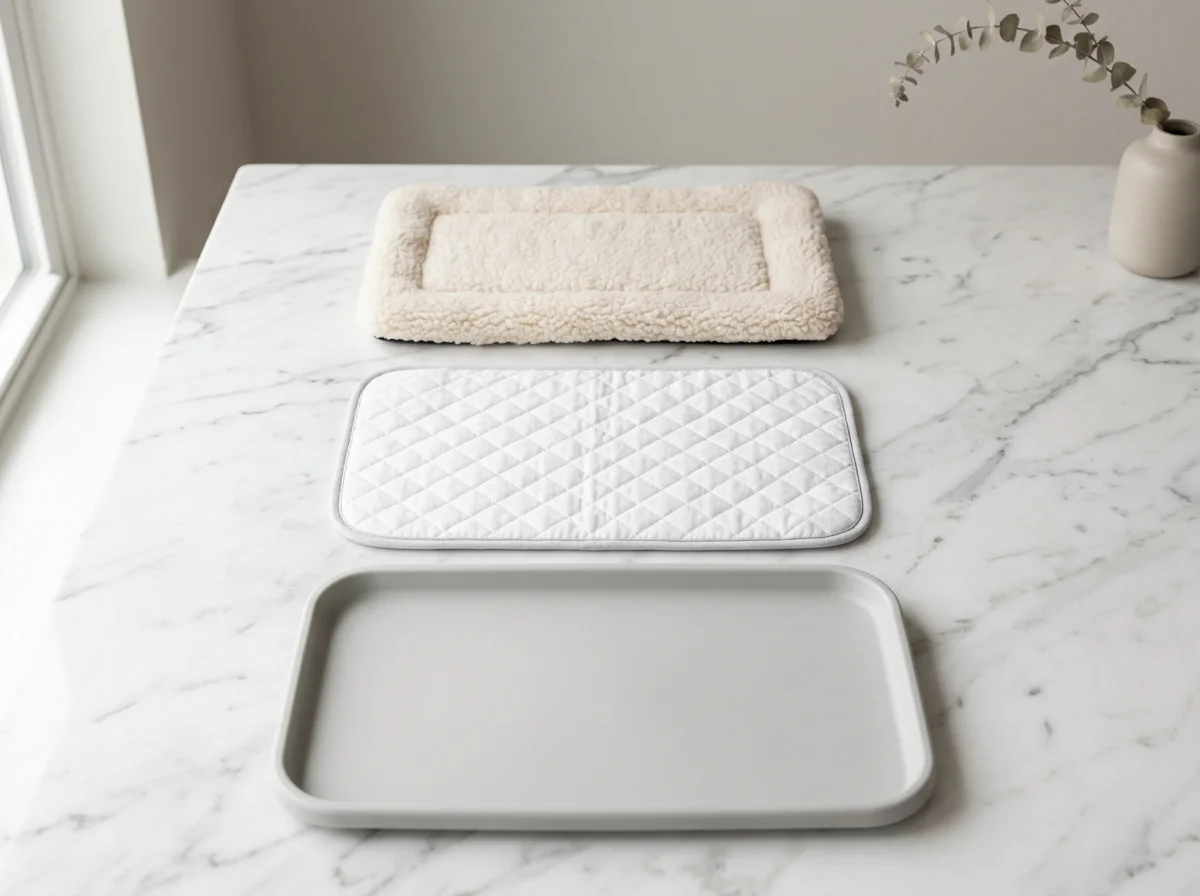
Practical design features include:
- leak-resistant lower lining
- raised internal edges
- removable absorbent pads
- washable cushions
- coated base materials
- removable bottom boards
- easy access for cleaning
The soft bed and the leak-resistant layer serve different purposes.
A plush cushion may improve comfort, but it does not automatically protect the aircraft floor. A waterproof base may contain liquid but still need an absorbent layer above it.
Brands should also consider what happens after cleaning:
- Does the baseboard warp?
- Does the cushion shrink?
- Can the liner be reinstalled easily?
- Do zippers continue to close smoothly?
- Does washing weaken the structure?
A carrier is not travel-ready if one small accident makes it unusable for the return flight.
Wheels and Trolley Structures Need Special Attention
A wheeled pet carrier may be convenient in an airport.
It may also create problems under the aircraft seat.
Some airlines specifically restrict:
- sturdy external frames
- fixed wheels
- telescopic handles
IATA container guidance also states that wheels should be removed or made inoperable where applicable.
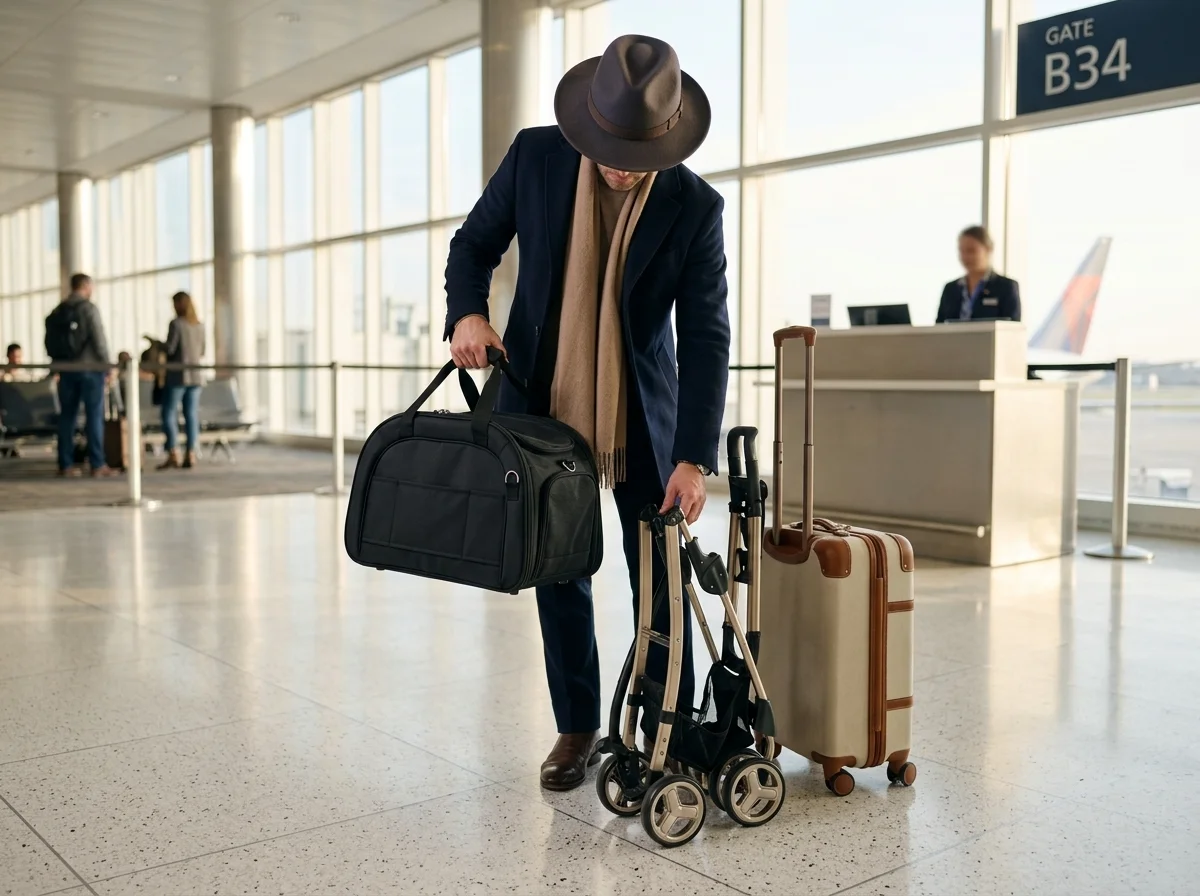
For product designers, the better solution is often to separate the functions:
- the pet carrier serves as the cabin container
- the trolley or stroller serves as a removable transport platform
- the carrier detaches before boarding
- wheels and handles do not remain permanently under the bag
This approach keeps airport movement convenient without forcing unnecessary hardware into the under-seat space.
It also makes the carrier easier to evaluate independently.
A good travel system can be modular before the flight and simple inside the cabin.
What Should Pet Brands Say Instead of “Approved by All Airlines”?
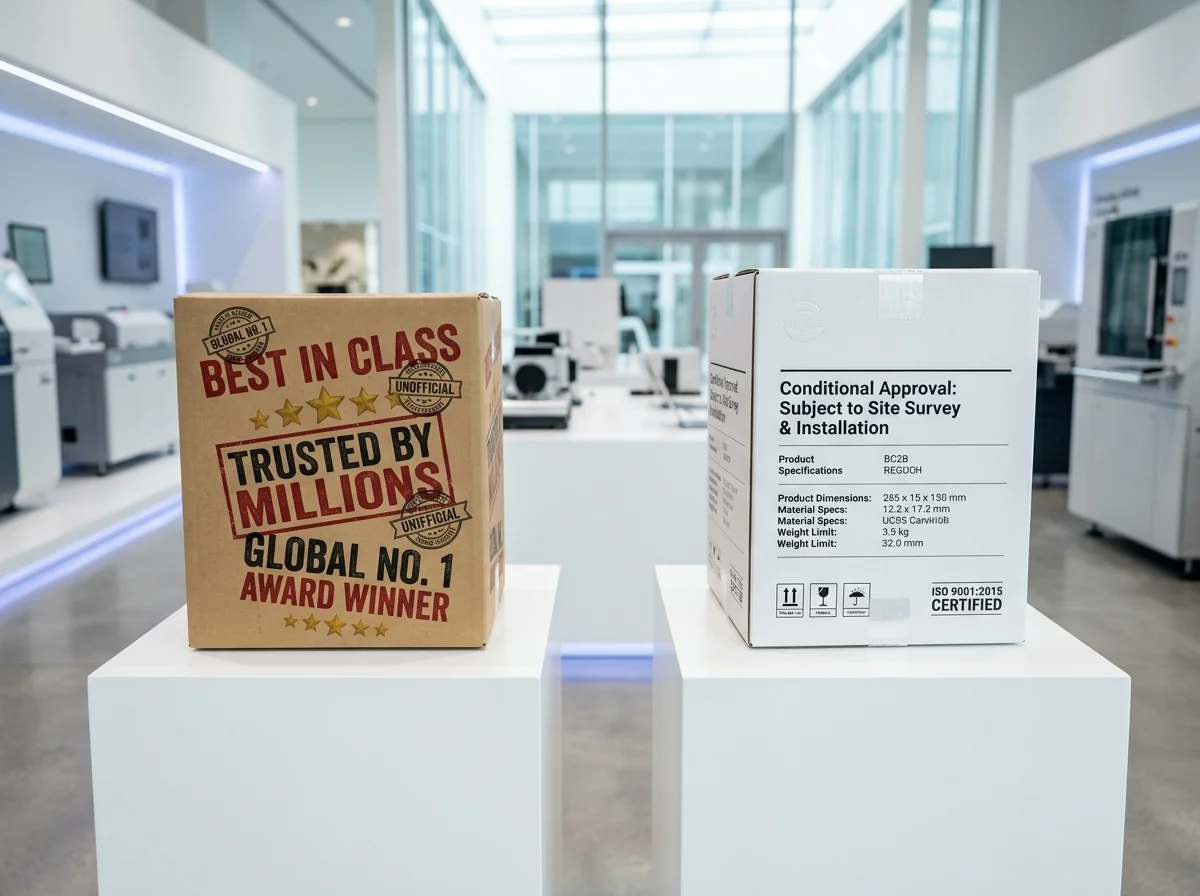
Marketing language should help customers without creating a promise the brand cannot control.
| Avoid This Claim | More Defensible Alternative |
|---|---|
| Approved by all airlines | Designed around common in-cabin pet carrier requirements; airline acceptance varies |
| IATA certified | Designed with reference to applicable IATA Live Animals Regulations |
| Guaranteed to fly | Confirm the operating airline, aircraft, route, and pet eligibility before travel |
| Fits under every airline seat | Designed for many common under-seat spaces; flight-specific limits apply |
| Suitable for pets up to 12 kg | Check both pet body dimensions and the airline’s combined weight limit |
| Airline approved size | External dimensions are provided for comparison with the airline’s current allowance |
| TSA approved pet carrier | Airline and destination rules still apply; TSA screening does not create universal carrier approval |
A responsible product page can still communicate the intended use clearly.
For example:
Designed for in-cabin travel with small pets, with a low-profile soft-sided structure, multi-side ventilation, leak-resistant lining, and secure closures. Always confirm the operating airline’s current carrier dimensions, combined weight limit, route restrictions, and pet reservation requirements before travel.
This wording is more useful than a large “AIRLINE APPROVED” badge because it tells the buyer what to check.
Clear limitations do not weaken a premium product. They make the claim more trustworthy.
What OEM Buyers Should Verify Before Using an Airline Claim
Before printing “airline-ready,” “IATA-compliant,” or similar wording on packaging, an OEM buyer should review the actual product rather than relying on a standard factory description.
Carrier Dimensions
- [ ] External length, width, and height confirmed
- [ ] Internal usable dimensions recorded
- [ ] Soft compression limits understood
- [ ] Handles and pockets included in the dimensional review
- [ ] Fixed hardware does not create additional height
Pet Fit
- [ ] Pet can stand or sit in a natural position as required
- [ ] Pet can turn around
- [ ] Pet can lie down naturally
- [ ] Product guidance considers body dimensions, not only weight
- [ ] Padding does not remove too much usable space
Construction
- [ ] Ventilation remains open under mild compression
- [ ] Interior has no harmful protrusions
- [ ] Mesh and seams resist pushing and scratching
- [ ] Zippers can be secured
- [ ] Base remains stable during carrying
- [ ] Carrier is escape-resistant
Travel Practicality
- [ ] Lower section is leak-resistant
- [ ] Absorbent pad can be added
- [ ] Cushion or liner is removable
- [ ] Carrier can be cleaned and reused
- [ ] Removable trolley or stroller parts detach easily
- [ ] Product can remain closed during the journey
Marketing
- [ ] No claim suggests IATA approved the brand
- [ ] No universal airline guarantee is made
- [ ] Product dimensions are easy to find
- [ ] Customers are told to check the operating airline
- [ ] Airline policies are reviewed regularly
- [ ] Retailers receive accurate explanation materials
A claim should be approved only after the product has been reviewed—not copied from another carrier’s packaging.
How This Applies to AERO and NIMBUS
For Anvoya, airline travel should not be treated as a badge added to every carrier.
Different product lines have different priorities.
AERO
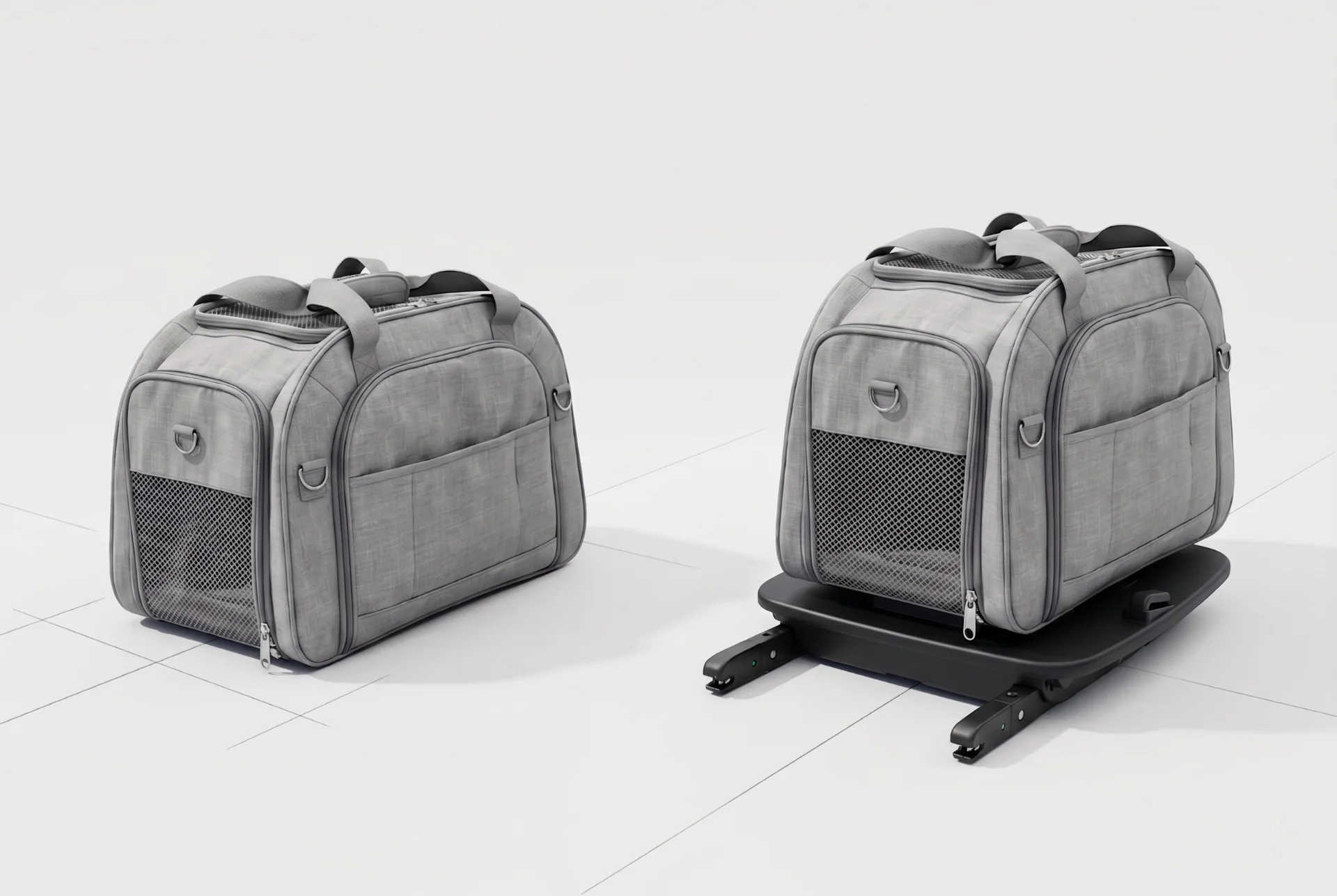
AERO is designed as a multi-scenario pet travel system.
Its carrier may move between:
- hand carrying
- stroller use
- vehicle use with a compatible base
- selected travel situations
For air travel, the carrier must be evaluated separately from the stroller frame and vehicle base.
The relevant questions include:
- Does the detached carrier meet the airline’s dimension limit?
- Is its empty weight practical when the airline uses a combined weight limit?
- Does the docking structure reduce internal space?
- Can the carrier fit under the seat without blocking ventilation?
- Are the stroller and base handled separately according to baggage rules?
The complete AERO system cannot be described as one cabin item simply because the carrier is detachable.
NIMBUS
For an airline-focused carrier collection such as NIMBUS, cabin usability should be considered earlier in the design process.
That may place greater priority on:
- low carrier weight
- controlled flexibility
- under-seat dimensions
- multi-side ventilation
- secure closures
- leak-resistant construction
- clear internal sizing
- detachable travel accessories
The marketing still needs to remain conditional.
NIMBUS can be developed around airline-travel requirements, but the operating airline continues to decide whether the carrier, pet, route, and reservation are acceptable.
AERO extends one carrier across several travel modes. NIMBUS can focus more closely on the specific compromises required for air travel. Neither should rely on a universal approval promise.
Airline Compatibility Should Be Treated as a Process
A good airline carrier is not created by choosing one popular external size.
The development process should include:
- Selecting the target airlines and regions.
- Comparing current in-cabin rules.
- Identifying the most restrictive practical dimensions.
- Reviewing combined weight limits.
- Measuring actual internal pet space.
- Calculating and testing ventilation.
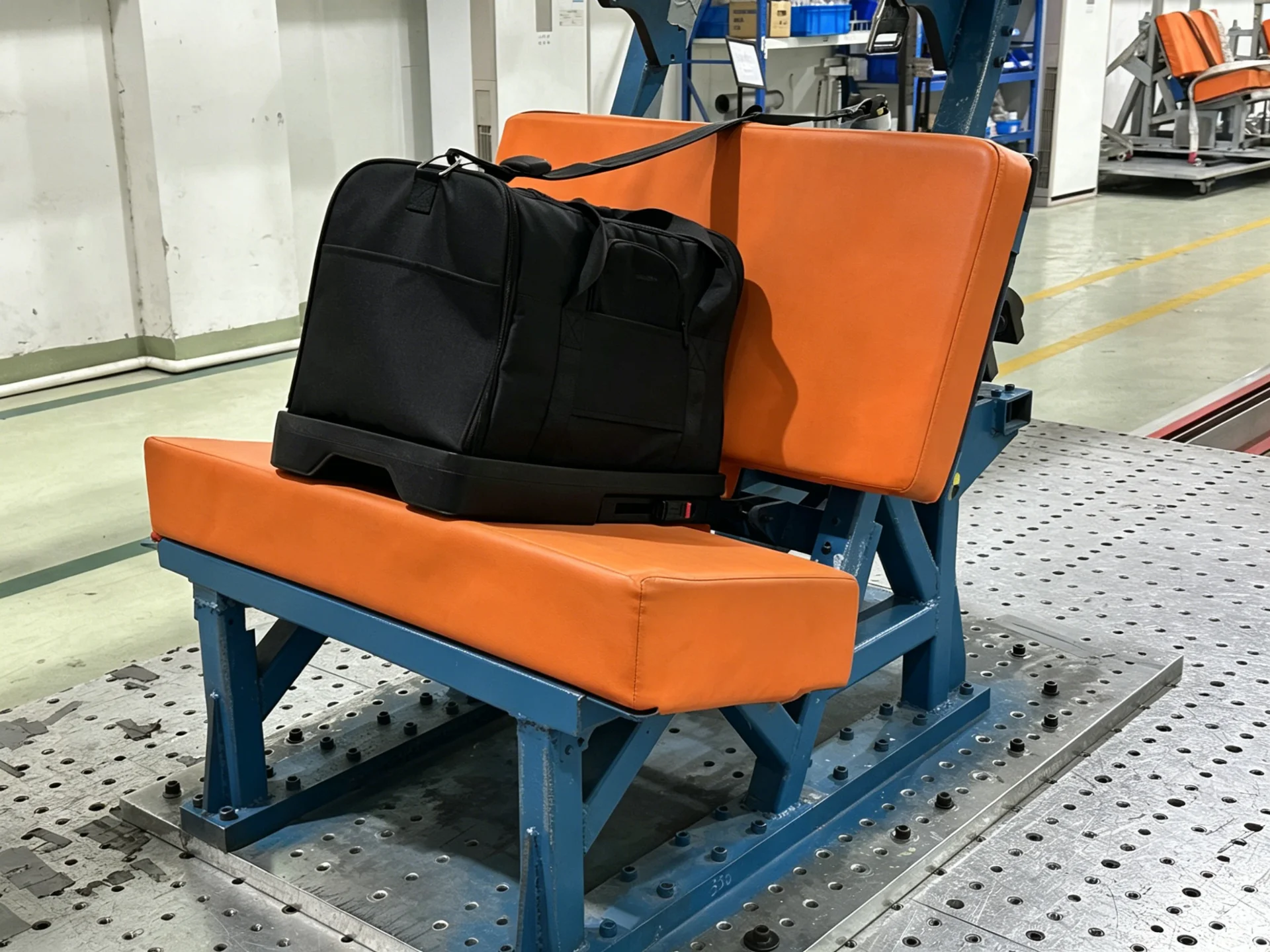
- Testing mild compression under a seat mock-up.
- Checking closure and escape resistance.
- Testing leakage and cleaning.
- Reviewing every marketing claim.
- Rechecking airline policies before each production or content update.
This is particularly important for private label products.
The brand name on the product carries the customer expectation. If the airline refuses the carrier, the customer is unlikely to blame an outdated factory specification sheet.
Airline compatibility is not one test result. It is an ongoing match between product, pet, airline, aircraft, and route.
FAQ
Is “airline-approved” an official certification?
No. There is no single approval that guarantees a pet carrier will be accepted by every airline. Airlines use their own policies, aircraft limitations, and check-in procedures.
Does IATA certify pet carriers?
No. IATA develops standards and guidance for transporting live animals, but it does not certify or endorse individual pet carrier brands or models.
What does “IATA-compliant” mean?
It should mean that the carrier has been reviewed against the applicable IATA container requirements. The claim still does not guarantee acceptance by a specific airline.
Can a soft carrier be slightly taller than the airline limit?
Some soft carriers can compress slightly, but the airline decides whether the carrier is acceptable. Compression must not reduce ventilation or force the roof down onto the pet.
Is the airline’s maximum carrier size the only requirement?
No. The pet must also fit comfortably, the carrier must remain ventilated and secure, and the pet must meet route, species, weight, and reservation rules.
Is a maximum pet weight enough to select a carrier?
No. Weight does not describe body length, shoulder width, or standing height. Internal usable dimensions and natural posture should also be considered.
Can a wheeled pet carrier travel in the cabin?
It depends on the airline and the design. Fixed wheels, rigid trolley frames, and telescopic handles may prevent under-seat storage. A detachable trolley or stroller platform is often more practical.
Can the same carrier work for air travel, stroller use, and car travel?
It is possible, but the design needs to balance conflicting requirements. Airline use favors low weight and controlled flexibility, while stroller and vehicle docking require stable support and consistent connection points.
Who makes the final decision at the airport?
The airline’s staff apply the carrier’s policy and may inspect the pet and carrier at check-in. Acceptance can depend on the specific flight and aircraft.
What should brands print on the packaging?
Brands should provide accurate carrier dimensions, internal sizing, construction features, and a clear statement that customers must confirm current requirements with the operating airline before travel.
Conclusion
“Airline-approved” is not a universal promise.
A responsible pet carrier brand should explain what the product was designed to do, provide accurate dimensions, protect ventilation and usable space, and tell customers what still needs to be confirmed.
The best airline claim is not the boldest one. It is the one that remains true at the check-in counter.