
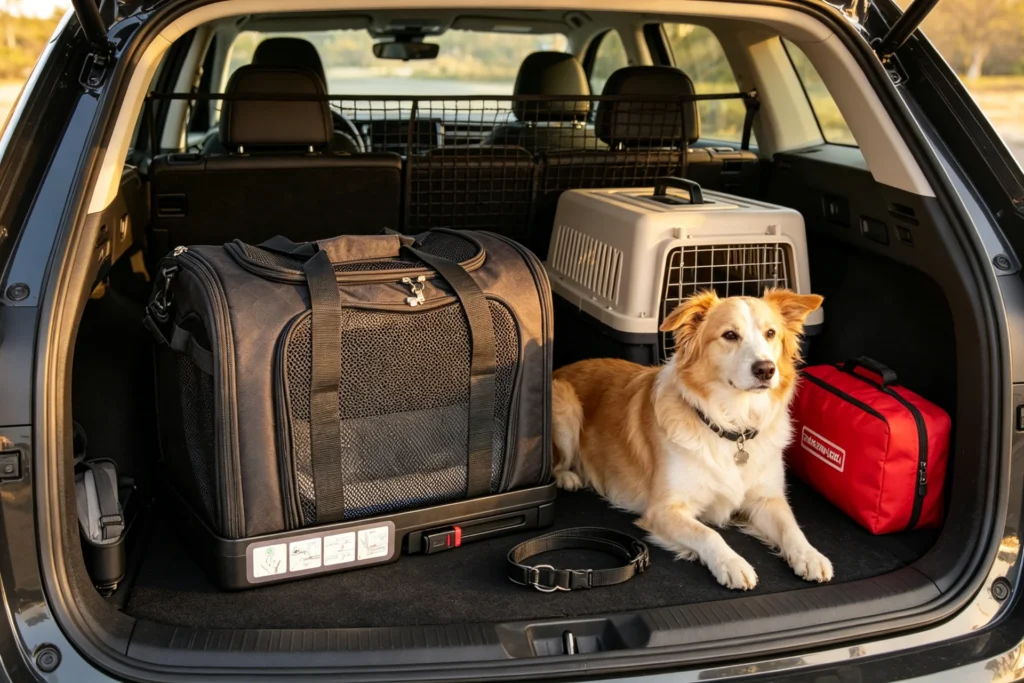
I often see pet owners buy comfort items first, then feel unsure when the pet still moves around, distracts the driver, and creates real risk.
The 5 essential car safety tools for pets are an anchored pet car safety seat, a short restraint tether, a rear-seat barrier, a properly secured travel crate, and a pet travel emergency kit. I treat these as safety tools because they control movement, reduce driver distraction, and lower travel risk.
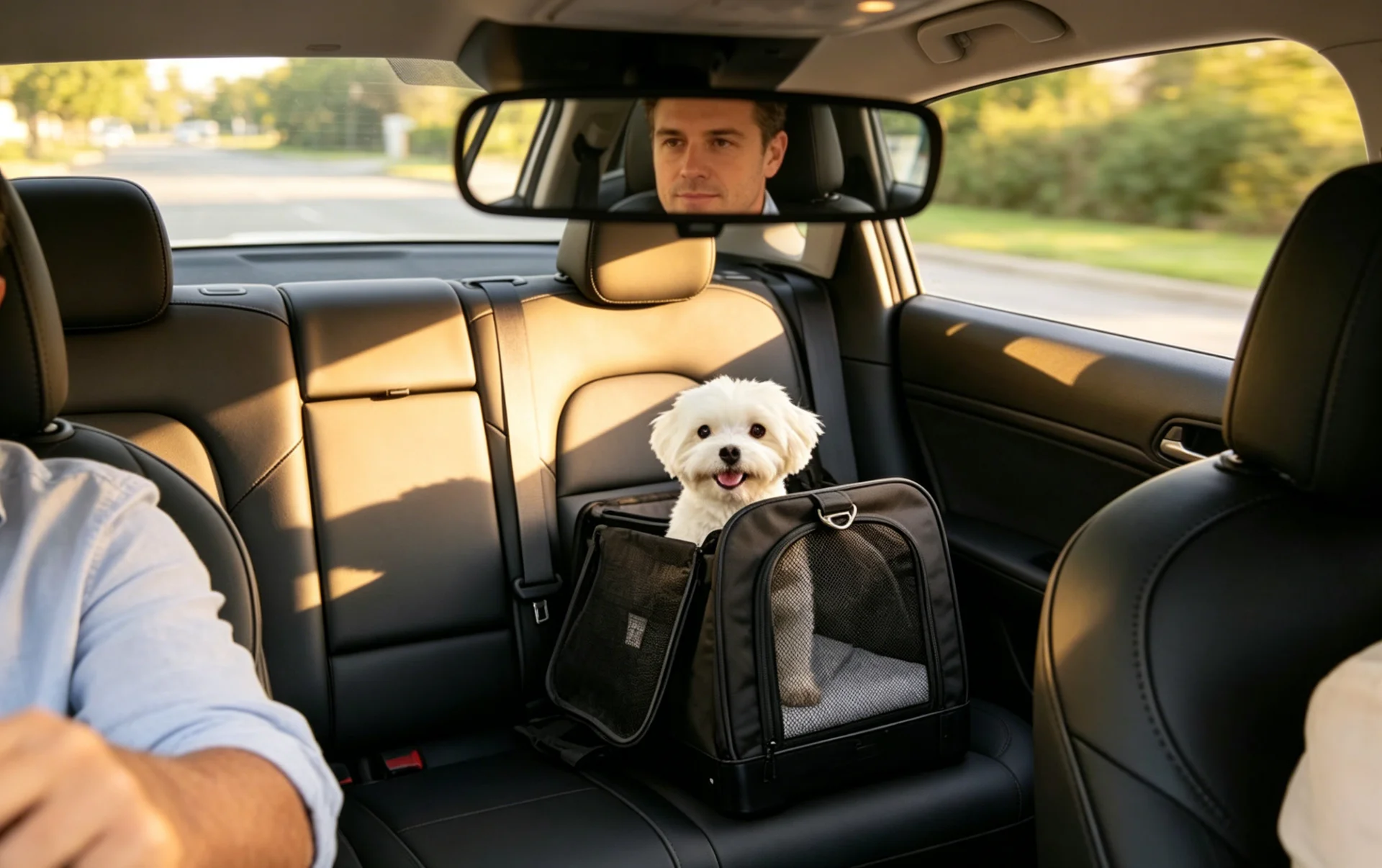
I start with one question: where does the force go when the car stops fast? This question changes how I judge every pet car product. A soft bed may feel kind. A high booster may look premium. A waterproof cover may keep the car clean. Yet none of these items becomes a safety tool unless it controls the pet’s movement and holds the load in a clear way. I believe pet car safety should protect people first, then reduce injury risk to the pet. An unsecured pet can fly forward, hit the driver, hit a child, or interfere with steering and braking. That is why I use the five tools below as a practical safety structure, not as a random shopping list.
Why Do ISOFIX Bases & Anchoring Matter Most?
I see the same problem often. A pet sits on a soft car bed, the car brakes, and the whole setup slides forward with the pet inside.
The ISOFIX pet car safety seat or anchoring base matters most because it creates a fixed connection between the pet travel system and the vehicle. I look for stable anchoring, controlled pet movement, and a load path that does not depend only on soft fabric.
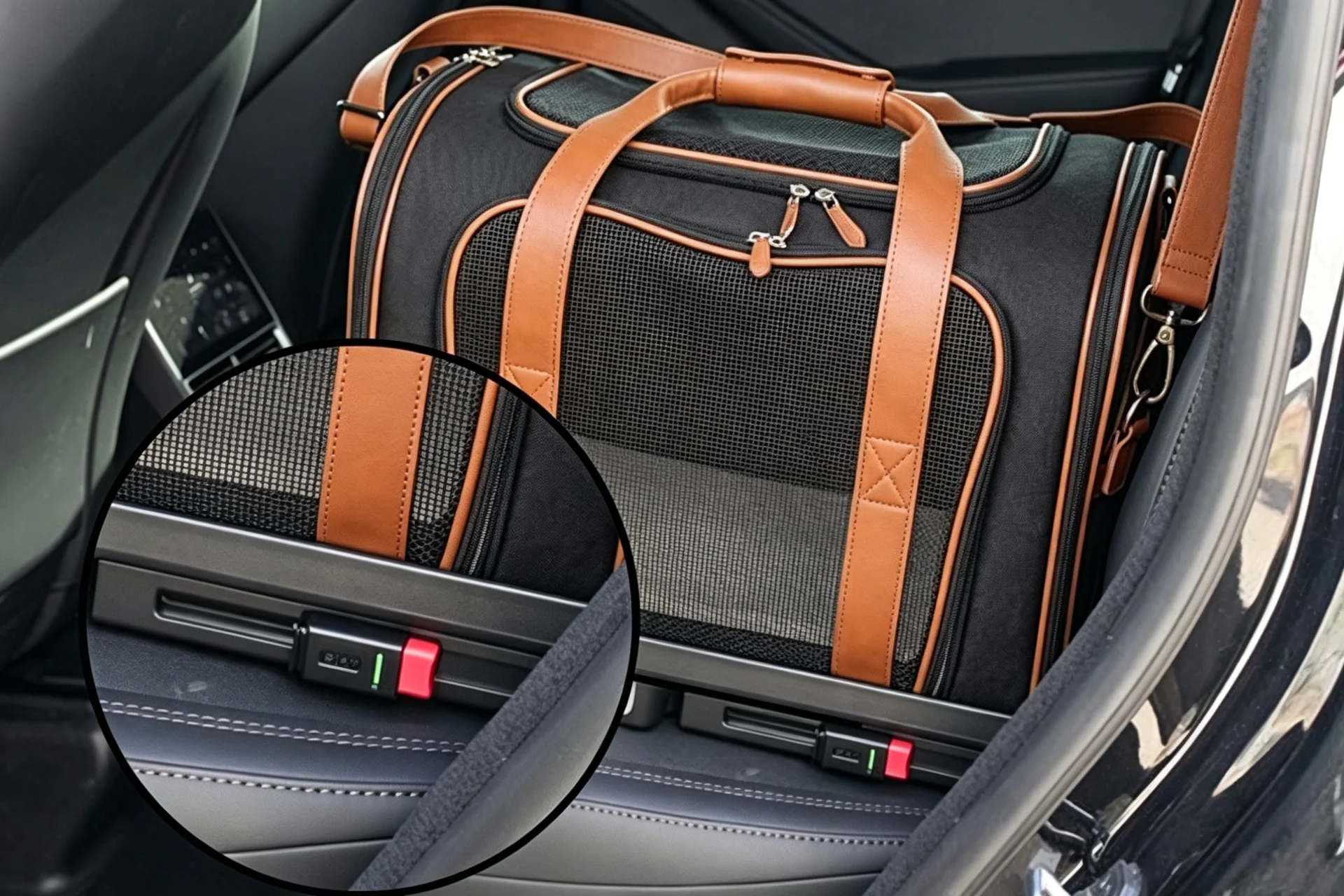
1. ISOFIX Pet Car Safety Seat or Anchoring Base
From a product design perspective, I treat the anchored pet car safety seat as the foundation. I do not see it as a cushion with straps. The base must stay stable. The pet area must limit uncontrolled motion. The connection to the vehicle must make sense. ISOFIX, latch-style anchoring, seat belt routing, and anti-slip contact can all support this goal when they are designed as one system. I also watch for a common mistake. Many products look like car seats because they have raised sides and soft padding. Yet raised sides alone do not make a safety product. The real test is simpler. I ask how the seat is held, how the pet is held, and how much movement is allowed during braking.
| Safety question I ask | Why it matters | What I prefer to see |
|---|---|---|
| Is the seat anchored to the car? | I want the product to stay in place. | ISOFIX base, stable belt routing, or strong anchor logic |
| Is the pet movement controlled? | I want to reduce driver distraction and sudden impact movement. | Short internal tether or harness connection |
| Is the base stable? | I want less sliding, tilting, and rolling. | Rigid or semi-rigid support with anti-slip contact |
| Is the structure more than decoration? | I want safety value, not only comfort. | Clear load path and controlled restraint points |
How I judge the core safety role
I place this tool first because it connects every other safety idea. If the seat itself moves freely, a tether attached inside it may not solve the main problem. If the pet is comfortable but not controlled, the driver still carries risk. If the product is soft but has no stable base, it may help the pet rest but not help enough during a hard stop. I have learned this from ODM and OEM product work. Brands often ask for a beautiful bag or a soft travel bed. I always bring the discussion back to anchoring. The outside look can change by market. The safety logic should not change. I want the pet to have comfort, but I want the car system to carry the load in a controlled way.
How Do Modular Travel Systems Control Pet Movement?
I used to hear one simple request from brands: make the pet seat more comfortable. I now answer with a different question: how will the system control movement?
Modular travel systems help when each part has a clear role. The seat holds position, the tether limits roaming, the barrier keeps the front area clear, and the carrier works only when it is properly secured in the vehicle.
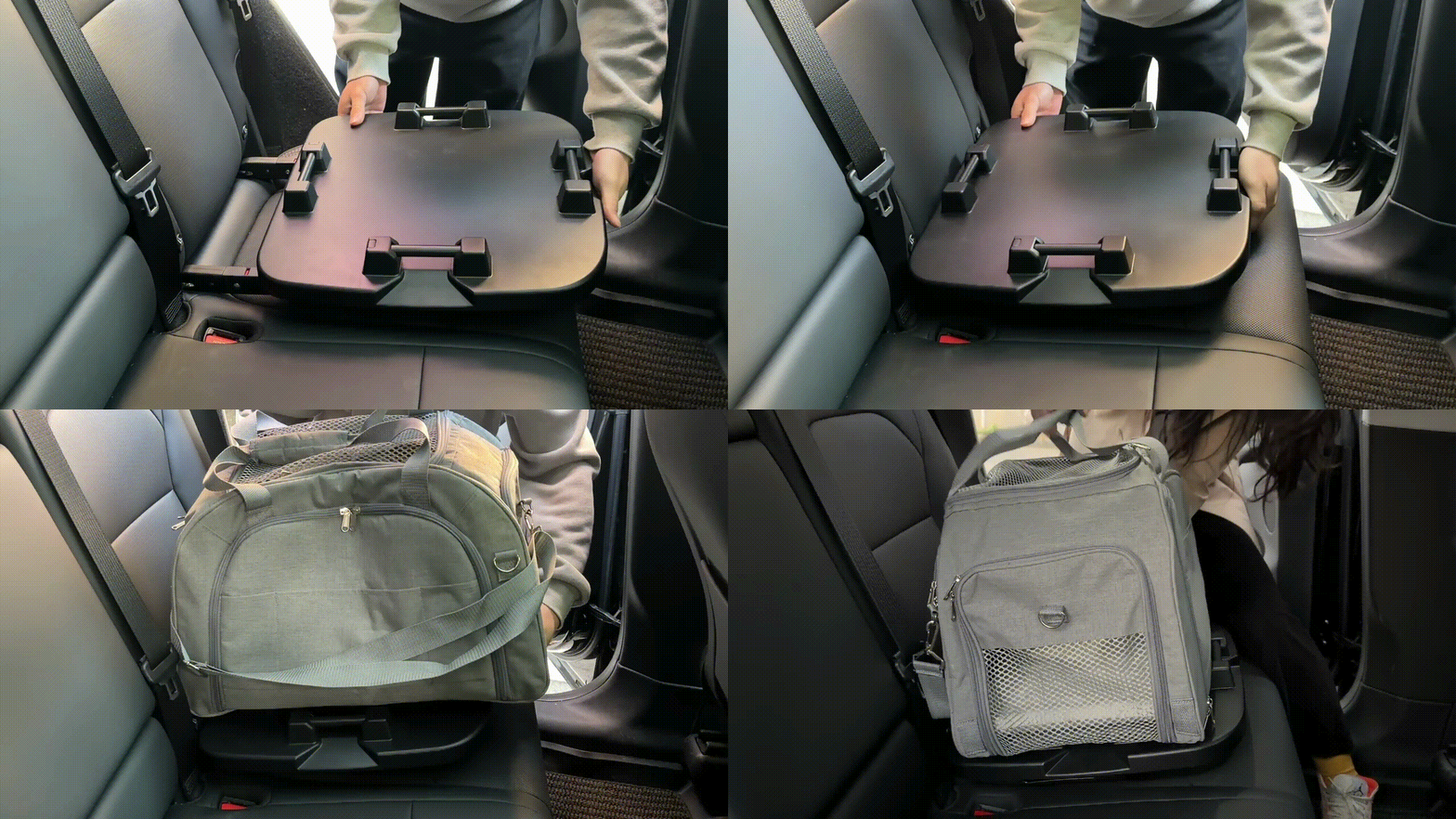
2. Pet Car Safety Belt or Short Restraint Tether
I see a pet safety belt as useful, but I do not oversell it. A short restraint tether can reduce roaming. It can keep the pet from climbing onto the driver. It can help hold the pet inside a seat or travel bag. Yet it is not a full safety system by itself. If the tether is too long, the pet can still gain speed before the strap stops movement. If the tether attaches to a weak point, the connection may not support the load well. If the pet wears only a collar, the neck may take too much force. I prefer a short tether connected to a proper harness and used with an anchored seat or base.
3. Rear-Seat Pet Barrier or Separation Net
I treat a rear-seat barrier as a driver safety tool first. A pet that jumps into the front seat can block the mirror, touch the gear area, step near pedals, or pull attention away from the road. A barrier or separation net can reduce this risk. It does not replace a restraint system, but it supports the whole travel plan. I see it as a boundary tool. It tells the pet where the travel zone is. It also helps the driver keep focus.
| Tool | Main job | Strong point | Limit I keep in mind |
|---|---|---|---|
| Short restraint tether | Limits pet roaming | Helps reduce distraction | It is not a full safety system alone |
| Rear-seat barrier | Keeps pet away from driver | Supports driver control | It may not restrain the pet during impact |
| Anchored pet seat | Holds pet travel zone | Combines stability and comfort | It must have real anchoring logic |
| Harness connection | Spreads force better than collar use | Supports safer restraint | It must fit the pet well |
Why modular thinking matters
I like modular systems because pets, cars, and travel habits are different. A small dog in a sedan needs a different setup from a medium dog in an SUV. A nervous pet needs more boundary control than a calm pet. A brand that sells in Europe may also need a different product package from a brand that sells in Australia or the United States. Still, the design thinking stays the same. I first control the pet’s travel zone. I then anchor the load. I then reduce the chance that the pet distracts the driver. This is why I see the pet car seat, tether, and barrier as connected tools. They are not random accessories. They form a simple safety chain. If one part is weak, the whole chain becomes weaker. I do not need to claim crash-test results to explain this. I only need to follow basic movement control, stable anchoring, and driver safety logic.
Which Additional Safety Accessories Actually Help?
I see many add-ons sold as safety items. Some help a lot, some help a little, and some only make the car look cleaner.
Additional safety accessories help when they support restraint, visibility, recovery, or travel care. A secured hard-shell carrier and emergency kit are true safety tools. Seat covers, mats, and sunshades support comfort and hygiene, but they are secondary.
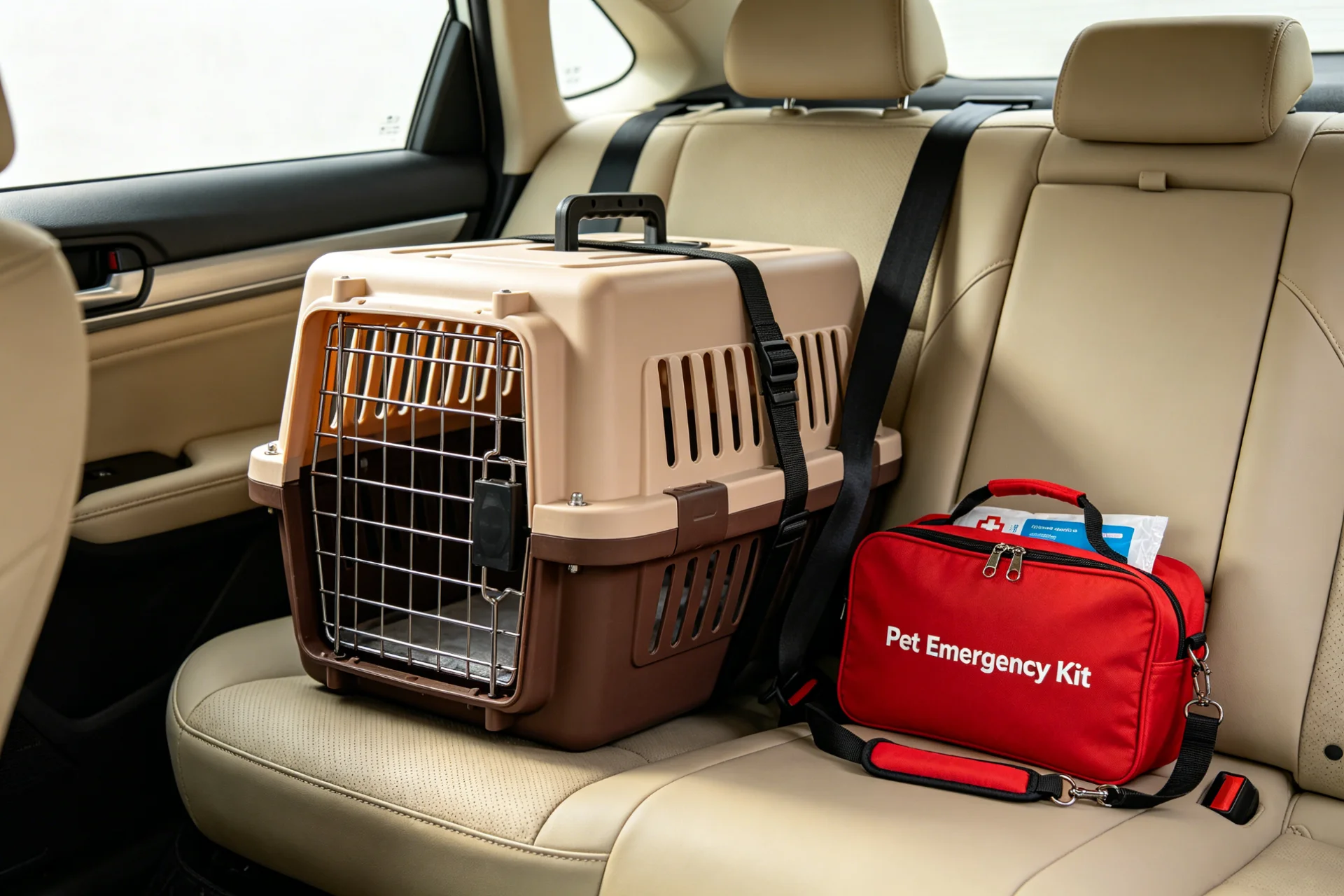
4. Secured Travel Crate or Hard-Shell Carrier
I see a hard-shell carrier as a good option in the right situation. It can give the pet a defined space. It can reduce movement inside the car. It can work well for some cats, small dogs, and nervous pets. Yet the word “carrier” does not automatically mean “safe in a car.” The carrier must be fixed in the vehicle. If it sits loose on the seat, it can move like any other object during hard braking. I look for a way to secure it with a seat belt route, cargo anchor, or stable base position. I also look at ventilation, door strength, pet size fit, and placement. A carrier that is too large may allow too much movement. A carrier that is too small may create stress and poor posture.
5. Pet Travel Emergency Kit
I include an emergency kit because car safety is not only about collision risk. Real travel risk also includes heat, traffic delay, minor injury, escape, lost leash, poor visibility, and water shortage. I like a kit that includes pet first aid basics, water, a collapsible bowl, waste bags, a spare leash, reflective item, vaccination or ID copy, and cleaning wipes. I also suggest a recent photo of the pet on the phone. If the pet escapes after a stop or accident, that photo can help fast.
| Accessory | Safety value | Main use | My category |
|---|---|---|---|
| Secured hard-shell carrier | High when fixed well | Movement control and containment | Core safety tool |
| Emergency kit | High during real travel problems | Care, visibility, and recovery | Core safety tool |
| Waterproof seat cover | Low to medium | Cleanliness and seat protection | Support accessory |
| Anti-slip mat | Medium when used with restraint | Reduces sliding | Support accessory |
| Sunshade | Medium in hot weather | Heat and comfort control | Support accessory |
| Ventilation aid | Medium when used carefully | Airflow and comfort | Support accessory |
Where comfort accessories belong
I do not dismiss comfort accessories. I use waterproof seat covers, anti-slip mats, sunshades, and cleaning tools in many travel setups. They make the car easier to manage. They help owners keep the routine simple. They may also keep the pet calmer. A calm pet is easier to control. Still, I do not count most of these items as primary safety tools. A seat cover protects the seat fabric. It does not anchor the pet. A soft mat reduces slipping. It does not replace a restraint. A sunshade helps with heat. It does not stop the pet from entering the front seat. This difference matters for pet brands and distributors too. A higher-value safety product should not be positioned only as a comfort upgrade. It should show a clear safety logic. I want the buyer to understand what the product does and what it does not do. That honesty builds trust, and it also makes the product category stronger.
Conclusion
I choose pet car safety tools by asking how they anchor, control movement, reduce driver distraction, and prepare for real travel problems.