
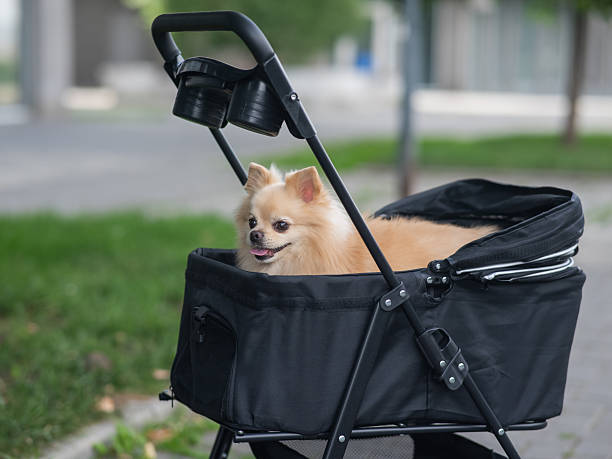
Pet stroller wheel size often looks like a simple buying decision, but it can create real design problems when it is treated as a shortcut for quality. Bigger wheels may look stronger and more “outdoor,” yet they can add weight, bulk, cost, and folding challenges. A better approach is to match wheel design to the actual use case.
Bigger pet stroller wheels are not automatically better. Larger wheels can improve rolling over cracks, grass, gravel, and uneven paths, but performance also depends on tire material, wheel width, bearings, suspension, frame rigidity, stroller weight, and center of gravity. The best pet stroller wheel size is the one that fits the target user, terrain, price point, and product positioning.
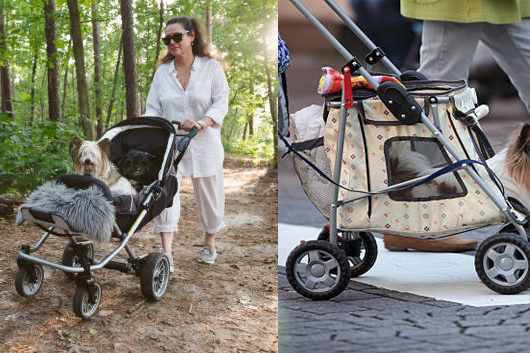
I have sat in product development discussions where everyone first focused on diameter. Then the conversation moved to folding size, carton volume, wheel wobble, stroller weight, and how the product would feel in a store aisle. That is where the real decision begins.
How Does Pet Stroller Wheel Size Affect a Pet Stroller’s Performance?
Wheel size affects how a pet stroller rolls, turns, absorbs small obstacles, and feels in the user’s hands. The problem is that many buyers judge performance from photos alone. That can lead to oversized wheels on a stroller that was meant for apartments, elevators, malls, and short urban trips.
Pet stroller wheel size mainly affects obstacle clearance, rolling resistance, steering feel, vibration transfer, and perceived stability. Larger wheels usually roll over uneven surfaces more easily, while smaller wheels can make a stroller lighter, more compact, and easier to maneuver indoors. Real performance depends on the complete wheel and frame system, not diameter alone.
Diameter changes the rolling experience
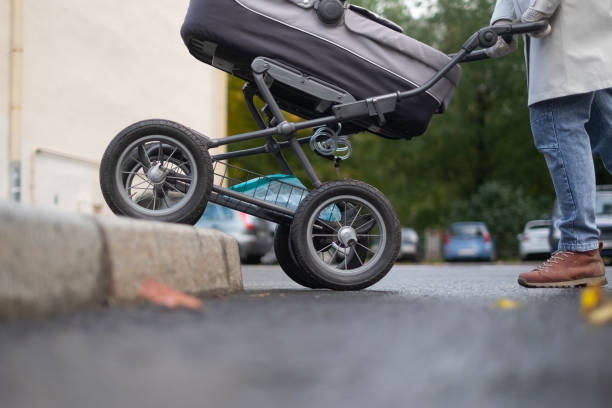
A larger wheel has a gentler approach angle when it meets a curb edge, paving gap, or stone. That usually makes it easier to push across imperfect ground. A smaller wheel meets the same obstacle more sharply, so the user may feel more vibration through the handlebar.
However, diameter does not work alone. I have seen development teams get excited about a large wheel sample, then later realize that the tire was too hard, the bearing was average, or the frame had too much flex. In those cases, the wheel looked capable, but the stroller still felt cheap.
A useful evaluation looks at the wheel system as a group of parts:
- Wheel diameter: helps with obstacle rollover and ground clearance.
- Wheel width: affects stability, surface contact, and sink-in on soft ground.
- Tire material: changes grip, noise, vibration, and wear.
- Bearing quality: affects smoothness under load.
- Suspension or flex design: helps reduce vibration transfer.
- Frame rigidity: keeps the stroller tracking straight.
- Center of gravity: affects tipping feel and turning confidence.
Front wheels and rear wheels do different jobs
The front wheels usually control steering. The rear wheels carry a large share of the load and influence stability. A stroller with large rear wheels and smaller front swivel wheels can feel very different from a stroller with four similar wheels.
For B2B buyers, that matters because the same pet stroller wheel size can produce different results depending on wheel position.
| Wheel Position | Main Role | Design Risk | Buyer Evaluation Point |
|---|---|---|---|
| Front wheels | Steering and obstacle entry | Shimmy, wobble, poor turning radius | Test turning in narrow aisles and over floor joints |
| Rear wheels | Load support and tracking | Added width, weight, folding bulk | Check stability and straight-line pushing |
| All wheels | Overall ride feel | Cost and packaging increase | Match spec to retail claim and use scenario |
Size influences the product story
Wheel size also affects how the stroller is perceived. A small-wheel stroller often signals lightweight travel, city use, and compact storage. A large-wheel stroller often signals outdoor use, premium mobility, and rougher terrain.
That perception can help sales, but it also raises expectations. If a product uses large wheels, buyers may expect stronger suspension, better frame stiffness, and more comfortable handling on mixed surfaces. A visible spec can create a promise. Product managers need to decide whether the rest of the design supports that promise.
What Are the Benefits of Larger Wheels on a Pet Stroller?
Larger wheels can solve real mobility problems, especially for outdoor pet strollers. The risk comes when buyers assume that every larger wheel automatically creates a better stroller. In practical development, bigger wheels help most when the target customer actually uses grass, gravel, cracked sidewalks, or park paths.
Larger wheels on a pet stroller can improve obstacle rollover, reduce pushing effort on uneven ground, increase ground clearance, and create a more outdoor-ready appearance. They are most useful for park, suburban, jogging-style, or premium mobility products, provided the tire material, bearings, suspension, and frame structure are designed to match the wheel size.
Larger wheels can reduce small impacts
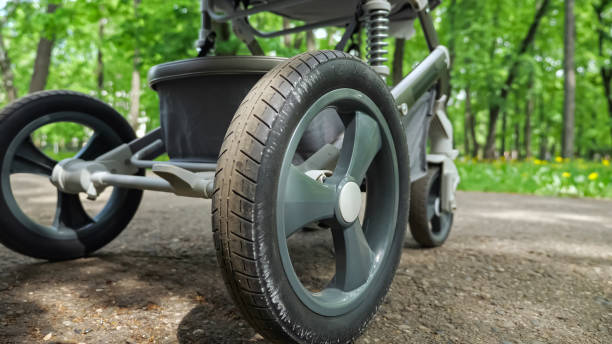
When a stroller moves over surface changes, the wheel diameter changes how the impact is felt. A larger wheel climbs over a raised edge more gradually. That can reduce the “stop-and-jolt” feeling that users often notice with small hard wheels.
Common outdoor surfaces where larger wheels may help include:
- Brick paths with uneven joints
- Cracked sidewalks
- Short grass
- Packed gravel
- Park paths with roots or small stones
- Driveway transitions
- Mild curb ramps
The improvement is not magic. A hard plastic large wheel can still feel noisy and harsh. A medium wheel with a good tread material and smooth bearing may feel better in daily use than a larger wheel with poor construction.
The user may push with less effort
Rolling resistance is affected by surface type, tire material, load, wheel deformation, and bearing quality. On uneven outdoor routes, a larger wheel often needs less force to keep moving because it does not fall as deeply into small gaps.
For pet strollers, this matters because the load is not fixed. A small dog, a medium pet, accessories, water, and storage basket contents all add up. A stroller that feels smooth in an empty sample room may feel different with a real pet inside.
A buyer evaluation that only checks an empty stroller on a showroom floor can miss the way wheel size behaves under real load.
A more practical check uses several loaded scenarios:
- Empty stroller for retail handling
- Average pet weight for the target model
- Maximum recommended load
- One-hand pushing
- Turning on smooth tile
- Crossing a 10–20 mm floor height change
- Rolling over outdoor paving gaps
These are not a substitute for formal testing. They are useful procurement and product development checks before a buyer commits to tooling or a production program.
In retail, big wheels are visible. They help customers understand the intended use quickly. For a stroller line positioned for parks, suburban walks, weekend travel, or outdoor lifestyle branding, larger wheels can make the product message easier to communicate.
Still, a premium claim needs more than wheel diameter. A stronger outdoor-oriented stroller may also need:
- Wider tire contact patch
- Higher-quality bearings
- Reinforced fork or wheel housing
- Better axle design
- More rigid frame tubes
- Controlled folding movement
- Stable brake system
- Handlebar strength that matches pushing forces
From a manufacturing view, the stronger story is not “large wheels.” The stronger story is a balanced mobility system that feels stable, quiet, and credible during normal use.
Are There Any Downsides to Bigger Pet Stroller Wheels?
Bigger pet stroller wheels can create hidden trade-offs. The most obvious problem is bulk, but the deeper issue is system balance. If the stroller becomes heavier, harder to fold, more expensive to ship, or awkward indoors, a larger wheel can reduce the value of the product for its real user.
Bigger pet stroller wheels can increase stroller weight, folded size, packaging volume, component cost, tooling complexity, and retail price. They may also affect turning radius, storage convenience, and center-of-gravity behavior. Larger wheels are worthwhile only when the target use case and product tier justify these trade-offs.
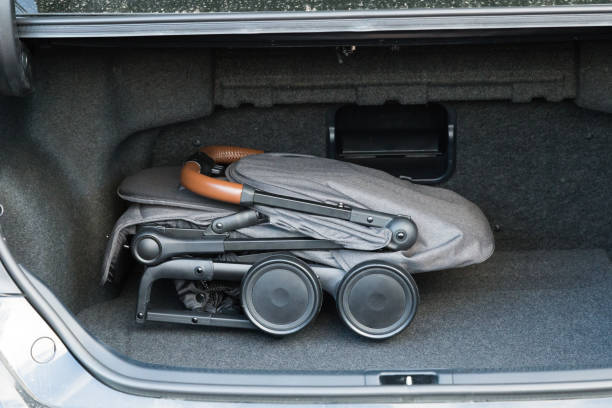
Bigger wheels often increase folded volume
A pet stroller is not only used while open. It is stored in apartments, placed in car trunks, carried through building entrances, and shipped in cartons. Wheel diameter directly affects those moments.
In one discussion I joined, the team liked a larger rear wheel because it improved the outdoor look. Then the packaging team raised a simple question: would the new folded unit still fit the planned carton size? That one question changed the conversation. Larger wheels can push a product into a higher shipping volume band, which affects landed cost and retail margin.
For B2B buyers, carton size matters because freight is often calculated by dimensional weight. A wheel change can influence:
- Master carton quantity
- Container loading efficiency
- Warehouse space
- Courier cost for e-commerce
- Retail shelf or backroom storage
- Return shipping cost
Bigger wheels can add cost beyond the wheel itself
The wheel is only one cost line. A larger pet stroller wheel size may require changes to multiple components.
| Cost Area | Why It Changes | Possible Buyer Impact |
|---|---|---|
| Wheel mold/tooling | Larger part and stronger structure | Higher upfront development cost |
| Tire material | More material volume | Higher unit cost |
| Fork or bracket | More load and leverage | Reinforced components needed |
| Axle and bearing | Larger loads and bending forces | Better hardware may be needed |
| Brake system | Larger wheel geometry | Redesign or new tooling |
| Packaging | Bigger folded dimensions | Higher shipping and storage cost |
A low-cost stroller with oversized wheels can become awkward from a price-positioning angle. The customer pays for visible size, but may not receive matching improvements in handling, comfort, or durability.
Large wheels may hurt indoor handling
Many pet stroller customers use the product indoors as much as outdoors. They move through elevators, mall corridors, pet-friendly cafes, clinics, airports, and apartment buildings. In those spaces, compact steering and easy storage can matter more than grass performance.
Oversized wheels can affect:
- Turning radius
- Aisle maneuverability
- Foot clearance while walking
- Stroller width
- Lift weight
- Folded standing balance
- Entry through narrow doors
A city-use stroller with medium or smaller wheels may create a better ownership experience than a large-wheel model that feels cumbersome every day.
Center of gravity still matters
Larger wheels can lift parts of the frame and change the pet cabin height. That can influence the center of gravity, especially if the carrier sits high or the storage basket carries weight. A stroller may look more stable due to bigger wheels, but stability depends on track width, load position, frame geometry, and user behavior.
For application-specific safety and compliance decisions, buyers need qualified evaluation rather than relying on appearance. Supplier documents, claims, and test reports need verification during procurement.
What Pet Stroller Wheel Size Works Best for Sidewalks, Parks, and Rough Terrain?
Pet stroller wheel size works best when it matches the surface the user meets most often. A travel stroller for airports and elevators has different needs from a stroller for gravel paths. The problem is that many product briefs say “all-terrain” without defining the actual terrain.
For smooth sidewalks and indoor travel, smaller or medium wheels often work well because they support compact folding and easy turning. For parks, grass, and uneven paths, medium to larger wheels with suitable tire material and stronger frame support are usually more appropriate. Rough terrain needs a complete mobility system, not only bigger wheels.
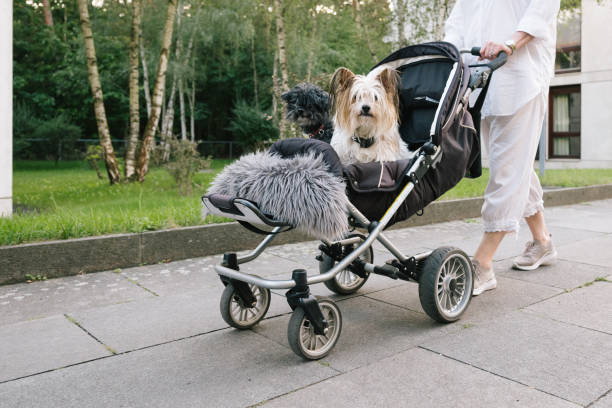
Match the wheel to the route, not the slogan
“All-terrain” is a broad phrase. In procurement conversations, I prefer to break it down into actual surfaces. A stroller that performs well on a paved park path may not be suitable for loose gravel, mud, sand, or mountain-style trails.
A practical segmentation looks like this:
| Use Scenario | Surface Examples | Wheel Direction | Other Important Specs |
|---|---|---|---|
| Urban indoor | Malls, clinics, elevators, airports | Small to medium | Tight turning, quiet wheels, compact fold |
| City sidewalk | Paving, curb ramps, cracks | Medium | Better tire material, stable front swivel |
| Park leisure | Grass, packed dirt, brick paths | Medium to larger | Wider wheels, stronger frame, smoother bearings |
| Outdoor mixed | Gravel, roots, uneven paths | Larger | Suspension, rigid frame, lower vibration |
| Travel storage | Car trunk, public transport | Small to medium | Lightweight frame, removable wheels, flat fold |
This table is not a universal specification. It is a way to start the buyer discussion. Product weight, pet size, wheel construction, and brand positioning may change the final choice.
Sidewalk strollers need controlled steering
For urban sidewalks, the user often turns frequently. They move around people, curbs, cafe tables, doors, and cars. A very large front wheel can feel stable in a straight line, but it may feel less convenient in tight spaces.
For this segment, I usually pay attention to:
- Front swivel quality
- Brake access
- Wheel noise on tile
- Handlebar height
- Frame flex during one-hand turns
- Fold size with wheels attached
- Ease of lifting into a car trunk
A medium wheel can be a strong compromise here. It offers better rollover than a tiny caster but avoids the bulk of a large outdoor wheel.
Park strollers need comfort and durability
Parks introduce changing surfaces. The stroller may go from pavement to grass, then to gravel or compacted dirt. A larger wheel can help, especially at the rear. Wider tire contact also helps reduce sinking into softer ground.
However, a park stroller also needs stronger hardware around the wheel. If the wheel has more leverage but the fork is weak, the product may develop looseness or rattling over time. Buyers can ask suppliers about:
- Axle diameter and material
- Bearing type
- Fork structure
- Wheel removal method
- Brake engagement design
- Tire wear expectations
- Replacement part availability
Those details are often more useful than asking only for the biggest diameter in the catalog.
Rough routes need careful claim control
If a product is marketed for rough terrain, the specification bar rises. Larger wheels may be part of the answer, but the stroller also needs appropriate structure. A pet cabin sits higher than a simple utility cart, and the pet moves inside. That movement affects handling.
For rough outdoor claims, brands need careful wording. It is safer to define the intended environment, such as “designed for park paths and uneven sidewalks,” than to make broad claims that buyers, retailers, or consumers may interpret as extreme terrain capability.
How Should You Choose the Right Pet Stroller Wheel Size for Your Needs?
Choosing the right pet stroller wheel size can feel difficult because suppliers may offer many wheel options without explaining the trade-offs. The risk is choosing a wheel that looks impressive in a rendering but creates problems in production, shipping, retail display, or daily use.
Choose pet stroller wheel size by defining the target user, pet weight range, terrain, retail price tier, folded-size requirement, packaging limit, and product claim. Then evaluate wheel diameter together with wheel width, tire material, bearings, suspension, frame rigidity, brake design, and center of gravity before approving the final configuration.
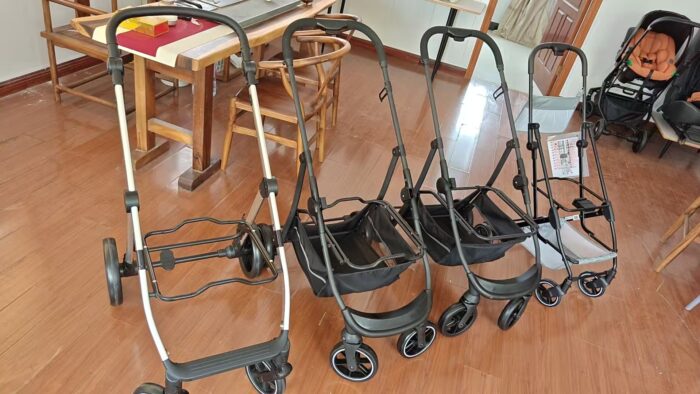
Start with a use-case brief
A strong wheel decision begins before the engineering drawing. It begins with a clear product brief. For B2B buyers and product managers, the brief needs to answer practical questions.
Useful questions include:
-
Where will the stroller be used most often?
City sidewalks, malls, parks, gravel paths, travel, or mixed use? -
What pet size and load range does the product target?
A stroller for small pets has different wheel and frame needs from a model for heavier pets. -
How important is compact folding?
Apartment users and travel buyers often care about storage more than large-wheel styling. -
What is the retail price position?
Entry-level, mid-range, premium urban, outdoor premium, or specialty mobility? -
How will the product ship?
E-commerce, distributor pallets, retail cartons, or mixed channels? -
What claims will appear in marketing?
“City,” “travel,” “park,” “outdoor,” and “all-terrain” each imply different expectations.
Evaluate the complete wheel module
A wheel module includes more than the round part. It includes the tire, hub, bearing, axle, fork, brake interface, and connection to the frame. If one of these parts is weak, the final experience suffers.
A simple procurement checklist can help:
| Evaluation Item | What to Check | Why It Matters |
|---|---|---|
| Diameter | Rollover and visual positioning | Affects terrain fit and product image |
| Width | Contact patch and stability | Helps on grass or soft surfaces |
| Tire material | Grip, noise, vibration | Changes user comfort and perceived quality |
| Bearing | Smoothness under load | Affects pushing effort |
| Fork/bracket | Strength and alignment | Reduces wobble and long-term looseness |
| Brake fit | Engagement and usability | Important for daily operation |
| Frame connection | Rigidity and load transfer | Influences steering and stability |
| Fold clearance | Wheel position when folded | Affects storage and shipping |
This kind of checklist reduces the chance of choosing a wheel based only on appearance.
Consider product line architecture
For brands developing several pet stroller models, one wheel size may not fit the whole range. A compact travel model, a detachable carrier stroller, and an outdoor walking model may need different wheel systems.
A product line could be organized like this:
- Compact city stroller: smaller to medium wheels, light frame, tight fold
- Everyday premium stroller: medium wheels, improved tire material, smoother bearings
- Park/outdoor stroller: larger rear wheels, stronger frame, wider tires
- Modular carrier + stroller system: wheel size balanced with docking height, carrier weight, and folding structure
In modular pet travel system development, wheel size also interacts with the carrier connection and overall height. If the carrier detaches from the stroller frame, the docking structure adds design constraints. A wheel that works on a traditional stroller may not be ideal for a detachable carrier system. The frame needs enough rigidity without making the whole unit heavy or awkward to fold.
Ask suppliers better questions
Instead of asking, “Can you make the wheels bigger?” buyers can ask questions that reveal engineering depth.
Better questions include:
- What surfaces was this wheel configuration designed for?
- What tire material options are available?
- How does the folded size change with this wheel?
- Can the wheels be removed for packaging or storage?
- What bearing options are practical for this price tier?
- How does the brake system change if the diameter changes?
- Does the larger wheel require a different fork or frame tube?
- What is the expected impact on carton size and shipping cost?
- Are any test reports, quality documents, or material documents available for buyer review?
Supplier answers need to be verified through samples, inspection, documentation review, and where needed, qualified third-party evaluation. A good supplier can explain trade-offs clearly, rather than treating bigger wheels as a universal upgrade.
Frequently Asked Questions
Is a bigger pet stroller wheel size always better?
No. A bigger pet stroller wheel size can help on uneven ground, but it can also increase weight, folded size, cost, and shipping volume. A smaller or medium wheel may be better for city, travel, apartment, elevator, and retail environments.
What wheel size is best for a travel pet stroller?
A travel pet stroller usually benefits from smaller to medium wheels because compact folding, low weight, and easy storage matter most. Buyers still need to check tire material, wheel noise, bearing smoothness, and front-wheel stability, especially for airports, malls, and smooth indoor floors.
Do large pet stroller wheels make the ride safer?
Large wheels alone do not guarantee a safer ride. Stability depends on frame structure, track width, center of gravity, brake design, load position, and user behavior. Safety-related claims need proper evaluation, documentation review, and application-specific professional assessment when required.
Are foam, rubber, or plastic wheels better for pet strollers?
Each material has trade-offs. Plastic wheels can be light and economical but may feel noisy. Foam-style wheels can improve comfort without air maintenance. Rubberized tires can improve grip and feel, but they may add cost and weight. The best choice depends on terrain and price tier.
What questions should OEM buyers ask before approving wheel size?
OEM buyers can ask about target terrain, tire material, bearing type, axle design, brake compatibility, folded size, carton impact, replacement parts, and quality documentation. A wheel sample needs to be reviewed as part of the full stroller system, not as an isolated component.
Conclusion
Pet stroller wheel size matters, but bigger does not automatically mean better. Larger wheels can improve outdoor mobility when the tire, bearing, suspension, frame, and center of gravity support the design. Smaller or medium wheels can be smarter for compact city and travel products. For B2B buyers, the best decision connects user scenario, product positioning, manufacturing cost, and logistics. If you are developing a new pet stroller or modular pet travel system, Anvoya can help evaluate wheel configuration, structure, and OEM/ODM feasibility before the design moves into tooling.