
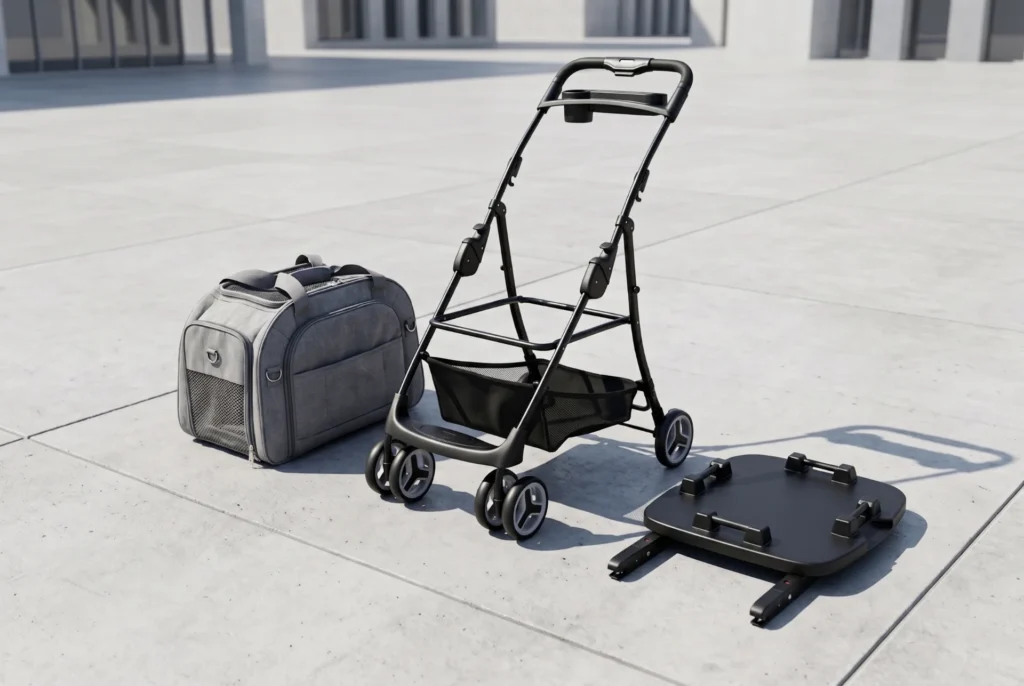
The premium pet travel category has evolved rapidly over the past few years. As more pet owners travel with pets in cars, airplanes, urban environments, and outdoor settings, the limitations of traditional pet strollers have become increasingly visible.
At the same time, a new category has started gaining attention: the modular pet travel system.
Although the two categories are often grouped together, a pet stroller and a modular pet travel system are not the same product type. They are designed with different structures, different travel scenarios, and different engineering priorities.
Understanding this distinction is becoming increasingly important for retailers, distributors, OEM buyers, and premium pet brands.
Key Takeaways
- Traditional pet strollers are primarily designed for walking convenience and short-distance outdoor use.
- Modular pet travel systems are built around removable carriers, vehicle integration, and multi-scenario transportation.
- Premium retailers and OEM brands are increasingly moving toward modular systems because they create stronger product ecosystems and higher long-term category value.
Definition
A pet stroller is a mobility product mainly designed for walking and outdoor transport.
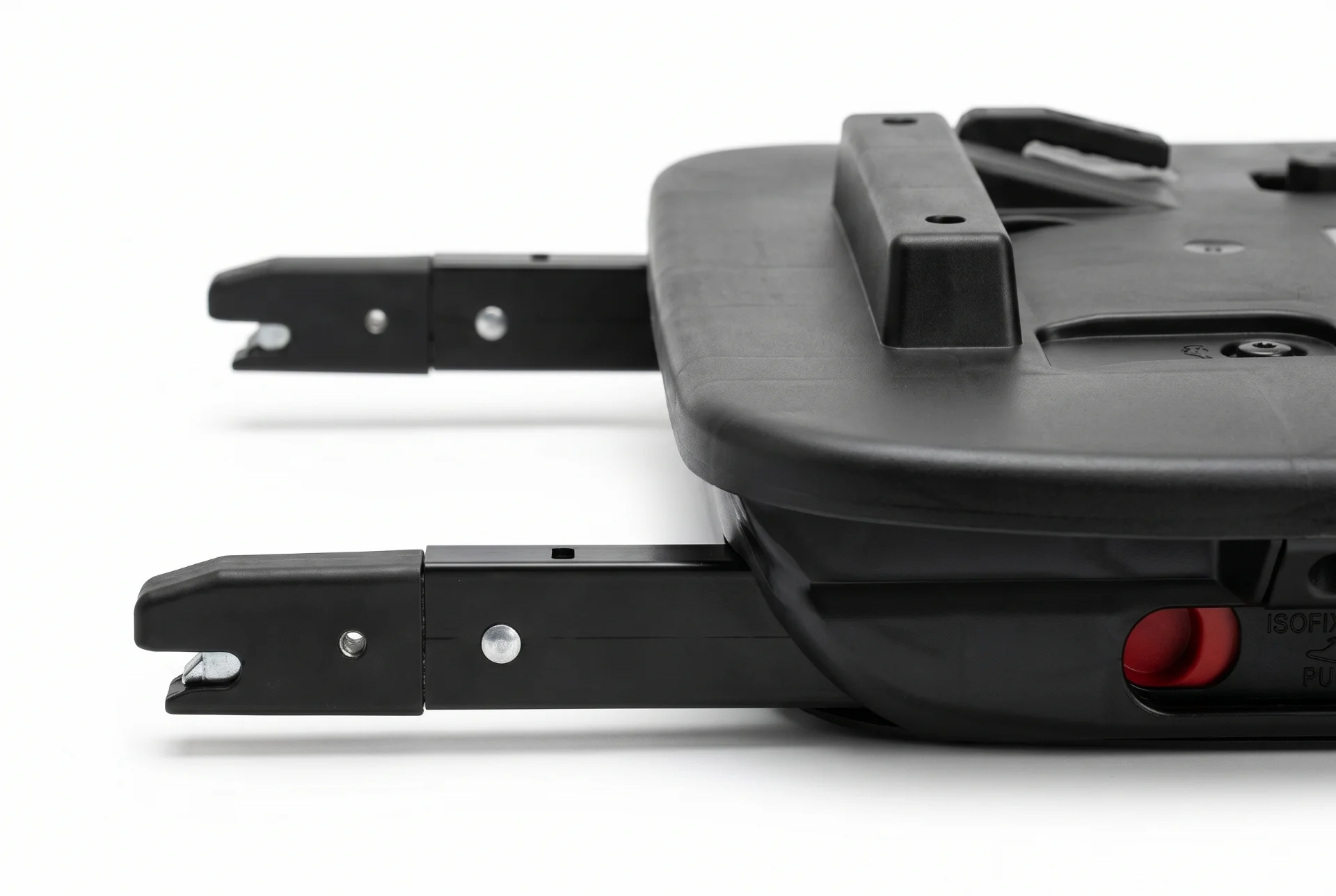
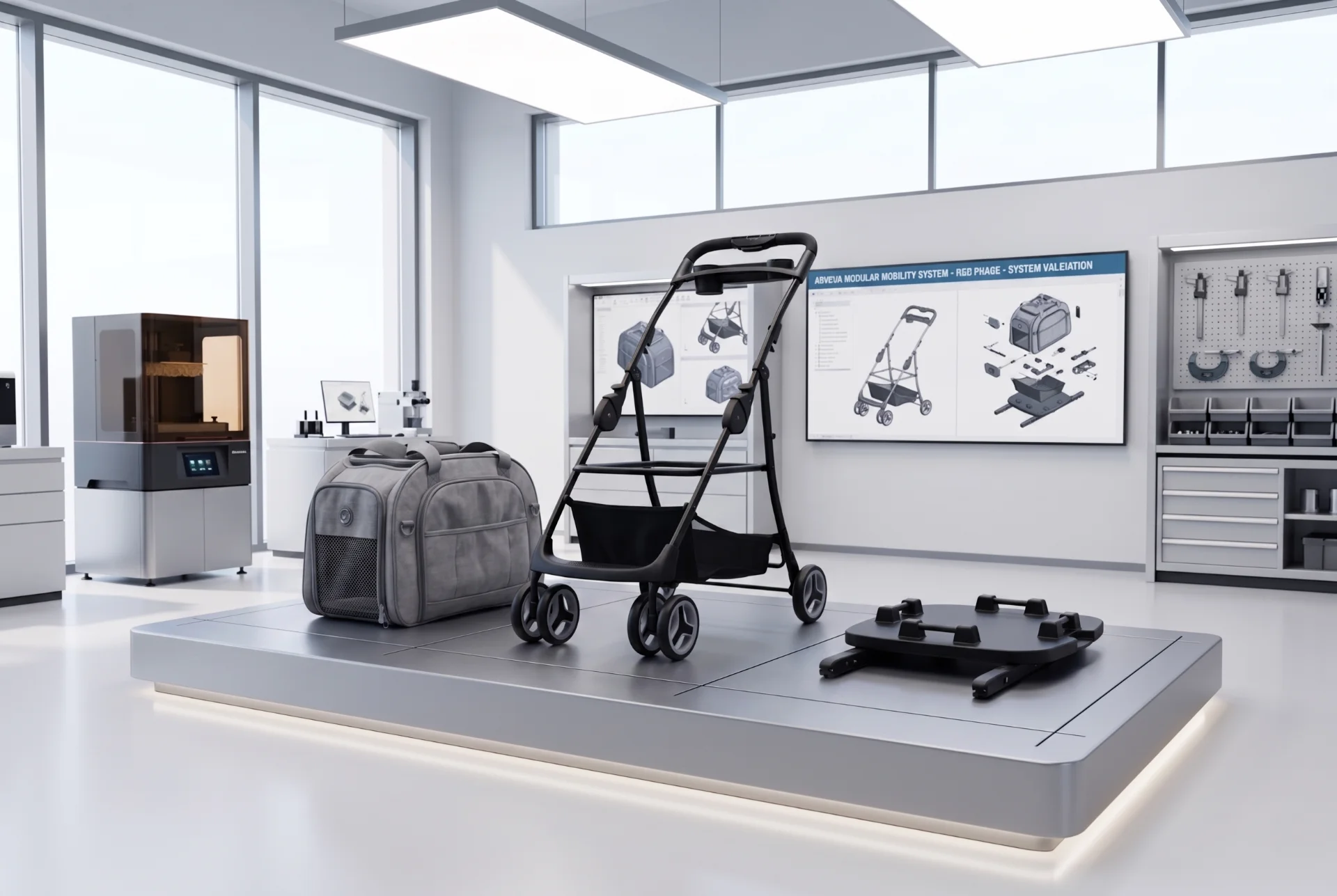
A modular pet travel system is a multi-component pet travel platform that integrates a stroller frame, removable carrier, and vehicle-compatible travel module into one connected system, often supported by anchoring or ISOFIX-inspired base structures.
What Is a Pet Stroller?
A pet stroller is primarily designed to help pet owners transport pets during walking or outdoor activities.
Traditional pet strollers are commonly used for:
- Daily walks
- Senior pets
- Small pets with limited mobility
- Urban commuting
- Outdoor shopping or events
Most pet strollers focus on:
- Lightweight construction
- Foldability
- Storage convenience
- Maneuverability
The primary purpose is walking convenience.
Because of this, many traditional strollers use simplified structures, lightweight textile baskets, and fixed seating compartments.
In most cases, the pet compartment is permanently attached to the frame and cannot function independently outside the stroller itself.
What Is a Modular Pet Travel System?
A modular pet travel system is designed for connected travel scenarios rather than walking alone.
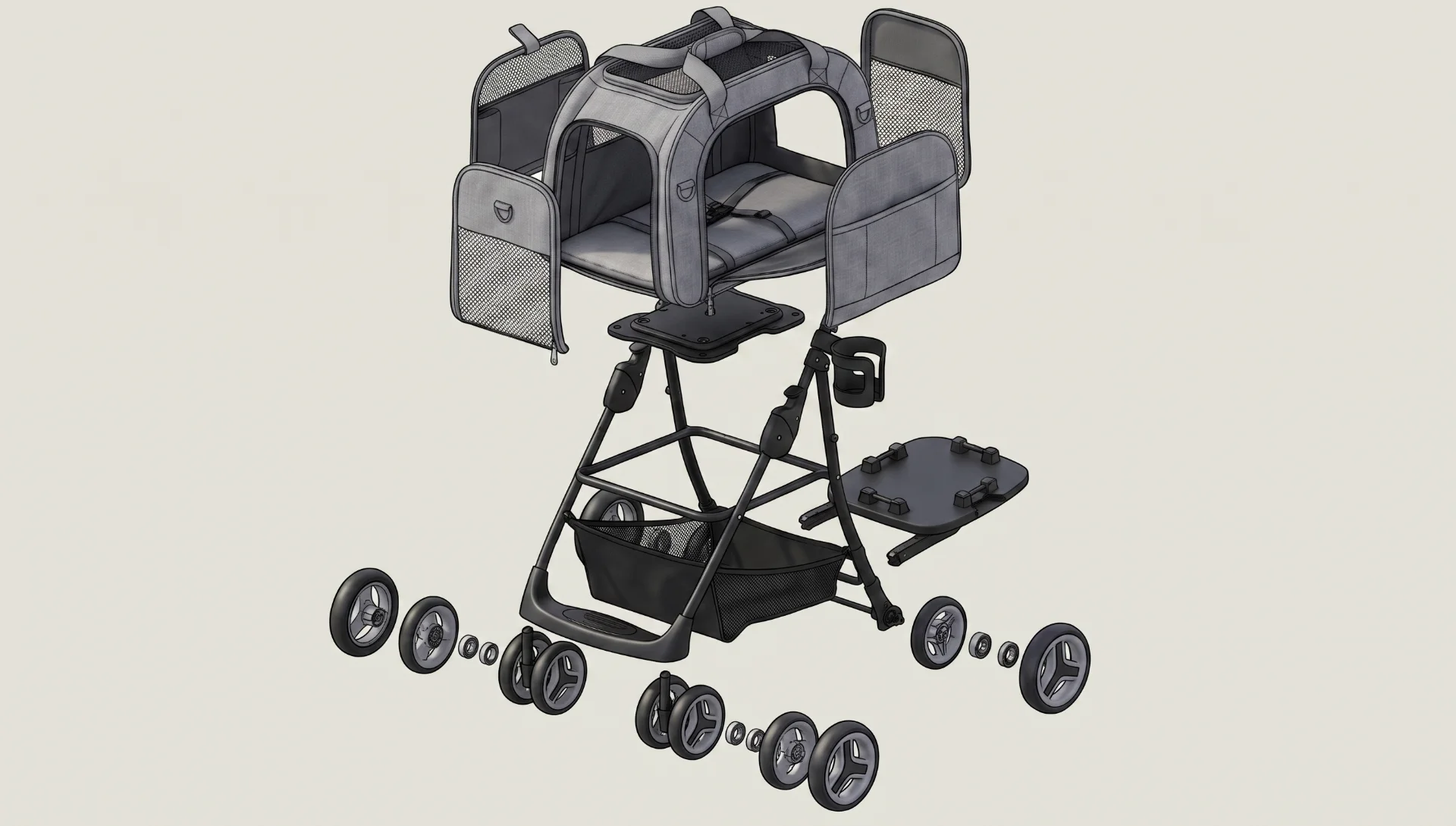
Instead of functioning as a single mobility product, a modular system combines multiple compatible travel components into one integrated platform.
A premium modular pet travel system may include:
- A stroller frame
- A removable carrier
- A vehicle travel module
- Anchoring or docking support
- ISOFIX-inspired base structures
- Optional airline-compatible components
From our experience, one of the biggest misunderstandings in the pet travel market is treating any detachable pet stroller as a modular pet travel system.
A carrier that can be lifted off a stroller frame is not automatically a true travel system. In real product development, the key question is whether the stroller frame, removable carrier, and vehicle-compatible base are structurally designed to work together.
Coming from the child safety seat industry, we pay special attention to connection stability, locking logic, and controlled movement during vehicle travel. A modular system should not only be convenient to detach; it should also remain stable when connected to different modules.
This is why we believe vehicle integration, especially ISOFIX hard connection logic, is a core part of a true modular pet travel system.
How Are They Structurally Different?
The structural difference between a pet stroller and a modular pet travel system is significant.
| Feature | Traditional Pet Stroller | Modular Pet Travel System |
|---|---|---|
| Primary Use | Walking | Multi-scenario travel |
| Carrier Design | Usually fixed | Removable |
| Vehicle Integration | Minimal | Core system feature |
| Anchoring Capability | Rare | Supported |
| ISOFIX-Inspired Design | Uncommon | Increasingly important |
| Product Architecture | Single product | Connected platform |
| Structural Base | Lightweight frame | Reinforced modular structure |
| Upgradeability | Low | High |
| OEM Expansion Potential | Limited | Strong |
Traditional strollers are usually optimized for lower weight and easier folding.
Modular travel systems, however, are engineered around compatibility between multiple travel components.
This often requires:
- Reinforced connection points
- Rigid structural bases
- More stable load distribution
- Better carrier locking systems
- Vehicle-compatible integration logic
These engineering differences become especially important during vehicle travel.
Common Mistakes to Avoid
A common mistake is comparing a traditional pet stroller and a modular pet travel system only by appearance.
Some products may look premium because they use better fabric, larger wheels, or a removable basket. However, these features alone do not prove that the product is engineered as a travel system.
For retailers and distributors, the more important questions are:
- Does the carrier lock securely into the stroller frame?
- Can the carrier connect to a vehicle-compatible base?
- Does the system support ISOFIX hard connection logic?
- Is the base structure designed to reduce uncontrolled movement during car travel?
- Are the stroller, carrier, and car module developed as one platform?
If the answer is no, the product may be a stroller-and-carrier combo, but not a true modular pet travel system.
Why Does Vehicle Integration Matter?
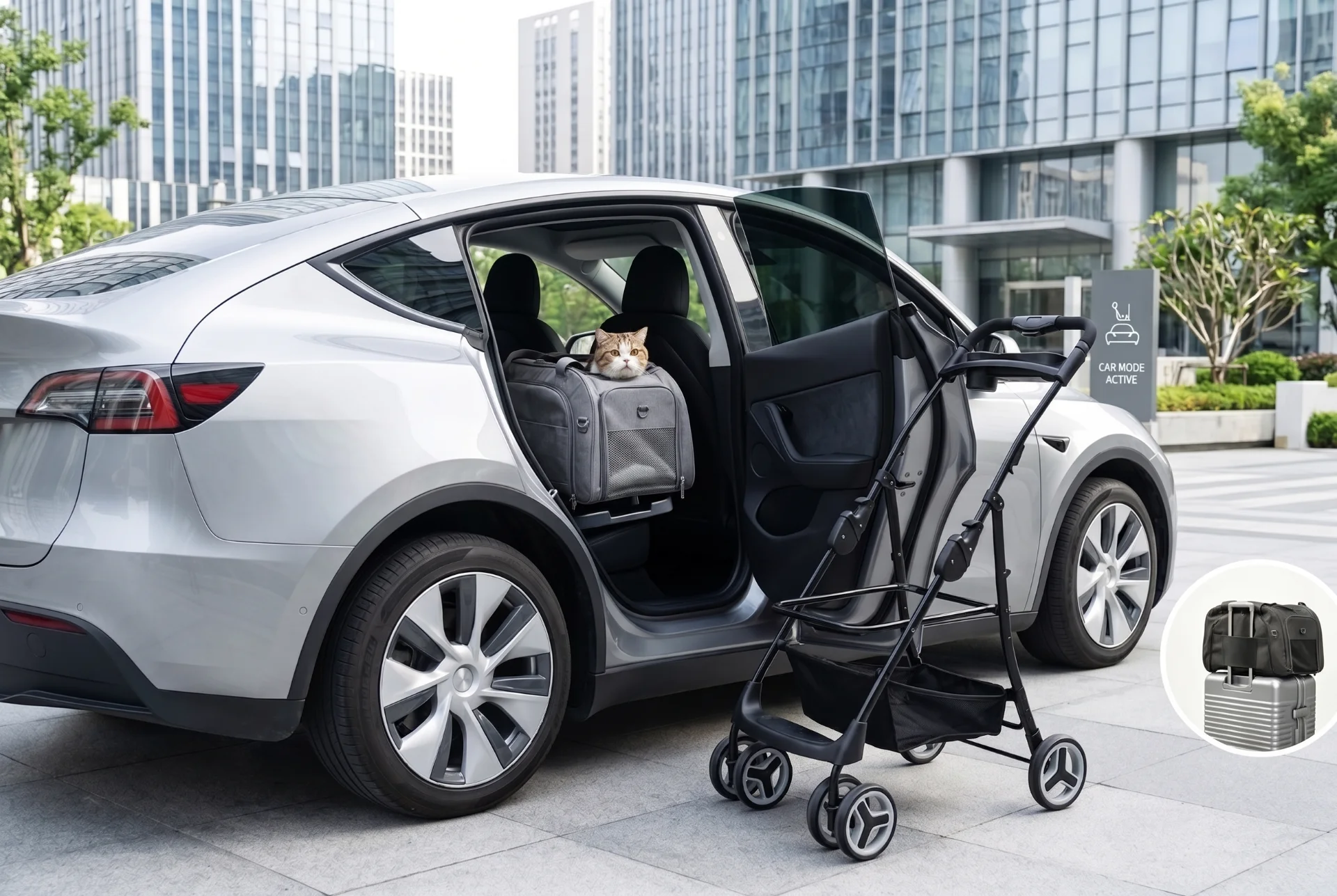
Vehicle integration is one of the most important differences between a stroller and a true modular pet travel system.
Traditional pet strollers are rarely designed to manage movement inside moving vehicles.
Many basic stroller systems lack:
- Stable carrier locking
- Vehicle anchoring
- Controlled movement support
- Structural reinforcement
- Base stabilization
As a result, unsecured carriers may shift, slide, or tip during braking or turning.
Modular travel systems increasingly address this issue through:
- Anchoring straps
- Docking systems
- Reinforced carrier shells
- Structural travel bases
- ISOFIX-inspired engineering concepts
While the pet industry still lacks universal safety standards, premium manufacturers are increasingly adopting automotive-inspired engineering logic to improve stability during transportation.
This is becoming one of the defining characteristics of premium modular pet travel systems.
Why Are Modular Systems Growing Faster?
Several industry trends are accelerating the growth of modular pet travel systems.
1. Multi-Scenario Travel Demand
Modern pet owners increasingly want products that support:
- Walking
- Vehicle travel
- Urban transportation
- Outdoor activities
- Airline travel
Instead of buying separate products for every scenario, consumers increasingly prefer connected systems.
2. Safety Awareness Is Increasing
Consumers are paying more attention to:
- Carrier stability
- Vehicle movement control
- Structural support
- Anchoring systems
- Engineering quality
This shift is pushing the market beyond simple fabric strollers toward more engineered travel platforms.
3. Product Ecosystem Potential
For retailers and distributors, modular systems create stronger ecosystem opportunities.
Instead of selling one stroller, brands can expand into:
- Additional carriers
- Anchoring accessories
- Vehicle bases
- Travel modules
- Upgraded frames
This creates higher customer lifetime value and stronger long-term product differentiation.
What Should Retail Buyers Consider?
Retail buyers should evaluate both product structure and long-term category potential.
| Evaluation Area | What Buyers Should Evaluate |
|---|---|
| Frame Stability | Structural rigidity and wheel performance |
| Carrier Locking | Connection security between modules |
| Vehicle Integration | Anchoring or docking compatibility |
| Structural Materials | Aluminum frame, Rigid PP Base, reinforced textiles |
| Product Ecosystem | Expandable accessories and modules |
| OEM Flexibility | Branding and structural customization |
| Warranty Risk | Failure points and spare parts availability |
The key question for premium buyers is no longer:
“Does this stroller look premium?”
The better question is:
“Was this system actually designed for connected travel scenarios?”
Which Category Creates Higher Long-Term Retail Value?
Traditional pet strollers remain important in convenience-focused markets.
However, modular pet travel systems increasingly create stronger long-term retail opportunities because they support:
- Higher price positioning
- Better engineering differentiation
- Travel-focused branding
- Vehicle integration
- Accessory ecosystem expansion
- OEM platform scalability
This is especially important in markets where low-cost stroller competition has become saturated.
For premium retailers, modular systems also provide stronger storytelling opportunities around:
- Engineering
- Structural design
- Vehicle travel compatibility
- Anchoring systems
- Automotive-inspired safety concepts
Industry Insight
The pet stroller category is evolving from simple walking products toward connected travel platforms.
In the past, many products focused only on outdoor convenience.
Today, premium buyers increasingly expect:
- Removable carriers
- Vehicle integration
- Anchoring support
- Modular ecosystems
- Multi-scenario functionality
- Structural compatibility
As a result, the definition of a premium pet travel product is shifting.
The next generation of premium products is no longer centered around walking alone.
It is increasingly centered around connected modular systems designed for transportation, vehicle compatibility, and controlled movement during travel.
Conclusion
Although pet strollers and modular pet travel systems may appear similar at first glance, they are fundamentally different categories.
A traditional pet stroller is primarily designed for walking convenience.
A modular pet travel system is designed as an integrated transportation platform that supports multiple travel scenarios through connected components and vehicle-compatible engineering logic.
For retailers, distributors, and OEM brands, understanding this distinction is becoming increasingly important as the premium pet travel category continues to evolve.
The future of premium pet travel products is moving beyond simple stroller designs toward more connected, modular, and vehicle-integrated travel systems.
FAQ
Is a pet stroller the same as a modular pet travel system?
No. A pet stroller is mainly designed for walking, while a modular pet travel system supports multi-scenario transportation through integrated travel components.
What makes a modular pet travel system different?
The biggest difference is vehicle integration. Modular systems often support removable carriers, anchoring systems, and ISOFIX-inspired travel structures.
Why is vehicle anchoring important in pet travel?
Vehicle anchoring helps reduce uncontrolled movement inside moving vehicles during braking, turning, or sudden motion changes.
Do all pet travel systems support ISOFIX?
No. Some premium modular systems use ISOFIX-inspired engineering concepts, but not all products include true ISOFIX-compatible structures.
Why are modular pet travel systems growing faster?
Consumers increasingly want connected travel systems that support walking, vehicle travel, and multiple transportation scenarios within one platform.
What should retailers look for in modular pet travel systems?
Retailers should evaluate structural stability, vehicle integration, carrier locking systems, material quality, OEM flexibility, and long-term ecosystem potential.
travel categories.