
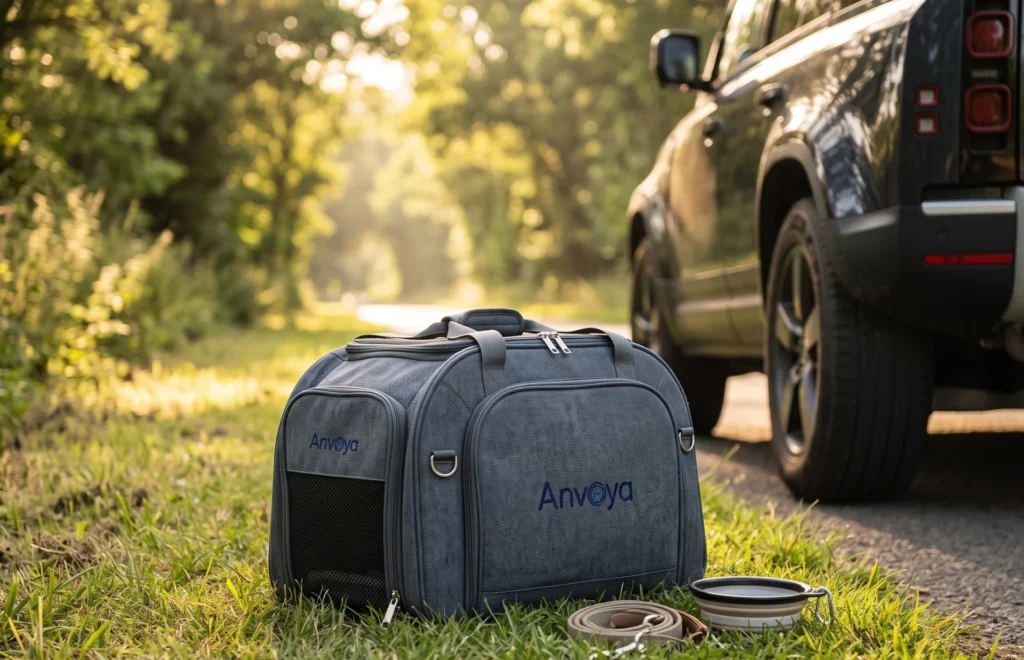
Pet carrier OEM development becomes much harder when a brand wants a regular carrier to work inside a vehicle. A simple strap may look like a quick upgrade, but weak fixing points can create product risk, channel confusion, and customer disappointment. The better path is controlled anchoring, structural judgment, and practical OEM development planning.
A vehicle-ready pet carrier OEM project should not start with “add a buckle.” It should start with the carrier structure, the anchoring path, the vehicle-use scenario, and the brand’s existing SKU value. The goal is to upgrade the product without over-redesigning it, overstating safety, or damaging what already sells.
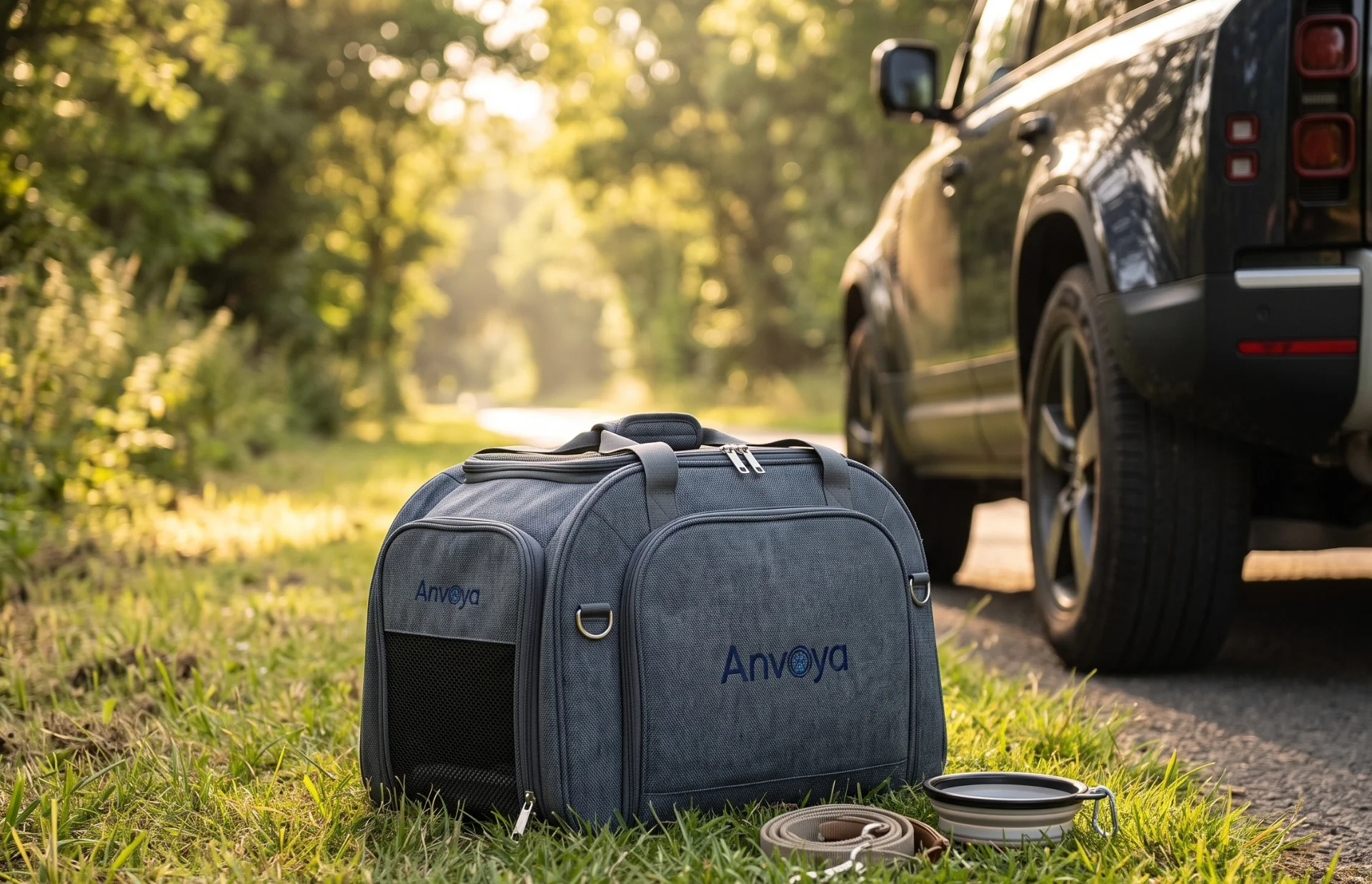
In brand-side product discussions, a common starting point is simple: “Can we make this carrier car-ready?” The useful answer is more complex. A strong OEM partner should help the brand decide what to preserve, what to reinforce, and what to verify before the product reaches the market.
What Makes a Pet Carrier OEM Product Suitable for Vehicle Travel?
Many pet carriers are designed for carrying, storage, and daily convenience. Vehicle use adds a different kind of pressure. If the carrier moves, twists, or pulls against a weak fabric area, the problem is no longer only comfort. It becomes a product judgment issue.
A pet carrier is more suitable for vehicle travel when its fixing method connects to structurally meaningful areas, manages movement during normal driving and sudden braking, and avoids weakening the original bag body. A pet carrier OEM should evaluate anchor position, load path, reinforcement, usability, and misuse risk before calling the design vehicle-ready.
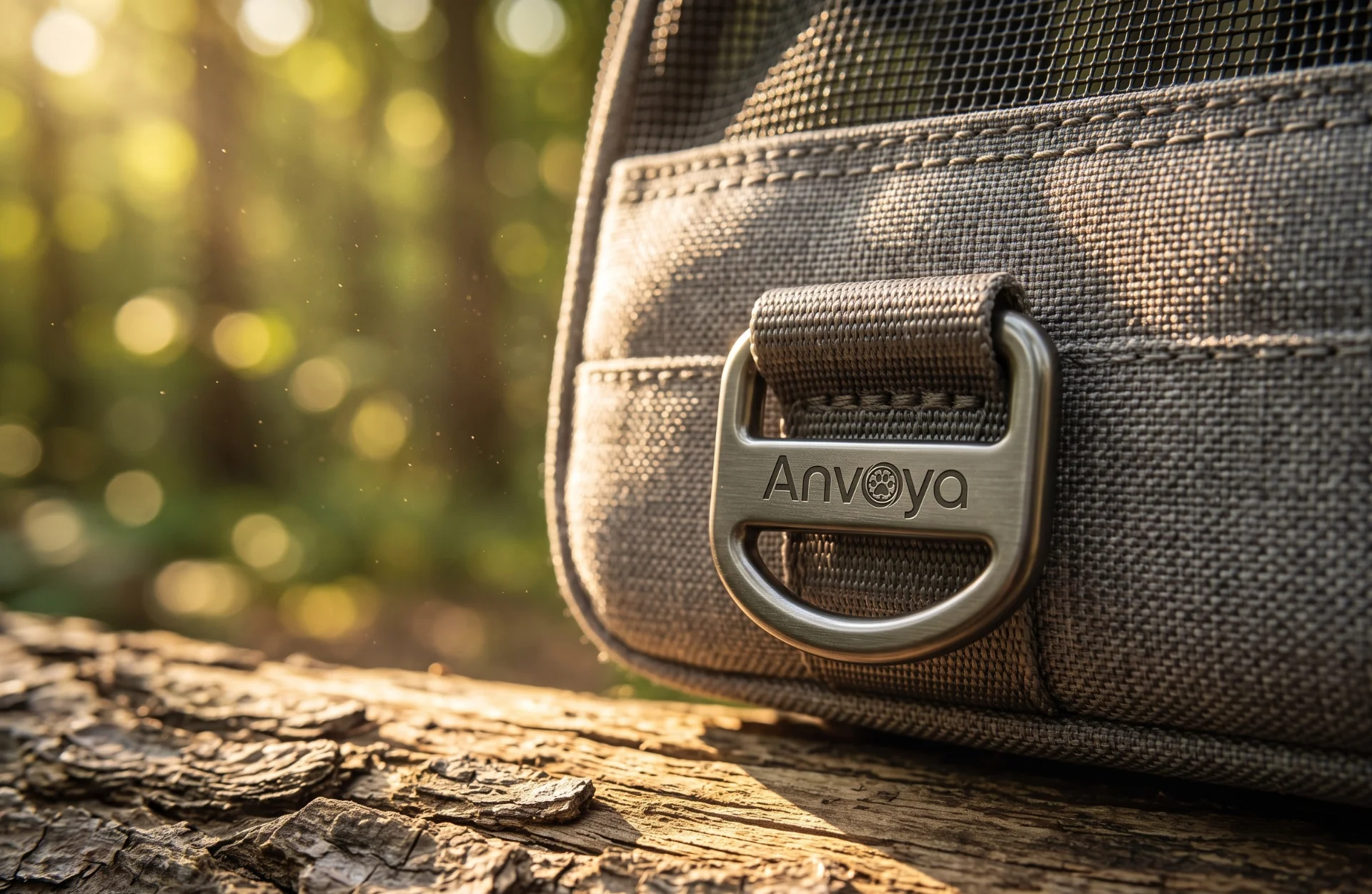
Vehicle-ready is not just a strap decision
In many development conversations, the first request sounds very direct: “Can you add a seat belt loop?” That request is understandable. Brand owners need a practical upgrade, and buyers want clear visible features. However, a belt loop alone does not answer the real engineering questions.
A vehicle-ready upgrade should examine:
- Where the fixing point connects
- How force travels through the carrier body
- Whether the bag shape remains stable
- Whether the pet can still enter and exit easily
- Whether the user can install it correctly
- Whether the upgrade changes cost, packing, or channel positioning
For Anvoya, this is where our background in child car seat and automotive safety products influences the conversation. We do not treat pet carriers as child restraint systems, and buyers should not treat pet carrier crash testing as equivalent to legal child car seat certification. Still, the same engineering habits are useful: think about anchoring, load paths, misuse prevention, and production consistency.
A practical buyer evaluation table
| Evaluation area | Weak approach | Stronger OEM approach |
|---|---|---|
| Anchor location | Sew a strap onto a convenient fabric panel | Connect to reinforced zones or designed interface points |
| Structure | Keep the bag soft everywhere | Reinforce only where the fixing path needs support |
| User experience | Add parts that make the bag harder to carry | Preserve the original use experience where possible |
| Development risk | Redesign the full SKU | Upgrade the proven SKU with controlled changes |
| Claims | Say “crash safe” without context | Explain vehicle-ready use with verified documents and limits |
Why the original carrier matters
A best-selling carrier usually has reasons behind its success. It may have the right shape, price point, color range, weight, pack size, or customer review history. If an OEM partner changes too much, the brand may lose the product-market fit that made the SKU valuable.
A better pet carrier OEM process asks:
- Which parts of the carrier must remain unchanged?
- Which parts can be modified without hurting conversion?
- Which areas need reinforcement for anchoring?
- Can the new version share materials, tooling, or packaging logic?
- Will the sales channel understand the upgrade clearly?
This approach keeps the project commercial, not only technical. The brand is not just buying a new feature. The brand is protecting a proven product while creating a stronger reason for retailers, distributors, and e-commerce buyers to view it as more than a standard soft pet carrier.
Why Is a Secure Vehicle Connection Important for Pet Carriers?
A loose carrier can slide, tip, or shift during everyday driving. That movement can distract the driver, affect passengers, and increase stress for the pet. The issue becomes more serious during sudden braking, where uncontrolled movement may create higher force and less predictable behavior.
A secure vehicle connection is important because it helps control the carrier’s movement in the car. The goal is to reduce sliding, tipping, and driver distraction while giving the pet a more stable travel environment. A pet carrier OEM should design the connection around structure, not decoration.
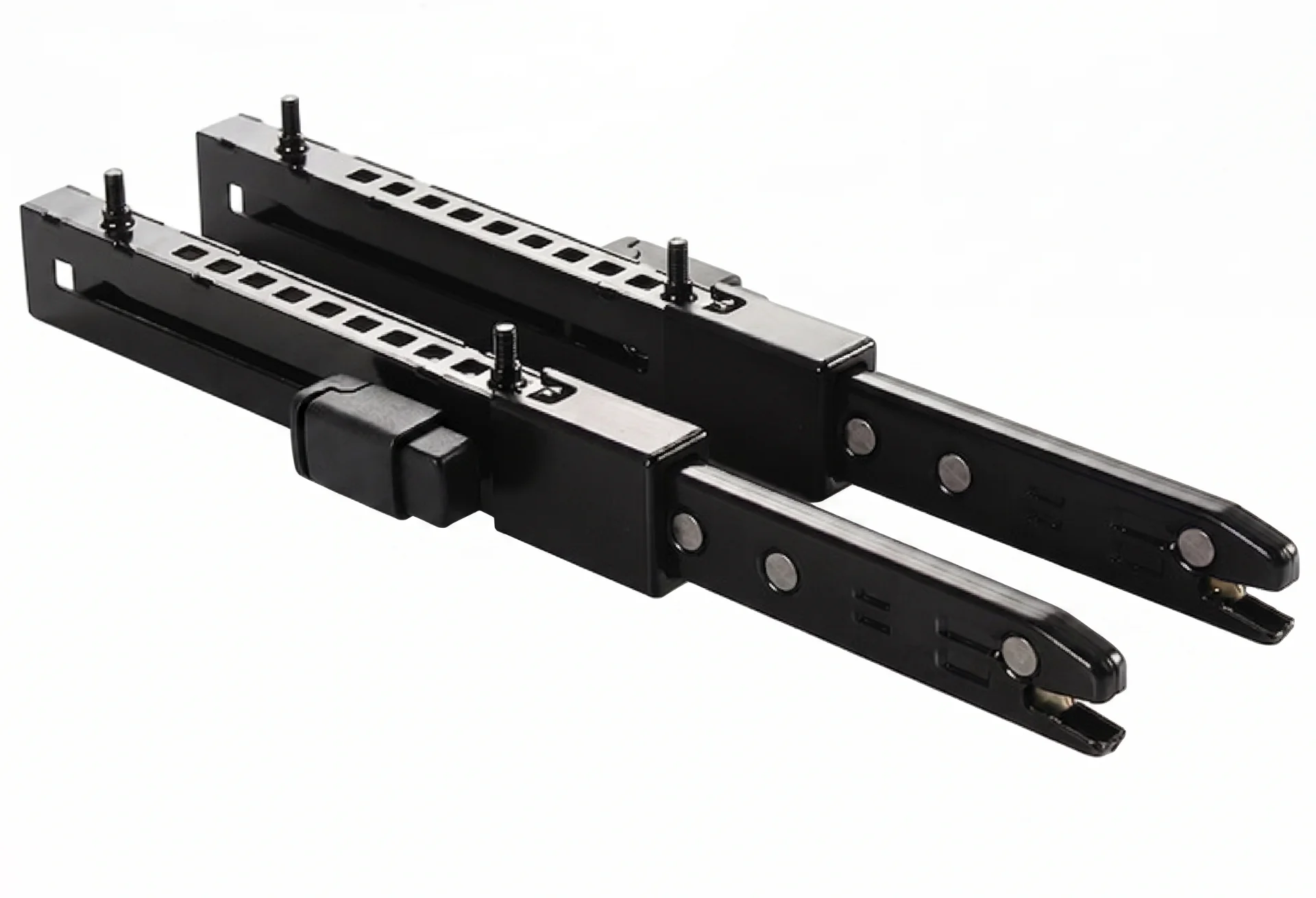
The real problem is movement control
When a vehicle stops suddenly, unsecured objects keep moving. This is basic physics, not a marketing claim. A pet carrier placed loosely on a seat may move forward, rotate, or fall depending on the seat angle, carrier weight, pet weight, and friction between surfaces.
For pet travel products, the practical question is:
Can the carrier remain reasonably controlled during real vehicle use, without relying on the user to improvise?
This is why secure connection matters. The purpose is not to promise absolute safety. The purpose is to reduce uncontrolled movement and support safer driving behavior. An unsecured pet can also become a source of driver distraction. If the animal climbs out, shifts strongly, or causes the carrier to fall, the driver may react at the wrong moment.
Common connection concepts buyers should understand
A vehicle-ready pet carrier may use different connection strategies. Each one needs evaluation.
| Connection concept | Buyer question | Main concern |
|---|---|---|
| Seat belt routing | Does the route hold the carrier in a stable position? | Slippage, poor user installation |
| Built-in anchor points | Are the anchor points structurally reinforced? | Weak stitching or fabric tear-out |
| Base connection | Does the carrier lock into a vehicle-installed base? | Interface tolerance and stability |
| ISOFIX-style base system | Does the base connect to the vehicle anchor points correctly? | Compatibility, documentation, user instructions |
| Hybrid strap and base logic | Does each part have a clear job? | Complexity and misuse |
Anvoya’s BASE-X concept sits in this system-thinking area. It is designed as a modular ISOFIX pet car seat base that can help upgrade selected pet carriers into vehicle-ready systems. Buyers should still evaluate fit, intended use, product documents, and market requirements. The important idea is that the base creates a planned interface, instead of treating the carrier as a bag with extra straps attached.
What brands should ask before approving a vehicle-ready upgrade
In our OEM/ODM discussions, useful questions often reveal more than a feature checklist.
Brands can ask:
- Where exactly does the vehicle fixing force enter the carrier?
- Does that area have reinforcement or a hard interface?
- Will the connection deform the bag shape under normal use?
- Can users install it without reading a long manual?
- Can the carrier still be used comfortably outside the car?
- What documents, drawings, and inspection standards support production?
- What claims are appropriate for the target market?
This last question matters. Pet car seats and pet carriers do not currently operate under the same unified, mandatory crash-test regulations as child restraint systems. Crash testing can be an important engineering tool, but brands should avoid language that suggests legal child car seat certification unless such certification is applicable and independently verified.
A qualified pet carrier OEM partner should help the buyer separate engineering improvement, test evidence, sales copy, and regulatory claim. Those are related, but they are not the same.
Can the Same Pet Carrier OEM Product Connect to a Pet Stroller?
A pet carrier that works in the car and on a stroller sounds attractive. It can create a complete travel system and a stronger retail story. Yet this idea becomes risky when brands add interfaces one by one without planning the whole structure.
The same carrier can connect to a pet stroller if the interface is planned from the start or upgraded with controlled reinforcement. A pet carrier OEM should evaluate the car connection and stroller connection separately because each scenario creates different forces, user actions, balance requirements, and misuse risks.
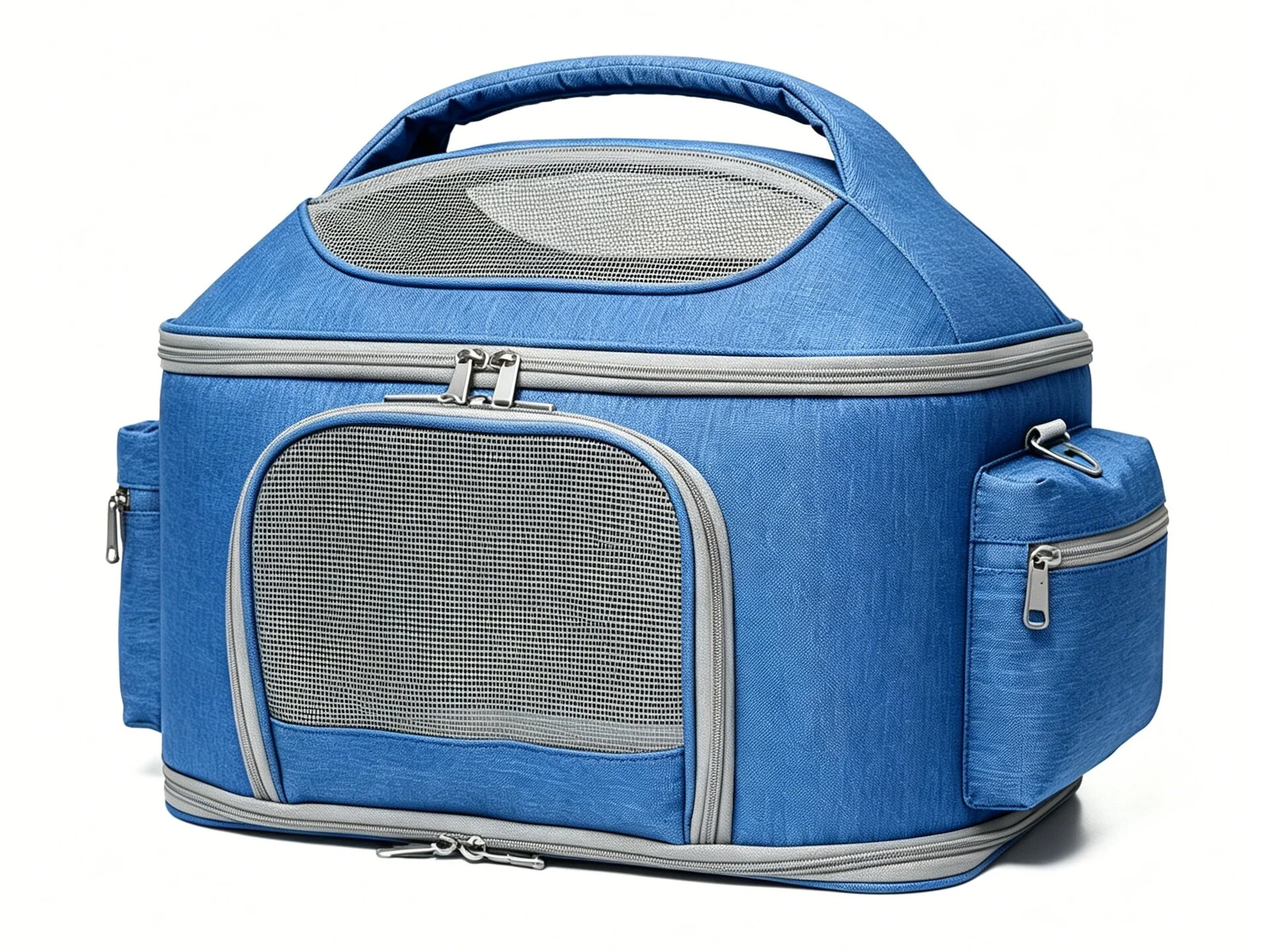
Vehicle connection and stroller connection may look similar from the outside. Both require attachment points. Both need stability. Both influence user trust. However, the load conditions are different.
A stroller system must consider:
- Carrier balance on the frame
- Locking and release operation
- Anti-tip behavior
- Height and center of gravity
- One-hand use expectations
- Vibration from pavement
- Storage and folding impact
- Compatibility across frame versions
A car system must consider seat geometry, belt routing, vehicle anchor positions, and sudden braking movement. So, the same carrier body may support both uses, but the interfaces should not be treated as interchangeable decorations.
Why accessory stacking creates risk
Accessory stacking happens when a brand adds one feature after another:
- Add a shoulder strap.
- Add a luggage sleeve.
- Add a car belt loop.
- Add a stroller adapter.
- Add a base connection.
- Add more clips because the first clips do not solve the new problem.
This can produce a product that looks feature-rich but feels confused. It can also make quality control harder. Every added part needs supplier control, tolerance control, sewing control, pull-strength judgment, and user instruction.
A better approach is to define a travel system architecture.
| System question | Why it matters |
|---|---|
| Is the carrier mainly a bag, a car module, or a stroller module? | The priority affects structure and cost |
| Which interface is primary? | Primary interfaces need stronger design control |
| Can one reinforced zone serve multiple uses? | Shared structure can reduce complexity |
| Does the interface affect appearance? | Brands need to protect existing SKU value |
| Is the release action intuitive? | Poor release design increases user frustration |
How AERO-type thinking helps brands
Anvoya’s AERO product direction uses a lightweight 3-in-1 idea for car, carry, and stroller use. The valuable point is not that every carrier should become a 3-in-1 product. The valuable point is that multi-scenario use requires planned interfaces.
For a brand, stroller compatibility can create strong commercial benefits:
- Higher perceived value
- Better bundle opportunities
- Expandable product lines
- Clear differentiation from ordinary soft carriers
- More channel storytelling
- More repeat purchase potential through system accessories
Still, the product should not become heavy, expensive, or visually unfamiliar just to support every possible use. The best solution often depends on the brand’s existing line. A premium travel brand may want a full modular system. A high-volume online seller may prefer a vehicle-ready carrier first, then a stroller-compatible version later.
A capable pet carrier OEM should help decide the order of upgrades instead of pushing every feature into the first project.
What Does It Take to Engineer a Pet Carrier OEM Product for Both Car and Stroller Use?
Many brands want one carrier to do more jobs. That ambition is reasonable because customers travel in connected ways: home to car, car to park, park to café, café back to car. The challenge is that each use case changes the product’s structural priorities.
Engineering a pet carrier for both car and stroller use takes interface planning, reinforcement control, tolerance management, user-operation design, and production consistency. A pet carrier OEM should define how loads move through the carrier, how users connect and release it, and how quality is checked during mass production.
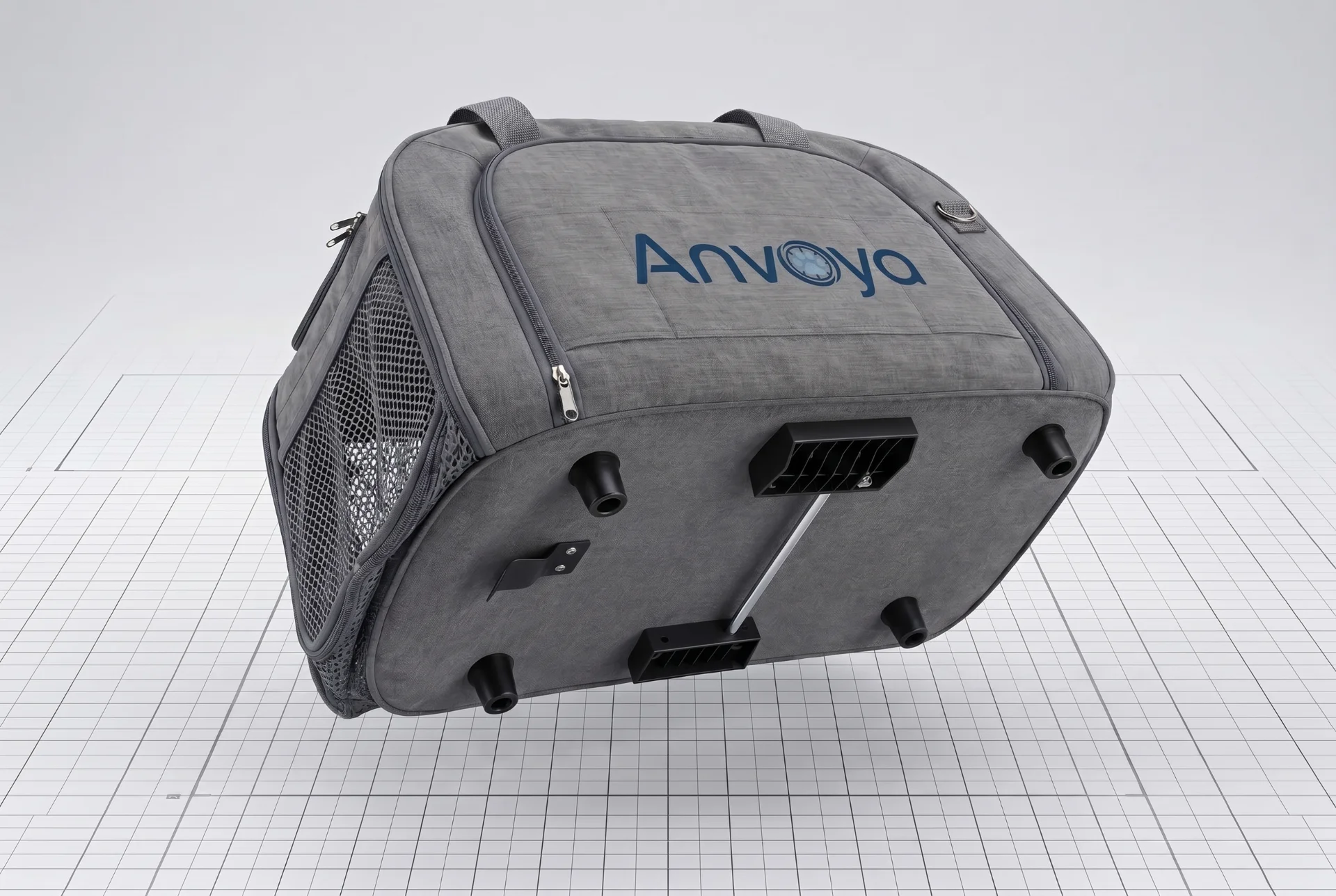
Start with the load path
A load path is the route force follows through a product. This idea sounds technical, but it is very practical. If the fixing point pulls on a weak fabric panel, the force may concentrate in one small area. If the fixing point connects to a reinforced frame, board, base plate, or stitched structure, the force can spread more predictably.
For a vehicle-ready pet carrier, the OEM team should ask:
- What happens when the carrier moves forward?
- Which part resists that movement?
- Does the zipper area carry any unwanted load?
- Does the side panel collapse?
- Does the bottom panel remain stable?
- Does the pet’s weight change the carrier shape?
For stroller use, the questions change:
- Does the carrier sit level on the frame?
- Can the user hear or feel the lock?
- Can the carrier release accidentally?
- Does the pet’s movement affect balance?
- Does the frame fold with or without the carrier?
Preserve the best-selling SKU where possible
One important OEM challenge is restraint. It is tempting to redesign the entire bag. A full redesign may feel cleaner from an engineering viewpoint. However, brand owners often need to preserve the carrier’s original commercial value.
A thoughtful upgrade may keep:
- The visible silhouette
- The main fabric direction
- The entry opening style
- The pet comfort layout
- The brand’s price logic
- The existing carton or shipping logic
- The retail photography angle
- The customer-recognized design language
Then the OEM partner can reinforce only the areas that matter. This is especially important when upgrading a proven SKU. The product already has market evidence. The goal is not to erase that evidence. The goal is to create a stronger version with controlled development risk.
Engineering work buyers may not see
A serious pet carrier OEM project includes many small decisions that do not appear in the product listing.
| Engineering task | What buyers should request |
|---|---|
| Interface drawings | Clear dimensions and connection logic |
| Reinforcement plan | Material, location, and method |
| Sewing standard | Stitch type, density, and inspection points |
| Hardware specification | Material, tolerance, supplier source |
| Assembly process | Steps that production workers can repeat |
| Misuse review | Likely user mistakes and prevention ideas |
| Packaging review | Protection for hard parts and interface areas |
| Claim review | Sales language aligned with documents |
Production consistency matters because a good sample does not guarantee a good shipment. In modular travel systems, small tolerance changes can affect locking, release, and fit. Buyers should ask how the OEM controls incoming materials, in-line inspection, final inspection, and corrective action.
A realistic development sequence
A balanced project may follow this sequence:
-
Review the existing carrier
- Identify best-selling elements.
- Mark no-change areas.
- Confirm target price and channel.
-
Define vehicle-ready requirements
- Choose anchoring concept.
- Review structural weak points.
- Decide whether a base system is needed.
-
Assess stroller compatibility
- Decide whether it is phase one or phase two.
- Define the stroller frame interface.
- Check balance and user operation.
-
Build and review prototypes
- Review fit, comfort, installation, and appearance.
- Adjust reinforcement without making the product overbuilt.
-
Verify documents and production controls
- Confirm drawings, materials, inspection standards, and appropriate claims.
- Use qualified third-party or professional evaluation where required for the market and application.
This process helps brands avoid superficial upgrades. It also helps prevent the opposite problem: over-engineering a product until it becomes too expensive, too heavy, or too far from the original SKU.
What Should Brands Look for in a Pet Carrier OEM Partner?
Choosing an OEM partner is not only about quotation speed. A supplier may produce a good-looking bag but still lack experience in vehicle anchoring, modular interfaces, or production consistency. For vehicle-ready products, the buyer needs deeper engineering judgment.
Brands should look for a pet carrier OEM partner that can protect existing SKU value, evaluate anchoring structure, explain trade-offs clearly, manage tooling and production quality, and avoid exaggerated safety claims. The right partner helps the brand reduce development risk while creating a more differentiated travel product line.
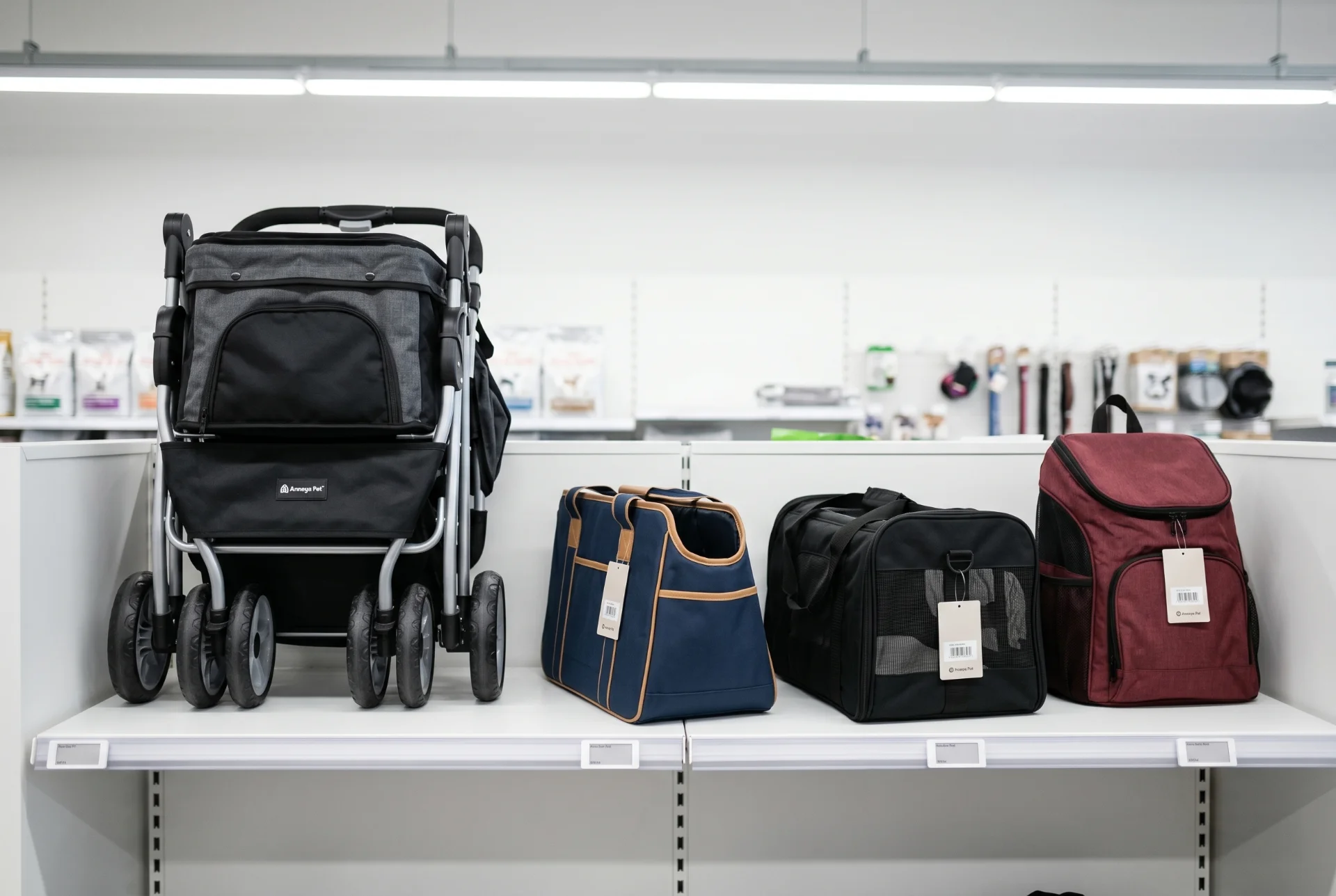
Look beyond ordinary soft-bag customization
Many factories can customize fabric, color, logo, zipper, webbing, and packaging. Those services are useful, but they do not prove vehicle-ready engineering capability. A buyer should look for signs that the OEM understands structural product development.
Useful signs include:
- Experience with vehicle anchoring concepts
- Ability to discuss load paths and reinforcement
- Familiarity with hard-soft product integration
- Awareness of misuse prevention
- Control over tooling and interface tolerances
- Clear documents for materials and inspection
- Willingness to separate engineering claims from marketing claims
At Anvoya, our Ningbo-based team works with modular pet travel systems, including pet carriers, pet car seats, ISOFIX bases, and stroller systems. Our background in European child car seats and automotive safety products shapes how we evaluate pet travel products. That does not make pet carriers legally equivalent to child car seats. It does mean we bring vehicle anchoring and dynamic-load thinking into OEM/ODM discussions.
Ask development-risk questions early
The best supplier conversations often happen before the quotation is finalized. If a brand shares an existing carrier and asks for a vehicle-ready version, the OEM should not only ask for order quantity and target price. The OEM should ask development-risk questions.
A strong supplier may ask:
- Which parts of this carrier are commercially untouchable?
- What is the current customer complaint or upgrade request?
- Which vehicle markets are you targeting?
- Do you need seat belt connection, base connection, or both?
- Will the same carrier need stroller compatibility later?
- What claims does your sales channel want to make?
- What testing, verification, or documentation does your buyer require?
These questions help prevent misalignment. They also show whether the pet carrier OEM partner is thinking like a product development partner, not only a sewing supplier.
Compare supplier capability clearly
| Supplier capability | Basic OEM | Vehicle-ready OEM partner |
|---|---|---|
| Customization | Fabric, logo, color | Interface, structure, modular system |
| Design discussion | Appearance focused | Use-case and risk focused |
| Vehicle thinking | Add strap or belt loop | Review anchoring path and stability |
| Stroller thinking | Add adapter after design | Plan interface and balance early |
| Existing SKU protection | May redesign heavily | Preserves commercial value where possible |
| Documentation | Basic spec sheet | Drawings, inspection points, material records |
| Claim discipline | Marketing-led | Evidence-led and cautious |
Certifications and documents should be verified
Buyers should always verify certificates, reports, and compliance documents directly. This is especially important for pet travel products because requirements may differ by country, sales channel, and product classification.
A responsible OEM partner should be comfortable providing relevant documents for buyer review. The buyer may also need professional evaluation for market-specific compliance, labeling, or performance requirements. If crash testing is used as part of development, the result should be described accurately. It should not be presented as proof of absolute safety.
The commercial benefit of the right partner
The right OEM partner helps a brand build a stronger product story:
- “This is not just a soft carrier.”
- “This is a vehicle-ready upgrade of a proven SKU.”
- “This product can become part of a modular travel system.”
- “This design preserves familiar user experience while improving connection logic.”
- “This line can expand into base, stroller, and accessory ecosystems.”
That story is useful for importers, distributors, retailers, and e-commerce sellers. It gives the channel a reason to treat the product differently from ordinary carriers. More importantly, it gives the brand a more disciplined way to innovate without gambling on a full redesign.
Frequently Asked Questions
What does vehicle-ready mean for a pet carrier?
Vehicle-ready means the carrier has been designed or upgraded with a planned vehicle connection concept. It should consider anchoring points, structure, user installation, and movement control. It should not be understood as a guarantee of absolute safety or as equivalent to child car seat certification.
Can an existing best-selling pet carrier be upgraded for car use?
Yes, many existing carriers can be reviewed for vehicle-ready upgrades. The key is to preserve the original SKU’s appearance, cost logic, and user experience where possible while reinforcing the necessary anchoring or interface areas. A qualified OEM should evaluate the structure before proposing changes.
Is ISOFIX necessary for every vehicle-ready pet carrier?
No, ISOFIX is not necessary for every project. Some products may use seat belt routing or other controlled connection methods. ISOFIX-style base systems can be useful for modular solutions, but brands should evaluate market fit, vehicle compatibility, cost, documentation, and user expectations.
Can one pet carrier work with both a car base and stroller frame?
Yes, one carrier can work with both if the interfaces are planned correctly. Car and stroller use create different load, balance, and operation requirements. The carrier should not rely on random accessory stacking. It needs controlled structure, fit, locking, and release design.
How should brands evaluate a pet carrier OEM supplier?
Brands should evaluate whether the supplier can discuss anchoring, load paths, reinforcement, interface tolerance, production consistency, and claim discipline. A good supplier should also help protect existing SKU value and provide clear documents for buyer verification.
Conclusion
A pet carrier OEM project becomes more valuable when it treats vehicle-ready design as an engineering and commercial upgrade, not a strap-added feature. Brands should examine anchoring, structure, user behavior, stroller interface planning, and production consistency before approving a design. The best partner protects what already sells while improving the product’s travel-system potential. If you are planning to upgrade an existing carrier or develop a modular pet travel line, Anvoya can help review the concept and discuss a practical OEM/ODM path.