
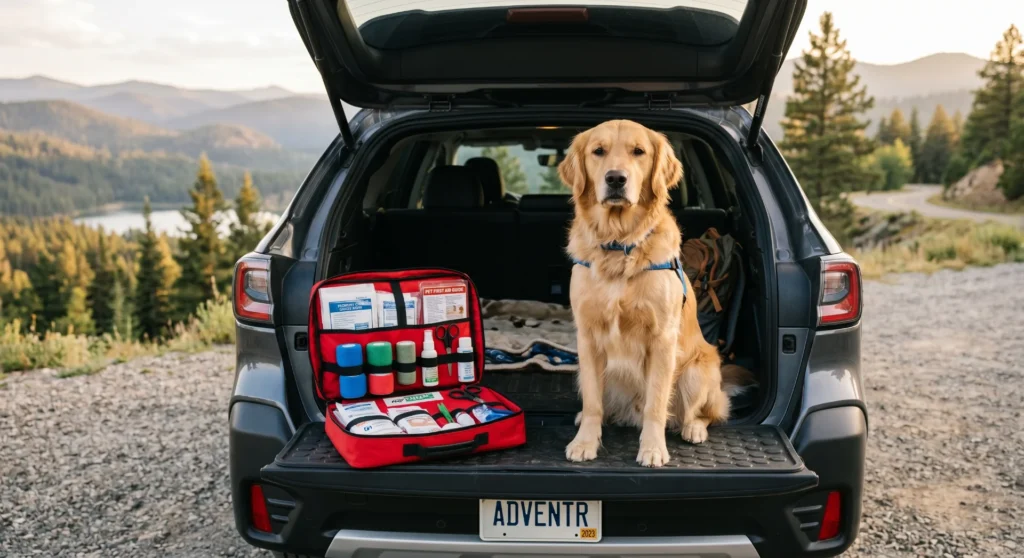
A pet emergency feels fast. Panic makes small problems worse. A first aid kit gives us a calm order before veterinary help is reached.
A pet first aid kit should be used to stabilize, protect, clean, cool, contain, or prepare a pet for transport. It is not a tool for diagnosis, medication, wound closing, vomiting control, or bone setting. The safest use is simple action that buys time for veterinary care.
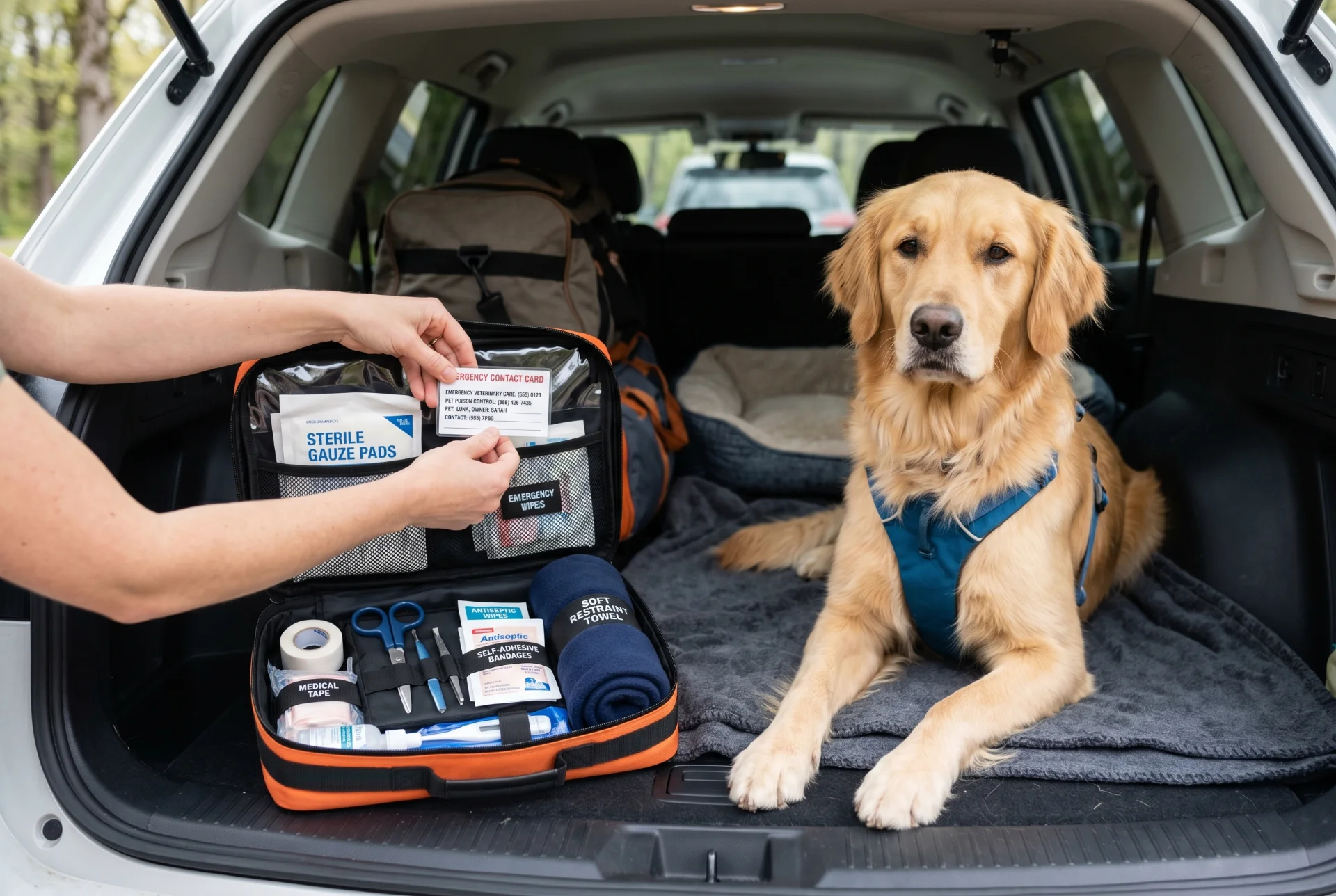
The useful part starts before the emergency. In customer conversations, we often see pet owners focus on what is inside the kit, but not when or how to use each item. That gap matters during travel, at home, and after a normal walk. Food, water, toys, and a seat cover are easy to remember. A plan for bleeding, heat stress, poisoning, or choking is easier to forget. We should see the kit as a first-response system. It helps us slow the scene down. It helps us protect people first, protect the pet next, and move toward professional help without adding harm.
How Should We Handle Cuts, Scrapes, and Bleeding?
A small cut can become stressful fast. Blood looks serious. A frightened pet may move, bite, lick, or rub the wound until it gets worse.
Use the kit to control bleeding, protect the wound, and prepare for vet care. Apply clean pressure with gauze, rinse light dirt with sterile saline, cover the area, and stop the pet from licking. Heavy bleeding, deep wounds, bite wounds, or swelling need urgent veterinary attention.
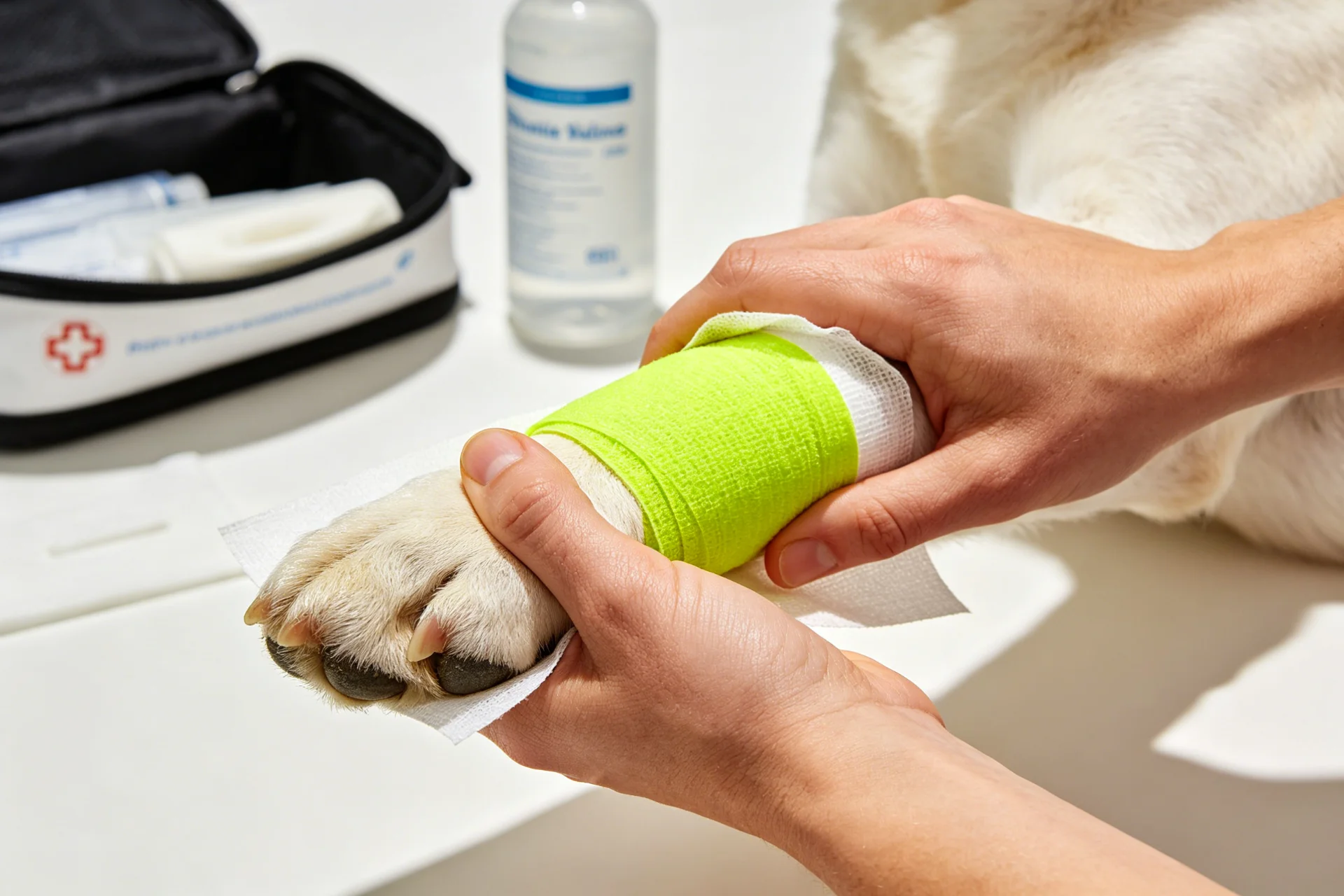
The first step is scene control. We should move the pet away from traffic, broken glass, sharp metal, or other animals. We should also protect our hands. Even a gentle dog or cat can snap when scared or in pain. A soft towel can help us limit movement. A muzzle can help in some wound cases, but we should never use a muzzle if the pet has breathing trouble, is vomiting, or may overheat.
A kit helps most when we use it in order. We do not need to “fix” the wound. We need to slow bleeding and stop dirt and licking.
| Situation we see | Safe kit action | What we should avoid |
|---|---|---|
| Light scrape | Rinse with sterile saline and cover lightly | Scrubbing hard or using strong chemicals |
| Bleeding cut | Press clean gauze on the area for several minutes | Lifting the gauze again and again to check |
| Paw pad cut | Wrap with gauze and light bandage for transport | Wrapping so tight that toes swell |
| Bite wound | Cover with clean gauze and call a vet | Treating it as a simple surface scratch |
| Deep or open wound | Apply pressure and go to a vet | Closing the wound at home |
We should also watch the pet’s behavior. Pale gums, weakness, fast breathing, heavy bleeding, or a wound on the face, chest, belly, or joint is not a “wait and see” moment. The kit gives us a clean barrier and time for transport. It does not replace wound care from a clinic.
How Should We Handle Heat Stroke & Temperature Issues?
Heat stress builds quickly in pets. A car, a sunny trail, or a crowded outdoor event can turn comfort into danger before we notice it.
Use the kit to move the pet to shade, start gentle cooling, offer small amounts of water if the pet can drink, and prepare urgent transport. Heavy panting, weakness, collapse, vomiting, dark gums, or confusion should be treated as an emergency.
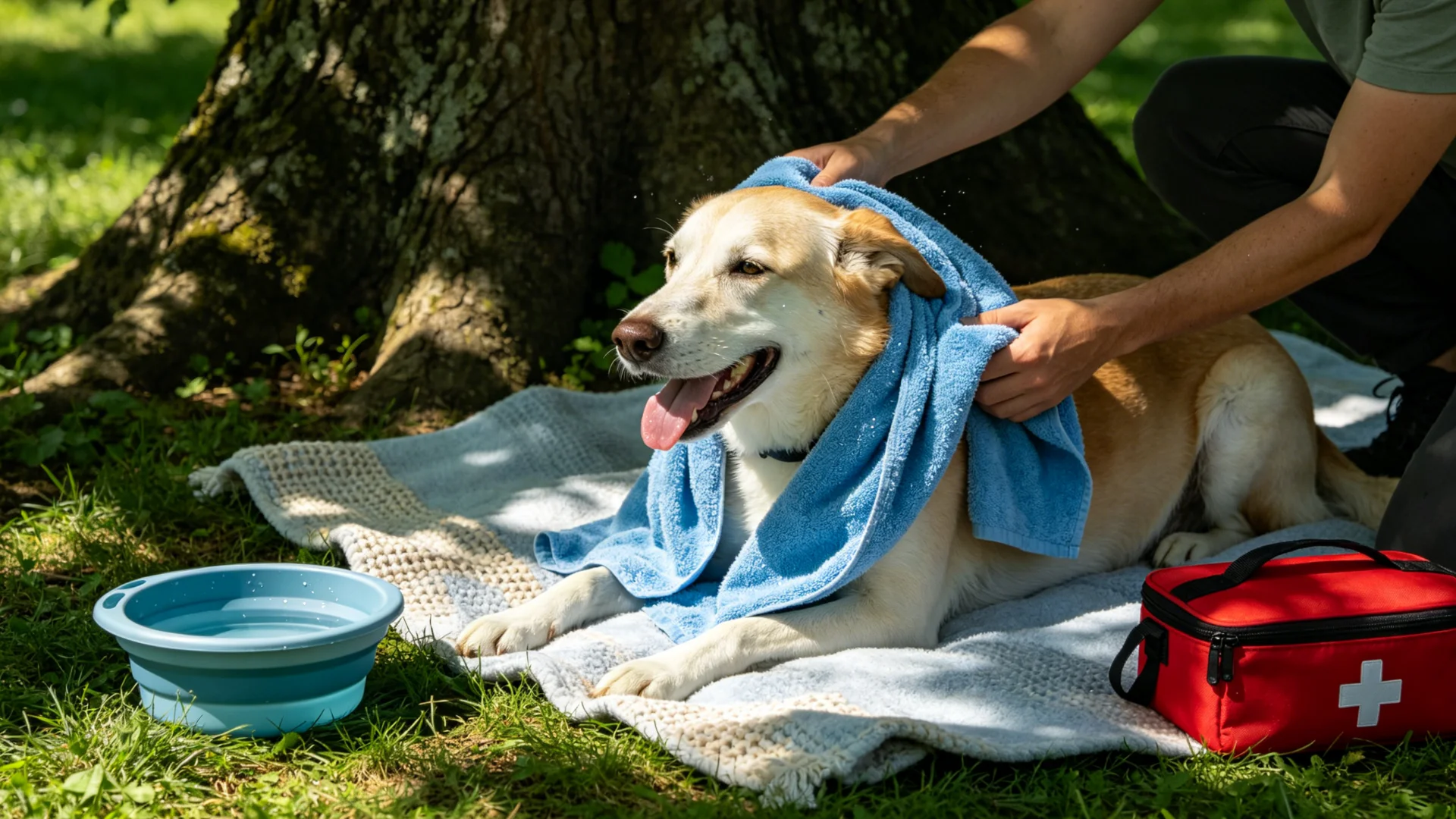
We work in pet travel, so temperature is one risk we think about often. Many owners plan the route, snacks, and comfort items. Fewer owners ask what they would do if a dog overheats halfway through the trip. Heat can come from a parked car, poor airflow, warm pavement, stress, or exercise. Flat-faced breeds, older pets, overweight pets, and pets with health issues may struggle faster.
The kit cannot “treat” heat stroke. It can support safe cooling while we contact a veterinarian or emergency clinic.
| Warning sign | What we can do with the kit | What we should not do |
|---|---|---|
| Heavy panting | Move to shade or air conditioning | Keep walking to “finish the route” |
| Warm body and drooling | Wet towels with cool water and place near neck, chest, and belly | Use an ice bath or shock the body with extreme cold |
| Weakness or wobbling | Stop activity and prepare transport | Force the pet to stand or run |
| Vomiting or collapse | Call a vet or emergency clinic at once | Wait to see if the pet “sleeps it off” |
| Refusing water | Offer small amounts only if alert | Pour water into the mouth |
A simple thermometer may be in some kits, but the number alone should not guide every choice. Behavior matters. If the pet is weak, confused, collapsing, or breathing hard, we should treat the situation as serious. Cooling should be gentle and steady. Transport should be planned early. We should also secure the pet safely in the vehicle, since a loose, distressed pet can distract the driver and create a second emergency.
How Should We Handle Poisoning & Ingested Toxins?
A pet can swallow trouble in seconds. Trash, human food, pills, plants, chemicals, or bait can turn a normal day into a high-risk moment.
Use the kit to collect evidence, prevent more ingestion, protect the pet during vomiting or diarrhea, and call a veterinarian or poison help line. Do not induce vomiting, give home medication, or guess treatment unless a veterinary professional tells you to do so.
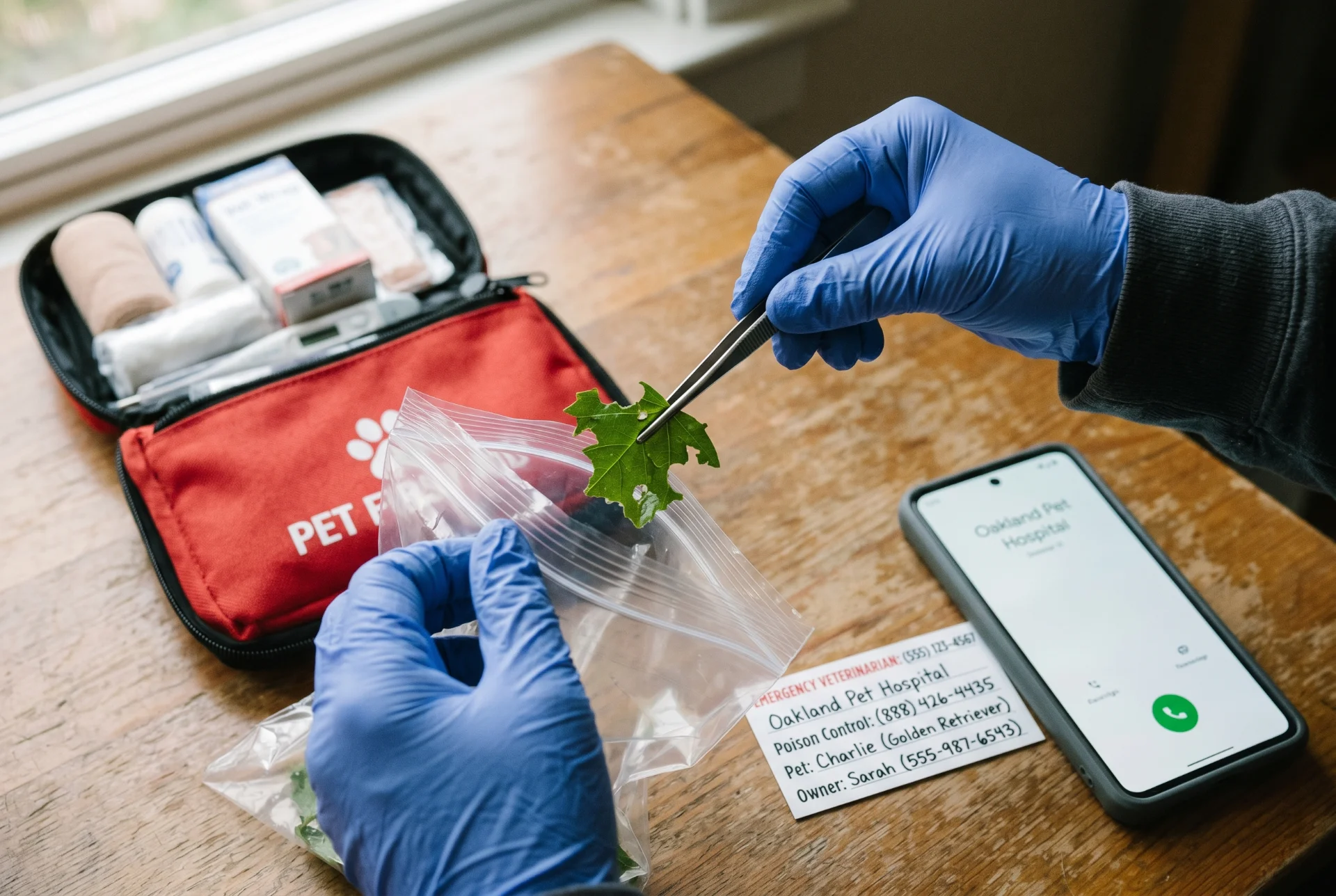
This is where restraint matters. Many owners want to “do something” right away. That feeling is normal. The wrong action can make the situation worse. Some swallowed items should not come back up. Some substances can burn twice. Some pets may choke if vomiting is forced. This is why the kit should support information and safe containment, not home treatment.
We should first remove access to the suspected toxin. Then we should save the package, label, plant sample, photo, or vomit sample if it can be done safely. These details help the vet make a faster decision.
| Scene | Safe first-response action | Information to collect |
|---|---|---|
| Pet ate unknown food | Move food away and call a vet | What it was, how much, and when |
| Pet found near pills | Keep the bottle or blister pack | Drug name, strength on label, missing amount |
| Vomiting or diarrhea | Use gloves, pads, and bags for hygiene | Color, frequency, and timing |
| Chemical exposure on fur | Prevent licking and call a vet | Product name and contact area |
| Plant chewing | Take a photo or sample | Plant type and amount eaten |
The kit may include gloves, waste bags, absorbent pads, saline, a towel, and emergency contact cards. These items help us stay clean, avoid contact, and keep the pet contained during transport. We should not give human medicine, oil, milk, salt, charcoal, or other “internet fixes” without direct veterinary instruction. A simple note card in the kit with the pet’s weight, age, medical history, and clinic contacts can save time when stress is high.
How Should We Handle Breathing & Choking Emergencies?
Breathing trouble is frightening. Choking makes people panic. Fast hands can help, but blind hands can also push an object deeper.
Use the kit to keep the airway area clear, remove only visible loose objects, avoid unsafe restraint, and seek emergency care. If the pet can cough or breathe, do not sweep blindly in the mouth. If breathing stops or gums turn blue or pale, treat it as urgent.
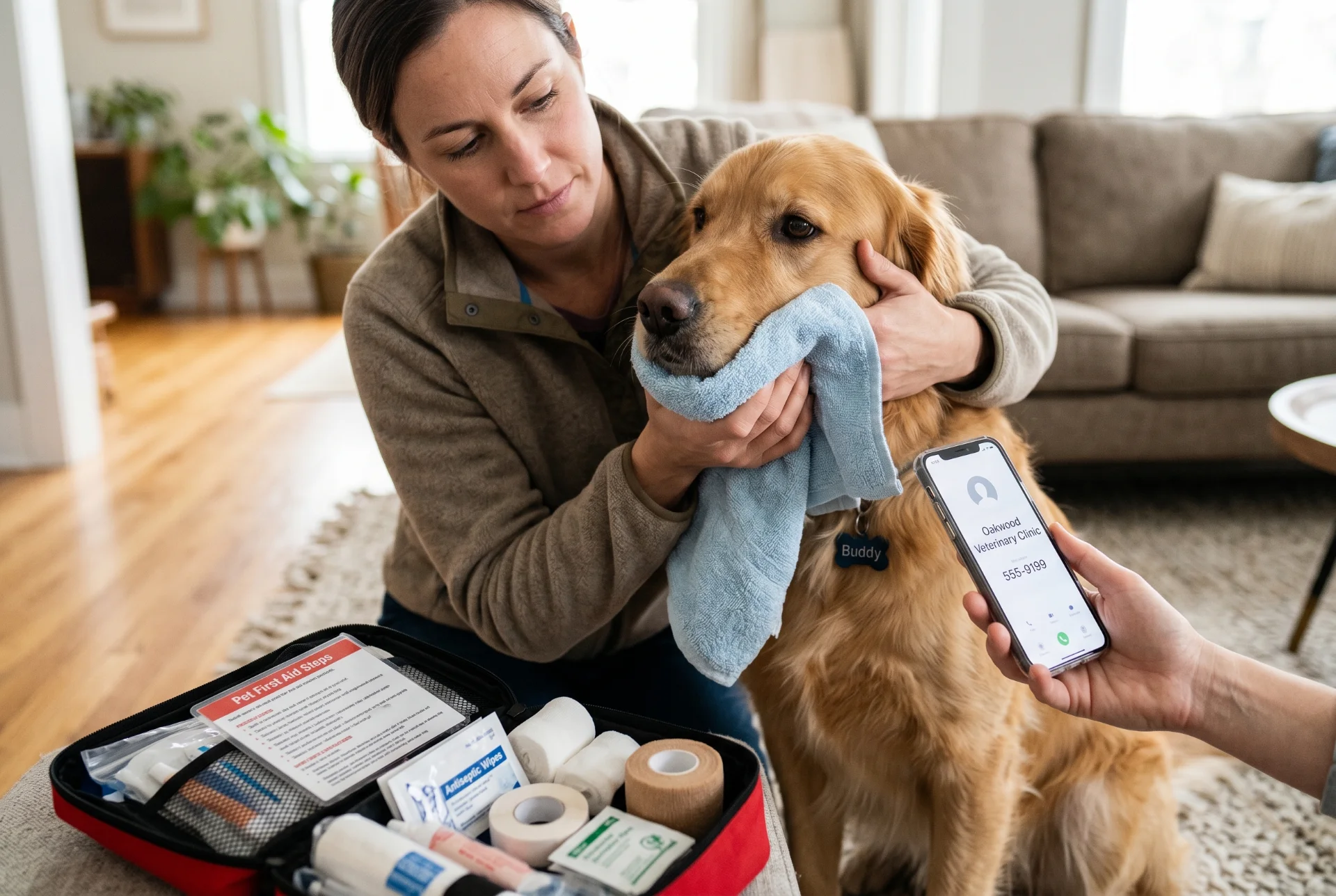
A breathing emergency is one of the clearest limits of a pet first aid kit. The kit does not replace hands-on veterinary training. It does not make us emergency clinicians. It does give us tools to reduce chaos. We can create space, keep people calm, control traffic around the pet, and prepare a fast, safer trip to care.
If a pet is coughing but still moving air, the cough may be the body’s way of clearing the airway. We should not push fingers deep into the mouth. We can look for a clearly visible object near the front of the mouth and remove it only if it is easy to grasp. We should avoid muzzles when breathing is difficult.
| Sign we notice | What we can do | What needs urgent help |
|---|---|---|
| Coughing but breathing | Keep calm and monitor closely | Continued distress or worsening effort |
| Pawing at mouth | Check only for a visible, loose object | Object stuck deep or pet panicking |
| Blue or pale gums | Go to emergency care at once | Always urgent |
| Noisy breathing | Reduce stress and keep pet cool | Breathing effort or weakness |
| Collapse or no normal breathing | Call emergency help and transport immediately | Always urgent |
Travel planning matters here. A pet that cannot breathe well should not be loose in a car. A second person should sit near the pet if possible, while the driver focuses on the road. A towel can support the body without squeezing the chest. The kit should also include emergency numbers, because searching online during panic wastes time. Pet CPR and choking-response skills are best learned in a proper class or from a veterinary source before an emergency happens.
Conclusion
A pet first aid kit is a safety system. It helps us stabilize, protect, and transport, while a veterinarian provides the real medical care.