
Transport a cat without a carrier, and the situation can feel stressful fast. You may have a vet visit, a rescue pickup, or a short move, but no proper carrier ready. The risk is that a frightened cat can escape, scratch, hide, or move freely in a vehicle[^1]. The safest solution starts with containment, restraint, and planning.
You can transport a cat without a carrier in limited situations if the cat is securely contained or restrained, such as with a fitted harness, a secure crate, or another enclosed travel solution. In a car, the priority changes: the cat must not move freely, distract the driver, or become an unsecured load during sudden braking[^2].
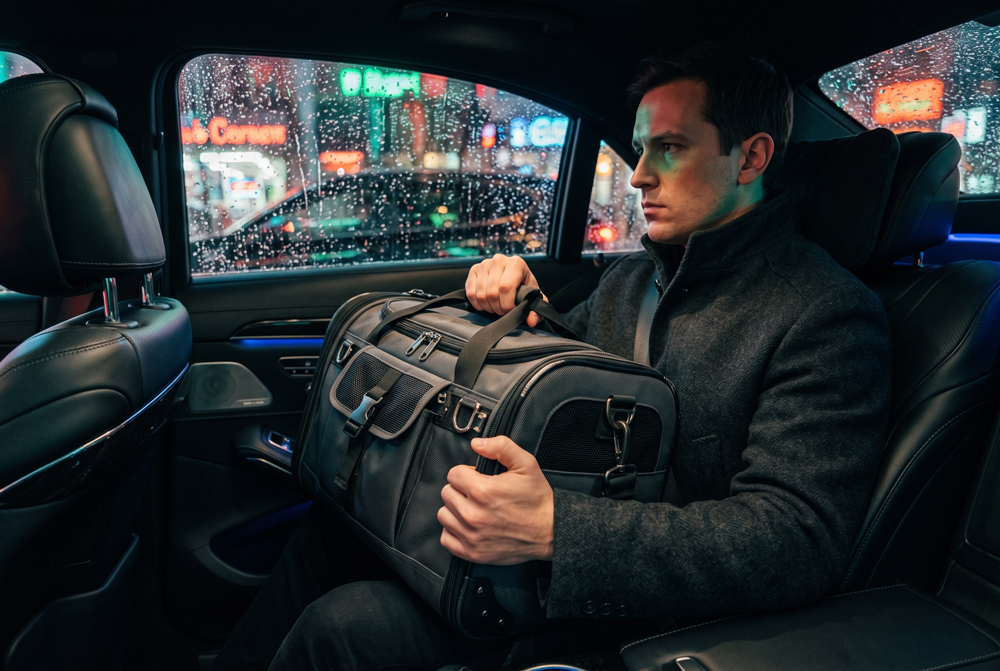
I understand why people search this question. I have seen many buyers, pet owners, and product teams start from the same urgent problem: “I do not have a carrier today.” So I will begin with practical alternatives, then explain why walking transport and vehicle transport are very different safety problems.
Can You Safely Transport a Cat Without a Carrier?
It is possible to transport a cat without a carrier, but it is not always wise. The problem is that cats do not behave like small dogs when frightened. They can twist, jump, claw, or hide under seats. If you ignore that risk, a short trip can become unsafe very quickly.
You can transport a cat without a carrier only when the cat is controlled, contained, and protected from escape. For walking or short hand-carry situations, a harness or secure enclosed box may work temporarily. For car travel, a loose cat is not safe because it can distract the driver and move during braking.
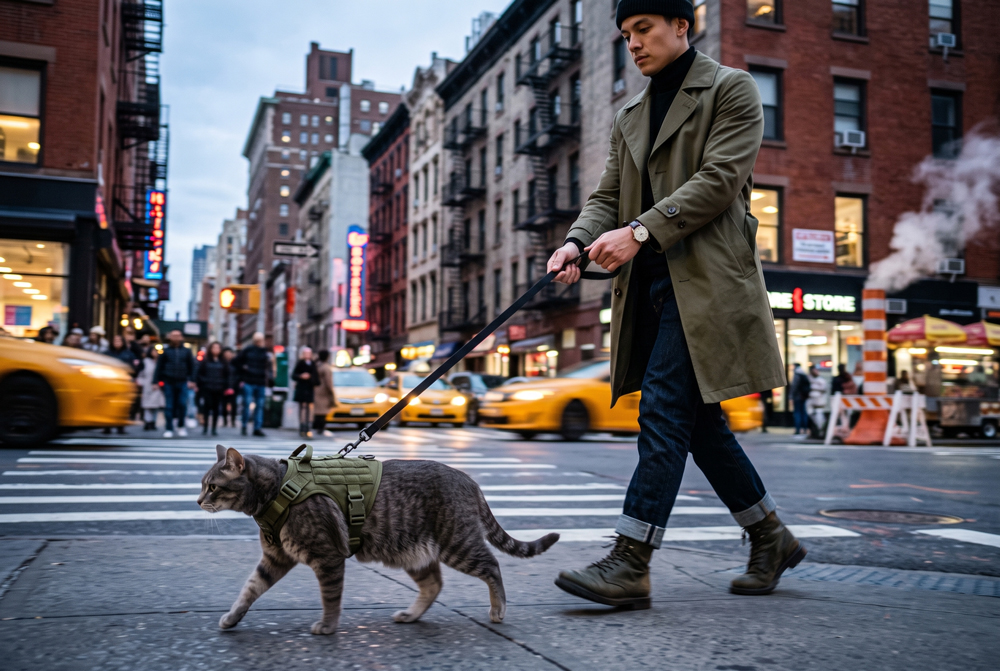
The real question is containment
I like to reframe this topic in a simple way:
The question is not simply whether a cat can be transported without a carrier, but whether the cat can be safely contained and prevented from moving freely inside the vehicle.
That distinction matters. A cat that is calm in your arms at home may panic when it hears traffic, smells a clinic, or feels a car turn. Once a cat escapes your grip, you may not get a second chance.
Walking transport is different from vehicle transport
Walking transportation and car transportation are not the same safety problem.
| Travel situation | Main risk | Possible short-term option | Safety priority |
|---|---|---|---|
| Walking to a nearby vet | Escape, scratching, panic | Harness plus backup wrap or enclosed bag | Prevent escape |
| Carrying through a building | Jumping from arms, hiding | Secure box, soft enclosed bag | Containment |
| Car travel | Driver distraction, sudden braking, moving load | Enclosed restraint or secured carrier system | Vehicle attachment and containment |
| Emergency rescue | Stress, unknown behavior | Crate, trap, rescue box | Protect human and cat |
For a very short walk, a properly fitted cat harness can help. But I would not treat a harness as a complete travel system. Cats can back out of loose harnesses, and many cats freeze or thrash when they feel pressure around the body.[^3]
For car travel, the safety requirements increase. You need to think about:
- Pet movement inside the cabin
- Driver distraction
- Passenger safety
- Sudden braking
- Vehicle attachment
- Containment after a door opens
- Emergency handling
This is also how we think at Anvoya when we evaluate modular pet travel systems. The aim is not only to protect the pet. An unsecured pet can also affect the driver and passengers. That is why vehicle-ready containment matters.
What Are the Alternatives to Transport a Cat Without a Traditional Cat Carrier?
If you need to transport a cat without a carrier, the first challenge is not comfort. It is control. A frightened cat can escape from arms, blankets, baskets, and poorly closed bags. So any alternative should reduce escape risk, limit movement, and give the cat a stable enclosed space.
The main alternatives to a traditional cat carrier are a fitted cat harness, a secure crate, an enclosed travel bag, a ventilated box, or a temporary pet travel solution with a closing structure. These options can work for short, low-risk movement, but they should be judged by containment, ventilation, strength, and escape prevention.
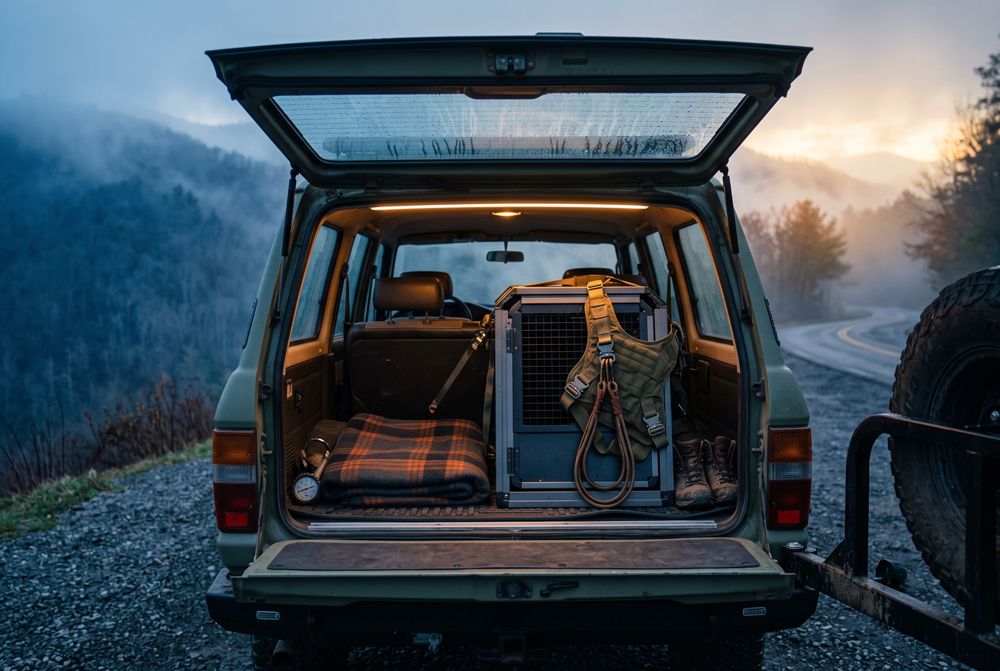
Option 1: A fitted cat harness and leash
A cat harness can be useful when you need to move a calm, trained cat over a short distance. It is not ideal for an untrained cat or a noisy environment.
A safer harness setup should include:
- A snug but not tight fit
- A design that supports the chest and shoulders
- A leash that stays short in public spaces
- A backup towel, bag, or enclosed space
- Practice at home before the trip
A harness is most suitable for walking control, not car safety. In a vehicle, the cat still needs containment. A harness clipped to a seat belt may reduce movement, but it does not create an enclosed space, and many cats can still rotate, tangle, or panic.
Option 2: A secure crate or small animal box
A secure crate may be better than carrying a cat in your arms. The crate should be rigid enough to hold shape, close firmly, and allow air circulation.
When I evaluate a temporary crate, I look for:
- Ventilation on multiple sides
- No sharp internal edges
- A door or lid that locks
- Enough room for the cat to sit and turn
- A base that does not collapse
- No large gaps where paws or heads can get stuck
A storage bin with holes is sometimes used in emergencies[^4], but I would treat it only as a temporary last resort. It must be ventilated, clean, escape-resistant, and strong enough not to crack or open.
Option 3: An enclosed travel bag
Some soft-sided enclosed bags can work for short trips. However, the bag must not collapse onto the cat, and it must not allow the cat to push through a zipper or mesh panel.
Here is a quick comparison:
| Alternative | Good for | Weak point | Better use case |
|---|---|---|---|
| Cat harness | Short controlled walking | Escape if poorly fitted | Calm, trained cats |
| Secure crate | Temporary containment | May not attach well in vehicle | Vet trips, rescue transport |
| Enclosed travel bag | Short carry trips | Soft structure can deform | Low-stress indoor movement |
| Cardboard box | Emergency only | Weak, poor durability | Very short, supervised movement |
| Proper carrier system | Regular travel | Requires purchase and storage | Car, stroller, vet, travel |
The best alternative depends on context. For a five-minute walk, a harness plus enclosed backup may be enough. For a car journey, I would move toward an enclosed and vehicle-secured solution as soon as possible.
How Can You Transport a Cat Safely in a Car Without a Carrier?
Car travel changes everything. The problem is no longer just “Can I hold my cat?” It becomes “Can I prevent my cat from moving freely, distracting the driver, or becoming a moving load?” If you miss that point, even a calm cat can create a safety issue.
To transport a cat without a carrier in a car, use the most secure enclosed restraint available, place it away from airbags, and prevent it from sliding or tipping. Do not let the cat roam freely. A harness alone is not ideal because it does not provide full containment during sudden braking or panic.
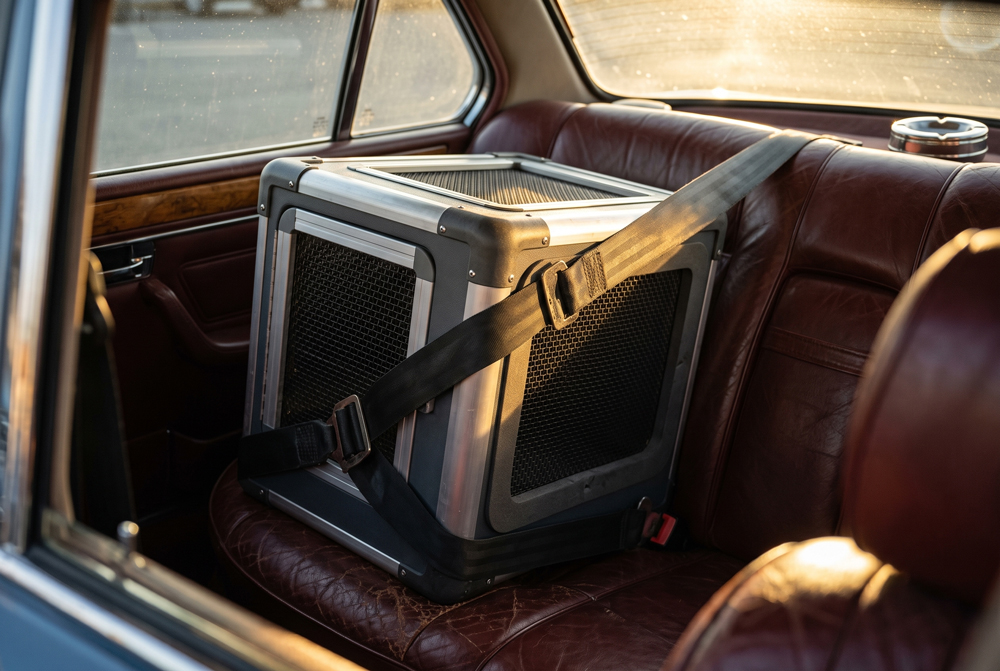
Why vehicle transport is a different safety category
Inside a car, the cat is part of the vehicle environment. That means the cat can affect more than itself.
A loose cat may:
- Climb under the brake pedal
- Jump onto the driver’s lap
- Hide under a seat
- Block the driver’s view
- Scratch or bite during panic
- Move forward during sudden braking
- Escape when a door opens
This is why I do not like advice that says, “Just wrap the cat in a towel and hold it.” That may work in a hallway. It is not a good vehicle safety plan.
A safer temporary car setup
If you truly do not have a carrier, use a layered approach.
-
Choose an enclosed object first.
A secure crate, ventilated box, or enclosed pet bag is better than open arms. -
Check ventilation.
The cat needs airflow. Do not use sealed containers.[^5] -
Prevent sliding.
Place the enclosure on the rear seat floor if it fits securely, or on the rear seat with a restraint method that prevents movement. -
Avoid the front passenger seat.
Airbags can create additional risk. The rear area is usually the better choice.[^6] -
Keep the trip short.
Temporary solutions are not designed for long journeys. -
Do not open the enclosure in the car.
If the cat escapes inside the vehicle, stop safely before doing anything.
What buyers and product teams should learn from this
For pet brands, importers, and OEM/ODM buyers, this topic reveals a real market problem. Consumers do not only buy pet carriers for comfort. They need confidence in stressful moments.
At Anvoya, we look at pet car travel through the lens of child-restraint engineering experience. Pet car seats and carriers do not currently follow the same unified mandatory crash-test regulations as child restraint systems.[^7] So I avoid claiming that any pet product proves absolute safety. Instead, I focus on practical engineering questions:
| Evaluation area | Buyer question |
|---|---|
| Containment | Can the pet escape under stress? |
| Vehicle anchoring | Can the product connect securely to the vehicle? |
| Load path | Where does force travel during sudden braking? |
| Misuse prevention | Can users install it correctly without confusion? |
| Materials | Do plastics, fabrics, and hardware stay consistent in production? |
| Modularity | Can one system work for car, carry, and stroller use? |
This is where products like ISOFIX pet car seat bases, modular carriers, and secured stroller systems become relevant. They are not just accessories. They are part of a broader pet transportation safety system.
When Is a Cat Carrier the Better Choice for Travel?
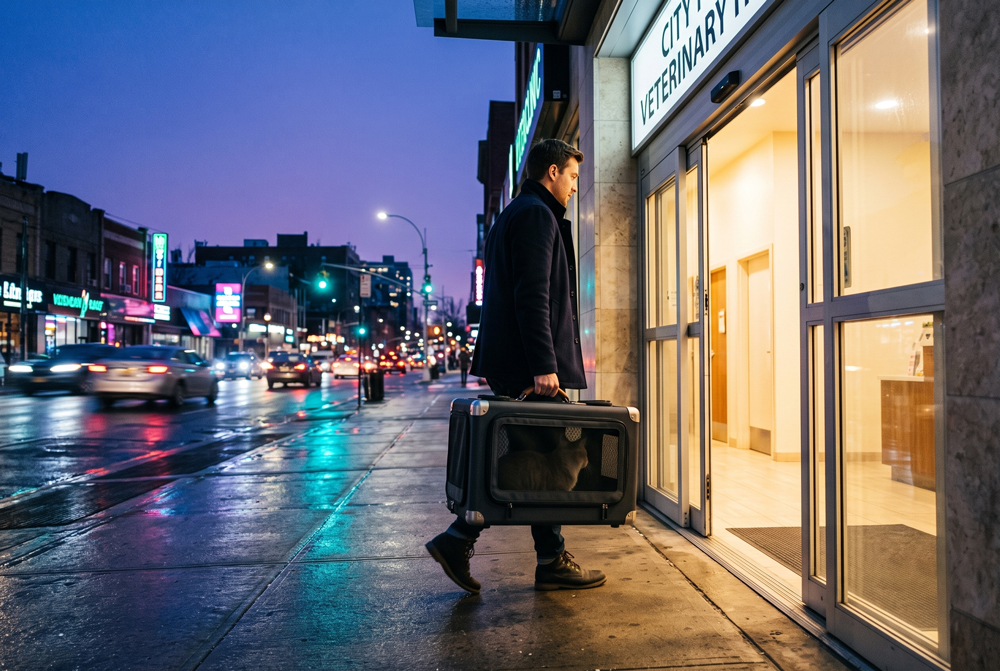
A cat carrier becomes the better choice when travel involves a vehicle, a nervous cat, a vet clinic, public spaces, or repeated use. The problem with improvising is that it may work once, until it does not. When stress rises, cats need an enclosed, predictable, escape-resistant space.
A cat carrier is usually the better travel choice when you need reliable containment, easier handling, better ventilation, and stronger control in a car or public environment.[^8] If the cat may panic, scratch, hide, or distract the driver, a proper carrier or vehicle-ready pet travel system is the safer option.
The carrier is not just a box
A good carrier solves several problems at once:
- It gives the cat a defined safe space.
- It helps the owner carry the cat without direct handling.
- It reduces escape risk at doors and clinics.
- It allows staff to move the cat more safely.
- It can support cleaner, calmer travel routines.
- It can connect with vehicle or stroller systems if designed for that use.
I once heard a pet owner describe a carrier as “the thing my cat hates.” I understand that feeling. Many cats associate the carrier with vet visits.[^9] But the solution is not always to avoid the carrier. The better solution is often to make the carrier part of normal life.
When you should stop improvising
You should move from temporary alternatives to a proper carrier when:
-
The trip involves a car.
Vehicle movement creates risks that hand-carry methods cannot solve well. -
The cat is anxious or untrained.
Stress makes escape more likely. -
You are going to a vet.
Clinics have dogs, noise, smells, and doors opening often. -
You travel more than once or twice a year.
Repeated improvisation increases risk. -
You need product consistency for resale or brand building.
For B2B buyers, improvised safety is not a product strategy.
Why this matters for pet brands
For pet product companies, the carrier category is evolving. Buyers are not only asking for a bag. They are asking for an integrated travel solution.
That is why modularity matters. Anvoya’s product direction focuses on smart, easy, and safety-oriented travel systems. For example, a modular base can help upgrade existing pet carriers into more vehicle-ready systems. A 3-in-1 product can support car, carry, and stroller use with one design language.
This is commercially important because brands often want to:
- Preserve existing best-selling carrier shapes
- Reduce development risk
- Shorten time to market
- Create expandable product lines
- Improve differentiation in a crowded category
- Offer stronger travel value without starting from zero
A proper carrier is not always the first thing a consumer searches for. Sometimes the search begins with “How do I transport my cat without one?” But the product opportunity often ends with a better carrier system.
What Should You Look for in a Pet Carrier for Safer Travel?
Choosing a pet carrier can be confusing because many products look similar online. The problem is that comfort images do not tell you much about containment, attachment, or production quality. If you choose only by color, price, or cute design, you may miss the features that matter most during travel.
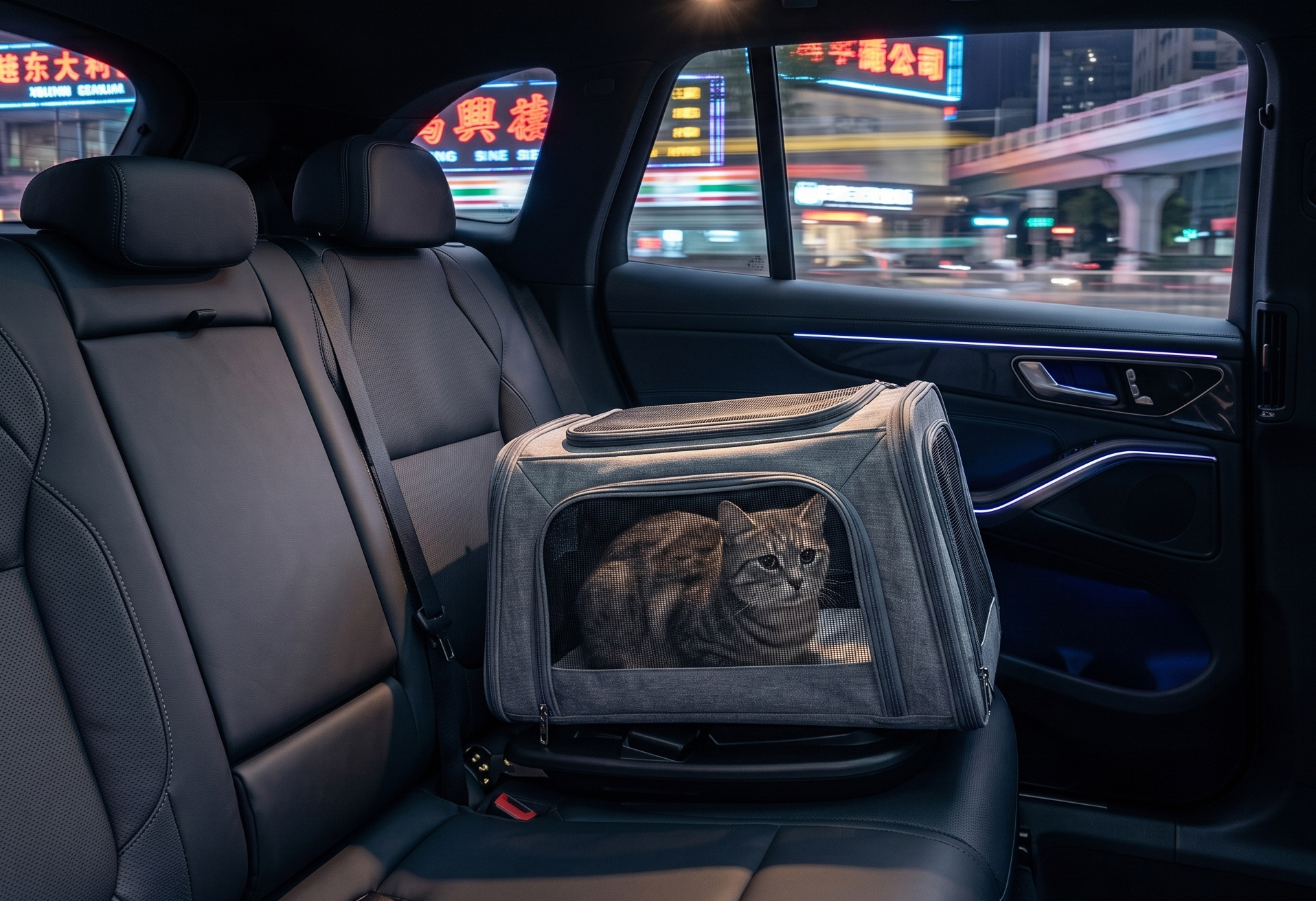
Look for a pet carrier with strong containment, secure closures, ventilation, stable structure, washable materials, comfortable access, and a way to limit movement in the vehicle. For car use, buyers should also evaluate attachment methods, load paths, misuse prevention, and supplier quality control.
Key features for individual pet owners
A safer travel carrier should include:
- Escape-resistant doors and zippers
- Ventilation on more than one side
- A stable base
- Smooth internal surfaces
- Washable lining or pads
- Enough space for the cat to turn around[^10]
- Handles that feel secure
- A design that does not collapse easily
- A way to secure the carrier in a car, when applicable
For cats, access design also matters. Top-loading carriers can make vet visits easier because the cat does not need to be dragged out through a front door.[^11] A removable top or wide opening can reduce stress for both the cat and the handler.
Evaluation points for B2B buyers
For importers, distributors, retailers, and private-label brands, the evaluation should go deeper. A product sample can look good, but production consistency decides whether the product is commercially reliable.
Here is a practical procurement checklist:
| Area | What to check | Why it matters |
|---|---|---|
| Structure | Frame, base, hinges, stitching | Prevents collapse or deformation |
| Closure system | Zippers, locks, buckles | Reduces escape risk |
| Materials | Fabric, mesh, plastic, metal hardware | Affects durability and safety |
| Vehicle interface | Seat belt path, ISOFIX base, anti-slip design | Helps limit movement in cars |
| Ventilation | Mesh area and airflow layout | Supports comfort during travel |
| Tooling | Mold quality and repeatability | Supports consistent production |
| QC process | Incoming, in-line, final inspection | Reduces defect risk |
| Documentation | Test reports, material declarations, supplier records | Helps buyers verify claims |
A note about crash testing and claims
Crash testing can be a useful engineering tool. However, pet car seats do not currently operate under the same unified and mandatory crash-test regulations as child car seats. So I would not describe a pet carrier as “absolutely safe” or equivalent to a legally certified child restraint.
A more responsible supplier should explain:
- What was tested
- Which method was used
- What the sample configuration was
- What the test did and did not prove
- Whether the buyer can review the report
- How production units match tested samples
At Anvoya, our advantage is not a slogan. It comes from applying child car seat engineering thinking to pet travel: vehicle anchoring, ISOFIX connection, structural load paths, dynamic-load thinking, misuse prevention, tooling, materials, and production consistency.
For buyers developing pet travel lines, that engineering mindset can reduce risk and create a stronger product story.
Frequently Asked Questions
Can I drive with my cat loose in the car?
No, I do not recommend driving with a cat loose in the car. A loose cat can distract the driver, hide near pedals, move during sudden braking, or escape when a door opens. Use an enclosed and secured travel solution whenever possible.
Can I use a cardboard box to transport a cat without a carrier?
A cardboard box may work only as a short emergency option if it is strong, ventilated, clean, and securely closed. It is not ideal for car travel because it can collapse, tear, slide, or open if the cat panics.
Is a cat harness safe for car travel?
A cat harness can help control movement, but it is not a complete car travel solution. A harness does not provide full containment, and a frightened cat may twist or tangle. In a vehicle, an enclosed carrier or secured pet travel system is usually better.
How do I calm my cat during travel?
You can calm your cat by keeping the environment quiet, using familiar bedding, avoiding sudden handling, and covering part of the enclosure for privacy.[^12] For anxious cats or long trips, ask a veterinarian for advice before travel.
What is the safest way to transport a cat to the vet?
The safest common option is a secure, well-ventilated carrier that prevents escape and is easy to handle. If the trip involves a car, the carrier should be placed and secured so it does not slide, tip, or interfere with the driver.
Conclusion
You can transport a cat without a carrier in some short, controlled situations, but the safer goal is always containment. Walking transport may allow a harness or temporary enclosed option. Vehicle transport is different because driver distraction, sudden braking, passenger safety, and attachment all matter. If your brand is developing pet travel products, I recommend evaluating carriers as part of a complete travel safety system. To explore OEM/ODM modular pet carrier, ISOFIX base, or stroller-ready solutions, connect with Anvoya for a practical product development discussion.
[^1]: "AAFP and ISFM Feline-Friendly Handling Guidelines - PMC", https://pmc.ncbi.nlm.nih.gov/articles/PMC11107994/. Veterinary and feline-welfare guidance describes transport as a common stressor for cats and emphasizes secure containment to reduce escape and handling risks; the evidence is general guidance rather than a controlled study of every transport scenario. Evidence role: general_support; source type: institution. Supports: Cats under stress during transport can attempt to escape, hide, scratch, or otherwise resist handling, making secure containment important.. Scope note: Contextual support; it supports the general risk pattern but not the frequency of each behavior in cars.
[^2]: "Driving with Pets as a Risk Factor for Motor Vehicle Collisions among ...", https://pmc.ncbi.nlm.nih.gov/articles/PMC4492539/. Road-safety guidance on vehicle occupants and distractions supports the principle that animals should not move freely in the cabin because they can distract the driver and become hazardous during abrupt deceleration; this evidence applies broadly to pets and unsecured loads, not cats alone. Evidence role: general_support; source type: government. Supports: Unrestrained pets or unsecured loads in vehicles can distract drivers and create injury risks during sudden stops or crashes.. Scope note: Contextual support; most transport-safety sources address pets or unsecured objects generally rather than cats specifically.
[^3]: "Stop Your Cat from Escaping the Harness: Escape-Proof Tips", https://www.youtube.com/watch?v=Onou8oXJ_30. Feline-behavior guidance on harness use notes that cats require gradual acclimation and properly fitted equipment, supporting the concern that poorly fitted or unfamiliar harnesses can lead to escape or stress responses; the source does not quantify how often cats back out of harnesses. Evidence role: mechanism; source type: institution. Supports: Cats may resist unfamiliar restraint and harnesses require proper fit and acclimation to reduce escape risk.. Scope note: Contextual support; it explains the mechanism and handling concern but may not provide incident-rate data.
[^4]: "Pet Preparedness | Spokane County, WA", https://www.spokanecounty.gov/1786/Pet-Preparedness. Animal-welfare emergency-preparedness materials describe the need for secure, ventilated temporary containment for pets during evacuation or emergency movement, providing contextual support for improvised containers when standard carriers are unavailable; such sources do not endorse every type of storage bin as safe. Evidence role: case_reference; source type: institution. Supports: In emergencies, animal-welfare guidance may discuss temporary ventilated containers when standard carriers are unavailable.. Scope note: Contextual support; it supports temporary ventilated containment in emergencies, not the safety of any specific storage-bin design.
[^5]: "Transporting Animals Commerce – Resources & Guidance", https://www.aphis.usda.gov/animal-care/awa-services/transporting-animals-commerce. Animal-transport standards require ventilation openings in containers used for live animals, supporting the statement that cats should not be placed in sealed containers; the standards are designed for regulated transport contexts and provide a conservative benchmark for informal travel. Evidence role: mechanism; source type: institution. Supports: Animal transport containers require adequate ventilation to protect animal welfare.. Scope note: Contextual support; transport standards may address commercial or air transport rather than short private car trips.
[^6]: "Vehicle Air Bags and Injury Prevention - NHTSA", https://www.nhtsa.gov/vehicle-safety/air-bags. Government airbag-safety guidance explains that front passenger airbags can injure small or improperly positioned occupants and that rear seating is generally safer for vulnerable passengers, supporting the caution against placing a pet enclosure in front of an active airbag; the evidence is extrapolated from occupant-safety guidance rather than pet-specific crash testing. Evidence role: general_support; source type: government. Supports: Airbags can pose risks to small occupants or objects in the front seat, and rear-seat placement is generally safer for vulnerable passengers or restraints.. Scope note: Contextual support; the source likely addresses human occupants, especially children, more directly than pets.
[^7]: "Federal Motor Vehicle Safety Standards; FMVSS No. 213, “Child ...", https://www.federalregister.gov/documents/2024/10/09/2024-22448/federal-motor-vehicle-safety-standards-fmvss-no-213-child-restraint-systems-fmvss-no-213a-child. Federal vehicle-safety regulations establish mandatory performance requirements for child restraint systems, while comparable unified mandatory crash-test requirements for pet carriers are not established in the same regulatory framework; this supports the regulatory distinction but does not evaluate any individual pet product. Evidence role: historical_context; source type: government. Supports: Child restraint systems are regulated under mandatory vehicle safety standards, while pet travel restraints do not have an equivalent unified mandatory federal crash-test regime.. Scope note: Contextual support; it establishes the regulatory framework rather than proving the safety or unsafety of specific pet seats.
[^8]: "AAFP and ISFM Feline-Friendly Handling Guidelines - PMC", https://pmc.ncbi.nlm.nih.gov/articles/PMC11107994/. Veterinary guidance commonly recommends transporting cats in secure, well-ventilated carriers to improve containment and handling during travel, supporting the article’s preference for a carrier in higher-risk settings; the guidance is consensus-based and practical rather than a direct comparative trial of all alternatives. Evidence role: expert_consensus; source type: institution. Supports: Veterinary and feline-care organizations recommend secure carriers for transporting cats, especially to veterinary clinics.. Scope note: Contextual support; it supports the general recommendation but may not compare every possible carrier alternative.
[^9]: "Happy cats: stress in cats and their carers associated with ...", https://pmc.ncbi.nlm.nih.gov/articles/PMC10812371/. Research and veterinary behavior literature identify carriers and veterinary visits as common sources of feline stress and discuss acclimation strategies, supporting the claim that cats may associate carriers with unpleasant veterinary experiences; the evidence supports a common behavioral pattern rather than proving it for all cats. Evidence role: general_support; source type: paper. Supports: Cats often experience stress related to carriers and veterinary visits, and carrier training can reduce negative associations.. Scope note: Contextual support; individual cats vary in prior experience and response.
[^10]: "Lesson 1: Preparing and Receiving Pets for Air Travel", https://www.aphis.usda.gov/pet-travel/pets-on-planes/preparing-pets-air-travel. Live-animal transport standards describe adequate container dimensions in terms of allowing the animal to stand, sit, lie down, and turn around naturally, supporting the carrier-size criterion used in the article; these standards are more formal than ordinary local travel but provide a recognized benchmark. Evidence role: definition; source type: institution. Supports: Animal-transport standards commonly define adequate container size as allowing the animal to stand, sit, lie down, and turn around normally.. Scope note: Contextual support; formal transport standards may exceed minimum needs for very short trips.
[^11]: "AAFP and ISFM Feline-Friendly Handling Guidelines - PMC", https://pmc.ncbi.nlm.nih.gov/articles/PMC11107994/. Feline-friendly handling guidance recommends carriers that open from the top or have removable lids because they allow easier access and can reduce forceful removal, supporting the claim that such designs may simplify veterinary visits; this is handling guidance rather than a controlled comparison of carrier designs. Evidence role: mechanism; source type: institution. Supports: Top-opening or removable-top carriers can facilitate lower-stress veterinary examination and handling.. Scope note: Contextual support; the source explains the handling rationale but may not quantify stress reduction.
[^12]: "Feline stress management during air travel - PMC - NIH", https://pmc.ncbi.nlm.nih.gov/articles/PMC10812047/. Feline-welfare and veterinary guidance recommends minimizing noise and handling stress, using familiar bedding or scents, and covering carriers when appropriate to reduce visual stimulation during travel; the support is based on stress-reduction principles rather than proof that every cat will calm down. Evidence role: expert_consensus; source type: institution. Supports: Feline-welfare guidance supports reducing sensory stress during travel through quiet handling, familiar scents, and partial carrier covering.. Scope note: Contextual support; effectiveness depends on the individual cat and the travel situation.