
A cat in a car can turn a short drive into a stressful and risky situation if the cat is loose, frightened, or poorly secured. That stress can distract the driver, and sudden braking can turn an unsecured carrier into a moving load. I use one simple rule: secure the cat, secure the carrier, and protect the driver first.
The safest way to transport a cat in a car is to place the cat inside a suitable carrier, position the carrier in a stable vehicle location, and restrain the carrier so it cannot slide, tip, or become airborne during sudden braking. A loose cat should never be allowed to roam inside the vehicle.
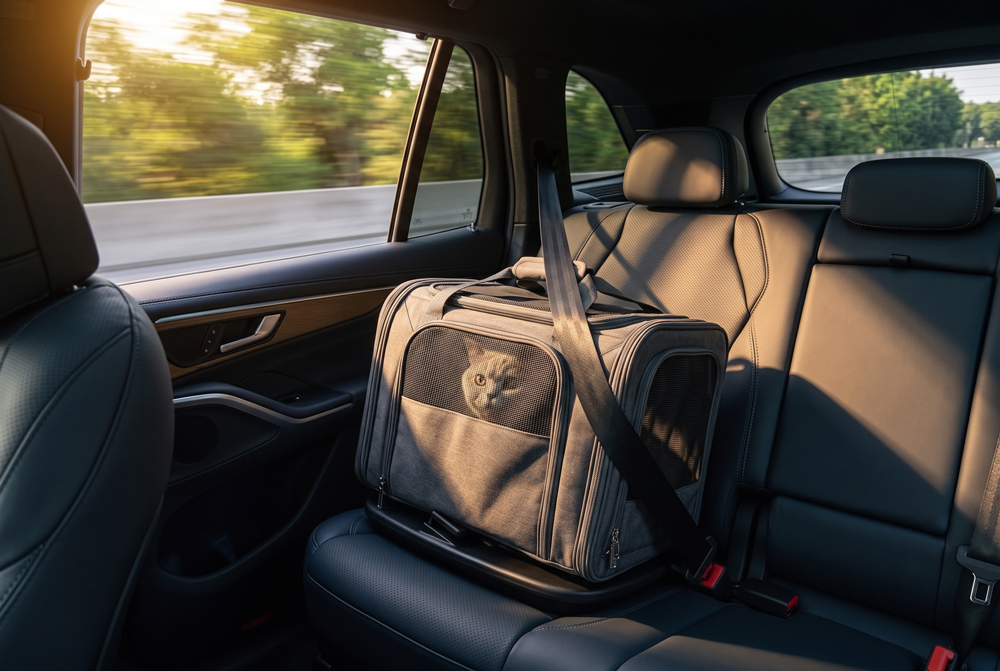
Most cat travel problems do not start with long road trips. They start with “just a quick drive.” I have seen many owners treat the carrier as a convenience item, not a restraint system. That is where the risk begins, especially when the cat panics or the driver has to brake suddenly.
What Is the Safest Way to Transport a Cat in a Car?
A cat in a car needs more than comfort. It needs control, containment, and stability. The problem is that many cats hide, jump, scratch, or crawl under seats when they feel scared. That can quickly become a driver distraction and a vehicle safety issue.
The safest way to transport a cat in a car is to use a closed pet carrier that is appropriately sized, placed in a stable position, and secured to reduce movement. The cat should remain inside the carrier for the entire journey, and the driver should avoid handling the cat while driving.
Why a loose cat creates real driving risk
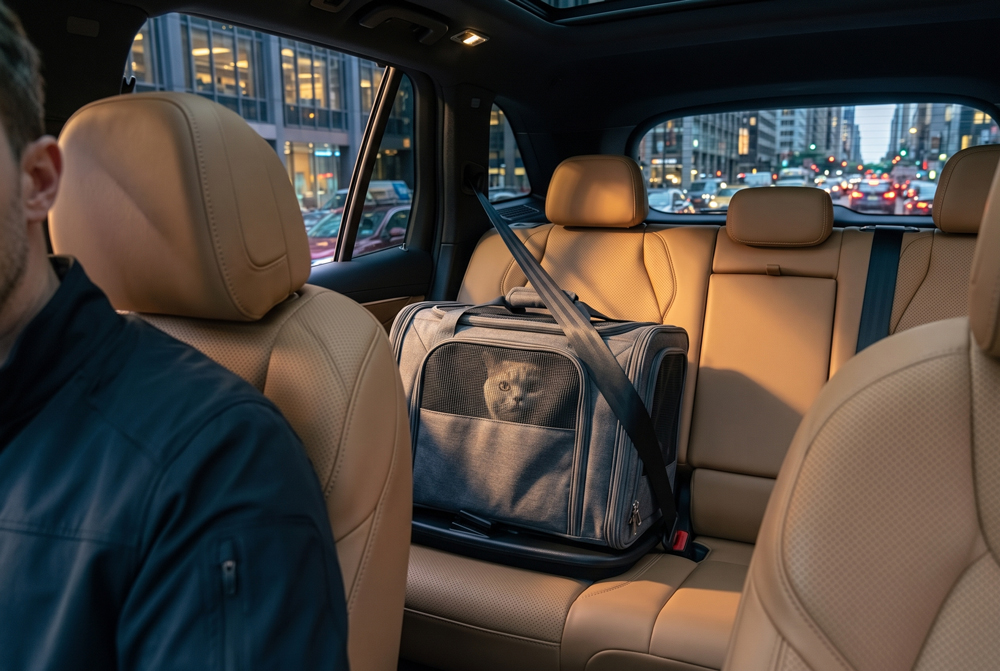
A loose cat may look harmless at home, but a moving vehicle changes everything. The cat can react to noise, road vibration, sunlight, air vents, or the sound of passing traffic. Even a calm cat can panic when the car turns, brakes, or hits a pothole.
When I talk about how to transport a cat in a car safely, I always start with the driver. That may sound strange because the cat is the passenger we are focused on. But driver control is the first safety layer.
A loose cat can:
- Crawl under the brake or accelerator pedal
- Jump onto the driver’s lap
- Block mirrors or the dashboard view
- Distract the driver with sudden movement
- Escape when a door opens
- Become a moving load during sudden braking
A secured carrier is not only about protecting the cat. It also helps protect the driver, passengers, and other road users.
The carrier is a containment tool first
Many people think a carrier is only for carrying the cat from the house to the car. I see it differently. In vehicle travel, the carrier has three jobs:
- Contain the cat so it cannot interfere with the driver.
- Create a familiar boundary that can reduce panic and sudden movement.
- Provide a structure that can be secured to the vehicle environment.
This does not mean every carrier is automatically suitable for vehicle use. A soft tote bag, a fashion-style pet bag, or a collapsible carrier may work for short hand-carrying. However, it may not provide enough structure, anchoring points, or stability in a car.
A simple pre-drive checklist
Before I transport a cat in a car, I like to check five things:
| Checkpoint | What I look for | Why it matters |
|---|---|---|
| Carrier size | Cat can turn around but not slide excessively | Reduces panic and uncontrolled movement |
| Door latch | Door closes firmly and cannot pop open easily | Prevents escape |
| Base stability | Carrier sits flat and does not rock | Reduces tipping risk |
| Vehicle position | Carrier is not on a loose or unstable surface | Reduces movement |
| Restraint method | Carrier is secured with belt, anchor, or approved system | Helps limit sliding during sudden braking |
The safest method is rarely the most complicated one. It is usually the one that prevents the most common problems: distraction, sliding, tipping, and escape.
How Should You Secure a Cat Carrier to Transport a Cat in a Car Safely?
A cat in a car is only as secure as the carrier that holds it. Many owners place a carrier on a seat and assume the job is done. But an unsecured carrier can slide forward, tip sideways, or hit the seatback during sudden braking.
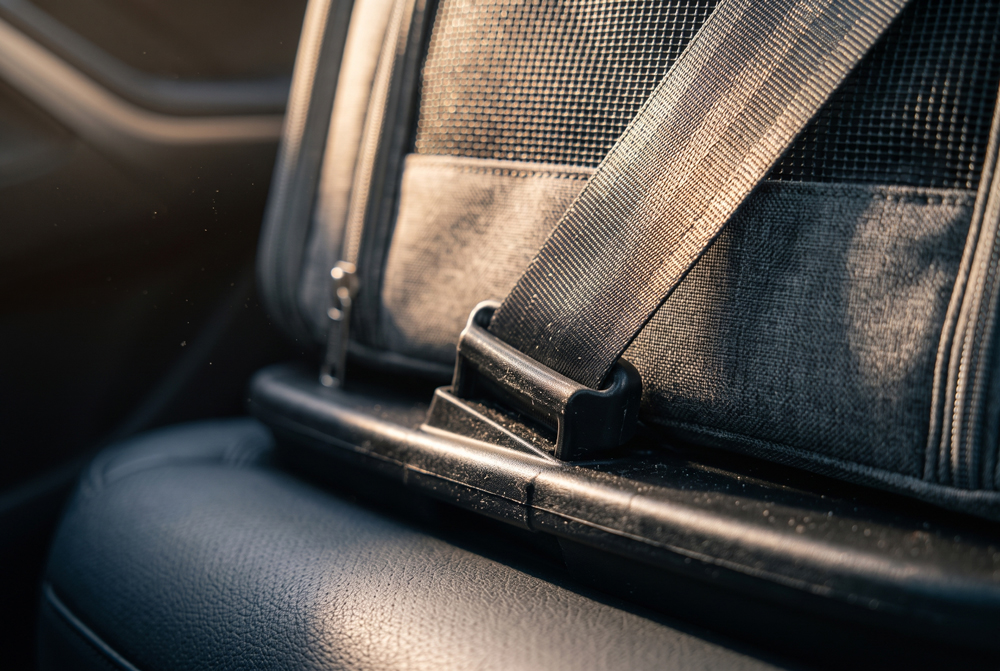
You should secure a cat carrier in a car by placing it on a stable surface and using the vehicle seat belt, approved anchor points, or a compatible base system to reduce movement. The carrier should not rely only on friction, the cat’s weight, or someone holding it.
Why “holding the carrier” is not enough
I understand why people do it. A passenger holds the carrier on their lap, speaks softly to the cat, and feels in control. But in sudden braking, human grip strength is not a reliable restraint method. The carrier can be pulled forward faster than expected.
A typical city emergency stop can create high forward force. Even at low speeds, a carrier can shift sharply. On highways, the risk increases because both vehicle speed and stopping distance increase.
A better approach is to treat the carrier like cargo that contains a living animal. It should be:
- Contained
- Positioned
- Restrained
- Checked before departure
Common ways to secure a cat carrier
The best method depends on the carrier design and vehicle layout. I never assume that one method fits every product, because carriers have different structures and belt paths.
| Securing method | Best use case | Buyer caution |
|---|---|---|
| Vehicle seat belt through carrier belt path | Carriers designed with reinforced belt routing | Verify the belt path is intended for vehicle use |
| Seat belt around carrier body | Short trips with rigid carriers | Belt may slip if carrier shape is rounded or soft |
| Footwell placement | Some small rigid carriers on short drives | Not suitable for all vehicles; ventilation must stay clear |
| ISOFIX-style base or vehicle-ready platform | Modular pet travel systems | Confirm compatibility with carrier and vehicle |
| Cargo area restraint | Larger vehicles and SUVs | Avoid loose placement in open cargo spaces |
What I look for in a belt-secured carrier
A carrier should not deform heavily when the belt is tightened. If the side wall collapses, the belt may not hold the carrier well. This is one reason ordinary soft carriers can be misleading. They may feel comfortable in the hand, but they may not manage vehicle movement in a predictable way.
I look for:
-
Defined belt routing
The carrier should show where the belt goes. Improvisation creates misuse. -
Reinforced structure
The carrier should resist crushing or folding when restrained. -
Stable base geometry
A flat, wide base usually sits more predictably than a narrow or rounded one. -
Reliable latch and door system
The door should not open if the carrier shifts. -
Clear instructions
A product meant for car travel should tell the user how to install it.
Why this matters for brands and buyers
For pet brands, importers, and OEM/ODM buyers, the question is not only, “Does this carrier look good?” The better question is, “Can the end user install this carrier correctly under real conditions?”
At Anvoya, this is where our background in child car seat and automotive safety product development shapes our thinking. Pet car seats and pet carriers are not regulated like child restraint systems, and I do not present crash testing as a guarantee of absolute safety. But the engineering mindset still matters.
A vehicle-ready pet carrier should consider:
- Load paths
- Anchor compatibility
- Misuse prevention
- Material consistency
- Tooling precision
- Production repeatability
- Clear consumer instructions
That is the difference between a carrier that is easy to carry and a carrier that is more suitable for car travel.
Where Should You Put a Cat Carrier in a Car?
A cat in a car should be placed where the carrier can sit flat, remain stable, and avoid interfering with the driver. The wrong location can make even a good carrier less effective. A loose back seat, front passenger seat, or open cargo area may all create different risks.
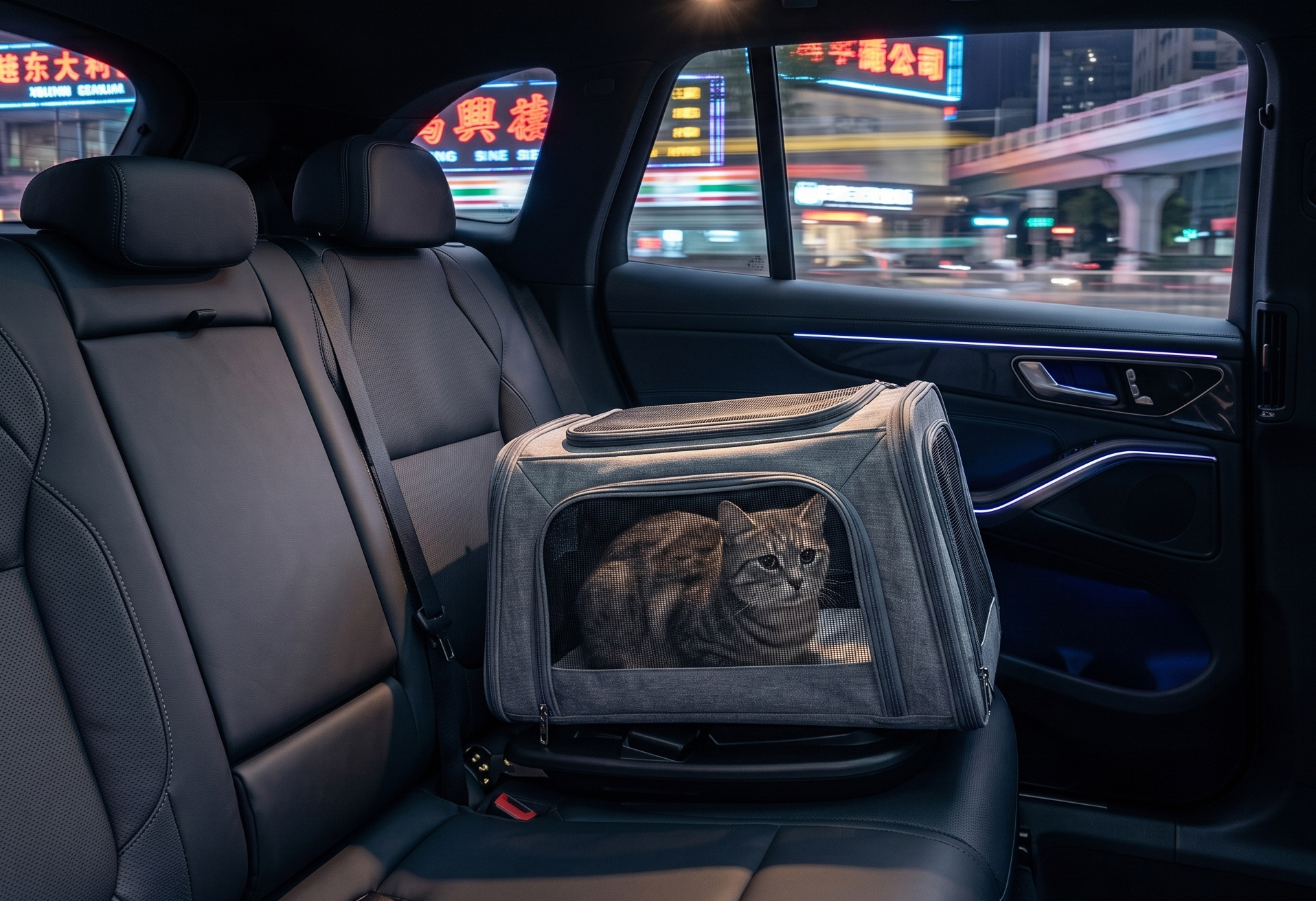
The best place for a cat carrier in a car is usually a stable rear-seat position or another secure location where the carrier can be restrained and kept away from airbags, pedals, and driver controls. The carrier should not block visibility or move freely during turns or braking.
Rear seat vs. front seat vs. cargo area
Many people put the carrier on the front passenger seat because they want to watch the cat. I understand that instinct. I have done the same mental calculation before a vet visit: “If I can see the cat, I will feel calmer.” But visibility is not the same as safety.
The front seat may expose the carrier to airbag deployment zones. It may also tempt the driver to reach over, unzip the carrier, or check on the cat while driving. That creates distraction.
The rear seat often gives more separation from the driver and can allow better restraint options. However, the carrier still needs to be secured. Simply placing it on the seat is not enough.
The cargo area can work for some vehicles, but open cargo spaces in SUVs or vans can allow sliding unless the carrier is tied down properly. Ventilation and temperature must also be considered.
| Vehicle location | Advantages | Risks |
|---|---|---|
| Rear seat | Often easier to secure; away from pedals | Carrier may slide if not belted |
| Front passenger seat | Easy to monitor | Airbag risk; driver distraction |
| Rear footwell | Low center of gravity in some vehicles | Space and airflow may be limited |
| SUV cargo area | More room for larger carrier | Can slide or tip if not restrained |
| Driver’s lap | None for safe driving | Severe distraction and control risk |
Why stability matters more than convenience
A stable location reduces sudden carrier movement. Cats are sensitive to motion. If the carrier slides at every turn, the cat may become more anxious. That anxiety can lead to scratching, loud vocalization, panting, or escape attempts when the door opens.
I prefer a location that checks these boxes:
- The carrier sits level.
- The carrier does not rock.
- The door remains accessible after parking.
- Airflow reaches the carrier.
- Sunlight does not overheat the cat.
- The carrier can be restrained.
- The driver is not tempted to touch the cat.
Keep the carrier away from airbags and controls
Airbags are designed for human occupants in specific seating positions. A pet carrier placed in an airbag deployment zone may be exposed to force that the carrier was not designed to manage. This is one reason I generally avoid recommending the front passenger seat unless the vehicle manual and product instructions clearly allow it.
Also, the carrier must never sit where it can interfere with:
- Pedals
- Gear selector
- Steering
- Parking brake
- Seat adjustment controls
- Driver visibility
For product development, location affects design
For B2B buyers, placement is not just a user instruction issue. It affects product design. If a carrier is intended for rear-seat use, the belt path, base shape, handle clearance, and door access should support that use case.
A strong vehicle-ready pet carrier design should answer practical questions:
- Can the consumer install it without confusion?
- Can the carrier stay stable on common vehicle seats?
- Can the belt or base system connect without twisting?
- Can the cat be loaded and unloaded without unfastening everything?
- Can the product fit multiple vehicle models?
These details create commercial value because they reduce returns, complaints, and misuse. They also help brands build trust in a category where customers are becoming more safety-aware.
Can a Cat Travel in a Car Without a Carrier?
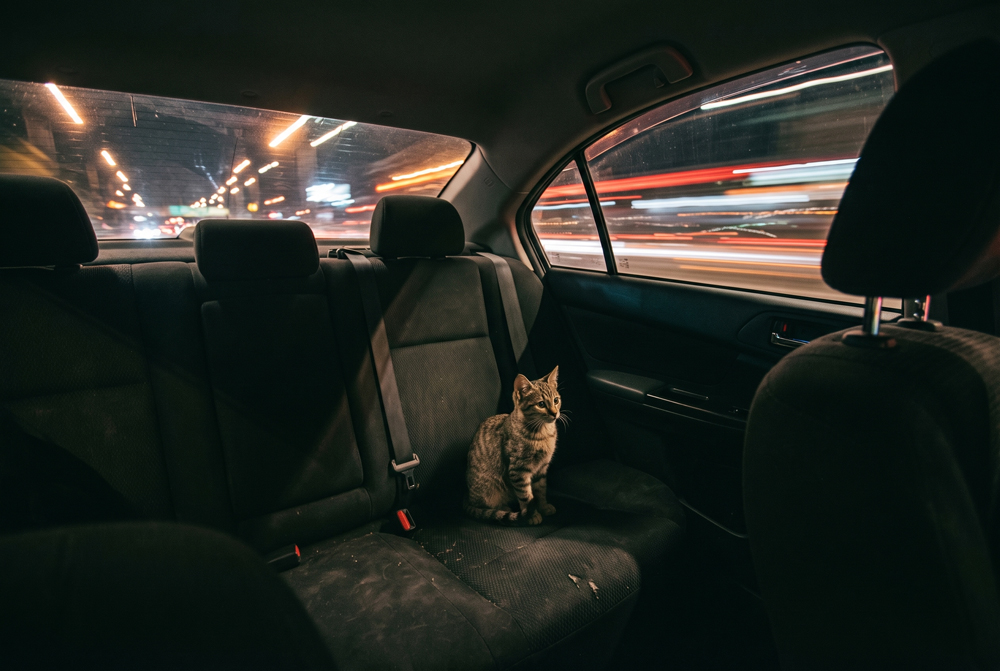
A cat in a car should not travel loose, even for a short trip. The problem is not only that the cat may get hurt. The bigger immediate concern is that the cat may distract the driver, obstruct controls, or escape during loading, refueling, or arrival.
A cat should not travel in a car without a carrier because a loose cat can distract the driver, crawl near pedals, jump suddenly, or become a moving load during sudden braking. A secure carrier is the most practical way to contain the cat and reduce vehicle-related risk.
“My cat is calm” is not a safety plan
Some cats are calm at home. Some even enjoy sitting near a window. But a vehicle is a changing environment. Noise, vibration, acceleration, braking, and unfamiliar smells can trigger behavior that the owner did not expect.
Even a calm cat can react suddenly to:
- A horn
- A motorcycle passing
- A sharp turn
- A dog outside the window
- A sudden stop
- A door opening at a parking lot
- A visit to the vet
I have heard many owners say, “My cat never does that.” The problem is that the first time may happen while the vehicle is moving.
Why leashes and harnesses are not the same as carriers
A harness can help when moving the cat between the home, car, and clinic. It can also reduce escape risk during transitions. But a harness alone does not provide the same containment as a carrier.
A harnessed cat may still:
- Twist out of the harness
- Tangle the leash
- Jump between seats
- Distract the driver
- Hit interior surfaces during braking
If a harness is used, I see it as a secondary layer, not the primary vehicle restraint. The cat should still travel inside a carrier.
What about very short trips?
Short trips are often where people take the most shortcuts. A five-minute drive to the vet can feel too brief to justify careful setup. But sudden braking does not wait for long-distance travel. Most daily driving risks happen close to home because that is where most driving happens.
For short trips, I still recommend:
- Load the cat into the carrier indoors.
- Close and check the latch.
- Carry the carrier with two hands if needed.
- Place the carrier in the prepared vehicle position.
- Secure the carrier before driving.
- Do not open the carrier until the vehicle is parked and doors are controlled.
Why this message matters for pet brands
The pet travel market often uses soft lifestyle language: cozy, cute, breathable, portable. Those features matter. But safety-aware buyers now ask harder questions.
They want to know:
- Can the carrier reduce driver distraction?
- Can the carrier be secured in the vehicle?
- Does the product have clear installation guidance?
- Does the structure support real travel use?
- Does the supplier understand vehicle environments?
For brands, this is an opportunity. A carrier that helps owners transport a cat in a car safely can stand apart from generic pet bags. It can become part of a broader travel system instead of a single accessory.
What Makes a Pet Carrier Suitable to Transport a Cat in a Car Safely?
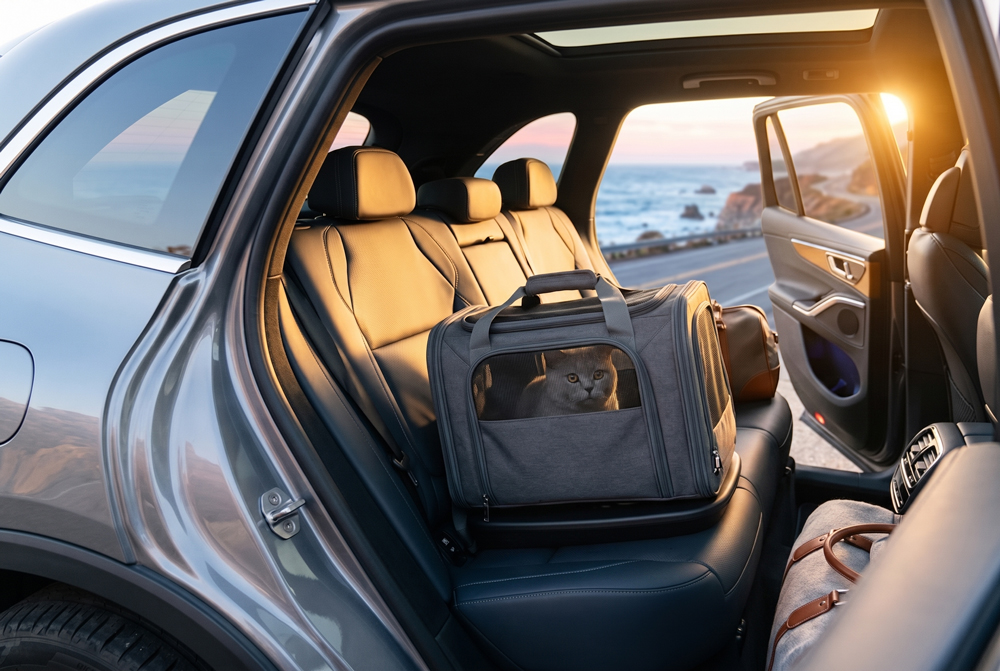
A cat in a car needs a carrier that is designed for more than hand-carrying. Many ordinary soft carriers are comfortable and attractive, but they may not be vehicle-ready. A suitable car travel carrier should combine containment, structural support, secure installation, ventilation, and misuse-resistant design.
A pet carrier is suitable for car travel when it has a stable structure, reliable closures, adequate ventilation, clear vehicle installation instructions, and a secure way to connect to the seat belt, anchor system, or compatible base. Buyers should verify test documents, material quality, and supplier production controls.
The difference between a carrier and a vehicle-ready carrier
A normal carrier helps move a cat from one place to another. A vehicle-ready carrier is designed with the car environment in mind. That difference matters because a vehicle adds forces, motion, heat, vibration, and user installation risk.
A carrier suitable for car travel should have:
- Strong containment so the cat cannot escape
- A stable base so the carrier does not tip easily
- A predictable restraint path so the user knows how to secure it
- Reinforced structure so the carrier does not collapse under belt pressure
- Ventilation that remains open after installation
- Durable materials that resist tearing, cracking, and deformation
- Clear labeling and instructions to reduce misuse
Soft carrier, hard carrier, or modular system?
Each option has advantages. I do not think the answer is always “hard carrier only.” The better question is whether the product is designed and validated for the intended use.
| Carrier type | Strengths | Limitations | Best buyer question |
|---|---|---|---|
| Soft carrier | Lightweight, easy to store, comfortable | May collapse or deform; belt may slip | Is it reinforced for vehicle restraint? |
| Hard plastic carrier | Better structure, easy to clean | Can be bulky; latch quality varies | Does it have a secure belt path? |
| Backpack carrier | Convenient walking use | May be unstable in cars | Is it intended for vehicle travel? |
| Modular carrier + base | Stronger system logic, repeatable installation | Requires compatibility management | Is the base-carrier connection validated? |
| Stroller-compatible carrier | Good for multimodal travel | Vehicle use may be unclear | Does car mode have separate instructions? |
What B2B buyers should verify
For pet brands, importers, wholesalers, and private-label customers, supplier selection is critical. A nice sample does not prove stable mass production. I always encourage buyers to evaluate both the product and the factory process.
Key documents and checkpoints include:
-
Material specifications
Buyers should review plastic grades, fabric strength, webbing quality, mesh durability, and metal hardware standards. -
Internal test reports
Test reports should be treated as documents to verify, not slogans. Ask what was tested, how it was tested, and whether the test reflects real use. -
Installation instructions
A safety-oriented product should include clear, user-friendly installation steps. Confusing instructions increase misuse. -
Tooling quality
Poor tooling can create weak latches, inconsistent gaps, sharp edges, or unstable fit. -
Production consistency
Buyers should confirm quality control plans, incoming material checks, in-line inspection, and final inspection standards. -
Compatibility strategy
If the product connects to a base, stroller, or ISOFIX-style anchoring system, compatibility must be controlled carefully.
Where Anvoya fits naturally
At Anvoya, I focus on modular pet travel systems that borrow engineering thinking from European child car seats and automotive safety products. That background shapes how we think about pet carriers, pet car seats, ISOFIX bases, and stroller systems.
I do not claim that pet car seats have the same mandatory regulatory framework as child restraint systems. They do not. I also do not describe crash testing as proof of absolute safety. Instead, I see testing and engineering review as tools that help improve design decisions.
Our approach is built around practical questions:
- How does the carrier connect to the vehicle?
- How does force move through the structure?
- How can we reduce installation misuse?
- How can brands upgrade existing best-selling carriers?
- How can a product line expand from car to carry to stroller use?
For example, Anvoya’s BASE-X is designed as a modular ISOFIX pet car seat base concept that can help upgrade compatible carriers into more vehicle-ready systems. Our AERO concept focuses on lightweight 3-in-1 use across car, carry, and stroller scenarios. For OEM/ODM buyers, the commercial value is clear: reduce development risk, shorten time to market, and build a more differentiated pet travel line.
A practical buyer scorecard
If I were sourcing a car-travel cat carrier today, I would score suppliers like this:
| Evaluation area | Weight | What to check |
|---|---|---|
| Vehicle securing method | 25% | Belt path, base connection, anchoring logic |
| Structural stability | 20% | Frame, base, deformation resistance |
| Cat comfort | 15% | Size, ventilation, visibility, bedding |
| Misuse prevention | 15% | Labels, instructions, intuitive installation |
| Supplier quality control | 15% | QC process, tooling, production consistency |
| Product line expandability | 10% | Stroller, base, accessories, private-label options |
This kind of scorecard keeps the conversation grounded. It helps buyers avoid choosing only by appearance or unit price.
Frequently Asked Questions
How long can a cat stay in a car carrier?
Most cats can handle short trips in a properly sized carrier, but longer trips need breaks, temperature control, and planning. I would check on the cat regularly while parked, not while driving. For medical, senior, or anxious cats, I would ask a veterinarian for trip-specific advice.
Should I cover my cat carrier in the car?
A light cover can help some cats feel calmer by reducing visual stimulation. However, the cover must not block ventilation or cause overheating. I prefer breathable coverage on part of the carrier, not a full wrap, especially during warm weather or long drives.
Is the front seat safe for a cat carrier?
I usually avoid the front seat because of airbag zones and driver distraction. A rear-seat position is often better if the carrier can be secured properly. Always check the vehicle manual and the carrier instructions before choosing the final location.
Can I use a soft cat carrier in a car?
You can use some soft carriers in a car, but not every soft carrier is vehicle-ready. I would look for reinforced structure, reliable zippers or latches, a stable base, and clear seat belt or anchor instructions. A soft bag without restraint guidance may not be enough.
How can I reduce my cat’s stress during car travel?
I would let the cat explore the carrier at home before the trip, add familiar bedding, keep the car quiet, and drive smoothly. The carrier should be secured before departure. For severe travel anxiety, a veterinarian can recommend behavior strategies or medication when appropriate.
Conclusion
A cat in a car should be safely contained, properly positioned, and securely restrained. The goal is not only to protect the cat. It is also to reduce driver distraction and prevent the carrier from becoming a moving load during sudden braking. For owners, that means using a suitable carrier every time. For brands and OEM/ODM buyers, it means developing vehicle-ready pet travel products with better structure, clearer installation, and stronger quality control. If you are building a safer, smarter cat travel product line, I invite you to talk with Anvoya about modular carrier, ISOFIX base, and stroller-compatible solutions.