
The global market for pet travel safety is growing fast, but dealers face high return rates. Customers often return products because the seats do not fit their specific cars or dogs.
A systematic framework solves these selection problems. You must choose inventory based on vehicle structure, travel scenarios, and precise pet sizing. This approach reduces customer complaints and establishes your brand as a professional leader in the wholesale market.
Many business buyers focus only on the look of the product. However, the real success of a pet safety line depends on how well it fits the car and the dog. If you ignore these technical details, you will face endless returns and safety issues.
Why Is Vehicle Compatibility Critical When Selecting Pet Car Seats?
Universal seats often fail to fit specific car interiors securely. A loose seat creates unstable installation and dangerous safety hazards for pets during travel.
Vehicle compatibility depends on seat angles, ISOFIX interfaces, and rear depth. Sedans often require compact designs to fit steep seats, while SUVs need stabilization against strong movement forces. Matching the seat base to the specific car model prevents safety failures.
"Universal fit" is often a marketing myth. Different vehicles have very different back seat structures. You cannot sell the same seat for a sports coupe and a large SUV and expect the same safety result.
In sedans and compact cars, the back seats usually have a steep angle. The space from the seat back to the front edge is short. If you put a large, flat-bottomed pet seat here, it will tilt forward. This is dangerous. These cars need a rigid base or a wedge design. They also rely heavily on ISOFIX support to keep the seat in place.
SUVs and MPVs have different problems. The space is larger, but the center of gravity is higher. When an SUV brakes hard, the force is much stronger. A pet seat in an SUV needs a very strong base structure to handle this inertia. Low-chassis coupes have flat seats but very little headroom. A tall pet seat will not fit.
As a B2B seller, you should not suggest one model for all cars. You need to provide a Compatibility Chart. This tool helps your customers check their car model before they buy. This simple step lowers your return rate and shows that you understand the technology.
| Vehicle Type | Common Structure Feature | Key Requirement for Pet Seat |
|---|---|---|
| Sedan / Compact | Steep seat angle, short depth | Rigid base, ISOFIX support, compact size |
| SUV / MPV | Large space, high gravity | Strong base structure, heavy-duty anchors |
| Coupe | Low roof, flat seat angle | Low profile design, compact height |
How Should Pet Car Seats Be Matched to Different Travel Scenarios?
Customers buy products for specific trips, not just for general usage. Ignoring the specific usage scenario makes your product line look generic and unhelpful to the buyer.
Different trips demand specific features for safety and comfort. Air travel requires IATA compliance, road trips need heavy-duty support, and city driving needs quick installation. Segmenting products by scenario helps customers make faster, correct buying decisions.
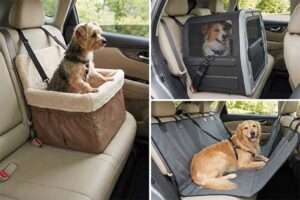
The market has changed. Consumers do not just want a "dog seat." They want a solution for a specific problem. If you categorize your products by scenario, you create a stronger reason to buy.
First, consider Air Travel. The regulations here are strict. The carrier must meet IATA size and closure rules. The design must be lightweight (AERO series) because the owner has to carry it through the airport. It also needs to be easy to take apart for security checks. If you sell heavy seats for this, customers will be unhappy.
Second, look at Road Trips. These are long drives. The pet needs continuous support to sleep comfortably. The seat needs high sidewalls for lateral stability on winding roads. The installation must be very firm. This is where you sell the heavy-duty (Terra series) options.
Third, consider the Urban Daily Commute. These trips are short. The owner needs to put the seat in and take it out quickly. The design should look good inside a modern car. It needs to balance weight with practical use.
By splitting your line into Travel Series, Urban Series, and Heavy-Duty Series, you help the dealer. They can sell more products to the same customer for different needs. This reduces the risk of unsold inventory.
What Defines a Secure Installation System for Pet Car Seats?
Plush fabrics look nice but do not save lives in an accident. Buyers often overlook the mechanical structure that actually ensures the safety of the pet.
A secure system relies on a rigid base and strong anchor points. ISOFIX connectors and anti-rotation supports provide necessary stability during a crash. These mechanical features define the safety level and justify a higher price point for professional gear.
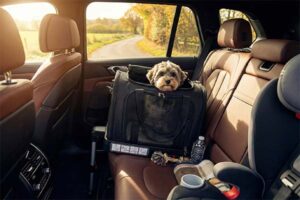
Many brands talk too much about cushions. Cushions are for comfort, not safety. The safety of a pet car seat comes from the installation system. This is the hardware that connects the carrier to the vehicle frame.
The most critical part is the base structure. A soft bottom cannot stop a dog from flying forward in a crash. You need a rigid base. The best systems use ISOFIX or LATCH points. These are the metal loops in the car seat. A simple seat belt loop is often not enough for larger pets.
You also need to look for a double-direction installation system. This means the seat can face different ways depending on the car seat shape. It adds versatility. Another key feature is anti-rotation support. This prevents the seat from flipping over if the car stops suddenly.
You should view these features as your main selling points. When you explain the engineering behind the base and the anchors, you prove the value of the product. This creates a barrier against cheap competitors. High-quality installation systems allow you to charge a premium price because they offer real peace of mind.
How Does Proper Sizing Improve Safety and Reduce After-Sales Issues?
Weight limits alone are misleading and dangerous for choosing a seat. A long dog fits differently than a stocky dog of the same weight.
Proper sizing requires three-dimensional measurement of the pet. Retailers must consider spine length, sitting height, and chest width. This precision prevents internal collisions and ensures the restraint system functions correctly during sudden stops.
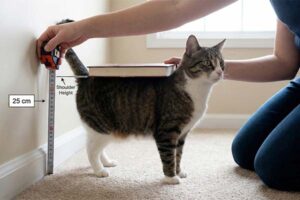
Using weight as the only guide is a big mistake. Imagine two dogs that weigh 10kg. one is a French Bulldog, and the other is a Dachshund. The French Bulldog is short and wide. The Dachshund is long and low. They cannot use the same car seat safely.
The Dachshund needs a longer seat. If the seat is too short, his spine will twist. The French Bulldog needs a wider seat with lower walls so he can breathe easily. If you only look at the "10kg" label, one of these customers will return the product.
You must teach your dealers to use the Three-Dimensional Measurement method.
- Spine Length: Measure from the shoulder blades to the base of the tail. This determines the length of the carrier.
- Sitting Height: Measure from the floor to the top of the head when the dog sits. This ensures the dog is not crushed by the roof of the carrier.
- Chest Width: This ensures the harness or side supports fit comfortably.
If the size is wrong, the dog will sway inside the seat. In a crash, the dog will hit the walls of the carrier with force. This causes injury. It also causes the product to fail. You should provide downloadable sizing guides. Make this a standard part of your sales process.
Why Scenario-Based Selection Matters in B2B Pet Safety Product Lines?
Selling random seats creates dead stock and confusion. Without a clear strategy, retailers struggle to build trust with professional end-users.
A scenario-based product line transforms a retailer into a solution provider. This strategy aligns inventory with actual user needs. It reduces return rates and positions the brand as a leader in pet travel safety.
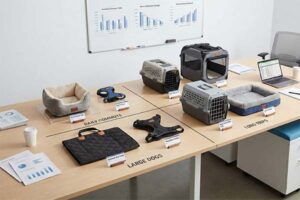
When you sell a "solution" instead of just a "product," you change the relationship with your client. You are no longer just a vendor. You are a partner who understands their business.
A clear selection strategy helps in three ways. First, it reduces inventory pressure. Dealers do not buy random items. They buy specific tools for specific jobs. This means less dead stock sitting in the warehouse.
Second, it lowers the return rate. When a customer buys a seat that fits their car, their dog, and their trip, they keep it. Returns eat up profit margins. Eliminating compatibility issues is the fastest way to increase profit.
Third, it builds a professional image. The pet market is getting crowded. To stand out, a dealer needs to look like an expert. When they use your framework—Vehicle, Scenario, Size—they look smart to their customers. They can answer questions confidently. This trust leads to repeat orders for your wholesale business.
Conclusion
Choosing the right pet car seat requires matching the vehicle, the travel scenario, and the pet's size. This logical approach ensures safety and reduces business risks for dealers.