
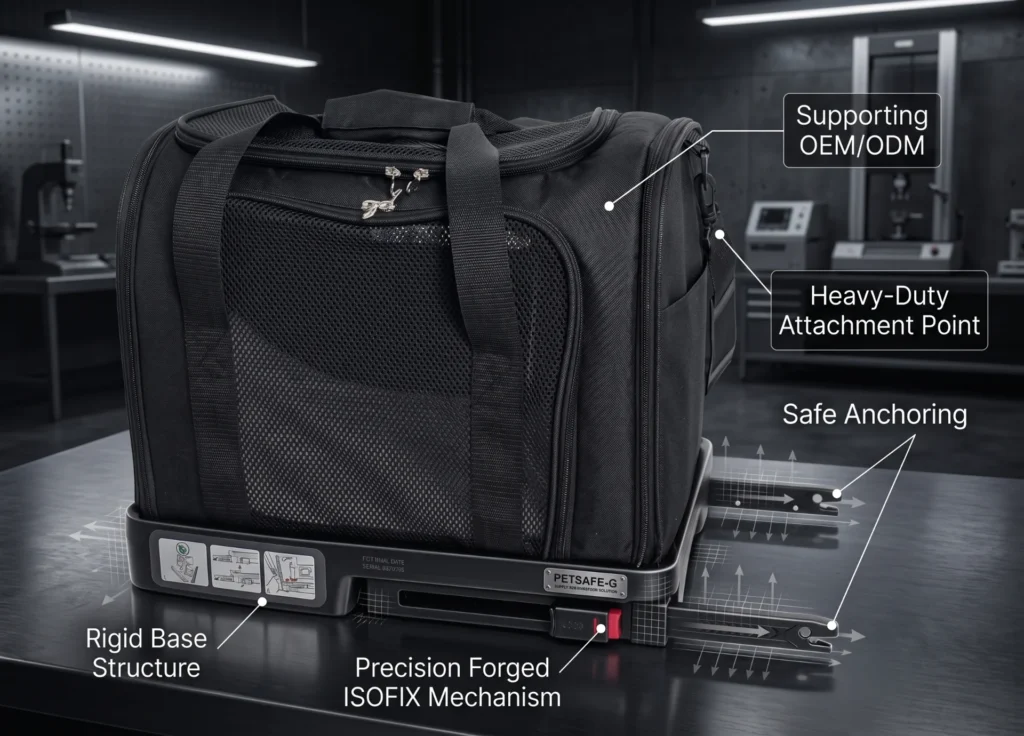
A premium pet seat can look safe and still move in a hard stop. That gap creates risk for people, pets, and brands.
To choose an ISOFIX pet car seat as a Tavo alternative, we should assess the full safety system: ISOFIX anchoring, rigid base design, pet restraint, material strength, supplier capability, and honest compliance claims. The best option is not a visual copy. It is a credible, market-ready product that reduces in-car risk.
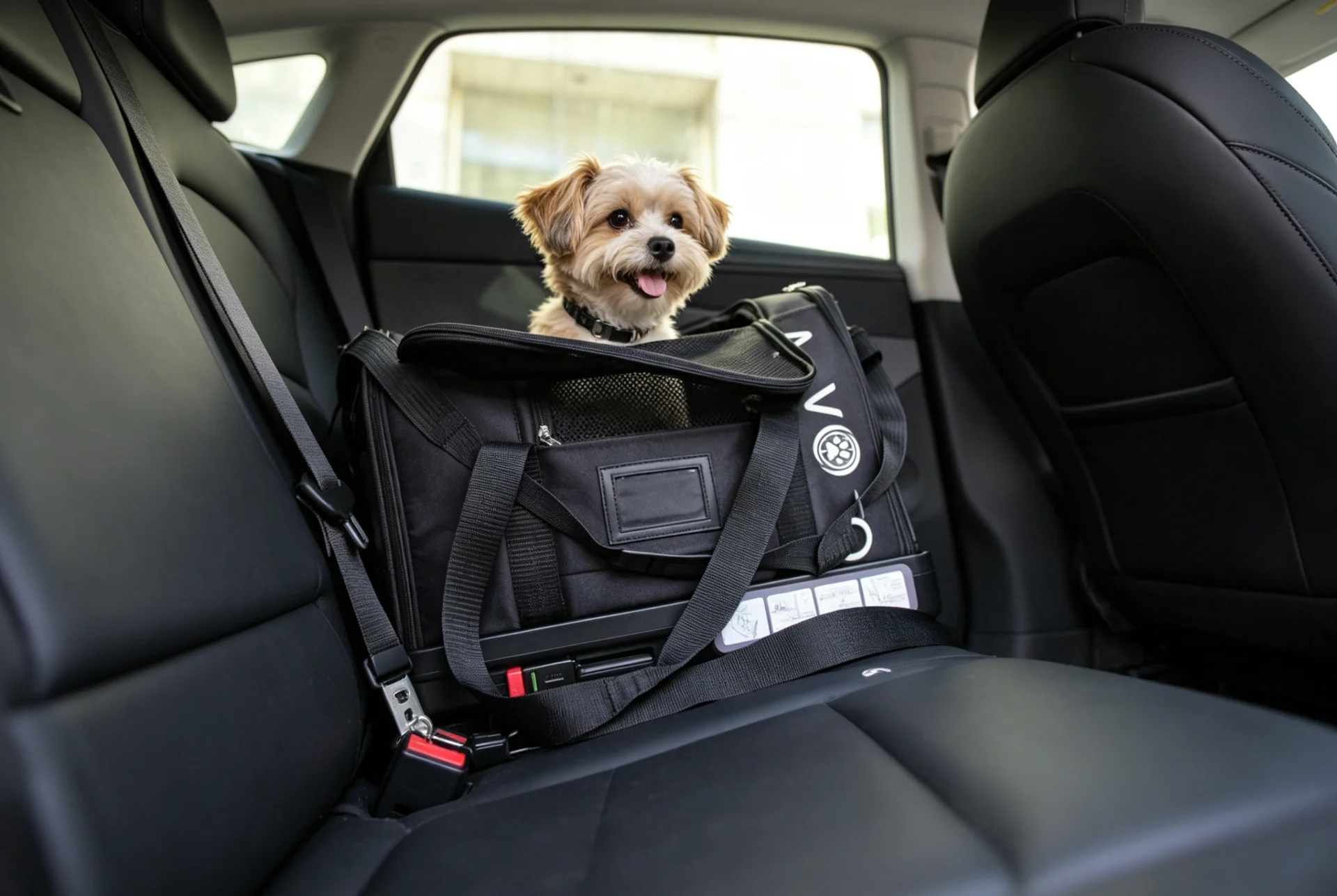
Many B2B buyers come to this category after seeing strong premium products from Tavo and Nuna. That is natural. They helped educate the market. Yet the better question is not, “Who can make the same look?” The better question is, “Who can build a safer and more sellable pet travel system for our market?”
From our background in child car seat manufacturing, we see the same pattern often. A buyer first asks for a Tavo-like ISOFIX pet seat. Then the real discussion starts. We talk about anchoring. We talk about the pet’s movement. We talk about the driver and passengers. We talk about what the brand can say without making false regulatory claims. That is where a good sourcing decision begins.
Why ISOFIX Pet Car Seats Are Safer?
A loose pet carrier can slide, tip, or fly forward.[^1] That movement can distract the driver and can harm people inside the vehicle.
ISOFIX pet car seats are safer because the base can connect to the vehicle structure[^2] instead of only sitting on the seat. This reduces unwanted movement. Real safety still depends on the whole system, including the base, restraint points, containment, and material strength.
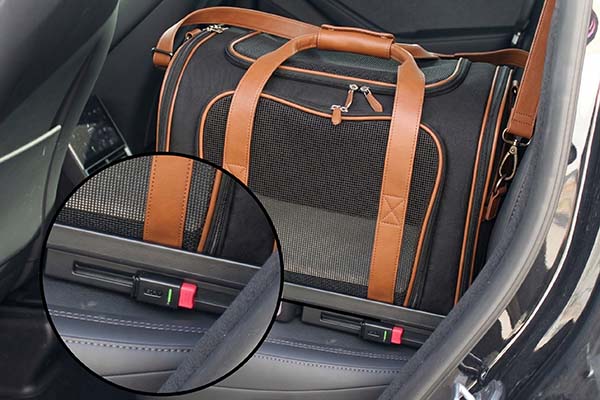
ISOFIX is a strong starting point, but our team never treats it as a magic word. In child car seats, the anchor is only one part of the safety logic. The same thinking should guide pet mobility products. The base must hold its position. The pet must be controlled inside the seat. The load path must make sense. The fabric, shell, hook, webbing, and buckle must work together. If one weak point fails, the system can fail.
The first safety problem is also not only pet injury. We should face a simple fact. An unsecured pet can become a hazard to the driver and passengers. That is why our principle is “people first, pet protected.” A pet seat should first reduce the chance that the pet hits people or blocks the driver. Then it should reduce harm to the pet itself.
| Safety Point | What B2B Buyers Should Check | Why It Matters |
|---|---|---|
| ISOFIX connection | Stable fit and clear engagement | The product must attach to the vehicle seat area |
| Rigid base | Strong structure under load | A soft bag alone can deform or move too much |
| Pet restraint | Internal tether or harness logic | The pet should not jump or launch forward |
| Side containment | High enough side walls or soft containment | The pet needs controlled space during movement |
| Claim control | No false “child seat certified” claim | Brands need trust and legal safety |
A good Tavo alternative should be judged by this system logic. The market does not need another pretty basket. It needs a more serious pet travel product.
Comparing Materials and Durability?
A pet seat may feel premium on day one, but weak materials can show stress after transport, cleaning, and repeated customer use.
To compare materials, we should look beyond fabric softness. We should check the rigid base, frame strength, ISOFIX hardware, webbing, buckles, zippers, stitching, foam, and cleaning performance. Durability is a system result, not a single material feature.
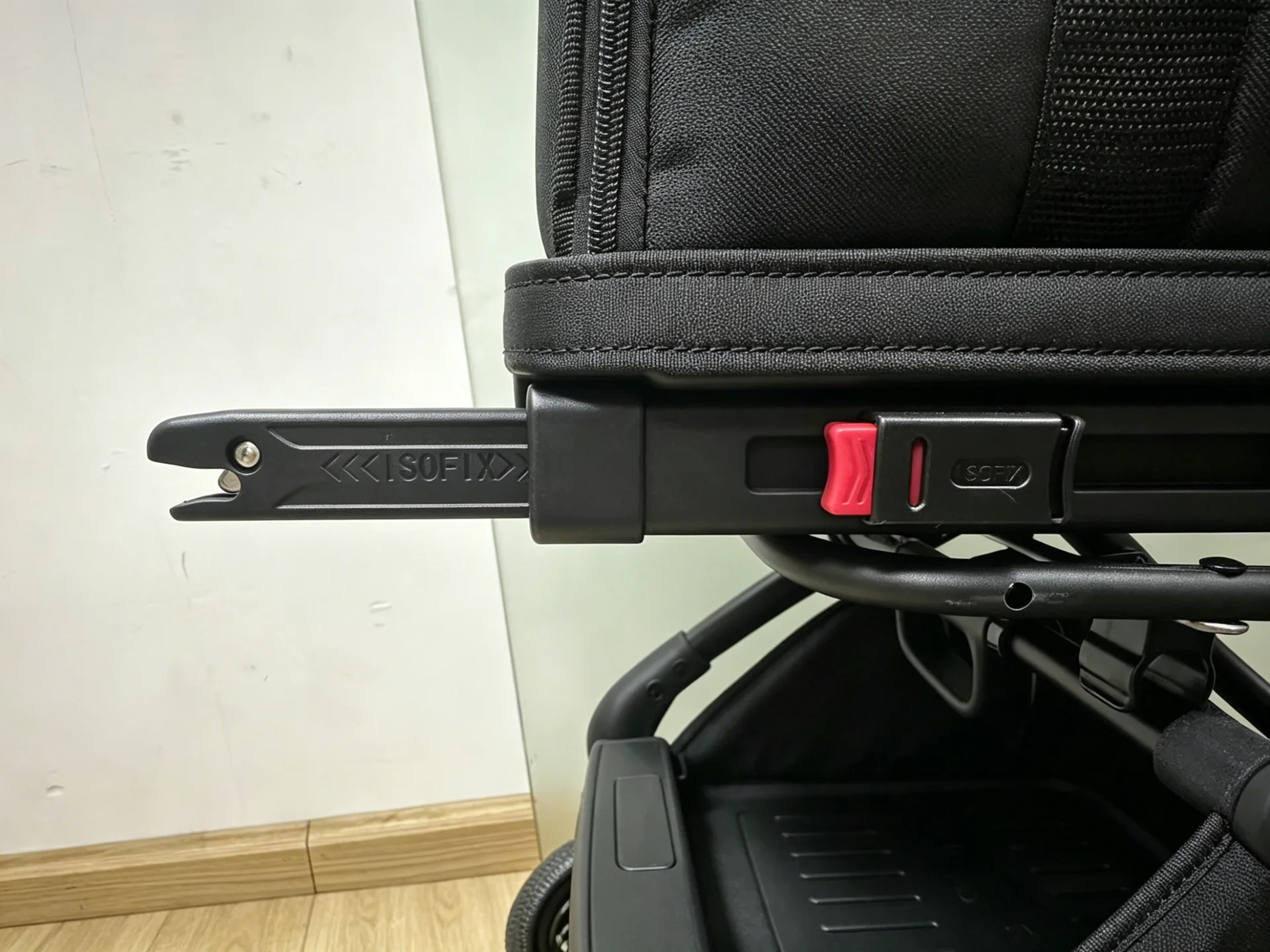
Many pet brands start material review with fabric. That is understandable because the consumer touches fabric first. Yet a B2B buyer should start from the hidden structure. If the pet seat has an ISOFIX base, the base and connector should be stable. If the product has a soft upper carrier, the connection between the soft part and the rigid base must be clear. If the product uses a tether, the webbing and stitching should be reviewed with care.
Our child car seat background changes how we look at this. We do not ask only, “Does it look expensive?” We ask, “Where does the force go when the car stops fast?” This simple question helps remove weak designs early. A product can use nice fabric and still have poor load control.
| Component | Better Buyer Question | Common Risk |
|---|---|---|
| Rigid base | Is it strong and stable on the seat? | Thin base flexes or rocks |
| ISOFIX arms | Do they connect with clear lock feedback? | Poor fit creates false confidence |
| Webbing | Is the width and stitching suitable? | Weak restraint path |
| Buckles | Are they easy and secure? | Pet or user releases by accident |
| Outer fabric | Can it resist scratching and cleaning? | Fast wear hurts reviews |
| Foam and padding | Does comfort hide weak support? | Softness replaces structure |
For distributors, durability also affects return rate. A product can win attention at launch but lose money after complaints. Strong materials protect the user, the pet, and the channel margin.
Key Features B2B Buyers Care About?
A retail buyer may notice color first. A serious importer must notice fit, packaging, claims, spare parts, and supplier support first.
B2B buyers should care about secure anchoring, clear pet restraint, vehicle compatibility, easy installation, premium appearance, responsible safety language, packaging readiness, MOQ flexibility, after-sales parts, and ODM or OEM support. These features decide whether the product can scale beyond a sample order.
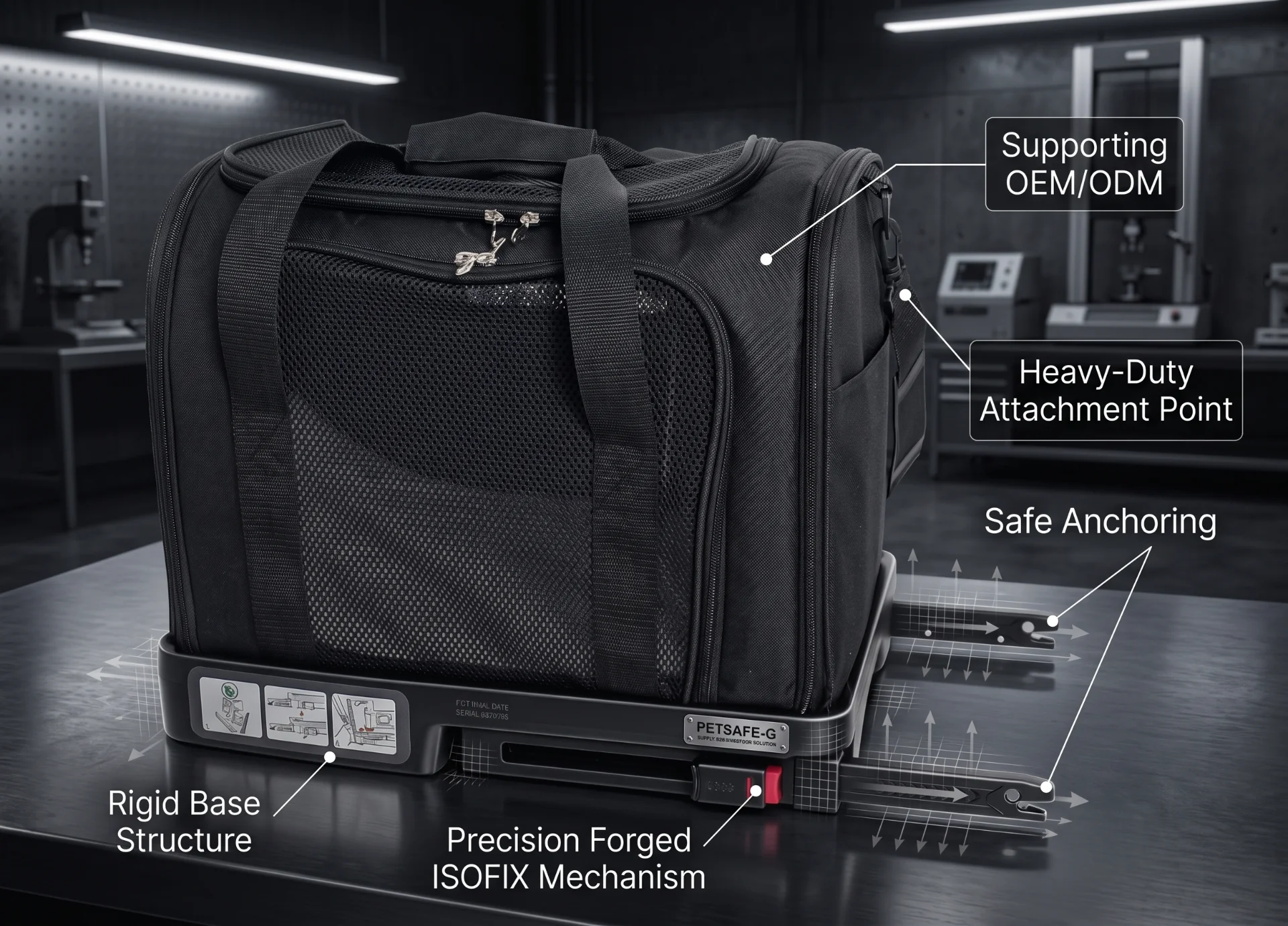
A premium pet car seat is not only a product. It is a market promise. When a brand sells an ISOFIX pet seat, the customer expects more than a cushion. The customer expects a real travel solution. This means the brand owner must understand the product story and the product limits.
One important feature is installation clarity. Consumers should know how the ISOFIX connection works. They should know how the pet is restrained. They should know whether the product is for calm short trips, daily driving, or a more structured travel use. We should never make claims that go beyond what the product can support.
B2B buyers also need supplier strength. A supplier should help with product education, packaging, instruction wording, and honest risk communication. This is especially important because pet travel safety does not have one unified global regulation like child car seats. A supplier that says “fully certified like a child seat” without proof creates risk for the buyer.
| B2B Feature | Why It Helps the Buyer | What We Prefer to See |
|---|---|---|
| ODM readiness | Faster launch | Ready-to-sell product line |
| OEM support | Brand difference | Custom soft bag or base integration |
| Clear instruction | Fewer user mistakes | Simple steps and diagrams |
| Claim review | Lower legal risk | Honest safety language |
| Spare parts | Better service | Replaceable cover, tether, buckle |
| Packaging support | Easier retail sell-in | Premium box and clear value points |
At Anvoya, our discussions with buyers often move from product shape to launch risk. That is the right movement. A Tavo alternative should help a brand enter the premium category with confidence, not only with a lower price.
Bulk Purchase Tips for Distributors?
A low unit price can hide high risk. A weak product can create returns, bad reviews, and retailer pressure after launch.
For bulk purchase, distributors should validate samples, test installation, review claim wording, confirm packaging, check spare parts, compare landed cost, and assess supplier response speed. The best order is not only the cheapest order. It is the order with controlled quality and clear market support.
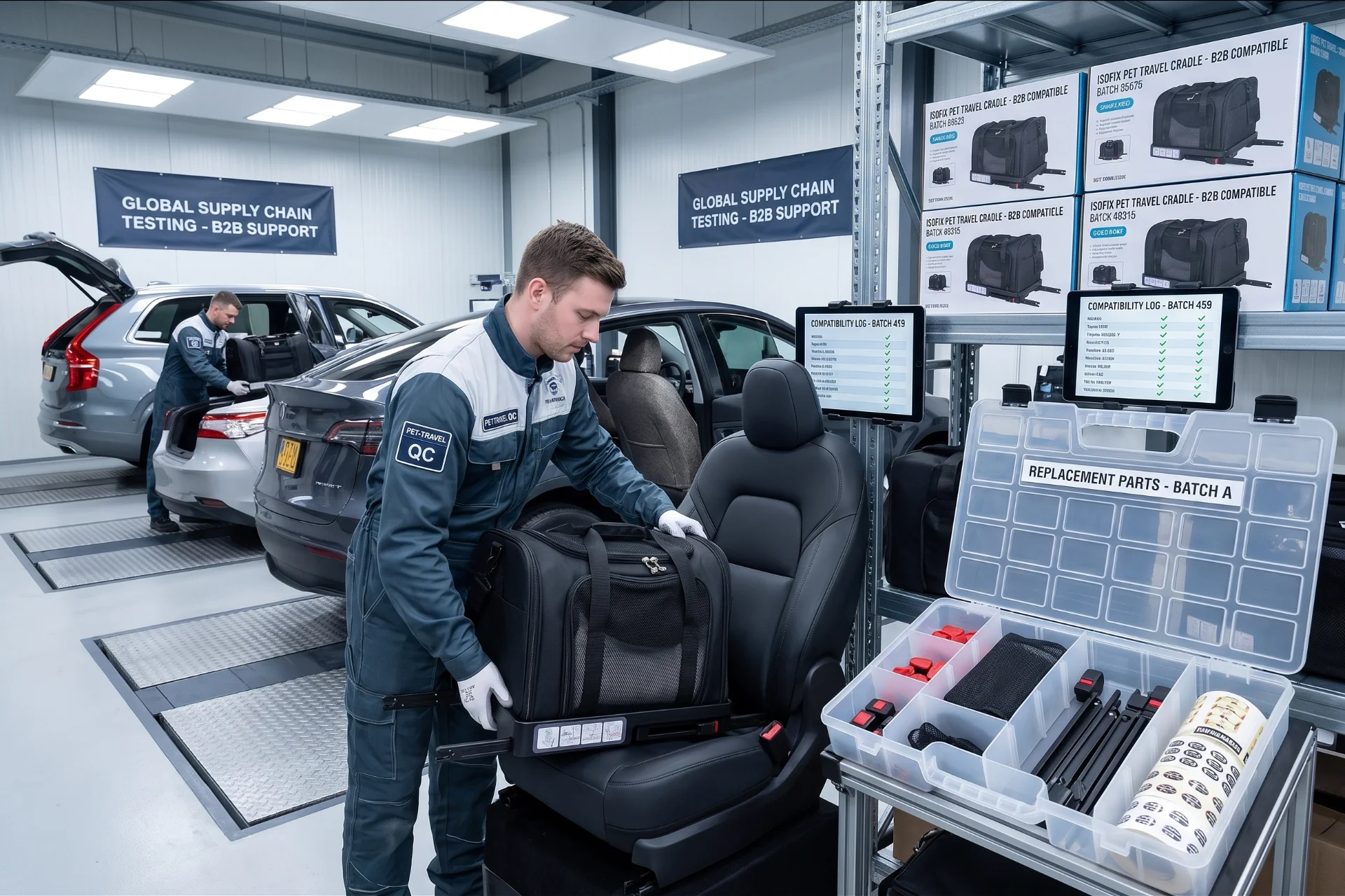
Bulk buying needs a different mindset from sample buying. A sample can look fine in a meeting room. A full shipment must survive transport, retail handling, consumer installation, pet use, cleaning, and service questions. Distributors should build a simple review process before placing a large order.
First, the distributor should install the product in real vehicles. ISOFIX fit can feel different across models.[^3] Second, the distributor should put a realistic pet weight inside the seat and check movement. This does not replace formal testing, and we should not present it as certification. It is still useful as a practical sourcing check. Third, the distributor should review the instruction manual and marketing copy. If the wording promises too much, the risk moves from factory to importer.
| Bulk Purchase Step | What to Do | What It Prevents |
|---|---|---|
| Sample review | Check structure, anchoring, restraint | Buying by photos only |
| Vehicle fit check | Install in several common cars | Compatibility complaints |
| Packaging drop review | Inspect box and protection | Shipping damage |
| Claim review | Remove unsafe or false claims | Legal and brand risk |
| Spare part plan | Confirm covers, tethers, buckles | Poor after-sales service |
| MOQ and lead time | Match forecast and cash flow | Stock pressure |
Distributors should also look at supplier communication. If a supplier cannot explain the difference between ISOFIX anchoring and full crash safety, that is a warning sign. A good supplier should be careful with words. Careful words show careful engineering.
Recommended Tavo Alternative Options?
The best alternative is not always the closest copy. The best alternative is the one that fits your channel, price band, and safety story.
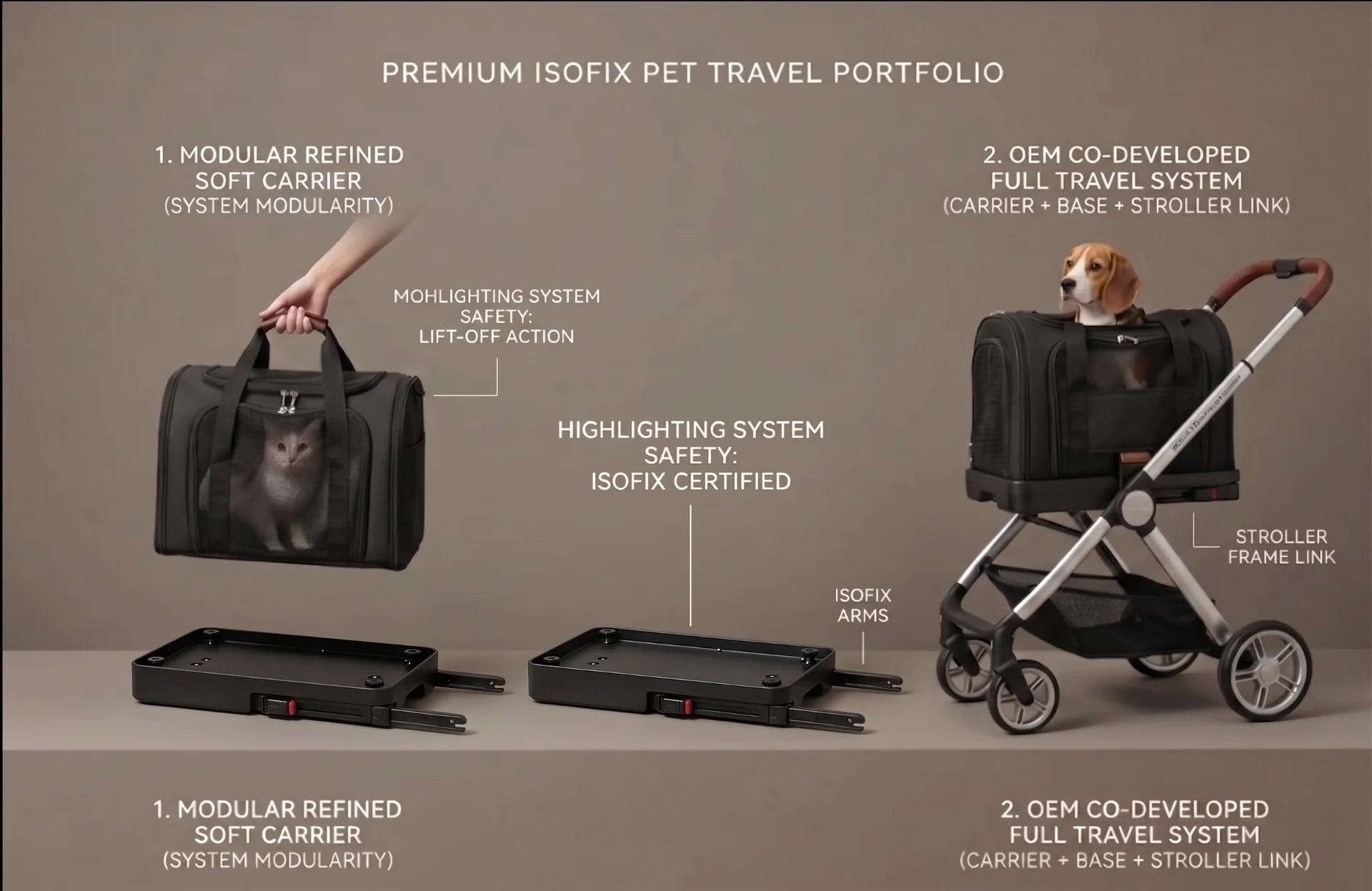
Recommended Tavo alternative options include ISOFIX rigid-base pet seats, ISOFIX bases with removable soft carriers, ODM ready-to-sell models, and OEM co-developed systems for existing pet bags. Buyers should choose based on anchoring logic, restraint design, brand positioning, and launch speed.
Tavo and Nuna are real leaders in this premium pet mobility space.[^4] We respect that. They raised buyer awareness and helped consumers understand that pets should travel with more structure. At the same time, this market is still young. More manufacturers from the child car seat industry will enter the category. We believe this will make the category stronger, safer, and more cost effective over time.
A buyer should not ask for a simple copy. A buyer should choose a product path. Some brands need a fast ODM line. Some distributors need a premium but cost-controlled product. Some established pet brands already own soft carriers and want a rigid ISOFIX base to upgrade the line. These are different needs.
| Option Type | Best For | Main Advantage | Main Checkpoint |
|---|---|---|---|
| Ready ODM ISOFIX pet seat | Fast market launch | Low tooling and short timeline | Brand difference may be limited |
| Rigid base plus soft carrier | Premium retail channels | Strong safety story and comfort | Connection between parts must be solid |
| OEM base for existing bag | Established pet brands | Keeps current brand design | Soft bag must work with the load path |
| Co-developed full system | Long-term category leader | Strong differentiation | Needs time, budget, and testing plan |
| Cost-effective premium line | Regional distributors | Wider price coverage | Quality must not be cut too far |
From our side, the most promising direction is a child-seat-style rigid foundation with pet-friendly comfort on top. This direction does not treat the pet seat as only a cushion. It treats it as a vehicle interior safety product. That is a better story for premium brands, importers, and retailers.
The future category will likely not belong to one design language. It will include several systems. Some will focus on small dogs. Some will focus on cats. Some will focus on removable carriers. Some will focus on higher structure for in-car containment. The winning products will be the ones that can explain safety honestly, install clearly, and still feel premium to the consumer.
Conclusion
Choose a Tavo alternative by safety logic first. A strong ISOFIX pet seat protects people, supports pets, and gives B2B buyers a credible premium product.
[^1]: "Crash Testing of unsecured cargo - YouTube", https://www.youtube.com/watch?v=-BRfHertP70. Crash test studies by automotive safety institutes demonstrate that in a collision, unsecured objects in the passenger compartment, including pet carriers, continue moving forward at the vehicle's pre-crash speed, posing a significant impact hazard. Evidence role: mechanism; source type: research. Supports: The source should demonstrate, through crash test footage or physics explanations, how loose objects inside a vehicle's cabin continue to travel at the vehicle's original speed after a sudden stop, causing them to become dangerous projectiles..
[^2]: "Isofix - Wikipedia", https://en.wikipedia.org/wiki/Isofix. ISOFIX is an international standard for attachment points for child safety seats in passenger cars, designed to provide a secure and direct connection to the vehicle's frame. Evidence role: definition; source type: encyclopedia. Supports: The source should define ISOFIX as an international standard (ISO 13216) for attachment points in passenger cars, which allows a compatible seat to be rigidly fixed to the vehicle's chassis..
[^3]: "[PDF] ISOFIX CHILD RESTRAINT SYSTEM ANCHORS - nhtsa", https://static.nhtsa.gov/odi/rcl/2016/RCRIT-16V333-5441.pdf. Automotive safety institutions and consumer reports frequently note that the accessibility and angle of lower anchors (LATCH/ISOFIX) can vary significantly between vehicle models, impacting installation. Evidence role: general_support; source type: institution. Supports: The source should discuss how factors like the depth of anchors within the seat cushions, seat angle, and available space can vary across vehicle models, affecting the ease and security of installing a LATCH/ISOFIX-compatible device..
[^4]: "Pet Stroller Market Size, Share, Trends | Report [2034]", https://www.fortunebusinessinsights.com/pet-stroller-market-115106. Industry publications and market analyses of the juvenile and pet product sectors have identified brands like Nuna and its affiliate Tavo as influential in establishing the premium pet mobility category. Evidence role: expert_consensus; source type: other. Supports: The source should be a third-party industry analysis or trade publication that identifies Tavo and Nuna as key or pioneering players in the premium pet travel system category.. Scope note: Such claims can be subjective and may reflect brand recognition rather than objective market share data.