
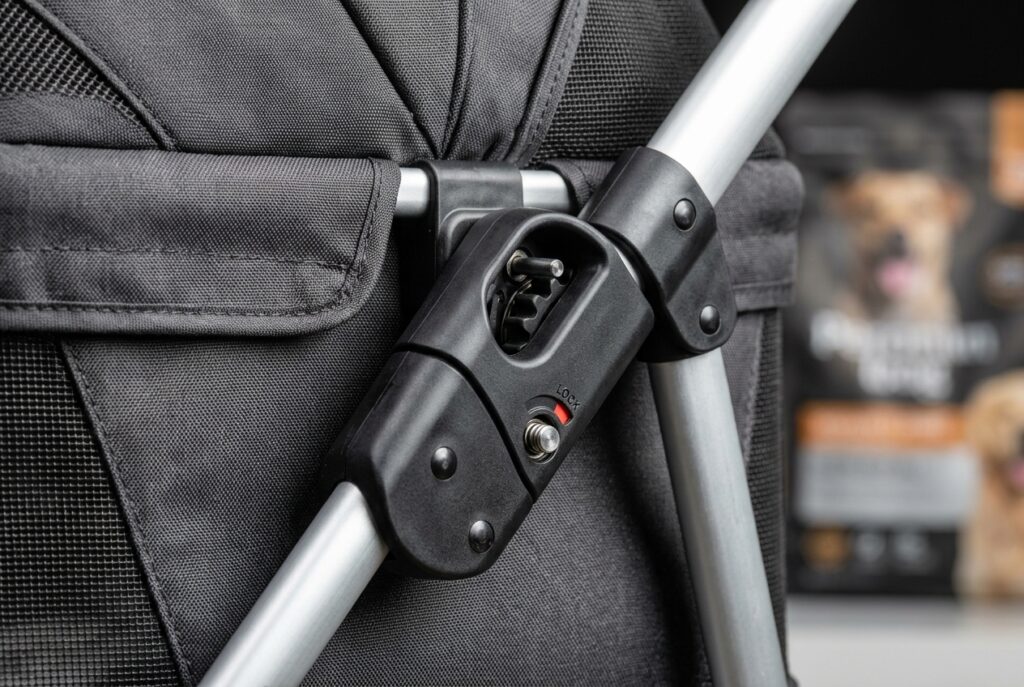
A detachable pet carrier can look like it is sitting correctly on a stroller, but that does not always mean it is locked. If the carrier shifts, tilts, or lifts unexpectedly, the ride can feel unsafe fast. The solution starts with understanding the locking points, alignment, and confirmation checks.
A detachable pet carrier is securely attached to a stroller when it is fully seated in the intended docking position, the locking mechanism has engaged, and the carrier cannot lift free during the manufacturer’s recommended check. A click can help, but secure attachment depends on proper alignment, latch engagement, and product-specific instructions.

Most problems happen at the docking interface, not the basket, canopy, or wheels. I usually look first at the connection geometry: where the carrier rests, where it locks, and how the user knows the lock has engaged. That small interface decides whether the system feels reliable or uncertain.
How Does a Detachable Pet Carrier Lock Onto a Stroller Frame?
A detachable pet carrier can be confusing because many systems look similar from the outside. You place the carrier on the frame, it seems to fit, and then a small movement makes you wonder if it is actually secure. That uncertainty usually comes from hidden or partly hidden locking hardware.
A detachable pet carrier usually locks onto a stroller frame through hooks, brackets, sliding guides, latch pins, push-button locks, or molded docking points. The carrier must sit in the correct position before the locking parts can engage. Different brands use different mechanisms, so carriers and frames are rarely interchangeable unless specified.

Common carrier-to-stroller connection types
Most detachable carrier systems use a mix of support points and lock points. The support points carry weight. The lock points resist lifting, tipping, or sliding. When I review a carrier-to-stroller connection, I separate those two jobs because a carrier can be supported without being locked.
Common connection styles include:
- Rear hooks with front latch: The carrier hooks onto one side first, then rotates down until the opposite latch engages.
- Vertical drop-in dock: The carrier lowers straight into a frame receiver or molded socket.
- Sliding rail interface: The carrier slides forward or backward along guided rails until it reaches a locked position.
- Side-button release system: Spring-loaded buttons or tabs hold the carrier in place until the user presses them.
- Adapter-based connection: A separate adapter connects the carrier shell or soft-goods base to the stroller frame.
Here is a simple comparison:
| Connection style | How it works | Common user risk |
|---|---|---|
| Hook-and-latch | One side hooks first, then the other side locks | Carrier may rest on hooks without final latch engagement |
| Drop-in dock | Carrier lowers into molded receivers | Misalignment may prevent full seating |
| Sliding rail | Carrier moves along a track into locked position | Dirt or fabric may block the final slide |
| Button lock | Spring buttons engage holes or catches | Buttons may not fully pop out |
| Adapter system | Adapter bridges carrier and frame | Wrong adapter or reversed installation can cause poor fit |
Resting is different from locking
A carrier may feel stable for a moment because gravity is holding it on the frame. That is not the same as mechanical lock engagement. I have seen prototypes where the carrier sat nicely on the frame during a bench check, but lifted off too easily when pulled upward from one corner. The shape looked right. The retention force was not enough.
A reliable system usually gives the user some form of confirmation. That confirmation may be:
- Audible feedback, such as a click.
- Tactile feedback, such as a latch snapping into place.
- Visual feedback, such as a colored indicator or visible pin.
- Functional feedback, such as the carrier resisting a gentle lift check.
The exact method depends on the product. A click alone does not prove every detachable pet carrier is secure. Some locks are quiet. Some clicks come from plastic parts touching rather than the main latch engaging. The product manual remains the reference point because the connection mechanism is part-specific.
For buyers comparing stroller-carrier systems, I pay close attention to whether the product makes correct use easy. A guided interface with clear seating points usually creates fewer mistakes than a flat platform with small hidden hooks.
How Can You Tell If the Carrier Is Fully Locked in Place?
A detachable pet carrier can appear locked even when one latch is only half engaged. That small error matters because stroller movement creates vibration, side loading, and repeated small shocks. If the carrier is not fully locked, the weak side often reveals itself during turns or curb transitions.
You can tell the carrier is fully locked when it is aligned with the stroller frame, seated flush at all intended contact points, and retained by the locking mechanism. Use the check described by the manufacturer. In many products, a gentle lift or wiggle check confirms that the carrier does not detach unexpectedly.

Practical signs of full engagement
I like to use a simple four-part check: align, seat, lock, verify. It is easy to remember and works for most detachable pet carrier systems, though the exact steps vary by model.
-
Align the carrier with the stroller frame
- Match the front and rear connection points.
- Keep the carrier level unless the instructions say to angle it first.
- Avoid forcing one side down before the other side is positioned.
-
Seat the carrier fully
- The base should contact the intended supports.
- The carrier should not sit high on one corner.
- Fabric, straps, zippers, or padding should not be trapped under the docking points.
-
Confirm lock engagement
- Listen for a click if the product uses an audible latch.
- Look for visible lock indicators if provided.
- Check whether release buttons return fully to their outward position.
-
Verify retention
- Perform the recommended lift or pull check.
- Hold the stroller steady while checking.
- Do not use excessive force beyond normal instructions.
What “flush” can tell you
A fully seated carrier usually has even contact at the main load-bearing points. If one side floats above the frame, the latch may not be in its proper location. If the carrier rocks diagonally, one hook or receiver may be resting on top of the connection instead of inside it.
Here is a quick diagnostic table:
| What you notice | Possible meaning | Next check |
|---|---|---|
| One side sits higher | Misalignment or trapped fabric | Remove carrier and reseat |
| Latch clicks but carrier lifts | Partial latch engagement | Inspect lock point and repeat attachment |
| Release button stays pushed in | Button or spring may be blocked | Check for obstruction or damage |
| Carrier slides forward/back | Rail or stop may not be engaged | Reinstall along the guide path |
| Carrier feels stable but no lock feedback | Product may use silent lock, or lock may not engage | Follow manual and perform retention check |
Why the manufacturer’s check matters
Each locking mechanism has its own intended load path. Some carriers lock at the rear. Some lock at both sides. Some use a center catch that is hidden under the carrier. Because of this, a universal “one tug test” is too simple.
A good product manual usually explains:
- The required attachment angle.
- The correct order of placing front or rear points.
- The meaning of any click, button, or indicator.
- The correct way to remove the carrier.
- The warning signs of incomplete attachment.
I have learned to respect these small instructions during product development reviews. When users ignore the sequence, even a well-designed latch can fail to engage. When the sequence is intuitive, attachment problems drop sharply. That is why connection design is both an engineering issue and a user-experience issue.
Why Does a Detachable Pet Carrier Feel Loose or Wobble on the Stroller?
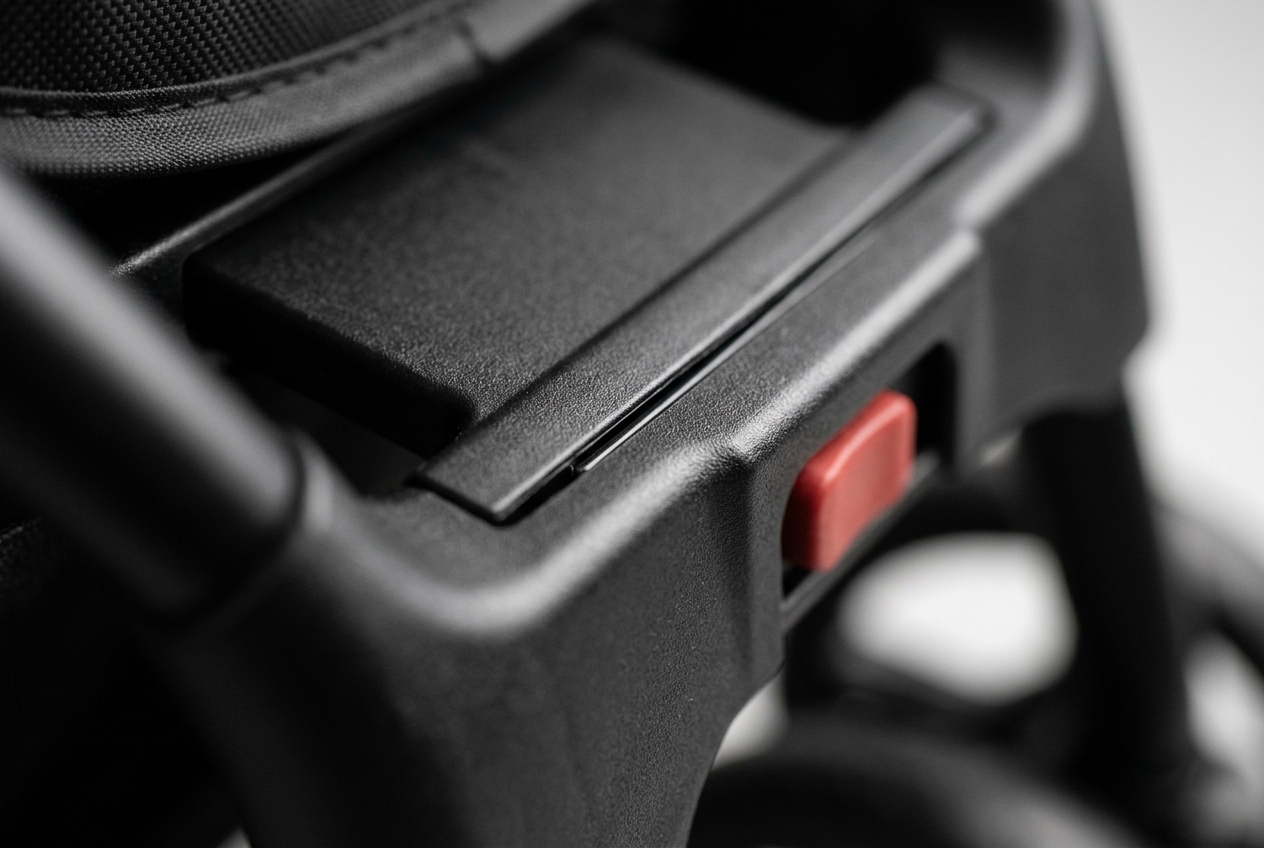
A detachable pet carrier may wobble for several reasons, and not all movement means failure. Some stroller systems allow slight controlled movement to reduce stress or make attachment easier. However, excessive looseness, rattling, lifting, or one-sided movement deserves closer inspection before use.
A detachable pet carrier may feel loose because it is not fully engaged, the carrier and stroller are incompatible, locking parts are worn, the frame is assembled incorrectly, or the connection points are damaged. Small designed-in clearance can be normal, but movement that affects retention or stability needs investigation.
Normal clearance versus concerning movement
Mechanical connections need clearance. If every part fit with zero gap, users would struggle to attach and remove the carrier. Plastic parts also expand, shrink, and flex slightly under real conditions. A tiny amount of motion may be part of the design.
The concern starts when movement changes the function of the lock.
I would separate looseness into three levels:
| Movement level | What it feels like | Likely concern |
|---|---|---|
| Minor clearance | Small click or shift, carrier remains locked | Often normal if described by manufacturer |
| Moderate wobble | Carrier rocks during pushing but does not detach | Needs inspection and compatibility check |
| Excessive movement | Carrier lifts, tilts, or unlocks | Stop using until resolved |
Common causes of wobble
Several issues can create a loose-feeling stroller connection.
1. Incomplete engagement
This is the most common issue. One latch may engage while the opposite side rests above its receiver. The carrier feels attached because one side is locked, but the other side can move.
2. Trapped soft goods
Pet carriers combine fabric, foam, webbing, zippers, and plastic or metal hardware. A strap hanging below the base can block full seating. A folded fabric panel can create a few millimeters of height difference, which is enough to stop a latch.
3. Product incompatibility
Detachable carrier systems are not universal. A carrier from one series may fit the shape of another frame but not match the lock geometry. Even within one brand, different production years or adapters can matter.
4. Worn or damaged locking parts
Repeated attachment cycles can wear plastic catches or metal pins. Damage may also happen if the carrier is dropped, forced into place, or stored under load. Look for:
- Cracked latch housings.
- Rounded hook edges.
- Loose screws or rivets.
- Bent brackets.
- Springs that do not return.
5. Stroller frame assembly issues
Sometimes the carrier is fine, but the stroller frame is not fully assembled. A crossbar may be reversed. A receiver may be installed on the wrong side. A folding joint may not be locked open. These frame issues can change the docking geometry.
Why tolerance matters
In manufacturing, every part has a tolerance range. A molded receiver may vary slightly. A fabric-wrapped base may compress differently. A metal tube may bend within an accepted range. Good design accounts for this through lead-in angles, controlled gaps, and latch travel.
Poor tolerance control creates one of two problems:
- The connection is too tight, so users force it.
- The connection is too loose, so the carrier rattles or feels unstable.
A premium detachable pet carrier system usually balances easy attachment with secure retention. That balance comes from testing, tooling control, and repeated assembly checks. It does not come from appearance alone.
What Should You Do If the Carrier Won't Lock Securely?
A detachable pet carrier that will not lock securely can be frustrating, especially when the stroller looks assembled and the carrier appears to be the correct one. The risk comes from guessing. If the lock does not engage as intended, forcing the mechanism can make the problem worse.
If the carrier will not lock securely, remove it and check alignment, obstructions, compatibility, frame assembly, and visible damage. Reattach it according to the product instructions. If it still does not lock, stop using the stroller-carrier connection and contact the manufacturer or retailer for support.

A calm troubleshooting sequence
I prefer a simple sequence because it prevents random forcing. Work slowly and keep the pet out of the carrier while checking the connection.
1. Remove the carrier completely
Start fresh. Partial attachment can hide the real issue. Place the carrier on a clean surface and inspect the underside.
2. Check for obstructions
Look for anything blocking the docking area:
- Loose shoulder straps.
- Folded fabric panels.
- Zipper pulls.
- Pet blankets.
- Debris, sand, or hair.
- Packaging material left from shipping.
Even a small object can stop a latch from reaching its final position.
3. Confirm the attachment direction
Some carriers attach front-first. Others attach rear-first. Some drop straight down. If the carrier is angled the wrong way, the latch may hit the outside of the receiver instead of entering it.
4. Inspect the stroller frame
Make sure the stroller is fully unfolded and locked. Check whether adapters, brackets, or receivers are installed in the correct direction. If the stroller has removable adapters, confirm left and right parts are not reversed.
5. Look for damage
Inspect both the carrier and frame. Damage does not always look dramatic. A slightly bent hook or cracked plastic edge can prevent proper engagement.
6. Try once more using the manual
Use the written instructions or official video if available. Avoid improvising. If the product needs a specific push point, press there rather than pushing randomly on the shell or soft side panel.
What not to do
A locking mechanism is a safety-related component in the product’s normal use. Do not modify it. Do not file a latch, bend a bracket, tape a receiver, add a screw, or use straps as a substitute for the original lock. Those fixes may seem practical, but they can change the load path and hide a real defect.
Also avoid mixing parts unless the manufacturer lists them as compatible. A stroller adapter that “almost fits” can be more dangerous than one that obviously does not fit, because the user may believe the carrier is secure.
When to contact the manufacturer
Contact support if:
- The carrier lifts off after attachment.
- One side locks and the other side does not.
- The release button sticks.
- A latch is cracked, bent, or loose.
- The carrier only fits when forced.
- The product manual and actual parts do not match.
For B2B buyers, I would also document the issue with photos and short videos. Show the docking points, the attempted attachment motion, and the movement after engagement. Clear evidence helps the supplier identify whether the problem is user assembly, tolerance, damage, or design.
How Can Pet Brands Design More Reliable Carrier-to-Stroller Connections?
A detachable pet carrier is only as good as its connection interface when used on a stroller. Brands can have beautiful fabrics, premium wheels, and a strong frame, yet users will lose confidence if the docking action feels vague or inconsistent.
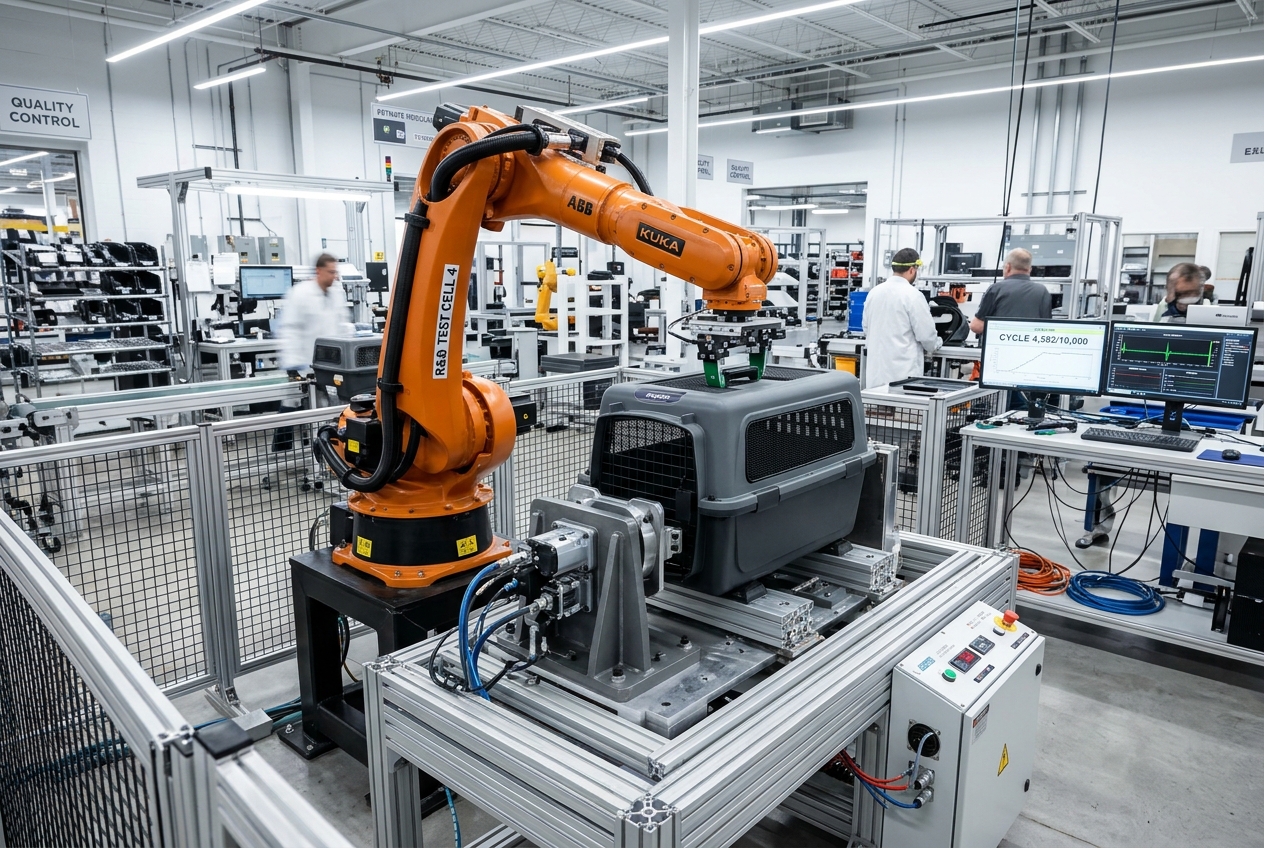
Pet brands can design more reliable carrier-to-stroller connections by using guided alignment, positive locking hardware, clear engagement feedback, anti-misassembly features, controlled tolerances, and repeated durability testing. The design also needs clear user instructions and validation under realistic loading, vibration, and attachment cycles.
Design starts with the attachment motion
In OEM/ODM development, the first question is not only “How strong is the latch?” I usually start with a more basic question: Can the user naturally place the carrier in the correct position?
A good interface guides the user before it locks. That guidance may come from:
- Tapered lead-in surfaces.
- Wide entry mouths on receivers.
- Asymmetric geometry that prevents reversed installation.
- Front/rear visual cues.
- A stable pre-lock resting position.
- Clear hand placement areas.
If the carrier can sit in the wrong place and still look correct, the design invites misuse. If the parts guide themselves into position, the latch has a much better chance of working every time.
Positive locking matters
A reliable connection needs a defined locked state. In product development, I look for evidence that the lock has crossed from “resting” into “retained.” Depending on the design, that may involve a spring-loaded latch, a rotating catch, a pin-in-hole connection, or a dual-side lock.
Good locking design often includes:
| Design feature | Why it helps |
|---|---|
| Positive latch travel | Confirms the lock reaches a defined position |
| Redundant support points | Reduces stress on one latch |
| Controlled release button | Prevents accidental unlocking |
| Visual indicator | Helps users confirm engagement |
| Audible or tactile feedback | Improves confidence during daily use |
| Anti-lift geometry | Resists upward separation during bumps |
No single feature guarantees performance by itself. The full system needs validation. A latch that works in a showroom may behave differently after dust exposure, repeated folding, fabric compression, or temperature change.
Tolerance control is where many designs succeed or fail
Carrier-to-stroller connections combine different manufacturing processes. A single product may include injection-molded plastic, aluminum tubing, steel rivets, sewn fabric, foam padding, and rubber trim. Each process has variation.
For a pet brand developing a detachable pet carrier system, tolerance planning needs to cover:
- Mold shrinkage and part warpage.
- Tube bending accuracy.
- Rivet or screw stack-up.
- Fabric thickness around the base.
- Assembly fixture repeatability.
- Wear after repeated docking cycles.
At Anvoya, this is the type of detail we focus on as an engineering-led OEM/ODM manufacturer for modular pet travel products. Our experience from child car seat and automotive-related product development shapes how we think about docking interfaces, although each pet product still needs its own evaluation and validation. Certifications, test reports, and claims always need buyer-side verification for the target market.
Testing beyond the first sample
A first sample can be misleading. New plastic is crisp. Springs are fresh. Operators are careful. Real use is less tidy.
For carrier-to-stroller connections, I like to see testing that includes:
-
Repeated attachment and release cycles
- This reveals wear, spring fatigue, and user friction.
-
Static load checks
- The connection needs to hold expected carrier and pet loads with appropriate safety factors.
-
Dynamic movement tests
- Pushing over uneven surfaces can expose rattling or partial disengagement.
-
Side-load and lift checks
- Users often lift from one handle or turn sharply.
-
Misuse evaluation
- The design needs to account for likely user mistakes, such as partial seating.
-
Environmental checks
- Heat, cold, dust, and humidity can affect plastic and metal behavior.
Pet brands do not need to overcomplicate the user experience. In fact, simpler is often better. The strongest designs make the correct action feel obvious and make the wrong action difficult. That is where engineering, industrial design, and manufacturing quality control meet.
Frequently Asked Questions
Is a clicking sound enough to confirm a detachable pet carrier is locked?
A click can be helpful, but it is not universal proof. Some systems click before the main latch fully engages, while others lock quietly. Check alignment, seating, latch position, and the manufacturer’s recommended verification step before placing your pet inside.
Can I use one detachable pet carrier with another brand’s stroller?
Only use mixed components if the manufacturer confirms compatibility. Carrier-to-stroller connections are not standardized across brands. Similar-looking hooks, rails, or adapters may have different dimensions, latch positions, or load ratings.
How much wobble is normal in a detachable pet carrier stroller system?
A small amount of controlled movement may be normal, depending on the design. Excessive rocking, lifting, rattling, or one-sided looseness is a warning sign. If the movement affects retention or confidence, stop using the connection and inspect it.
What causes one side of the carrier to lock while the other side stays loose?
One-sided locking usually comes from misalignment, trapped fabric, damaged connectors, reversed adapters, or incomplete seating. Remove the carrier, inspect both docking points, and reattach it according to the manual. Do not force the loose side into place.
Can I repair a loose stroller latch myself?
Avoid modifying latches, hooks, brackets, or receivers. Filing, bending, taping, or adding hardware can change how the connection carries load. Contact the manufacturer or retailer for replacement parts, warranty support, or qualified inspection.
Conclusion
A detachable pet carrier is securely attached to a stroller when it is seated correctly, mechanically locked, and verified through the product’s intended check. A carrier that merely rests on the frame is not the same as one that is retained by a latch, hook, rail, or dock. For pet brands developing premium carrier-stroller systems, the connection interface deserves serious engineering attention. If you are evaluating OEM/ODM development for modular pet travel products, Anvoya can help review docking architecture, locking hardware, prototyping, and manufacturing feasibility.