
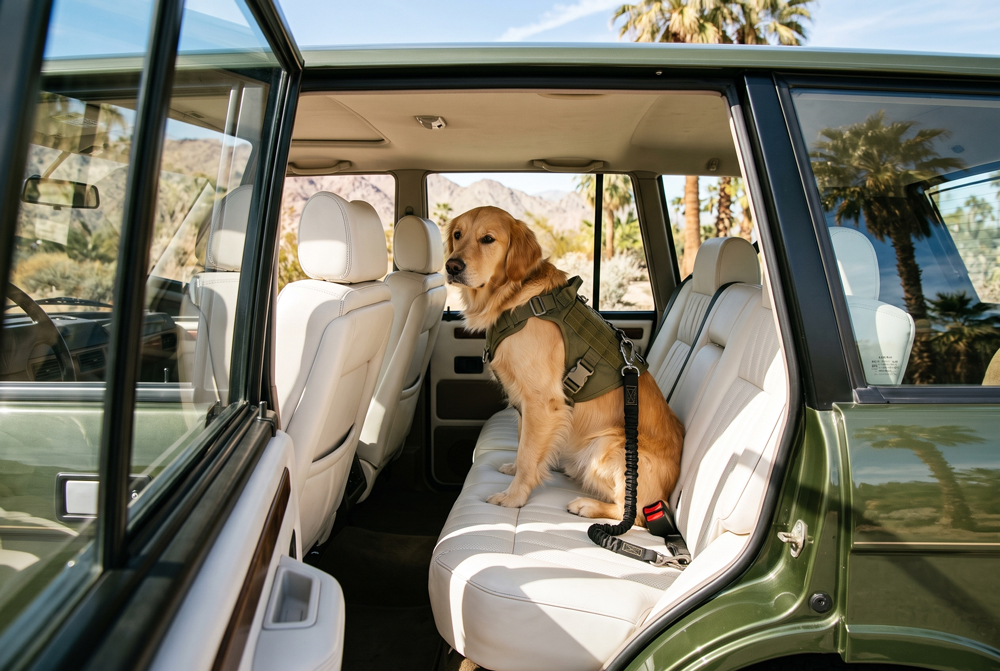
A dog car restraint harness for larger dogs becomes relevant when portable carrier-based travel starts to feel too heavy, too bulky, or too limited for real vehicle use. Pet brands can feel this gap quickly: smaller pets fit neatly into carriers, while larger dogs create new handling, fit, and vehicle-space challenges. A purpose-designed restraint harness offers another product architecture to evaluate.
A dog car restraint harness for larger dogs can be an alternative to carrier-based travel when portable carriers become impractical due to dog size, carrier weight, vehicle space, or handling difficulty. It uses a body-worn restraint structure connected to compatible vehicle anchor points, but its suitability depends on design, fit, installation, and product-specific verification.
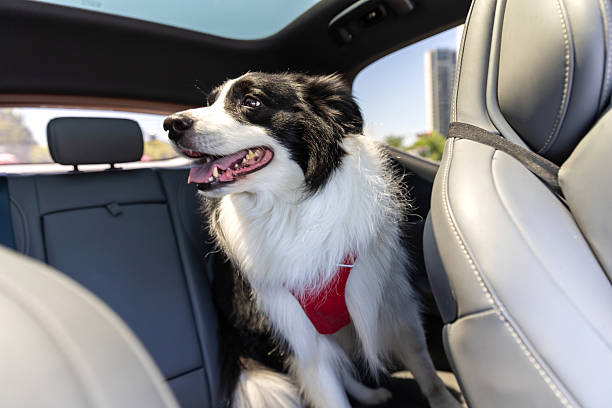
Carrier-based systems remain useful for many pets. I work around these products often, and I still see strong value in portable carriers, stroller-compatible carriers, and vehicle-ready docking systems. The more interesting question is where the practical boundary sits. Once a dog grows beyond that boundary, brands need a different way to think about vehicle travel.
Why Do Portable Pet Carriers Become Less Practical for Larger Dogs?
Portable pet carriers solve many small-pet travel problems, but larger dogs quickly change the equation. The carrier must become bigger, stronger, and more spacious. Then it becomes harder to lift, harder to place inside a vehicle, and less convenient for everyday use.
A portable carrier becomes less practical for larger dogs when the required interior space increases the carrier’s weight, bulk, and handling difficulty. Larger-dog travel can require a different restraint architecture because the product must fit the dog, the vehicle, and the user’s daily routine without becoming unmanageable.
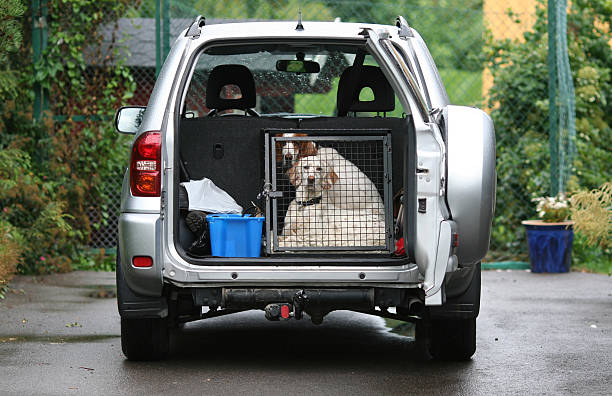
The size problem is also a handling problem
When we develop carrier-based travel products, size is never just a dimension on a drawing. A few extra centimeters in length, width, and height affect almost everything:
- Material usage
- Panel stiffness
- Handle strength
- Mold size
- Package volume
- Shipping cost
- Retail shelf practicality
- User handling
- Vehicle placement
For smaller pets, a portable carrier can feel natural. The owner can lift it, carry it into the car, dock it onto a stroller, or move it indoors. As the dog gets larger, that same workflow becomes harder.
A larger dog needs more usable internal room. The carrier also needs enough structure to avoid excessive deformation. That usually means more material, stronger hardware, and a larger footprint. At some point, the carrier may still be technically possible, but it no longer feels portable in a normal consumer scenario.
Vehicle space creates another boundary
A larger carrier does not only need to fit the dog. It also has to fit the vehicle.
In product development discussions, I often separate the issue into three practical checks:
| Evaluation Area | What Buyers Need to Check | Why It Matters |
|---|---|---|
| Dog fit | Interior length, height, turning space, posture | A cramped carrier creates poor user acceptance |
| Vehicle fit | Rear seat width, seat depth, door opening, anchor access | A carrier that cannot be placed easily will create returns |
| Human handling | Lift weight, grip access, loading angle | Heavy carrier handling becomes a daily-use barrier |
For B2B buyers, this matters because a product line designed around small pets may not scale cleanly. A carrier that works well for a 4–6 kg pet does not automatically become a good solution when enlarged for a much bigger dog.
Carrier-based systems still have their place
It is useful to be careful here. I do not treat larger carriers, crates, or vehicle docking systems as unsuitable by default. In some travel scenarios, they may remain appropriate. For example, a rigid crate may suit a certain vehicle layout, training routine, or professional transport need.
The product gap is more specific:
Portable carrier-based systems cannot practically address every dog size, vehicle space, and everyday travel scenario.
That gap is where a dog car restraint harness for larger dogs becomes worth evaluating. It does not replace every carrier. It gives pet brands another architecture for customers who already find portable carrier travel too bulky or inconvenient.
How Does a Dog Car Restraint Harness for Larger Dogs Work During Vehicle Travel?
A walking harness is made for control during daily movement. A vehicle restraint harness has a different job. It must manage the dog’s position inside the vehicle and connect the body-worn structure to a compatible restraint arrangement through purpose-selected webbing, buckles, stitching, and vehicle attachment hardware.
A dog car restraint harness for larger dogs works by distributing restraint forces through a body-worn harness and connecting that harness to vehicle anchor points or restraint hardware. Its performance depends on fit, structural layout, attachment geometry, adjustment, and verified use conditions, not simply on the presence of straps.
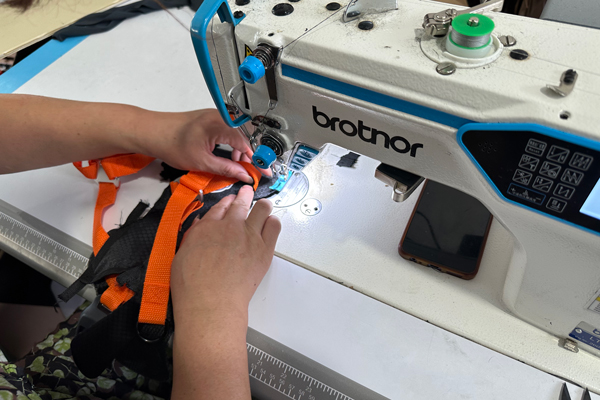
A vehicle restraint harness is a separate product architecture
A carrier-based system uses an enclosure. The pet sits inside the carrier, and the carrier interacts with the vehicle seat, belt, base, or docking structure. A harness-based system changes the architecture. The dog wears the restraint, and the restraint connects to the vehicle.
That sounds simple, but the development work is very different.
A larger-dog restraint harness usually requires attention to:
- Chest support panels
- Neck and shoulder clearance
- Adjustable body straps
- Load-bearing webbing paths
- Reinforced stitching
- Buckles and adjusters
- Lower anchor connections
- Top Tether connection
- Installation sequence
- Dog posture inside the vehicle
A conventional walking harness may look similar from a distance. In engineering terms, it is not the same product. Walking harnesses are usually designed for leash control, comfort, and daily wear. Vehicle restraint harnesses need a more specific structure because the use environment changes.
Load paths matter more than appearance
In soft-goods product development, it is tempting to judge a harness by how strong it looks. Thick webbing, large buckles, and padded panels can create a reassuring appearance. However, product buyers need to look deeper.
I usually pay attention to the load path first. The load path is the route forces may travel through the product structure during vehicle restraint use. In a harness, that route may include:
- Vehicle anchorage hardware
- Connector strap or tether
- Adjustment hardware
- Harness attachment point
- Webbing network
- Chest or body support panel
- Stitching and reinforcement zones
If one part of the chain is poorly specified, the overall structure becomes questionable. A strong buckle does not compensate for weak stitching. A wide chest panel does not solve poor strap geometry. A premium connector does not establish suitability if the attachment angle is wrong for the intended seating position.
Fit affects function
Larger dogs vary a lot in body shape. Two dogs can have similar body weight but completely different chest depth, shoulder width, neck angle, and torso length. A harness that fits one breed type may sit poorly on another.
That is one reason I avoid treating body weight as the only fit reference. Weight is useful for rough market segmentation, but it does not define harness fit. Pet brands considering a dog car restraint harness for larger dogs need a measurement strategy that includes chest circumference, body length, and adjustment range.
A well-planned harness platform may use multiple sizes or graded patterns. It may also require fitting samples across different dog body types before tooling, pattern cutting, and component selection are finalized.
Product claims need evidence
A restraint harness may look like a safety product, and buyers may want strong marketing language. However, technical claims require supporting verification. If a brand wants to reference crash testing, certification, compliance, or vehicle compatibility, those claims need documents that can be reviewed.
For procurement teams, a practical checklist may include:
- Product drawings and bill of materials
- Material specifications for webbing, buckles, and connectors
- Stitching construction details
- Sample inspection criteria
- Prototype fit feedback
- Installation instructions
- Test plan or third-party evaluation scope
- Any certificates or reports, if available and relevant
A dog car restraint harness for larger dogs deserves this kind of review because it is not just an accessory. It is a body-worn vehicle travel product with hardware, soft goods, and installation behavior working together.
What Is the Difference Between ISOFIX and LATCH Hook Restraint Connections?
ISOFIX and LATCH-style terms often appear in vehicle restraint discussions, but buyers need to separate connector language from verified product suitability. A connector type describes hardware and attachment method. It does not automatically prove universal vehicle compatibility or product performance for pet restraint applications.
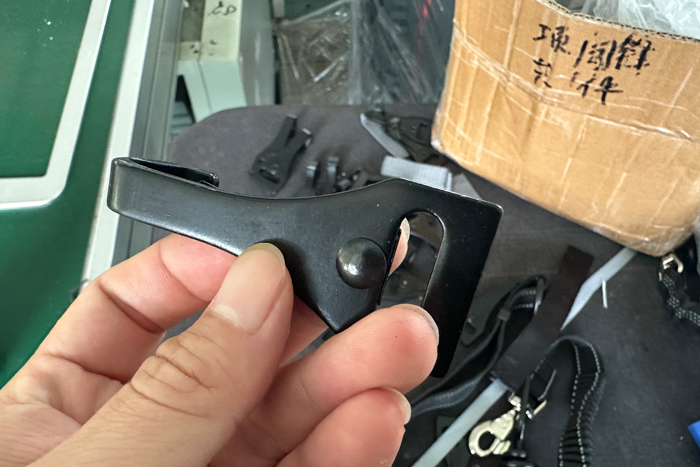
For a larger-dog vehicle restraint harness, one configuration may use ISOFIX lower connectors with a Top Tether, while another may use two LATCH-style lower anchor hooks with a Top Tether. Both use lower anchorage connections and an upper tether, but cost, installation feel, hardware sourcing, and market expectations may differ.
Two configurations under evaluation
From our product-development perspective, there are two connection configurations that pet brands may want to compare for a dog car restraint harness for larger dogs:
| Configuration | Main Connection Elements | Product Development Considerations |
|---|---|---|
| ISOFIX + Top Tether | ISOFIX lower connectors plus upper tether connection | More defined connector mechanism, potentially higher component cost, different installation feel |
| Two LATCH Hooks + Top Tether | Two lower anchor hooks plus upper tether connection | Slightly lower component-cost direction in our current evaluation, simpler hook-style hardware, different adjustment process |
Both concepts involve lower vehicle anchorage connections and a Top Tether connection. However, the hardware design and user experience can differ. ISOFIX connectors often feel more mechanical and guided. LATCH-style hooks may be simpler in construction and may offer a cost advantage depending on sourcing, material, and specification.
The cost point matters for OEM/ODM buyers. A brand developing a good-better-best range may use connector configuration as one part of product positioning. A premium SKU may justify more complex hardware. A more accessible SKU may use lower-cost components while still requiring proper engineering and verification.
Connector cost is not the same as safety ranking
It would be easy to say that the more expensive connector is automatically safer. That would be an unsupported shortcut. Product performance depends on the complete system:
- Harness body design
- Webbing routing
- Connector strength
- Stitching consistency
- Adjustment retention
- Anchor geometry
- Vehicle seating position
- User installation
- Test method and verification scope
A lower-cost connector configuration is not automatically less protective. A higher-cost configuration is not automatically more protective. Buyers need to compare the actual product design, intended use, and validation evidence.
ISOFIX and LATCH terminology needs care
ISOFIX and LATCH are commonly associated with child restraint anchorage systems in vehicles. Pet travel products may reference compatible anchor locations or use similar connection hardware. However, that does not mean every vehicle with corresponding anchorages is automatically suitable for a pet restraint harness.
Several practical questions remain:
-
Does the vehicle manufacturer allow this type of use?
Vehicle manuals may include restrictions or intended-use guidance for anchorages. -
Does the product geometry match the seating position?
Strap angle, tether routing, and dog position can affect usability and restraint behavior. -
Does the harness fit the dog in the intended posture?
A poor fit can change how loads distribute through the body-worn structure. -
Has the product configuration been evaluated with its exact components?
Substituting connectors, buckles, or webbing can alter the system. -
Are instructions clear enough for real users?
Even a strong structure can be misused if installation is confusing.
OEM/ODM implications for sourcing managers
For sourcing managers, ISOFIX and LATCH-style hardware decisions affect much more than the product page description. They influence component supply, assembly workflow, quality inspection, packaging, documentation, and after-sales communication.
A basic procurement comparison may include:
| Evaluation Point | ISOFIX + Top Tether | Two LATCH Hooks + Top Tether |
|---|---|---|
| Component complexity | Often higher | Often simpler |
| Relative component cost | Usually higher in our current evaluation | Slightly lower-cost direction |
| Installation feel | More guided connector engagement | Hook attachment and strap adjustment |
| Supplier qualification | Connector mechanism consistency matters | Hook strength and finish consistency matter |
| Brand positioning | May suit premium technical positioning | May suit value-oriented or mid-tier positioning |
| Validation need | Product-specific verification still required | Product-specific verification still required |
At Anvoya, our background in vehicle-ready carrier systems makes these details familiar. The hardware must connect cleanly with the soft-goods structure. The installation cannot feel like an afterthought. The bill of materials has to make sense for the target channel. A dog car restraint harness for larger dogs sits right at that intersection.
What Fit, Structural, and Vehicle Compatibility Requirements Matter Most for a Dog Car Restraint Harness for Larger Dogs?
Larger-dog harness development creates problems that do not appear when designing small-pet carriers or casual walking accessories. The dog’s body shape, the harness load path, the vehicle anchor layout, and the user’s installation behavior all influence whether the product can work as intended.
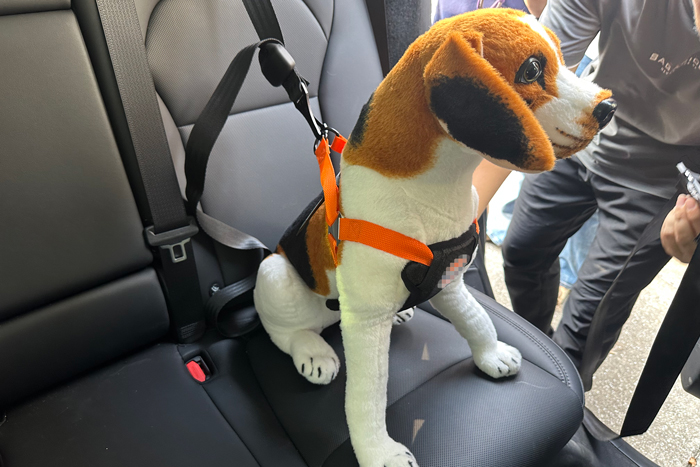
The most important requirements for a dog car restraint harness for larger dogs are body fit, structural load distribution, secure hardware integration, vehicle anchorage geometry, adjustment usability, and repeatable manufacturing quality. Body weight alone is not enough because dogs with similar weight can have very different proportions.
Body fit starts with shape, not only weight
Many pet products use weight ranges because they are easy for consumers to understand. Weight can help create a basic size guide, but it is not enough for a larger-dog restraint harness.
A dog’s body shape can vary in several ways:
- Deep chest versus round chest
- Narrow shoulder versus broad shoulder
- Long torso versus compact torso
- Thick neck versus lean neck
- Upright sitting posture versus lower resting posture
A harness pattern must accommodate these differences without creating pressure points or unstable strap positions. If the chest panel sits too high, it may interfere with the neck. If the body strap sits too far back, the harness may shift. If adjustment hardware is hard to reach after the dog is seated, the product becomes frustrating.
For B2B buyers, sample fitting across different dog types becomes valuable before mass production. It is better to find these problems in prototype review than after the first shipment.
Structural design needs a complete system view
A larger-dog harness is not a small-dog harness with longer straps. Scaling up changes the forces on webbing, buckles, seams, and anchor points. The structure needs a planned relationship between soft goods and hardware.
Important structural elements include:
-
Webbing layout
The webbing needs to route forces through strong areas of the harness rather than relying only on fabric panels. -
Chest support
The chest area often needs stable support and suitable padding, but padding alone does not create strength. -
Stitching construction
Stitch type, thread selection, stitch density, seam overlap, and reinforcement patches affect repeatability. -
Buckles and adjusters
Hardware must match the webbing width, material thickness, and adjustment load. Inconsistent hardware can create slippage or poor user experience. -
Attachment points
The connection between the harness and vehicle restraint strap needs careful reinforcement and inspection control.
Vehicle compatibility cannot be assumed
A dog car restraint harness for larger dogs interacts with the vehicle. That creates another evaluation layer. Vehicle seat shape, anchor position, tether access, and seatback angle may all affect use.
Pet brands need to consider:
- Rear-seat intended positions
- Lower anchor access
- Top Tether routing
- Strap adjustment range
- Dog sitting or lying posture
- Clearance from door panels and seatbacks
- User ability to connect and disconnect hardware
This article is not an installation tutorial because final installation guidance depends on the exact product design and verified instructions. Still, product managers can plan early around the user experience. If the restraint takes too long to fit, uses hidden anchor points, or requires awkward hand access, many consumers will not use it correctly.
Manufacturing feasibility protects product consistency
Once a concept looks good, manufacturing discipline becomes the quiet part that decides whether the product can scale. A restraint harness includes soft-goods sewing, hardware sourcing, webbing cutting, assembly, inspection, and packaging. Every step affects consistency.
A practical production control plan may include:
| Manufacturing Area | What to Control | Why It Matters |
|---|---|---|
| Webbing | Width, thickness, tensile specification, edge finish | Affects strength, adjustment, and sewing |
| Stitching | Pattern, thread, seam allowance, reinforcement | Affects repeatability and inspection |
| Buckles | Material, molding quality, locking feel | Affects usability and durability |
| Metal hardware | Finish, geometry, corrosion resistance | Affects connection quality |
| Assembly | Strap routing, orientation, label placement | Prevents functional assembly errors |
| QC inspection | Pull checks, visual checks, measurement checks | Supports consistent production lots |
This is where OEM/ODM collaboration becomes important. A concept drawing is not enough. The buyer and manufacturer need to align on the intended use, component specifications, inspection standards, and documentation trail. If a brand wants application-specific decisions, qualified professional evaluation and product-specific testing need to be part of the development plan.
How Can Pet Brands Expand Their Car Travel Product Lines With a Dog Car Restraint Harness for Larger Dogs?
Many pet brands already serve small pets well through carriers, pet car seats, and stroller-compatible travel systems. The commercial question appears when customers with larger dogs ask for a vehicle travel option that does not rely on lifting a bulky portable carrier.
A dog car restraint harness for larger dogs can help pet brands extend vehicle travel assortments beyond carrier-based products. It gives brands a complementary category for medium and larger dogs while allowing existing carrier, stroller, and modular travel lines to remain focused on the pet sizes they serve best.

The portfolio gap is easy to miss
A brand may have a strong small-pet travel range:
- Soft carriers
- Airline-style travel bags
- Pet car seats
- Carrier-and-stroller sets
- Detachable carrier systems
- Vehicle-ready carrier concepts
These products can serve many cats and small dogs very well. However, the same product family may leave a gap for larger dogs. Customers still want vehicle travel solutions, but they may not want a large portable carrier. Retailers may also want a broader range that covers more pet sizes without adding oversized boxes to every shelf.
A restraint harness can sit beside carrier-based products rather than replacing them. The portfolio logic can look like this:
| Pet Travel Need | Product Architecture | Typical Product Direction |
|---|---|---|
| Small pet portability | Enclosed carrier | Soft carrier, hard carrier, airline-style bag |
| Small pet vehicle + stroller use | Modular carrier system | Carrier + base + stroller docking |
| Larger dog vehicle restraint | Body-worn restraint | Vehicle restraint harness with anchor connections |
| Outdoor mobility | Platform or carrier integration | Bike, stroller, or motorcycle pet travel products |
Two connection configurations create product positioning options
The ISOFIX + Top Tether and two LATCH hooks + Top Tether concepts may support different product positions. A brand could evaluate them based on channel expectations, component budget, packaging claims, and regional familiarity with vehicle anchorage terms.
For example:
- A premium technical range may prefer a more mechanical connector feel.
- A mid-tier line may prioritize simpler hardware and competitive costing.
- A distributor program may need fewer SKUs and clearer installation documentation.
- A private-label customer may want custom trim, webbing color, logo patches, and packaging.
Again, connector choice does not establish a safety ranking by itself. It is one part of the product specification. The harness body, materials, stitching, fit, instructions, and verification work all remain part of the decision.
OEM/ODM development needs cross-category knowledge
A larger-dog restraint harness combines disciplines that do not always sit together in a traditional pet product factory. It needs soft-goods construction, hardware integration, vehicle-interface thinking, pattern development, prototyping, and production quality control.
At Anvoya, our work in modular pet travel systems gives us a useful reference point. Carrier-based vehicle products already require attention to docking, restraint interfaces, structural support, and user handling. A harness moves the design challenge onto the dog’s body, but the same product-development discipline still applies.
A typical development path may include:
-
Product definition
Define target market, intended dog sizes, vehicle seating assumptions, connector direction, and retail positioning. -
Concept structure
Create webbing layouts, body support concepts, attachment zones, and adjustment logic. -
Prototype sampling
Build soft-goods samples with representative hardware and evaluate fit, usability, and assembly process. -
Component selection
Review webbing, buckles, connectors, adjusters, thread, padding, and labels. -
Manufacturing review
Check sewing sequence, tooling needs, inspection points, and production repeatability. -
Verification planning
Decide what third-party evaluation, internal checks, documentation, and buyer review are required before claims are made.
Brands can expand without abandoning carriers
The strongest commercial path is often incremental. A pet carrier brand does not need to stop selling carriers to enter larger-dog vehicle travel. It can keep carriers for smaller pets and add a dog car restraint harness for larger dogs as a complementary category.
That approach helps the brand tell a clearer story:
- Small pets: portable carrier-based travel
- Smaller dogs and cats: modular carrier + stroller + vehicle systems
- Larger dogs: dedicated vehicle restraint harness architecture
This also gives product managers more room to create tiered assortments. Different connector configurations, material grades, padding styles, colorways, and packaging formats can support different retail channels. The main point is to treat the harness as a serious vehicle travel product, not as a casual accessory extension.
Frequently Asked Questions
Is a dog car restraint harness for larger dogs safer than a pet carrier?
A harness is not automatically safer than a carrier. Performance depends on the actual design, fit, installation, vehicle use, and supporting verification. A well-developed carrier, crate, or harness may suit different scenarios. Buyers need to review product-specific test reports, instructions, and compatibility information before making claims.
Can a normal walking harness be used as a car restraint harness?
A normal walking harness is designed for leash control, not vehicle restraint. Its webbing layout, buckles, stitching, and attachment points may not be intended for vehicle loads. Pet brands need a purpose-designed vehicle restraint harness and suitable verification before positioning it for car travel.
Does ISOFIX or LATCH hardware mean the harness fits every vehicle?
No. ISOFIX or LATCH-style hardware describes connector type and anchorage interaction. It does not prove universal compatibility. Vehicle manufacturer guidance, anchor geometry, seating position, tether routing, product instructions, and product-specific validation all need review before compatibility claims are made.
Why is body weight not enough for larger-dog harness sizing?
Body weight does not show chest depth, shoulder width, torso length, or neck geometry. Two dogs with similar weight can need different harness shapes. A reliable sizing approach needs body measurements, adjustment range, pattern grading, and prototype fitting across representative dog body types.
What should OEM/ODM buyers ask before developing this category?
Buyers can ask about webbing specifications, buckle and connector sourcing, stitching construction, fit samples, vehicle connection concepts, quality control plans, and verification options. They can also request documentation for any claimed testing, certification, or compatibility before approving packaging or marketing language.
Conclusion
A dog car restraint harness for larger dogs gives pet brands another way to serve customers beyond the practical limits of portable carrier-based travel. It is a different vehicle restraint architecture, with its own fit, structural, connection, manufacturing, and verification requirements. ISOFIX and LATCH-hook configurations may both be worth evaluating, depending on cost, positioning, and target-market expectations. If your brand is exploring larger-dog vehicle travel products, Anvoya can support early OEM/ODM development discussions around structure, hardware integration, prototyping, and production planning.