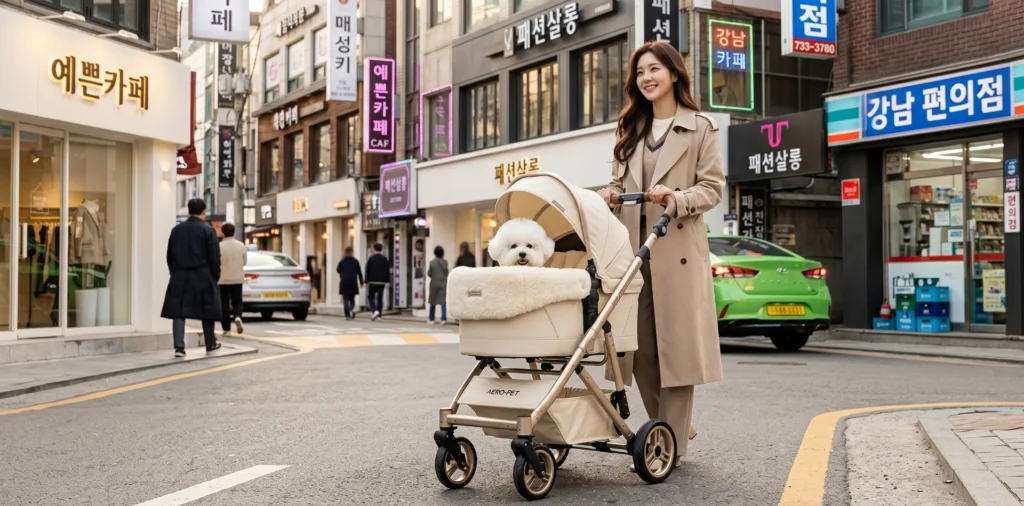
Many buyers lose time when they treat Japan and Korea as simple color jobs. The sample looks beige, but the product still feels wrong.
To design pet strollers for Japan and Korea, we focus on soft color, fuller cushions, semi-structured carriers, high-view frames, balanced wheels, controlled premium details, packing cost, and country-level positioning. A European pet stroller in beige is not automatically a Japanese or Korean product.
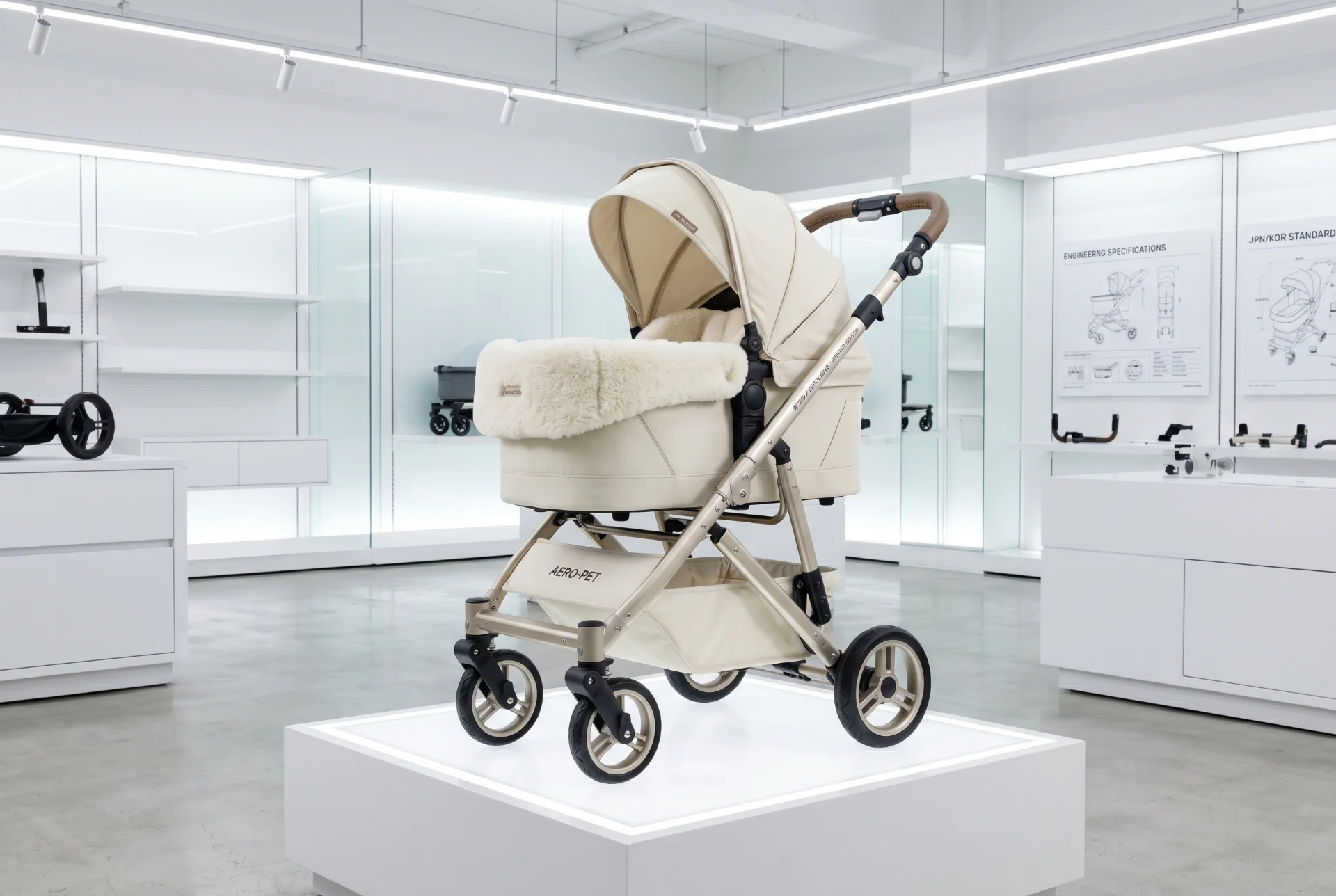
I have seen this problem many times in OEM projects. A brand sends a strong European model and asks for cream fabric. If we make the sample quickly. The buyer opens the box and says, “It is still not Japanese enough.” The issue is not only taste. The issue is product language. Japan and Korea often read comfort, value, and premium feeling through shape, cushion fullness, texture, proportion, and small details. If we only change the fabric color, I keep the old logic inside the product.
Why Is Changing the Color Not Enough?
Many OEM projects start too late. I see buyers approve beige fabric first, then they discover the carrier shape, frame, and wheels still say “European utility.”
Changing color is not enough because the market reads the whole stroller. The factroy must align carrier shape, cushion fullness, frame height, wheel size, material texture, stitching, logo, handle finish, and packing plan before sampling.
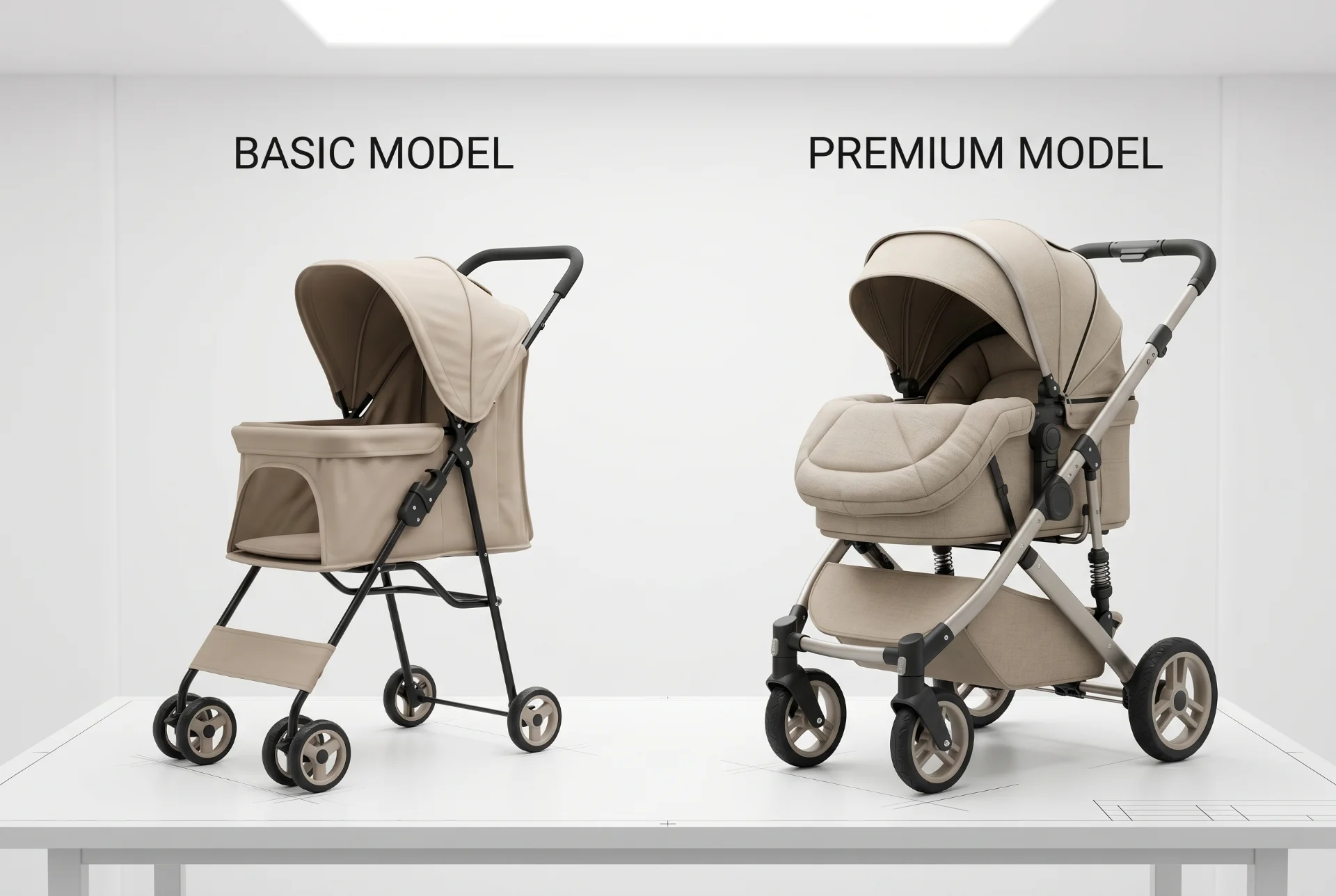
When we review a pet stroller for Japan or Korea, we do not start with a color card. we put the whole product on the table and check if the carrier looks full or flat ,if the frame looks tall enough and if the wheel size supports the visual weight of the carrier. I check if the zipper tape, piping, and handle color belong to the same story. A soft cream fabric on a hard black frame can still feel cheap. A warm grey cushion inside a stiff box can still look unfinished. We have also seen factories use good fabric but weak sewing. The first sample looked fine in one photo, but it lost shape on the retail floor.
| Development Approach | Likely Result |
|---|---|
| change black fabric to beige only | The product looks like a recolored European model |
| add fuller cushions | The product gains stronger comfort and display value |
| adjust carrier stiffness | The carrier looks cleaner and more stable |
| match frame, wheels, trims, and handles | The product gains one clear market language |
| localize after tooling is finished | lose many useful design options |
A European stroller in beige is not automatically a Japanese or Korean product.
What Color Direction Works Better in Japan and Korea?
A wrong grey can destroy a good design.
We usually choose soft, warm, low-saturation colors for Japan and Korea. Cream white, ivory, greige, warm grey, oatmeal, muted taupe, soft brown, dusty green, and pale blue-grey often work better than strong contrast colors.
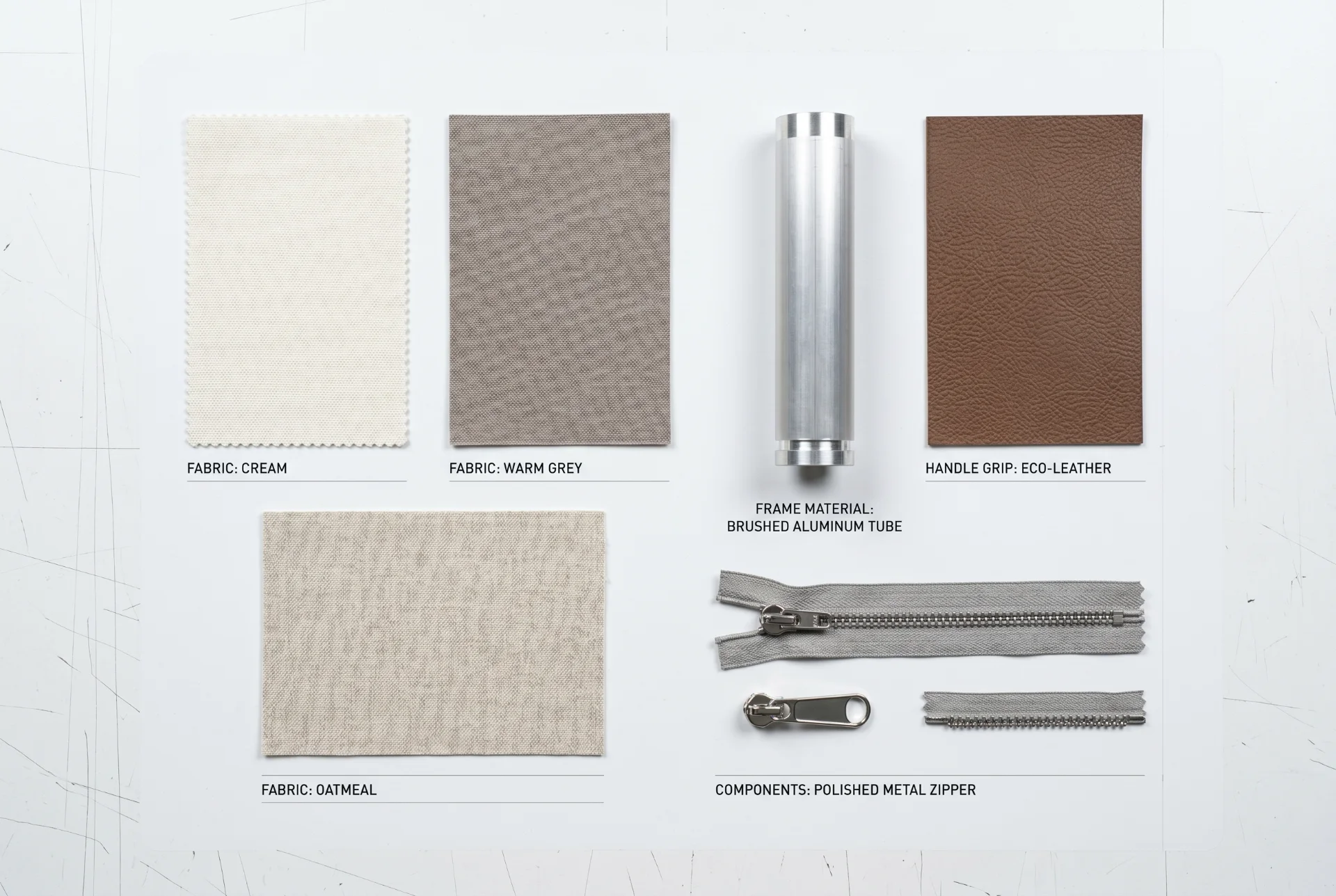
And we treat color as a system, not as one fabric choice. The main body, cushion, canopy, frame coating, zipper tape, piping, wheel parts, badge, and handle should sit in one family. Japan and Korea often accept quiet premium colors. I do not mean dull colors. I mean colors that can match cafés, home interiors, small cars, clothing, and city life. Bright optical white can look clean in a showroom, but it may feel too hard in pet travel. Warm cream can feel softer. Cool industrial grey can look practical, but warm grey often looks more friendly. Beige can be safe, but too much yellow can feel old. Muted brown can add warmth, but it needs a modern frame and refined trims.
| Color Area | My Usual Check |
|---|---|
| Main fabric | I check warmth, texture, and dirt visibility |
| Cushion | I check contrast and photo effect |
| Frame | I avoid a frame that fights the soft-goods color |
| Zipper and piping | I match them early, not after sewing |
| Badge and handle | I use them to support the premium level |
In Japan and Korea, premium color is usually quiet rather than loud.
Why Do Cushions Need to Look Fuller?
Thin cushions can pass a basic function test, but they often fail the retail test.
Fuller cushions create stronger visual comfort, better product photos, and higher perceived value. We use cushion fullness as part of the product design, not only as a comfort feature for the pet.
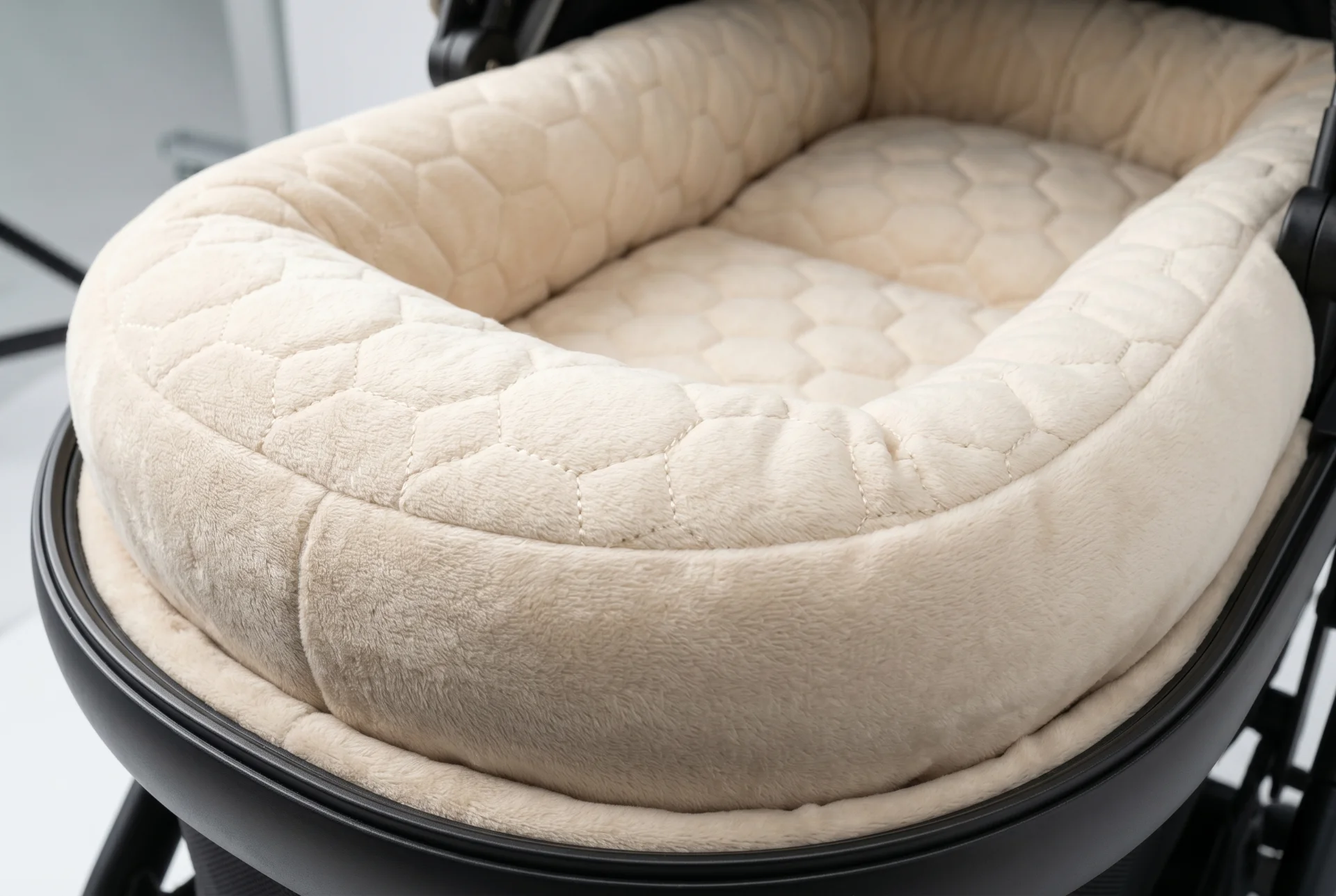
One buyer liked the stroller frame, but the cushion looked thin after shipping. The product looked empty in photos. The customer asked for more “soft feeling.” The factory first added more filling. Then the carton size grew. Then the buyer worried about freight cost. This is the real work of product development. I need to control thickness, sewing line, edge shape, material recovery, and carton volume together. A cushion can look full with better quilting, rounded edges, and resilient filling. It does not always need to be oversized. I also need to protect pet space. Small dogs and cats still need room to sit and turn. A beautiful cushion that steals too much internal space creates a new problem.
| Cushion Decision | Visual Benefit | Development Risk |
|---|---|---|
| Thicker filling | get a softer premium look | increase carton volume |
| Rounded edge | create a stronger comfort image | need better sewing control |
| Removable cover | improve cleaning value | add labor and components |
| High-resilience filling | keep shape longer | raise material cost |
| Oversized cushion | improve display impact | reduce carrier space |
In these markets, softness is not only a comfort feature. It is part of the product’s visual value.
How Should the Carrier Balance Softness and Structure?
A fully soft carrier can collapse. A fully hard carrier can feel cold. I see this balance decide whether a stroller looks premium or basic.
For Japan and Korea, they prefer a semi-structured carrier. It should feel soft to the pet, hold shape on display, support docking, and avoid looking like a simple fabric bag.
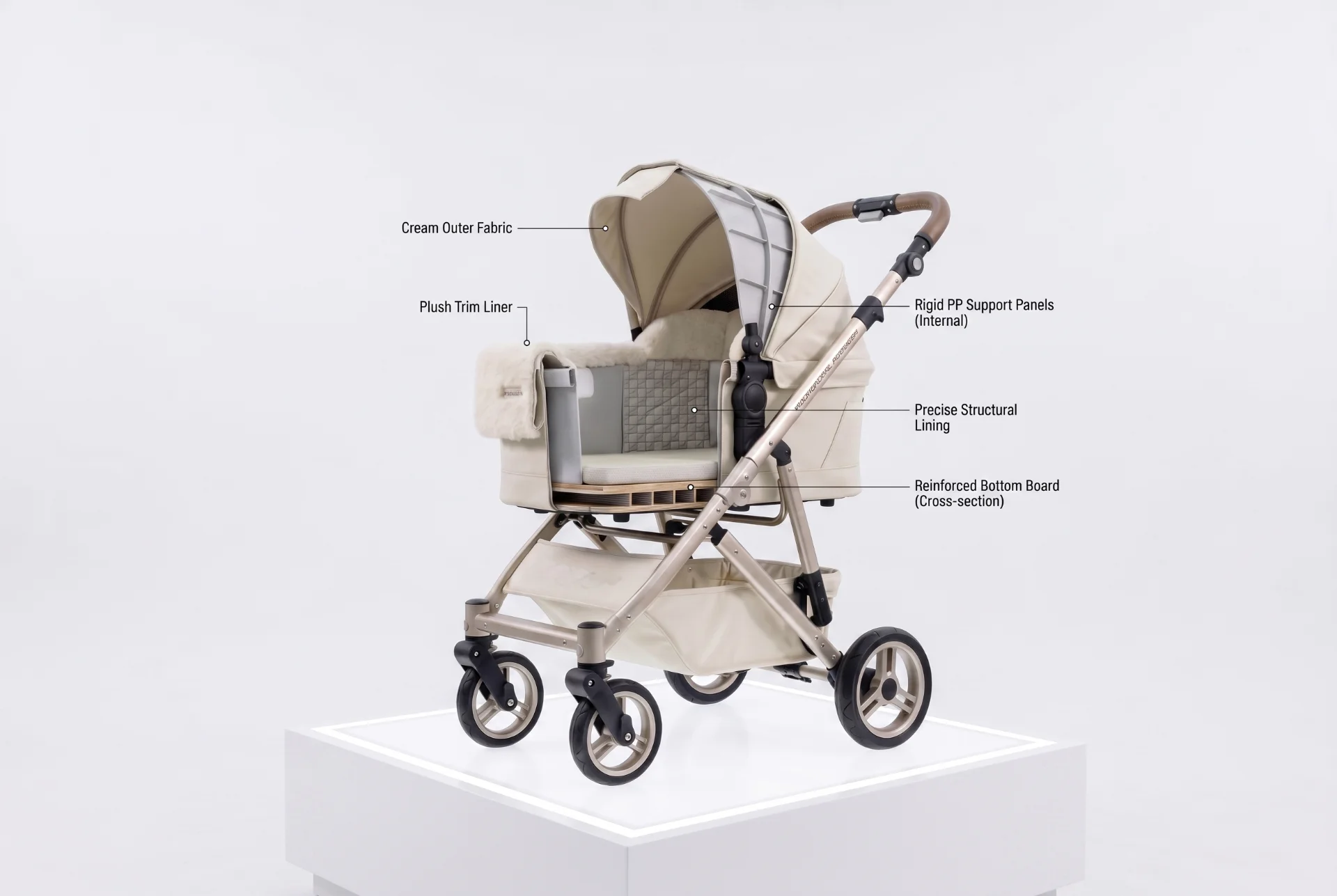
The carrier body is one of the most important development decisions. A fabric bag can look warm, but it may collapse in storage and retail display. It can also create poor support if the carrier must connect to a stroller frame or car base. A hard shell can solve shape problems, but it can look too industrial for a soft-luxury market. So the Korean clients usually prefer the middle path. they prefer to use PP panels covered with fabric, PVC lining, foam-supported side panels, reinforced bottom boards, shaped piping, heat-pressed panels, or hidden inserts. The method depends on target price and MOQ. The buyer must decide this before the first serious sample. If we add structure after the soft carrier is finished, we usually create wrinkles, poor fit, and extra cost.
| Construction Method | Why I Use It |
|---|---|
| PP panels | gain stable side shape |
| PVC lining | add support with controlled cost |
| EVA or foam support | keep a softer touch |
| Reinforced bottom board | support pet weight and docking |
| Shaped piping | make the edge look cleaner |
| Concealed inserts | hide structure inside soft goods |
The carrier should feel soft to the pet but structured to the customer’s eye.
Why Do High-View Frames and Larger Wheels Matter?
A low stroller can look small and practical, but it may not look premium.
High-view frames and larger wheels create functional and visual value. They bring the pet closer to the owner, improve presence, support smoother pushing, and make the stroller feel closer to premium baby-stroller proportions.
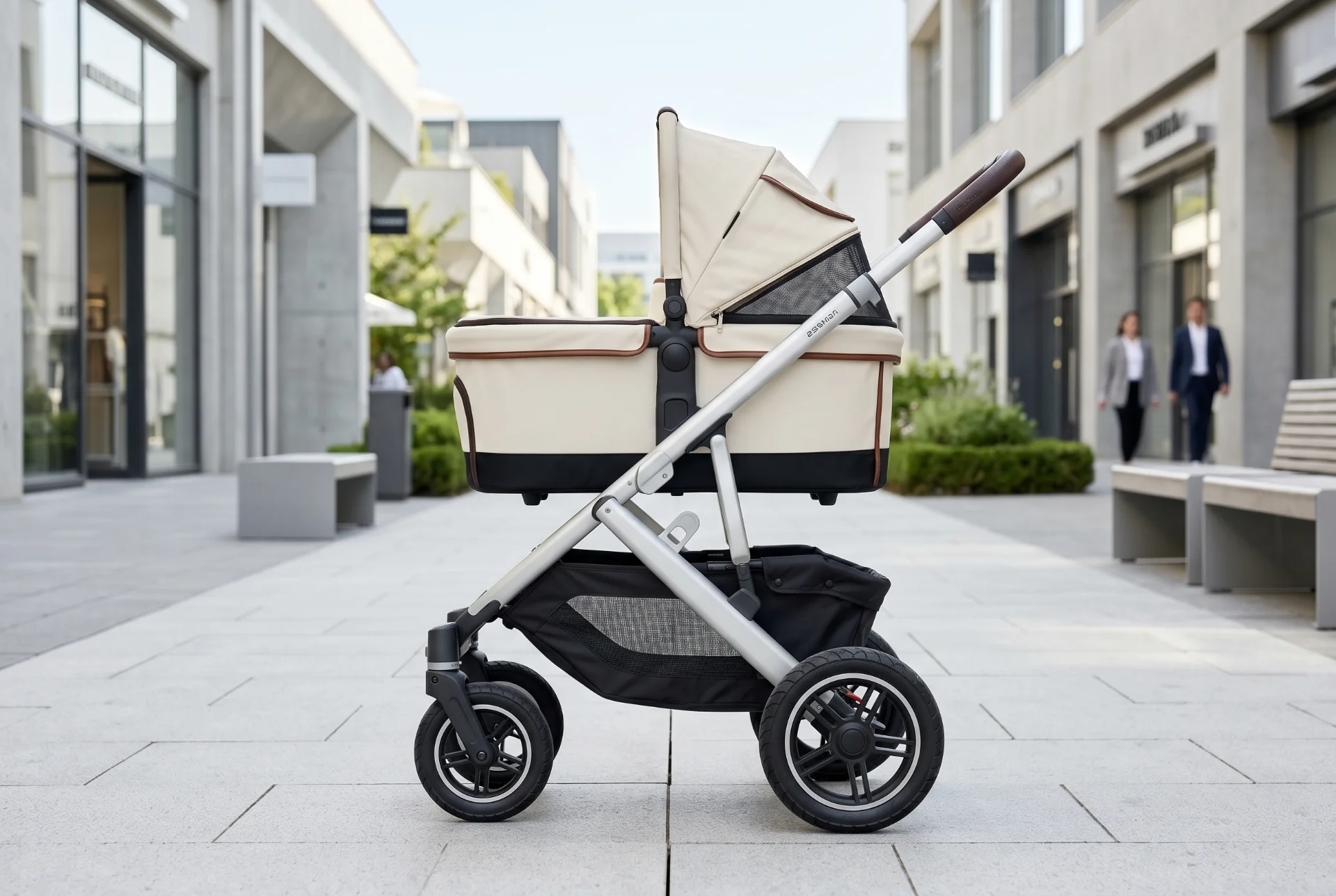
We don't add big wheels only because they look fashionable. we check the whole system. The carrier height affects how the owner talks to the pet. It also affects how the product looks in a store window. A higher carrier can feel more intimate and more premium. Larger wheels can make the stroller look stable and easier to push. But they also affect folded size, carton volume, center of gravity, and frame cost.
| Frame and Wheel Item | My Development Check |
|---|---|
| Carrier height | check owner interaction and silhouette |
| Wheel diameter | check proportion and movement |
| Wheel width | check stability and packing size |
| Front swivel | check city turning use |
| Center of gravity | check tipping risk during movement |
| Folded size | check carton and retail storage |
| Frame finish | check premium appearance |
High-view frames and larger wheels create both functional value and premium visual proportion.
Which Premium Details Actually Change Perception?
Small details can help a product. Too many details can make it look noisy. I have seen both results in private-label projects.
The best premium details are controlled and consistent. Metal badges, leather labels, leather-look handles, matte frames, matching zipper tape, refined stitching, and hidden connectors can raise perceived value when they support one design direction.
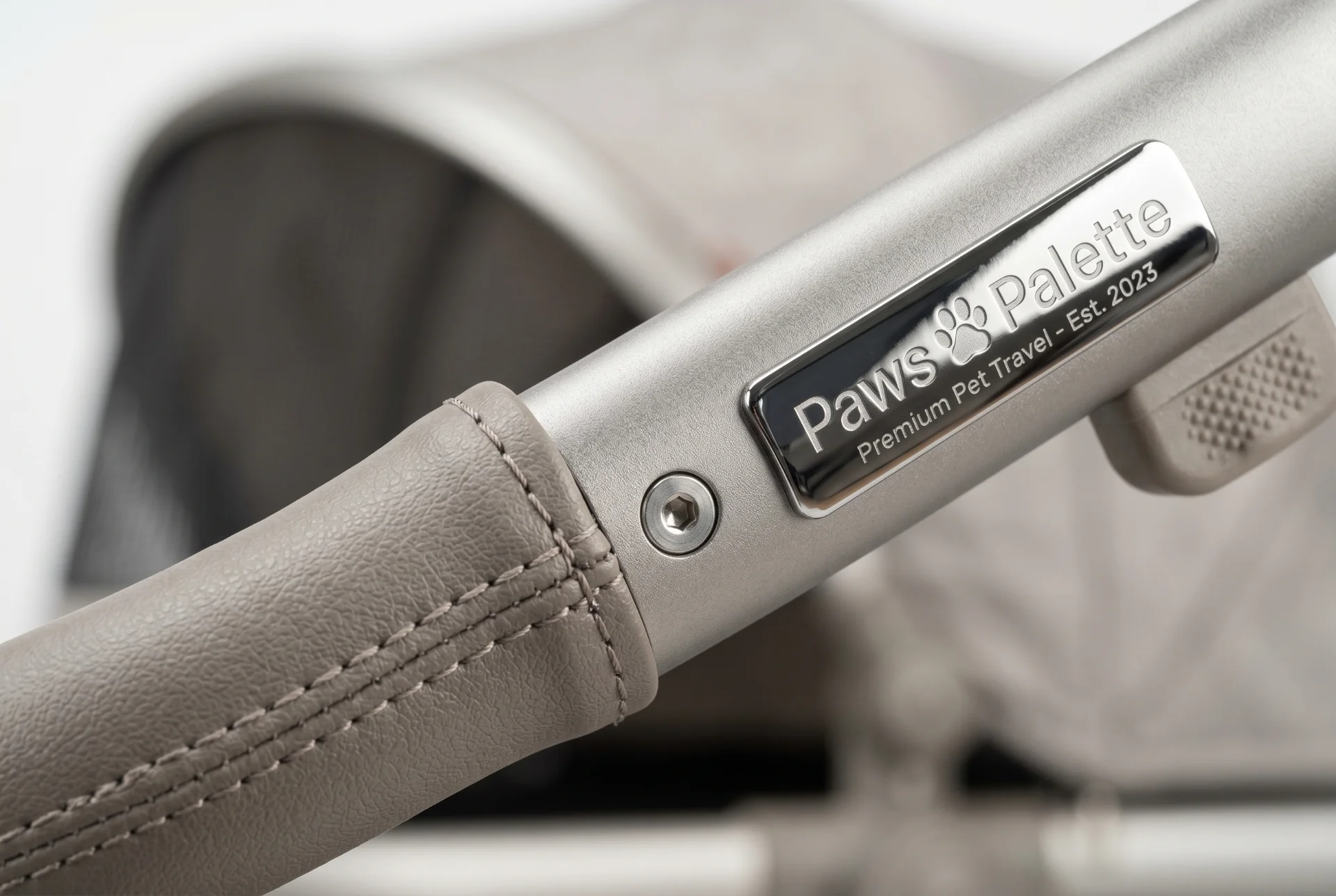
A metal badge can help a new brand look more established. A leather-look handle can improve touch and photo quality. Matching zipper tape and piping can make the product feel more complete. But every trim adds work. It can add MOQ pressure, color matching risk, sewing difficulty, and QC checkpoints. One buyer once asked for badge, label, embroidery, printed logo, branded wheels, and contrast piping on the same model. The product became busy. The cost went up, but the premium feeling went down.
| Premium Detail | Perceived Value |
|---|---|
| Metal badge | create a stronger brand image |
| Leather label | add warmth and craft feeling |
| Leather-look handle | improve touch and photo quality |
| Matching zipper and piping | make the product feel complete |
| Refined stitching | support boutique positioning |
| Matte frame finish | reduce cheap plastic feeling |
| Hidden connectors | keep the design clean |
| Branded wheel cap | extend brand identity to hardware |
Premium detail works best when it looks intentional, not added.
Why Can Bulkier Packing Still Be Acceptable?
Many buyers fear carton size, and I understand that fear. Freight cost can destroy a beautiful product if nobody calculates it early.
Bulkier packing can still work for Japan and Korea because these markets are close to China. Buyers may accept lower loading quantity when the product gains stronger retail value, better display, and premium pricing power.
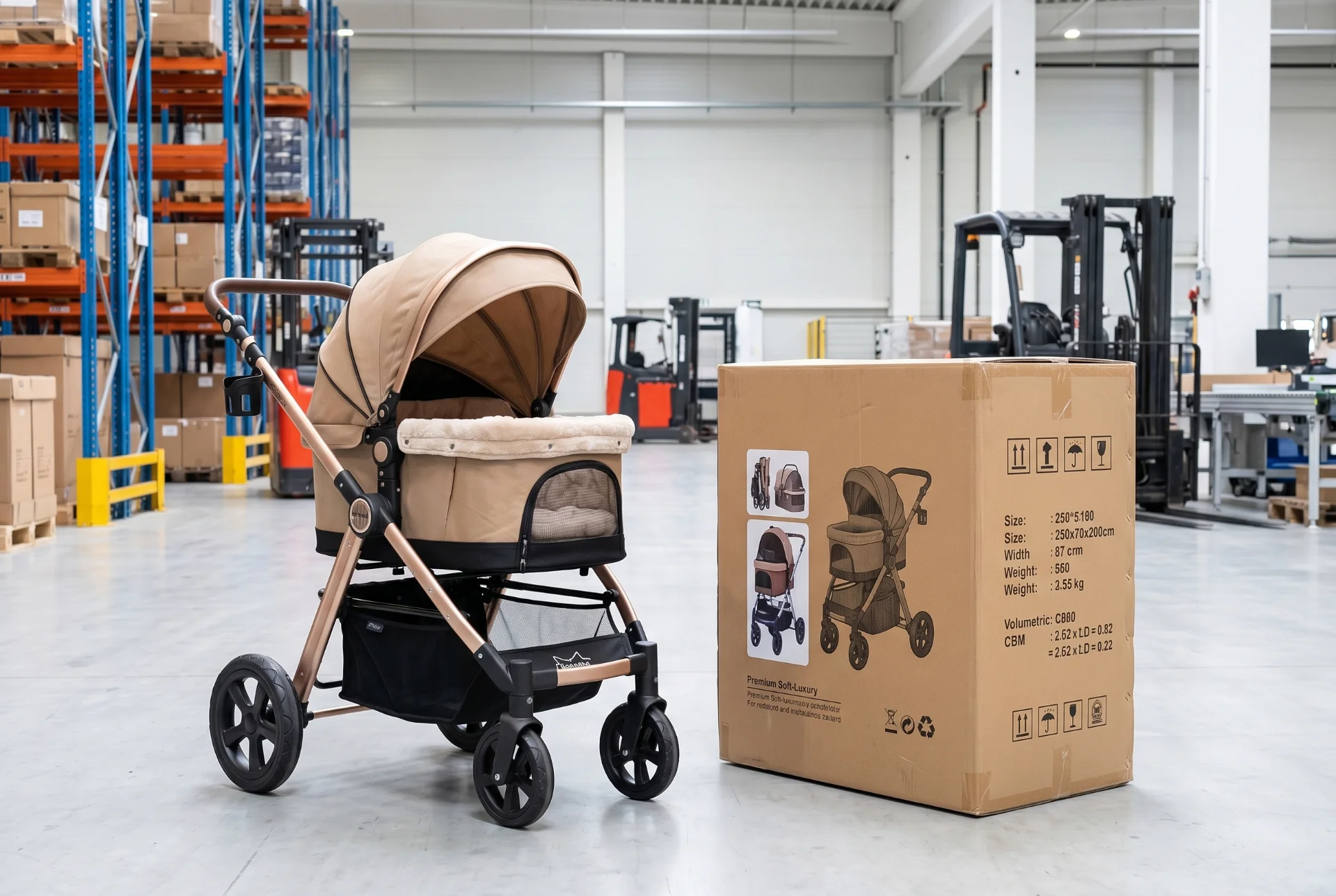
I never tell buyers to ignore packing. I tell them to compare freight loss with retail gain. Fuller cushions, semi-structured carriers, shaped canopies, larger wheels, and high frames all increase carton volume. They can reduce container loading quantity. But Japan and Korea have shorter shipping routes from China than many long-distance markets. Sample movement is also faster. Replenishment can be more flexible. This gives buyers more room to protect visual value. The key is to calculate early. I ask for estimated carton size before final sampling. I also check if the wheel can be quick-release, if the cushion can be packed without losing shape, and if the frame can fold in a cleaner way. I do not want to discover the freight problem after tooling or bulk materials are ready.
| Product Decision | Premium Value | Freight Impact |
|---|---|---|
| Full cushion | improve comfort appearance | enlarge the carton |
| Semi-hard carrier | improve display shape | lose compression |
| Large wheels | improve movement and proportion | lower loading quantity |
| High frame | improve premium presence | enlarge folded size |
| Premium trim | improve brand perception | raise unit cost |
| Compact redesign | improve freight efficiency | may reduce visual fullness |
For nearby premium markets, the highest container loading is not always the highest-value decision.
Should Japan and Korea Be Treated as One Market?
It is easy to group Japan and Korea together. I think that shortcut is useful at the first meeting and dangerous during product development.
Japan and Korea share soft-luxury tendencies, but they are not identical markets. I still confirm target country, brand style, pet size, retail channel, logo level, packaging style, and target price before sampling.
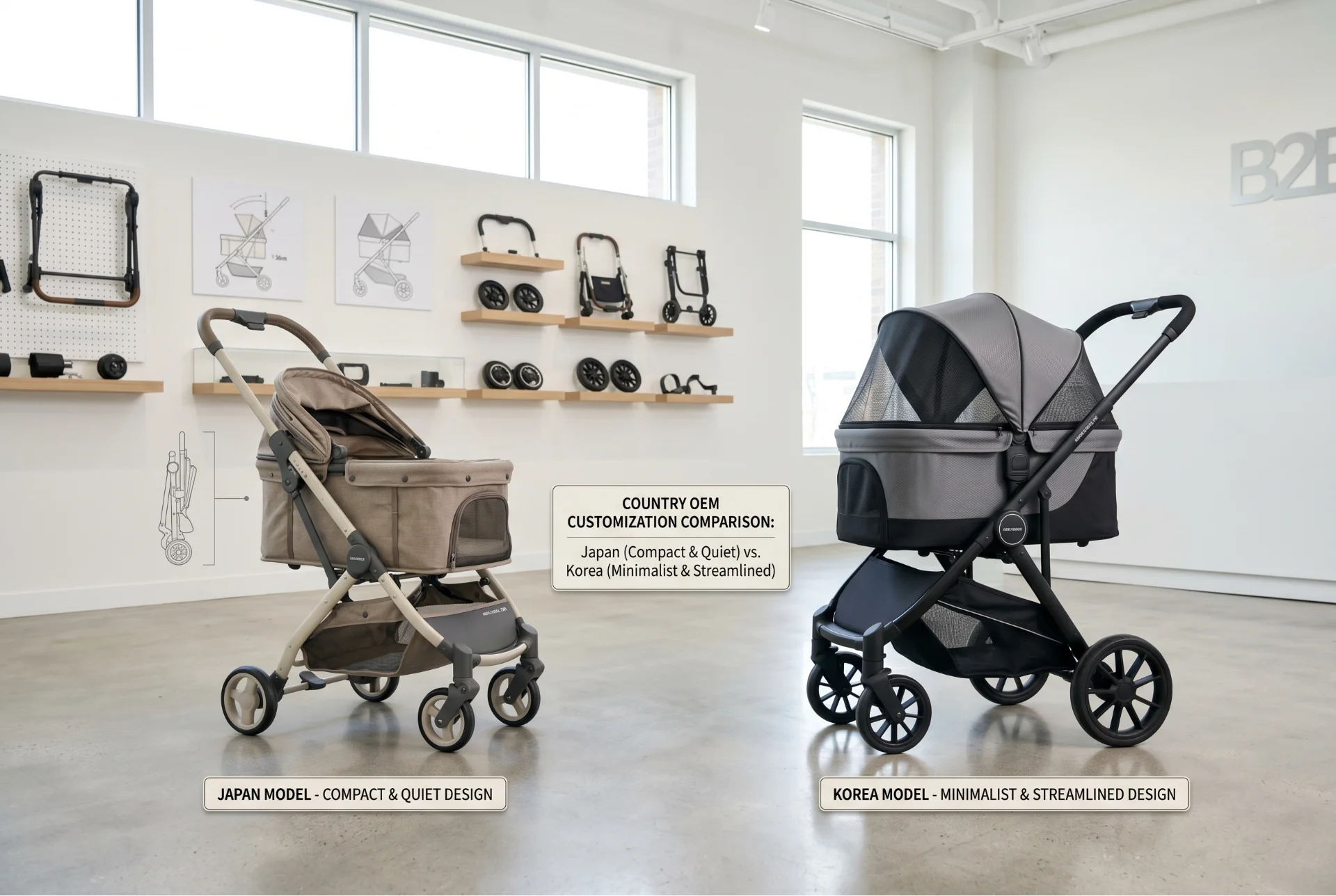
Both markets may like soft neutral colors, refined design, small-pet comfort, and strong visual presentation. A Korean brand may want a cleaner, more modern look with stronger online photos. A Japanese buyer may care more about compact use, quiet details, and precise finishing. These are not fixed rules, but they show why I need country-level decisions. Pet size distribution also matters. Many models are built for cats and small dogs, but internal dimensions still need real checks. A carrier that looks cute in photos may feel cramped for the actual target pet. Packaging also differs by channel. Offline retail may need stronger display and clearer box design. Online sales may need better carton protection and photo-friendly details.
| Decision Area | What I Confirm |
|---|---|
| Target country | avoid one-size-fits-all assumptions |
| Brand style | match modern, cute, minimal, or boutique direction |
| Pet size | protect real use, not only photo effect |
| Logo visibility | control premium feeling and brand identity |
| Sales channel | balance display, packing, and delivery risk |
| Target price | choose trim and structure realistically |
| Packaging | match retail and e-commerce needs |
Shared regional tendencies are useful, but they should never replace country-level product decisions.
What Should OEM Buyers Confirm Before Sampling?
A vague brief creates a vague sample. I have lost weeks on projects that started with only “make it beige.”
Before sampling, I ask buyers to define market, target pet, retail price, sales channel, color system, cushion fullness, carrier stiffness, frame height, wheel size, premium trims, carton limit, and vehicle-use needs.
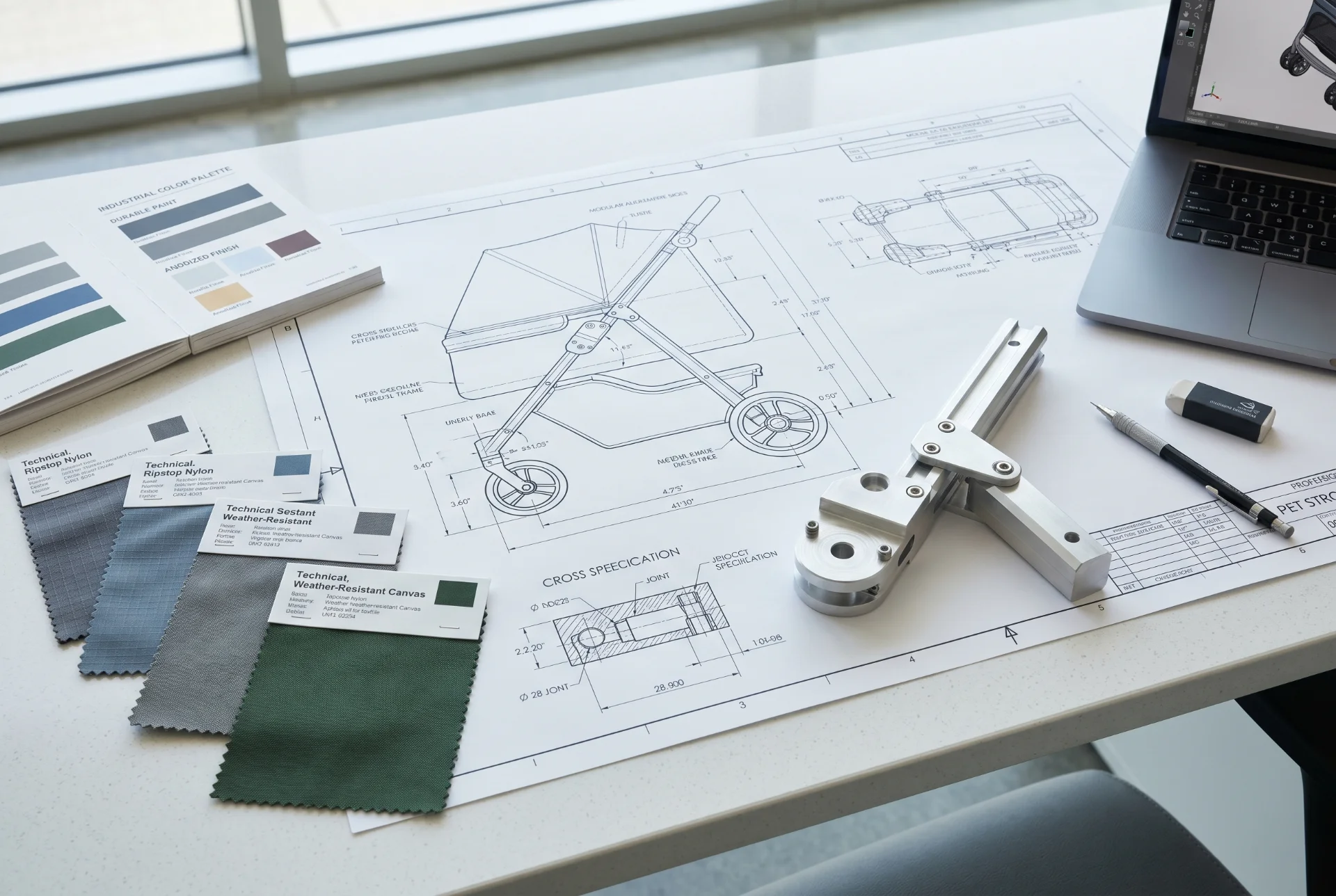
Sampling should prove the business direction. It should not only prove that a factory can sew fabric. I ask hard questions before we cut material. Is the product for Japan or Korea? Is it for cats, small dogs, or both? Will it sell online or in stores? Is the target price high enough for metal badges and leather-look handles? Does the buyer want a stroller-only product, or does the carrier need car-seat compatibility later? This last question matters a lot. If vehicle use is possible, I need to plan the carrier bottom, docking points, and support structure early. I cannot add a serious connection system to a weak soft carrier at the end without compromise.
| Question | Why I Ask It |
|---|---|
| Is the target market Japan or Korea? | need country-level direction |
| What is the target retail price? | control material and trim level |
| What pet size is the product for? | set carrier and frame balance |
| Is the channel online or offline? | adjust display and packing needs |
| How full should the cushion look? | balance value and carton volume |
| How stiff should the carrier be? | select structure method |
| What wheel size is required? | check movement and packing |
| Which trims are necessary? | control cost and brand feeling |
| What carton limit is acceptable? | prevent freight surprises |
| Is car compatibility required? | plan bottom and docking early |
The sample should prove the market strategy, not just the factory’s sewing ability.
How Can Existing Products Be Localized Through OEM Development?
Many brands already have a selling carrier or stroller. I do not always ask them to start from zero.
An existing product can be localized by adjusting soft goods, structure, frame proportions, wheel configuration, premium details, packaging, and docking design. The best path depends on tooling, MOQ, current sales, and target market position.
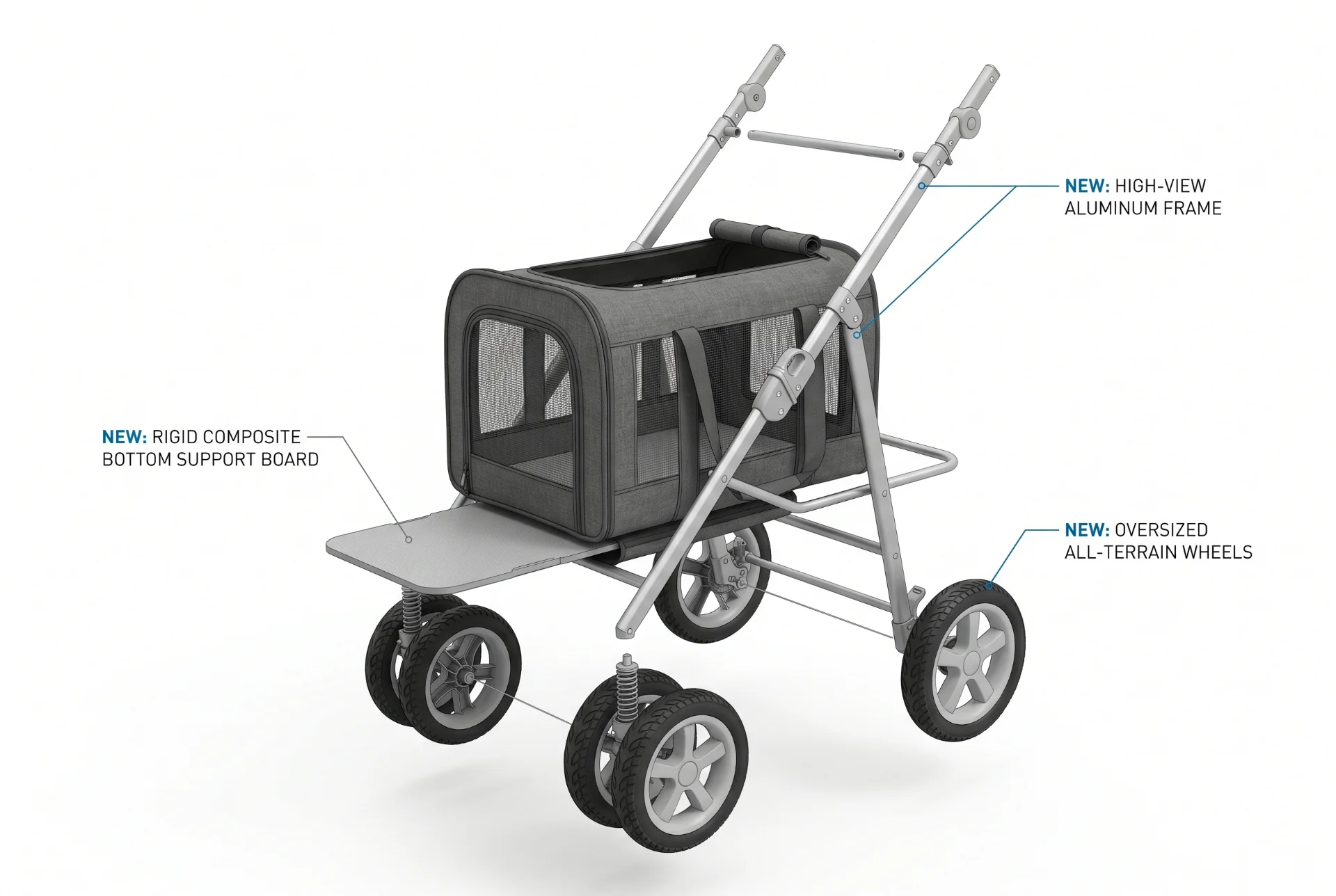
I like to protect what already sells. If a buyer has a proven carrier shape, I first check what should stay. The brand may have a recognizable silhouette, logo position, or fabric style. Then I check what needs improvement for Japan or Korea. Maybe the cushion needs more fullness. Maybe the side wall needs hidden support. Maybe the zipper tape and piping should match the body color. Maybe the wheel size should grow slightly to balance the carrier. Maybe the carton needs a better layout before the design becomes too bulky. This is the OEM path I trust. I do not force a new model just because it is easier for the factory. I also do not keep an old model if the structure blocks the new market goal.
| OEM Modification Area | Practical Path |
|---|---|
| Color and texture | build a coordinated material board |
| Cushion | adjust thickness, edge, and recovery |
| Carrier support | add PP, PVC, foam, or bottom boards |
| Frame | adjust height, finish, and fold logic |
| Wheels | match diameter with visual weight |
| Branding | add controlled badges, labels, or handles |
| Packing | test carton size before bulk commitment |
| Docking | plan stroller or vehicle connection early |
OEM localization should protect existing sales while adding market-specific value.
How Can Anvoya Support Japan and Korea Pet Stroller Projects?
A buyer does not need another factory that only changes fabric and adds a logo. I believe the market needs better product-development thinking.
I can support Japan and Korea projects by aligning soft goods, stroller frames, carrier structure, wheel choices, private-label details, carton planning, and vehicle-use options in one development system.
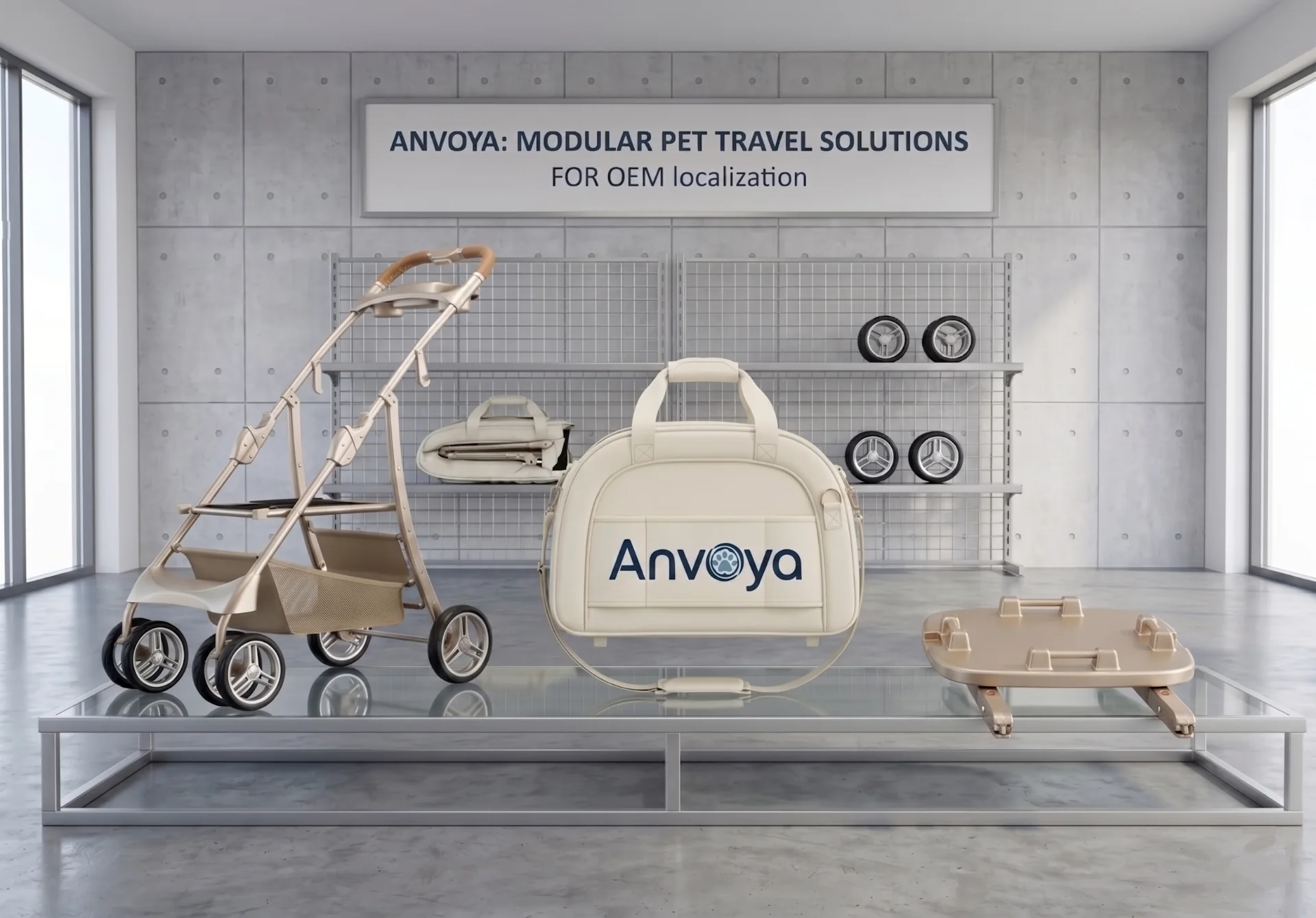
At Anvoya, I look at pet travel as a system. This comes from our background in child car seats and automotive safety products. I do not say pet strollers have the same legal rules as child restraint systems. They do not. But the engineering thinking helps me ask better questions. How does the carrier connect? Where does the load go? How does the user avoid misuse? How does the soft carrier keep shape in daily use? How does the product move from car to stroller? AERO can fit brands that want a lightweight 3-in-1 direction for cats, small dogs, carry use, stroller use, and car-to-stroller movement. BASE-X can help brands that already have a strong carrier and want to add vehicle-ready value through an ISOFIX base path. The product still needs correct structure, docking, and user instructions. I see this as commercial value, not only technical value. A brand can extend a product line without throwing away its current best seller.
| Development Area | How I Usually Support It |
|---|---|
| Soft goods | work on color, cushion, lining, canopy, and stitching |
| Carrier structure | review PP, PVC, foam, bottom board, and inserts |
| Hardware | check frame height, wheels, handle, and docking |
| Private label | support badges, labels, packaging, and trim direction |
| Logistics | estimate carton size and freight pressure early |
| Product line | connect stroller, carrier, car base, and accessories |
| Existing products | plan upgrade paths, not only new tooling |
Anvoya’s value is not only changing the appearance. It is aligning soft goods, hardware, stroller structure, and vehicle use for the target market.
Conclusion
The best Japan or Korea product is not beige. It is designed around comfort, structure, detail, logistics, and real market value from the beginning.